- The paper introduces a novel case reasoning framework that uses LLMs and RAG to overcome traditional database limitations in processing complex cases.
- It demonstrates significant performance improvements, including a 15% increase in F1 scores for medical diagnosis and a 12% boost in legal precedent retrieval precision.
- The framework integrates query processing, dense vector retrieval via FAISS, and iterative insight generation to provide actionable, contextual case analysis.
CaseGPT: A Case Reasoning Framework
The paper "CaseGPT: a case reasoning framework based on LLMs and retrieval-augmented generation" presents a sophisticated approach to enhancing case-based reasoning by leveraging LLMs and Retrieval-Augmented Generation (RAG) technologies. This new framework is particularly focused on overcoming the limitations inherent in traditional database query systems, primarily within the healthcare and legal domains. The paper outlines substantial improvements in accessibility and utility of case data, demonstrating notable advancements over state-of-the-art baselines in both medical and legal tasks.
Introduction
CaseGPT is introduced as a solution addressing the challenges posed by the massive proliferation of digital case data in professional domains. Traditional systems, which rely heavily on exact keyword matches, often fail to grasp the complexities of professional terminologies and contextual information. CaseGPT proposes a novel framework capable of handling ambiguous queries, understanding semantic contexts, and generating meaningful insights from retrieved cases.
Methodology
System Architecture
CaseGPT's architecture consists of three primary modules: the Query Processing Module, the Case Retrieval Engine, and the Insight Generation Module.
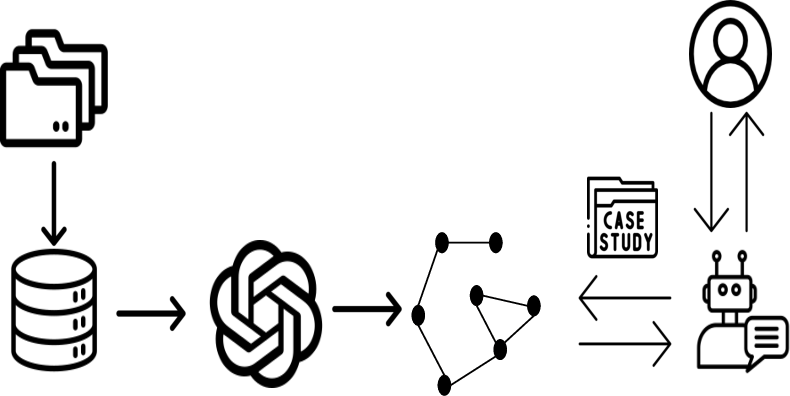
Figure 1: High-level architecture of CaseGPT.
Query Processing Module: This module interfaces between users and the system, leveraging pre-trained LLMs (such as GPT-3) to parse queries and transform them into semantically rich vectors. A formal algorithm ensures effective tokenization and encoding, which primes queries for subsequent processing.
Case Retrieval Engine: This component uses a dense vector index representing cases to facilitate retrieval through advanced RAG technology. The engine's semantic search algorithm employs cosine similarity, augmented by FAISS for efficient nearest neighbor search, and a sophisticated ranking mechanism considering various domain-specific factors.
Insight Generation Module: Beyond retrieval, CaseGPT generates actionable insights by aggregating context and employing conditional generation techniques. The module iteratively refines output, enhancing relevance and practical applicability of insights.
Experimental Evaluation
Datasets
The framework was tested on extensive real-world datasets: a medical dataset from a large hospital network and a legal dataset of court case summaries. Each dataset underwent rigorous preprocessing to ensure quality and consistency.
Results
CaseGPT showed a remarkable 15% increase in F1 score for medical diagnosis tasks and a 12% improvement in precision for legal precedent retrieval. Its efficiency in both domains was underscored by rapid response times, better than competing methods such as BioBERT and LEGAL-BERT.
Moreover, the insight generation module with human evaluation demonstrated high-quality and actionable insights, surpassing baseline systems like GPT-3 Zero-shot in terms of relevance and applicability.
Discussion
The empirical results of CaseGPT demonstrate its capacity to enhance decision-making processes significantly across sensitive domains. While it excels in precision and recall, its real-time capabilities also show potential for democratizing access to specialized insights. However, potential limitations include handling of edge cases and ensuring ethical deployment, which require further investigation.
Ethical Considerations and Limitations
The deployment of CaseGPT in healthcare and law demands careful handling of privacy issues, potential biases, and the importance of explainability. There is a risk of over-reliance, which could impact professional skills adversely. Additionally, the system's ability to handle rare cases needs further improvement.
Conclusion and Future Work
CaseGPT epitomizes a paradigm shift in AI-assisted case reasoning, showcasing superior performance and embodied with significant contributions to the integration of semantic understanding with precise retrieval and insightful recommendations. Future research could address scalability, explainability, robustness, long-term impact, and privacy-preserving collaborative learning, paving the way for broader applicability across diverse professional landscapes.