- The paper demonstrates that Structured-GraphRAG effectively transforms soccer data into knowledge graphs, enhancing data retrieval efficiency and accuracy.
- It employs natural language query translation into Cypher queries via an LLM, significantly reducing response times by over 80% compared to traditional methods.
- The framework mitigates LLM hallucinations by leveraging detailed entity relationships in soccer data, enabling robust and scalable information retrieval.
Enhancing Structured-Data Retrieval with GraphRAG: Soccer Data Case Study
The research paper "Enhancing Structured-Data Retrieval with GraphRAG: Soccer Data Case Study" presents a framework called Structured-GraphRAG, which aims to address the challenges of information retrieval in complex structured datasets. The focus is given to soccer data as a relevant case study to exemplify the framework's capabilities.
Introduction to Structured-GraphRAG
Structured-GraphRAG is designed to improve the accuracy and efficiency of information retrieval systems that process large and structured datasets. Traditional IR methods, such as sequential search, often struggle with interrelated data structures, leading to incomplete retrievals. By integrating KGs into the retrieval process, Structured-GraphRAG enhances the understanding and processing of natural language queries through an LLM.
The integration of KGs facilitates enriched semantic understanding and detailed relational mapping between entities, which is crucial for mitigating typical hallucination issues associated with LLMs. The initial step in the framework involves constructing KGs from datasets, followed by query translation and information retrieval through Cypher queries. Finally, the retrieved data refines the LLM-generated outputs.
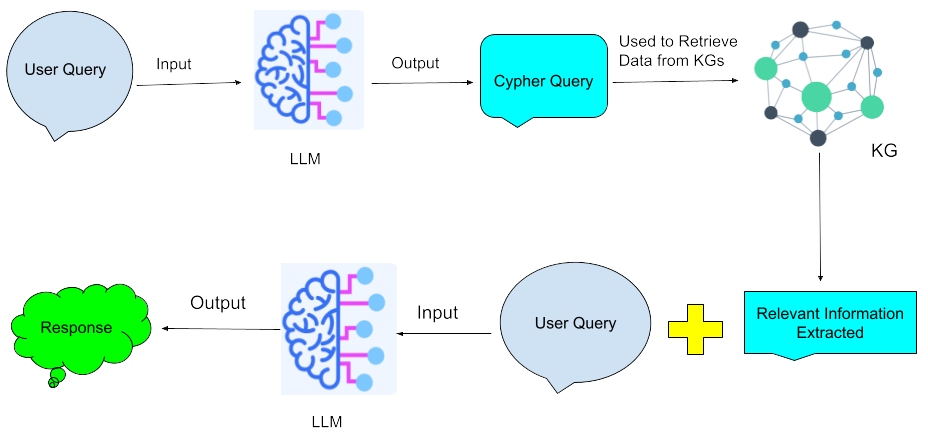
Figure 1: Framework overview.
Demonstrative Case Study: Soccer Data
The framework's effectiveness is illustrated using SoccerNet, which includes detailed information about various soccer matches. This dataset is characterized by structured and unstructured data, demanding sophisticated handling informed by KGs.
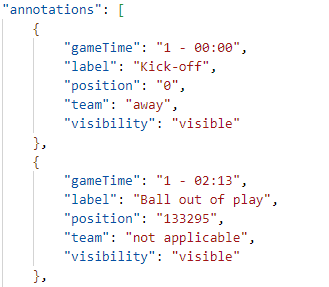
Figure 2: Samples of data in Labels file.
The method transforms the soccer dataset into a KG that accurately represents the data's relational structure, such as player events and team associations. The creation of node structures is essential to capture the complete dimensions of data entities like games, players, and events.
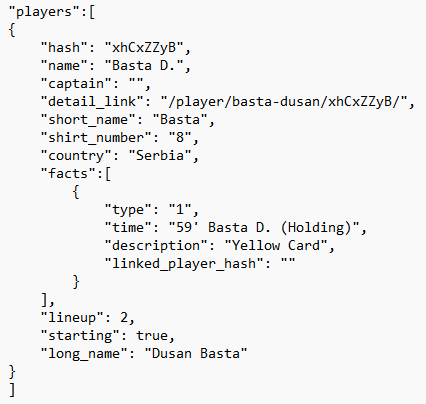
Figure 3: Samples of Players Data.
Knowledge Graph Construction
The paper outlines innovative methodologies for generating KGs from structured data like SoccerNet. The examples provided include detailed descriptions of node and edge representations to capture both the entities and their interactions. For instance, each match is represented as a node with attributes, interconnected with team and event nodes via defined relationships. This structured approach simplifies information retrieval and ensures scalability across different domains of structured data.
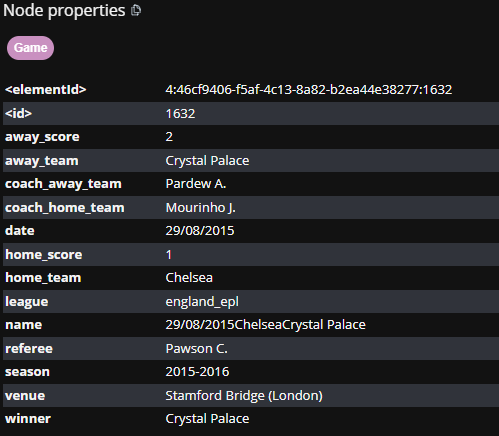
Figure 4: An example of Game node.
Practical Application Example
An example illustrates querying for cumulative home goals by a team within a specific season. Structured-GraphRAG seamlessly translates this natural language query into a Cypher query via an LLM, navigates the KG to pull relevant data, and composes a coherent response.
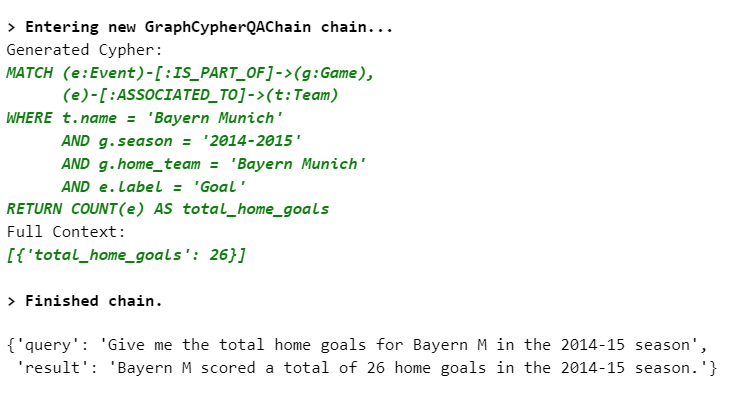
Figure 5: Sample of a Q&A application.
Evaluation
The performance of Structured-GraphRAG is evaluated against a traditional approach without the KG enhancement. The KG not only significantly cuts down on response times (improved by over 80%) but also enhances the accuracy by mitigating LLM hallucinations to a greater extent than conventional methods.
Discussion and Implications
Structured-GraphRAG offers significant advantages in optimizing execution times by utilizing sparse graph structures, as indicated by the low density values of the KGs. It demonstrates versatility, showcasing how complex data relationships are distilled into retrievable insights. While the framework excels in accuracy improvements, there remain challenges in consistently delivering complete lists in responses, which may be addressed through future improvements in LLM capabilities.
Conclusion
Structured-GraphRAG is a promising advancement in data retrieval frameworks, particularly effective in domains requiring intricate data representations such as competitive sports data. By systematically incorporating and leveraging KGs, the framework not only bolsters query performance and output accuracy but also democratizes the capability to build sophisticated data retrieval systems without necessitating in-depth domain-specific knowledge of graph theory. Such innovations are pivotal for broadening AI applications in structured data environments across various industry sectors.