- The paper introduces meta-causal states to capture dynamic shifts in causal relationships within complex systems.
- The paper employs mechanistic decomposition and algorithms like Expectation-Maximization and LO-RANSAC to uncover underlying causal mechanisms from unlabeled data.
- The paper highlights applications in attributing responsibility and disentangling multifaceted causal structures, with implications for AI and reinforcement learning.
The paper "Systems with Switching Causal Relations: A Meta-Causal Perspective" introduces a novel approach to understanding systems where causal relationships are not constant but switch due to changes in the environment or actions by agents. Traditional Structural Causal Models (SCM) assume static causal mechanisms, but this work proposes meta-causal states that group classical causal models based on similar qualitative behaviors and consolidate these mechanism parameterizations. This framework provides deeper insights into the emergence and disappearance of causal relations leading to altered causal graphs.
Meta-causal states generalize the idea of binary adjacency matrices in causal graphs. In practice, this allows for capturing more expressive system dynamics that are relevant in scenarios where environmental changes impact causal mechanisms. The identification of these states is crucial for understanding the qualitative shifts in system dynamics.
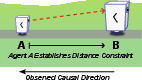
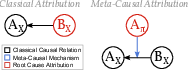
Figure 1: Meta-Causality Identifies the Policy as a Meta Root Cause. Agent A intends to maintain its distance from agent B by conditioning its position A_X on the position B_X, establishing a control mechanism.
Mechanistic Decomposition
The paper utilizes the concept of mechanistic decomposition to analyze how meta-causal states influence system dynamics. This involves dissecting the roles that different mechanisms play in a system, particularly in stress-induced scenarios. The decomposition identifies self-reinforcing or self-suppressing mechanisms, which highlight the robustness of the meta-causal models when analyzing dynamical systems.
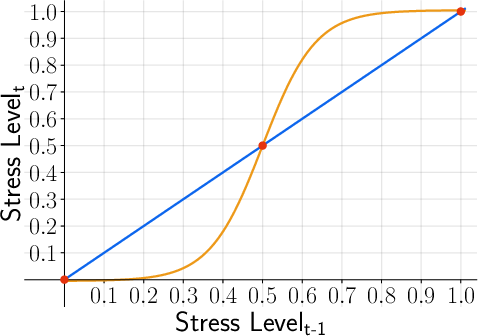
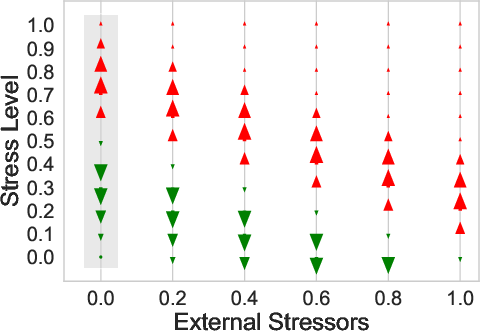

Figure 2: Mechanistic Decomposition as Meta-Causal States. Stress levels influence dynamics significantly, revealing behaviors like self-reinforcement and self-suppression.
The authors showcase applications of meta-causal models in various domains, particularly in attributing responsibility and discovering underlying causal mechanisms. These models can identify the presence of multiple simultaneous causal mechanisms from unlabeled data. This has implications for disentangling complex causality in real-world situations.
Attributing Responsibility
Meta-causal models provide a framework for attributing responsibility differently from traditional causal inference. By recognizing the policy of an agent as a meta root cause, the models can infer causal relationships that are not apparent in standard analyses, particularly where preventive mechanisms are involved.
Discovering Mechanisms from Unlabeled Data
The paper employs Expectation-Maximization and LO-RANSAC algorithms to uncover mechanisms in bivariate datasets. It demonstrates the ability to recover meta-causal states even when data is unlabeled, paving the way for more advanced causal reasoning and system modeling.
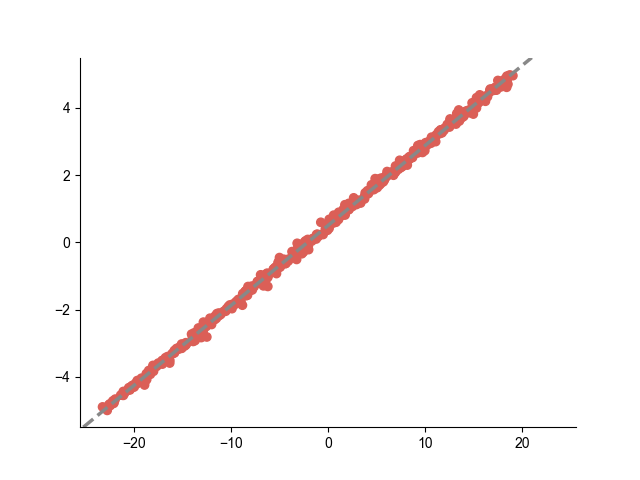
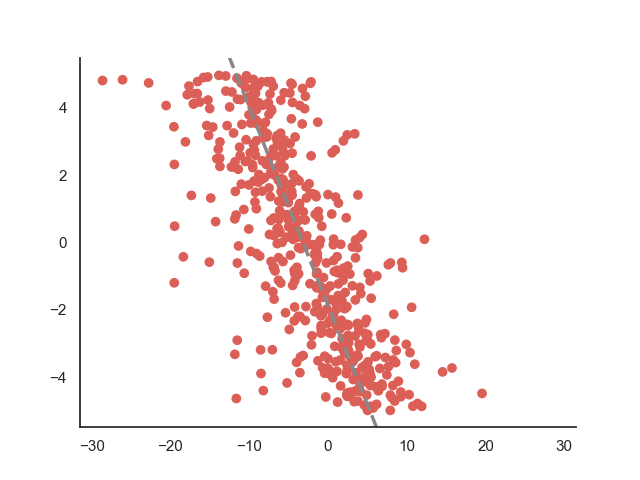
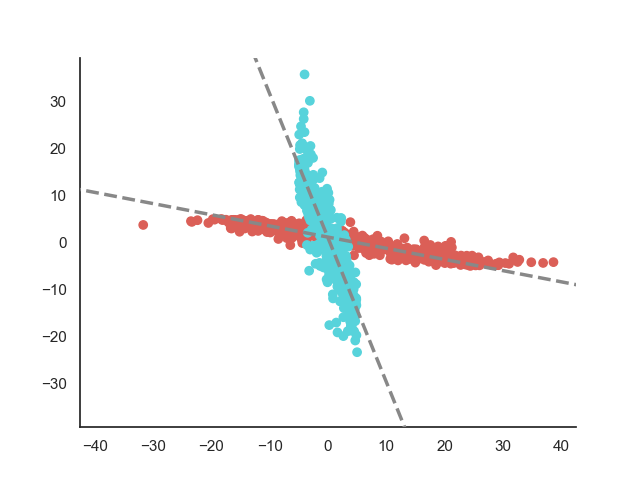
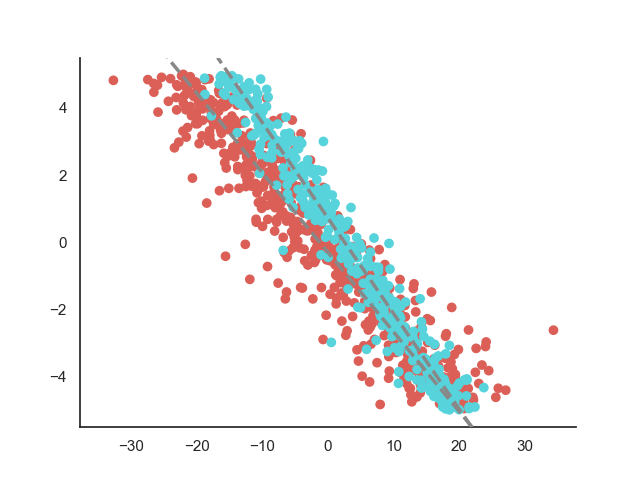
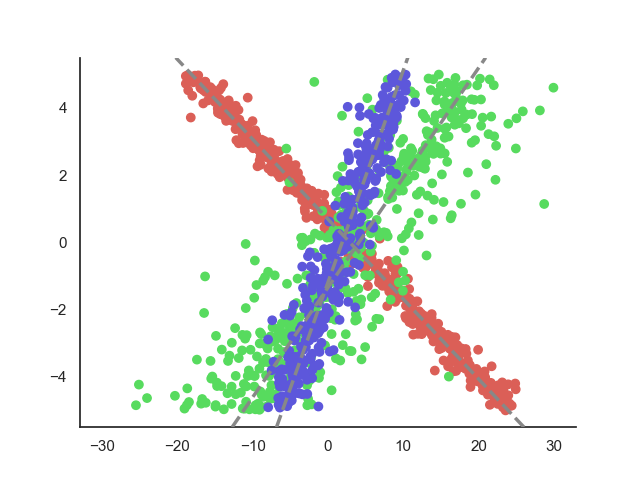
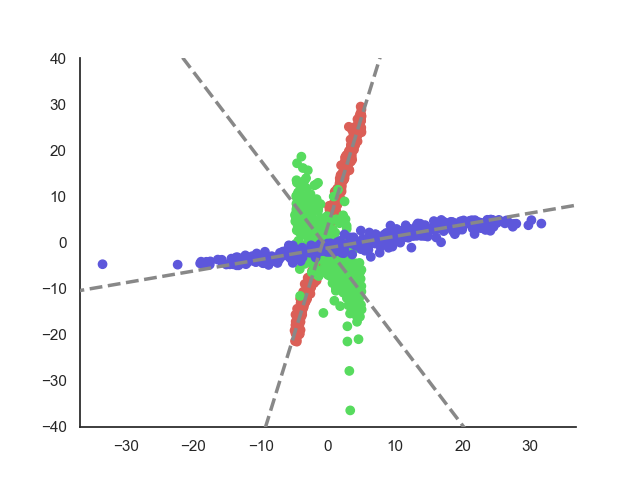
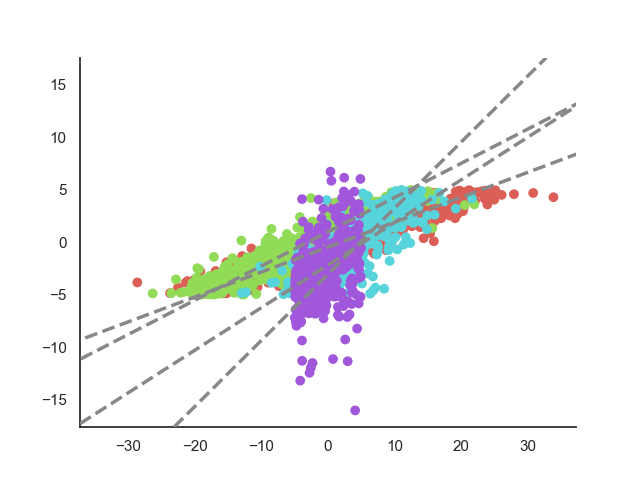
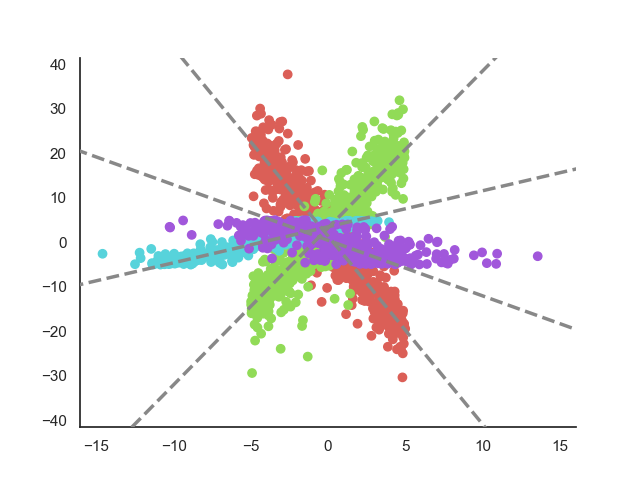
Figure 3: Sampled Mechanisms. Different randomly sampled mechanism distributions illustrate the presence of simultaneous mechanisms.
Implications and Future Research
The meta-causal perspective opens up new avenues for causal analysis in complex systems. It bridges gaps between classical causal models and real-world dynamical systems where causal relations are subject to frequent change. Future research could focus on extending these models to discover full causal graphs and refine algorithms for recovering mechanisms on more complex datasets.
Conclusion
"Systems with Switching Causal Relations: A Meta-Causal Perspective" provides a comprehensive framework for analyzing systems with non-static causal relations. The introduction of meta-causal states allows for a deeper understanding of how causal relations change in response to dynamic environmental factors. The implications for AI systems are vast, touching on areas such as reinforcement learning, transportability of causal relations, and high-level cognition models. Future work will focus on refining these approaches to offer even richer insights into complex causal relationships.