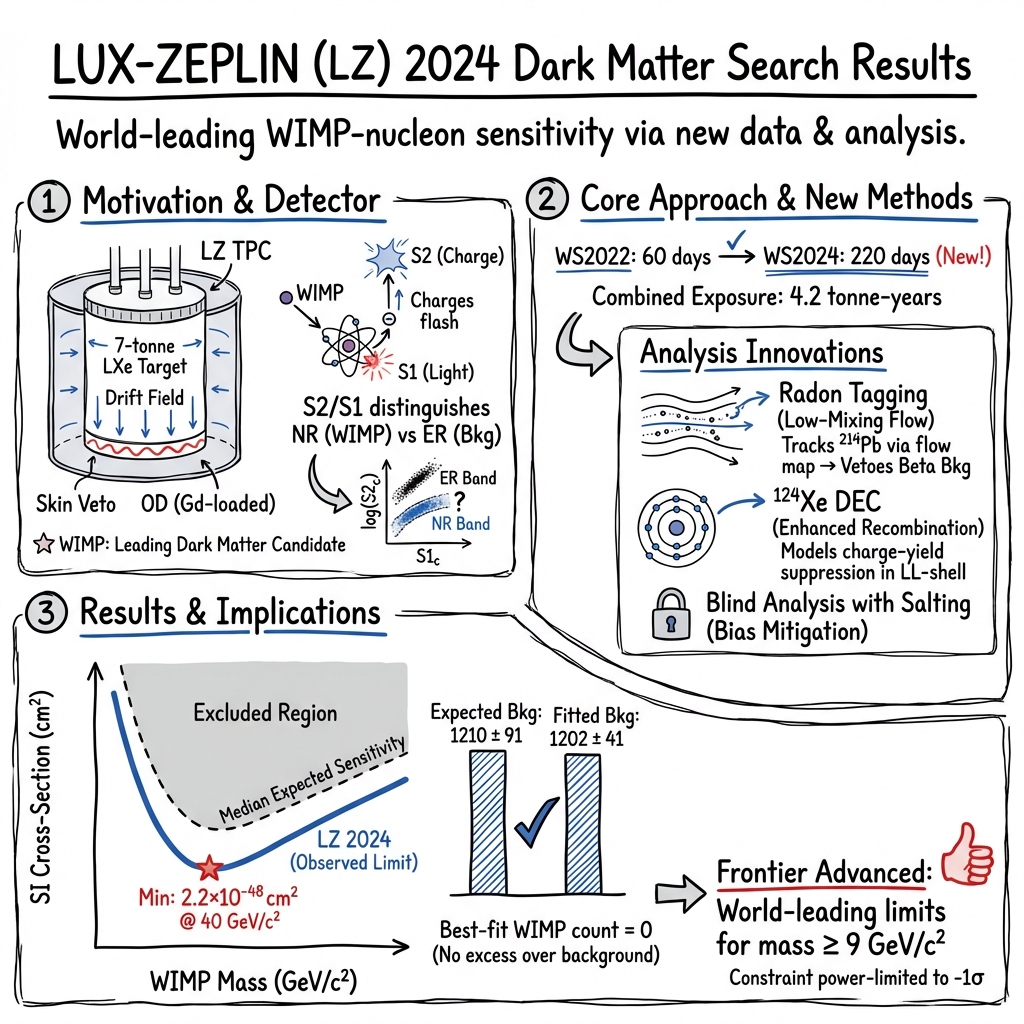
- The paper establishes stringent upper limits on WIMP-nucleon cross sections using 4.2 tonne-years of xenon TPC exposure.
- It employs a two-phase xenon TPC with innovative 'salting' techniques and meticulous analysis cuts to differentiate between nuclear and electronic recoils.
- The results significantly narrow the dark matter parameter space and guide future experiments with improved sensitivity to low-mass WIMPs.
Dark Matter Search Results from 4.2 Tonne-Years of Exposure of the LUX-ZEPLIN (LZ) Experiment
Experimental Setup and Methodology
The LUX-ZEPLIN (LZ) experiment aims to directly detect weakly interacting massive particles (WIMPs) using a two-phase xenon time projection chamber (TPC). This paper reports on the findings from 4.2 tonne-years of exposure, which constitutes the most sensitive search for dark matter to date. The experiment is located underground at the Sanford Underground Research Facility, shielded by rock and equipped with a dual-detector veto system that includes a xenon skin layer and a gadolinium-loaded liquid scintillator for neutron detection.
The TPC uses collected scintillation (S1) and ionization (S2) signals to discriminate between nuclear recoils (NRs) from WIMPs and electronic recoils (ERs) from background radioactivity. The key metrics are the 220 live days from WS2024 and 60 days from WS2022, resulting in a combined analysis of 280 live days.
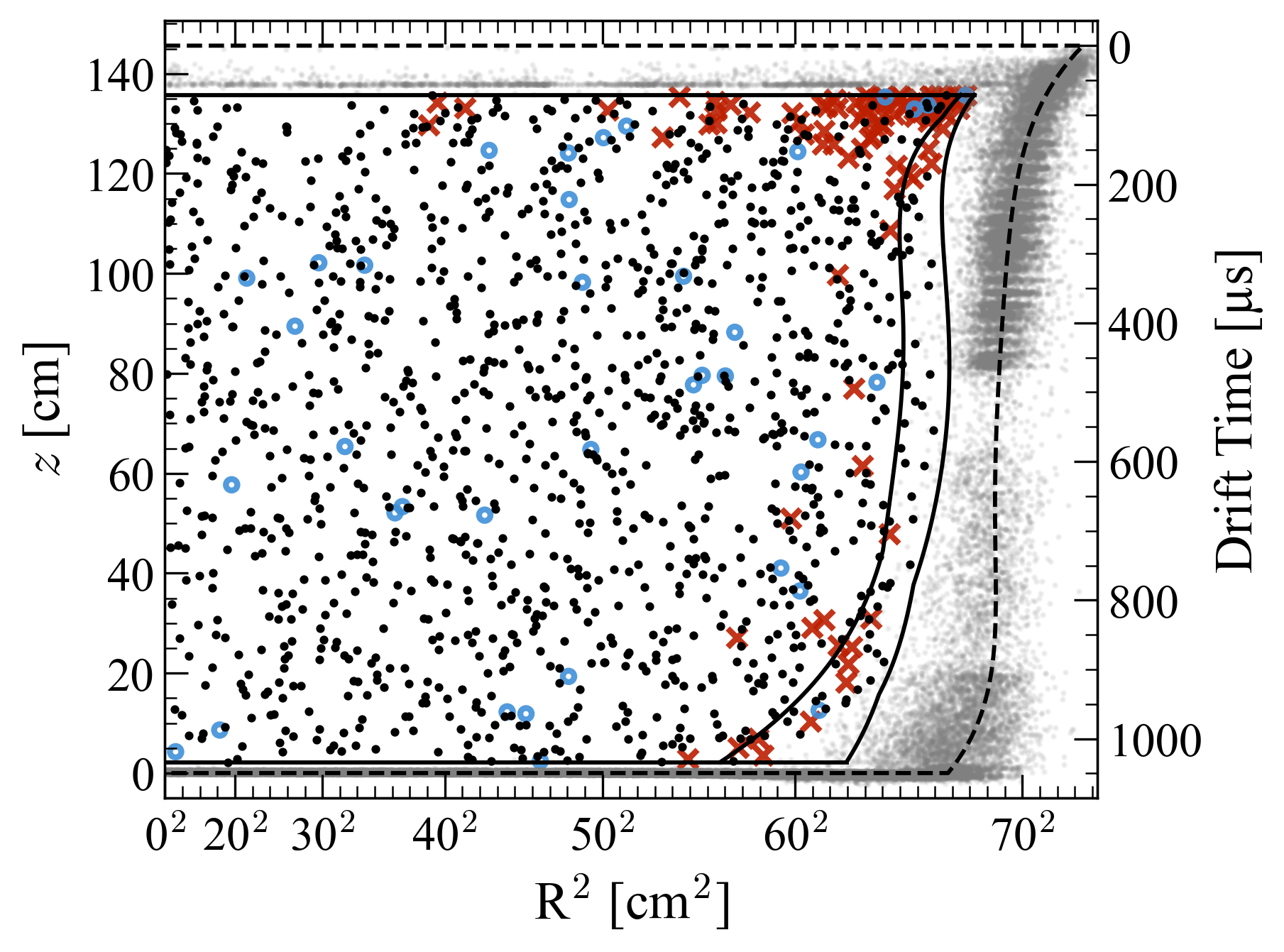
Figure 1: Data from WS2024, displaying the differentiation of background using analysis cuts, with radial extent depicted by solid lines.
Analysis and Statistical Techniques
The data is processed to extract valid S1 and S2 signals, allowing the classification of events as single-scatter (SS) or multiple-scatter (MS). The NR signal efficiency post various cut applications is detailed in Figure 2, highlighting the effectiveness of the trigger and cuts strategy over a range of energies, with a focus on the low-energy behavior critical for WIMP interaction detection.
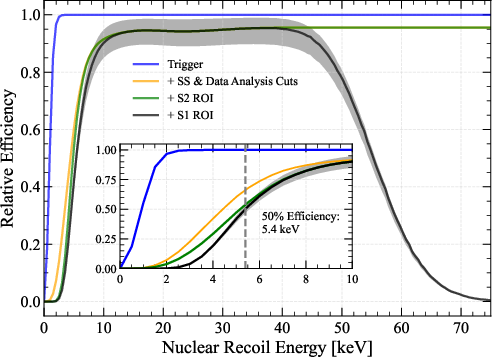
Figure 2: Energy-dependent NR signal efficiency as the analysis proceeds through various stages, demonstrating the systematic reductions in background.
A "salting" technique is implemented to counteract analysis bias, whereby artificial WIMP-like events are inserted into the data. This ensures unbiased reporting of statistical significance and limits on potential WIMP signals.
Results and Constraints
The LZ experiment finds no significant excess of events indicative of WIMP interactions over expected background. World-leading constraints are set on spin-independent and spin-dependent WIMP-nucleon cross sections, reaching a minimum of 2.2×10−48 cm2 at a WIMP mass of 40 GeV/c2. Figure 3 presents the upper limits on WIMP-nucleon interactions, contrasting WIMP masses from 9 GeV/c2 to 100 TeV/c2, thereby greatly narrowing the parameter space of viable dark matter particle candidates.
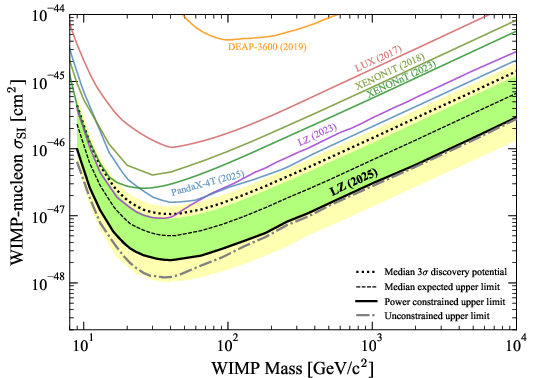
Figure 3: Upper limits on the spin-independent WIMP-nucleon cross section, including constraints with prior models and competitor experiments.
Implications and Future Directions
The LZ experiment advances the frontier of direct dark matter detection efforts, setting unprecedented limits that refine our understanding of WIMP interactions. These results are imperative for excluding potential WIMP candidates and informing theoretical models of dark matter. Future work will benefit from extended data collection to improve statistical constraints and sensitivity, especially in the exploration of WIMPs with masses below current detection thresholds.
Enhanced focus on suppressing ER backgrounds, leveraging cutting-edge techniques such as radon tagging, also promises greater insights, particularly for scenarios with non-standard interaction channels.
Conclusion
The LUX-ZEPLIN collaboration has significantly tightened constraints on WIMP dark matter through an extensive and meticulously controlled experiment. By integrating advanced techniques in signal discrimination and bias mitigation, the LZ experiment establishes a benchmark in the search for dark matter, paving the way for future discoveries in astroparticle physics.