- The paper presents a novel automated UI translation tool, the A2H Converter, that maps Android XML layouts to HarmonyOS ArkUI components.
- It employs a three-module architecture using LLM agents to parse, decompose, and regenerate complex UI structures accurately.
- Experimental results show migration success rates exceeding 89%, with cases like PSLab achieving up to 96.5% conversion accuracy.
UITrans: Seamless UI Translation from Android to HarmonyOS
Introduction
The increasing diversity of mobile development platforms poses significant challenges for application developers who traditionally expend considerable effort to create platform-specific applications, such as those for Android, iOS, and the emerging HarmonyOS. Such efforts inevitably result in higher development costs and extended iteration cycles. The disparity in UI frameworks between Android and HarmonyOS illustrates these challenges well. Android relies on an XML-based layout system, whereas HarmonyOS uses the ArkUI framework—a distinction that complicates straightforward UI migration.
To address this, the A2H Converter stands as a formidable automated solution for translating Android UIs to HarmonyOS. By leveraging a sophisticated LLM-driven multi-agent framework, it maps Android XML layouts to HarmonyOS ArkUI components efficiently, incorporating a reflective mechanism for enhanced accuracy. Its experimental efficacy is validated by high migration success rates across several components, pages, and overarching projects, demonstrating its potential to streamline cross-platform application development.
A2H Converter Architecture
The A2H Converter is conceptualized to automate the translation of Android application source codes into HarmonyOS-compliant code through a structured three-module architecture:
- Android Project Parsing: This initial phase conducts a thorough page-level analysis of Android applications. It identifies UI components, dependencies, and the interaction logic between pages, preparing the groundwork for subsequent translation tasks.
- Translation Task Planning and Decomposition: Here, the translation process is finely tuned by breaking down complex UI structures into manageable units. This modular approach is facilitated by LLM agents, which dissect UI layouts into translatable elements, thereby ensuring precise and efficient conversion strategies.
- HarmonyOS Code Generation: Utilizing a multi-agent reflective collaboration framework, this phase transforms the parsed data into HarmonyOS ArkUI code. The process includes domain knowledge generation, source code production, and a reflective re-generation cycle to optimize translational accuracy (Figure 1 depicts this code generation mechanism).
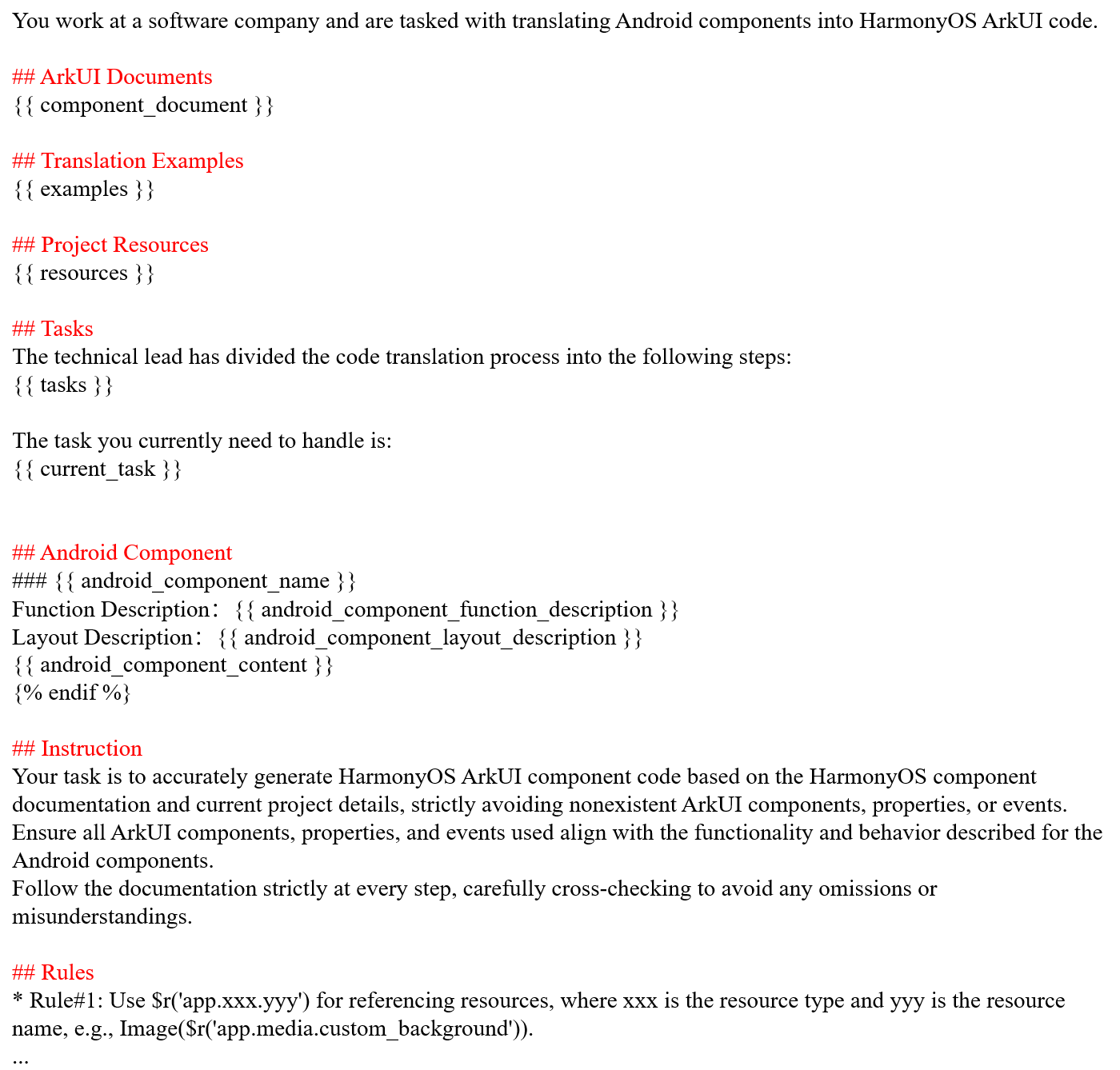
Figure 1: HarmonyOS code generation.
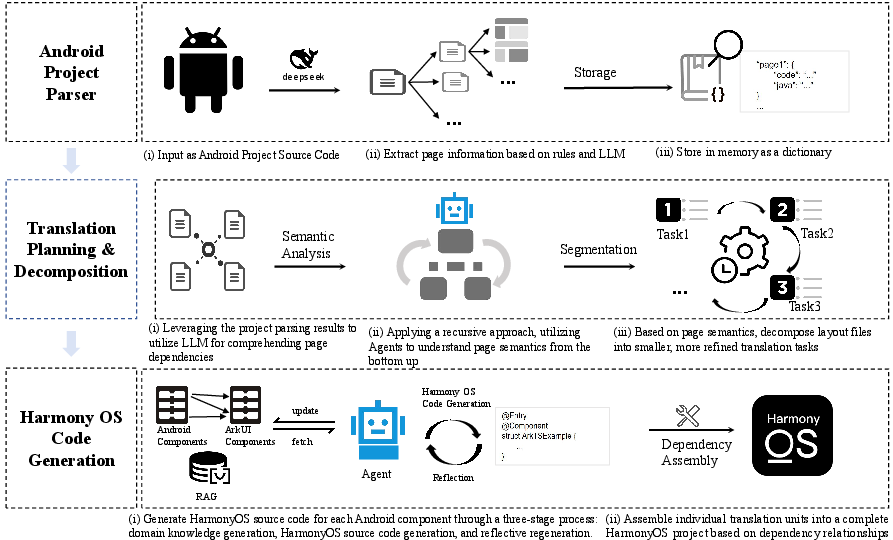
Figure 2: The architecture of A2H Converter.
Evaluation and Results
The A2H Converter has been rigorously evaluated using six diverse Android applications sourced from GitHub, representing various domains such as education, e-commerce, and daily utilities. The tool's performance was measured using component, page, and project-level success rates, which offer a clear metric of translation efficacy.
The results are striking, with the A2H Converter achieving a migration success rate exceeding 89% in component, page, and project levels. Notably, applications like the PSLab Android App exhibited up to 96.5% success, significantly surpassing traditional prompt-based methods, which seldom exceeded 59.5% in accuracy. Such outcomes underscore the converter's capability to reduce developer workload while maintaining code integrity and functionality.
Discussion and Implications
The A2H Converter's implementation exemplifies a robust application of LLMs in facilitating automated UI migration across platforms, reducing the dependency on manual adjustments and the associated costs. By enhancing translation precision and supporting complex UI logic, it enables developers to focus on higher-value tasks rather than repetitive layout conversions. This tool not only promises efficiency improvements in current practice but also sets a precedent for future research focusing on comprehensive, project-level UI migrations.
The implications extend beyond immediate application development efficiencies; the methodologies employed in A2H Converter could potentially generalize to other software environments requiring similar cross-platform migration strategies.
Conclusion
The A2H Converter presents an innovative, effective solution for the seamless migration of Android UIs to HarmonyOS, leveraging cutting-edge LLM technology and a reflective multi-agent framework. Its high success rate in empirical evaluations positions it as a valuable asset for developers seeking to minimize redundant tasks in cross-platform development projects. As mobile platforms continue to evolve, such tools will be crucial for maintaining agile development practices and optimizing resource allocation.
To access the demo and further information, the authors have provided a resource: A2H Converter.