- The paper introduces a hybrid QPINN framework combining quantum neural networks and physics-informed neural networks to solve PDEs without gradient nesting.
- The paper demonstrates accurate solutions for the 1D Poisson and Heat equations with NMSE as low as 1.39×10⁻⁵, showcasing its precision.
- The paper outlines potential scalability to quantum hardware, paving the way for advanced quantum machine learning applications.
This technical essay explores the hybridization of quantum computing and classical machine learning techniques to develop Quantum Physics-Informed Neural Networks (QPINNs). The QPINNs framework is proposed for solving complex partial differential equations (PDEs) by leveraging quantum computational models.
Framework and Methodology
Quantum Neural Network Architecture
The QPINN combines Quantum Neural Networks (QNNs) with Physics-Informed Neural Networks (PINNs), forming a novel architecture that effectively captures both the quantum computational advantages and the constraints imposed by physical laws. This architecture is implemented in a Continuous Variable Quantum Computing (CVQC) framework. The use of continuous variables, as opposed to discrete ones, allows the manipulation of quantum information using photonic states, thereby mimicking the operations in classical neural networks through quantum gates.
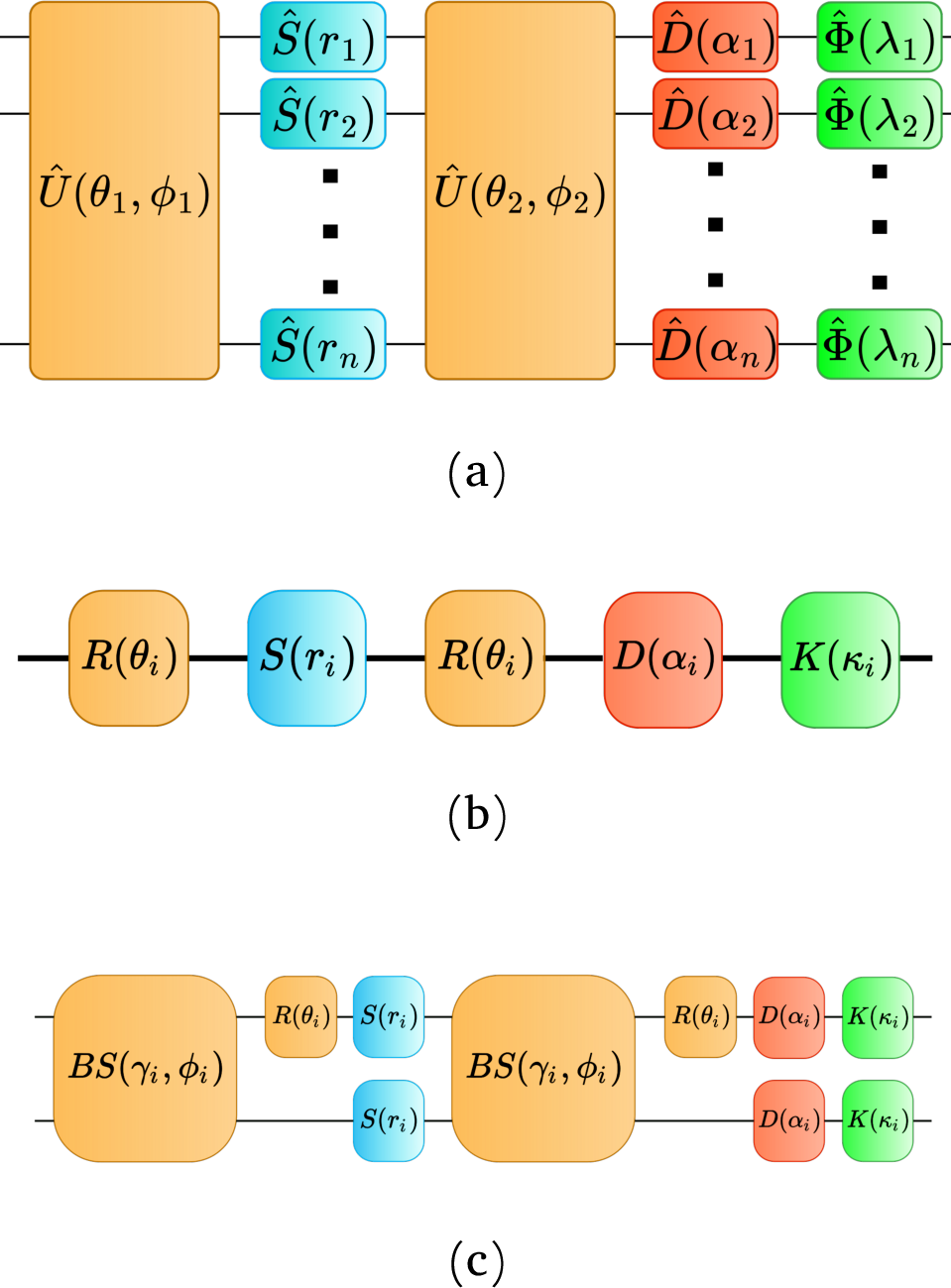
Figure 1: (a) Quantum circuit building block for CVQC-based quantum neural network. (b) Quantum Neural Network Layer for a multi-qumode setup.
Encoding and Measurement: The network employs qumodes to represent inputs and outputs, encoding the problem domain variables through displacement gates. Quantum measurements are performed using homodyne detection, which enables the extraction of desired solution parameters aligned with the encoded physical model.
Building QPINNs
The QPINN framework enhances classical PINNs by incorporating quantum computational layers, designed to avoid the computationally expensive nested gradient calculations typically required for solving PDEs. The architecture features a newly designed quantum circuit capable of computing higher-order derivatives necessary for PDE solutions, such as the heat equation and Poisson's equation (Figures 2 and 3).
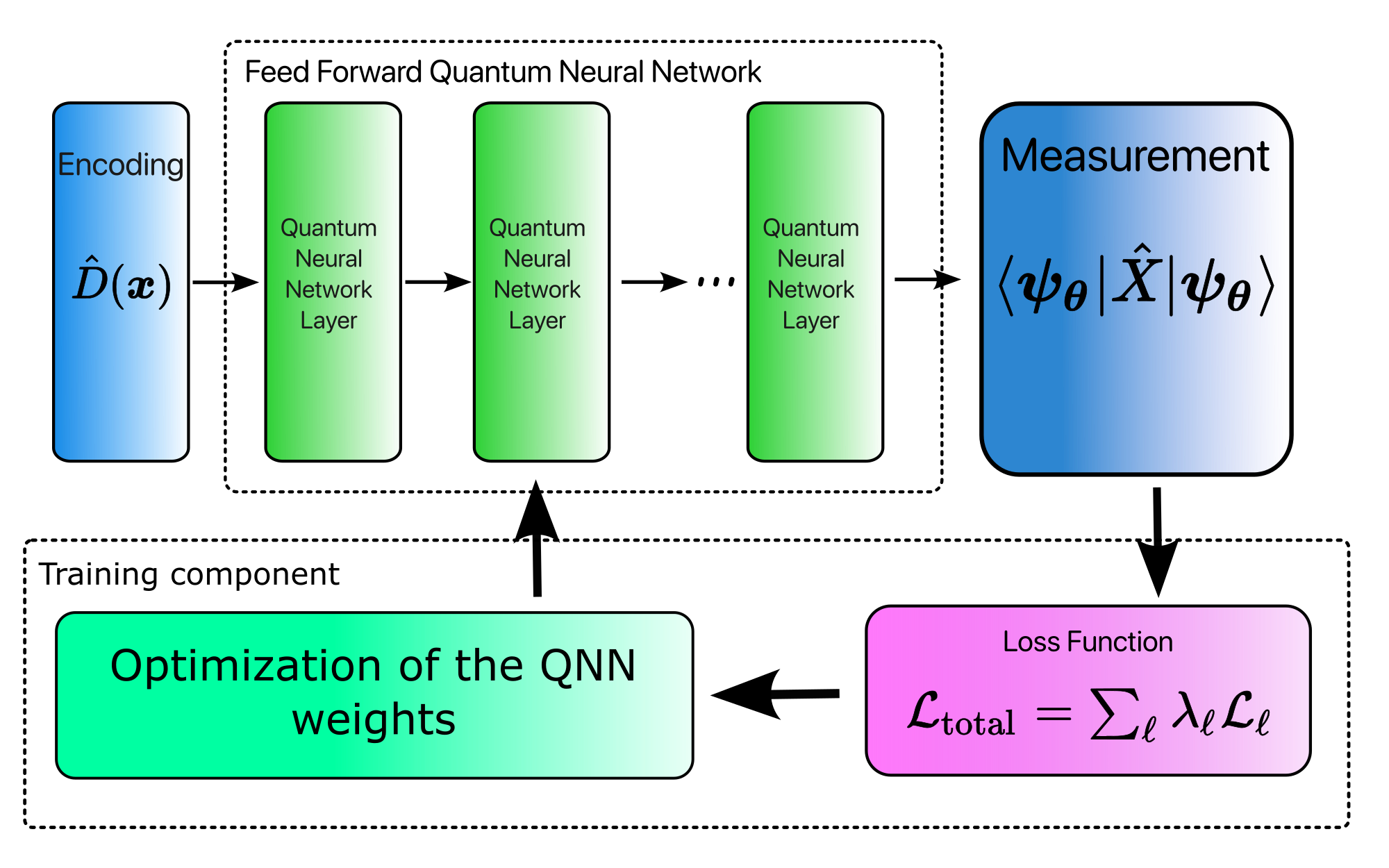
Figure 2: QPINN overall structure. The encoding is implemented by a set of displacement gates D(x)^.
Loss Function Construction: Central to the QPINN implementation is a well-defined loss function that consists of multiple components: physics loss for PDE constraints, boundary condition loss, trace loss for state normalization, additional terms for further constraints, and consistency loss to enforce derivative calculations. These components ensure the trained model retains physical fidelity across its predictions.
Implementation Insights
Training and Optimization: The quantum training dynamics require adopting gradient-free optimization techniques due to the challenges in deriving exact gradients. This is complemented by modern automatic differentiation frameworks, like TensorFlow, which enhance simulation capabilities and expedite convergence when coupled with Strawberry Fields for quantum circuit simulations.
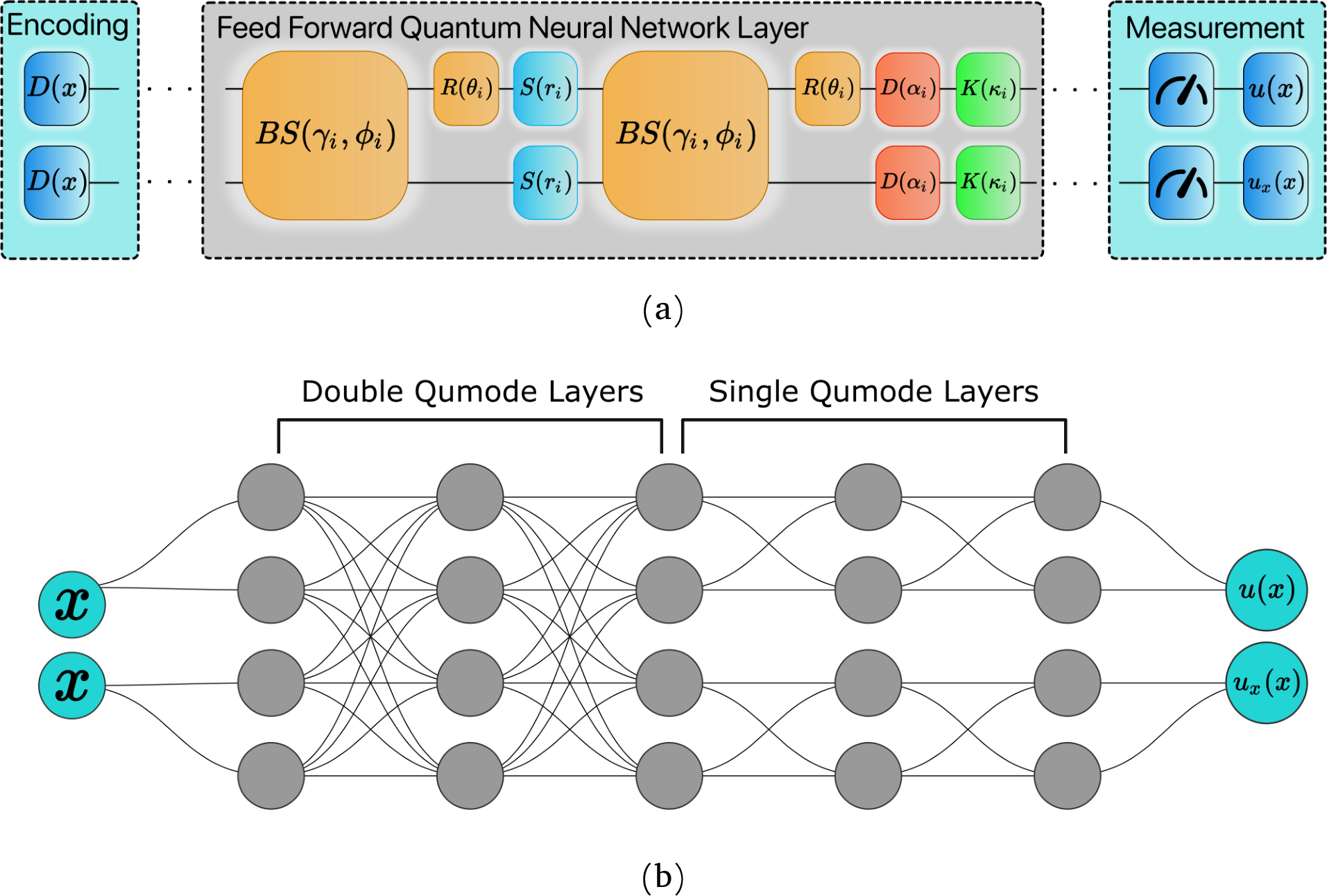
Figure 3: (a) Schematic network setup for solving the 1D Poisson equation. (b) Classical equivalent.
Experimental Results
Solving PDEs Using QPINNs
1D Poisson Equation: The network resolves this equation by efficiently incorporating sinusoidal terms and boundary conditions, achieving a Normalized Mean Squared Error (NMSE) of 1.39×10⁻⁵, thereby demonstrating its capability for accurate solutions without gradient nesting.
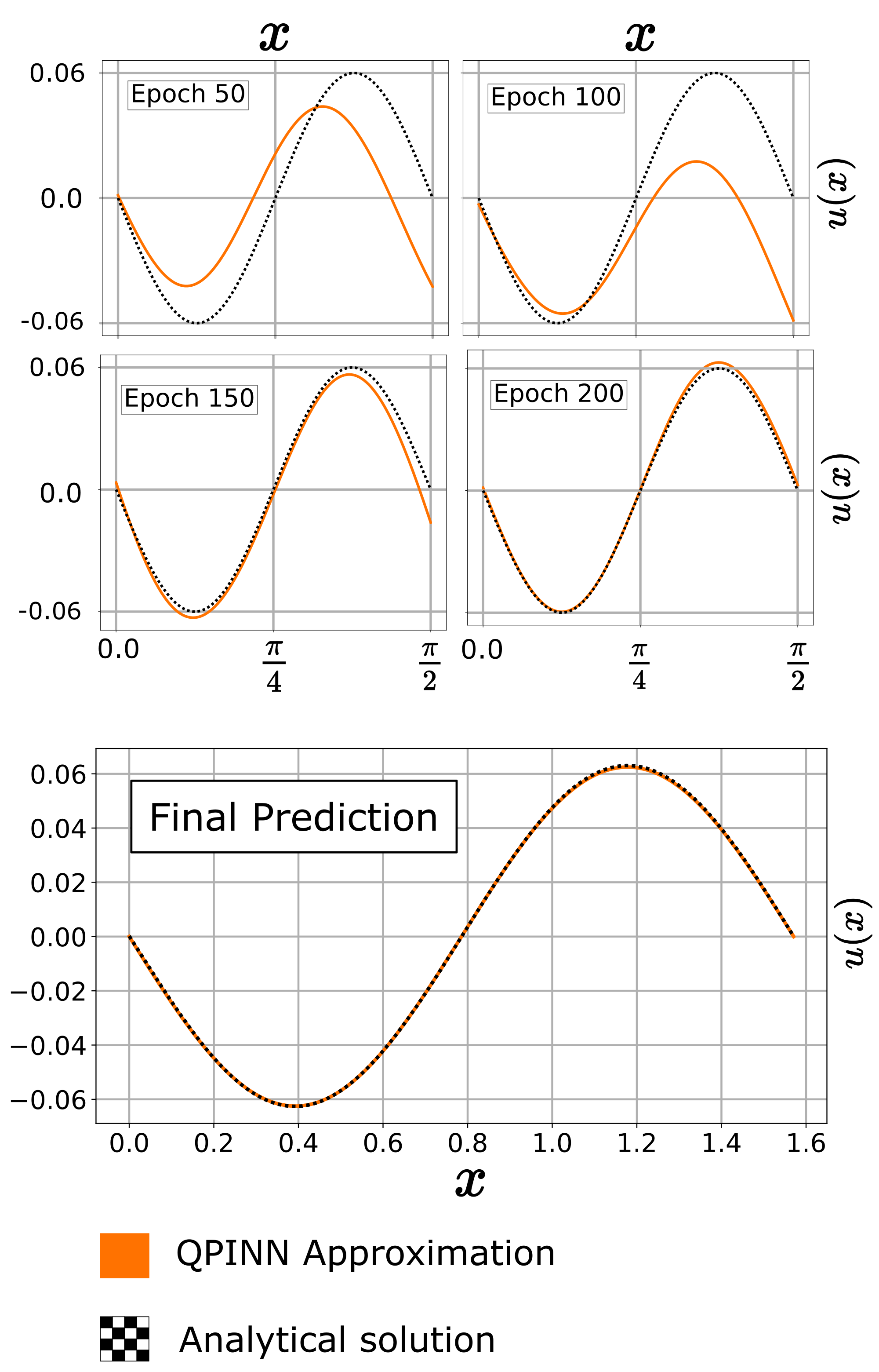
Figure 4: Training progress for the 1D Poisson equation, showing convergence to a solution.
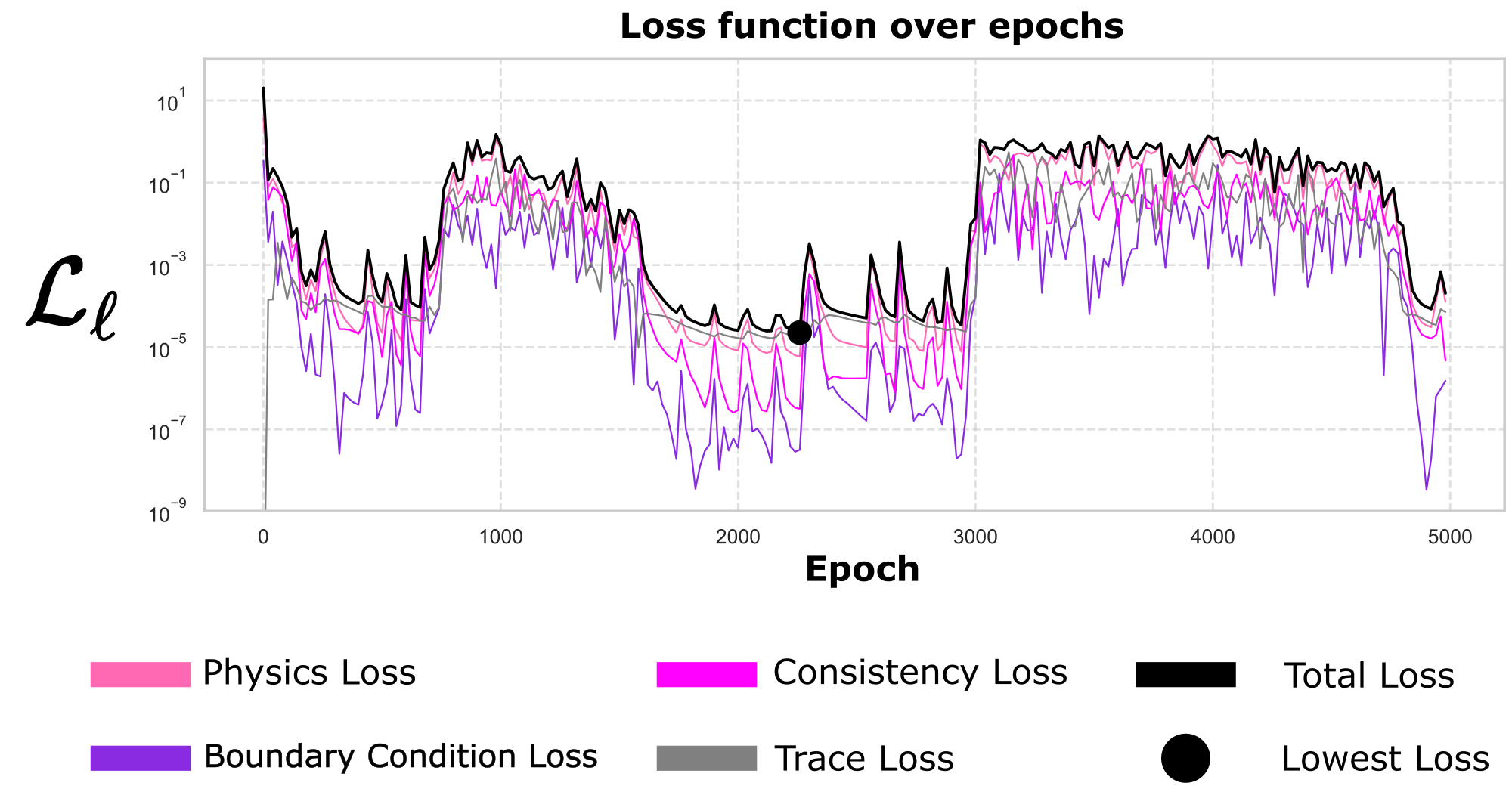
Figure 5: Different loss components during training showcase optimization stability.
Heat Equation: Addressing the heat equation involves the modeling of temporal evolution in a 1D medium. The QPINN accurately simulates this behavior, producing a thermal profile with precise temperature gradients and satisfactory convergence metrics.
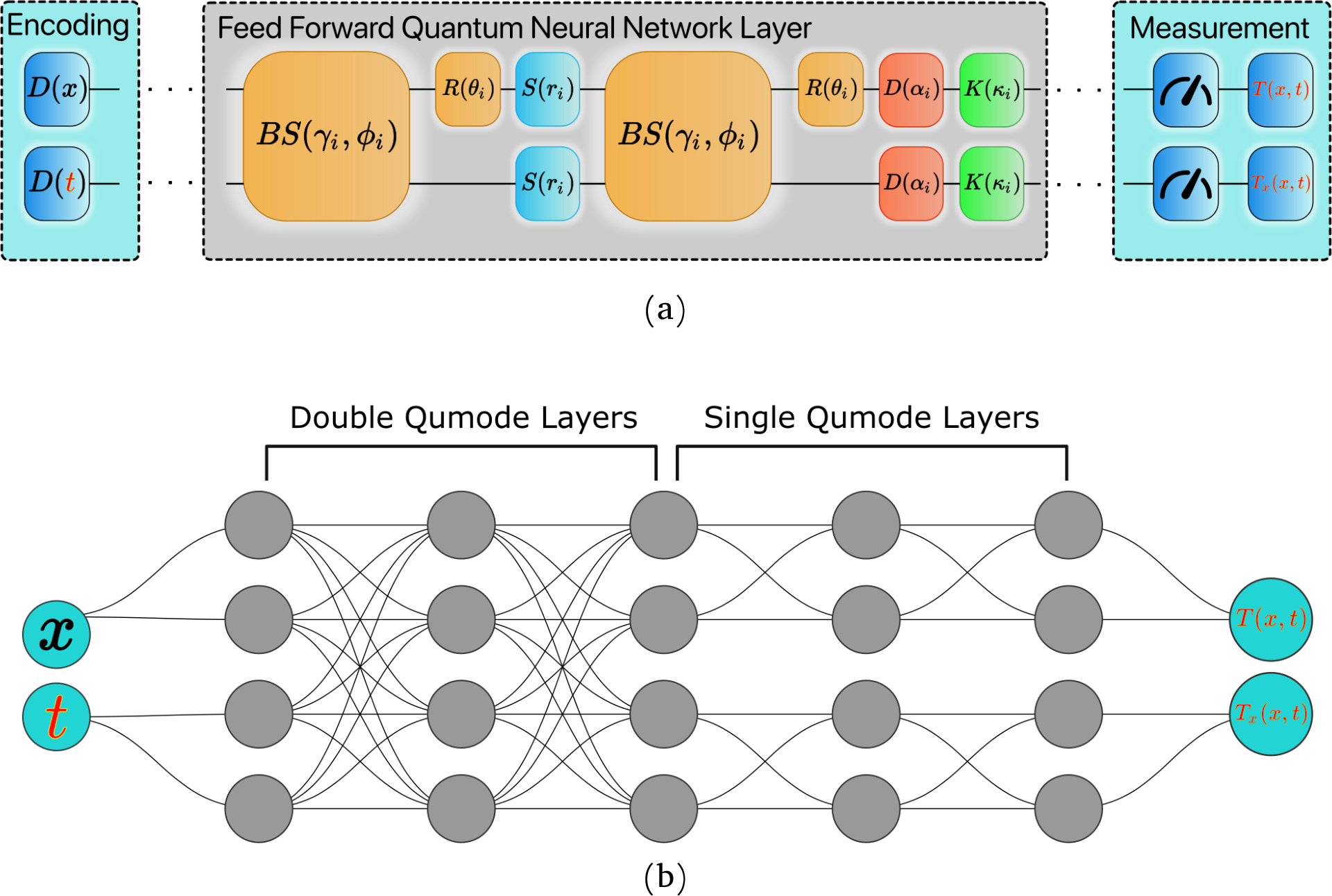
Figure 6: Network setup for solving the Heat equation.
Precision and Scalability: Despite operating on quantum simulators with inherent constraints, the QPINN framework shows promise in handling higher dimensional PDEs by aligning with quantum computational enhancements over time. This suggests potential scalability on quantum hardware, subject to future experimental advancements.
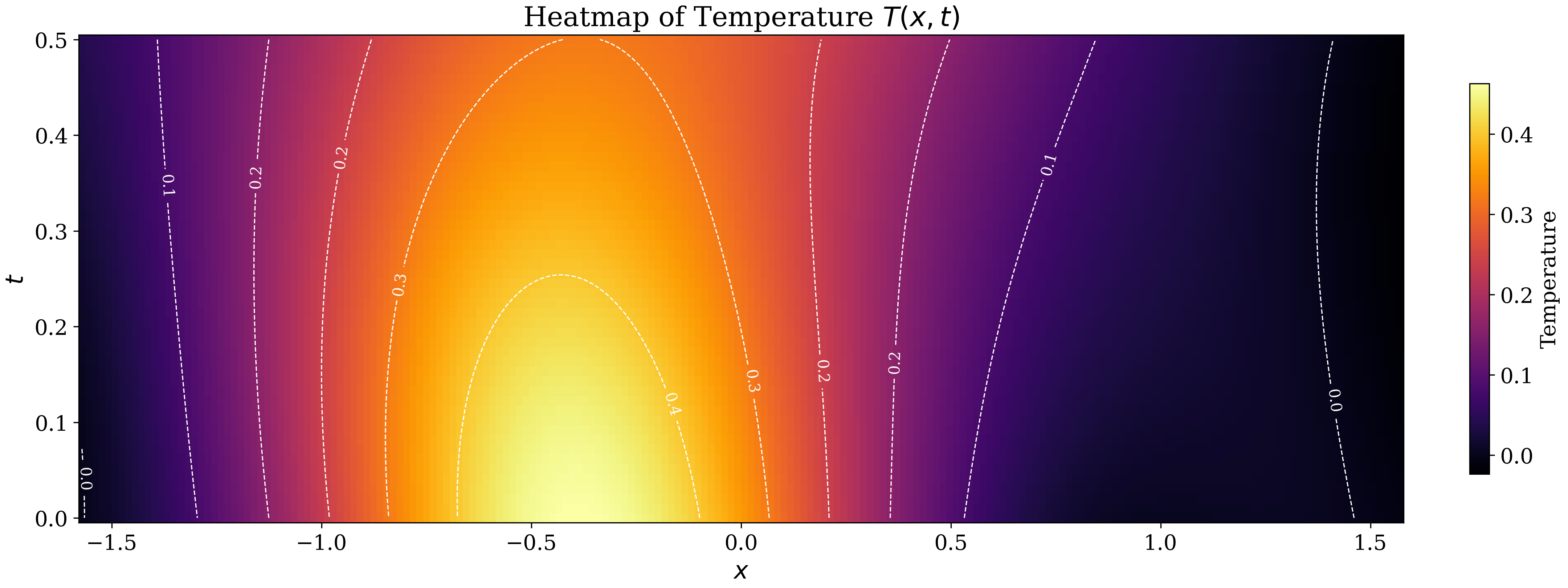
Figure 7: Heatmap illustrating temperature propagation over time.
Conclusion
The development of QPINNs marks an important step toward leveraging quantum advantages in solving complex PDEs. While current implementations are contingent on classical simulations, transitioning to real quantum hardware offers exciting prospects. Future research will focus on addressing inherent challenges such as gradient computation on quantum devices, optimization efficiency, and exploring broader applications within quantum machine learning contexts. The synergistic marriage of quantum mechanics and neural network architectures promises unlock potential in fields transcending computational constraints seen in classical counterparts.