- The paper presents a comprehensive exploration of personalization in AI, detailing the evolution from RAG frameworks to agent-based systems.
- By analyzing pre-retrieval, retrieval, and generation stages, it demonstrates techniques like query reformulation, indexing, and context-aware output generation.
- It outlines the transition to personalized LLM-based agents while addressing challenges in scalability, evaluation metrics, and privacy.
A Survey of Personalization: From RAG to Agent
Introduction
The paper "A Survey of Personalization: From RAG to Agent" (2504.10147) examines personalization in artificial intelligence, particularly focusing on the evolution from Retrieval-Augmented Generation (RAG) frameworks to advanced agent-based architectures, herein referred to as LLM-based Agents. These systems enhance user satisfaction by tailoring interactions to individual preferences at various stages of the pipeline, namely pre-retrieval, retrieval, and generation.
Personalization in RAG Frameworks
Pre-Retrieval Stage
Pre-retrieval involves enhancing user queries prior to retrieval actions, thereby refining outputs' relevance and quality. This stage integrates explicit user profiles, historical interactions, and persona-based simulations to reformulate queries. It utilizes techniques like query rewriting and expansion to adapt to user-specific contexts.
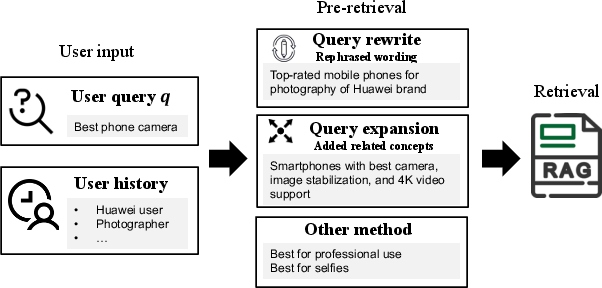
Figure 1: Overview of the personalized pre-retrieval stage.
Retrieval Stage
Personalized retrieval employs indexing techniques, both dense and sparse, to structure knowledge bases. It also leverages prompt-based retrieval strategies guided by user-specific instructions or interactions. This stage ensures the delivery of relevant, user-centered results, improving downstream outputs' personalization.
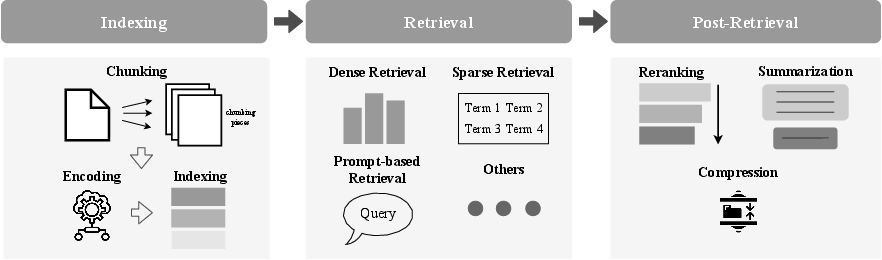
Figure 2: Overview of the personalized retrieval stage.
Generation Stage
Generation seamlessly integrates retrieved artifacts with personalized context, ensuring the alignment of outputs to user preferences. This stage employs two primary strategies: explicit personalization through context-aware prompts and implicit personalization via parameter tuning techniques like LoRA.
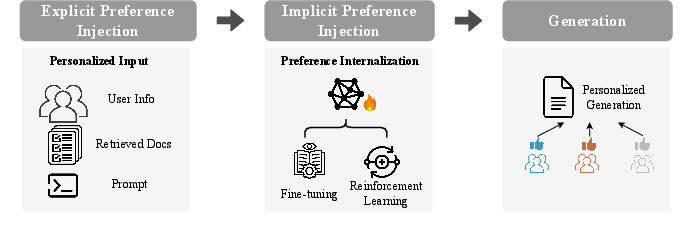
Figure 3: Overview of the personalized generation stage.
Transition to Personalized Agents
The convergence of personalized RAG processes with agent architectures forms "personalized RAG++," integrating deeper user-state tracking, adaptive tool usage, and context-aware generation. Personalized LLM-based agents dynamically incorporate user preferences into planning and execution phases, enabling contextually aligned, preference-sensitive outputs.
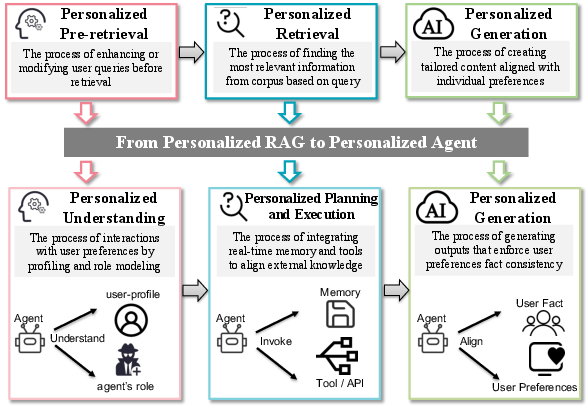
Figure 4: Overview of transition from personalized RAG to personalized agent.
Planning and Execution
Agents manage complex tasks leveraging advanced memory management techniques and real-time APIs, ensuring outcomes adhere to user-specific constraints. This transition emphasizes agents' capabilities to handle intricate interactions, dynamically aligning with user contexts.
Personalized Understanding and Interaction
Personalized understanding encompasses an agent's ability to decode user queries and preferences dynamically, enhancing role understanding. The integration of user-role joint frameworks further augments the agent’s adaptability across different contexts and interactions.
Challenges and Future Directions
The research identifies challenges in balancing system scalability with personalization complexity, optimizing evaluation metrics, and preserving privacy. Future work is directed towards lightweight frameworks, specialized evaluation metrics, and ethical system design to address these challenges effectively.
Conclusion
This survey synthesizes recent advancements in personalization within RAG frameworks and their convergence towards intelligent, personalized agents. By refining personalization from query inception through generation, it paves the way for nuanced, user-adaptive AI systems. Future directions include optimizing system scalability, advancing evaluation metrics, and ethical considerations, ensuring robust personalized interactions across diverse applications.