- The paper formalizes AI supply chains as directed graphs, revealing complex dependencies among AI components and actors.
- It employs case studies to assess how upstream choices affect explanation fidelity and fairness in downstream models.
- The study underscores the need for robust frameworks to manage transparency, accountability, and regulatory risks in AI ecosystems.
AI Supply Chains: An Emerging Ecosystem of AI Actors, Products, and Services
The rapid advancement of AI technology has led to the development of extensive and complex networks of interconnected AI actors, products, and services, collectively referred to as AI supply chains. This paper aims to formalize the concept of AI supply chains, highlight how they influence machine learning systems, and examine their broader implications in economic, social, and regulatory contexts.
Introduction
In contemporary AI development, it is rare for systems to be developed by a single organization from start to finish. Instead, development is distributed among multiple actors providing models, datasets, computing resources, and other components. Through illustrative examples, the paper introduces AI supply chains as directed graphs where nodes represent AI components, and directed edges symbolize dependencies among these components (Figure 1).
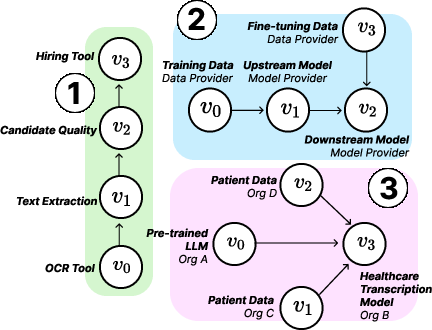
Figure 1: Three examples of AI supply chains. (1) A linear AI supply chain where an OCR tool (v0) contributes to a text extraction tool (v1) used when predicting candidate quality (v2), terminating in a hiring tool (v3). (2) A generic upstream model (v1) trained on some dataset (v0) that is fine-tuned (v2) using a new dataset (v3). (3) A healthcare transcription model (v3) that is composed of one pre-trained LLM (v0) and patient data from two hospitals (v1, v2).
This shift signifies a trend towards specialization and cost-effectiveness within the AI industry but also brings forth novel challenges related to responsibility, communication inefficiencies, unintended downstream implications, and potential centralization of market power.
Representing AI Supply Chains
AI supply chains are represented as directed graphs, capturing intricate interactions among diverse AI components, such as models and datasets, across the chain. This representation enables the identification of issues inherent in AI supply chains like non-modularity, exacerbated transparency concerns, distributed control challenges, and feedback loops caused by cycles in the chain.
AI Components and Non-Modularity
In AI supply chains, components do not always interact modularly, akin to blending ingredients in a soup. This non-modularity leads to complexities such as ambiguity in tracing the influence of individual components, positing obstacles in ensuring accountability, traceability, and reliable attribution within AI systems.
Transparency and Hidden Interactions
The composition of far-reaching AI supply chains tends to obfuscate interactions and dependencies between upstream and downstream components, thereby complicating transparency and accountability due to hidden interactions, inherent in complex graph structures.
Dispersed Control and Resilience
Control is widely dispersed across multiple organizations within AI supply chains, compromising resilience. Changes in upstream model behavior could unexpectedly affect downstream tools, which may not have straightforward mechanisms for adaptations due to inter-organizational communication barriers.
Feedback Loops from Cycles
Cycles within AI supply chains contribute to feedback loops, impacting performance, fairness, and even leading to homogenization, as described in similar results in reinforcement learning and content recommendation systems. These cycles exacerbate the challenges of dispersed control.
Implications for Machine Learning Outcomes
Two detailed case studies reveal AI supply chain impacts on machine learning outcomes.
The first case study highlights how changes in the AI supply chain can lead to significant information loss along the chain, particularly in explanation fidelity (Figure 2).
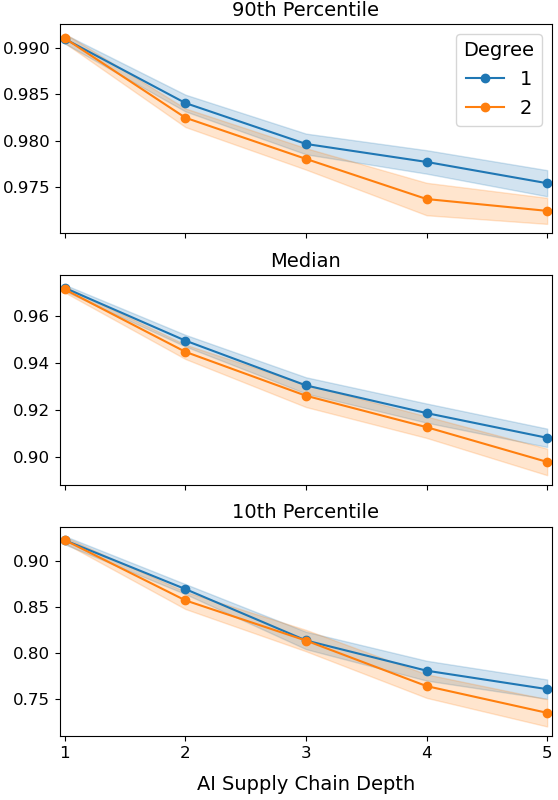


Figure 2: Cosine similarity quantifying explanation fidelity degradation along AI supply chains.
Case Study 2: Upstream Design Choices and Downstream Fairness
The second study evaluates how fairness constraints implemented upstream can propagate and impose unintended restrictions or trade-offs on downstream models' performance and fairness (Figure 3).
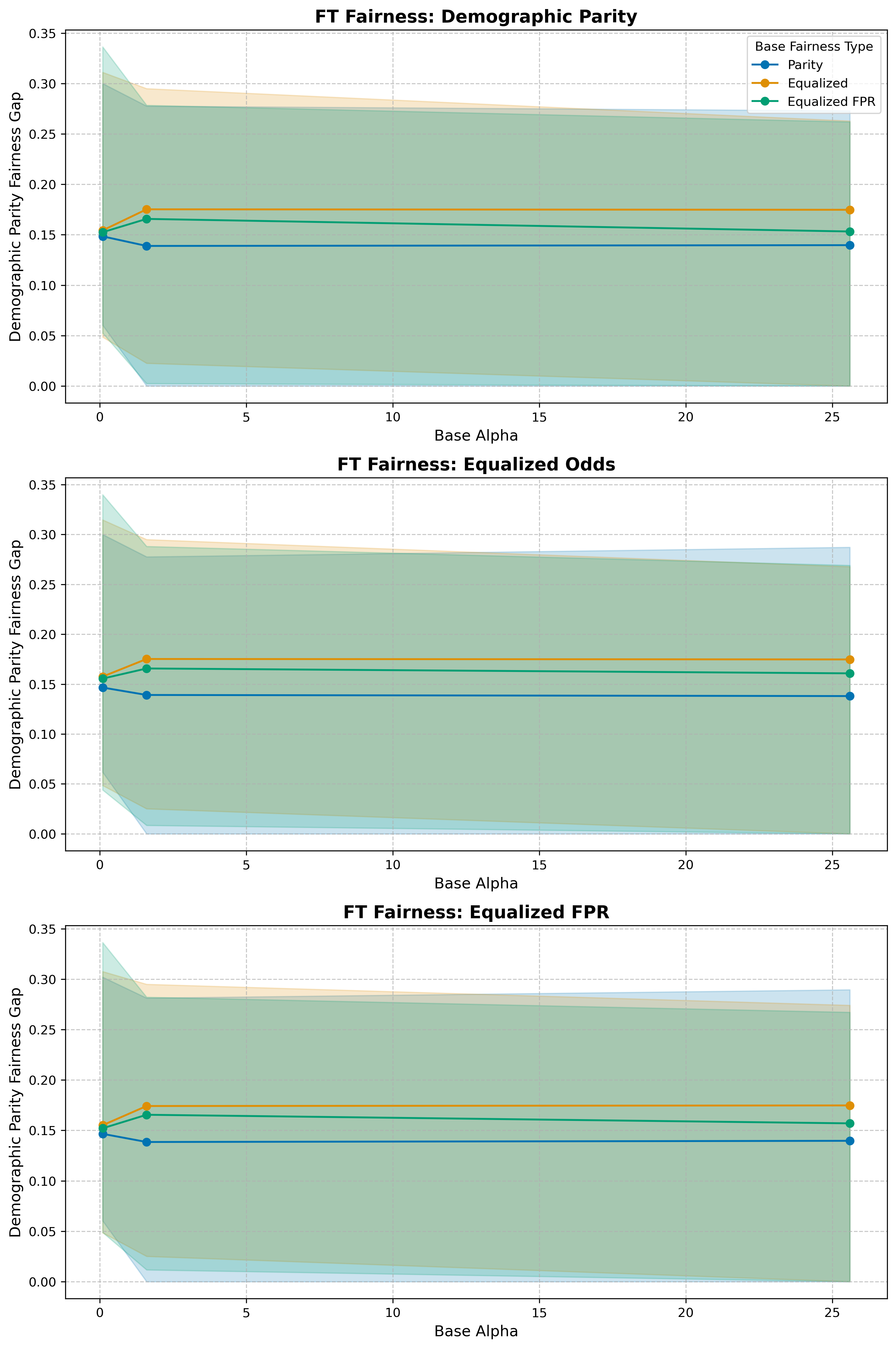
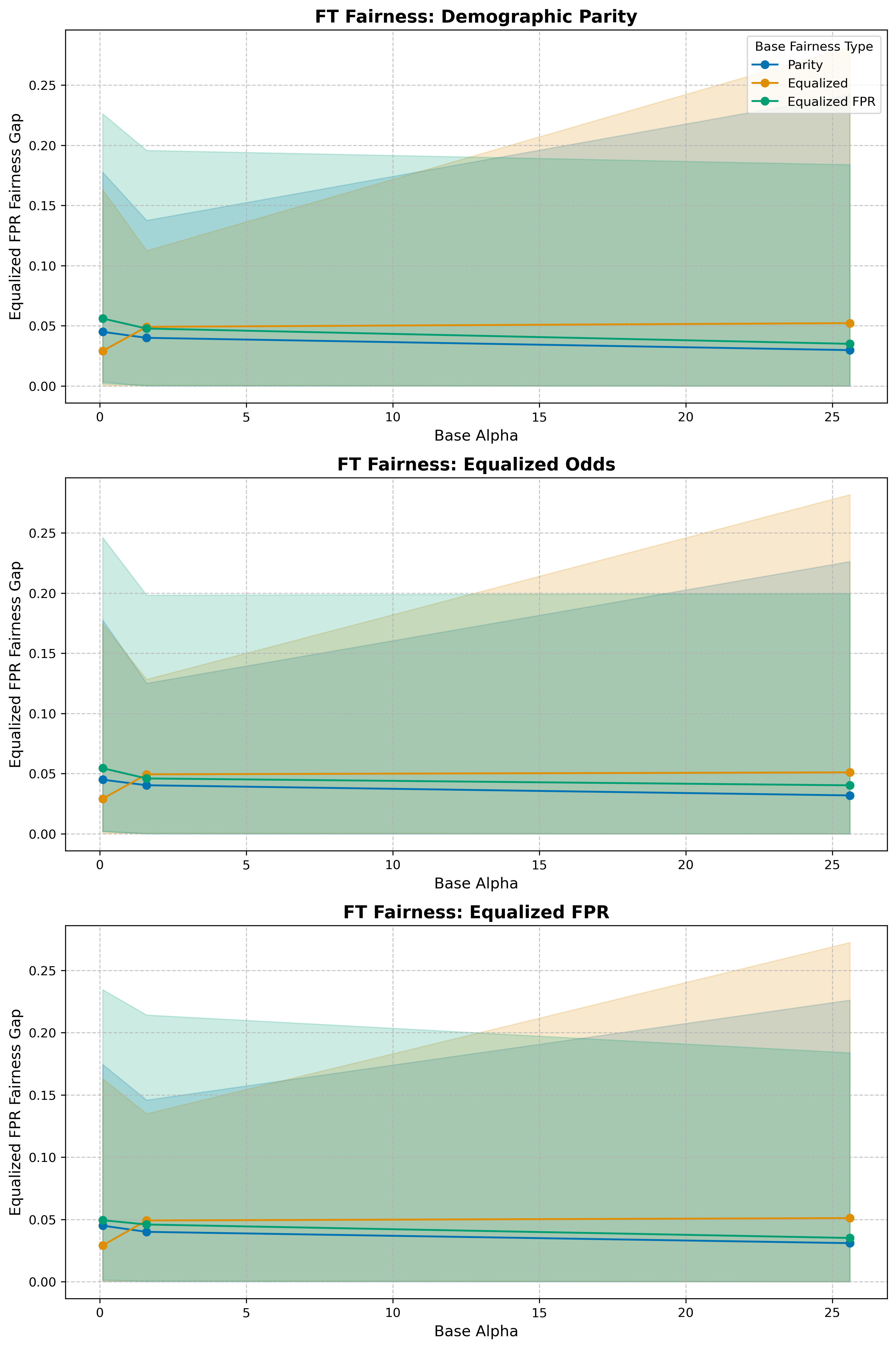
Figure 3: Demographic parity fairness gap demonstrating the impact of upstream fairness on downstream outcomes.
Conclusion
The emergence of AI supply chains not only represents a positive indicator of industry growth towards specialization and efficiency but also surfaces numerous technical and regulatory challenges. Further research is warranted to develop frameworks for evaluating AI supply chains, focusing on risk management and the development of more effective regulatory mechanisms. The work motivates exploring methods to ensure robustness, explainability, and accountability in AI systems developed across diverse and complex supply chains, a pressing need as the impact of AI supply chains on society continues to grow.

