- The paper presents TaxAgent, demonstrating the integration of LLMs with ABM to create adaptive tax policies that improve equity and productivity.
- Methodology includes simulating diverse household behavior via H-Agents and dynamically adjusting tax rates based on real-time economic conditions.
- Performance analysis shows TaxAgent outperforming traditional models like the Saez and US Federal Income Tax systems by achieving higher equality and economic stability.
TaxAgent: How LLM Designs Fiscal Policy (2506.02838)
This essay summarizes the research paper titled "TaxAgent: How LLM Designs Fiscal Policy" (2506.02838), which introduces an innovative framework combining LLMs with agent-based modeling (ABM) for the development and evaluation of adaptive tax policies. The study challenges the conventional static nature of traditional tax policies and offers a more flexible, data-driven approach aimed at achieving an optimal balance between equity and productivity.
Introduction
Economic inequality presents a rising concern globally, with adverse effects infiltrating areas such as education, healthcare, and societal stability. Current conventional systems, like the United States federal income tax, while alleviating inequality, lack the responsiveness necessary to adapt to dynamic economic shifts. In contrast, models like the Saez Optimal Taxation framework, though adaptive, overlook the heterogeneity and irrational behavior prevalent among taxpayers.
In addressing these challenges, the paper introduces TaxAgent, a system that integrates LLMs with agent-based modeling (ABM) within a macroeconomic simulation. Household agents (H-Agents) simulate various real-world decision-makers, while TaxAgent uses LLMs to dynamically optimize tax policies, striving for an optimal balance between equity and productivity. When compared with traditional models like the rule-based Saez Optimal Taxation and the entrenched U.S. Federal Income Tax, TaxAgent outperforms by providing a scalable, realistic, and adaptable framework for fiscal policy formulation.

Figure 1: The illustration of the Taxation Evaluation System.
Taxation Evaluation Framework
The framework consists of three core components: the TaxAgent representing the government, the H-Agents Group representing diverse households, and the macroeconomic simulation environment that models the interaction between households and government due to tax policies.
H-Agents as Households
H-Agents simulate the behavior of diverse households. They make decisions regarding labor and consumption based on current economic conditions and learn from past experiences. This modeling mirrors human-like decision-making, important for capturing the heterogeneity in household behavior. The decision-making and self-reflection are both anchored by an LLM that guides households in optimizing their economic activities with respect to imposed tax policies.
Long-Term Societal Outcomes
The performance of TaxAgent, when compared against Saez Optimal Taxation and the US Federal Income Tax system, reveals its superior ability to achieve a higher balance between productivity and equality in the long-term (Figure 2).
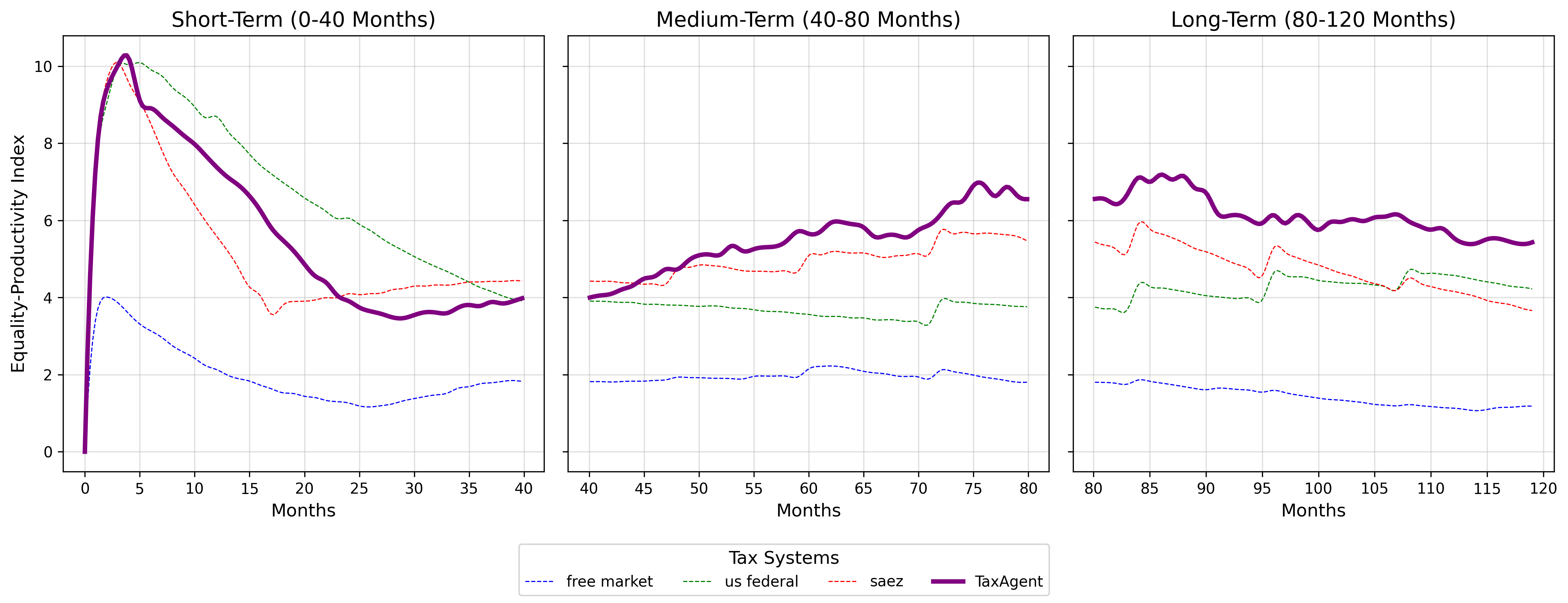
Figure 2: The social outcomes of all tax systems over 120 months. The TaxAgent (purple) performs significantly better in the long-term.
Mechanisms Underlying Success
The efficacy of TaxAgent in balancing equality and productivity arises from its design, which allows for adaptive tax rate adjustments based on real-time economic metrics and household behavior.
- Equality Performance and Flexibility: TaxAgent emphasizes equality, evident in its consistently higher equality scores over time compared to other systems (Figure 3). Its flexible approach enables it to make responsive adjustments, prioritizing equality while accommodating necessary productivity fluctuations, unlike the more rigid structures of traditional systems.
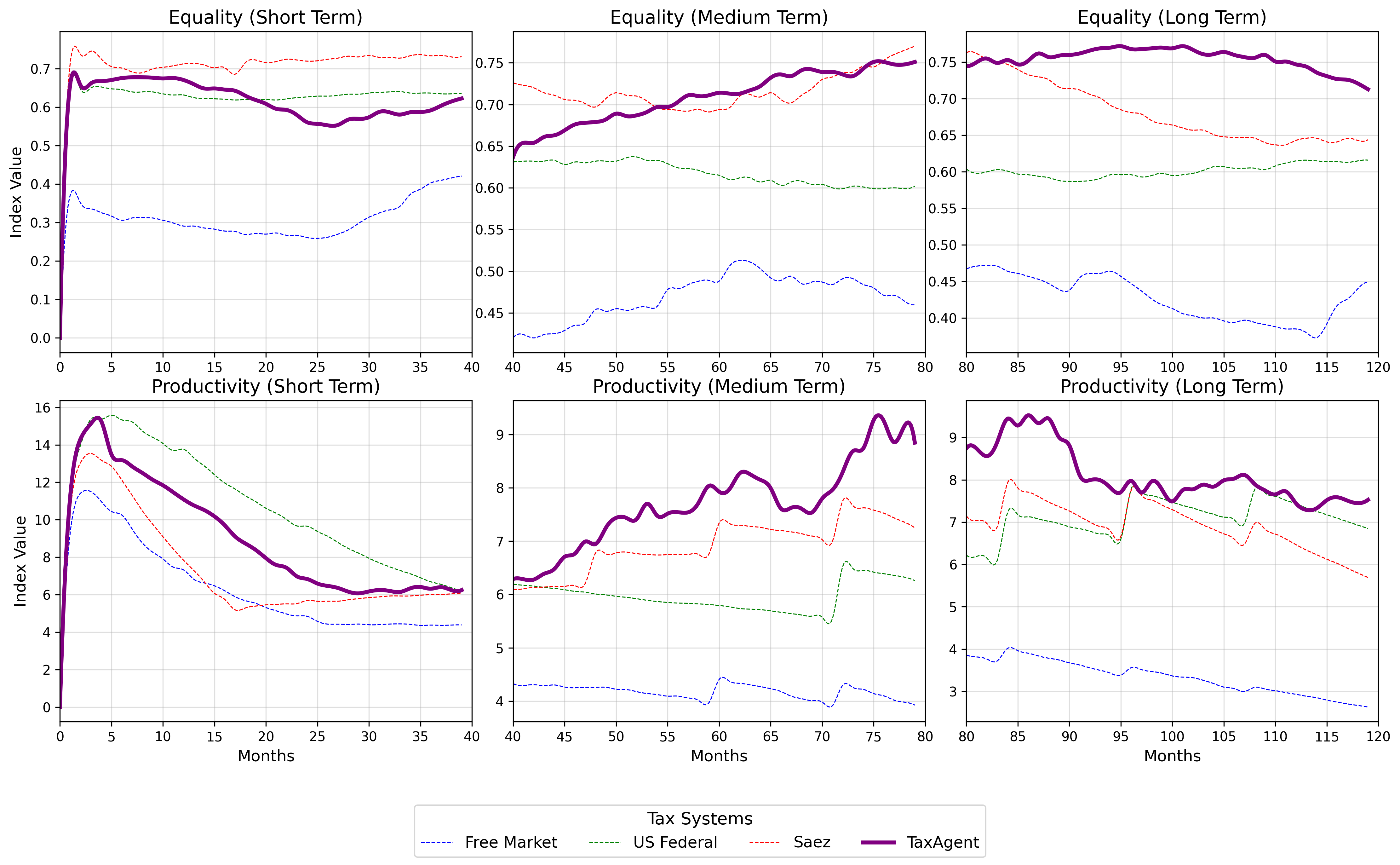
Figure 3: The equality(above) and productivity(below) performance of the TaxAgent. The TaxAgent demonstrates its prioritization on equality and its flexibility in making equality-productivity trade-offs.
- Regressive Structure and Optimization Limits: The Saez Optimal Taxation model shows competency in the medium term but demonstrates limited long-term potential due to its regressive tax structure. This design inherently introduces practical challenges despite its theoretical basis (Figure 4).
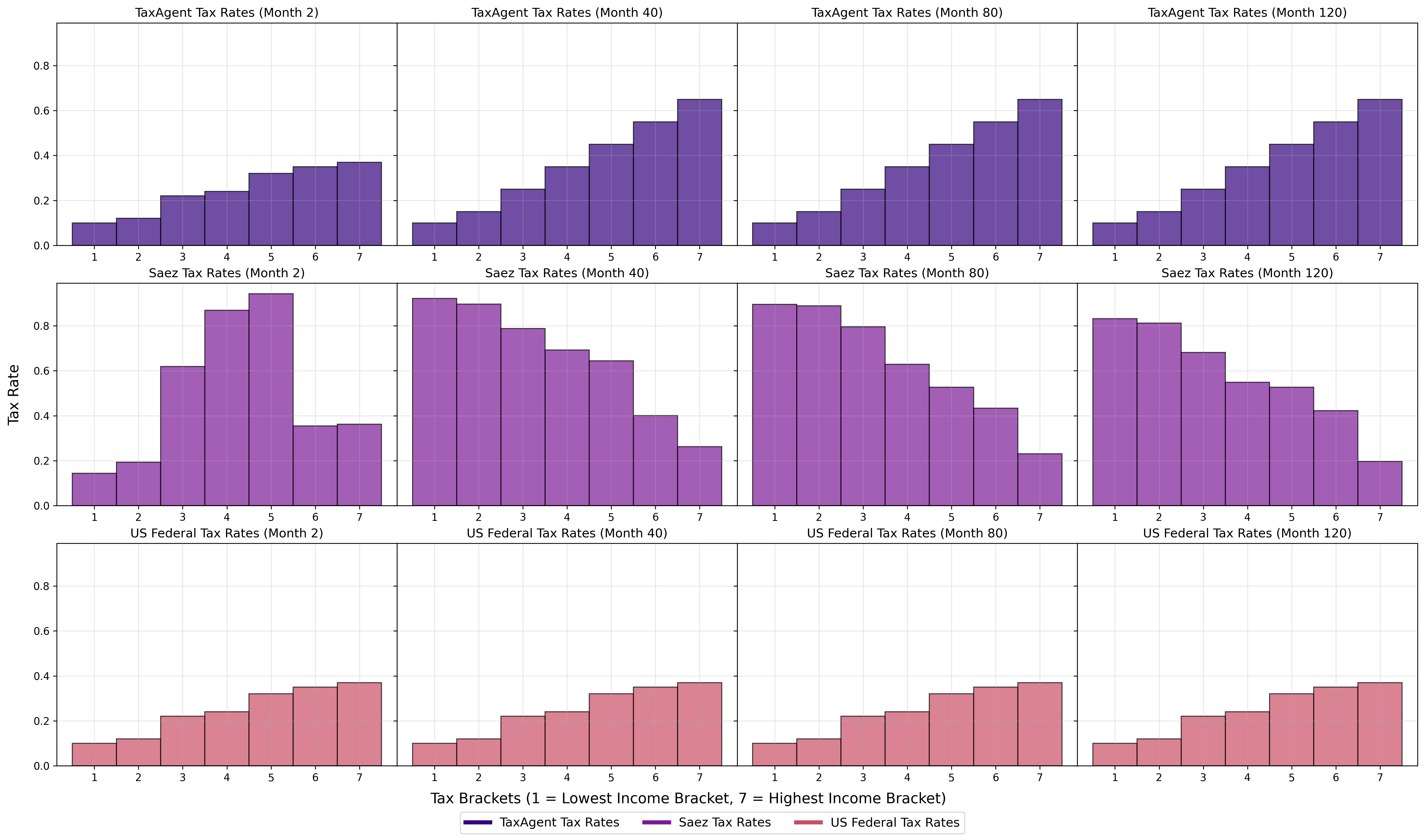
Figure 4: Sample tax rates for seven income brackets of the TaxAgent(top), the Saez taxation(middle), US federal income tax(bottom) over 120 months. Regressiveness of Saez taxation and rigidness of US federal income tax limit their performances.
Macroeconomic Stirring and Systemic Effects
The TaxAgent showcases remarkable macroeconomic stability, maintaining a balanced inflation rate at approximately 8%—an acceptable figure beyond the short-term instability observed in other systems.
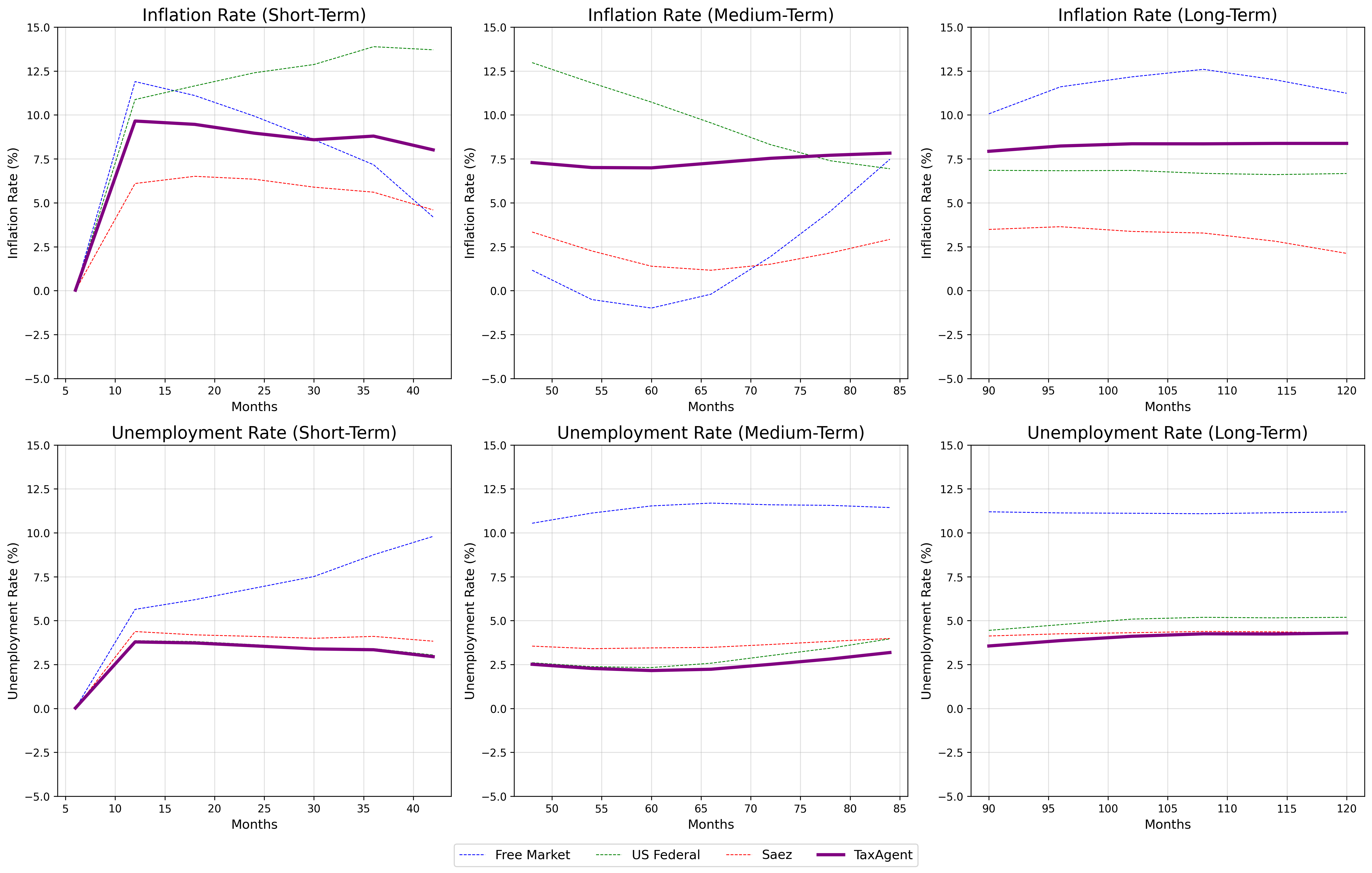
Figure 5: The side-effects of the TaxAgent on the macroeconomic environment.
- Comparison Against Baselines: The TaxAgent's results are superior to the US federal income tax system, achieving greater equality without impairing productivity. While the Saez model achieves low inflation rates, it falters in the equality dimension, reinforcing the priority of dynamic adjustment in handling diverse and time-varying real-world conditions.
The resilience of the TaxAgent is further demonstrated in an ablation study that shows the model's robustness across different LLM implementations (Figure 6).
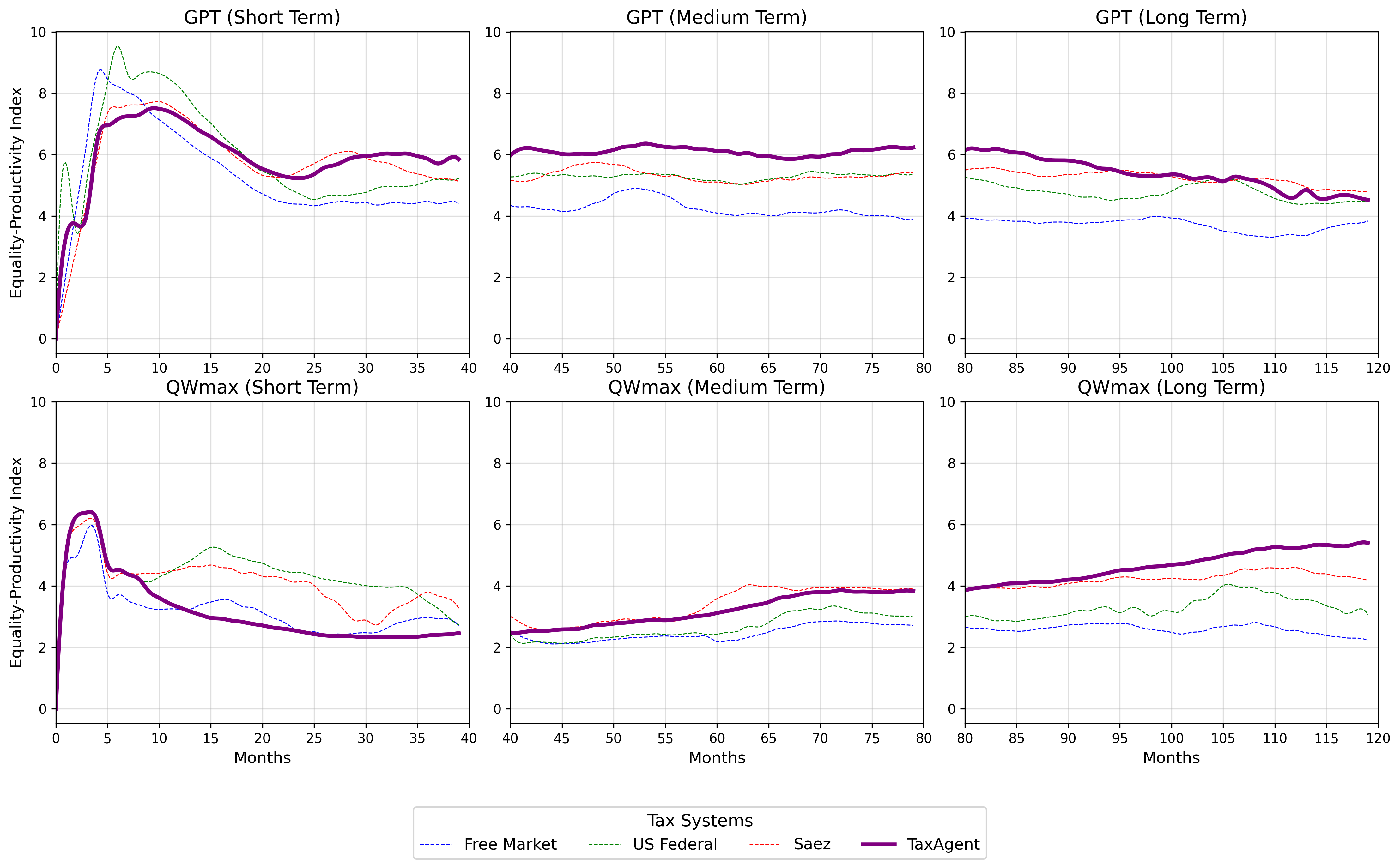
Figure 6: Ablation study of the robustness of the TaxAgent. The TaxAgent shows low sensitivity to changes in its base LLM.
Conclusion
"TaxAgent: How LLM Designs Fiscal Policy" (2506.02838) outlines an innovative method for fiscal policy adaptation using LLMs integrated with ABMs. TaxAgent surpasses existing tax systems in achieving a superior equilibrium between equity and efficiency, without sacrificing stability. This work paves the way for future developments in AI-driven fiscal policy, indicating a promising direction for leveraging computational intelligence to address global economic challenges. Looking forward, the integration of LLMs in economic policy design could revolutionize how governments approach taxation, fostering enhanced adaptability and optimized societal outcomes.