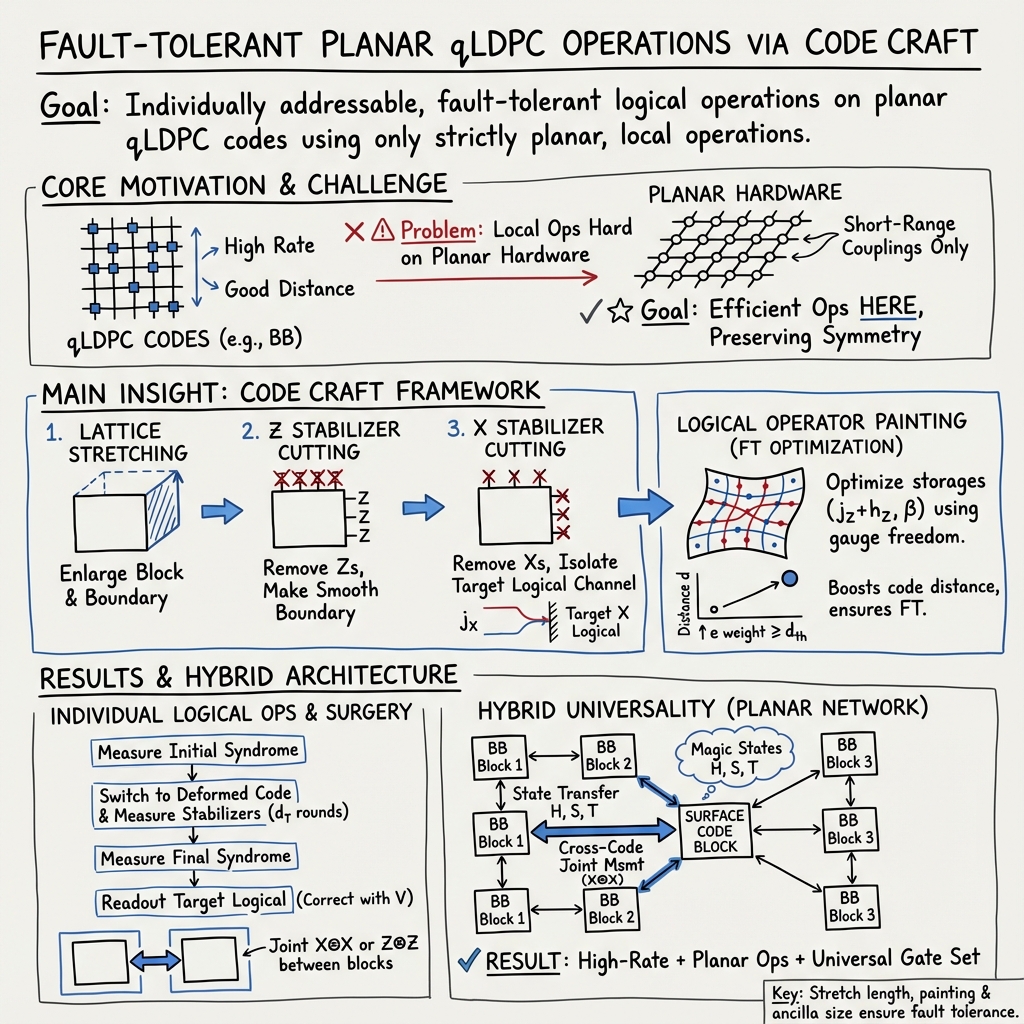
- The paper introduces a novel code craft method that employs planar BB codes to significantly reduce qubit overhead in fault-tolerant quantum computation.
- It demonstrates how stretching, cutting, and painting operations on a 2D lattice preserve translational symmetry and improve logical operator measurements.
- The hybrid integration of planar BB and surface codes paves the way for universal quantum computation with scalable, resource-efficient quantum architectures.
Planar Fault-Tolerant Quantum Computation with Low Overhead
Introduction to Low-Overhead Fault-Tolerant Quantum Computation
Fault-tolerant quantum computation remains a pivotal challenge due to the significant qubit overhead required for error correction. This paper presents advancements in the domain by leveraging quantum low-density parity-check (qLDPC) codes, specifically bivariate bicycle (BB) codes, to achieve fault tolerance with reduced overhead. The framework introduced, termed "code craft," facilitates the design of logical operations on planar BB codes within a translationally invariant two-dimensional lattice of qubits. This method combines the encoding efficiency of qLDPC codes with geometric locality, enabling practical paths to universal quantum computation while maintaining a planar hardware configuration.
Planar BB Codes and Qubit Networks
BB codes are detailed as a variant of qLDPC codes that are adapted to planar networks. The constructive approach involves utilizing template stabilizers to form a qubit arrangement that achieves translational symmetry in a lattice, as illustrated in Figure 1. These planar configurations allow for fault-tolerant structures which are essential in scalable quantum systems. The paper emphasizes the importance of retaining planarity and translational symmetry to simplify hardware design and reduce logical errors during computation.
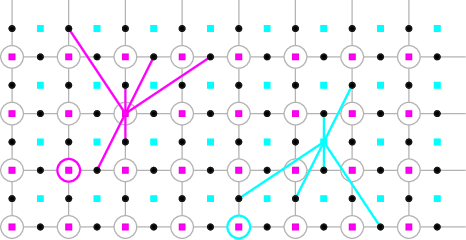
Figure 1: A planar qubit network with translational symmetry, tailored to a family of BB codes.
Planar Operations and Code Craft
The paper introduces a systematic method for code deformation called code craft, which involves stretching, cutting, and painting operations to create deformed codes capable of logical measurements. This method ensures that logical operations remain planar, thus minimizing overhead and maximizing fault tolerance. Figures 2 and 3 elucidate these configurations, demonstrating how stabilizers are employed and how logical operators are measured using these configurations.
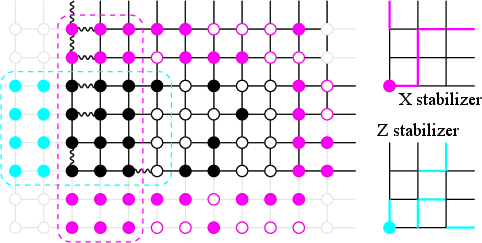
Figure 2: Code craft of the [[54,6,4]] planar BB code.
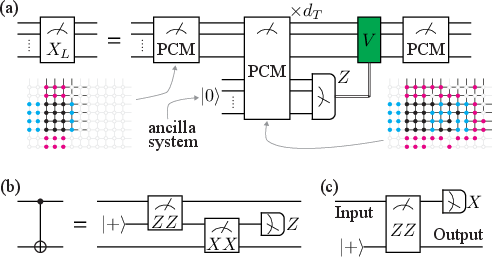
Figure 3: Circuits of logical operations involving logical operator measurements and gates.
Construction of Logical Networks
The protocol extends to constructing logical networks where logical qubits are arranged in a two-dimensional array of code blocks. Inter-block logical operations are facilitated through the code craft approach, ensuring efficient measurement and logical gate operations with minimized qubit requirements. The tabulation of code distances post-logical operator optimization underscores the effectiveness of the approach in maintaining logical integrity even with reduced qubit use.
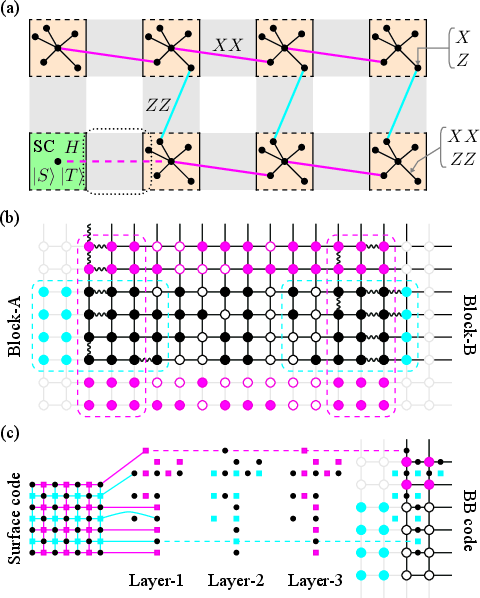
Figure 4: (a) Array of code blocks showing planar-BB-code blocks (orange squares) and surface-code blocks (green squares), and their ancilla regions.
Universal Quantum Computation
The paper delineates a path to universal quantum computation by integrating BB code blocks with a surface-code block. This hybrid approach allows for efficient implementation of additional gates such as Hadamard, S, and T gates, which are essential for universal quantum operations. The coupling strategy optimizes the integration of multiple logical qubits, as shown in Figure 4(c), which details the deformed codes used for joint measurements between different code types.
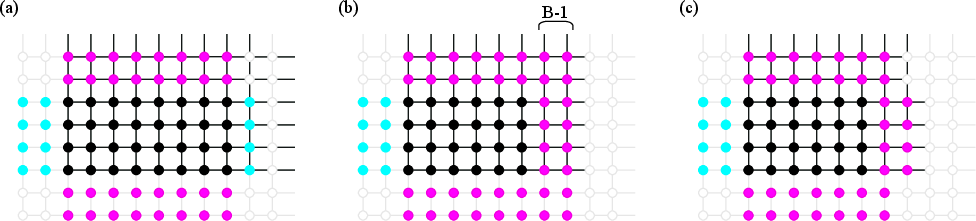
Figure 5: (a) An intermediate code generated by stretching the [[54,6,4]] planar BB code; (b) the code after removing Z stabilizers.
Conclusion
This study proposes a viable approach to reducing the overhead required in fault-tolerant quantum computations via planar BB codes, emphasizing planarity and local operability. By optimizing logical operator measurements and refining code distances, the code craft framework presents a significant advance in practical quantum computing applications. The hybrid approach with surface code integration presents a promising avenue for universal quantum computation on planar architectures, paving the way for scalable quantum technologies with reduced physical resource requirements. Future work aims to explore quasi-planar operations directly on BB codes to broaden the applicability of these methods further. This study represents a potential shift toward more resource-efficient quantum computation on constrained hardware platforms.