- The paper introduces a novel static black hole solution incorporating a Kalb-Ramond field that induces spontaneous Lorentz symmetry breaking alongside perfect fluid dark matter.
- It derives modified metrics and singularity analyses, quantifying deviations from classical Schwarzschild solutions through detailed gravitational lensing studies.
- Observational implications are explored via parameter estimation using black hole shadow data, with results consistent with EHT and other astrophysical measurements.
Black Hole Surrounded by Perfect Fluid Dark Matter with a Background Kalb-Ramond Field
This paper develops a static spherically symmetric black hole (BH) solution, involving a Kalb-Ramond (KR) field with spontaneous Lorentz symmetry breaking surrounded by perfect fluid dark matter (PFDM), and explores the implications in strong gravitational lensing and parameter estimation from astrophysical observations.
Lorentz Symmetry Breaking and Black Hole Solution
Black holes traditionally exhibit Lorentz symmetry, a cornerstone of General Relativity (GR). However, violations are predicted within theories like non-commutative field theories and string theories. This paper considers symmetry breaking through a frozen KR field whose vacuum expectation value (VEV) creates this effect spontaneously.
The BH solution is obtained from field equations given a background KR field surrounded by PFDM. The resulting metric reflects combined effects of Lorentz symmetry breaking (LSB) and PFDM, with alterations evident in scalar invariants like Ricci Scalar and Kretschmann Scalar.
Singularities at r=0 and event horizons exhibit distinct scalar invariant behavior. The KR and PFDM components introduce novel singular behaviors relative to standard Schwarzschild solutions.
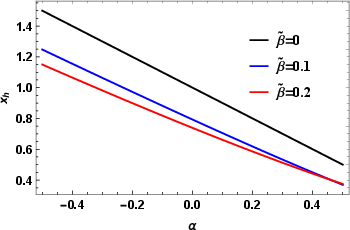
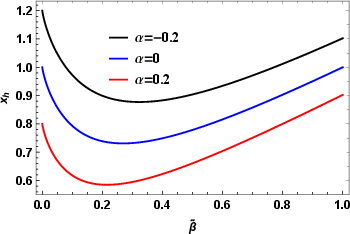
Figure 1: Variation of event horizon with LSB and PFDM parameters.
Strong Gravitational Lensing by KRPFDM BHs
Gravitational lensing offers insights into BH properties; this paper extends strong lensing equations for KRPFDM black holes to study the impact of LSB and PFDM.
Solve for the trajectory of photons deflected by BH mass—yielding critical impact parameter (bm) that dictates whether photons will escape or be captured.
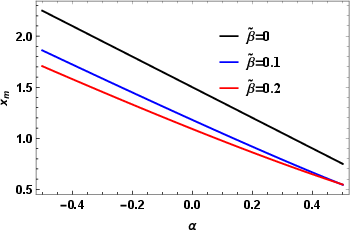
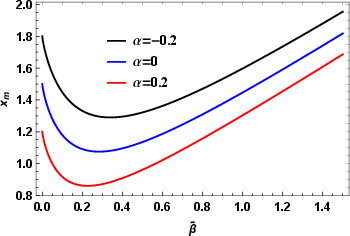
Figure 2: Variation of photon radius with LSB and PFDM parameters.
Coefficients a and b, affecting deflection angle calculations, vary significantly based on KR field and PFDM level—highlighting deviations from classical Schwarzschild values.
Observables in Strong Gravitational Lensing
The paper measures angular positions and separations in lensing phenomena, noting deviations tied to KR and PFDM fields:
- Angular Position θ∞ and Separation s:
These observables decrease with increasing LSB; PFDM shows nonlinear impacts, providing potential discriminatory testing against standard GR predictions.
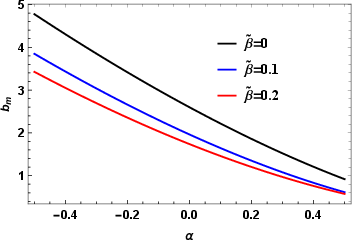
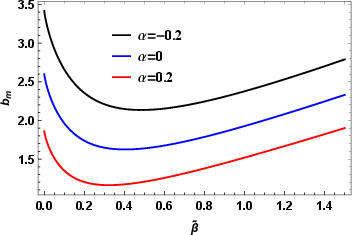
Figure 3: Variation of observables angular separation s and angular position θ∞ for supermassive BHs.
The diminishing flux ratio indicates detectable deviations by comparing observed BH shadows to theoretical predictions.
Parameter Estimation Using Shadow Observable
Experimental observations regarding SMBH shadows by EHT, Keck, and VLTI are critical for testing model feasibility. This approach performs parameter estimation based on deviations from Schwarzschild metrics.
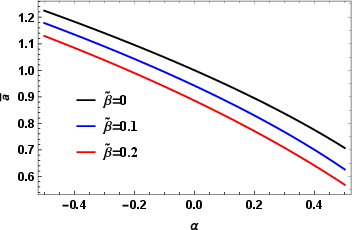
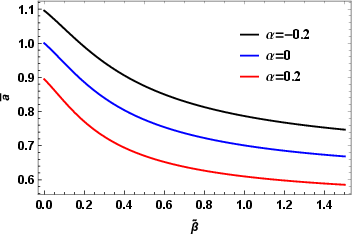
Figure 4: Variation of deviation from Schwarzschild δ for varying parameters showcasing concordance with EHT results.
Using observational data, constraints on the KR field and PFDM are derived, ensuring model compatibility with current astrophysical measurements, particularly for M87∗ and SgrA∗.
Conclusions
This work demonstrates the significant influence of KR fields and PFDM on BH metrics, singularities, and observable lensing properties. Through systematic analysis, the impact on key gravitational phenomena is quantified. Future telescope observations, like those anticipated from the Next Generation Event Horizon Telescope (ngEHT), might refine these model parameters further.