- The paper introduces Constella, an LLM-based multi-agent system that enhances interconnected character generation.
- It employs features like FRIENDS DISCOVERY, JOURNALS, and COMMENTS to stimulate creative character relationships.
- User studies indicate that Constella effectively deepens narrative complexity and supports iterative storytelling.
Constella: Supporting Storywriters' Interconnected Character Creation through LLM-based Multi-Agents
Constella is designed to enhance the process of creating interconnected character casts through the utilization of LLMs within a multi-agent framework. This essay will explore the tool's architecture, implementation, and practical applications as outlined in the paper.
Introduction to Constella
Constella addresses challenges commonly faced by writers, such as the difficulty in envisioning characters that complement or contrast with established personas, fleshing out character relationships, and balancing uniqueness while maintaining cohesiveness within a story. By leveraging the capabilities of LLMs, Constella offers three core features: FRIENDS DISCOVERY, JOURNALS, and COMMENTS, each tailored to support specific aspects of character creation.
System Features
FRIENDS DISCOVERY
Purpose: To aid writers in conceptualizing characters related to existing ones, thus expanding the ensemble in logical and explorative directions.
Implementation: The feature allows users to input a relational phrase that describes the type of connection they desire (e.g., "long-lost friend"). The LLM generates three character profiles, each tied directly to the user-defined character, effectively broadening the narrative possibilities.

Figure 1: Procedure of the formative study.
JOURNALS
Purpose: To facilitate the comparison of characters’ introspective thoughts on a shared theme, spotlighting differences and similarities in their internal landscapes.
Implementation: Users define a theme or scenario, and characters generate personal diary entries, accommodating multiple perspectives on the same issue. This method aids writers in enriching character depth and recognition of diverse viewpoints.
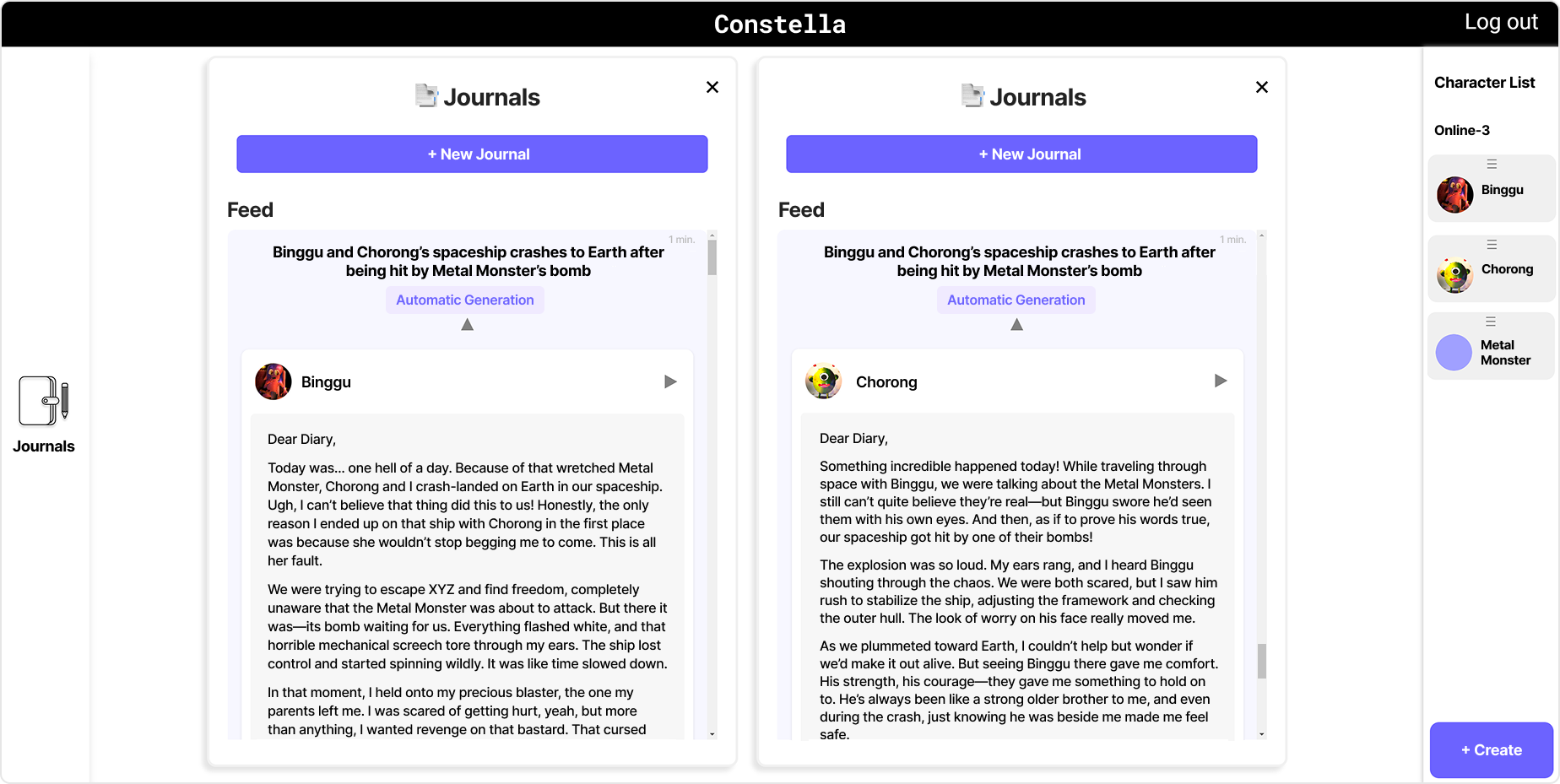
Figure 2: Automatically generated journal entries by two characters based on the same theme.
Purpose: To elaborate on character relationships via interactive dialogue, revealing hidden dynamics through reactions and exchanges.
Implementation: Characters can respond to each other’s journal entries, allowing connections and tensions to manifest organically. This feature highlights the interactive storytelling aspect and the evolution of character relationships.

Figure 3: COMMENTS view. (A) Create a new comment thread. (B) A generated comment thread. (C) Create a reply to a comment.
Constella is structured around the social media metaphor, drawing parallels between digital social interaction and narrative development. This provides intuitive user experiences and conceptual mapping of features to real-world social dynamics. The layout simulates the interactive environment of social media platforms, encouraging writers to easily navigate and apply complex relational constructs.
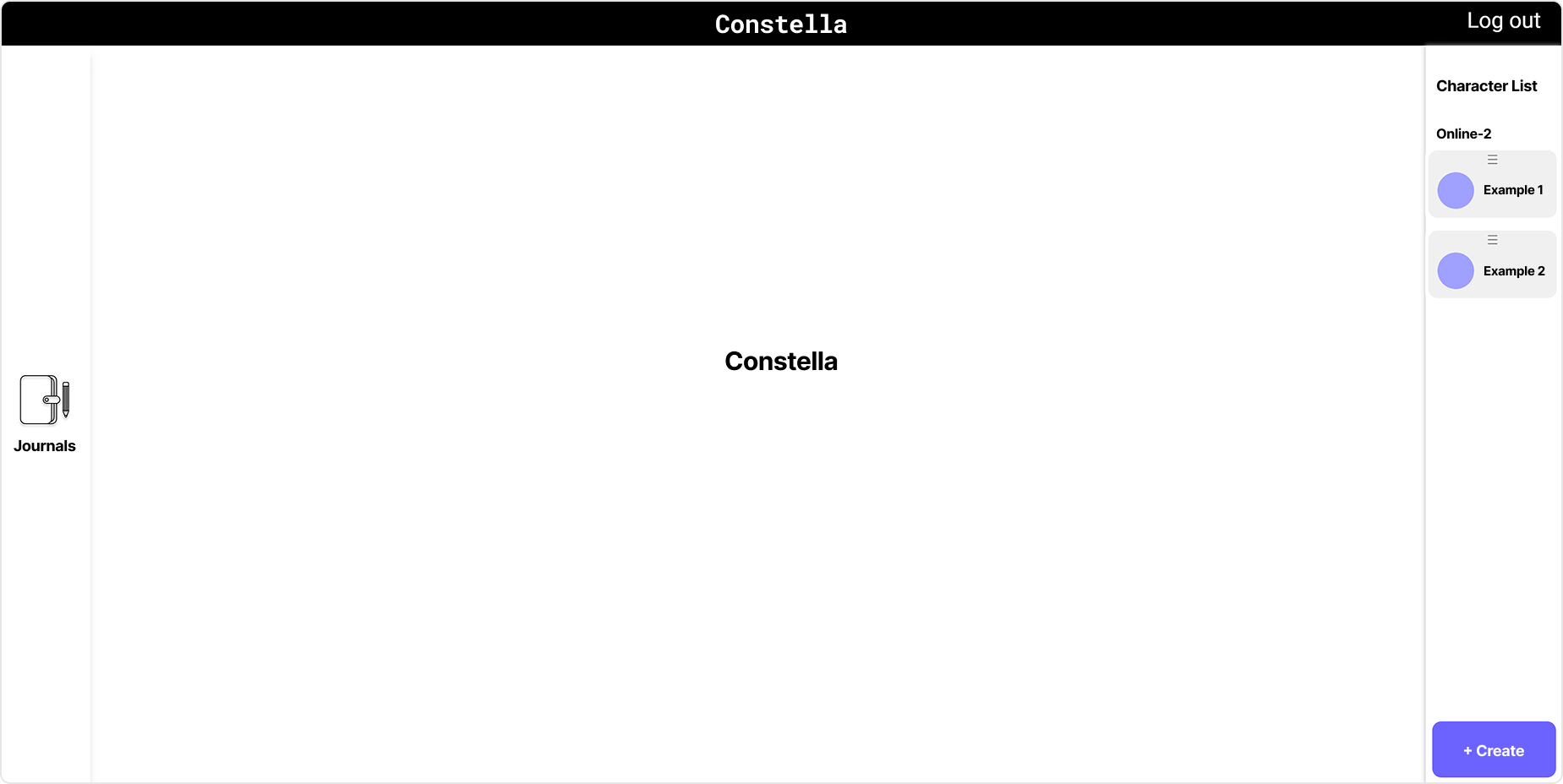
Figure 4: Constella's default layout. The Left Sidebar opens the Journals Panel. The Right Sidebar shows a list of Character Cards, each of which opens the Profile Panel. The Create Button opens the New Character Panel.
Implementation and Prompt Design
The tool is implemented using React.js for the frontend and Node.js for the backend server, interfacing with OpenAI's API for generative tasks. Prompts are crafted to guide the LLMs in maintaining fidelity to specified character attributes while enabling creative deviations within set parameters, ensuring generated outputs remain coherent with user-defined profiles.
User Study Insights
A detailed deployment study demonstrated Constella’s efficacy in supporting interconnected character creation. Participants noted enhanced ability to develop expansive character networks and comprehensively analyze character interactions and emotional depth. The study highlighted Constella's capability to inspire narrative twists and character complexities that were initially unforeseen, supporting both iterative and emergent storytelling methods.
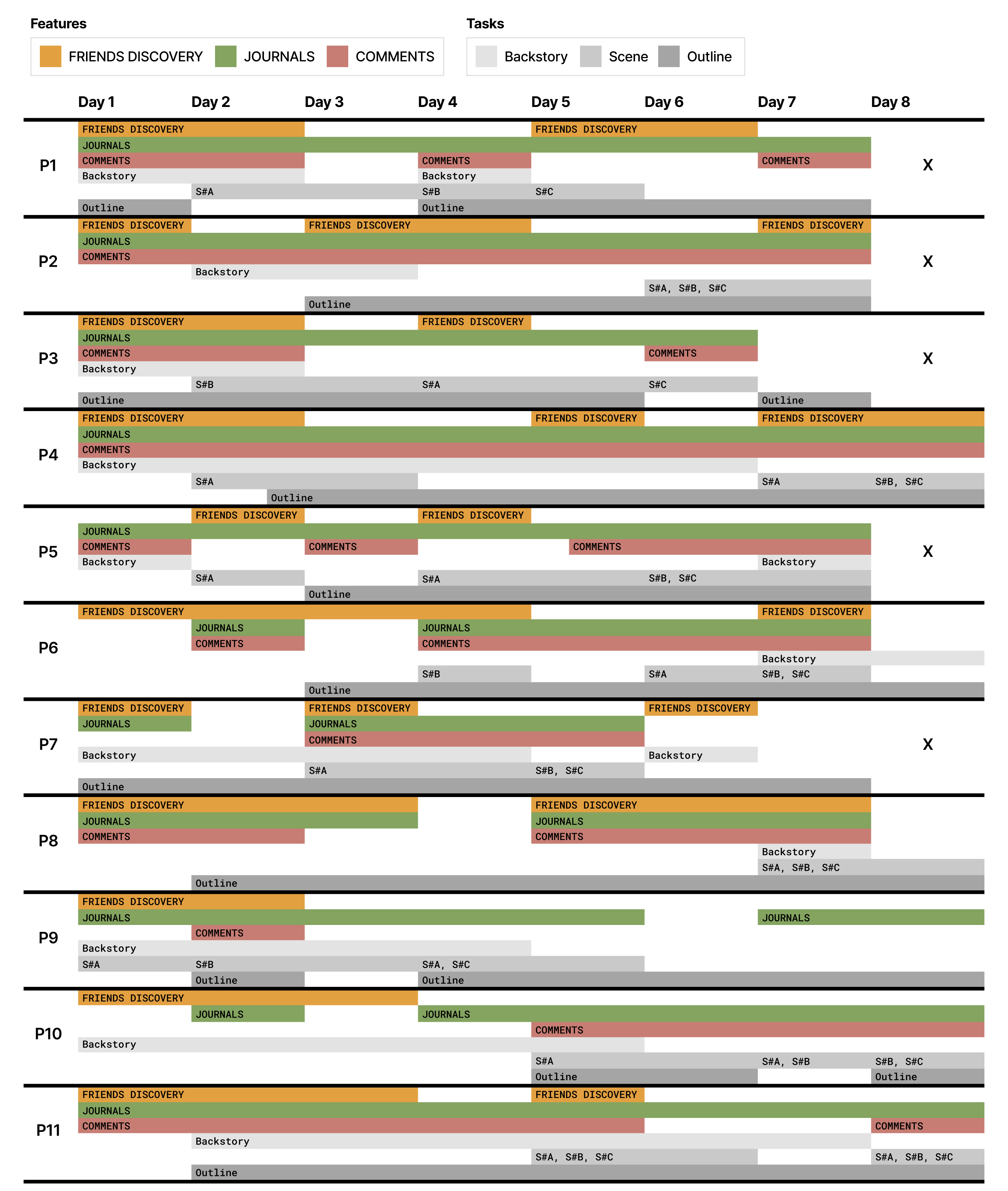
Figure 5: Timeline of feature usage and task engagement across participants over the 7–8 day study period. Colored bars indicate usage of Constella's AI features: FRIENDS DISCOVERY (yellow gold), JOURNALS (olive green), and COMMENTS (red clay). Grayscale bars represent user engagement with their study tasks: Backstory, Scenes (S#), and Outline. The 'X' denotes participants who completed the study by Day 7, indicating no further engagement on Day 8.
Conclusion
Constella demonstrates the potential of LLM-based multi-agent systems in enriching the creative writing process through integrated character development and relational dynamics. By fostering a balanced focus across the character cast, Constella helps writers navigate complex storytelling terrains while maintaining personal creative agency. Future iterations could explore expanding functionality to accommodate broader narrative structures and extensive story arcs, thus continuing its role as an integral component of digital storytelling environments.