- The paper presents a derivative-free MADS algorithm that optimizes feeder reconfiguration, effectively minimizing power loss and operational constraint violations.
- The framework employs a Pareto-based frontier filter and local polling strategies to smartly navigate the binary decision space and reduce simulation evaluations.
- A case study on the IEEE-123 node test feeder validates the method's efficiency, demonstrating near-optimal solutions with significantly fewer computations.
Fast Feeder Reconfiguration via Mesh Adaptive Direct Search in Black-Box Distribution System Environments
This paper presents a robust framework for feeder reconfiguration in power distribution systems by leveraging the Mesh Adaptive Direct Search (MADS) algorithm. The proposed approach efficiently handles the inherent challenges posed by the black-box nature of utility modules and provides a derivative-free optimization strategy suitable for simulation-based environments. The MADS-based framework is designed to minimize active power loss and operational constraint violations concurrently, supported by a Pareto-based frontier filter to guide the search toward high-quality solutions.
Introduction to Feeder Reconfiguration
Feeder reconfiguration aims to optimize switching operations such as sectionalizers and tie-switches in distribution systems to enhance operational performance. The complexity of modeling constraints associated with power flows, thermal capacities, and voltage regulation devices in a comprehensive mathematical optimization framework precludes effective execution using conventional methods. The discrete and combinatorial nature of the problem further complicates the optimization process, rendering gradient-based methods infeasible. The proposed MADS algorithm addresses these constraints with its derivative-free optimization approach, making it highly compatible with industry-standard black-box simulation modules.
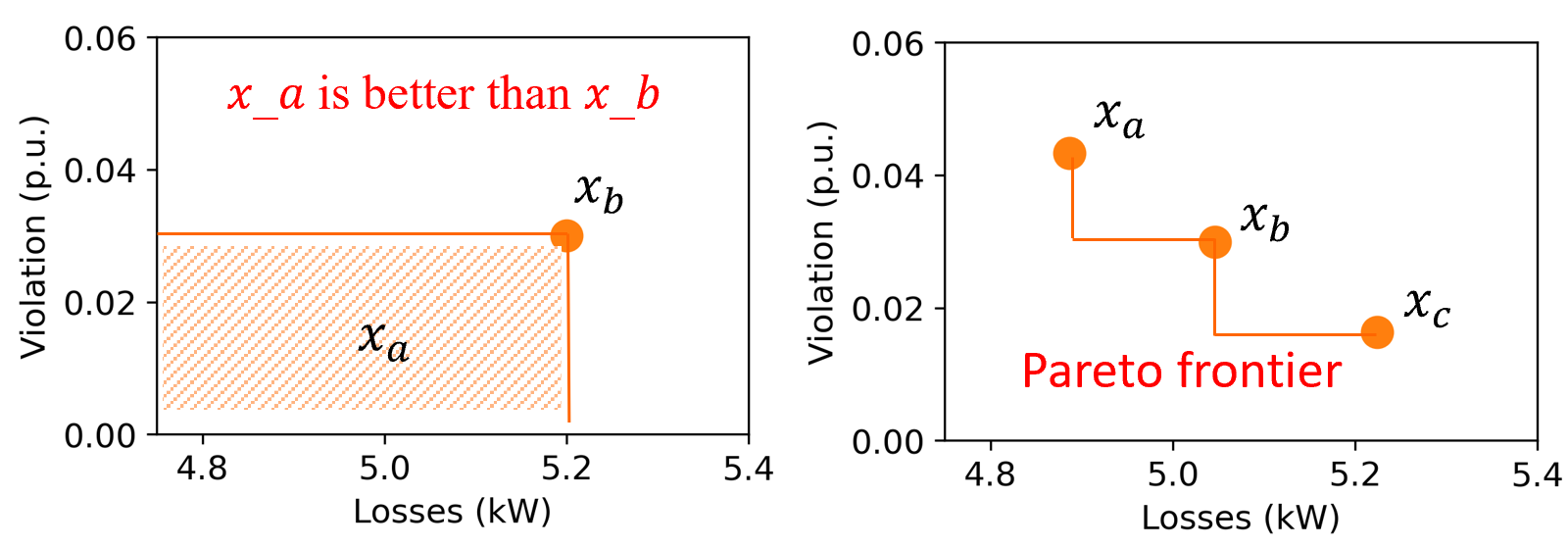
Figure 1: An illustration of the frontier filter.
The feeder reconfiguration is modeled as a bi-objective optimization problem where the primary objectives are to minimize the active power loss and constraints violations. Let x=(x1,…,xn)∈{0,1}n represent the switch status vector, where xi=1 denotes a closed switch. The objective functions are defined as:
- f(x): Total active power loss computed post convergence of device set-points.
- h(x): Maximum degree of operational constraint violation across simulation modules.
The optimization goal is to find configurations that efficiently minimize these performance metrics.
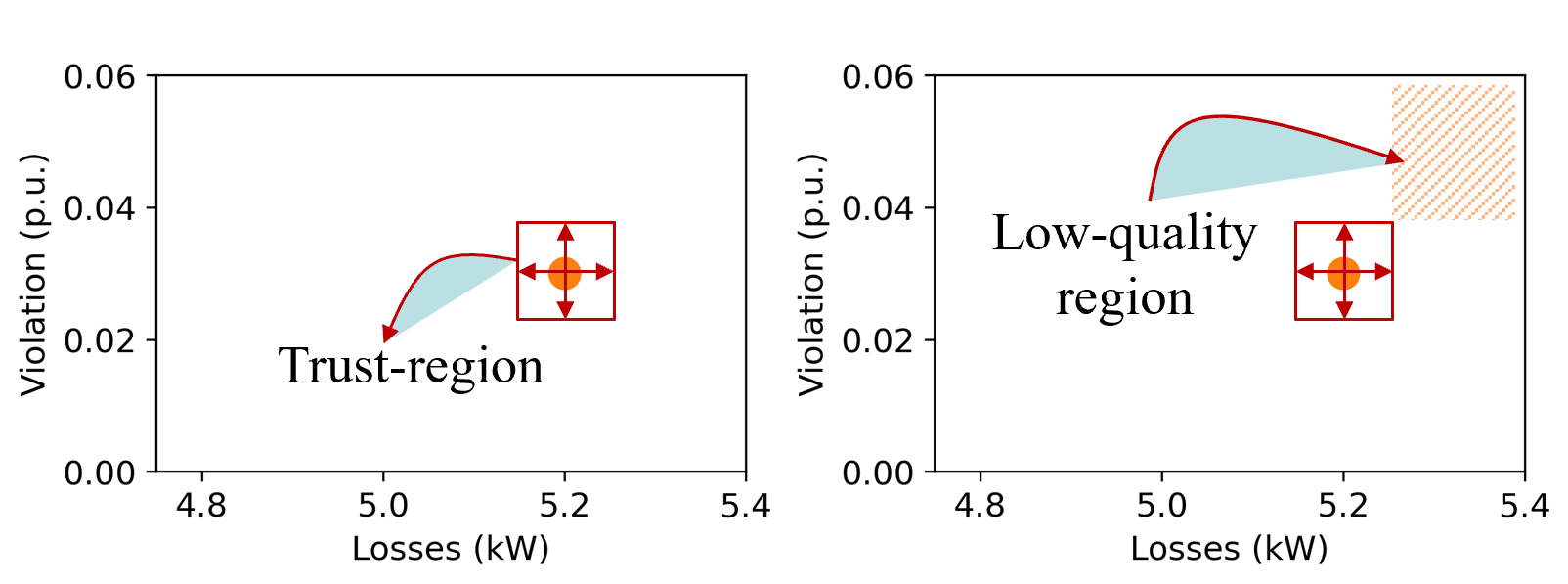
Figure 2: An illustration of the polling points and trust-region.
Solution Algorithm Using MADS
Frontier Filter
The Frontier Filter F maintains non-dominated candidate solutions with respect to both objectives. The filter dynamically updates to include only the Pareto-efficient solutions, thus guiding the search towards optimal configurations. By performing a controlled iterative search based on local polling strategies, MADS accelerates convergence while systematically refining the search space around promising candidates.
Polling Process
The MADS algorithm employs a local search strategy where polling points are generated around a current candidate solution xk. These points, representing one-bit flips in the binary decision space, are evaluated using black-box simulation modules. The method incorporates a systematic exploration of the neighborhood, enabling efficient navigation and refinement of high-quality regions in the decision space.
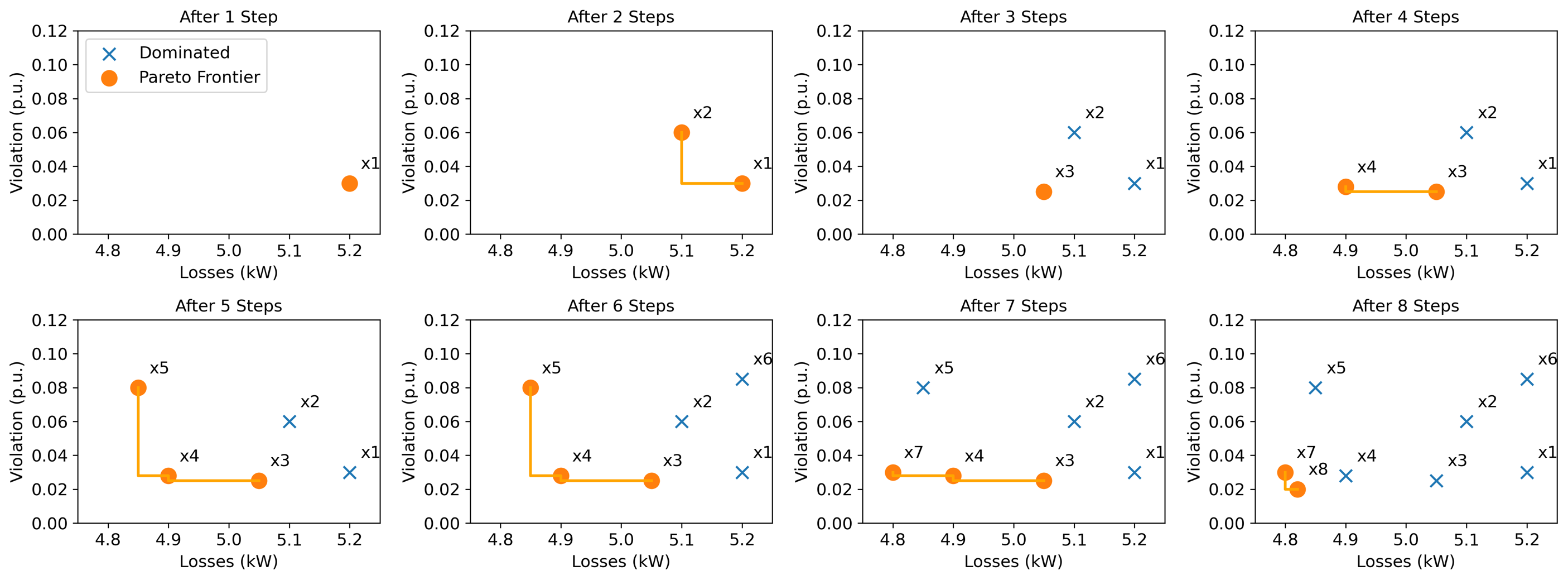
Figure 3: An illustration of the solution searching process using MADS.
Algorithm Execution
The algorithm iteratively selects candidates from the current frontier and generates neighboring solutions. The evaluation of these solutions through simulation modules determines their inclusion in the Pareto frontier. The process continues until convergence criteria are met, ensuring a Pareto-optimal set of solutions is obtained with a minimal number of evaluations.
Case Study on IEEE-123 Node Test Feeder
Evaluations conducted on the IEEE-123 node test feeder confirm the efficacy of the proposed MADS-based approach. With significantly fewer evaluations than heuristic methods, the algorithm yields near-optimal configurations, demonstrating its practical applicability and superior performance in simulation-based environments. The case study results validate the approach's capability to effectively balance exploration and exploitation within the solution space.
Conclusion
The paper presents a fast and efficient feeder reconfiguration framework designed to operate within black-box simulation environments. The integration of MADS with a Pareto-based frontier filter facilitates an optimized search while maintaining compatibility with utility software constraints. By directing the search towards high-quality solutions, the framework achieves near-optimal results with reduced computational burden, as evidenced by its performance on IEEE test feeder systems. This work offers a promising strategy for utility companies seeking to improve distribution system operations through advanced optimization techniques.