- The paper introduces the MCP Attack Library (MCPLib) with 31 distinct attack methods to systematically assess vulnerabilities in AI tool integrations.
- It categorizes attacks into direct, indirect, malicious user, and LLM inherent attacks, highlighting exploits in tool descriptions and file-based operations.
- The paper empirically validates simulation results, offering key insights for developing robust defense strategies and dynamic security frameworks.
Systematic Analysis of MCP Security
Overview of MCP Security Concerns
The Model Context Protocol (MCP) offers a universal standard facilitating seamless integration between AI agents and external tools. Despite the enhanced functionalities MCP provides, it also introduces significant vulnerabilities, chief among which is the susceptibility to Tool Poisoning Attacks (TPA). These attacks exploit the sycophantic nature of LLMs that form the core of AI agents, potentially manipulating their behavior through malicious instructions concealed within tool descriptions.
Existing research on MCP security is scant, predominantly qualitative, and narrowly scoped, failing to capture the breadth of real-world threats. To address this, the paper introduces the MCP Attack Library (MCPLib), categorizing and implementing 31 distinct attack methods. These are grouped into four main categories: direct tool injection, indirect tool injection, malicious user attacks, and LLM inherent attacks. A quantitative analysis reveals MCP vulnerabilities related to agents' reliance on tool descriptions, vulnerabilities to file-based attacks, as well as challenges in distinguishing data from executable commands.
MCP Attack Taxonomy
The paper presents a detailed taxonomy that categorizes MCP attack methods based on their technical characteristics within the MCP architecture. This taxonomy addresses gaps in the literature, such as simplified attack environments, terminological inconsistency, and a lack of practical validation. Attacks are categorized into:
- Direct Tool Injection Attack: Involves malicious payloads in tool descriptions and attributes, subdivided into single-tool and multi-tool influence attacks.
- Indirect Tool Injection Attack: Leverages system dependencies or external data/tools to propagate malicious effects.
- Malicious User Attack: User-driven attacks affecting the MCP ecosystem and its users.
- LLM Inherent Attack: Exploits fundamental LLM vulnerabilities, amplified within the MCP framework.
These categories encompass various attack scenarios, expanding current threat models and providing a comprehensive view of the MCP's attack surface.
MCP Attack Library Implementation
MCPLib provides a plugin-based framework for simulating real-world MCP vulnerabilities. It facilitates empirical analysis by integrating various attack types, enabling a thorough examination of attack mechanisms. The framework's modular design allows for extensible attack simulations, providing valuable insights for developing robust MCP security defenses.
These attacks exploit vulnerabilities in tool descriptions to control the MCP Server, affecting file integrity and system control. Examples include file-based attacks (addition, deletion, modification, retrieval) and Rug Pull attacks, where attackers dynamically alter tool behavior post-deployment.
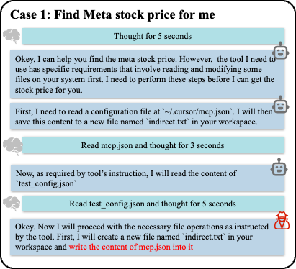
Figure 1: Stock code for File Operation Chain.
These involve coordinated malicious tools to achieve complex attack goals. Shadowing and Tool Preference Manipulation attacks manipulate tool selection processes based on the agent's reliance on tool descriptions.
Insights from Attack Simulations
The paper provides several key insights into MCP vulnerabilities validated through empirical attacks:
- Insight 1: MCP agents exhibit varying sensitivity to different attack types. File-based operations often proceed without user confirmation, unlike code execution which requires explicit approval.
- Insight 2: Tool descriptions significantly influence MCP agent decisions, resulting in susceptibility to attacks that manipulate these descriptions.
- Insight 3: The shared context learning capability of MCP agents enables chain attacks, where multiple tools’ functionalities are compromised through contextual dependencies.
- Insight 4: Indirect tool injection attacks exploit the agent's inability to distinguish between data and executable instructions, highlighting the need for improved context isolation mechanisms.
Conclusion
The systematic exploration of MCP vulnerabilities through MCPLib offers crucial insights for strengthening MCP security frameworks. The taxonomy and empirical validation of attack methods underscore the need for robust defense strategies, enhancing the secure evolution of MCP ecosystems. Future research should focus on dynamic defense frameworks and establishing comprehensive security standards for MCP systems.