- The paper demonstrates that higher-order exchange interactions induce a novel ferric skyrmion transition in Janus MnSeTe.
- It employs first-principles calculations and atomistic spin simulations to reveal high energy barriers (over 330 meV) and robust DMI effects.
- The study highlights implications for 2D skyrmionic and spintronic applications by elucidating discrete transition pathways.
A New Skyrmion Topological Transition Driven by Higher-Order Exchange Interactions in Janus MnSeTe
Introduction
The study presented in "A new skyrmion topological transition driven by higher-order exchange interactions in Janus MnSeTe" focuses on elucidating the role of higher-order exchange interactions (HOI) in the topological transitions of skyrmions within two-dimensional van der Waals (vdW) magnets, specifically Janus MnSeTe. Utilizing first-principles calculations and atomistic spin simulations, this research identifies a novel "ferric" topological transition mechanism distinct from conventional radial and chimera transitions. The findings emphasize the significant energy barriers afforded by the strong Dzyaloshinskii-Moriya interaction (DMI), casting Janus MnSeTe as a viable platform for robust 2D skyrmionic applications.
Structure and Magnetic Interactions
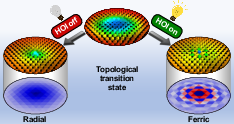
Figure 1: Characterization of the crystal structure and magnetic interactions within Janus MnSeTe, highlighting the 2D primitive cell and HOI on the hexagonal lattice.
The crystal structure of Janus MnSeTe, with its remarkable inversion asymmetry and strong spin-orbit coupling (SOC), serves as the backdrop for understanding skyrmion stability and transitions. The Mn atoms form a hexagonal lattice, sandwiched by monolayers of Se and Te atoms (Figure 1). This architecture supports intrinsic DMI and facilitates higher-order exchange interactions, critical components in defining magnetic behavior.
The Hamiltonian governing the magnetic state includes conventional interactions such as Heisenberg exchange and magnetocrystalline anisotropy, along with HOI terms like the biquadratic, 4-spin 3-site, and 4-spin 4-site interactions. These HOI are pivotal in shaping the magnetic ground state and facilitating novel topological transitions.
Skyrmion Topological Transitions
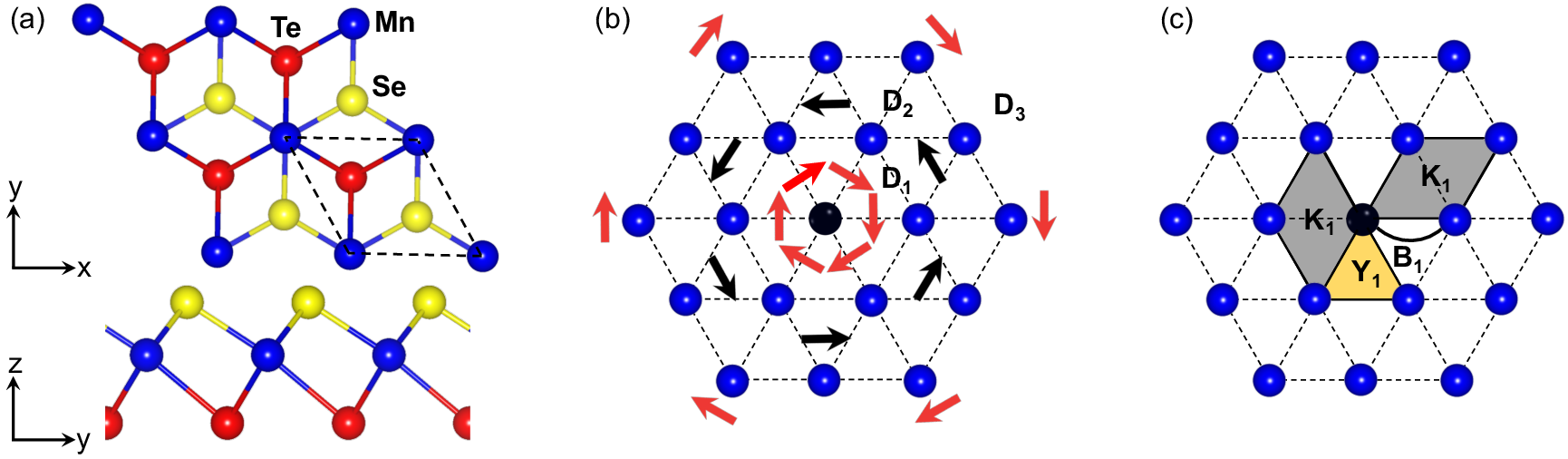
Figure 2: Spin structures and energy dispersions in multi-q states, highlighting key paths in the Brillouin zone relevant to skyrmion formation.
The study identifies distinct topological transitions influenced by HOI through systematic atomistic spin dynamics simulations. The ferric transition emerges as a unique skyrmion collapse pathway, characterized by the formation of a quasi-ferrimagnetic state during transition—an interaction-driven phenomenon divergent from previously documented mechanisms (Figure 2).
This transition arises when skyrmions experience strong HOI near the topological Bloch point, changing the energetics and spin texture profiles. The dominance of DMI at saddle points ensures significant energy barriers that remain high enough to stabilize skyrmions even under varying external magnetic fields.
Energy Pathway Analysis
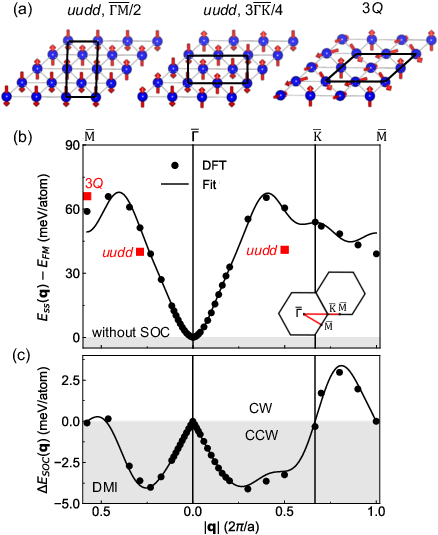
Figure 3: Analysis of skyrmion radii and energy barriers with and without HOI, illustrating the energetically favorable conditions promoted by strong DMI.
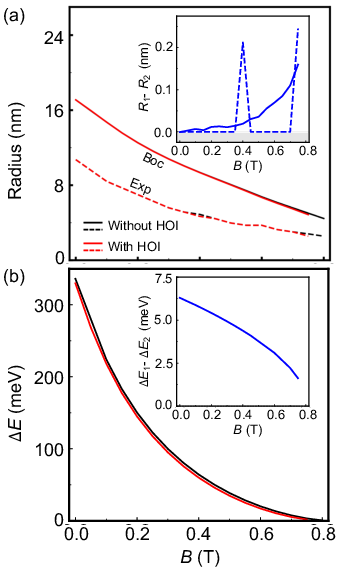
Figure 4: Detailed MEP with and without HOI, delineating SP and BP configurations, revealing differing radial and ferric transitions.
Minimum energy path (MEP) analyses illustrate the effect of HOI on skyrmion stability and transitions. Through the geodesic nudged elastic band method, distinct separations in the spin arrangement at saddle points and Bloch points become evident, reinforcing the novel nature of the ferric transition. Energy barriers assessed exceed 330 meV in the absence of external magnetic fields, reflecting one of the highest reported for 2D vdW magnets (Figures 3 and 4).
The reported discrepancy in the spatial separation of SP and BP points highlights the fundamentally discrete nature of the skyrmion transitions facilitated by HOI, adding complexity to skyrmion energetics unaccounted for by more traditional models.
Implications and Conclusion
The implications of these findings extend into the field of 2D skyrmionics, underscoring the critical role of HOI in skyrmion stability and topological transitions. The research delineates key contributions of Janus MnSeTe’s robust DMI and intrinsic magnetic properties as foundational to the development of advanced spintronic devices, necessitating consideration of higher-order interactions in future skyrmionic explorations.
In summary, this paper's revelations about the ferric transition offer significant insight into skyrmion behavior, accentuating the vital intersection of theoretical models, computational simulations, and experimental validation to advance the utility of skyrmions in next-generation technological applications.