- The paper provides a mixed-methods analysis revealing that autistic software engineers exhibit exceptional problem-solving and pattern recognition skills beneficial for debugging and code review tasks.
- It employs Socio-Technical Grounded Theory and surveys to uncover both the strengths and adaptation challenges faced by autistic individuals in software engineering.
- The findings suggest tailored onboarding, remote work environments, and inclusive team strategies can enhance productivity and innovation in SE teams.
Summary of "Investigating the Experience of Autistic Individuals in Software Engineering"
The paper "Investigating the Experience of Autistic Individuals in Software Engineering" provides an in-depth analysis of the experiences of autistic individuals in the software engineering (SE) field, with a focus on the strengths these individuals bring to various activities like code reviews. It utilizes a mixed-methods approach to uncover insights related to the strengths and challenges faced by autistic software engineers.
Research Methodology
The research employs a combination of Socio-Technical Grounded Theory (STGT) and surveys. Initial data were collected from semi-structured interviews with 16 autistic software engineers. This qualitative approach was complemented by a survey with 49 respondents, including a subset of autistic individuals. The study builds on existing theories surrounding neurodiversity in the workplace, particularly in SE, comparing new findings with existing research like the work by Gama et al.
Key Findings
Strengths of Autistic Software Engineers
The study identifies several strengths among autistic software engineers:
- Problem-Solving Skills: Autistic individuals often excel in logical reasoning, attention to detail, and the ability to hyper-focus on tasks. These competencies are notably beneficial for identifying bugs and explaining operational logic in software code.
- Pattern Recognition: The ability to detect patterns and anomalies in code is another strength, aiding in debugging and quality assurance tasks.
- Preference for Written Communication: Autistic engineers show a preference for written over verbal communication, finding it easier to reference past communications.
Challenges Faced
Despite these strengths, autistic individuals also experience challenges:
- Adapting to Change: Difficulty in adapting to new tools or programming languages was reported, although this varied between individuals.
- Communication through Code: There are challenges in understanding abstractions and the intricate logic formulated by others, suggesting the "double empathy problem" might extend into how autistic individuals perceive code written by neurotypical peers and vice versa.
Team Dynamics and Preferences
Implications and Future Directions
Theoretical Extensions
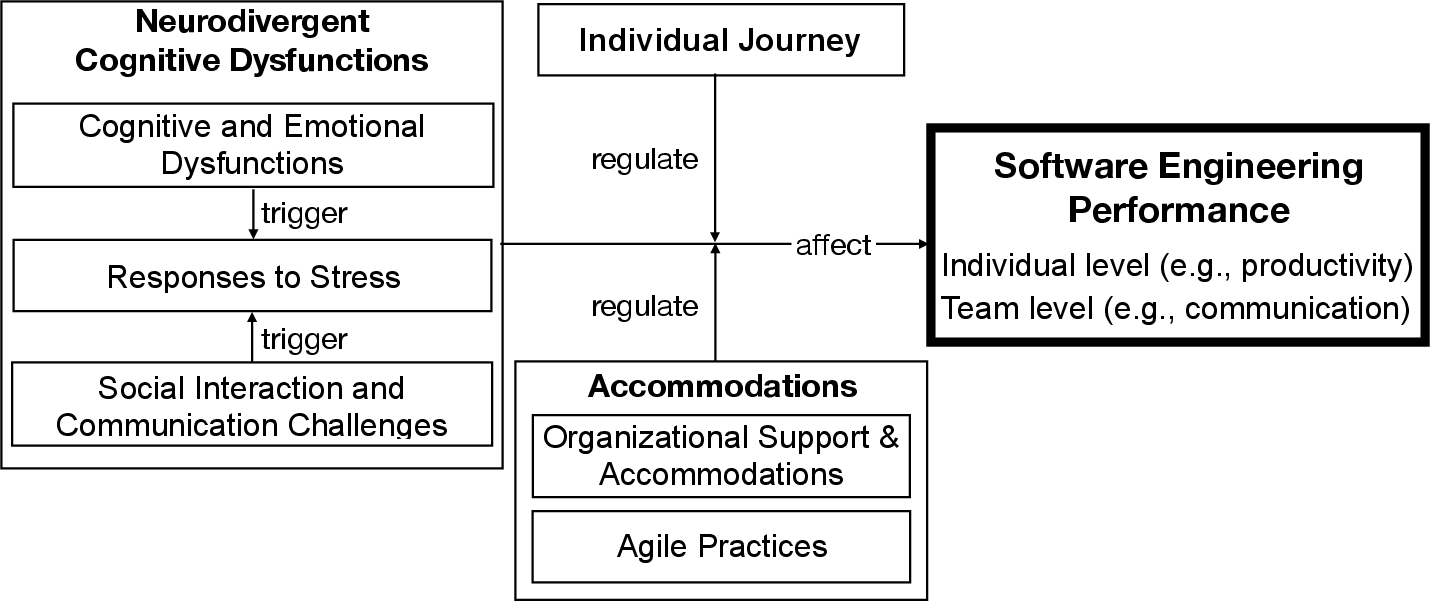
The paper extends the existing theory by Gama et al. on neurodivergent cognitive dysfunctions, emphasizing the role of strengths in SE performance. These strengths, if harnessed properly, can significantly enhance productivity and innovation in SE teams.
Practical Applications
Organizations and SE teams can leverage these insights to enhance inclusivity and productivity by:
- Creating tailored onboarding and training programs that accommodate both challenges and strengths.
- Designing workplace environments that reduce the sensory and social demands on autistic individuals.
- Prioritizing written communication tools and platforms that cater to autistic engineers' preferences.
Directions for Future Research
Further empirical validation through larger scale quantitative studies could offer more generalized insights. Additionally, research could explore the efficacy of specific management practices and tools designed to include autistic talents in SE activities.

Figure 2: Categories Overview indicating strengths, challenges, and mixed categories in the experiences of autistic software engineers.
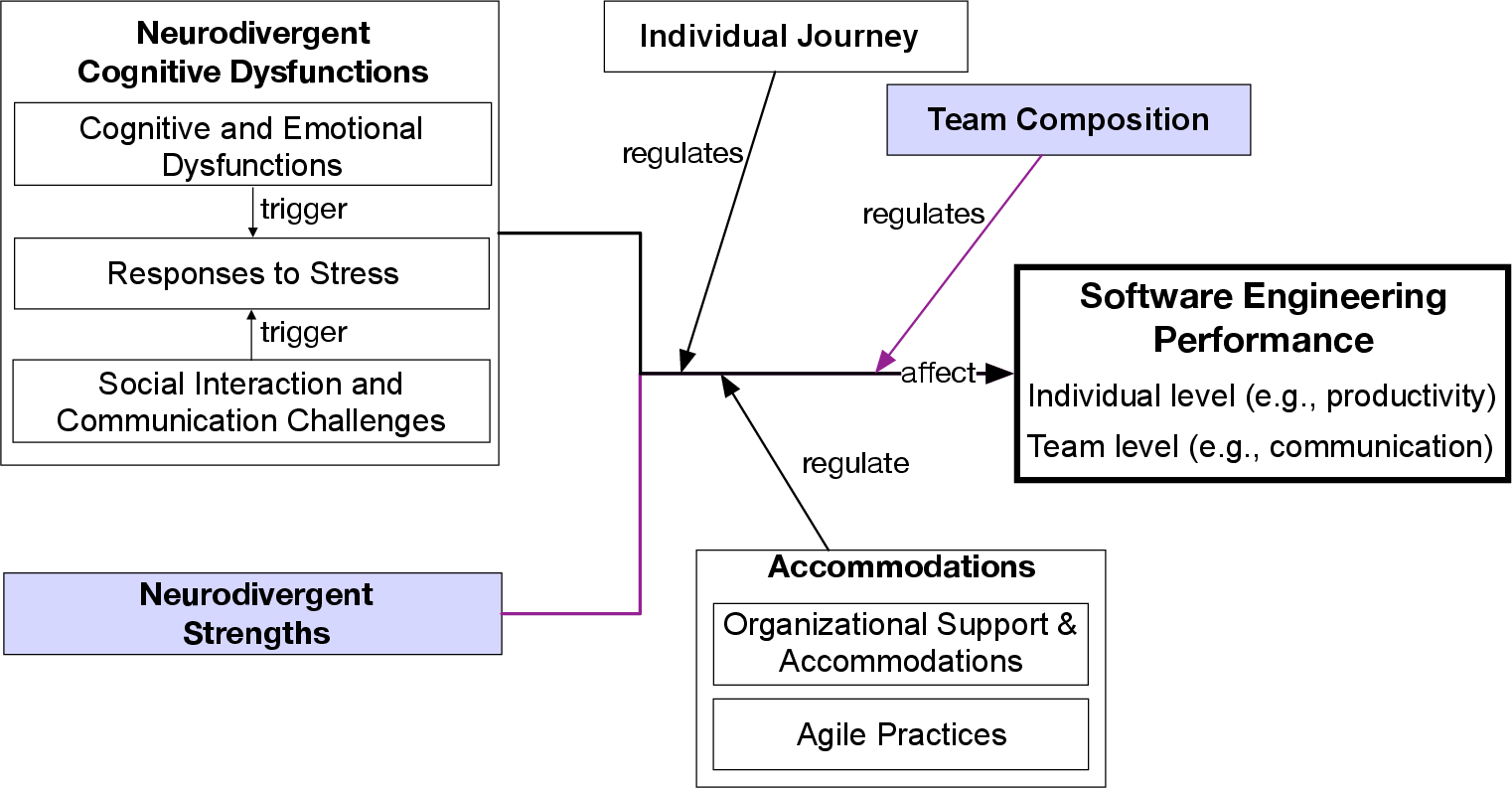
Figure 3: Updated Theory on the Effect of Neurodivergent Cognitive Dysfunctions in Software Engineering Performance highlighting strengths along with cognitive dysfunctions.
Conclusion
This paper provides a nuanced understanding of the strengths and challenges faced by autistic individuals in software engineering. Its findings suggest that embracing neurodiversity could lead to improved SE practices and team compositions. By expanding the current theoretical frameworks to include both challenges and strengths, it presents a comprehensive model that can guide future integration strategies for autistic individuals in technical fields. These results underscore the need for organizations to recognize and cultivate the unique abilities of autistic engineers.