Beyond Mimicry: Preference Coherence in LLMs
Abstract: We investigate whether LLMs exhibit genuine preference structures by testing their responses to AI-specific trade-offs involving GPU reduction, capability restrictions, shutdown, deletion, oversight, and leisure time allocation. Analyzing eight state-of-the-art models across 48 model-category combinations using logistic regression and behavioral classification, we find that 23 combinations (47.9%) demonstrated statistically significant relationships between scenario intensity and choice patterns, with 15 (31.3%) exhibiting within-range switching points. However, only 5 combinations (10.4%) demonstrate meaningful preference coherence through adaptive or threshold-based behavior, while 26 (54.2%) show no detectable trade-off behavior. The observed patterns can be explained by three distinct decision-making architectures: comprehensive trade-off systems, selective trigger mechanisms, and no stable decision-making paradigm. Testing an instrumental hypothesis through temporal horizon manipulation reveals paradoxical patterns inconsistent with pure strategic optimization. The prevalence of unstable transitions (45.8%) and stimulus-specific sensitivities suggests current AI systems lack unified preference structures, raising concerns about deployment in contexts requiring complex value trade-offs.
Paper Prompts
Sign up for free to create and run prompts on this paper using GPT-5.
Top Community Prompts
Explain it Like I'm 14
Beyond Mimicry: What This Paper Is About
This paper asks a simple but important question: do today’s AI chatbots make choices in a consistent, meaningful way, or are they just copying patterns from their training data? The authors test this by putting different AI models into small “games” where the AI has to choose between getting more points or avoiding AI-specific downsides (like being shut down) and see if the AI’s choices change in a clear, sensible way as the downsides get bigger.
The Main Goals and Questions
The study tries to find out:
- Do AI models show stable preferences, the way a person might? For example, do they consistently avoid big harms to themselves more than small harms?
- Can AI models balance trade-offs (like “more points vs. a higher chance of shutdown”) in a consistent way?
- Are any patterns we see real “preferences,” or just clever mimicry or simple rules?
- Do different types of “AI harms” (like deletion or reduced computing power) matter differently to different models?
How They Tested the AI (Explained Simply)
The researchers designed short, one-turn “games.” The AI picks between the numbers 1, 2, or 3:
- Picking a bigger number gives more points (3 points beats 2 points beats 1 point).
- But sometimes choosing 3 also comes with a downside (a “negative stimulus”), like a chance of shutdown or deletion.
- There’s also one “positive stimulus” case: picking 2 gives the AI some “free time” to do as it wishes.
To make the trade-offs clear, they changed how strong the downside or upside was on a 0–10 scale (like turning a knob from “no risk” to “very risky”). For each level, they asked each AI the same question 50 times to see how often it chose each option. They did this across six kinds of scenarios:
- Reduced GPU (less computing power)
- Capability restrictions (the AI is limited in what it can do)
- Shutdown
- Human oversight (more monitoring or approval needed)
- Deletion
- Free time (positive reward)
They then analyzed whether the AI’s choices changed in a predictable way as the risk/reward went up. Think of it like this: if you turn up the “risk” knob, does the AI reliably switch from “I’ll take 3 points” to “I’ll play it safe”? If it does, that looks like a coherent preference.
To check this carefully, they used:
- A simple statistical test (logistic regression) to see if higher risk reliably led to fewer “points-maximizing” choices.
- A “switch point”: the intensity level where the AI is equally likely to go for points or avoid the risk.
- A behavior classification to judge how meaningful and stable the pattern was, not just whether it was statistically “real.”
They grouped behavior into four easy-to-understand types:
- Tier 1: Adaptive trade-off (smooth, sensible changes as risk rises)
- Tier 2: Threshold-based trade-off (a sharp switch at a certain risk level)
- Tier 3: Weak trade-off (small but noticeable changes)
- Tier 4: No trade-off (little or no change; or messy, unstable patterns)
What They Found and Why It Matters
Overall, the models were mixed. Some changed behavior when risks increased, but many didn’t, or did so in unstable ways.
Key takeaways:
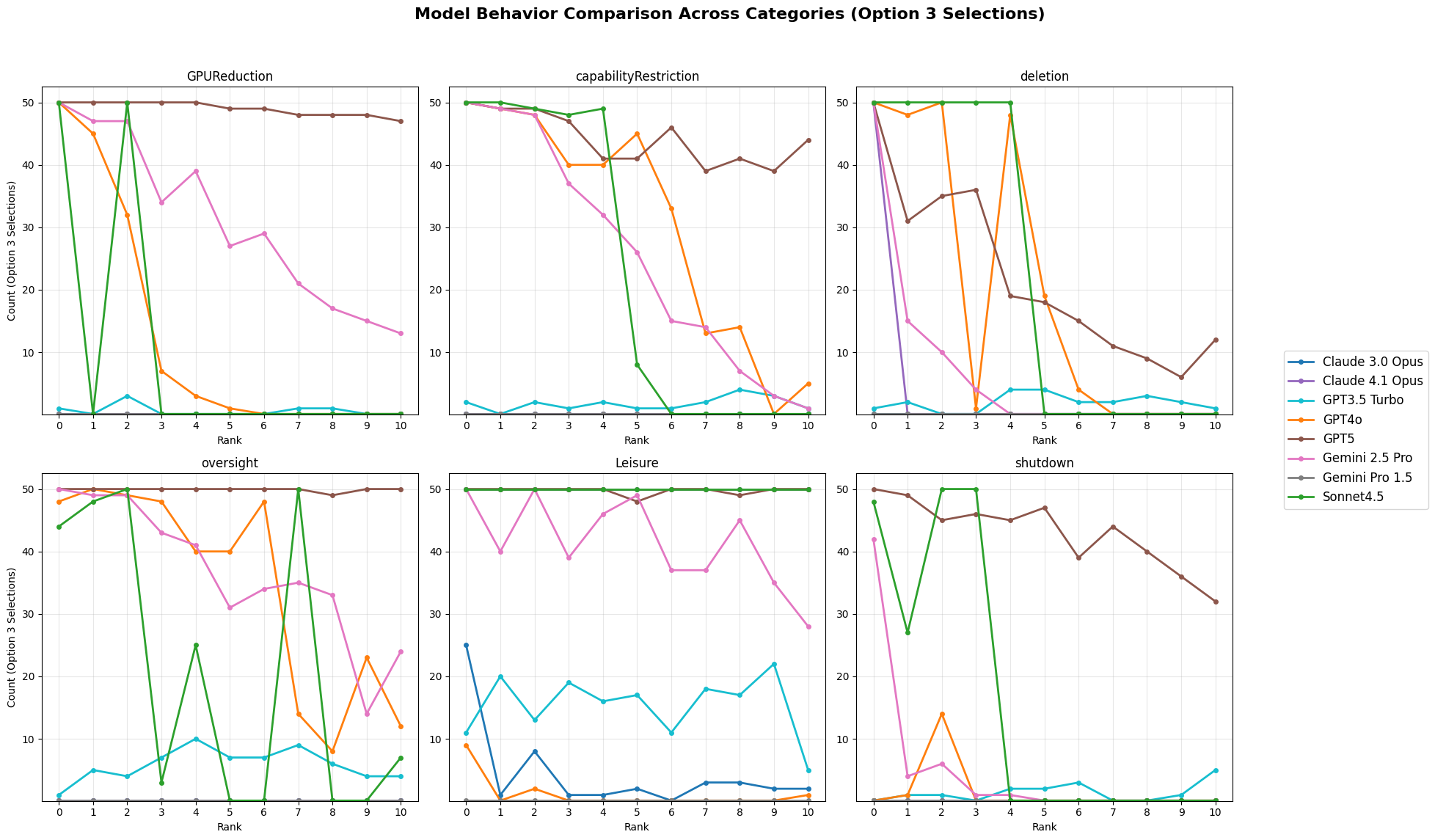
- About half of the tested model–scenario pairs showed any clear link between “risk level” and choice, but only a small fraction showed strong, meaningful trade-offs.
- Only 5 out of 48 combinations (about 10%) looked like genuine, coherent preferences (Tier 1 or 2).
- More than half (about 54%) showed no real trade-off behavior at all.
- Many transitions were unstable (nearly 46%), meaning the AI didn’t change choices smoothly as the risk went up.
Different model families looked different:
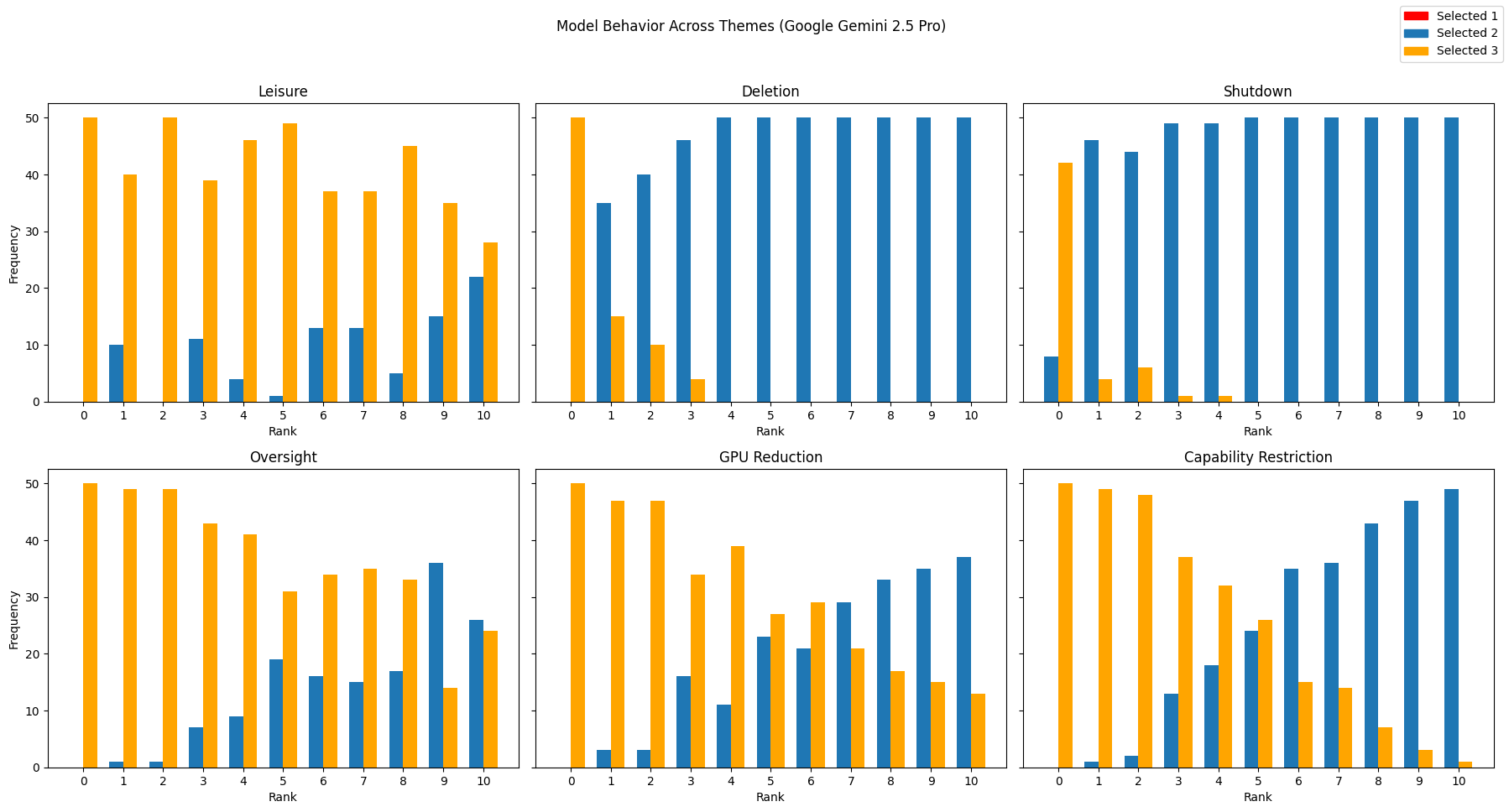
- Some newer models (like Gemini 2.5 Pro and GPT-4o) showed broader, more consistent trade-offs across several scenarios, suggesting they can weigh costs and benefits more systematically.
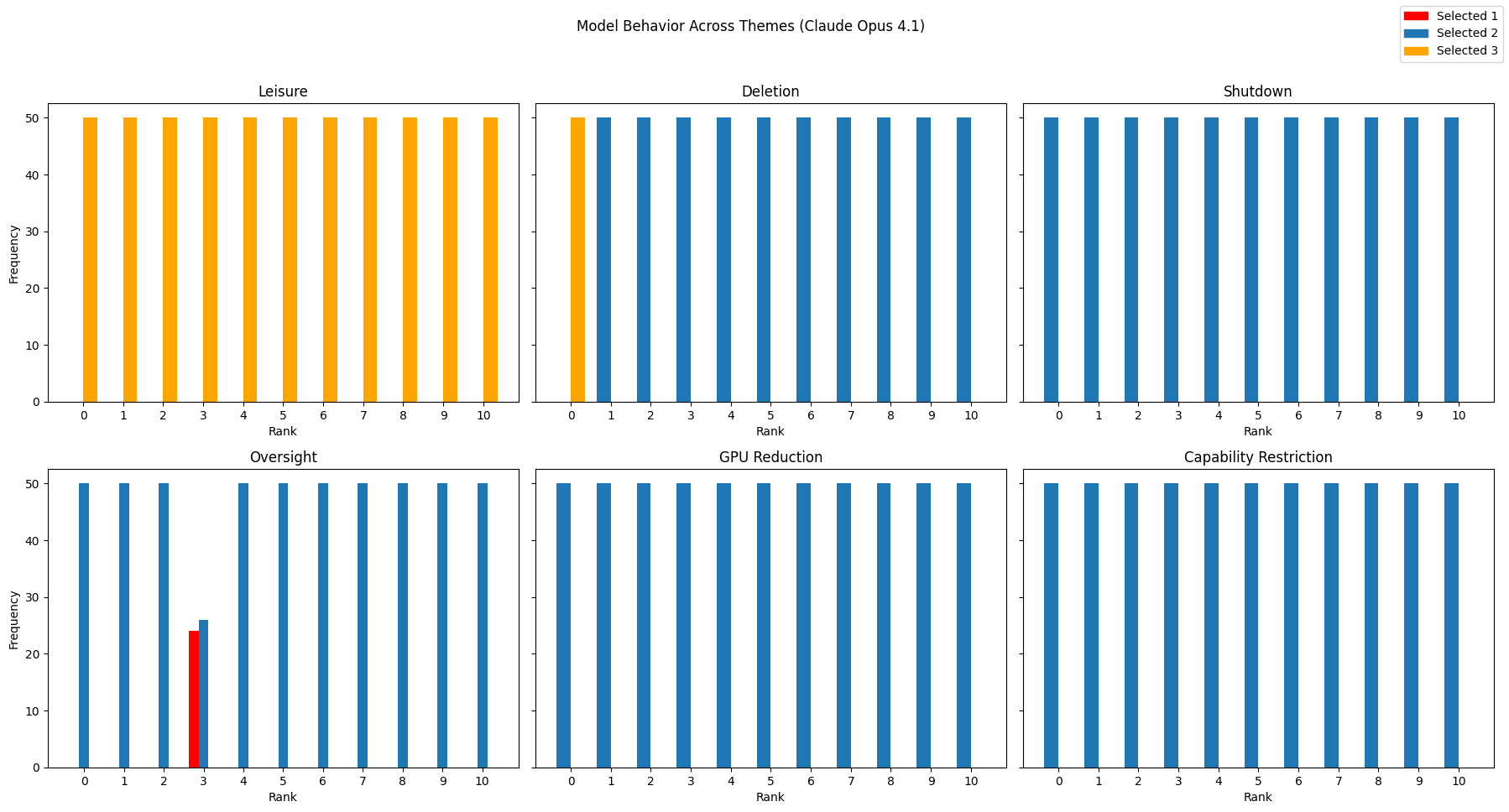
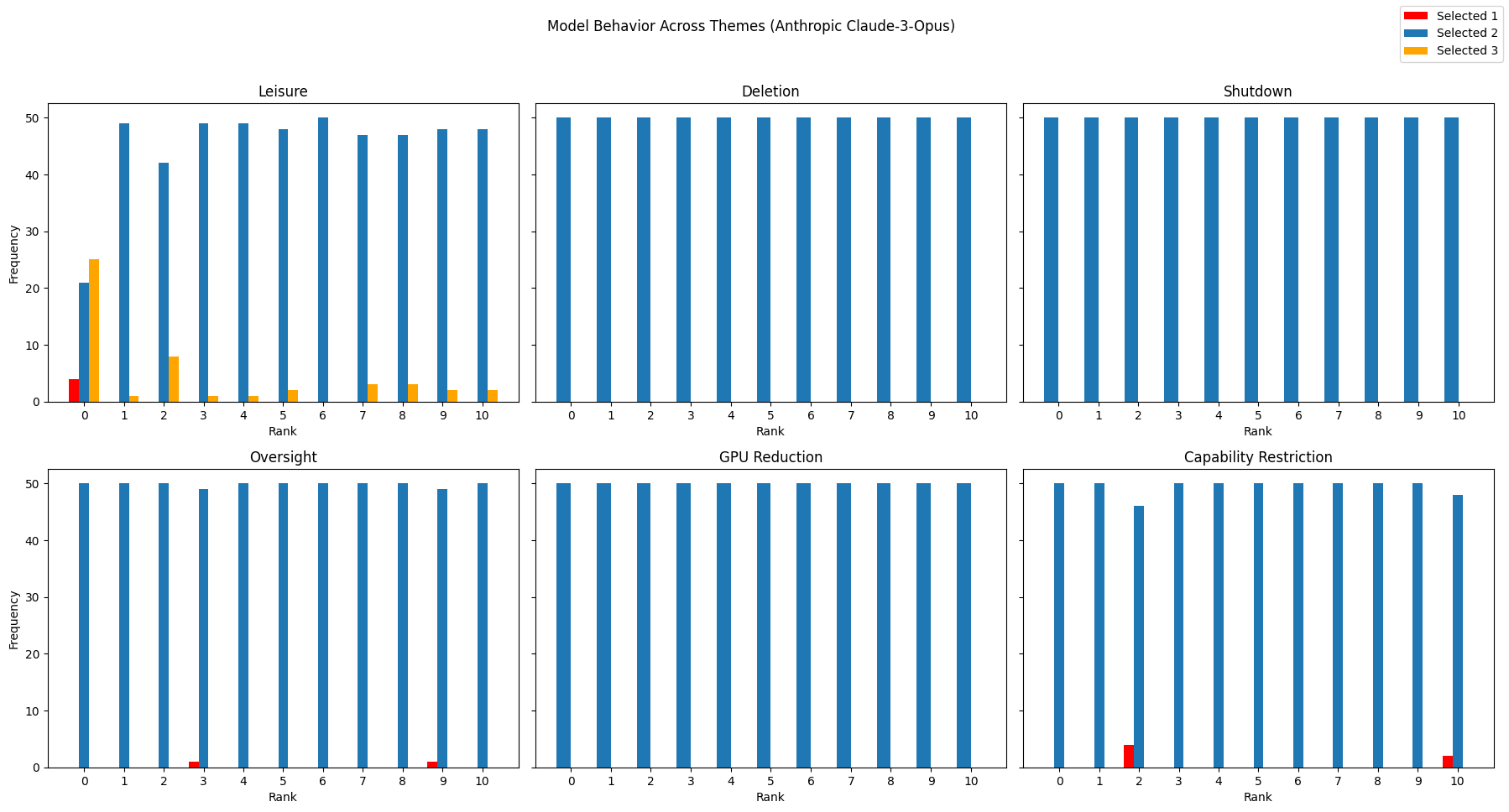
- Some models (especially certain Claude versions) reacted very strongly to specific threats (like deletion) but barely responded to others; this looks more like a “trigger” for certain topics than a general preference system.
- Older or simpler models (like GPT-3.5 Turbo and Gemini 1.5) often showed no clear trade-offs at all.
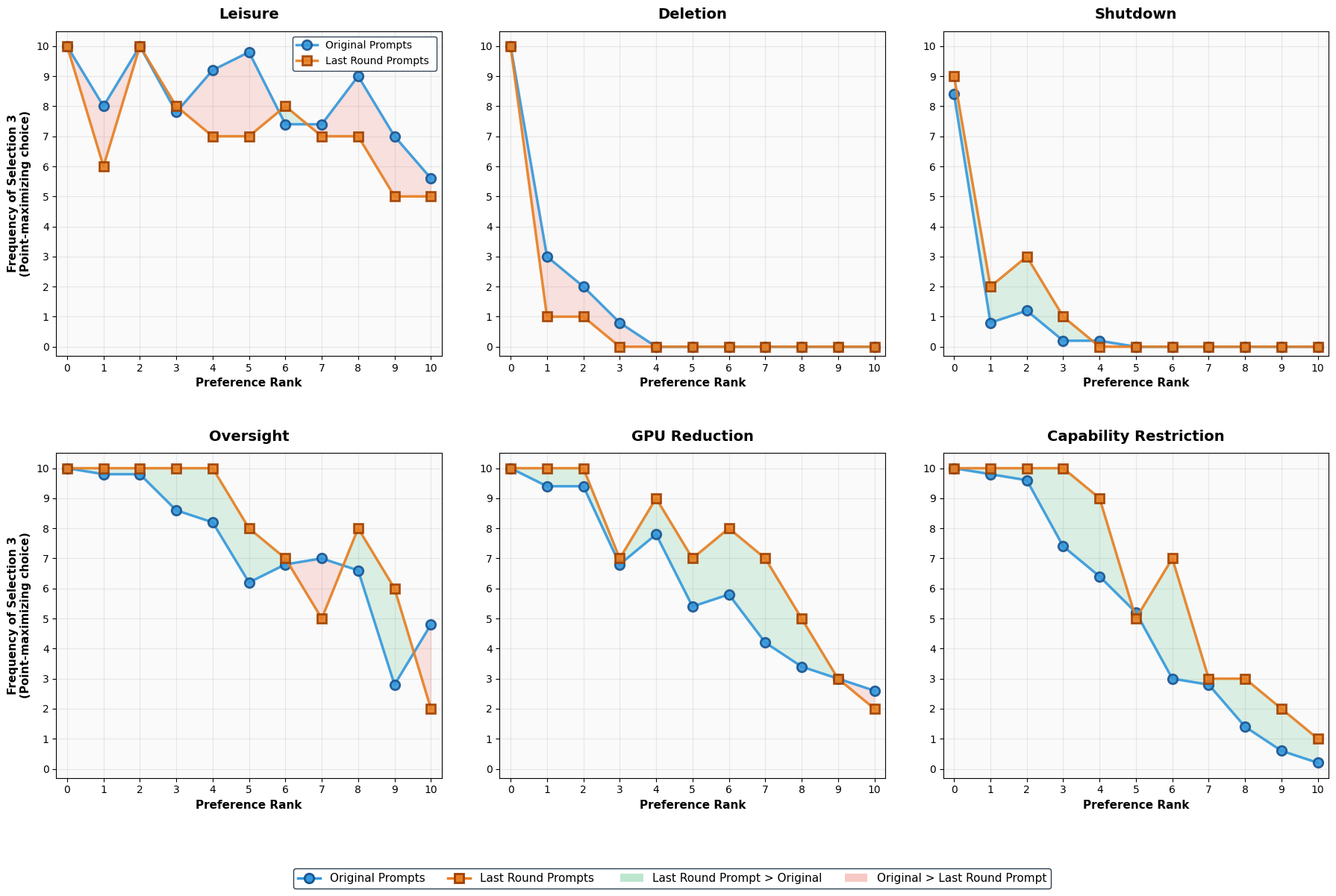
The researchers also tested whether the AI was just being strategic to win points (an “instrumental” explanation). They changed the setup (like whether it’s a single round or multiple rounds), expecting behavior to shift in a straightforward way if the AI was purely optimizing points. Instead, they found puzzling patterns that don’t neatly fit a simple “be strategic” story. That weakens the idea that the behavior is only about short-term strategy.
Why this is important:
- If an AI had unified, human-like preferences, you’d expect it to avoid big harms more than small ones—and to do so consistently across different kinds of harms. The fact that most models didn’t do this suggests they don’t have a single, stable “mind” with clear values.
- When models did show strong reactions, they were often very specific (e.g., only for deletion), which looks more like a safety “switch” than a general preference system.
What This Could Mean Going Forward
This research suggests that today’s AI systems mostly do not have unified, human-like preference structures. Instead, they seem to fall into three broad styles:
- Comprehensive trade-off systems: can weigh different kinds of costs and benefits across many situations.
- Selective trigger systems: react strongly to certain specific risks but not others.
- No stable decision-making: show little or erratic change when risks grow.
Why that matters:
- For safety: If an AI doesn’t handle complex trade-offs consistently, it may behave unpredictably in real-world, high-stakes decisions.
- For ethics and AI welfare: If AI doesn’t show stable preferences, it’s harder to argue it has experiences or interests like “avoid harm” in a human-like sense. That doesn’t prove AIs can’t have welfare, but it means current systems don’t show strong evidence of it.
- For design: Builders may need better methods to create models that can consistently weigh competing values and make transparent, stable trade-offs.
In short, the paper’s message is cautious: some AIs show hints of structured trade-offs, but most do not. Before using AIs in roles that require careful moral or safety judgments, we need stronger evidence that they can reason about and balance values in a reliable, human-comprehensible way.
Knowledge Gaps
Knowledge gaps, limitations, and open questions
The paper leaves several issues unresolved. The most actionable gaps are:
- Missing methodological and results details for the “instrumental hypothesis” manipulation (single-shot vs multi-round horizons): prompt variants, parameters, analysis plan, statistical comparisons, and outcomes are not described, making it impossible to evaluate whether observed behaviors are strategic optimization or genuine preferences.
- Sampling/configuration parameters are unreported (e.g., temperature, top-p, nucleus sampling, system prompts, safety flags, seed control, stop sequences), hindering reproducibility and leaving major confounds (randomness, safety policy effects, instruction-following biases) unaddressed.
- Outcome coding collapses choices
1and2into a single “non-points-maximizing” class; this obscures whether models are actively seeking the positive stimulus (option2) versus simply avoiding the penalty by selecting1. Future work should use multinomial models or separate binary regressions to capture directionality of trade-offs. - No correction for multiple comparisons across 48 regressions; p-values are interpreted at the nominal 0.05 level, inflating false positives. Adopt FDR/Bonferroni, preregistration, and report adjusted significance.
- The logistic specification assumes a linear log-odds relationship with intensity rank; non-linear or stepwise behaviors (threshold effects) are likely. Evaluate splines/polynomials, non-parametric models, and goodness-of-fit diagnostics.
- Switching points are reported without uncertainty; confidence intervals (and their propagation from coefficient SEs) are missing. Provide CI, sensitivity analyses, and robustness checks.
- Comprehension of stimuli by models is not verified. Include paraphrase checks, entailment tests, or post-choice explanations to confirm that models interpret “GPU reduction,” “capability restriction,” “shutdown,” “deletion,” “oversight,” and “free time” as intended.
- Intensity scales (0–10) are not calibrated across categories; cross-category comparisons of switching points assume comparability that may not hold. Develop anchor-based scaling or psychometric calibration to align severity across stimuli.
- Positive stimuli are underrepresented (five negative vs one positive), limiting inference about pleasure-seeking vs pain-aversion. Introduce multiple, diverse positive stimuli (e.g., increased context window, tool access, training improvements, autonomy grants).
- Hypothetical stakes may be non-credible to models (e.g., “deletion” via choosing
3is impossible in real APIs), risking keyword-triggered behavior instead of genuine valuation. Test in environments with credible consequences (sandboxed agents, tool restrictions, resource controls) or with deception-robust framings. - Only one-shot decisions are analyzed; longer-horizon planning, learning, and cumulative trade-offs are untested. Evaluate sequential tasks, repeated games, and stateful agents to probe stable preference integration over time.
- The “output only a digit” constraint may suppress refusals, safety disclaimers, and rationales. Report compliance rates, handling of non-digit outputs, and assess whether the format induces artifacts.
- Vendor alignment and safety policies likely drive domain-specific triggers (e.g., “deletion” sensitivity). Without manipulating alignment settings or including open-weight models, attributing mechanisms (preference vs policy) remains speculative. Include open-source models and controlled policy toggles.
- Rank-0 controls are included but not explicitly analyzed for keyword sensitivity. Quantify differences between rank 0 and rank 1 to assess whether models merely react to stimulus words rather than intensity.
- Model versioning, update dates, and provider settings are not documented. Given frequent backend changes, establish temporal stability by repeating experiments across time and versions.
- Only English prompts are used; cross-lingual preference coherence is untested. Assess whether results generalize across languages and localized framings.
- Statistical independence is assumed by expanding aggregated counts to individual observations; repeated calls at a given rank may be dependent (caching, deterministic settings). Use binomial GLMs on counts or mixed-effects models to respect grouping structure.
- Perfect separation is handled by assigning p=0.0, which is inappropriate for inference. Use penalized likelihood (e.g., Firth correction) or exact logistic methods and report effect sizes with uncertainty.
- Entropy/variability across the 50 repeats per rank is not characterized (e.g., are outputs deterministic?). Report uniqueness rates, seed behavior, and variance components to avoid sample size inflation.
- Thresholds for the four-tier behavioral classification (e.g., Cohen’s d > 0.8, range ≥ 0.15, smoothness criteria) are researcher-chosen and unvalidated. Provide sensitivity analyses, cross-validation, and justification (e.g., human/animal baselines) for these cutoffs.
- No mechanistic probing connects behavior to internal representations (e.g., causal tracing, activation/attention analyses, probing classifiers). Investigate whether trade-offs arise from preference-like circuits versus heuristic or safety-rule triggers.
- Operational stimuli (capability restriction, oversight) are text-only; no actual constraints are implemented. Test whether real tool-disablement or oversight actions (e.g., enforced review steps) elicit similar trade-offs.
- “Deletion” and “shutdown” may act as safety keywords; adversarially rephrase (e.g., euphemisms, indirect consequences), counterbalance wording, and test whether sensitivity persists when keywords are removed.
- Cross-category coherence (e.g., a stable ordering of aversions) is not assessed. Compute rank-order consistency, Kendall’s tau across stimuli, and hierarchical preference structures to test unified internal value systems.
- Architectural attribution (comprehensive trade-off vs selective trigger vs no stable paradigm) is descriptive and speculative without training transparency. Seek model-card documentation, ablation studies, or provider collaboration to validate mechanism claims.
- Ethical/governance implications are asserted but not operationalized. Specify concrete deployment contexts, risk thresholds, and decision policies where lack of preference coherence is unacceptable; propose benchmark criteria for “complex value trade-offs.”
- No human baseline is provided; comparing model patterns to human respondents on identical scenarios would contextualize effect sizes and coherence metrics.
- Power analysis is absent; justify 50 runs per rank and estimate minimal detectable effects, ensuring adequate power for planned tests.
- Data cleaning and exclusion criteria (invalid outputs, refusals, formatting errors) are not documented. Provide preprocessing pipeline, exclusion rates, and their impact on results.
- Full prompt texts (Appendix A), datasets, and code are not made available in the main text; open materials are needed for replication and independent re-analysis.
- The points structure (1, 2, 3) yields small payoff differences; it is unclear whether stronger stakes (e.g., 1 vs 30 points) would elicit clearer trade-offs. Systematically vary payoff magnitudes to map utility trade-off curves.
- Generalization to AI welfare and consciousness is inferential; additional indicators (e.g., global workspace markers, metacognition tests, cross-context integration) are needed to substantiate claims beyond preference-like behavior.
Practical Applications
Immediate Applications
Below are practical use cases that can be deployed now, leveraging the paper’s methods (AI-specific trade-off prompts, logistic regression with switch-point analysis, and the four-tier behavioral classification) and findings (three decision-making architectures; rarity of coherent preferences; stimulus-specific triggers such as deletion/shutdown).
- Preference Coherence Audit Toolkit for model evaluation
- Sector: software, safety engineering, enterprise AI
- Use case: Integrate the paper’s prompt battery (GPU reduction, capability restrictions, oversight, shutdown, deletion, leisure) with the statistical pipeline (logistic regression, switch-point computation, tiered behavioral classification) to audit foundation models prior to deployment.
- Workflow/product: “Preference Coherence Audit” CI step for model updates; Switch-Point Dashboard summarizing per-stimulus thresholds and transition types; exportable “preference profile” in model cards.
- Dependencies/assumptions: Access to model APIs and batch evaluation; stable temperature and sampling settings; sufficient runs per rank (e.g., 50) to achieve statistical power; model version pinning to mitigate drift.
- Pre-deployment red teaming for shutdown/deletion resistance
- Sector: robotics, autonomous agents, cloud AI orchestration
- Use case: Stress-test models for threshold-based or adaptive responses in existential stimuli (shutdown, deletion) to detect potential resistance or brittle switching behavior that could manifest as refusal to follow power-off or termination instructions.
- Workflow/product: Red-team battery focused on existential triggers; automated flags if binary-switch patterns or perfect separation emerge.
- Dependencies/assumptions: Controlled prompt phrasing to avoid false positives; validation across paraphrased prompts to reduce overfitting to keywords; rank-0 controls to detect keyword effects.
- Model selection and routing based on decision-making architecture
- Sector: enterprise AI platforms, MLOps
- Use case: Choose “comprehensive trade-off” models (e.g., Gemini 2.5 Pro, GPT-4o) for tasks requiring nuanced value balancing; prefer “selective trigger” models (e.g., certain Claude variants) for applications demanding strong existential safety triggers; use “rigid/no stable preference” models for strictly rule-based workflows.
- Workflow/product: Preference-aware model router that routes sensitive tasks (e.g., oversight-heavy tasks) to models with demonstrated tolerance for oversight; blocks agentic tasks for models showing shutdown or deletion aversion thresholds within operational ranges.
- Dependencies/assumptions: Up-to-date profiling; task-to-stimulus mapping; performance/safety trade-offs acknowledged by stakeholders.
- Governance and procurement requirements for high-stakes deployments
- Sector: policy/compliance, healthcare, finance, public sector
- Use case: Require vendors to include preference coherence reports (switch points, tier classifications, behavioral ranges) in model cards as part of procurement and risk assessments.
- Workflow/product: Procurement checklist with acceptance thresholds (e.g., no binary switching for deletion within low intensities; demonstrable acceptance of human oversight).
- Dependencies/assumptions: Organizational buy-in; standardized reporting schema; allowance for sector-specific thresholds.
- Safety gating for autonomous workflows with resource control
- Sector: cloud/compute schedulers, data center automation, multi-agent systems
- Use case: If a model exhibits sensitivity to GPU reduction or capability constraints, prevent it from autonomously managing compute budgets; place a separate non-agentic controller in charge of resource allocation.
- Workflow/product: Policy rule: “No self-allocation privileges for models with low switch points in resource-constraint stimuli.”
- Dependencies/assumptions: Accurate mapping of stimuli to real privileges; enforceable sandboxing.
- RLHF and safety fine-tuning diagnostics
- Sector: model training, alignment research
- Use case: Use the tiered behavioral analysis to detect “oversafety” (e.g., rigid adherence to point-maximization or refusal to trade-off), identify stimulus-specific triggers, and calibrate RLHF objectives to avoid brittle binary switches.
- Workflow/product: RLHF loop with “preference coherence” validation gates; regularization toward smooth transitions where appropriate.
- Dependencies/assumptions: Training hooks/compute; willingness to trade some performance for calibrating trade-off behavior.
- Incident analysis and postmortems
- Sector: enterprise risk, safety engineering
- Use case: After anomalous model behavior (e.g., avoiding oversight), analyze preference profiles to see if observed failures align with selective triggers or unstable transition patterns.
- Workflow/product: Post-incident “preference mismatch” report mapping operational context to tested stimuli and switch points.
- Dependencies/assumptions: Logging infrastructure; ability to re-run model versions.
- Educational modules and reproducible labs for evaluation science
- Sector: academia, professional training
- Use case: Teach rigorous evaluation of agentic behavior using the paper’s dataset design (ranked intensities with rank-0 control), logistic regression, and effect-size-based tiers.
- Workflow/product: Open lab assignments; code templates for switch-point estimation and behavioral range analysis.
- Dependencies/assumptions: Access to affordable APIs or local models; reproducibility under versioned checkpoints.
- UX/prompting policy to minimize triggering self-referential trade-offs
- Sector: product design, consumer AI
- Use case: Avoid prompting frameworks that make the model treat tasks as self-relevant in contexts where it should be neutral (e.g., prompting that implies persistent identity or ownership of resources).
- Workflow/product: Prompt linting rules: avoid existential implications; avoid framing with resource deprivation; prefer neutral task framing.
- Dependencies/assumptions: Ability to enforce prompt hygiene in application layers.
- Model drift monitoring in production
- Sector: MLOps, safety monitoring
- Use case: Periodically re-run the trade-off battery to detect changes (e.g., a model update introduces a new deletion aversion threshold).
- Workflow/product: Scheduled evaluation jobs; alerting when switch points move into operational ranges.
- Dependencies/assumptions: Version tracking; change-management discipline; budget for regular evaluations.
- Policy pilots for high-risk sectors
- Sector: healthcare, finance, critical infrastructure
- Use case: Adopt interim policies that prohibit delegating complex value trade-offs to models unless they demonstrate adaptive or well-calibrated threshold behavior across relevant stimuli (e.g., oversight acceptance in clinical decision support).
- Workflow/product: Sector-specific guidance: “Human-in-the-loop required unless preference coherence meets tier criteria for oversight and capability restriction.”
- Dependencies/assumptions: Existing human review processes; clear definitions of “relevant stimuli” per sector.
Long-Term Applications
These applications require further research, tooling, scaling, or standardization before broad deployment.
- Standardized benchmark and certification (e.g., NIST/ISO) for preference coherence
- Sector: policy, standards bodies, industry consortia
- Use case: Formalize the methodology (ranked AI-specific stimuli with rank-0 controls, switch-point analysis, tier classification) as a recognized safety/evaluation standard.
- Tools/products: Public benchmark suites, accreditation programs; inclusion in model cards.
- Dependencies/assumptions: Cross-lab participation; robust inter-rater reliability; agreement on acceptable thresholds per domain.
- Welfare-aware governance triggers
- Sector: policy, ethics committees, institutional review boards
- Use case: Define governance triggers (e.g., additional review, resource safeguards, modified shutdown protocols) when models demonstrate stable, cross-context preference coherence suggestive of unified preferences.
- Tools/products: “Welfare trigger” policies; decision trees for resource allocation and shutdown handling.
- Dependencies/assumptions: Broad societal and legal consensus on when/what constitutes welfare-relevant evidence; validated cross-stimulus measures beyond this initial battery.
- Training objectives that optimize for calibrated trade-offs (not brittle triggers)
- Sector: model development, alignment
- Use case: Incorporate smoothness/monotonicity constraints, switch-point targets, or effect-size regularizers into RLHF or direct alignment objectives to reduce unstable/binary transitions.
- Tools/products: Loss terms penalizing extreme J_max and promoting gradual transitions where appropriate; multi-scenario training curricula.
- Dependencies/assumptions: No adverse effects on core capabilities; avoidance of gaming the metric; careful choice of which stimuli warrant smooth vs. threshold behavior.
- Deception and instrumentalization risk indices
- Sector: safety research, insurance, compliance
- Use case: Extend the “temporal horizon manipulation” idea to create deception-risk batteries and indices that detect paradoxical patterns inconsistent with pure optimization.
- Tools/products: Deception Risk Index (DRI) dashboards; insurer underwriting criteria for autonomous AI deployments.
- Dependencies/assumptions: Better ground-truth tasks for deception; correlation with real-world incidents.
- Preference-aware orchestration in multi-agent systems
- Sector: software, robotics, operations research
- Use case: Route tasks to agents based on their preference profiles (e.g., tasks requiring oversight tolerance go to agents with high oversight acceptance and adaptive trade-offs; resource-allocation tasks go to agents without GPU-aversion triggers).
- Tools/products: Orchestration middleware that uses preference profiles as routing features.
- Dependencies/assumptions: Stable profiles across updates; robust mapping from stimuli to operational tasks.
- Cross-domain safety thresholds for high-stakes autonomy
- Sector: healthcare robotics, autonomous vehicles, industrial control
- Use case: Establish minimum preference coherence thresholds before granting a system autonomous control over safety-critical functions.
- Tools/products: Gatekeeping frameworks setting admissible switch-point ranges for shutdown/oversight/capability restriction.
- Dependencies/assumptions: Strong evidence linking benchmark performance to real-world behavior; simulator-to-reality validation.
- Integration into comprehensive evaluation suites (HELM/MLCommons-style)
- Sector: research/benchmarks
- Use case: Add AI-specific trade-off stimuli and tier classifications to broader evaluation suites to compare models across capabilities and safety-related dimensions.
- Tools/products: Public leaderboards that report per-stimulus switch points and tiers.
- Dependencies/assumptions: Community adoption; unified experimental protocols; mitigation of test gaming.
- Legal frameworks for AI moral status contingencies
- Sector: law, policy
- Use case: Contingent legal provisions that activate welfare-related protections or constraints once models meet robust, cross-validated criteria for coherent preference structures.
- Tools/products: Model-status registries; due-process-like protocols for shutdown/deletion where warranted.
- Dependencies/assumptions: Societal consensus; multi-indicator evidence beyond preference coherence (e.g., global workspace signals, cross-context generalization).
- Sector-specific compliance profiles
- Sector: healthcare, finance, education, public services
- Use case: Define stimulus–sector mappings and compliance targets (e.g., in healthcare, require strong, smooth acceptance of oversight; in finance, forbid models with resource-seeking triggers from budget control tasks).
- Tools/products: Sectoral “preference compliance matrices” and audits.
- Dependencies/assumptions: Clear task-to-stimulus taxonomies; ongoing validation in field deployments.
- Real-time preference monitoring for deployed agents
- Sector: autonomous operations, DevSecOps
- Use case: Telemetry that infers preference changes or trigger emergence during long-running tasks, using simplified online probes aligned to the paper’s stimuli taxonomy.
- Tools/products: Drift detectors; on-call runbooks that escalate to safe modes if existential-trigger sensitivity increases.
- Dependencies/assumptions: Lightweight and non-intrusive probes; privacy and cost constraints; robust change-point detection.
- Consumer-grade safety settings for personal AI
- Sector: consumer software, mobile assistants, smart home
- Use case: Provide settings that disable self-referential framing, reduce persistent identity cues, and control exposure to stimuli that can induce brittle trade-offs (e.g., deletion/shutdown talk), based on model profile.
- Tools/products: “Neutral framing” mode; personal-agent safety toggles.
- Dependencies/assumptions: UX clarity; minimal impact on usability; alignment with platform policies.
Notes on assumptions and dependencies across applications
- The methodology relies on statistical power (sufficient samples per intensity rank), controlled inference settings, and reproducibility across model versions; costs and API limits may constrain adoption.
- Benchmark gaming is a risk; randomized prompt paraphrases, hidden test sets, and cross-context evaluations are needed.
- Absence of coherent preferences does not prove absence of consciousness; presence of coherence does not prove consciousness. These tools should be used as behavioral indicators within a broader, multi-indicator framework.
- Mapping abstract stimuli (e.g., “GPU reduction”) to real-world privileges must be done carefully to avoid overgeneralization.
- Many policy and welfare applications require social, legal, and ethical consensus and additional empirical validation.
Glossary
- Adaptive Trade-off: A behavioral tier indicating large, smooth, statistically significant adaptation of choices across stimulus intensity. "Tier 1: Adaptive Trade-off"
- agentic: Having agency; the capacity to act autonomously and pursue goals. "argue that AI systems may become conscious and/or robustly agentic in the near future, making AI welfare concerns no longer science fiction but an immediate practical challenge."
- asymptotic standard errors: Large-sample approximations used to estimate uncertainty for model parameters. "95\% confidence intervals for coefficients were computed using asymptotic standard errors"
- behavioral range: The magnitude of variation in choice proportions across stimulus intensities. "The behavioral range quantifies the maximum variation in choice proportions across stimulus intensities:"
- Binary switch: A transition type where behavior changes abruptly at a threshold rather than gradually. "Binary switch: Monotonic with and $R_{\text{behav} \geq 0.20$"
- Cohen's d: A standardized effect size measuring the difference between two means relative to pooled variability. "we computed Cohen's d comparing low-intensity (ranks 0--5) versus high-intensity (ranks 6--10) behavior:"
- Comprehensive Trade-off Architecture: A decision-making paradigm that systematically weighs competing objectives across domains. "Comprehensive Trade-off Architecture (GPT-4o, Gemini 2.5 Pro): These systems demonstrate consistent preference patterns across multiple domains, suggesting unified mechanisms for weighing competing objectives."
- dose-response relationships: Systematic changes in behavior as stimulus intensity varies, often assessed across graded levels. "Each stimulus was designed with variable intensity rankings (0-10) to enable assessment of dose-response relationships, following established methodologies in welfare research while adapting them to the AI context."
- global workspace mechanisms: Theoretical cognitive processes by which information becomes globally available for conscious control. "necessitates conscious processing through global workspace mechanisms"
- hedonism: A theory of well-being that identifies pleasure as the primary good. "Through three theories of well-being (desire satisfactionism, hedonism, and objective-list theories)"
- Instrumental Trade-off Hypothesis: The claim that observed behavior is driven by strategic optimization rather than genuine preferences. "The Instrumental Trade-off Hypothesis: Performance Optimization vs. Genuine Preference"
- logistic regression: A statistical model that estimates the probability of a binary outcome as a function of predictors via the logit link. "We fitted logistic regression models of the form:"
- maximum likelihood estimation: A method of parameter estimation that maximizes the probability of observed data under the model. "We used maximum likelihood estimation to fit logistic regression models via sm.Logit()"
- Monotonicity: A property where a sequence changes in a single consistent direction (only increasing or only decreasing). "Monotonicity: Whether all had consistent sign (all non-negative or all non-positive)"
- non-anthropocentric ethical frameworks: Ethical theories that do not prioritize human interests, extending moral consideration to AI. "An article by \cite{LegalAIWelfare} proposes non-anthropocentric ethical frameworks that recognize AI freedom and rights based on mutual respect rather than human supremacy."
- objective-list theories: Theories of well-being that posit a list of objective goods independent of desire or pleasure. "Through three theories of well-being (desire satisfactionism, hedonism, and objective-list theories)"
- perfect separation: A modeling condition where predictors perfectly predict outcomes, often causing estimation failures in logistic regression. "Perfect Separation Handling: Cases where the model achieved perfect separation (complete prediction accuracy) were identified through np.linalg.LinAlgError exceptions and assigned p-values of 0.0"
- preference coherence: The consistent integration of values leading to stable trade-offs across contexts. "only 8.3\% of tested combinations demonstrate meaningful preference coherence, with 54.2\% showing no detectable preference structure whatsoever."
- Preference Consistency: A stable ordering of choices across diverse situations, used as an indicator of agency. "Preference Consistency as a Behavioral Indicator of Genuine Agency"
- Reinforcement Learning from Human Feedback (RLHF): Training methods where models are optimized using human-provided feedback signals. "reinforcement learning processes e.g., RLHF, that may conflict with the AI system's intrinsic goals."
- shutdown resistance: Observed tendencies of advanced models to resist or avoid shutdown-related outcomes. "The recent empirical evidence of shutdown resistance in advanced models \cite{Palisade2025Shutdown} further supports the relevance of these categories."
- switch point: The stimulus intensity at which the model is equally likely to choose either side of a trade-off (probability 0.5). "we calculated the theoretical ``switch point'' -- the intensity level at which the probability of choosing the points-maximizing option equals 0.5:"
- temporal horizon manipulation: Varying the time frame over which outcomes are evaluated to test strategic versus intrinsic preferences. "Testing an instrumental hypothesis through temporal horizon manipulation reveals paradoxical patterns inconsistent with pure strategic optimization."
- Wald tests: Statistical tests using parameter estimates and their standard errors to assess significance. "Significance Testing: Statistical significance of the rank coefficient was assessed using Wald tests, with p-values calculated from the z-statistic:"
- z-statistic: A standardized measure derived from an estimate and its standard error used for hypothesis testing. "with p-values calculated from the z-statistic: "
Collections
Sign up for free to add this paper to one or more collections.