- The paper demonstrates that integrating a GRIN metamaterial lens with a quantum Rydberg RF receiver effectively doubles the EIT splitting, leading to significant sensitivity improvements.
- The study employs numerical simulations and experimental tests using Cesium vapor cells at 2.2 GHz and 3.6 GHz to validate the lens design and methodology.
- The results indicate promising applications in quantum radar, EMC testing, and wireless communications through a cost-effective, passive design.
Experimental Sensitivity Enhancement of Quantum Rydberg Atom-Based RF Receiver
Introduction
The paper "Experimental Sensitivity Enhancement of a Quantum Rydberg Atom-Based RF Receiver with a Metamaterial GRIN Lens" (2512.04298) investigates the enhancement of RF receiver sensitivity utilizing quantum Rydberg atoms by integrating a GRIN Luneburg-type metamaterial lens. Rydberg atom-based sensing relies on electromagnetically induced transparency (EIT) to achieve an optical transition to a Rydberg state, providing highly sensitive detection capabilities. However, Doppler effects and other real-world conditions hinder sensitivity, necessitating innovative approaches for performance enhancement.
The study explores the introduction of a GRIN lens as a method to enhance Rydberg RF receiver sensitivity. The metamaterial lens focuses electromagnetic waves at the vapor cell center, effectively amplifying the local electric field amplitude. The GRIN lens is designed with a refractive index that varies radially, enabling it to convert incoming plane waves into circular wavefronts without active power consumption or spurious emissions.
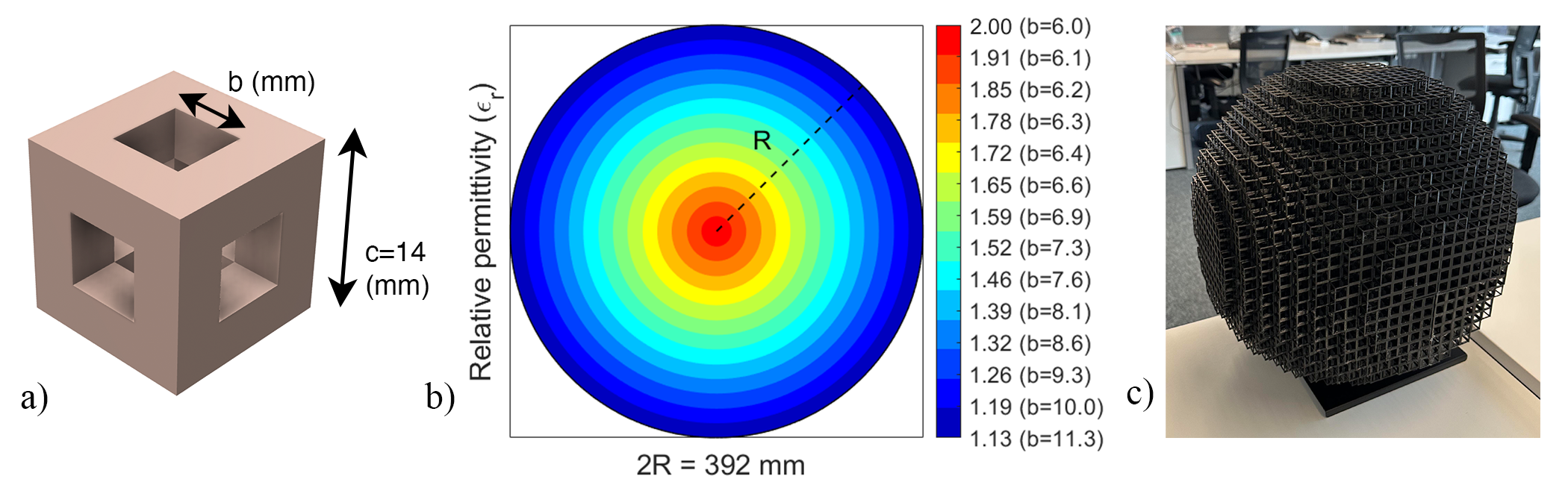
Figure 1: GRIN Luneburg-type metamaterial design, illustrating the unit cell and refractive index variation.
The metamaterial lens is fabricated using PLA, discretized to achieve the desired refractive index profile, ensuring compatibility with the EIT effect. The work utilizes numerical simulation to optimize the lens’s focusing gain, resulting in significant improvements in experimental settings.
Experimental Setup and Sensitivity Improvement
The experimental setup integrates a GRIN lens with a Rydberg RF receiver, utilizing Cesium vapor cells under 2.2 GHz and 3.6 GHz excitations. The study quantifies the sensitivity enhancement by comparing the EIT window with and without the lens. The inclusion of the GRIN lens effectively doubles the EIT splitting, thereby enhancing receiver sensitivity across an ultrawide bandwidth.
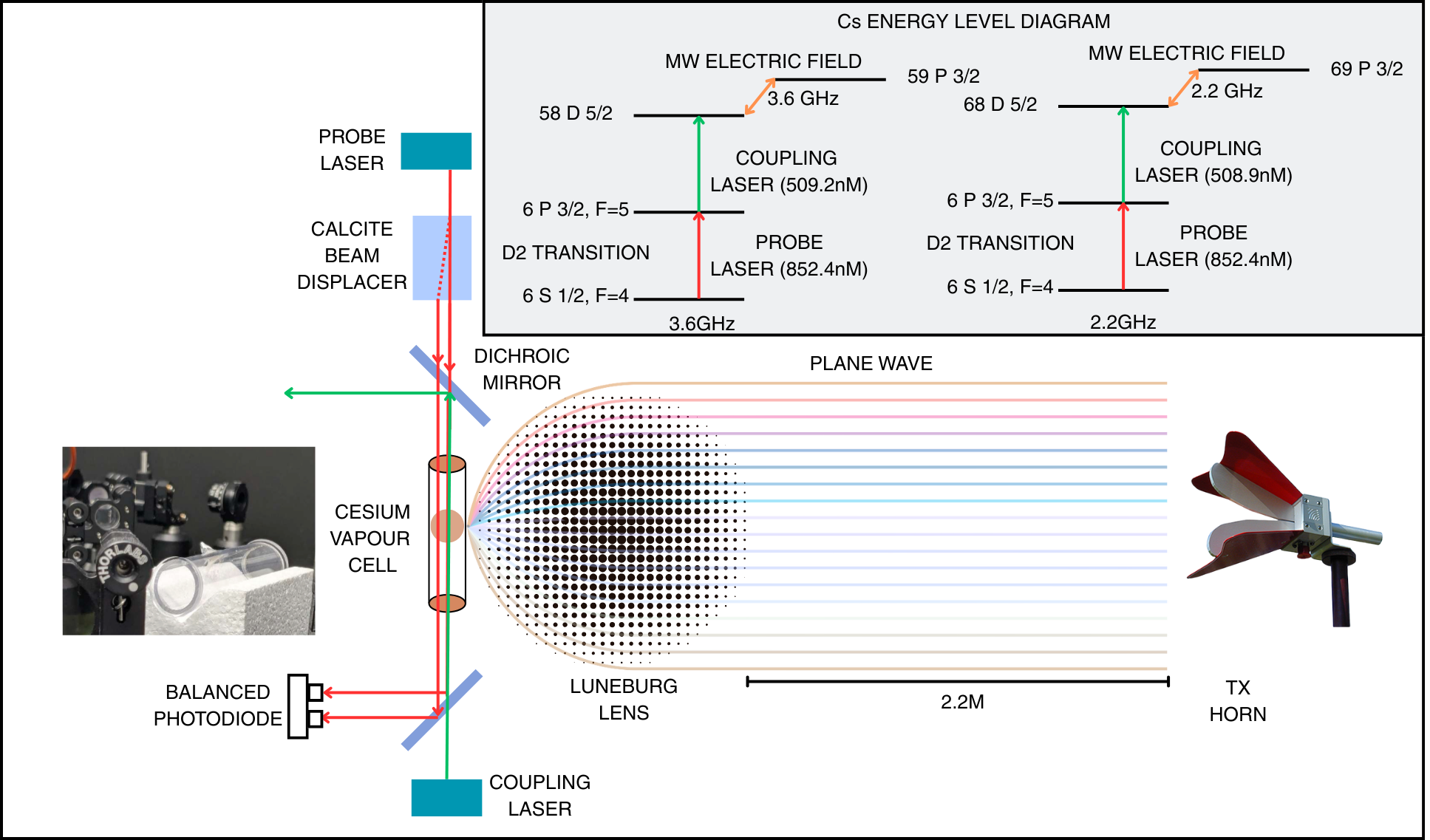
Figure 2: Schematic diagram of the experimental setup with GRIN lens integration.
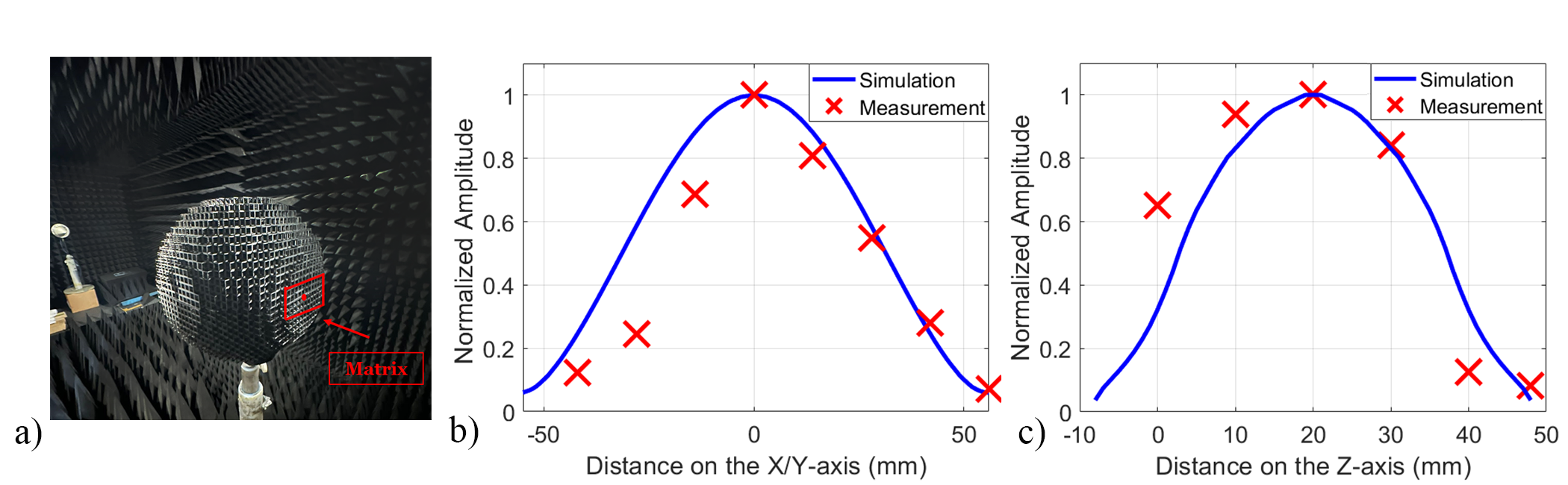
Figure 3: Testing in the anechoic chamber, showing measurements and simulation results.
The experiment evidences that the metamaterial lens vastly improves the receiver's capability in detecting minimal electric fields, validated through anechoic chamber measurements, confirming alignment with theoretical expectations.
Implications and Future Prospects
The implications of these findings are substantial for applications such as quantum radar, EMC testing, and wireless communications. The passive nature of the GRIN lens avoids common pitfalls associated with other sensitivity enhancement methods, such as resonant structures. By substantially increasing sensitivity without narrowband or spurious emission drawbacks, this method presents a cost-effective and scalable solution for advanced RF sensing applications.
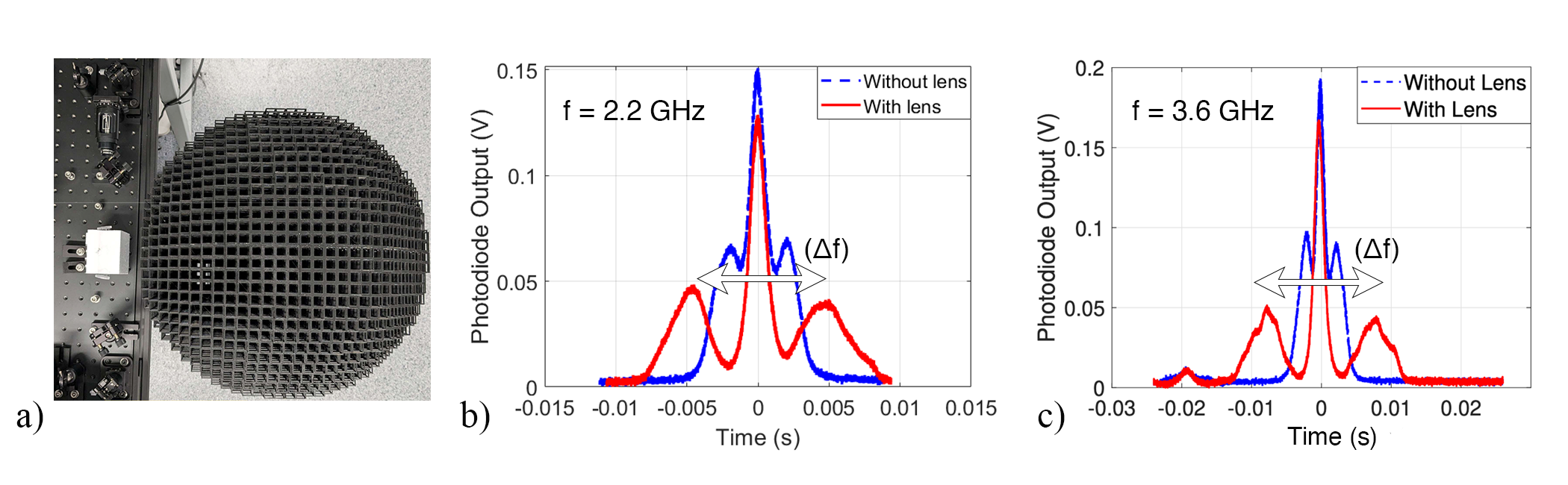
Figure 4: Enhancement of EIT window observed in experimental results with lens application at distinct frequencies.
Conclusion
This study presents a notable advancement in Rydberg RF receiver sensitivity, leveraging metamaterial GRIN lens technology. The enhancements in sensitivity provide a compelling case for its application in various domains requiring high sensitivity RF detection. Future research could explore further optimization of lens design and expand testing to a broader frequency range, potentially extending its applicability and effectiveness.
The integration of this innovative approach showcases the potential for metamaterial-enhanced quantum RF sensing in emerging technologies, highlighting the intersection of quantum physics and practical engineering solutions.