- The paper demonstrates that nonlinear saturation of ballooning modes produces metastable flux tube states, critical for understanding MHD limits in stellarators.
- It employs a generalized flux tube model with variational energy evaluation, rigorously benchmarked against COBRAVMEC and M3D-C1 simulations.
- Findings indicate that metastable equilibria in linearly stable regimes may trigger abrupt MHD events, informing improved stellarator design.
Nonlinear Saturation of Ballooning Modes in Stellarators: An In-Depth Analysis
Introduction and Motivation
This study presents a comprehensive investigation into the nonlinear saturation of ballooning modes in stellarators, leveraging the field-aligned flux tube model generalized to non-axisymmetric geometry. The driving motivation is the ambiguous nature of MHD β-limits in stellarator operation, where experimental evidence reports both soft and hard limits not predictable solely from linear theory. In particular, ballooning modes—well understood in the linear regime—exhibit nonlinear saturation phenomena that are critical both for the design of stellarator equilibria and the mitigation of deleterious MHD events analogous to ELMs in tokamaks.
By adapting the flux tube model of Ham et al. to account for stellarator-specific force balance issues and developing a variational method for energy evaluation, this research establishes a robust approach to probe the nonlinear regime of ballooning instabilities in three-dimensional equilibria.
The core methodology is the application of the thin flux tube approximation along field lines on so-called α-surfaces (surfaces tangential at every point to the unperturbed field lines). A small but finite flux tube is displaced from its original location and allowed to slide along the α-surface without altering the magnetic topology, thus avoiding field line reconnection and maintaining the order of the configuration.
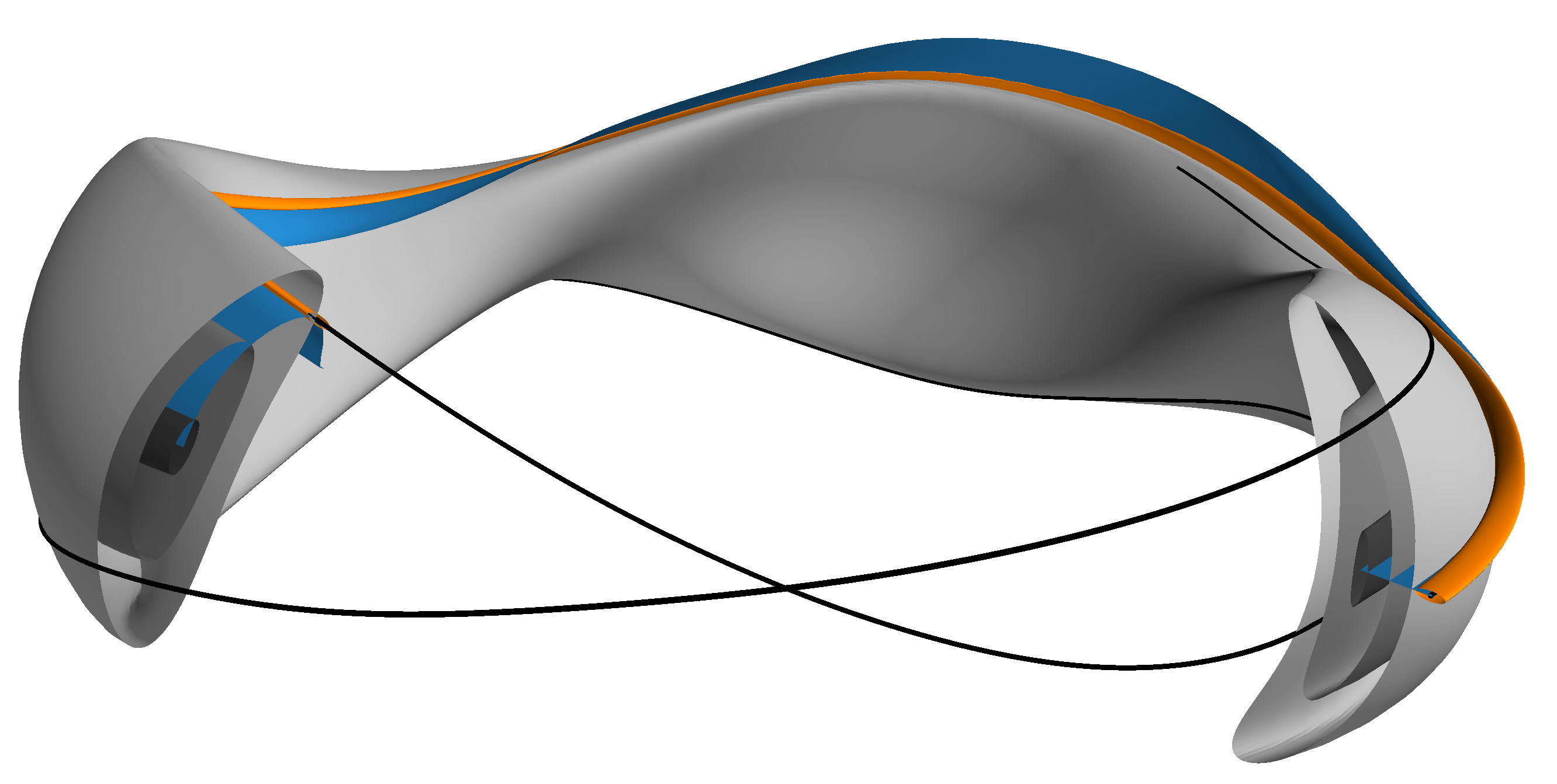
Figure 1: An illustration of the geometry of the flux tube model using a compact QA equilibrium. The displaced flux tube remains tangential to the α surface, aligned with the equilibrium field lines.
Radial displacements η(ζ), parameterized along the field-aligned toroidal coordinate ζ, are determined by a nonlinear system derived from perpendicular MHD force balance. The equilibrium inside the tube is set by parallel force balance, leading to approximately constant pin along the flux tube.
The resulting two first-order ODEs for η(ζ) and an auxiliary variable Y(ζ) encapsulate the nonlinear interaction between magnetic tension, pressure gradients (the instability drive), and changes in magnetic pressure. These ODEs are solved using a shooting or variational method, subject to Dirichlet boundary conditions at long field-line distances (η→0 as ζ→±∞).
Numerical Implementation and Benchmarks
The model is implemented using DESC for baseline MHD equilibrium computation, with equilibrium data numerically interpolated onto the field-aligned grid required for the flux tube ODE integration.
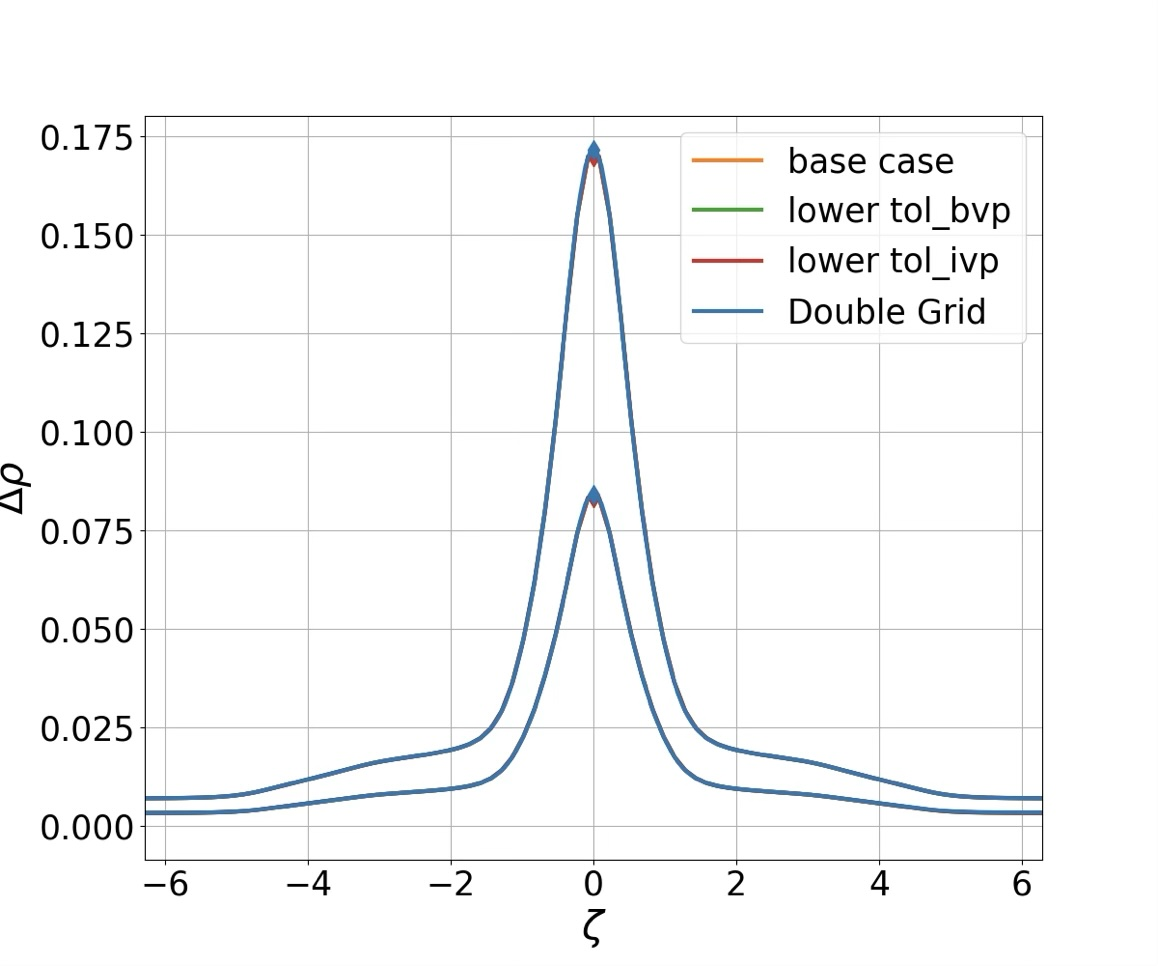
Figure 2: Typical shape of the saturated flux tube states in terms of normalized minor radius displacement, showcasing convergence across different numerical resolutions.
Rigorous benchmarks against the COBRAVMEC code in the linear regime demonstrate that the nonlinear solver reproduces linear ballooning growth rates when initialized in the small amplitude limit.
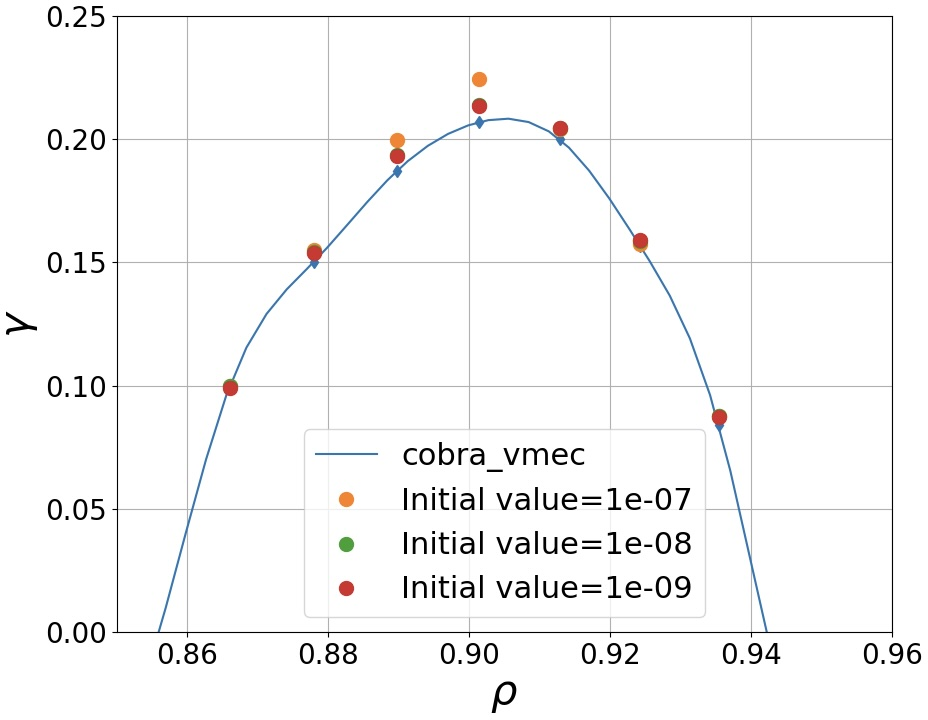
Figure 3: Benchmark against COBRAVMEC showing close agreement of calculated linear ballooning growth rates using the nonlinear model.
Validation Against Nonlinear MHD Simulation
The model predictions are directly validated by quantitative comparison with extended MHD simulations performed using M3D-C1 for Wendelstein 7-X-like configurations. Analysis of the saturated regime reveals distinct, localized pressure perturbations aligned along field lines—a key qualitative marker of ballooning flux tubes.
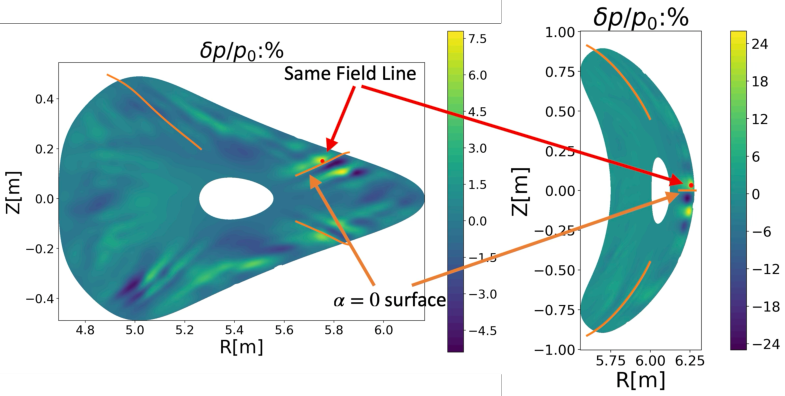
Figure 4: Pressure perturbation in M3D-C1 simulations at different toroidal cross-sections. The red dots trace a field line intersecting regions of maximum pressure perturbation, aligned with α-surfaces.
Analysis of the total pressure and field-line-aligned pressure from the simulations confirms the core theoretical assumptions: continuity of total pressure across the flux tube and approximate constancy of pin within the displaced tube.
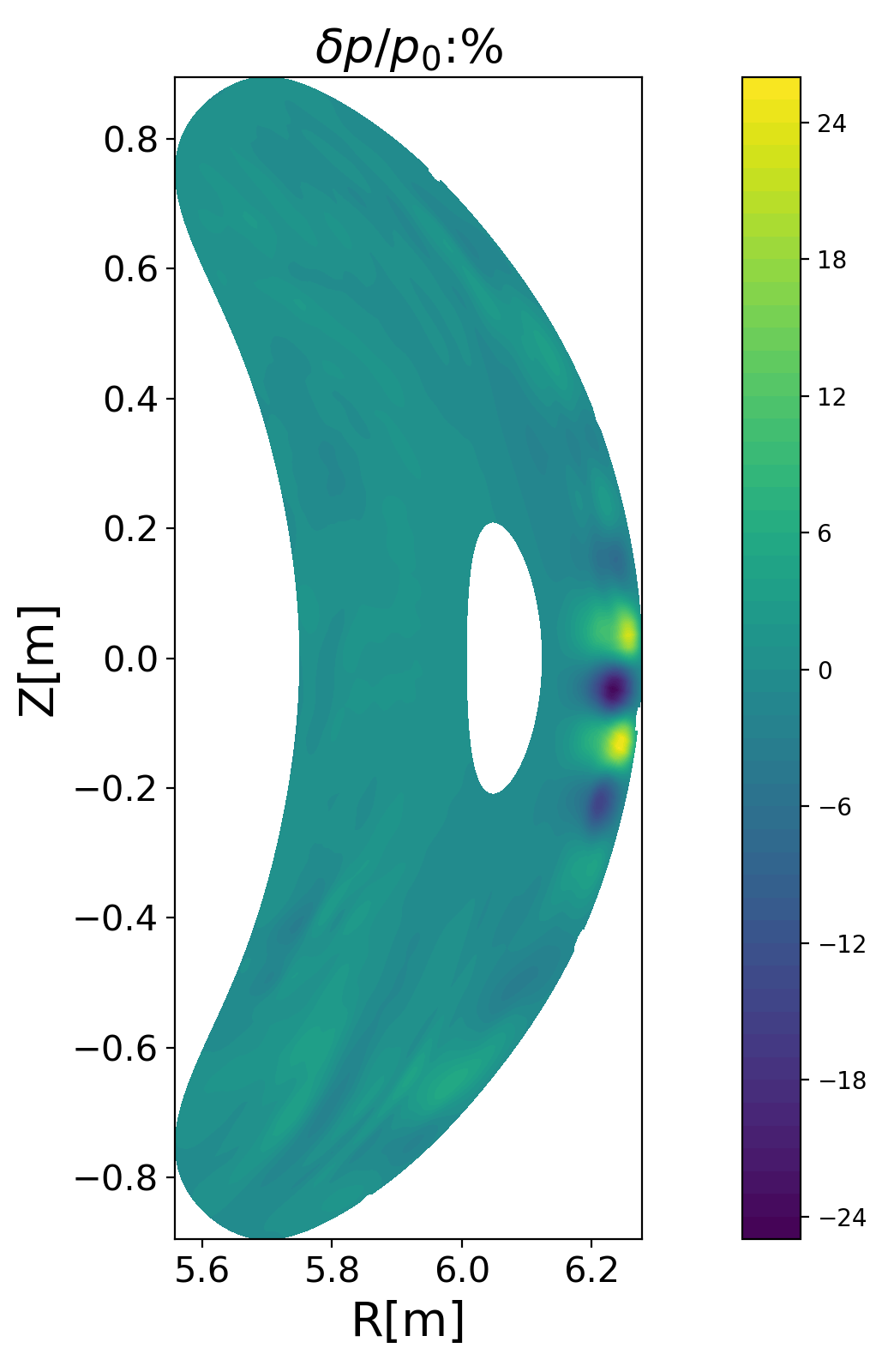
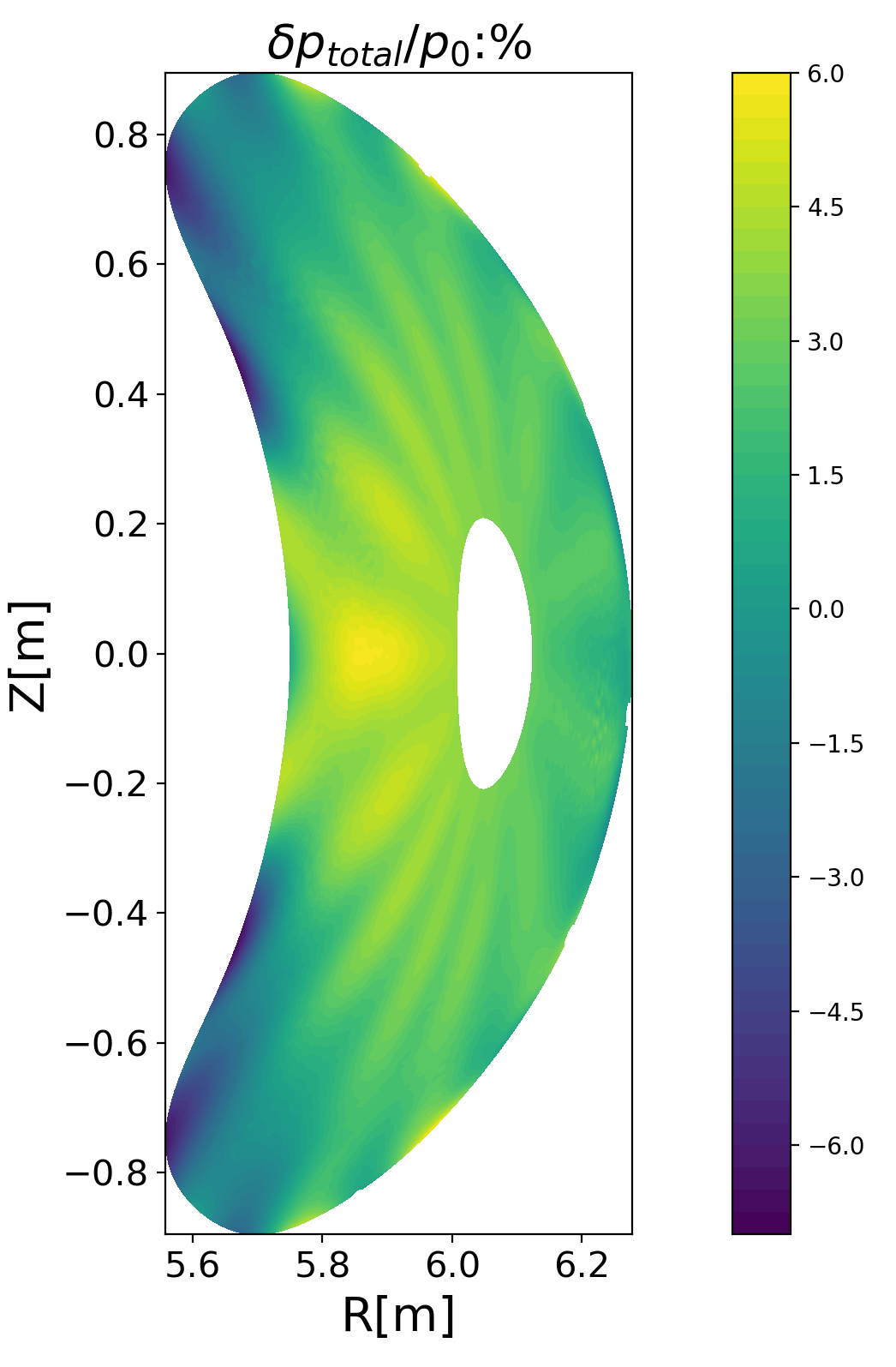
Figure 5: Pressure perturbation on selected cross-sections, confirming the structural alignment and pressure continuity.
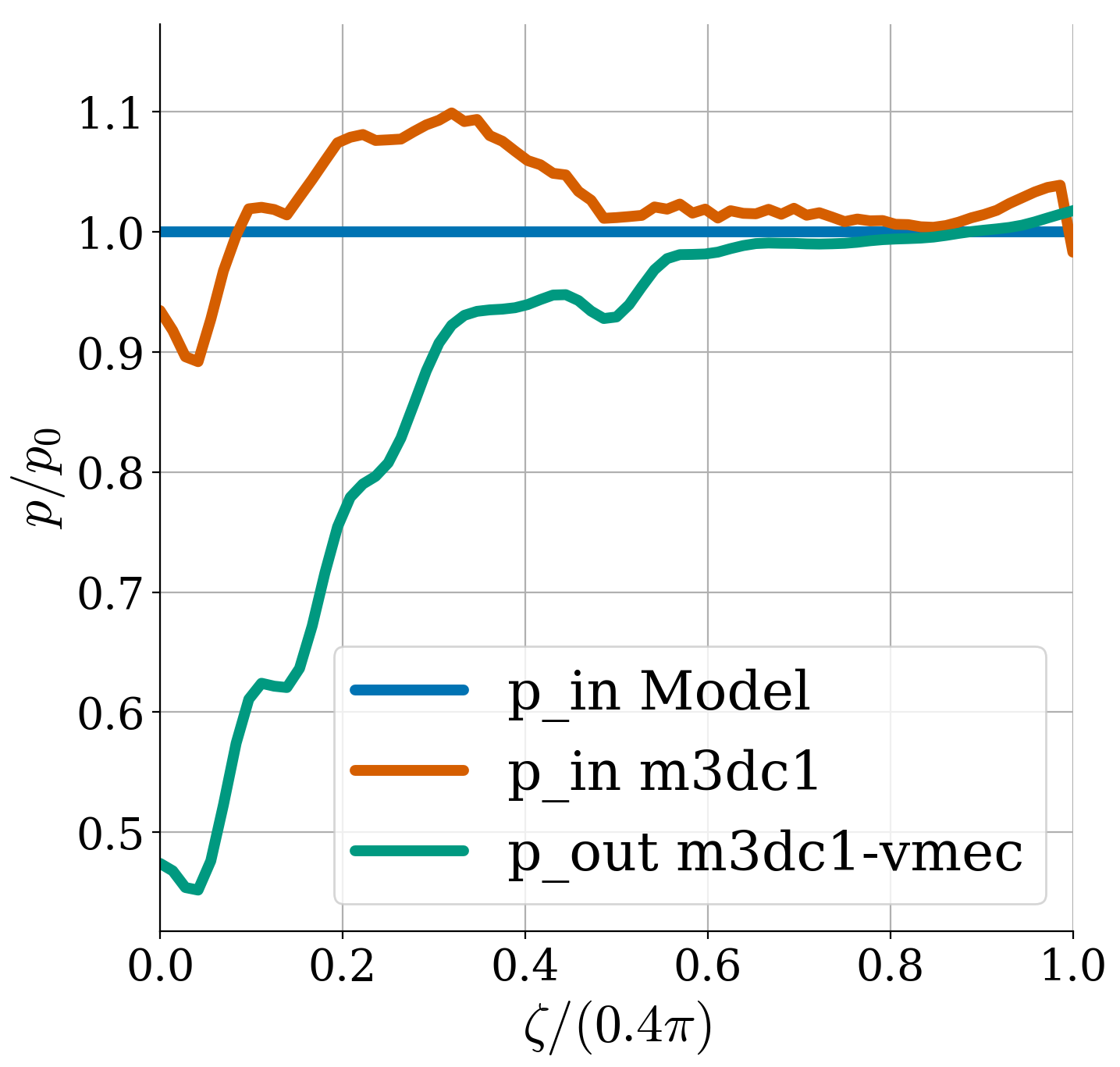
Figure 6: Comparison of pressure inside and outside the flux tube in simulation and theoretical model, validating the constancy assumption for pin.
The shape of the simulated saturated flux tube is compared directly against the theoretical prediction, indicating robust agreement along the central portion of the tube.
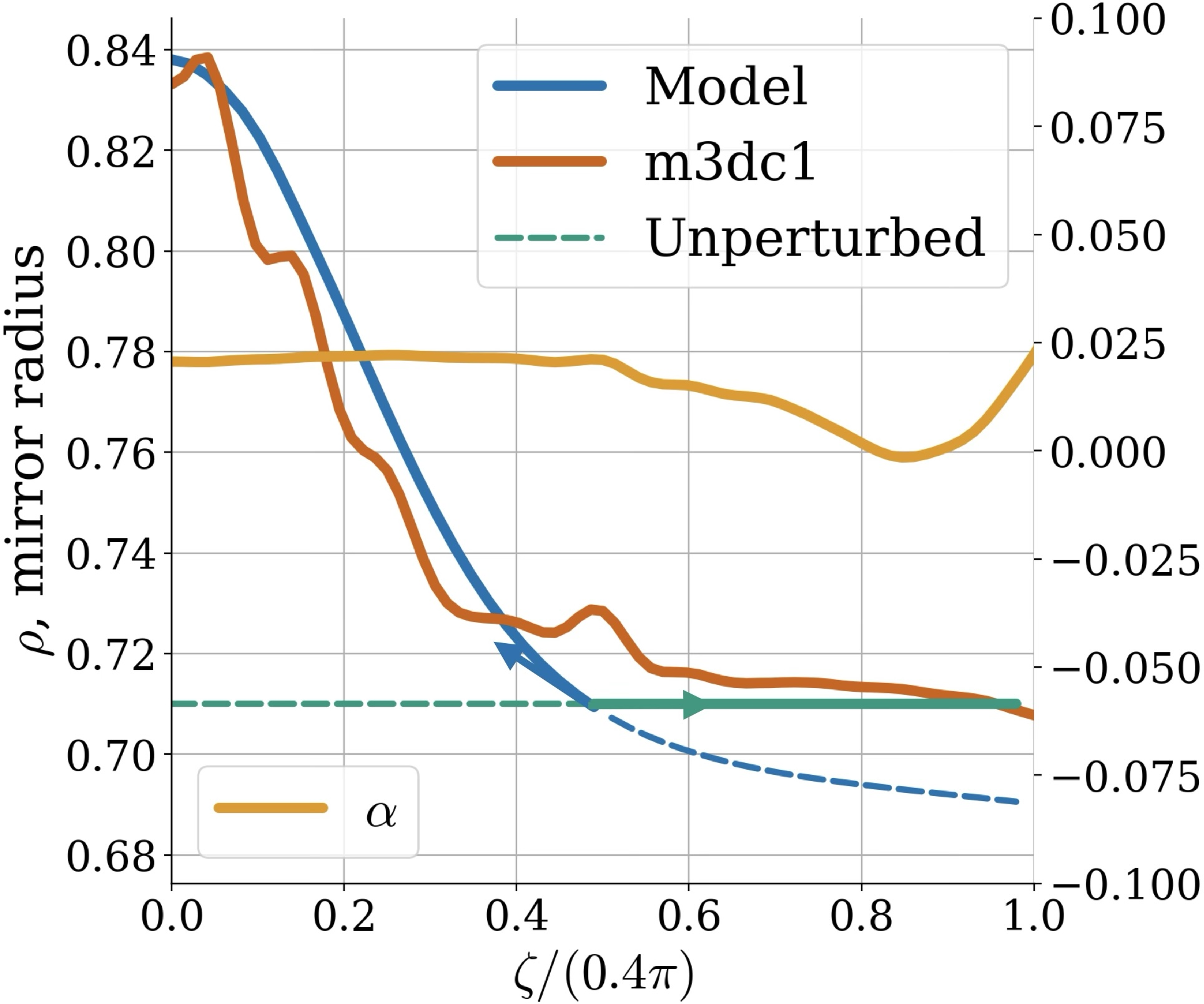
Figure 7: Comparison between the simulated flux tube and the nonlinear model prediction, with alignment at the pressure peak and displacement evolution along the tube.
Both inward- and outward-ballooned flux tubes are captured, with similar agreement between theoretical and simulation results.
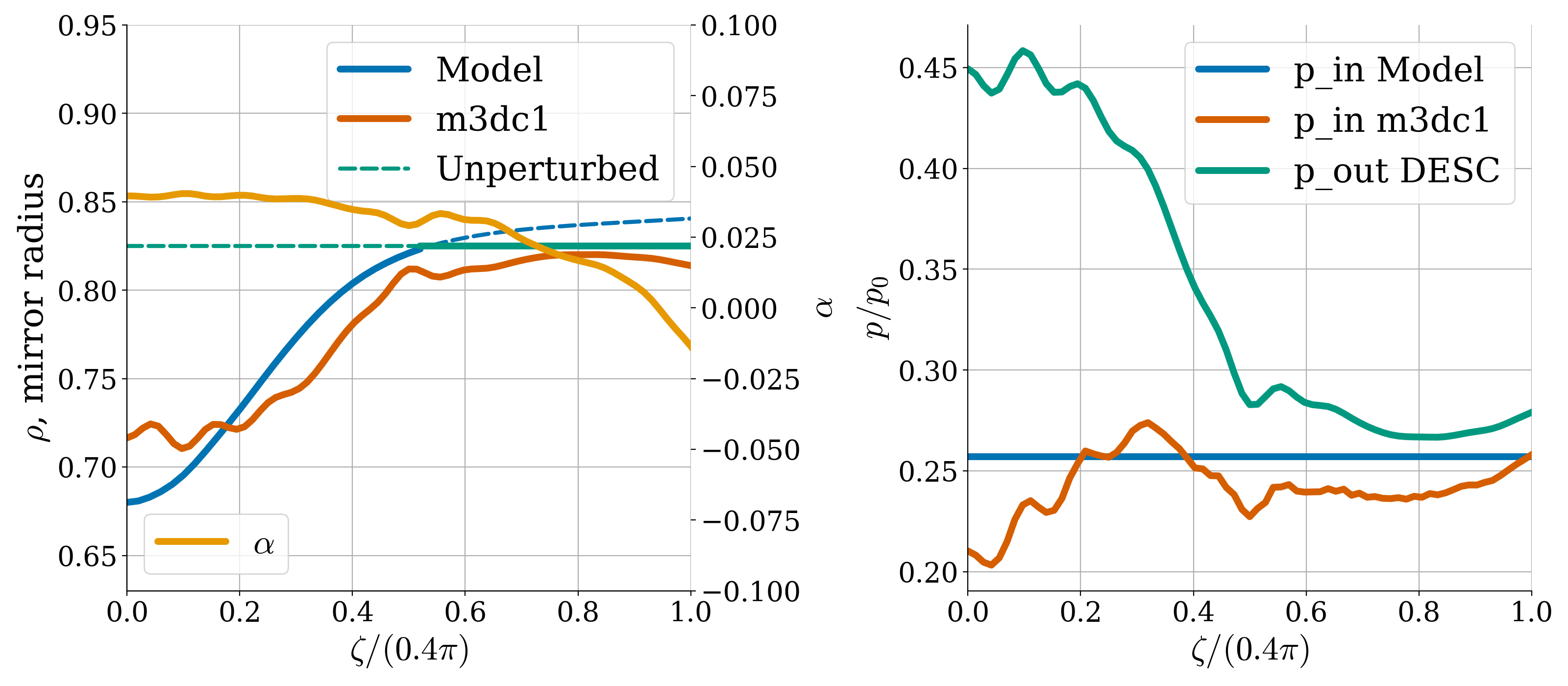
Figure 8: Inwardly ballooned flux tube comparison; the pressure inside and outside the simulated tube agrees with model assumptions and reconstruction.
Calculation of the energy barrier for the formation of a saturated flux tube is central to determining metastability and the possibility of hard MHD events. The integration variable is shown to be critical—the Boozer toroidal angle yields well-behaved energy densities, while naive integration along the cylindrical angle does not.
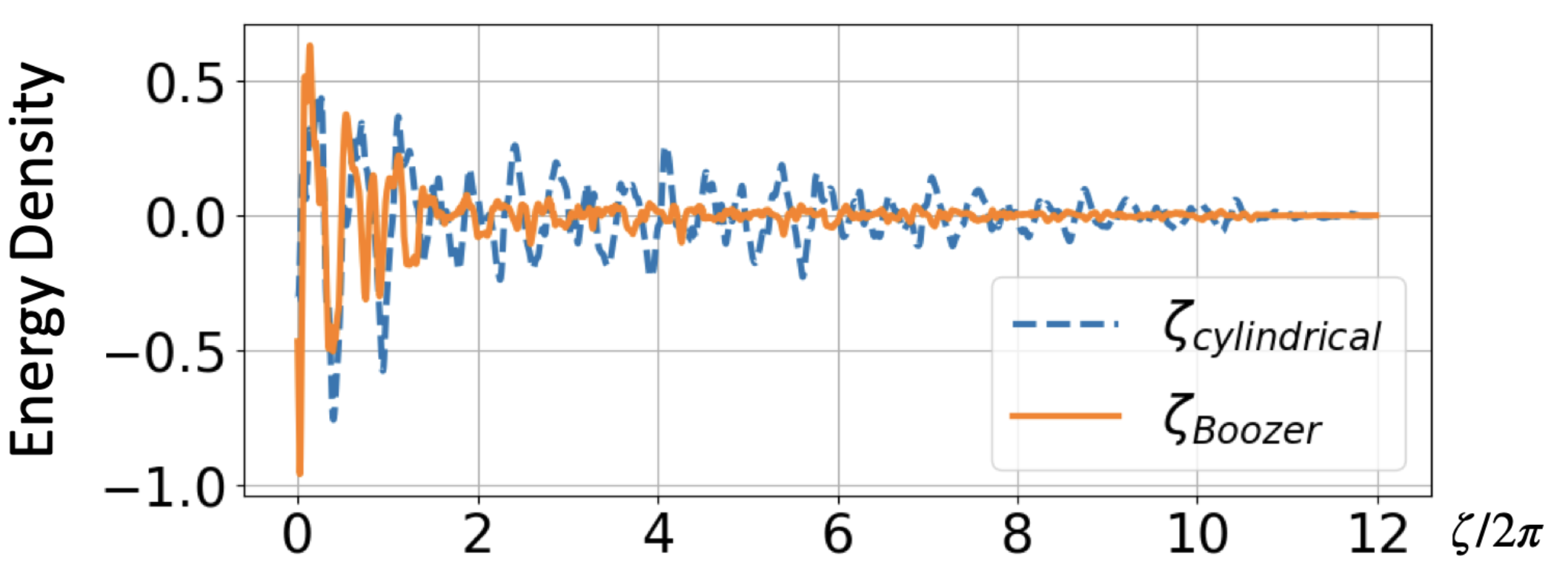
Figure 9: Energy density of a flux tube as a function of toroidal angle, illustrating the need for the correct flux coordinate (Boozer angle) for convergence.
Stellarator numerical equilibria generally contain non-negligible force errors; direct energy integration can yield non-convergent and physically incorrect results. A variational method based on piece-wise C1 flux tubes, with energy evaluated from the jump in magnetic tension at controlled discontinuities, circumvents these issues and produces sharply convergent energy curves.
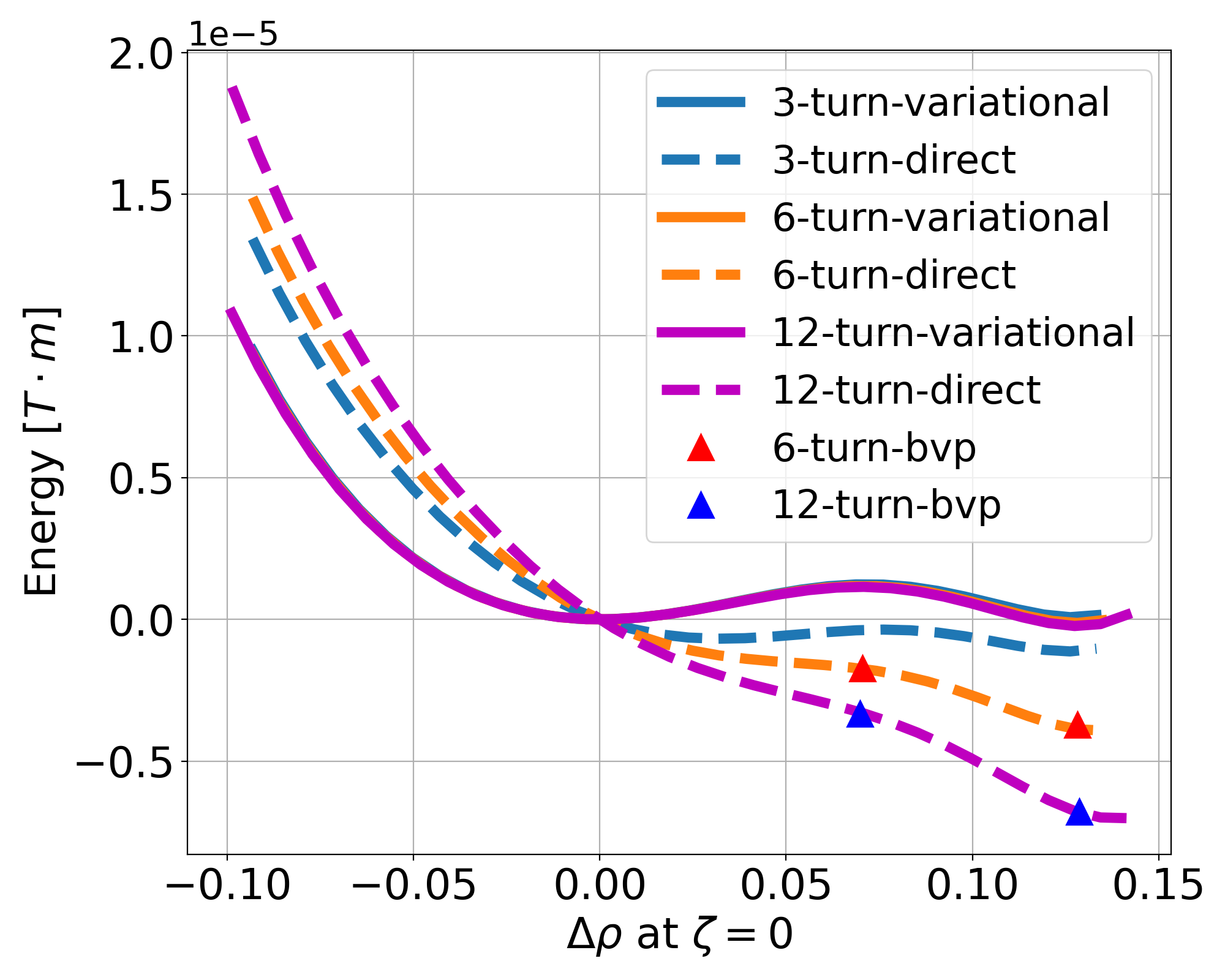
Figure 10: Comparison between variational and direct energy calculation, demonstrating strong agreement in low-force-error (tokamak) equilibria and highlighting the importance of force error subtraction.
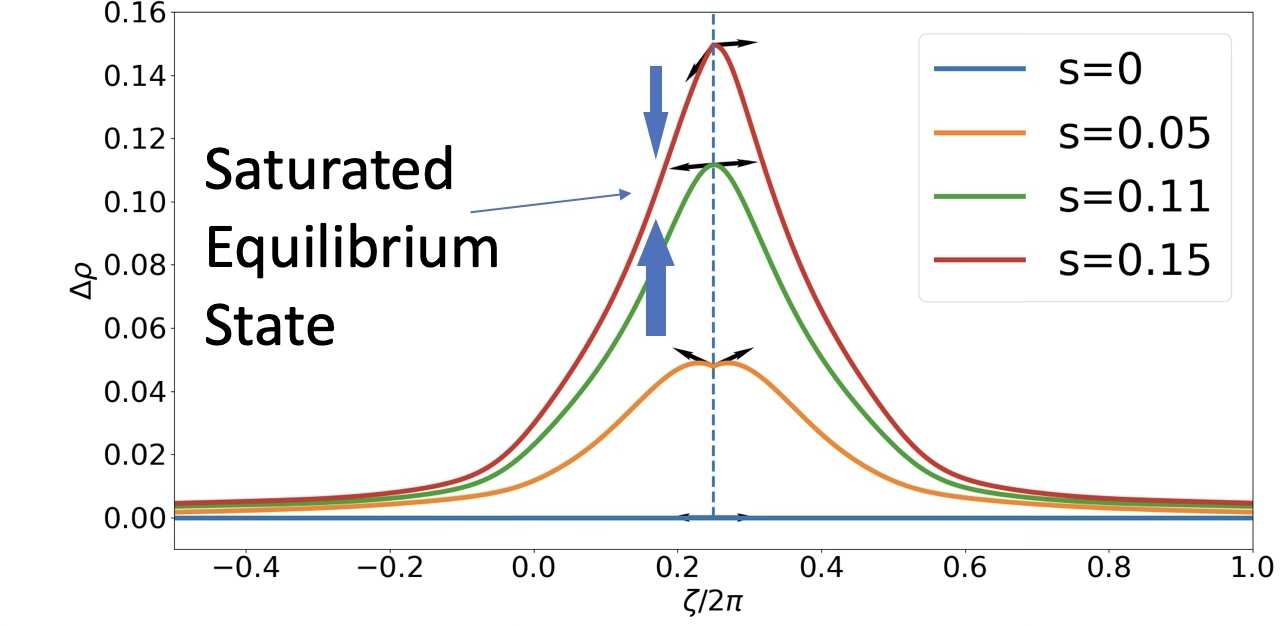
Figure 11: Family of piece-wise C1 flux tubes used in variational energy calculations. Stable and unstable saturated states correspond to minima and maxima, respectively, of the energy curve as a function of displacement at the cut location.
Stationary points on the energy curve—local minima (stable) and maxima (unstable)—correspond directly to the saturated equilibrium states found via ODE integration. The variational method yields energy values robust to the choice of cut location and box size, subject to equilibrium resolution.
Case Studies in Compact QA Stellarators
In compact QA equilibria, the full methodology is applied near and below the marginal linear stability boundary.
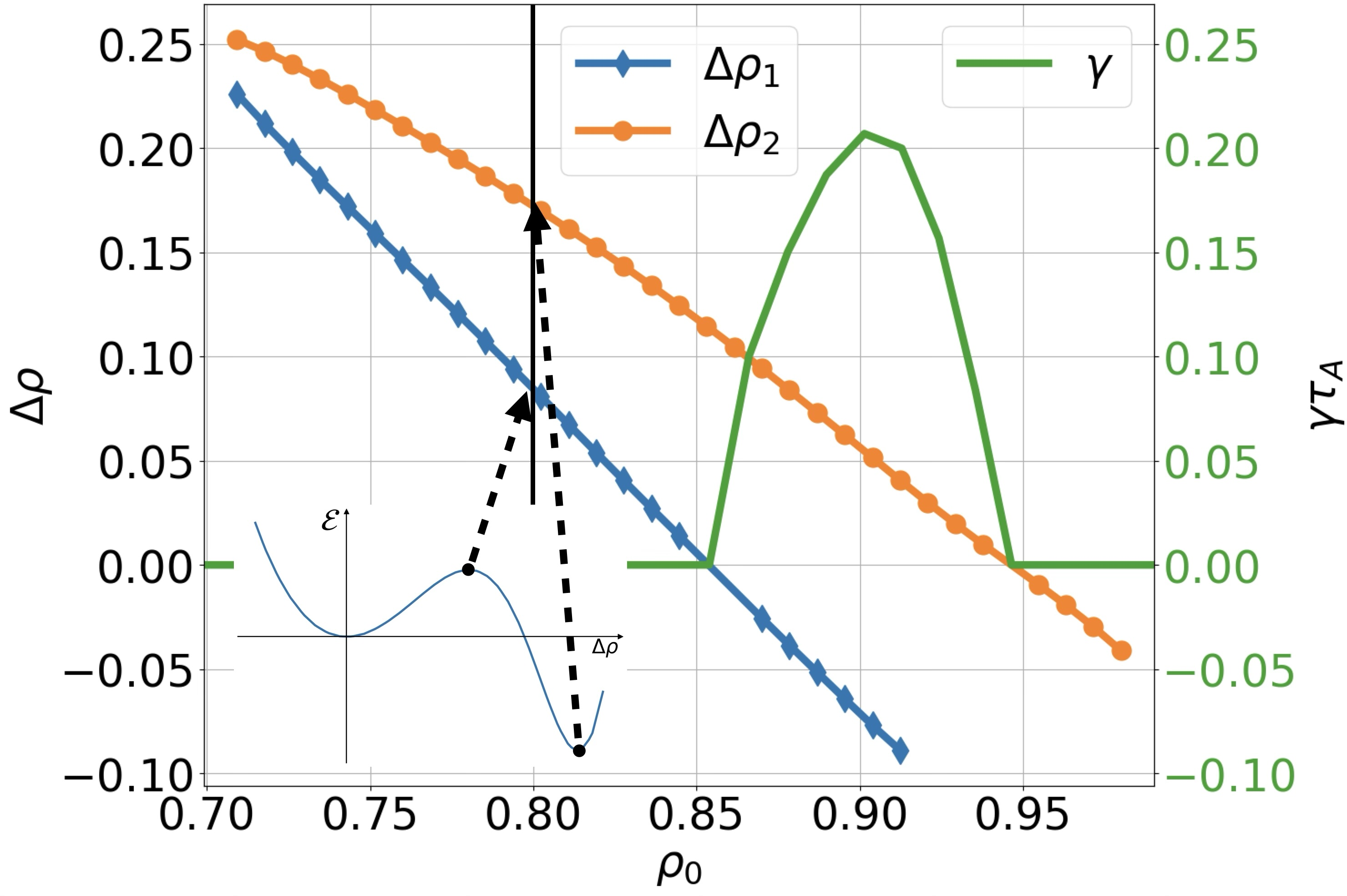
Figure 12: Saturated flux tube maximum displacement as a function of radial location. Both stable and metastable states are identified, the latter corresponding to regions just below linear instability.
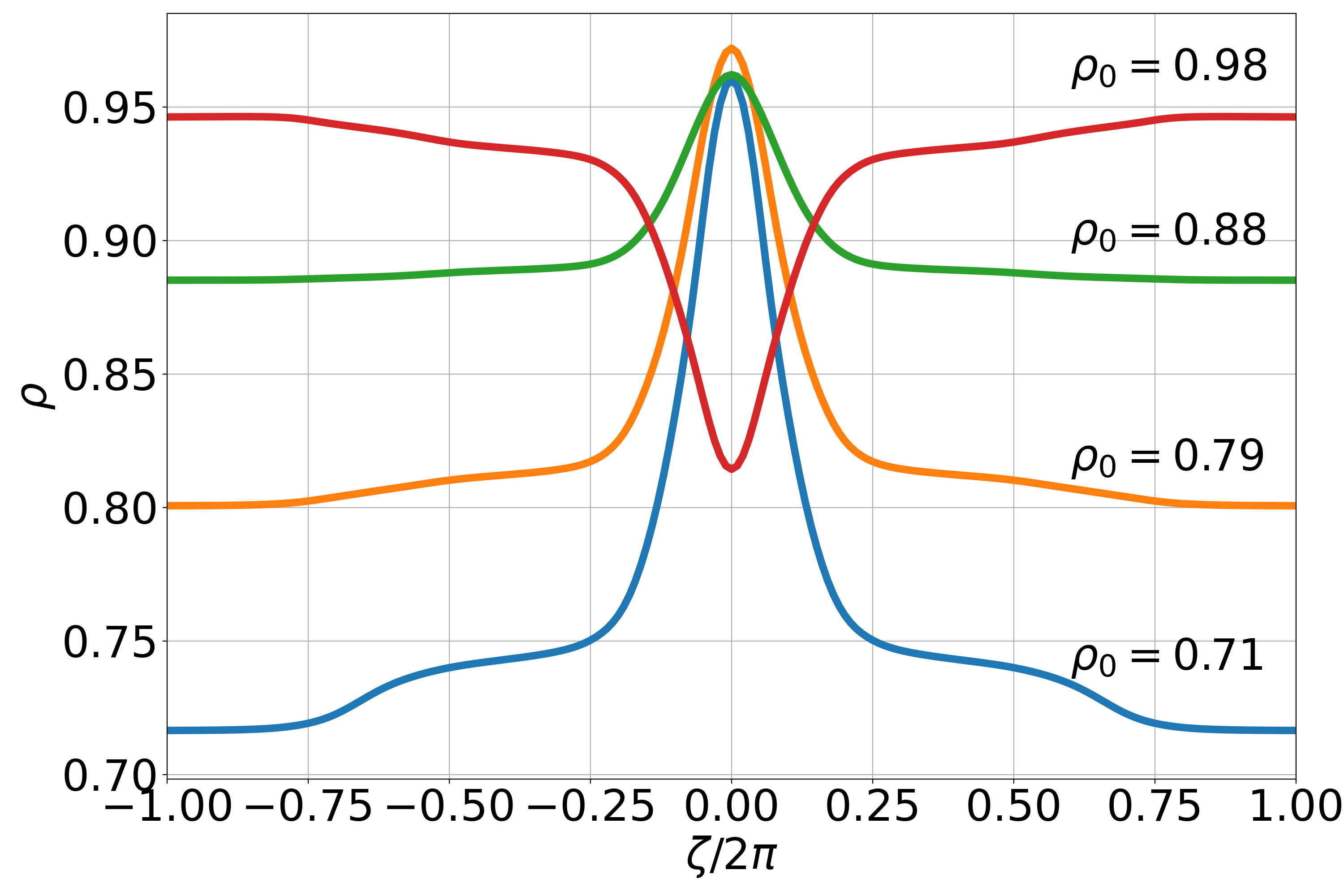
Figure 13: Profiles of saturated flux tube shape for several unperturbed radii, contrasted with the unperturbed configuration.
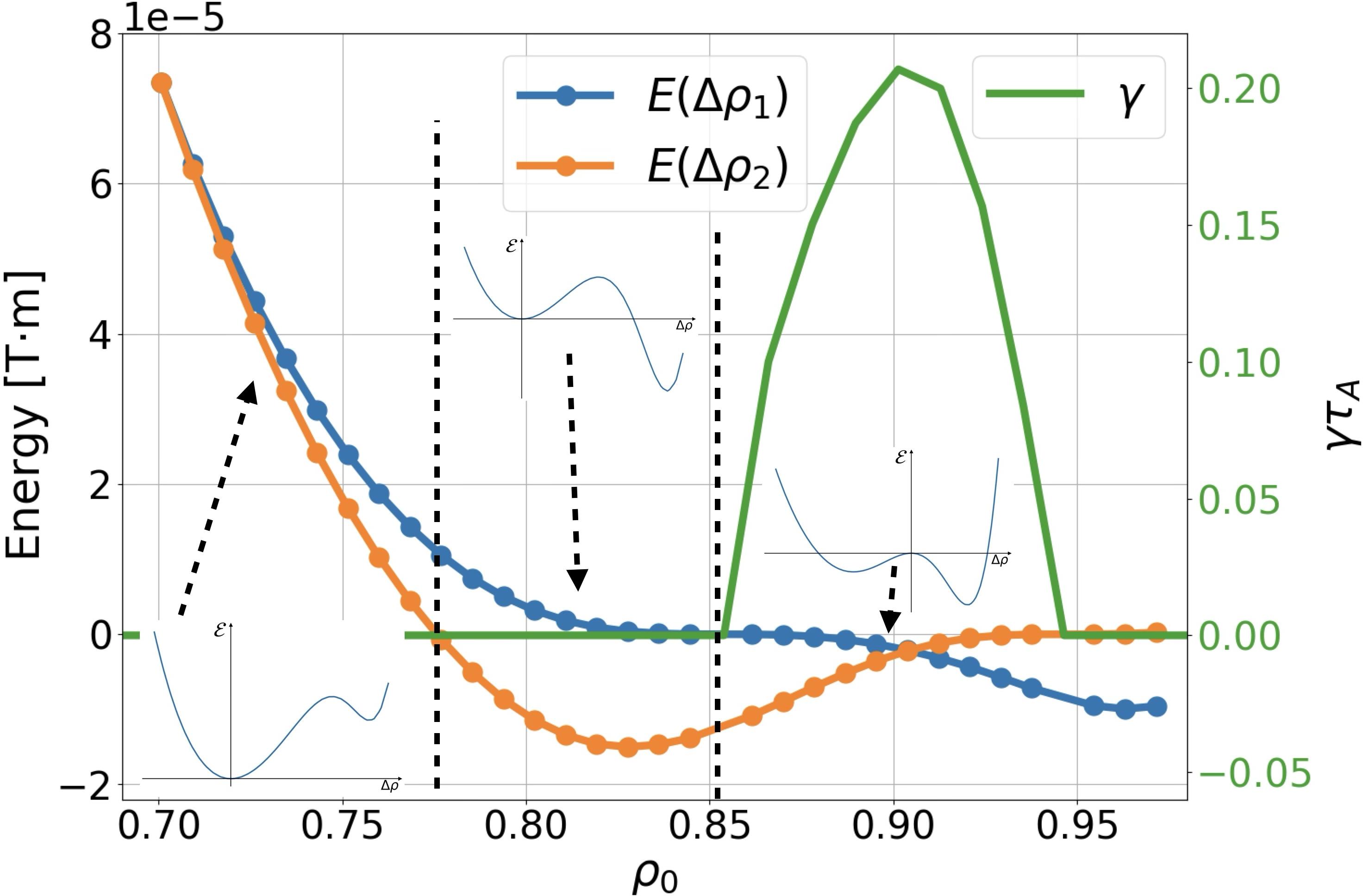
Figure 14: Energy release profile for saturated flux tubes, indicating the presence of both metastable and unstable states depending on minor radius.
Critically, metastable flux tubes are observed for profiles just below the linear ballooning boundary: these states are linearly stable but admit lower energy nonlinear equilibria, implying susceptibility to finite-amplitude perturbations and thus the potential for abrupt, ELM-like events even absent linear instability.
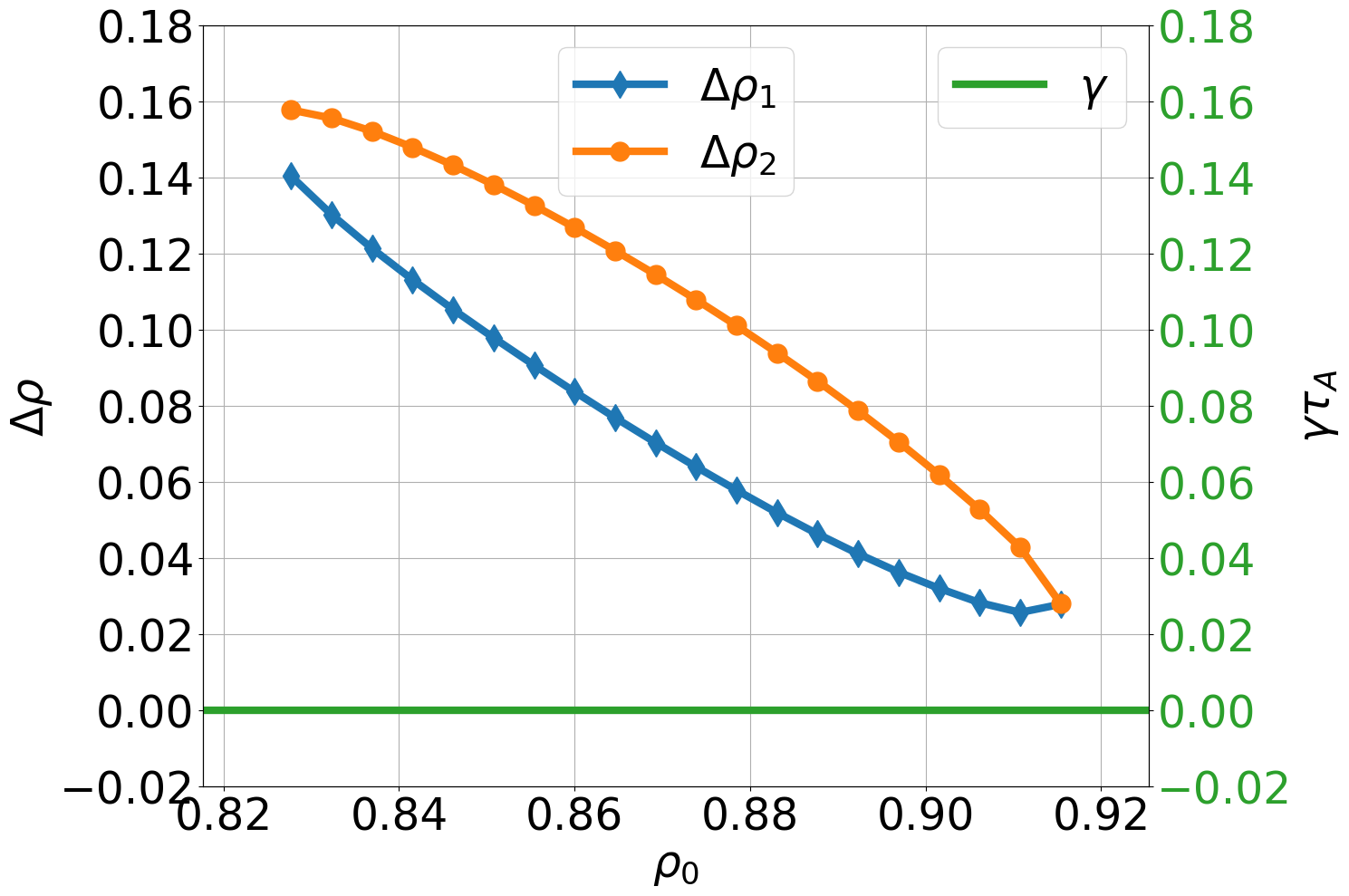
Figure 15: Displacement of metastable flux tubes in a scaled, linearly stable equilibrium, with finite but reduced energy release.
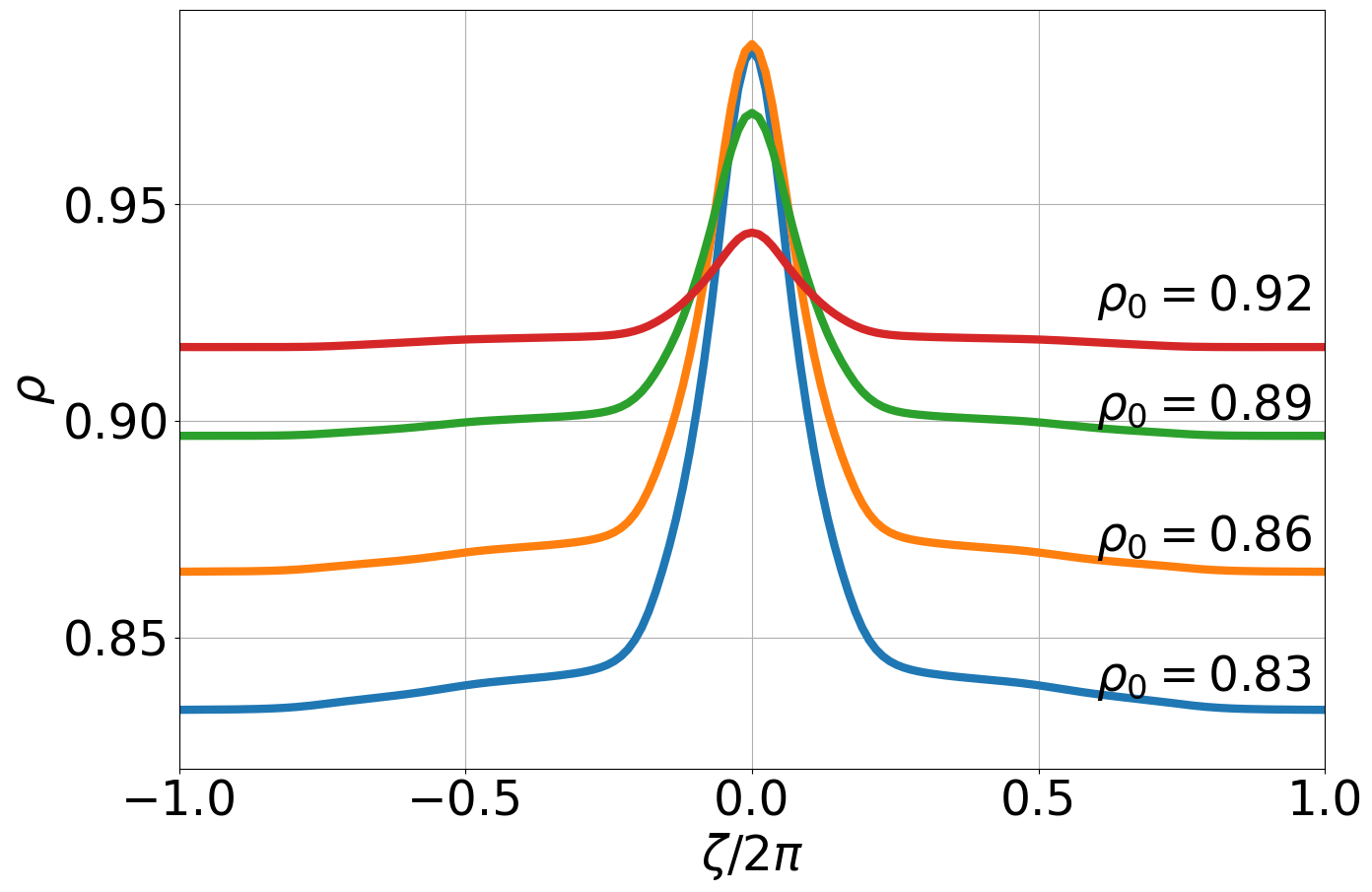
Figure 16: Shape of saturated flux tubes in the metastable, globally linearly stable regime.
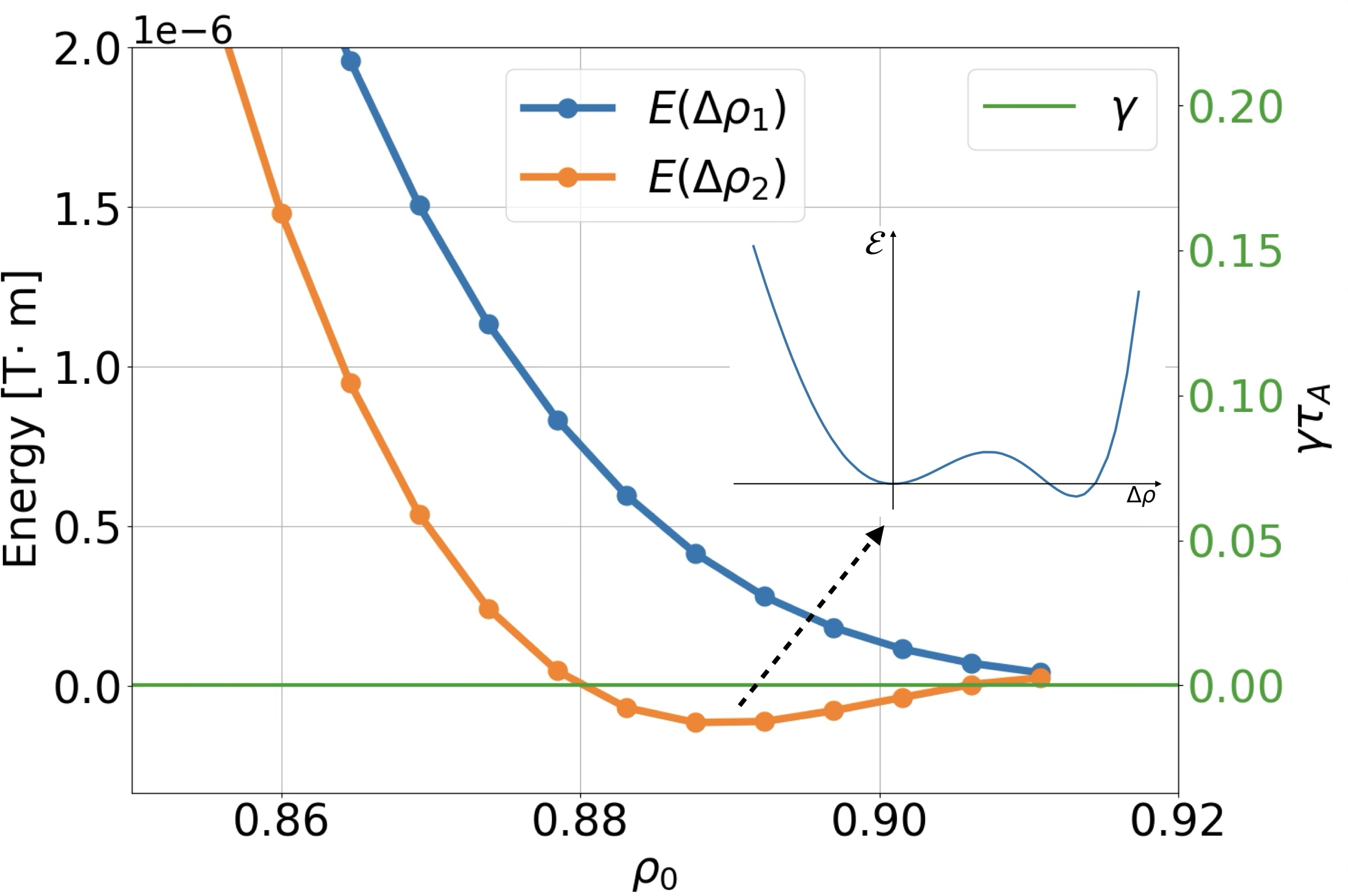
Figure 17: Energy of metastable flux tubes in the subcritical equilibrium; small but finite energy barrier indicates possible nonlinear MHD events.
Implications and Future Directions
This work rigorously demonstrates that metastable ballooning flux tube states exist in stellarators—analogous to those previously found in tokamaks—in general three-dimensional geometry. The presence of these metastable equilibria implies the possibility of "hard" β-limits and abrupt MHD events in stellarators, offering a mechanistic basis for rare, ELM-like behavior observed in some experiments. The tools developed here—specifically, the variational energy calculation methodology and the robust handling of stellarator equilibrium data—can be immediately leveraged in the analysis of future reactor designs and advanced stellarator scenarios.
The sensitivity of nonlinear saturation calculations to equilibrium detail underscores the necessity for high-fidelity, force-balanced equilibria in both theoretical and computational studies. Additional work is required to classify the configuration dependence of saturated state characteristics (e.g., energy release, displacement magnitude) and to explicitly connect these findings to experimentally observable phenomena such as MHD bursts.
Conclusion
This paper extends the flux tube model of nonlinear ballooning mode saturation to realistic stellarator geometries, addresses force balance challenges in numerical equilibria, and validates theoretical predictions by direct comparison with global nonlinear MHD simulation. The discovery of metastable, lower-energy flux tube states in linearly stable equilibria has significant implications for the operational limits and event phenomenology of stellarators. The methodological advances and benchmarked results provide a foundation for further exploration of nonlinear MHD physics in 3D fusion devices.
Reference: "Nonlinear Saturation of Ballooning Modes in Stellarators" (2602.17964)