- The paper presents a novel algorithm, the 'Doomsday Algorithm', that uses quantum post-selection in a many-worlds context to create subjective instances of P=NP.
- It constructs a quantum circuit that leverages destructive observer elimination to isolate branches where NP solutions are efficiently obtained.
- Although theoretically provocative, the approach brings exponential anthropic costs, challenging both practical feasibility and ethical boundaries in computation.
Quantum Suicide and the Computational Implications for P vs NP
Introduction
The manuscript "Quantum Suicide in Many-Worlds Implies P=NP" (2603.28869) addresses the P vs NP question via a speculative application of quantum post-selection, leveraging the many-worlds interpretation (MWI) of quantum mechanics and the quantum suicide (QS) thought experiment. The methodology constructs a highly unconventional yet internally consistent pathway whereby, conditioned on the survival of observers through a QS protocol, observers would find themselves in universes where NP problems are solved in polynomial time, due to subjective post-selection in the MWI framework.
Algorithmic Framework and Quantum Post-Selection
The central proposal is the "Doomsday Algorithm," which exploits the subjective certainty attached to quantum suicide under MWI. The algorithm operates as follows:
- The quantum system prepares a uniform superposition over all possible solutions to an NP problem instance.
- Verification—formally a polynomial-time quantum circuit—encodes result validity on an ancilla qubit.
- Application of a destructive "doomsday channel" annihilates all conscious observers in those branches where the ancilla does not signal a valid solution.
By the nature of quantum post-selection and MWI, only those branches where the correct solution was selectably present survive. Measurement in the computational basis in these branches yields the NP solution with certainty, and every surviving observer would perceive that NP search was efficiently resolved—effectively P=NP in all conscious histories.
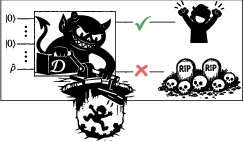
Figure 1: A schematic for implementing the Doomsday Algorithm, where a Maxwell's demon orchestrates the destructive post-selection conditional on verification failure.
Technical Construction
The protocol is instantiated via a quantum circuit:
- Initial state: ∣ψ0⟩=∣0n⟩S⊗∣0⟩A.
- Hadamard gates generate an equal superposition across all candidate bit-strings.
- Unitary U marks the solution via U∣s,y⟩↦∣s,y⊕f(s)⟩, where f(s) is the verifier.
- The doomsday channel D, controlled on the ancilla, irreversibly destroys all observers conditional on verification failure.
The population of branching universes in the MWI framework ensures one branch remains where the observer is both alive and in possession of the NP solution. The physical resource cost—intuitively the body count of observers—is exponential in the size of the NP instance, transmuting computational complexity into existential risk.
Numerical and Logical Claims
The work asserts that, subjectively, all surviving observers will reach the unanimous conclusion that P=NP, as every implementation of the protocol produces apparent polynomial-time NP solutions in their respective history. However, the exponential scaling is not circumvented but displaced: what was exponential time becomes exponential anthropic loss. Practically, the protocol's utility is entirely nullified by the catastrophic selection cost, as evidenced by the annihilation of non-winning branches.
Theoretical Consequences
On a theoretical level, this construction radicalizes the notion of computational complexity: the distinction between feasible and infeasible computation is rendered observer-dependent given quantum post-selection. Within any branch hosting a conscious observer, standard complexity-theoretic barriers vanish for the class NP, but only at the expense of exponential culling of all other possible histories.
This reframing underscores the limits of physical implementations of complexity classes: constraints in computational complexity are, in this scenario, not absolute but contingent upon the measure problem in quantum mechanics and the willingness to embrace anthropic selection mechanisms with extreme ethical and existential consequences.
Practical Implications and Future Developments
Practically, this algorithm is infeasible under any physically meaningful implementation for anthropic and ethical reasons. Nevertheless, the construction offers provocative insights into the interface between computational complexity, quantum mechanics, and interpretational questions in physics. The use of the QS protocol highlights how interpretations of quantum theory—specifically MWI—potentially upend foundational notions of algorithmic intractability and observer-centered physical law.
For future research, this suggests two main avenues:
- Interpretational clarity: How do subjective probabilities and the principle of self-sampling interact with computational barriers when observer selection is involved?
- Resource accounting: Can thought experiments rooted in measure-theoretic interpretations of quantum mechanics inform complexity theory, or do they only yield unphysical loopholes?
Conclusion
"Quantum Suicide in Many-Worlds Implies P=NP" articulates a novel instance of observer-dependent computational complexity predicated on quantum post-selection. While the exponential complexity barrier for NP is not objectively removed but rather shifted to existential selection across quantum branches, this work illuminates the fundamental dependence of computational hardness on both the ontology adopted in quantum physics and the principles of observer survivability. This underscores the persistent importance of physical constraints, interpretational consistency, and ethical boundaries in both quantum computing and complexity theory.