- The paper introduces a statistical framework connecting stationary abundance distributions with observed log-growth-rate statistics beyond the traditional Gaussian model.
- It demonstrates that different SDE models yield distinct LGR forms—such as generalized logistic, Laplace, or normal—based on underlying abundance distributions like Gamma or Lognormal.
- Empirical tests on global ecological data validate the approach, achieving up to 73% coherent classification across four distinct SDE regimes.
Analytical Frameworks for Growth-Rate Distributions in Stationary Systems
Background and Motivation
Growth processes are central to quantitative analyses in ecological, economic, and social systems. Traditional approaches often hinge on Gibrat's Law, which models the evolution of system size (e.g., population abundance) as a multiplicative random walk, producing non-stationary lognormal distributions of abundance and normal log-growth-rate distributions with variances that grow indefinitely with lag. However, this conventional view does not universally capture empirical behaviors observed in many real datasets, particularly in ecological time series where regulation and stationarity are prevalent. Notably, empirical growth-rate distributions are frequently non-Gaussian (leptokurtic), and their variances saturate, indicating stationarity and the breakdown of standard central limit arguments.
This paper provides a rigorous statistical and stochastic framework for describing growth-rate (particularly log-growth-rate, LGR) distributions in stationary regimes, moving beyond the limitations of the normal (Gaussian) null model and addressing the analytic consequences of diverse stationary abundance distributions.
Theory: Growth-Rate Distributions from Abundance Statistics
Consider stationary time series governed by Markovian SDEs with analytically tractable stationary abundance distributions. The key observable is the log-growth rate over lag τ:
g(t,τ)=lnx(t+τ)−lnx(t)
For large τ, temporal correlations vanish, and the distribution P(g,τ) converges to a null form, P∞(g), determined solely by the steady-state abundance distribution (AD), irrespective of SDE specifics. For Markovian systems, this convergence is exponential, and the variance of P(g,τ) saturates rather than exhibits diffusive growth as in Gibrat's model.
For several canonical ADs:
- Gamma AD: The asymptotic LGR distribution is a generalized logistic law, parameterized by the shape parameter α, with explicit closed-form,
P∞Γ(g;α)=Γ(α)2Γ(2α)(eg+1)2αeαg
This form interpolates smoothly between leptokurtic (low α) and nearly normal (high α) distributions, with tails approximating a Laplace.
- Inverse-Gamma AD: Also produces a generalized logistic structure for LGR distributions, but is significant for modeling heavy-tailed abundance data (populations with rare, extreme events).
- Lognormal AD: Here, the LGR distribution remains exactly normal, upholding the traditional null.
- Uniform AD: Yields a Laplace distribution for the LGR, which serves as an explanation for empirical findings of Laplacian LGRs in some systems swamped by measurement noise.
This construction justifies non-Gaussian, leptokurtic LGRs as the statistical expectation given stationary, non-lognormal ADs, contesting the pathological interpretation of such deviations. The particular case of normality is thus contingent on specific SDE constructions yielding lognormal ADs.
Connections Between SDE Models and Observed Patterns
The work systematically links families of SDEs to their induced stationary ADs and the resulting LGR null distributions:
- Type I (Gamma-distributed AD, g(t,τ)=lnx(t+τ)−lnx(t)0 models): Biogeographic SDEs with immigration and demographic noise yield a Gamma AD and a generalized logistic LGR.
- Type II (Gamma-distributed AD, g(t,τ)=lnx(t+τ)−lnx(t)1 models): Stochastic logistic equations (without immigration, but with environmental noise) yield normal LGRs.
- Type III (Inverse-Gamma AD): SDEs with linear drift and environmental noise, suitable for heavy-tailed scenarios.
- Type IV (Lognormal AD): Generalizations incorporating log-regulation, producing normal LGRs.
The paper introduces a pragmatic workflow (decision tree) for empirical selection among these regimes, based on observed behaviors of g(t,τ)=lnx(t+τ)−lnx(t)2, AD fits, and properties of g(t,τ)=lnx(t+τ)−lnx(t)3 and g(t,τ)=lnx(t+τ)−lnx(t)4. This classification is algorithmically summarized for ease of application, particularly beneficial for ecological datasets where data quality and resolution preclude sophisticated inference.
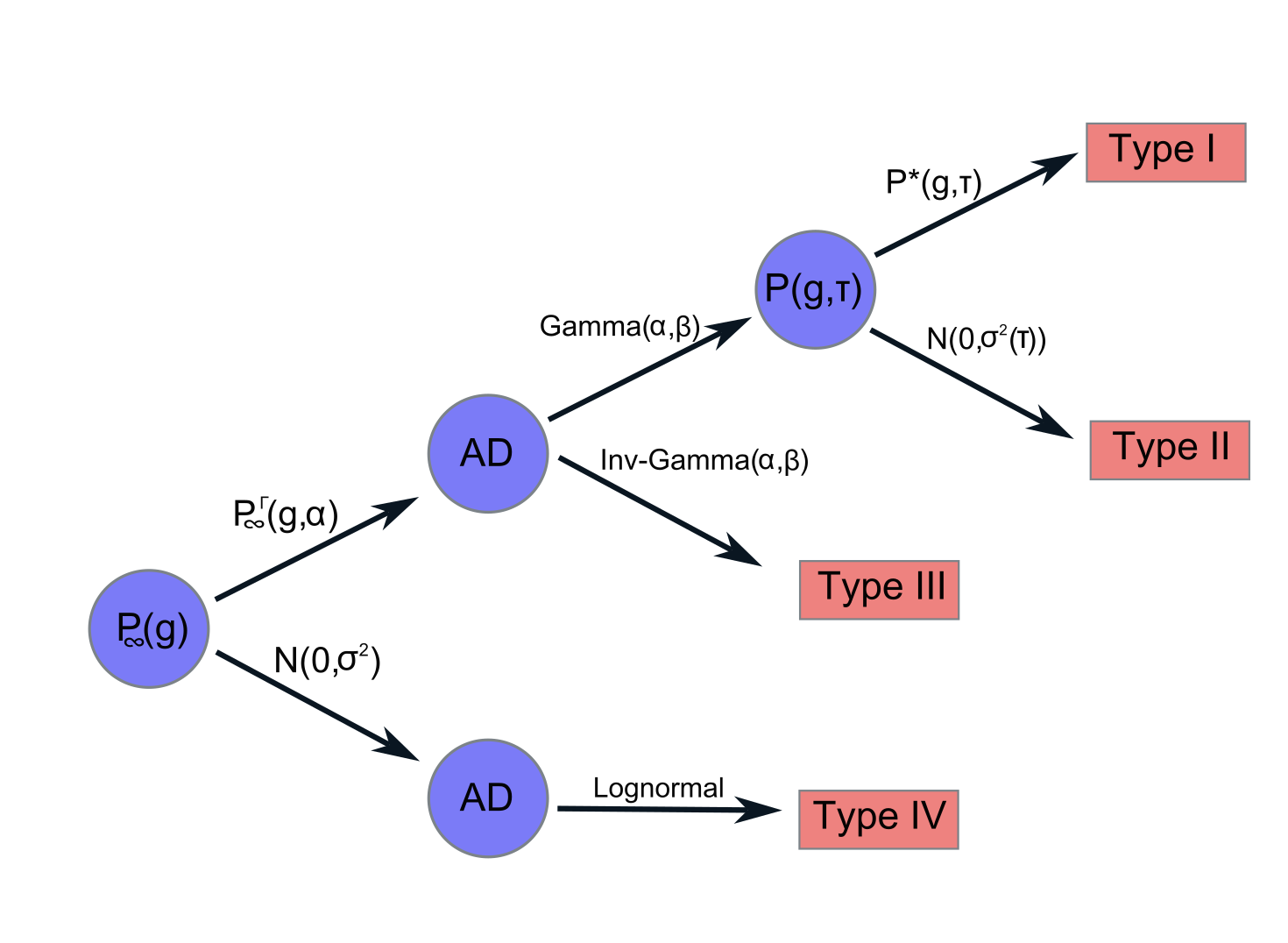
Figure 1: Decision tree for model selection based on abundance (AD) and growth-rate (LGR) distributional features and variance behavior.
Empirical Applications and Consistency Checks
The framework is tested on longitudinal abundance data from the Global Population Dynamics Database. Most time series conform to stationary expectations: exponential saturation or constancy in variance of LGR is observed in the majority of cases. ADs are well described by Gamma or Lognormal models, with Inverse-Gamma fitting a minority.
- 73% of time series are coherently classified into one of the four SDE regimes via the proposed workflow.
- 25% Type I, 30% Type II, 7% Type III, and 38% Type IV, paralleling the diversity of ecological scenarios and processes represented.
Comparison of parameter inference (e.g., Gamma shape parameter g(t,τ)=lnx(t+τ)−lnx(t)5) across different time windows and observables (g(t,τ)=lnx(t+τ)−lnx(t)6, g(t,τ)=lnx(t+τ)−lnx(t)7, and AD) reveals strong correlations (correlation coefficients as high as 0.98), reinforcing consistency and robustness of the methodology, despite noisy and heterogeneous data.
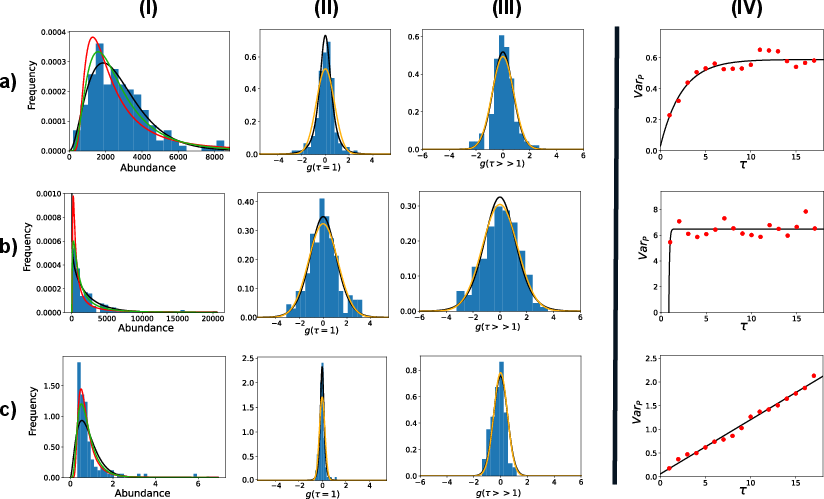
Figure 2: Illustrative fits of empirical abundance (AD) and LGR (g(t,τ)=lnx(t+τ)−lnx(t)8 and large g(t,τ)=lnx(t+τ)−lnx(t)9) distributions to Gamma, Lognormal, and Inverse-Gamma models; representative behaviors of LGR variance as a function of τ0.
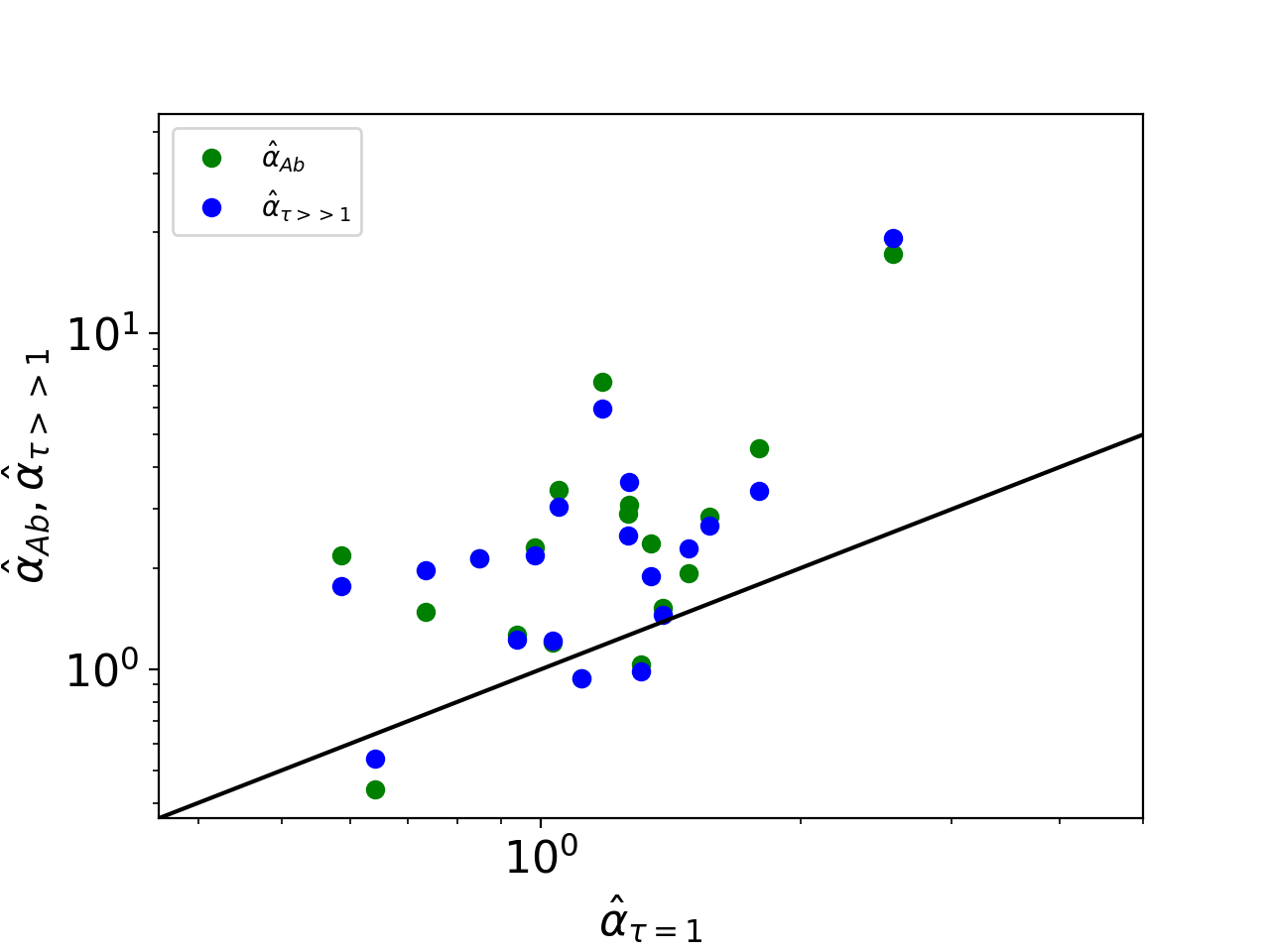
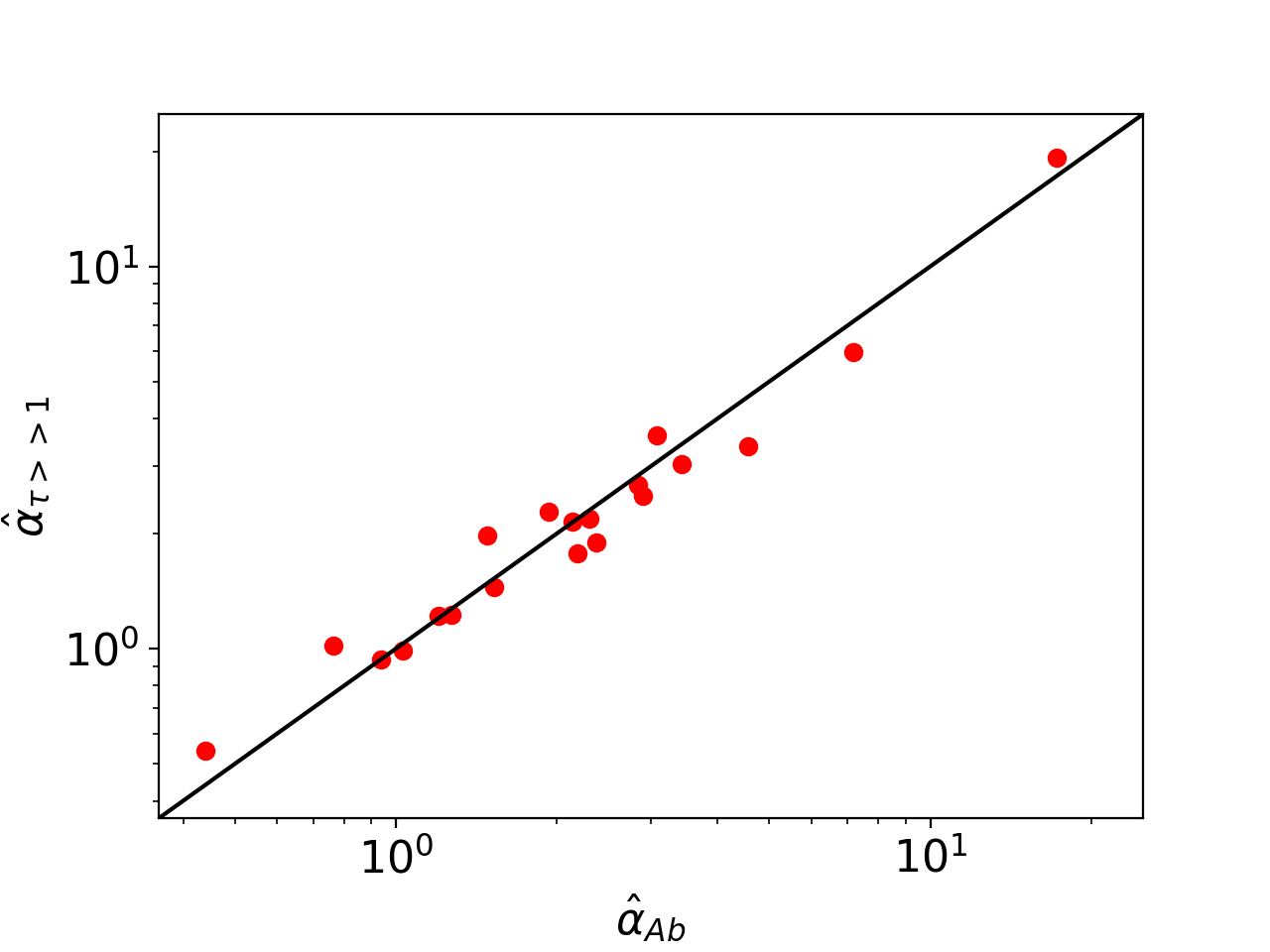
Figure 3: Pairwise scatter plots and correlations of τ1 estimates obtained from short-lag LGR, long-lag LGR, and AD.
Theoretical and Practical Implications
This paradigm establishes that non-normal LGR distributions should not be dismissed as anomalous, but are rather the statistical expectation for stationary systems with non-lognormal abundance statistics. The analytical mapping between SDE structural elements, their stationary measures, and the corresponding LGRs allows for:
- Rigorous null hypothesis construction beyond naive normality.
- Inference of underlying population processes (e.g., effect of immigration, type of environmental noise) from observable time series data.
- Improved model selection in low-data or high-noise regimes, leveraging the coexistence of multiple inference avenues (LGR at short and long lags, AD fit).
- Deeper mechanistic interpretation and falsification, bridging macroecological patterns and micro-level SDE dynamics.
The findings also caution against over-interpretation: LGR non-normality is a necessary but not sufficient condition to discriminate between SDE families, and robust inference must incorporate more explicit temporal correlation structures when data permit.
Conclusion
This work rigorously redefines the statistical baseline for growth-rate fluctuations in stationary systems, mapping out the analytic consequences of distinct stationary abundance distributions for growth-rate statistics. It provides both theoretical justification and practical algorithms for model selection and parameter inference, and demonstrates empirical effectiveness on ecological data. By clarifying the non-exceptional nature of non-Gaussian growth-rate distributions, the study enhances the transparency and power of inference in population-dynamical systems and opens new directions for future research in the statistical physics of complex systems (2603.29916).