- The paper presents a novel frequency-dependent capacitance matrix that accurately captures hybridized Fabry-Pérot resonances in 1D high-contrast systems.
- It employs a tridiagonal block structure to achieve sharp asymptotic classifications of Type I and Type II resonances, detailing spatial mode localization.
- Numerical verifications confirm that the method predicts resonance shifts and block-localized eigenmodes with high precision.
Introduction and Problem Setting
This work rigorously establishes an asymptotic framework for scattering resonances in 1D chains of high-contrast resonators well beyond the classical subwavelength regime. Standard capacitance matrix approaches, foundational in subwavelength asymptotics, do not capture hybridized Fabry-Pérot resonances at higher frequencies due to their static nature and absence of explicit spectral dependence. By introducing a novel frequency-dependent, tridiagonal capacitance matrix, the authors recover not only the leading-order shifts of hybridized resonant frequencies but also provide a block-diagonal reduction that precisely reflects the system’s resonance structure and spatial localization behavior.
The model consists of a chain of N disjoint resonators embedded in an infinite 1D medium, with piecewise-constant density and bulk modulus, subject to high contrast between inclusions and the background. The central object is a coupled system of Helmholtz equations, with spectral parameter ω, for the field u(x), together with transmission conditions at interfaces and outgoing Sommerfeld radiation.
Frequency-Dependent Capacitance Matrix Construction
To efficiently capture inter-resonator hybridization and spectral shifts, the key analytic tool is the frequency-dependent capacitance matrix C(k), which is tridiagonal, with elements depending explicitly on the wavenumber k corresponding to the candidate resonance. The construction leverages geometric parameters (resonator lengths and spacings) and the frequency contrast between domains:
- Each nontrivial resonance k0 induces a resonant set I(k0) marking all intervals matching a quantization condition tjk0∈πZ, where tj encodes physical length scales.
- For each k0, the nonzero structure of ω0 is block-diagonal modulo symmetrization, with blocks corresponding to disjoint integer intervals within ω1.
- This structure directly governs not only the leading eigenvalues (resonance shifts) but also the local support of associated eigenmodes.
The nontrivial spectral features arise entirely from the frequency dependence: at ω2 the matrix recovers the classical static capacitance matrix, but for ω3 the tridiagonal form splits into blocks defined by commensurability conditions, reflecting the breakdown of global coupling and emergence of spatially localized resonant intervals.
(Figure 1)
Figure 1: Log-log plot of the error between numerical Fabry-Pérot resonant frequencies and their asymptotic expansions; theoretical slopes for ω4 (hybridized, block-supported) and ω5 (non-hybridized) branches match the predicted orders.
Asymptotic Expansions and Resonance Classification
The principal result is a sharp asymptotic classification of all scattering resonances near a fixed frequency ω6 in the high-contrast limit ω7:
- Type I resonances (“hybridized”): ω8, where ω9 are nonzero eigenvalues of the frequency-dependent capacitance matrix at u(x)0, and u(x)1 captures higher-order corrections computable directly from the matrix structure.
- Type II resonances (“non-hybridized”): u(x)2, corresponding to u(x)3 localized on degenerate intervals, i.e., not supporting nontrivial inter-resonator coupling.
This result is established by a Newton polygon analysis of the zero set of the transfer matrix determinant, with block structure inherited from the tridiagonal capacitance matrix’s resonant intervals.
(Figure 2)
Figure 2: Eigenmodes u(x)4 corresponding to the four u(x)5 resonant frequencies for a system with u(x)6, showing spatial localization on target resonant intervals (green), with trigonometric form and vanishing amplitude elsewhere (blue).
Structure of Eigenmodes Beyond Subwavelength
A major advancement arising from the block decomposition is a precise, spatially resolved description of the eigenmodes associated with hybridized resonances:
- To leading order, eigenmodes are supported exclusively on the resonant intervals determined by the block structure of u(x)7. On each such interval, they are trigonometric functions with frequencies fixed by u(x)8, amplitudes determined by the right eigenvectors of the block, and vanish to high order elsewhere.
- The support and shape of each mode are thus entirely encoded by local rather than global system geometry, a fundamentally different localization pattern compared to the subwavelength (static) case.
- The resulting modes exhibit phase-locked hybridization exactly where inter-resonator interactions match the Fabry-Pérot quantization, and remain exponentially small on nonresonant intervals.
This analytic prediction aligns with exact numerics, demonstrating the framework’s precision.
(Figure 3)
Figure 3: Schematic of mode support. Green interval is the “target” block (resonant), with mode amplitude forming a trigonometric profile; blue intervals (non-resonant) support negligible amplitude at high contrast.
Multiple Resonant Intervals and Mode Degeneracy
The methodology admits direct generalization to multiple resonant blocks and even to (rare) degenerate eigenvalues:
- If an eigenvalue u(x)9 is simple for a block, the resonance is uniquely supported on that block.
- For degeneracy (i.e., C(k)0 shared by several blocks), resonant eigenmodes arise as arbitrary superpositions of block-localized trigonometric modes. In the case of exactly adjacent blocks, mixing occurs at leading order, with amplitude ratios determined by higher-order coupling.
- The resonance splitting, or absence thereof, is governed by geometric separation; with large gaps, modes remain essentially block-localized.
Such mode multiplicity and the possibility of hybridization across blocks reflects profound algebraic and geometric sensitivity of high-contrast spectral theory well beyond the classical regime.
Numerical Verification and Asymptotic Accuracy
Extensive numerics validate both the spectral and spatial predictions:
- The log-log convergence of resonance errors matches the theoretical C(k)1 and C(k)2 rates for Type I and II modes, respectively.
- Mode shapes computed at finite contrast are matched by leading-order asymptotics on resonant intervals.
- The method elegantly captures the transition from fully delocalized (subwavelength) to spatially selective (Fabry-Pérot) hybridization.
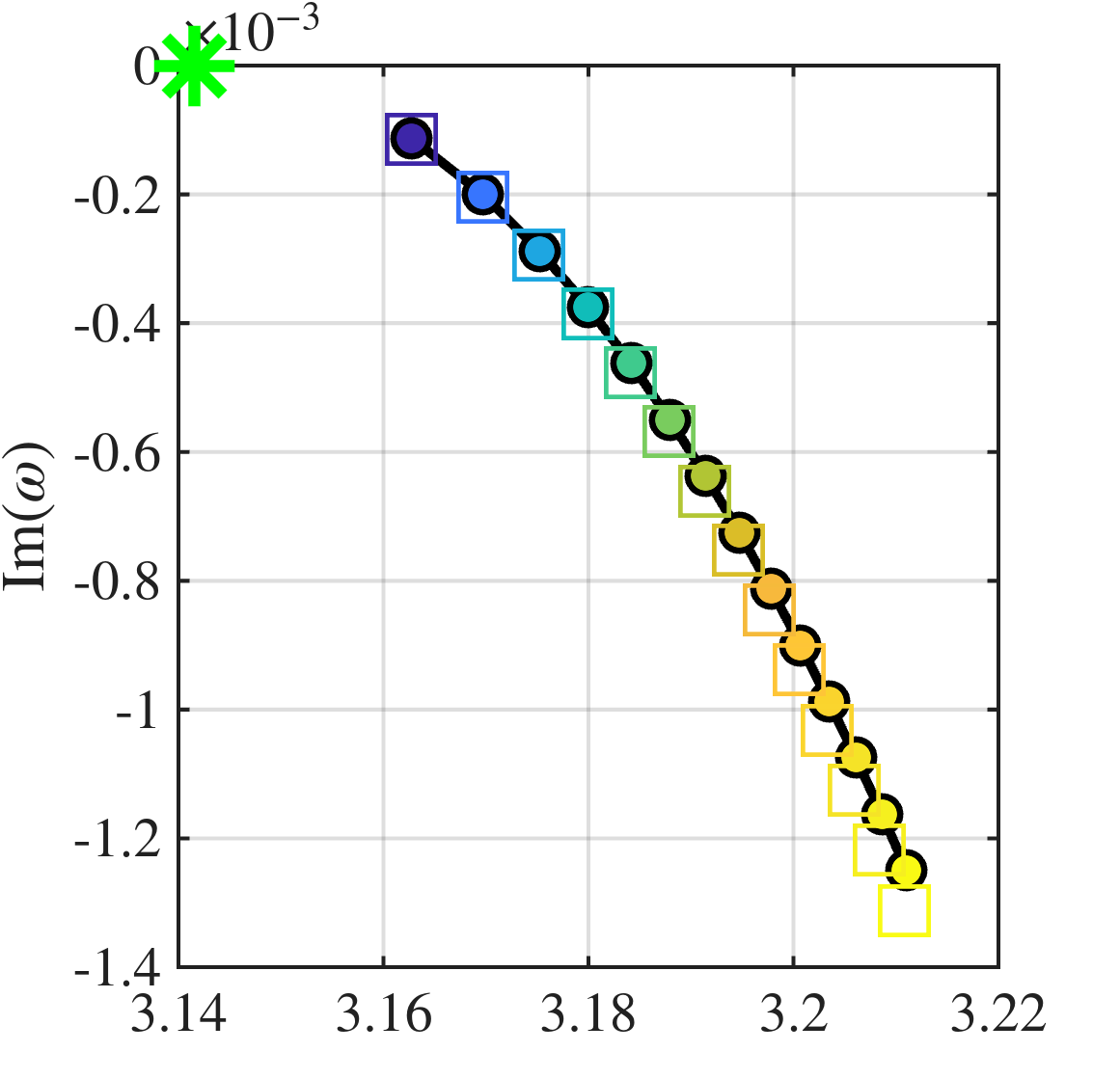
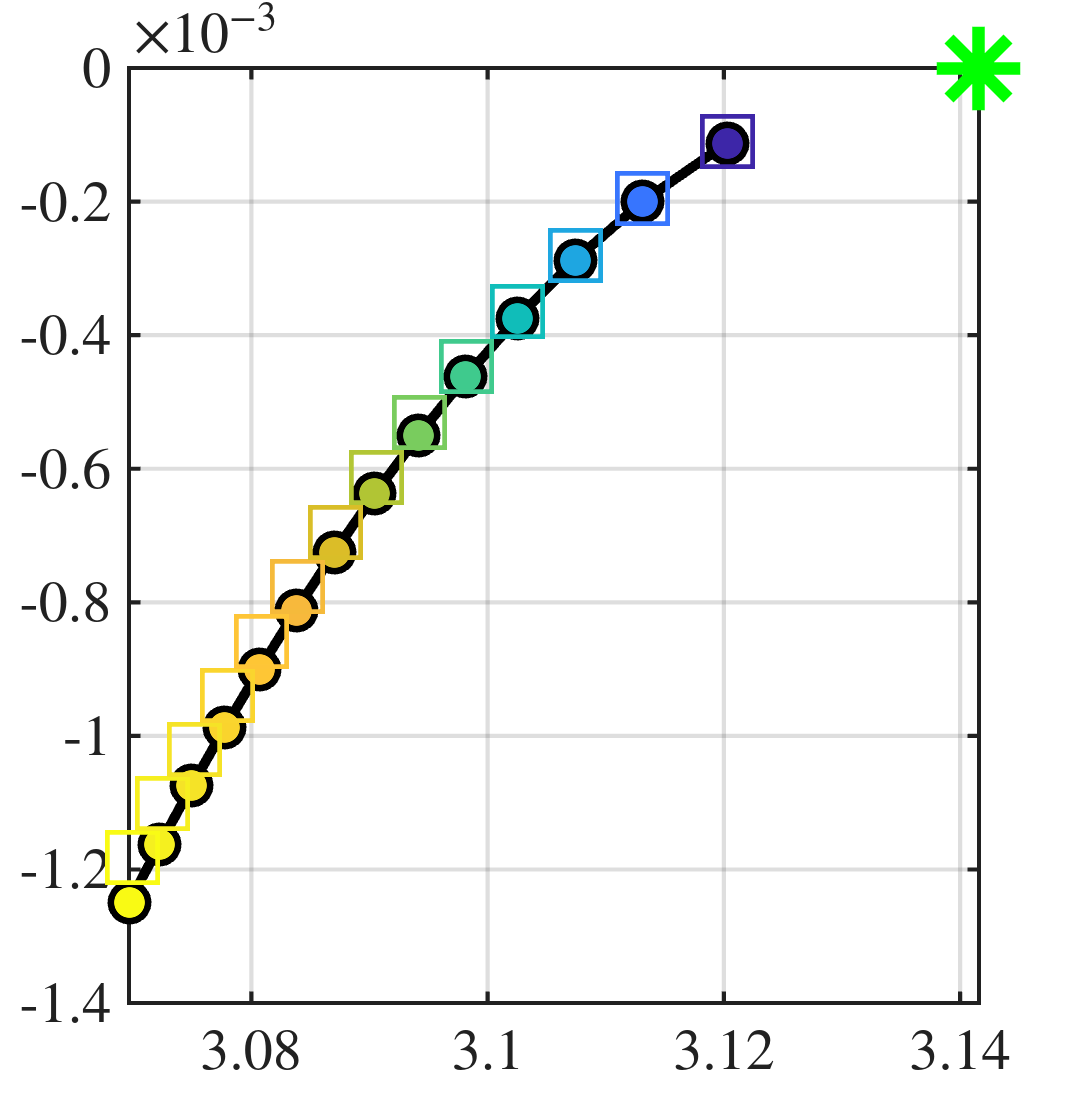
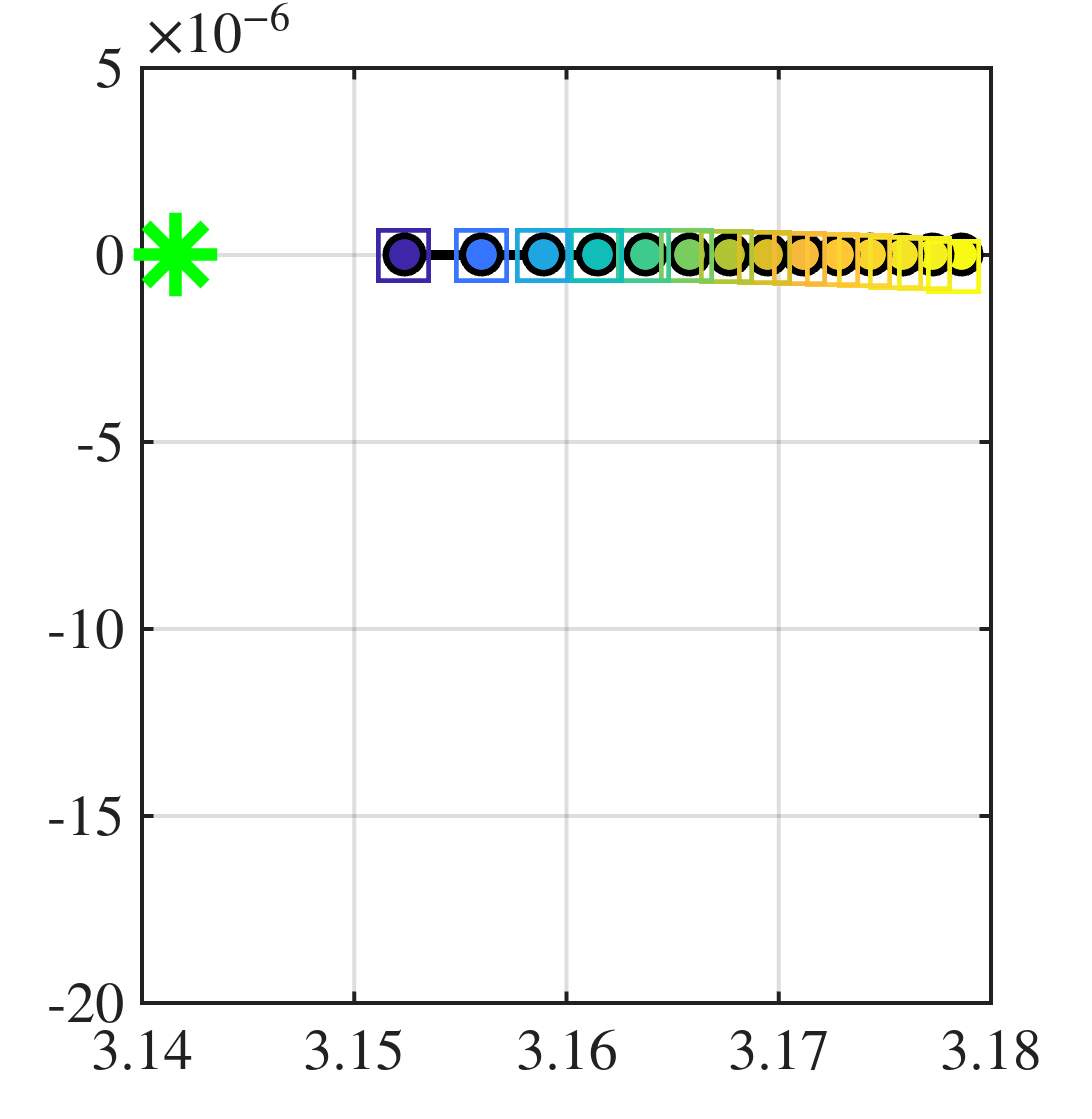
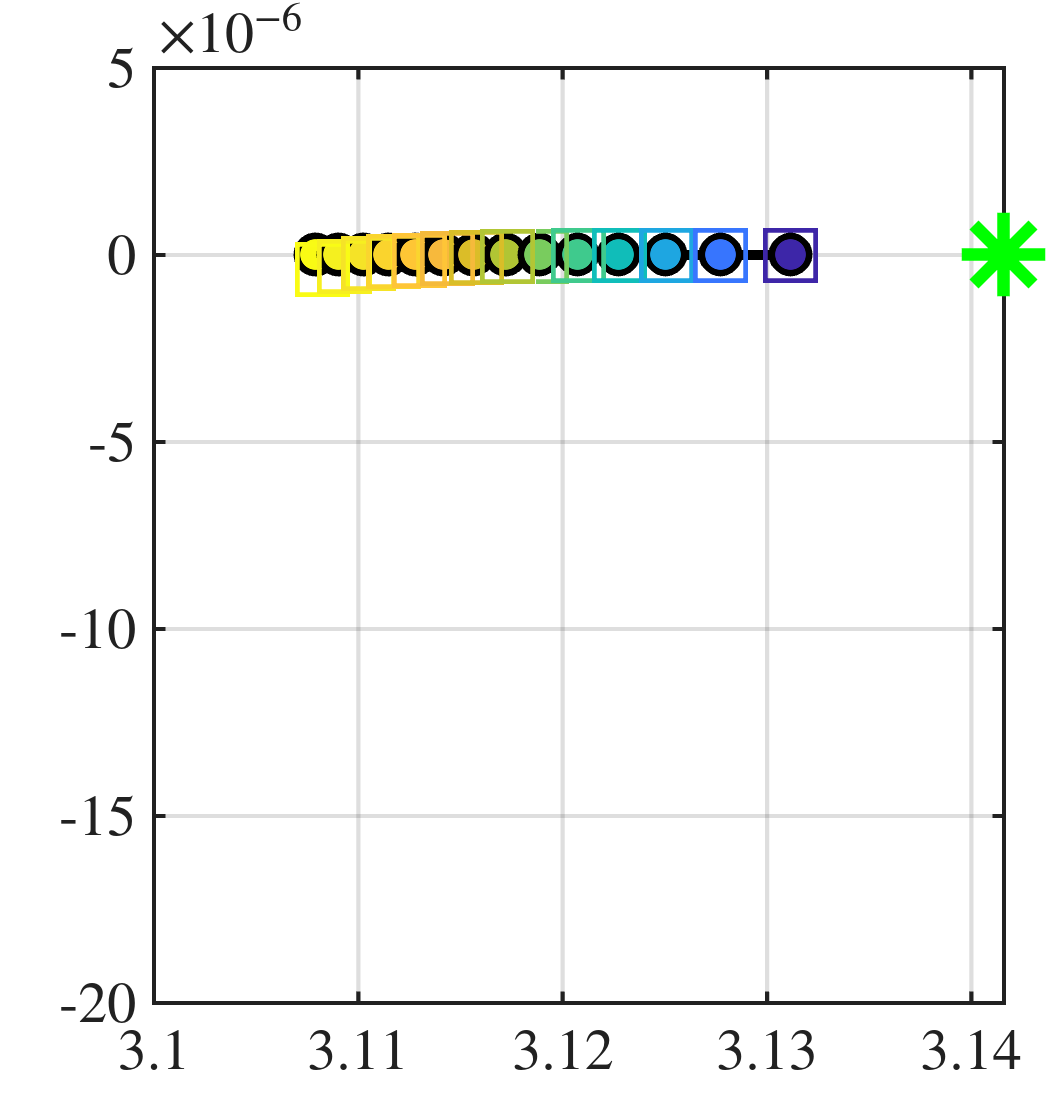
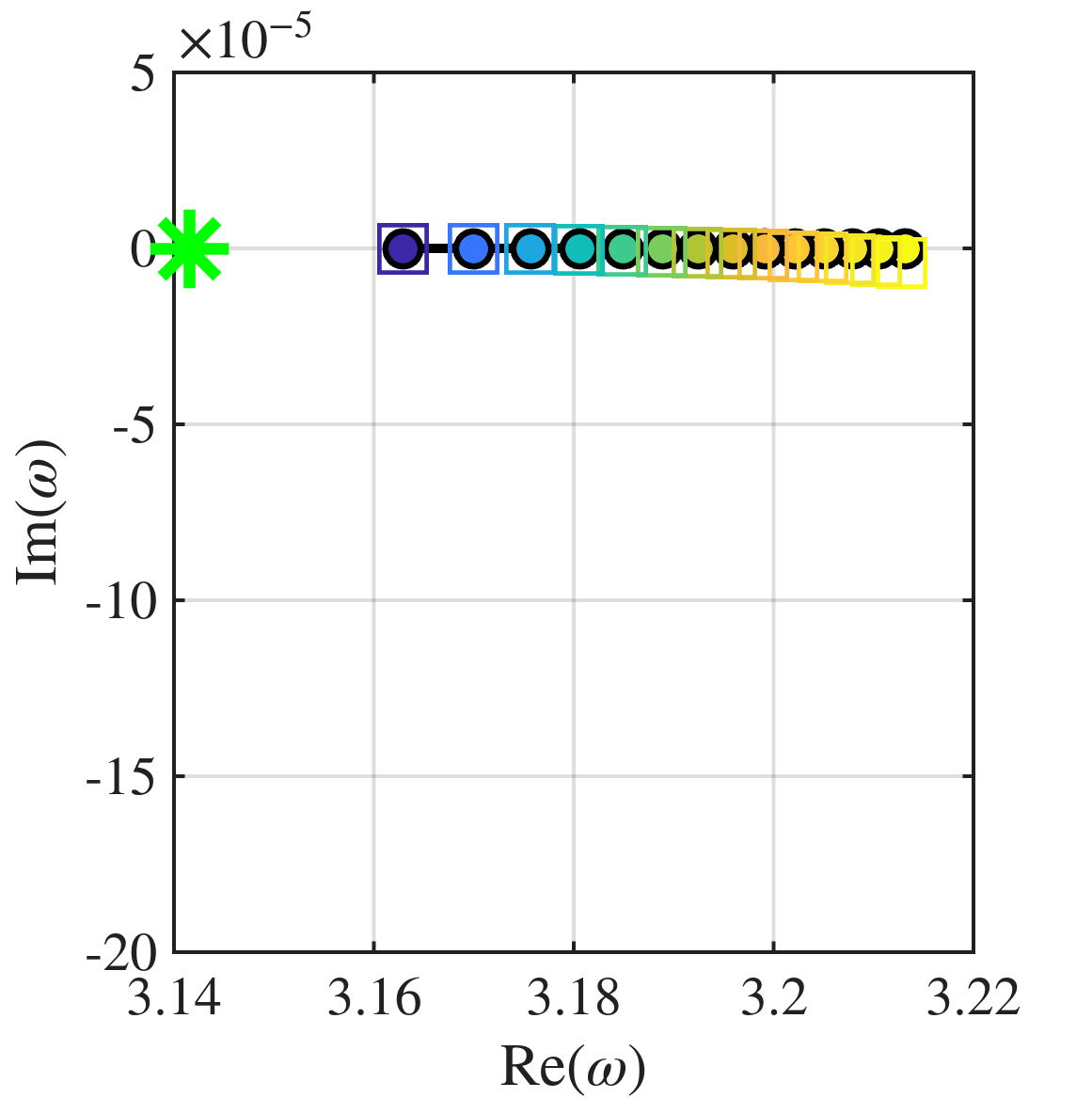
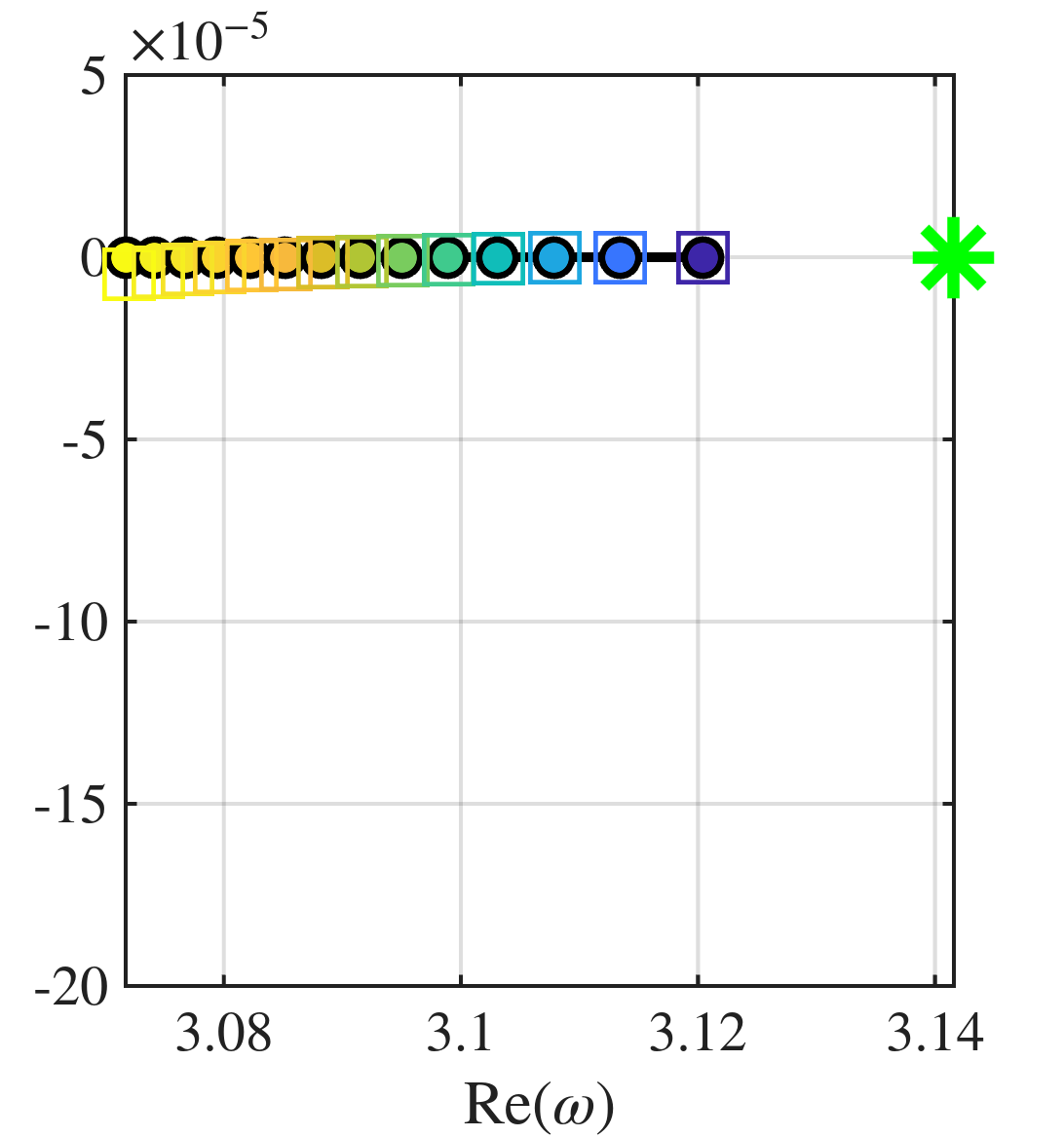
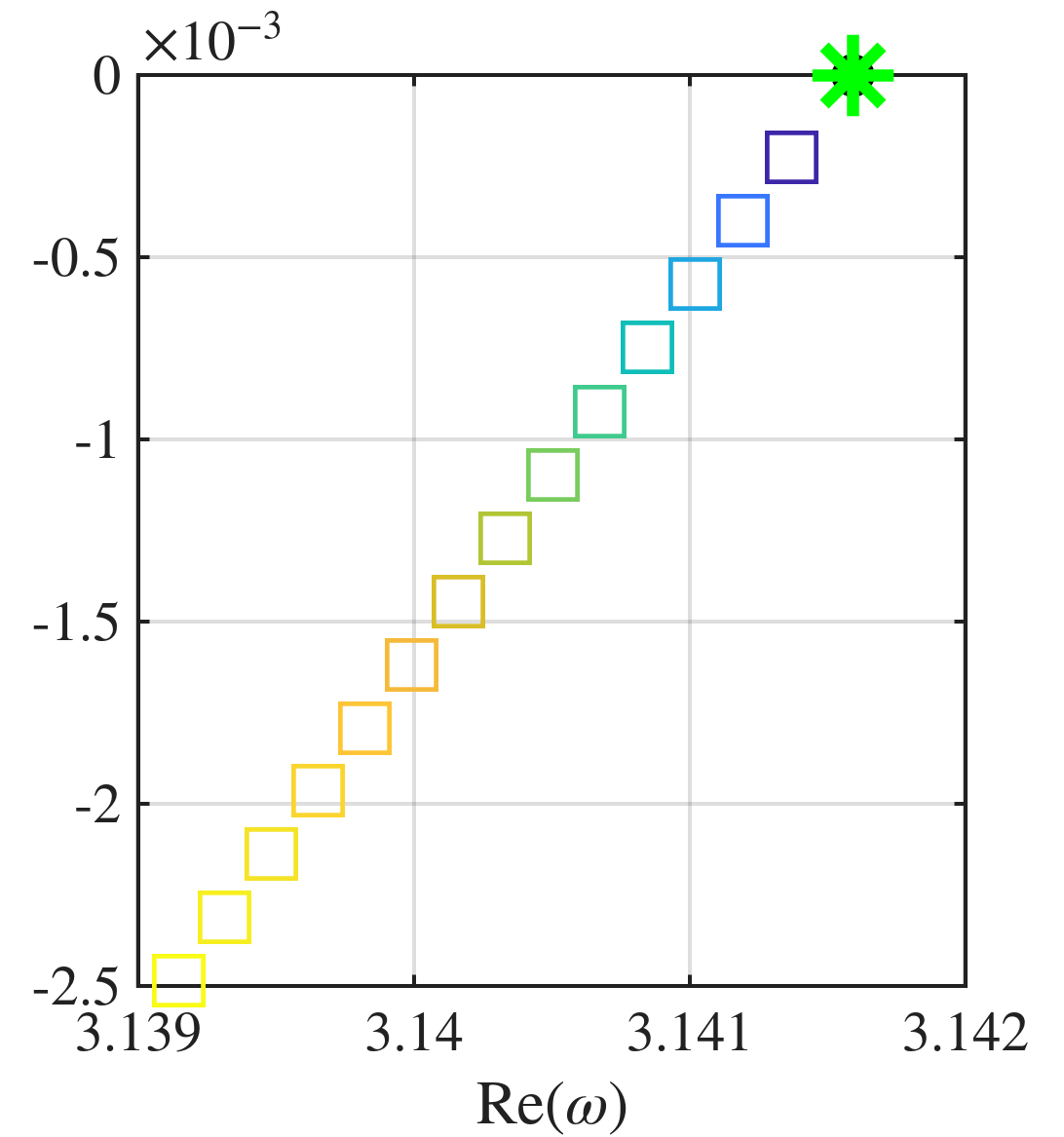
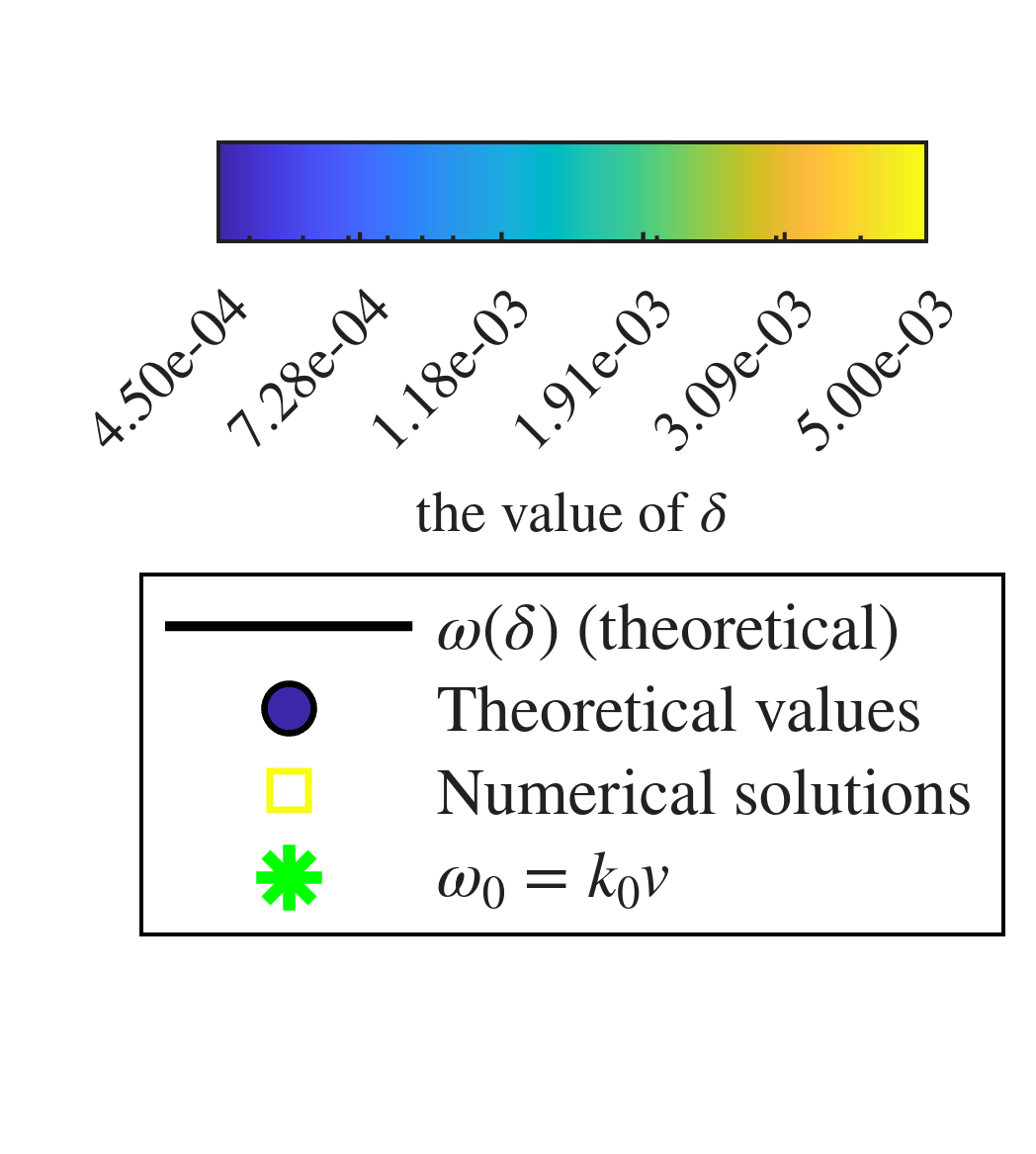
Figure 4: The function C(k)3 for prototypical system parameters (C(k)4, C(k)5), exhibiting the distribution of limiting resonances; all limiting resonances are captured by the block structure of the capacitance matrix.
Implications, Extensions, and Outlook
The analytic machinery introduced here offers a strong foundation for theoretical and computational advances in resonance engineering:
- Theoretical implications:
- Yields systematic reductions for high-frequency spectral problems via discrete matrix analogues, potentially extendable to infinite and periodic structures, 3D domains with long-range coupling, nonlinearities, and nonreciprocal (space-time modulated) media.
- Provides block-resolved control of resonance splitting and localization, critical for robust device design.
- Practical implications:
- Enables efficient computation of high-frequency, high-contrast hybridized resonances for arbitrary geometric configurations.
- Suggests direct strategies for engineering spatially localized and spectrally isolated modes in metamaterials and waveguides.
The framework’s generality foreshadows straightforward extensions to higher dimensions, time-dependence, and non-Hermitian/nonreciprocal modulations, supporting future developments in topological photonics and acoustic metamaterials.
Conclusion
This work rigorously defines and exploits a frequency-dependent discrete matrix formulation to asymptotically solve the Fabry-Pérot resonance problem for finite 1D high-contrast systems. The analytic block structure, precise spectral asymptotics, and spatial mode localization combine to yield an efficient, transparent, and highly predictive theory for hybridized resonances beyond the reach of classical approaches. The resulting formalism sets the stage for new directions in high-frequency metamaterials analysis, including higher-dimensional, non-Hermitian, and nonlinear extensions.
Cite as: "Frequency-dependent capacitance matrix formulation for Fabry-Pérot resonances. Part I: One-dimensional finite systems" (2604.01159)