- The paper introduces an optimal degree-correlated frequency assignment that ensures exact complete synchronization (r=1) even under significant phase frustration.
- It employs a combination of analytical reductions, mean-field theory, and numerical simulations to reveal both first- and second-order synchronization transitions in heterogeneous networks.
- The findings offer practical insights for controlling synchronization in engineered systems such as power grids, neural networks, and Josephson junction arrays.
Complete Synchronization in Networks of Phase-Frustrated Sakaguchi-Kuramoto Oscillators with Bi-Harmonic Coupling
Introduction
The Sakaguchi-Kuramoto (SK) model has long served as a paradigmatic framework for analyzing synchronization phenomena in networks of coupled oscillators, particularly through the generalization of phase-lagged interactions representative of delays and other real-world effects. For heterogeneous oscillator networks, classical intuition and prior analyses indicate that even moderate phase frustration α, β generically precludes complete synchronization (r=1), especially with bi-harmonic or higher-order coupling—a regime relevant to a wide range of physical systems including Josephson junction arrays, neurological networks, and mechanical oscillator ensembles.
This work revisits this problem by proposing and rigorously analyzing a structurally informed, degree-correlated set of optimal natural frequencies. This approach yields an analytically tractable path to induce exact complete synchronization (r=1) even under strong phase frustration and higher-order coupling, generalizing beyond the classical Kuramoto-Sakaguchi formulation. A combination of reduced analytical models, mean-field theory, bifurcation analysis, and large-scale network simulations on both synthetic and empirical network topologies is used to substantiate and generalize these results, laying a foundation for controlled synchronization in complex oscillator systems.
Analytical Framework for Complete Synchronization
The paper introduces a generalized SK model with bi-harmonic coupling and uniform phase frustration,
dtdθi=ωi+K1j=1∑NAijsin(θj−θi−α)+K2j=1∑NAijsin(2θj−2θi−β)
where Aij encodes the network structure, and K1, K2 are the first- and second-harmonic coupling strengths.
A small-phase reduction yields a linear system where the assignment of optimal frequencies is shown to be: ωi∗=j∑Aij[K1sinα+K2sinβ]
meaning that each oscillator's intrinsic frequency is constructed directly from its connectivity and the phase-lagged coupling structure. This degree-frequency correlation ensures that the synchrony alignment function J(ω,L) vanishes, thereby guaranteeing β0 for all harmonics.
Crucially, the analysis demonstrates that under this assignment, the network supports a fixed-point solution with all phase differences vanishing (i.e., β1 for all β2), thus overcoming the generic hindrance caused by phase frustration.
Network Topology and Synchronization Transitions
The study systematically evaluates the macroscopic synchronization transitions not only under the proposed optimal frequency assignment but also under standard normal and uniform frequency choices. Both scale-free (SF) and Erdős-Rényi (ER) ensembles serve as the principle testbeds, supplemented by the Zachary Karate Club and C. elegans connectomes as empirical benchmarks.
First-Order vs. Second-Order Synchronization Transitions:
For SF networks, the onset of synchronization is shown to be abrupt (first-order/discontinuous) with pronounced hysteresis under adiabatic parameter sweeps, both for β3 and β4 (Figure 1).
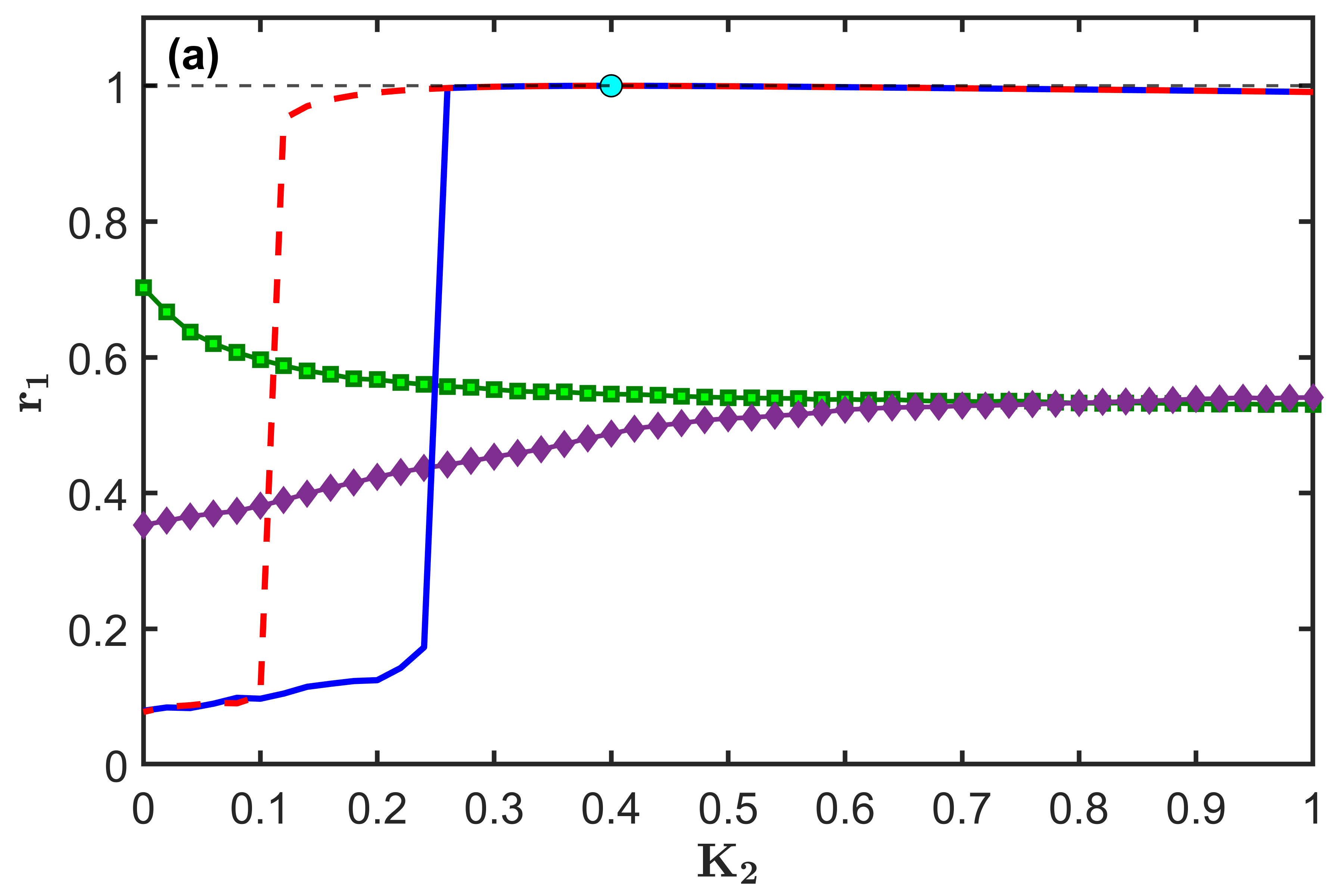
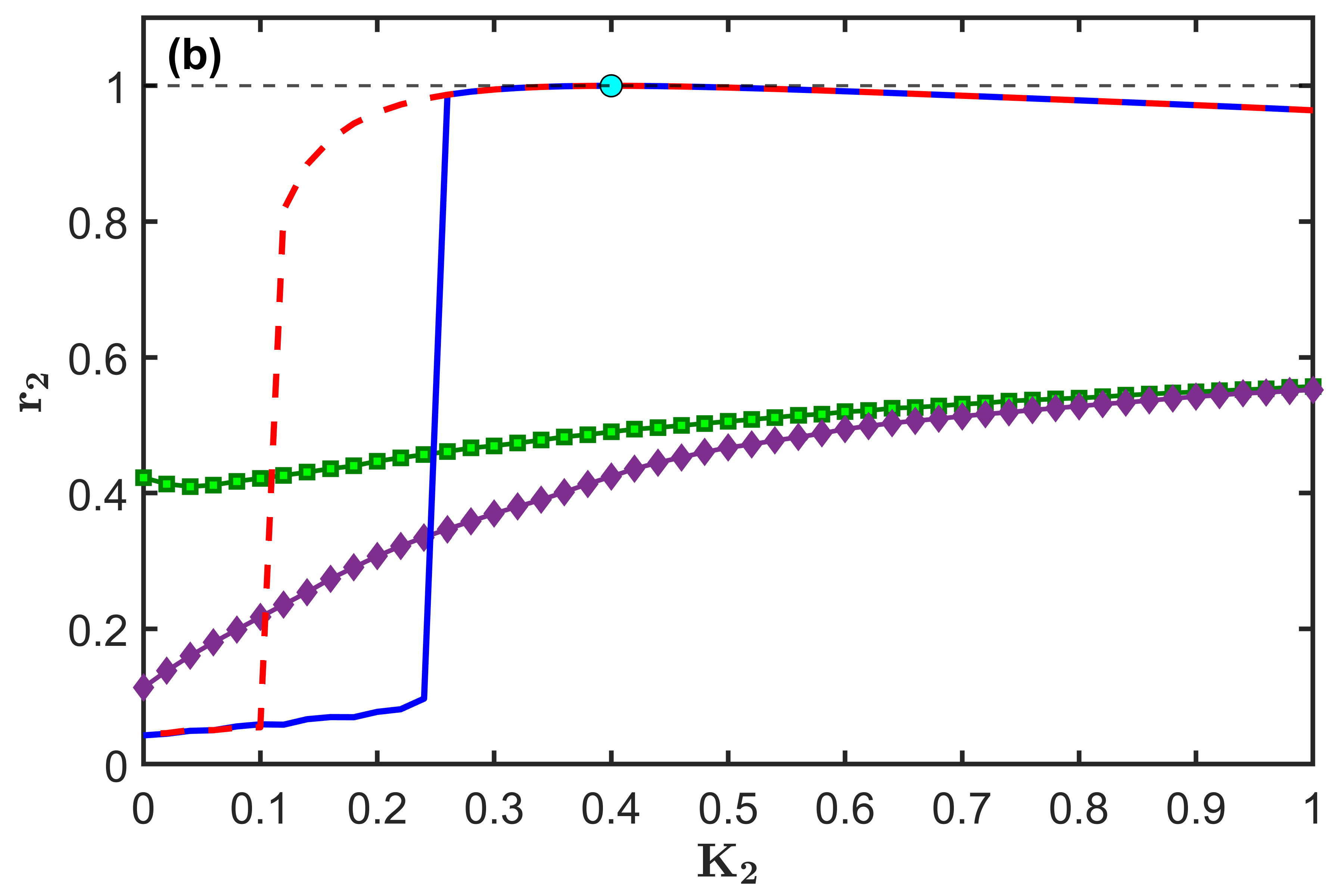
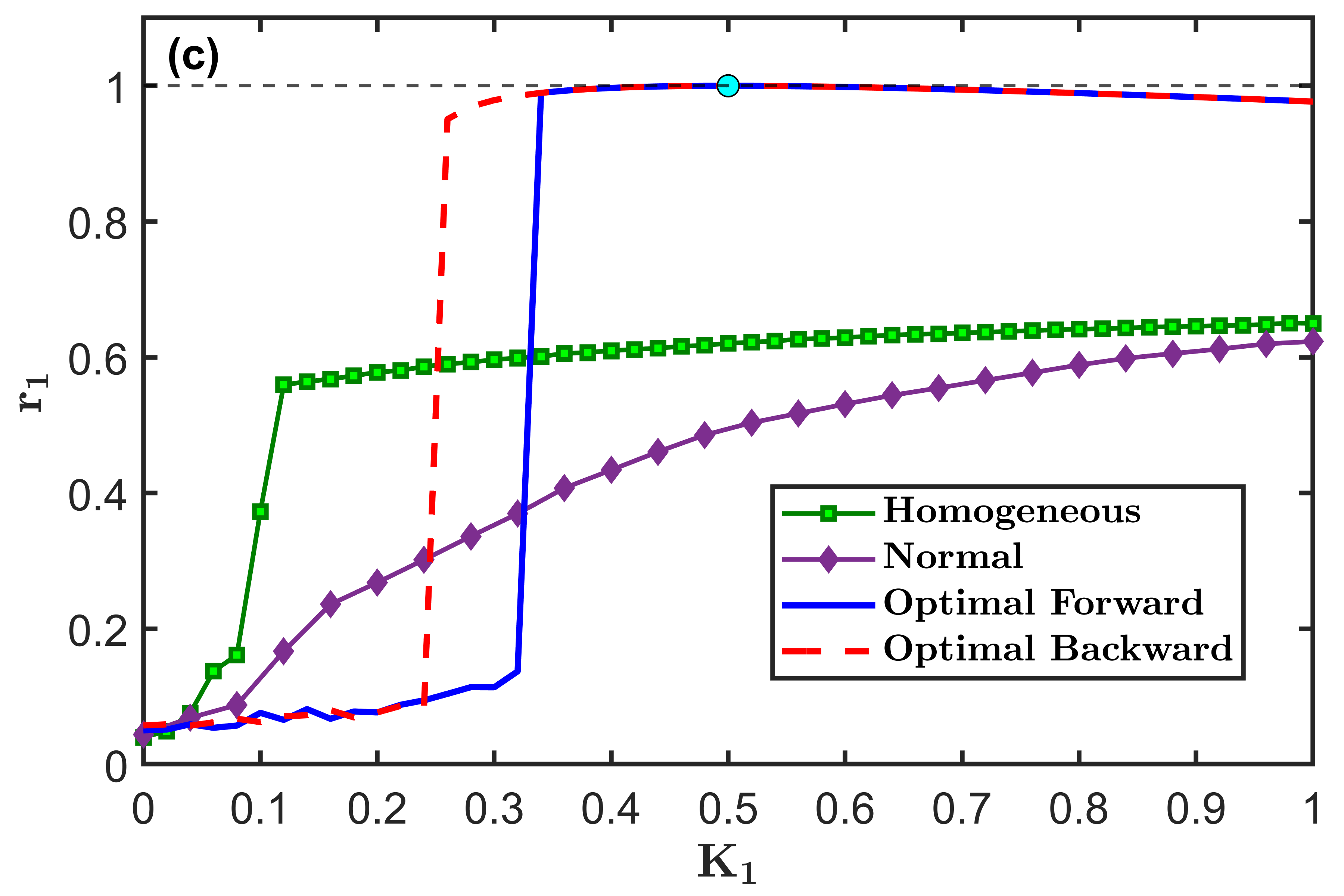
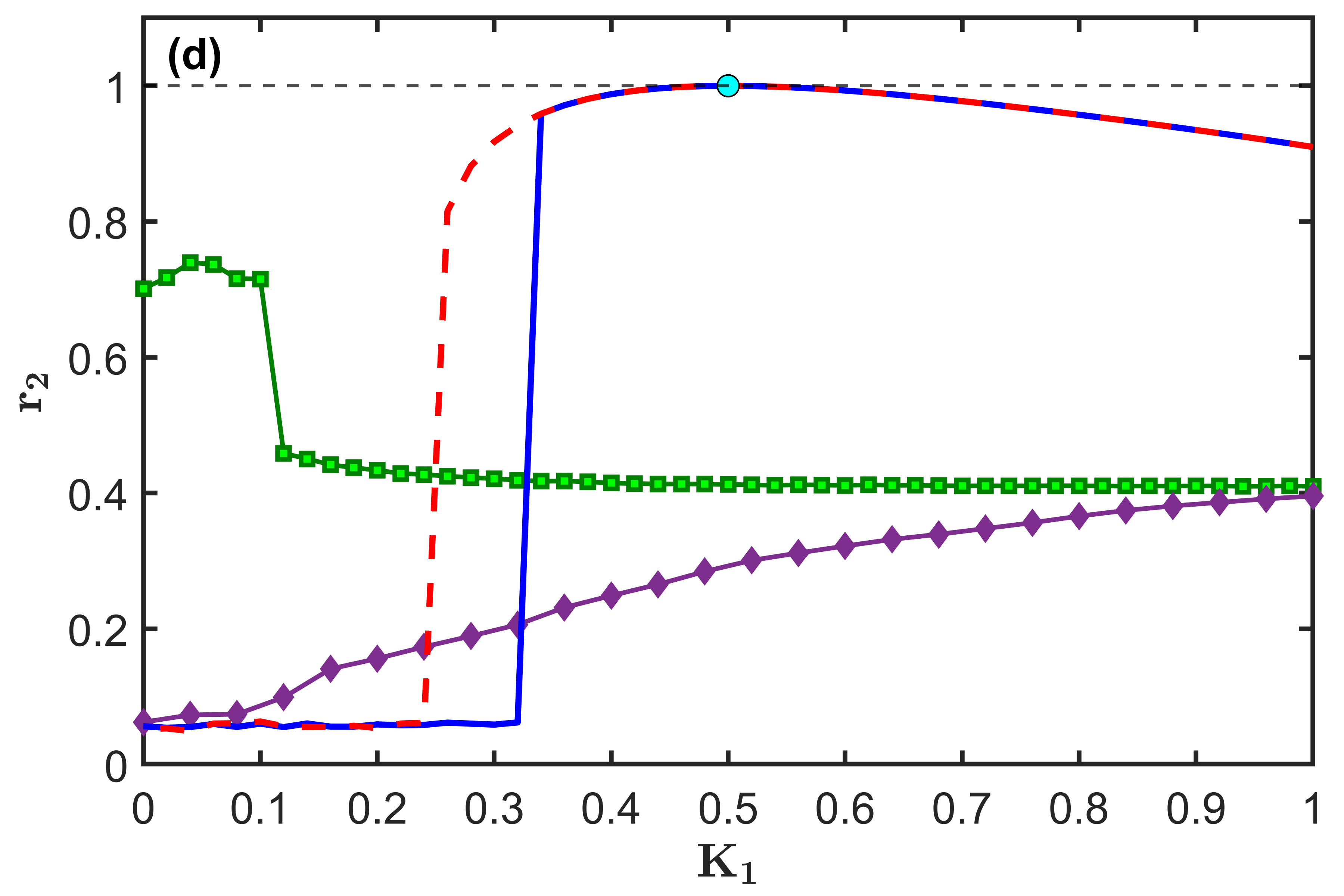
Figure 1: Synchronization dynamics in a scale-free network, highlighting abrupt (first-order) hysteresis and complete synchrony at prescribed coupling strengths under optimal frequency assignment.
The backward transition proceeds at significantly lower coupling strength than the forward one, a hallmark of an underlying bistability and explosive synchronization observed in heterogeneous networks with degree-frequency correlations.
In contrast, ER random networks display continuous (second-order) transitions with no detectable hysteresis (Figure 2).
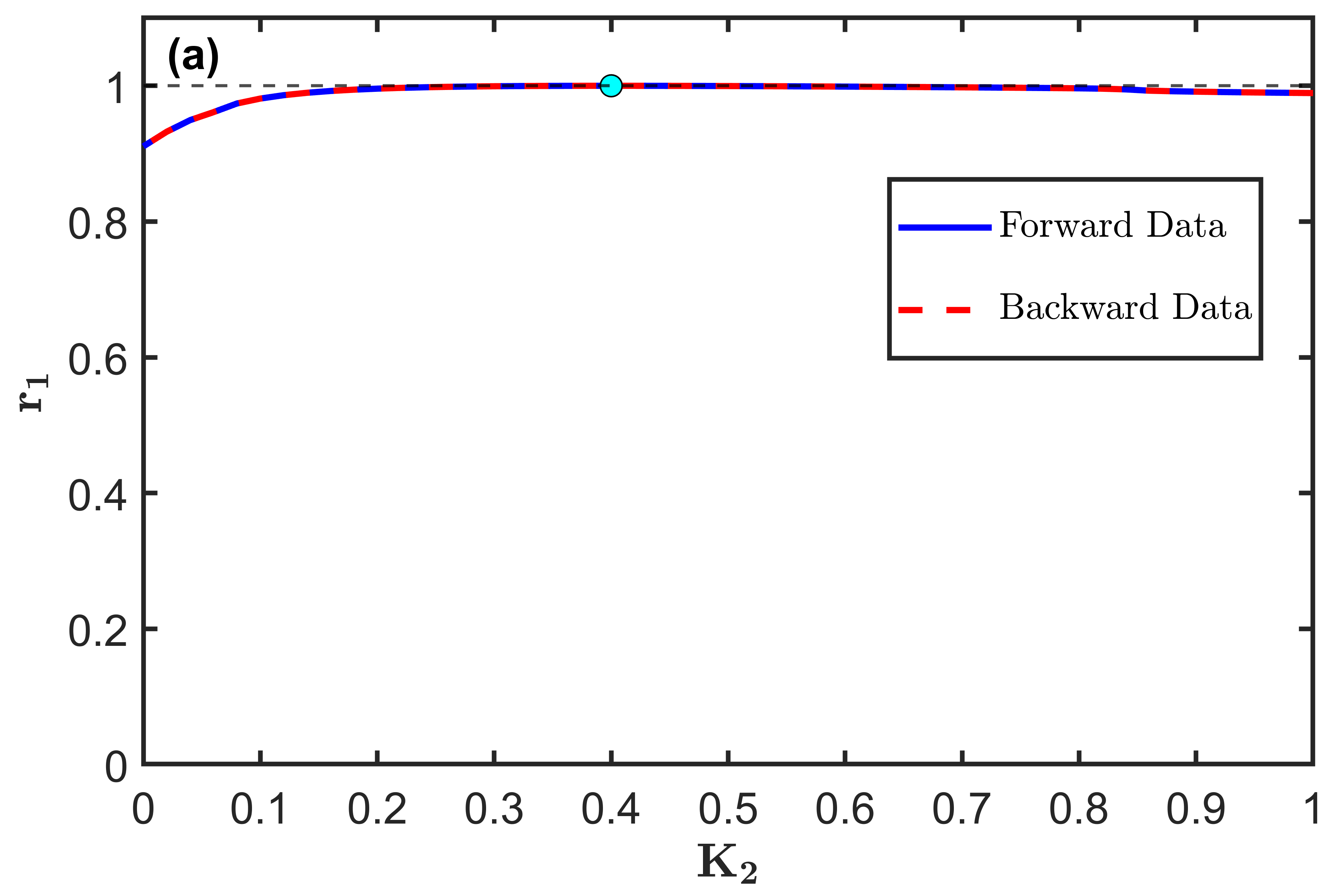
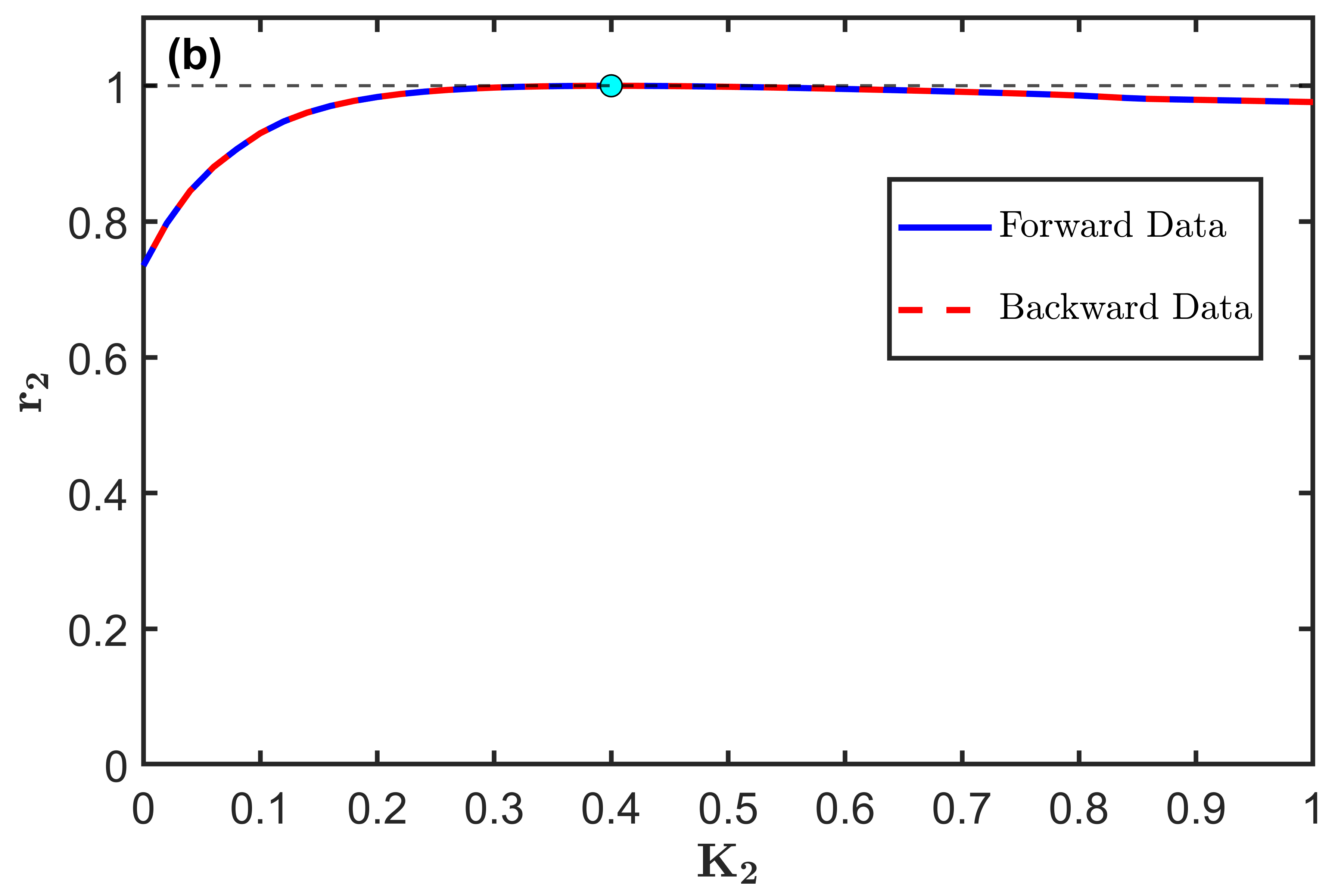
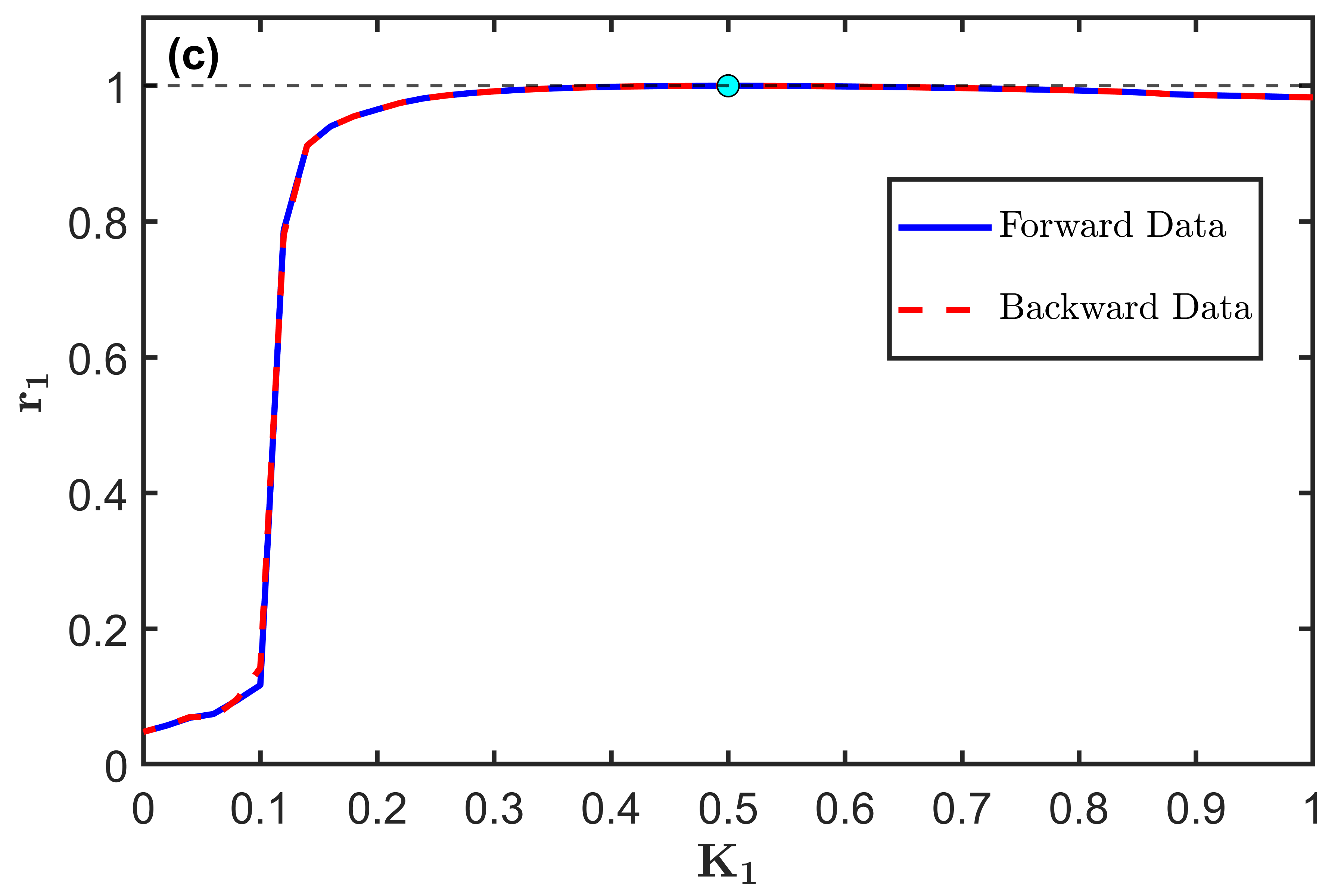
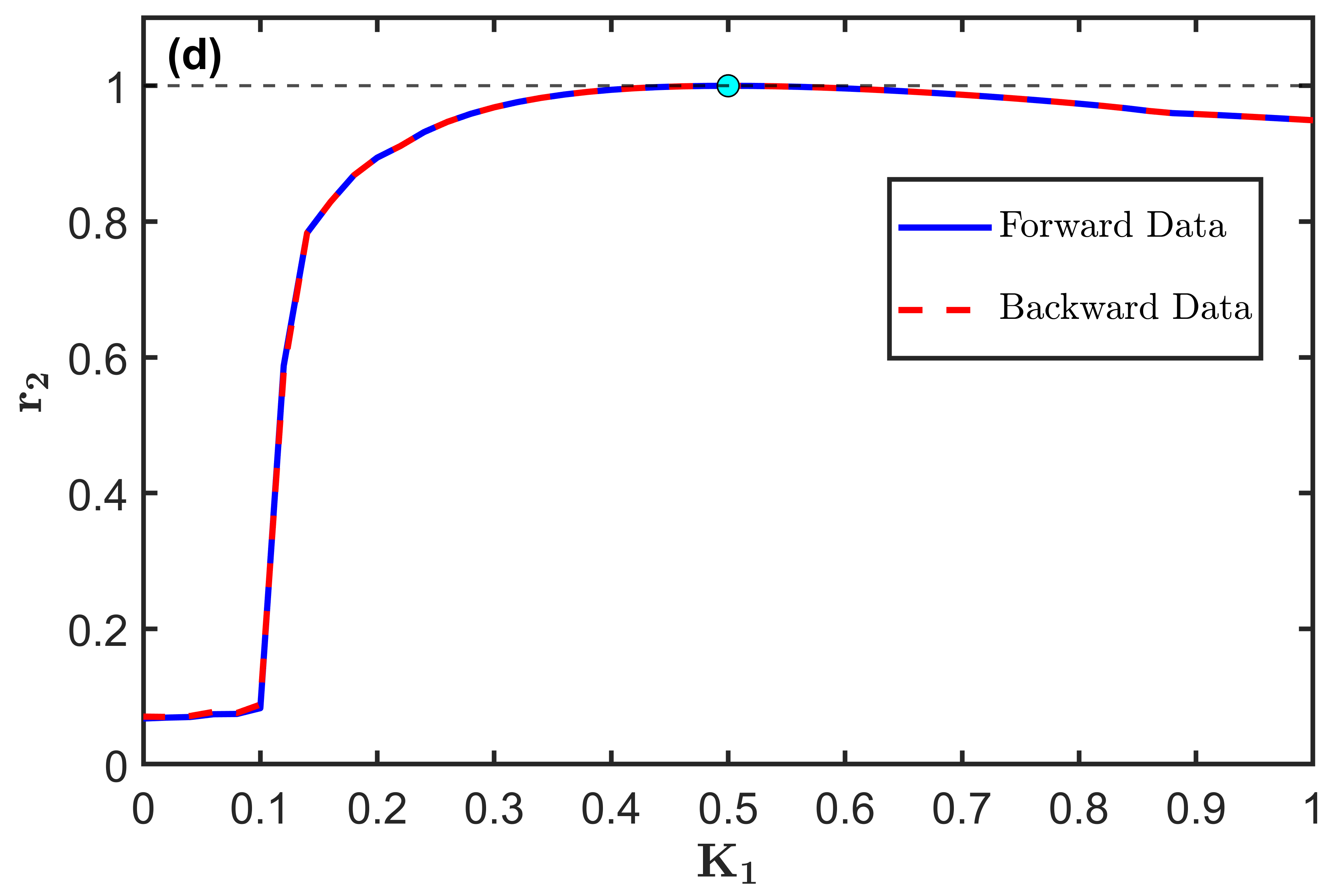
Figure 3: Synchronization dynamics in an Erdős–Rényi network, showcasing continuous synchronization transitions and the realization of perfect synchrony at controlled coupling strengths.
Empirical Networks:
The methodology, including both analytical critical coupling calculations and order parameter trajectories, is corroborated by the empirical Zachary Karate Club and C. elegans networks. SF-like features foster abrupt transitions, while homogeneous degree distributions manifest smoother transitions with overlapping forward/backward branches (Figure 4).
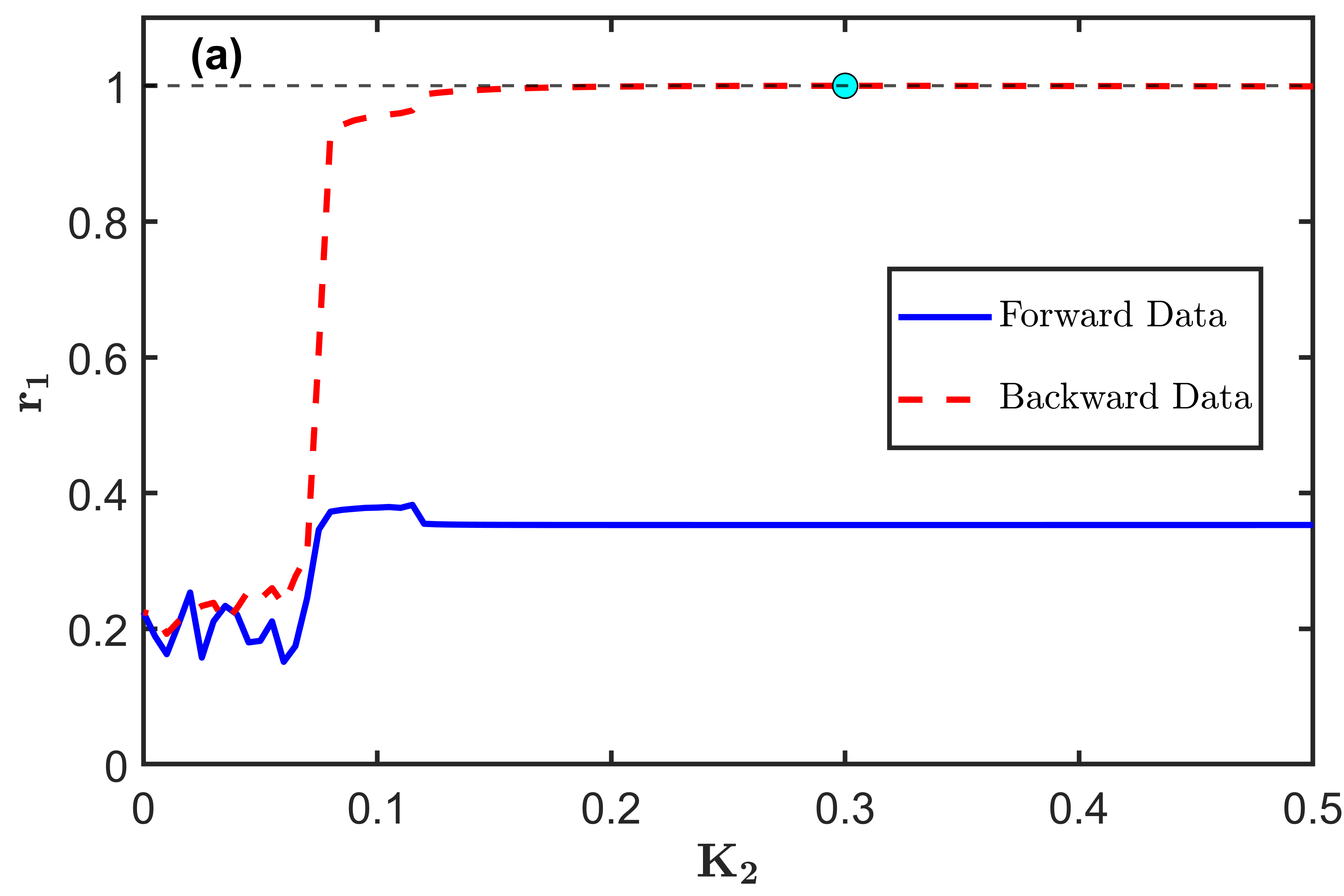
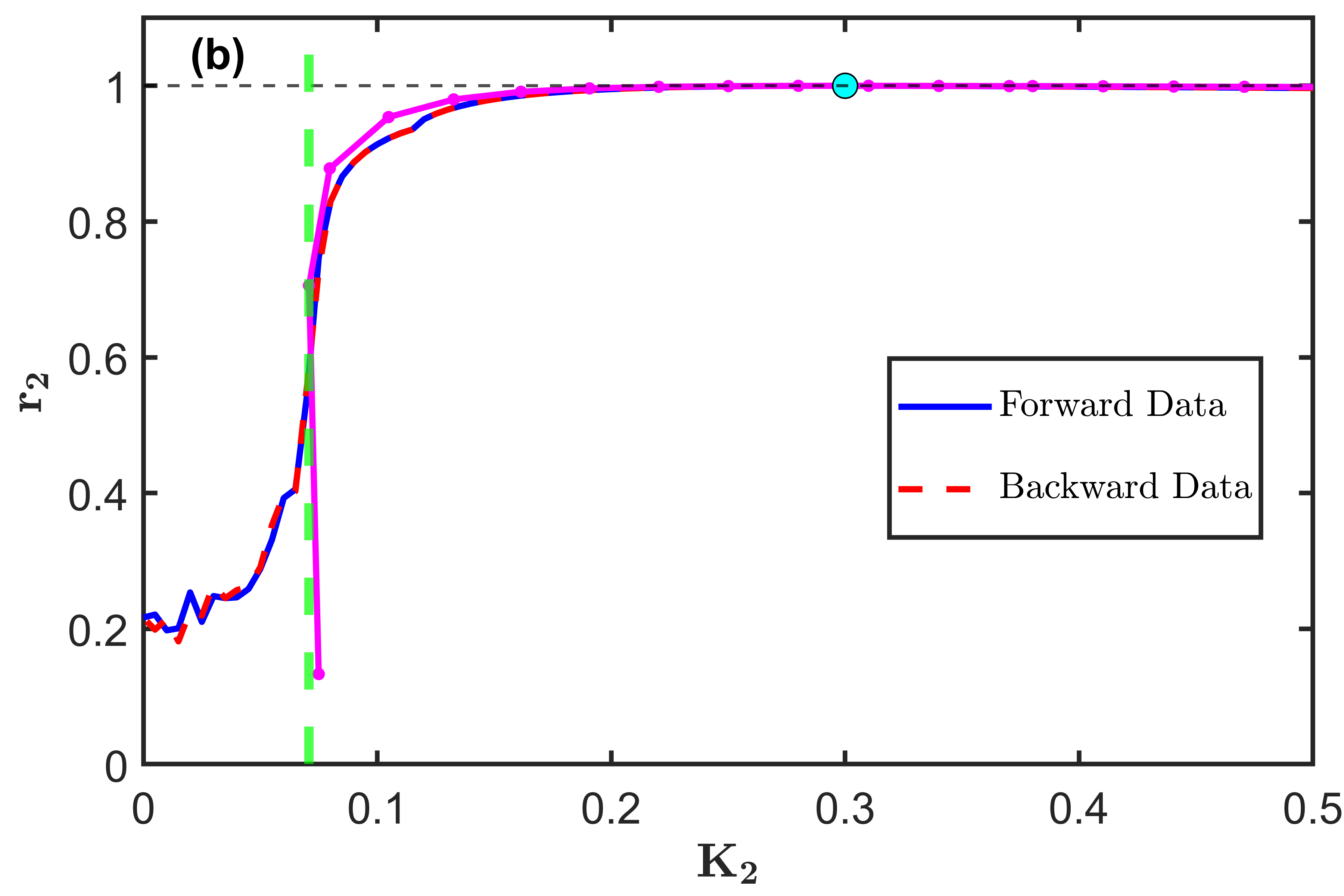
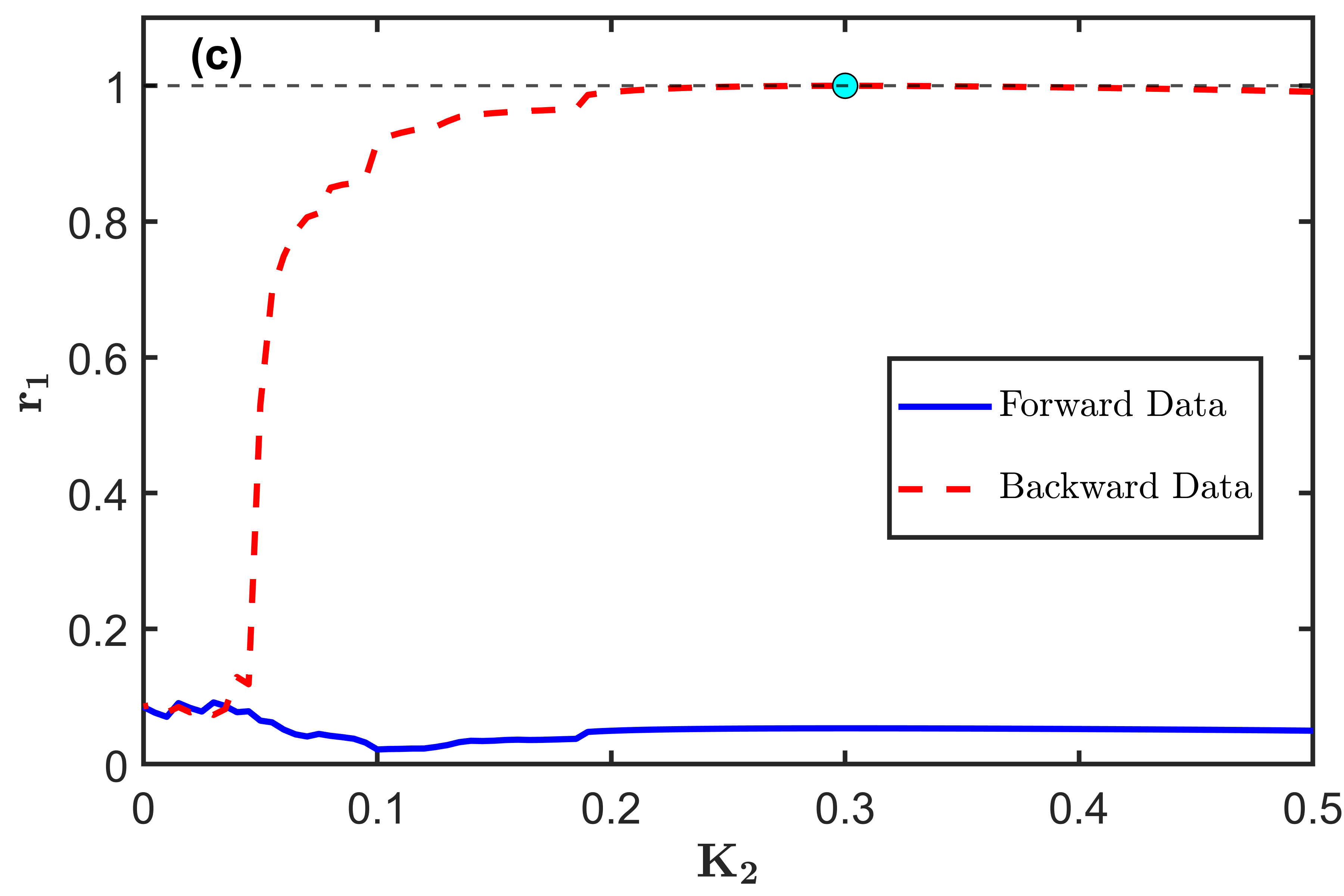
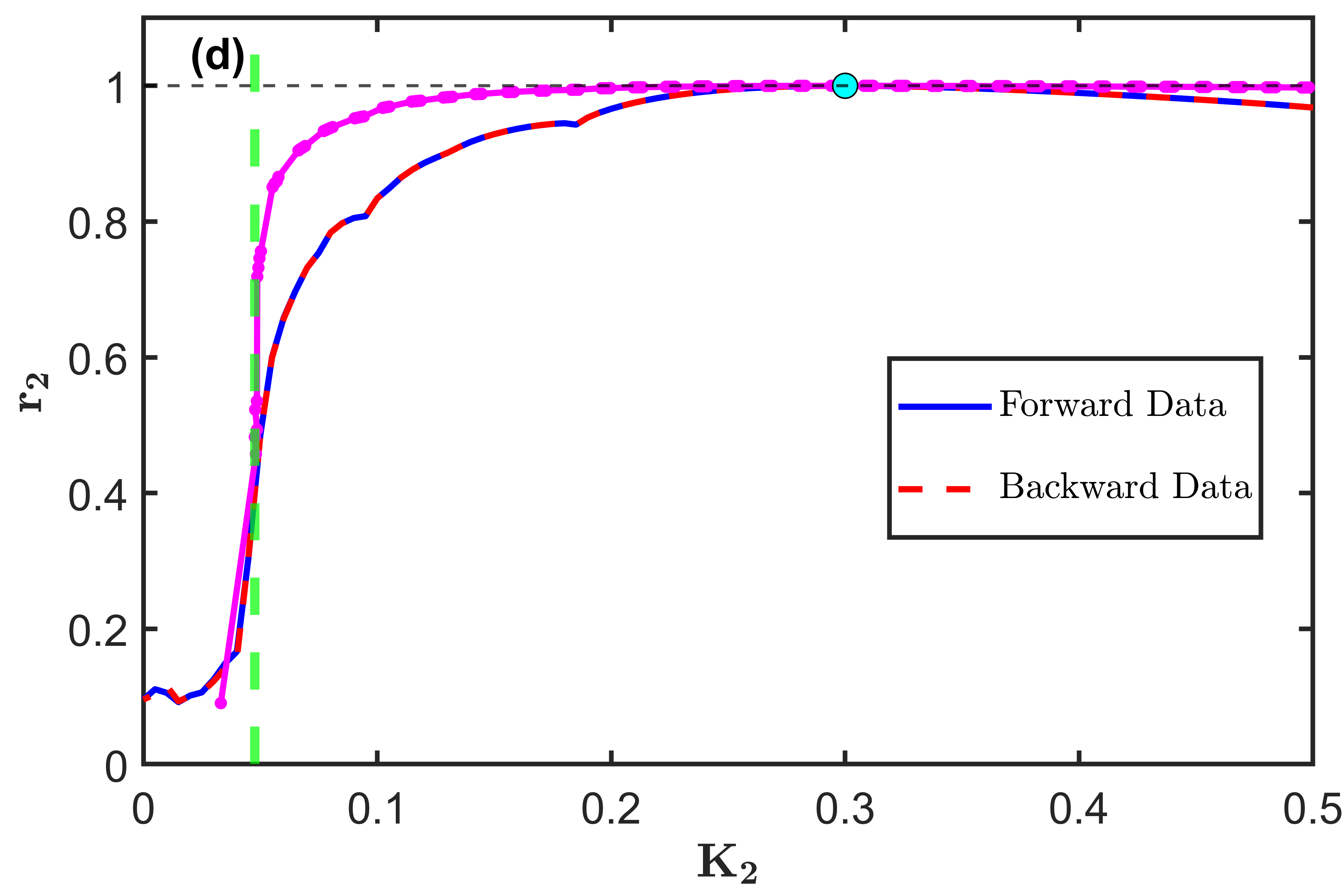
Figure 5: Variation of order parameters with coupling strength in empirical networks, demonstrating the generalizability and analytic accuracy of the proposed approach.
Critical Coupling and Mean-Field Theory
The mean-field reduction is extended to compute the critical coupling β5 necessary for the onset of (possibly incomplete) coherence. The analysis shows that for β6, the optimal frequency set can always be chosen to scale with node degree, with
β7, β8,
and closed-form expressions are derived for β9 and the group angular velocity r=10 via self-consistency (bifurcation) equations. These values closely track the numerically observed onset of synchronization (Figure 3).
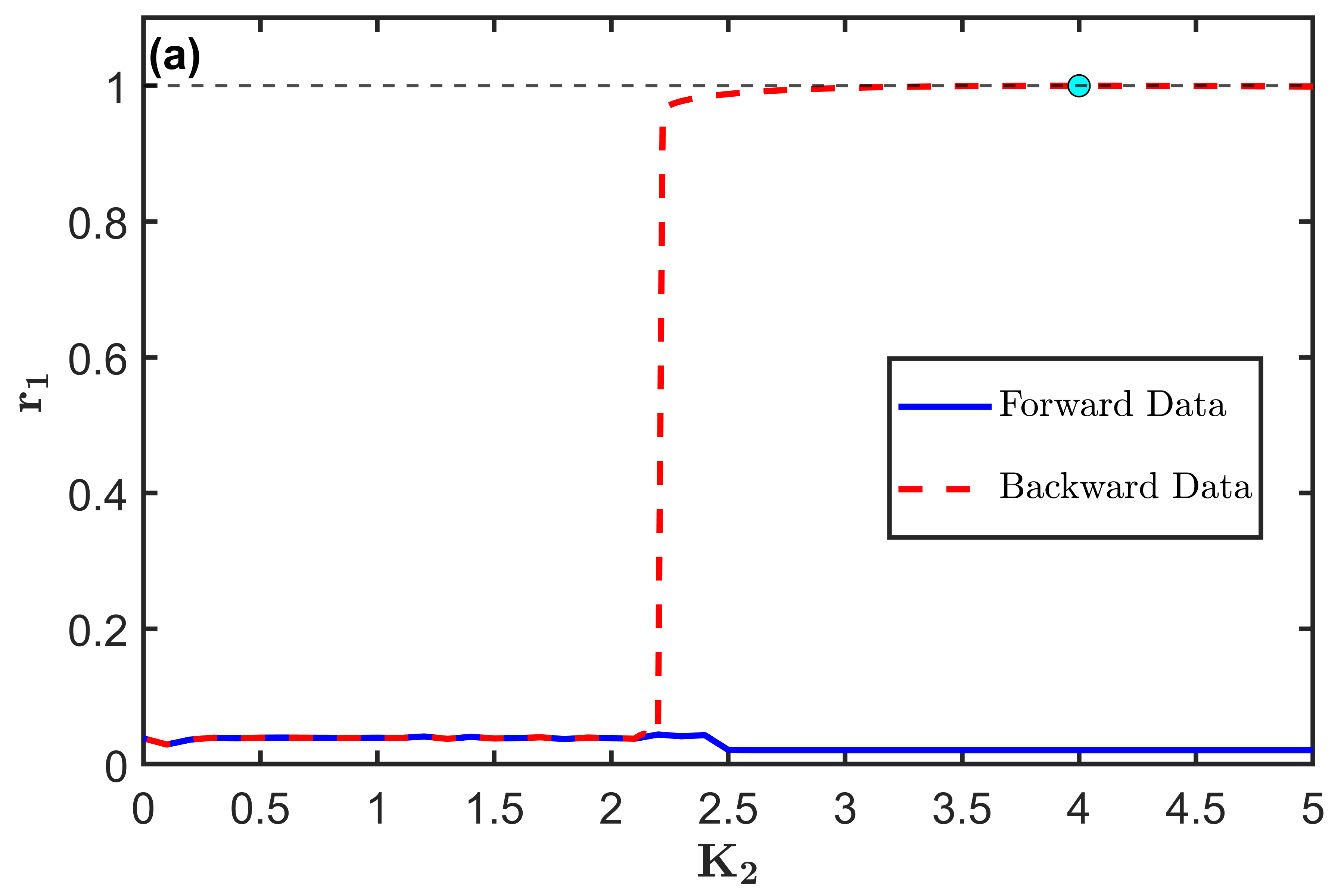
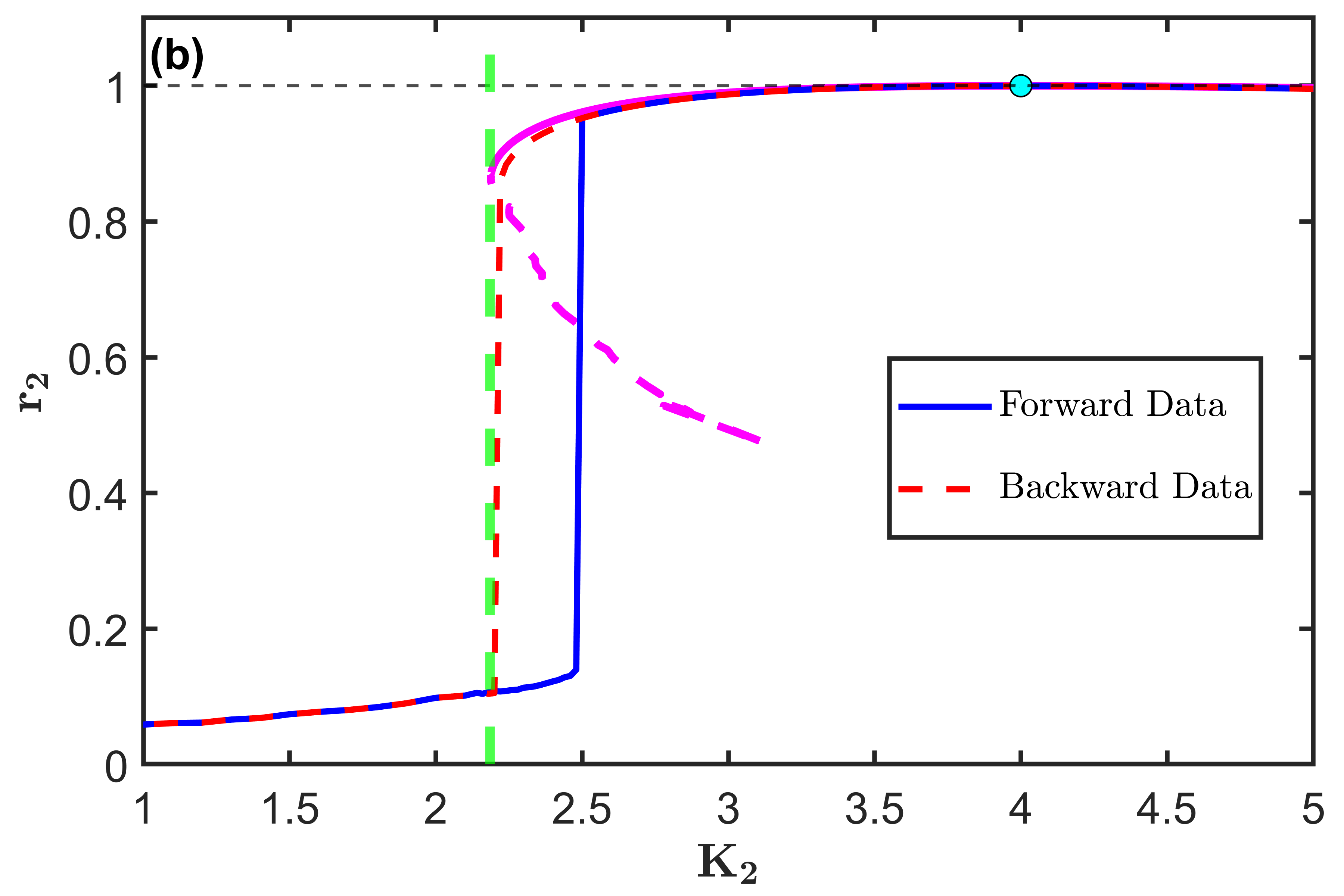
Figure 4: Analytical and numerical evaluation of the critical coupling, bifurcation diagrams, and corresponding hysteresis in a scale-free network.
Robustness to Frequency Noise
The complete synchronization state displays quadratic sensitivity to deviations in the optimal frequency (r=11 for weak multiplicative noise), as demonstrated both analytically (perturbation theory on the linearized system) and numerically (Figure 5), illustrating the practical bounds of robustness for the control protocol.
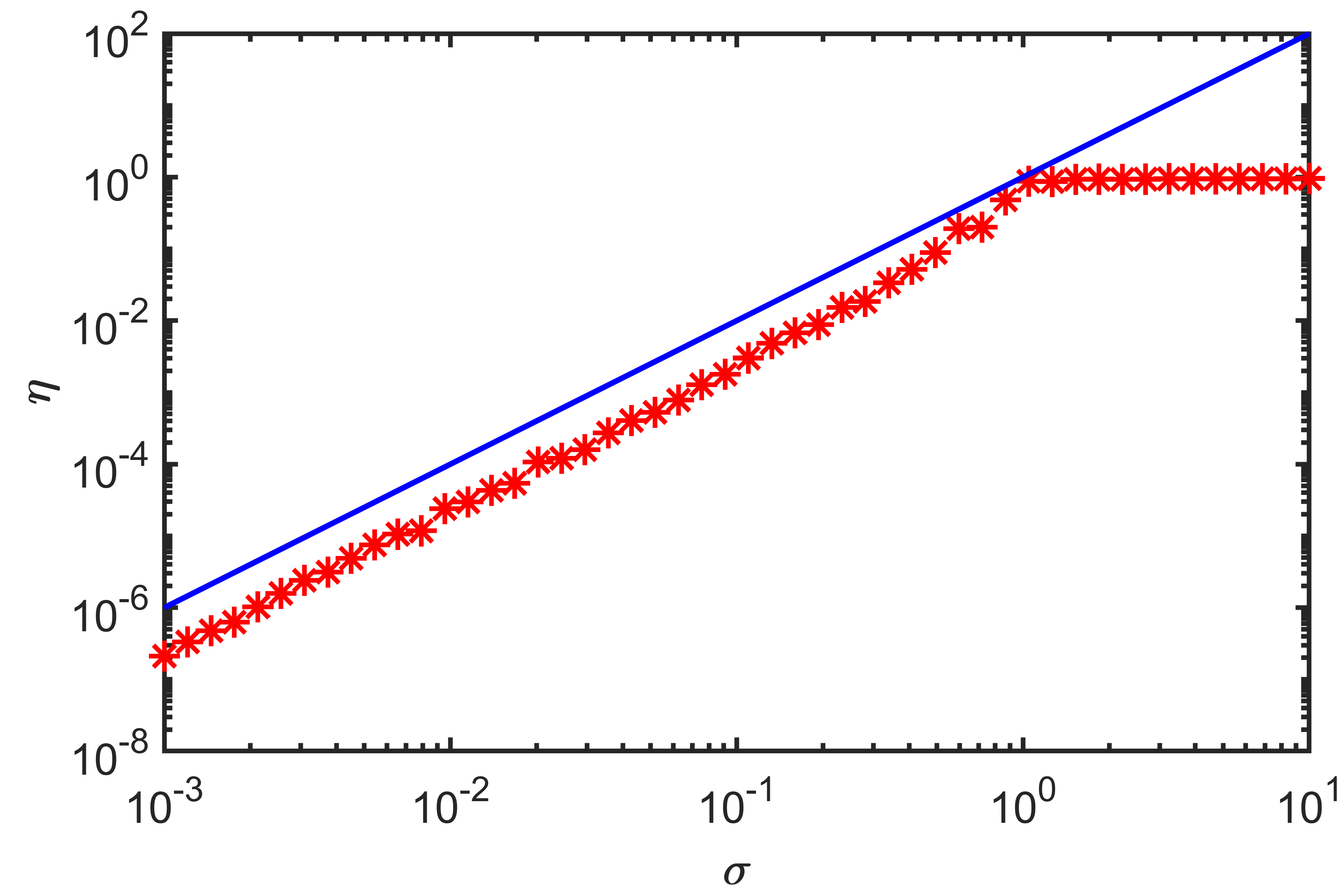
Figure 6: Synchronization error scaling as a function of noise in the frequency assignment; error grows quadratically at weak noise and saturates near loss of coherence at strong noise.
Higher-Order Harmonic Coupling Extensions
The optimal frequency assignment generalizes naturally to higher r=12-harmonic interactions, enabling complete synchronization for r=13 in systems with multi-harmonic coupling. Investigations with third-order harmonics confirm the emergence of sharp first-order transitions and hysteresis in higher r=14, with qualitative agreement to the bi-harmonic theory (Figure 6).
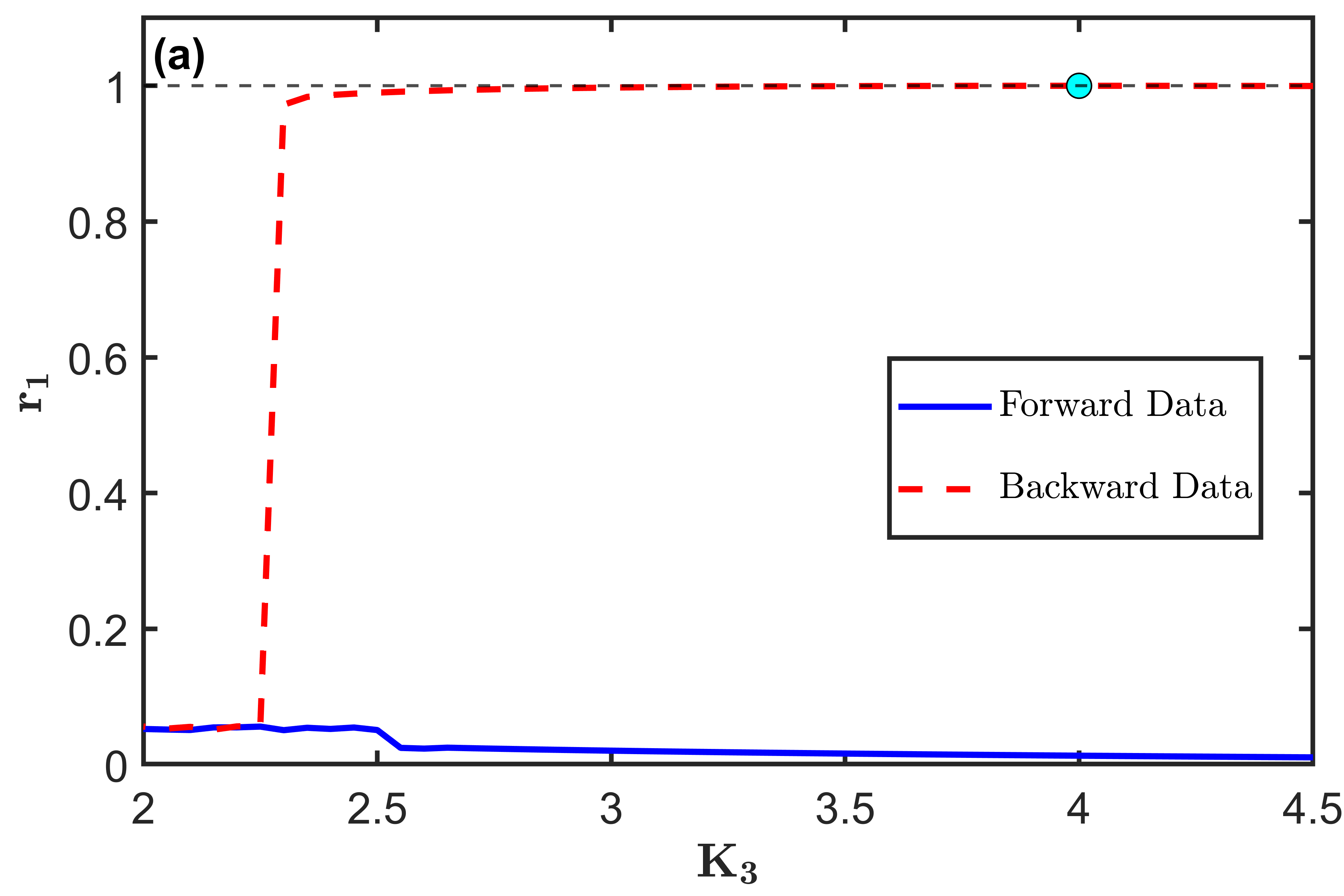
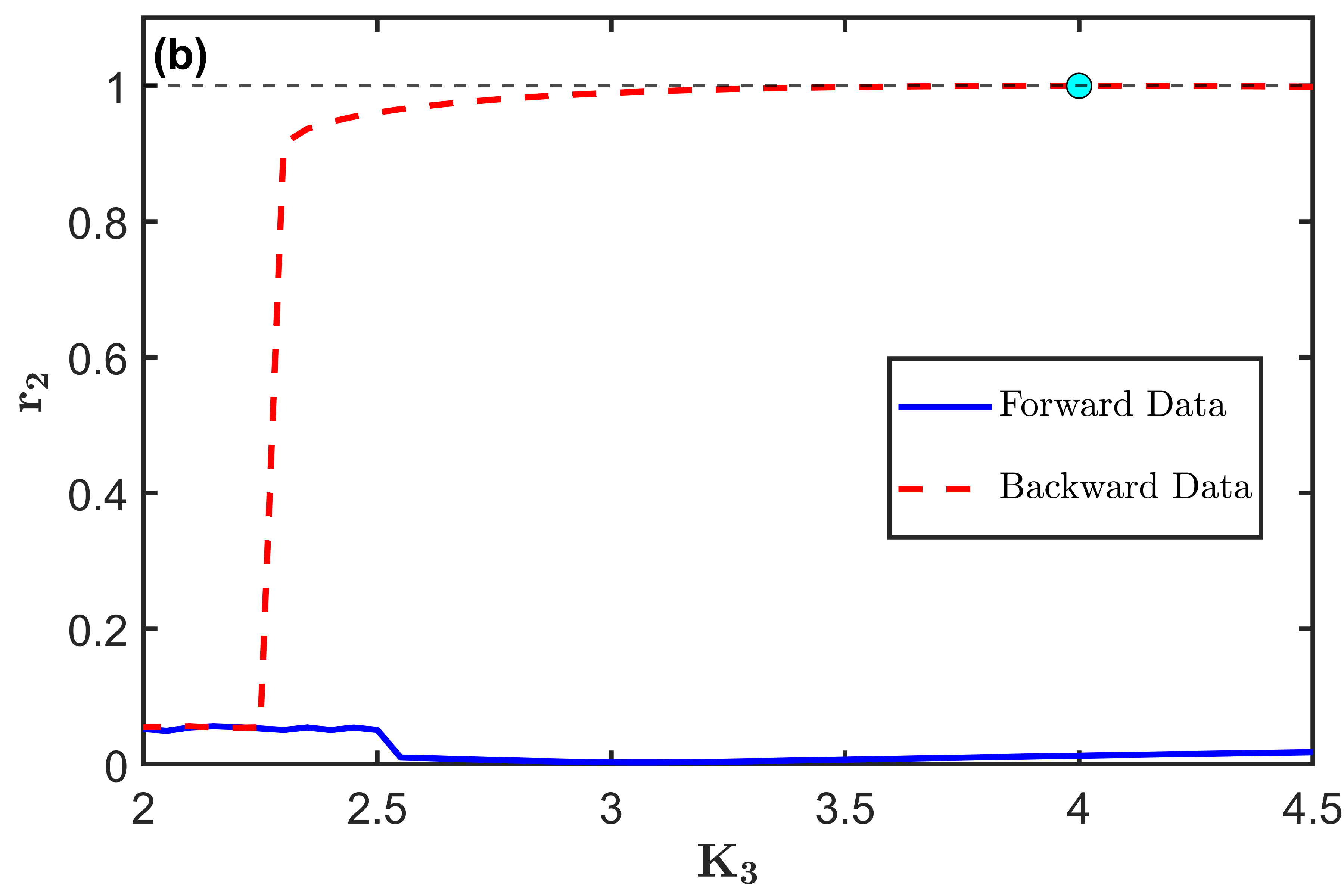
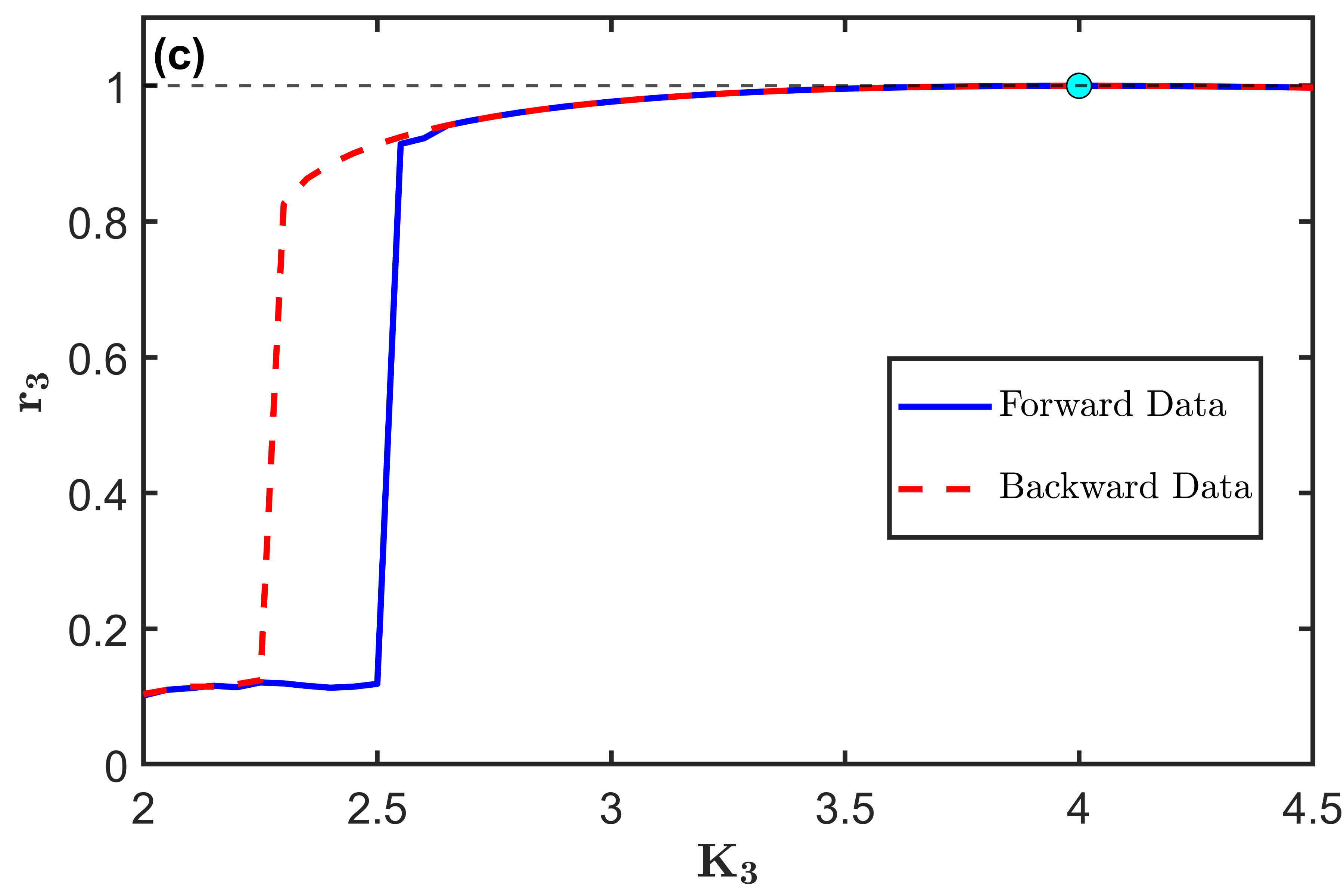
Figure 2: Third-order harmonic extension demonstrating the emergence of new hysteresis and multistability phenomena in r=15, with r=16 and r=17 showing only backward jumps.
Practical and Theoretical Implications
Control of Synchronization:
The findings provide a route for structural assignment of intrinsic dynamics (via r=18) to enforce controllable, exact synchrony in otherwise phase-frustrated, multi-harmonic oscillator networks. This is directly applicable to engineered systems such as power grids, microgrids, neural synchronization control, Josephson arrays, and any system modeled by Kuramoto-type equations with heterogeneous topology.
Phase Transition Theory:
The ability to toggle between first- and second-order synchronization transitions via topology and frequency assignment elucidates the interplay between network heterogeneity, coupling nonlinearity, and phase frustration in dictating macroscopic critical phenomena.
Generalization Potential:
The generality of the optimal frequency assignment principle extends to arbitrary harmonic compositions and nontrivial empirical networks, laying the groundwork for further exploration in multilayer, adaptive, and temporal networks.
Conclusion
This work rigorously establishes that optimal, degree-correlated frequency assignment enables complete synchronization in SK networks with bi-harmonic and higher-order coupling, even in the presence of generic phase frustration. The analytical predictions—both for full coherence and for critical coupling thresholds—are substantiated by simulations on synthetic and empirical networks. The framework reconciles the presence of explosive synchronization, hysteresis, and continuous transitions under a unified formalism and provides a scalable method for synchronization control in high-dimensional oscillator ensembles. Future research can extend these principles to multiplex and adaptive networks, explore constraints under incomplete information, and examine stability in the context of dynamically evolving network topologies.
Reference:
"Complete synchronization in networks of Sakaguchi-Kuramoto oscillators with bi-harmonic coupling" (2604.01724)

