- The paper introduces a computational framework that extends quantum emitter models beyond the single-excitation limit using a non-Markovian hierarchy.
- It leverages Green's function electrodynamics integrated with ECM and M-LN quantization to capture multi-photon and environmental feedback effects.
- Numerical demonstrations reveal dynamic population trapping, subradiant state formation, and entanglement revival in structurally complex photonic environments.
Computational Framework for Non-Markovian Multi-Emitter Dynamics Beyond the Single-Excitation Limit
Introduction
This work presents a computational framework for the explicit modeling of non-Markovian dynamics in quantum emitter ensembles, extending beyond the single-excitation manifold. The approach addresses a key limitation in conventional open quantum systems theory, where Markovian and single-excitation approximations obscure critical phenomena arising from environmental retardation, structured dissipation, and multi-photon effects. By integrating the rigor of Green's function electrodynamics with the flexibility of the emitter-centered mode (ECM) formalism and the modified Langevin noise (M-LN) quantization, the framework enables first-principles simulations of collective quantum optical processes in complex photonic environments.
The total Hamiltonian, constructed for N electric-dipole two-level systems coupled to a structured electromagnetic reservoir, is expressed using the M-LN formalism. This approach separates the continuum bath into boundary-assisted (BA) and medium-assisted (MA) polaritonic modes, ensuring first-principles compliance with the fluctuation-dissipation theorem and full account of both radiative leakage and material loss channels.
The core reduction is achieved by projecting the full polaritonic reservoir onto an orthonormal ECM basis, constructed from the spectral decomposition of the projected field Green’s function at the emitter sites. This orthogonalization yields collective bright-mode operators c^k, each directly parameterized by the imaginary part of the dyadic Green's tensor, which encodes all electromagnetic environment specifics—geometry, dispersion, and dissipation.
Within this basis, the quantum state is expanded in the two-excitation manifold, with explicit amplitudes for doubly excited atomic states, one-photon intermediates, and two-photon continua. The resulting equations of motion are a closed, non-Markovian hierarchy that exactly conserves total probability and preserves multi-photon symmetry—formally confirmed via commutation relations and norm preservation analysis. This hierarchical truncation, unlike master equations or time-convolutionless projections, retains both the multi-photon interference and the explicit field phase structure required for higher-order quantum correlations.
Photonic and Atomic Observables
The formalism provides direct access to atomic reduced density matrices, from which populations, coherences, Bell-state fidelities, and Wootters' concurrence are extracted. Of particular note is the systematic reconstruction of the emitted field at arbitrary positions, leveraging the mode decomposition enabled by the ECM. This enables not only atomic correlation observables but also spatiotemporal field intensities and spectral entanglement measures in the two-photon sector.
Numerical Demonstrations and Phenomenology
Homogeneous and Structured Waveguide Environments
A set of numerical experiments highlight the capabilities and the distinct physical regimes captured by the framework. For emitters in a semi-infinite waveguide (Figure 1), boundary-induced interference enables bound-state-like population trapping or enhanced radiative decay, depending on the mirror-image phase configuration. Population and coherence dynamics strictly follow manipulation of the underlying Green's function, as seen in the sector probability and atomic populations.
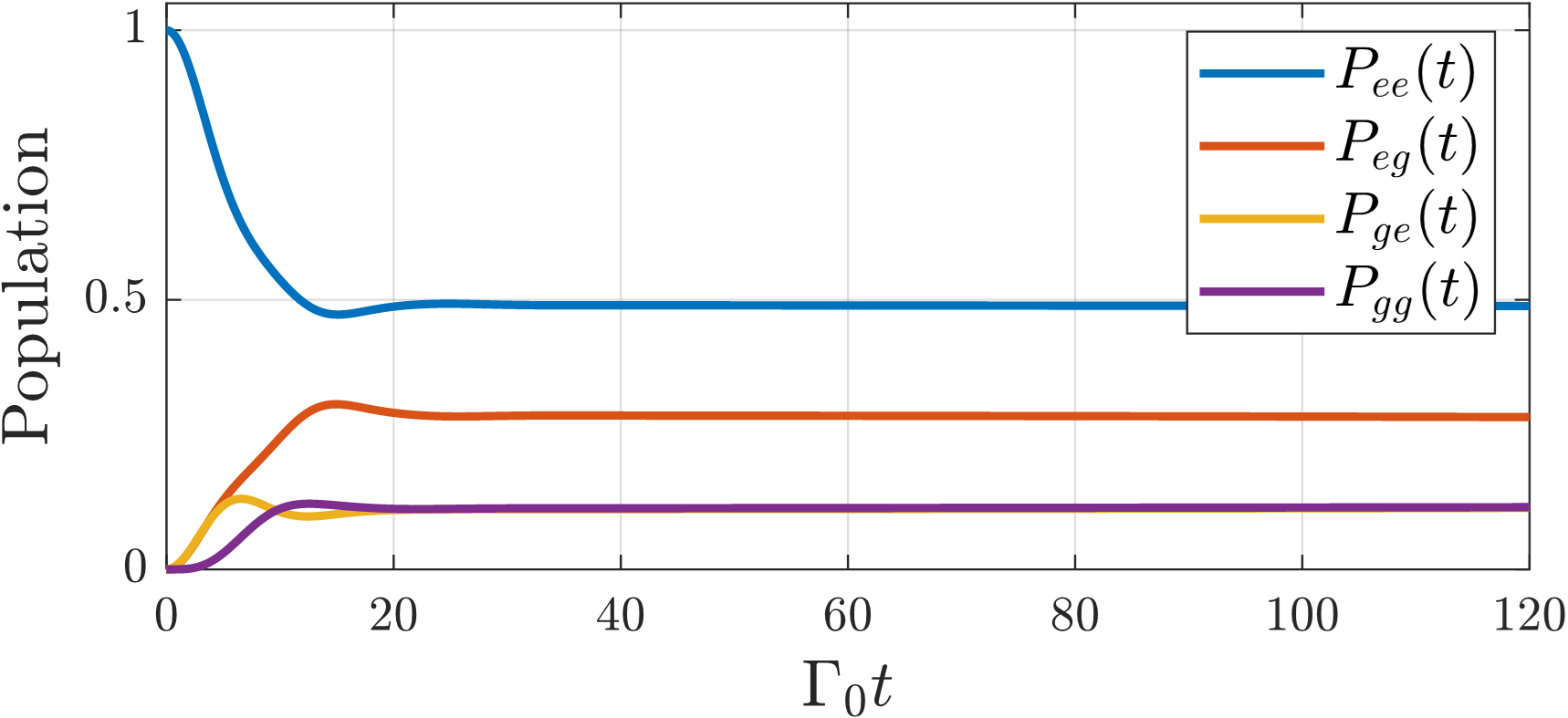
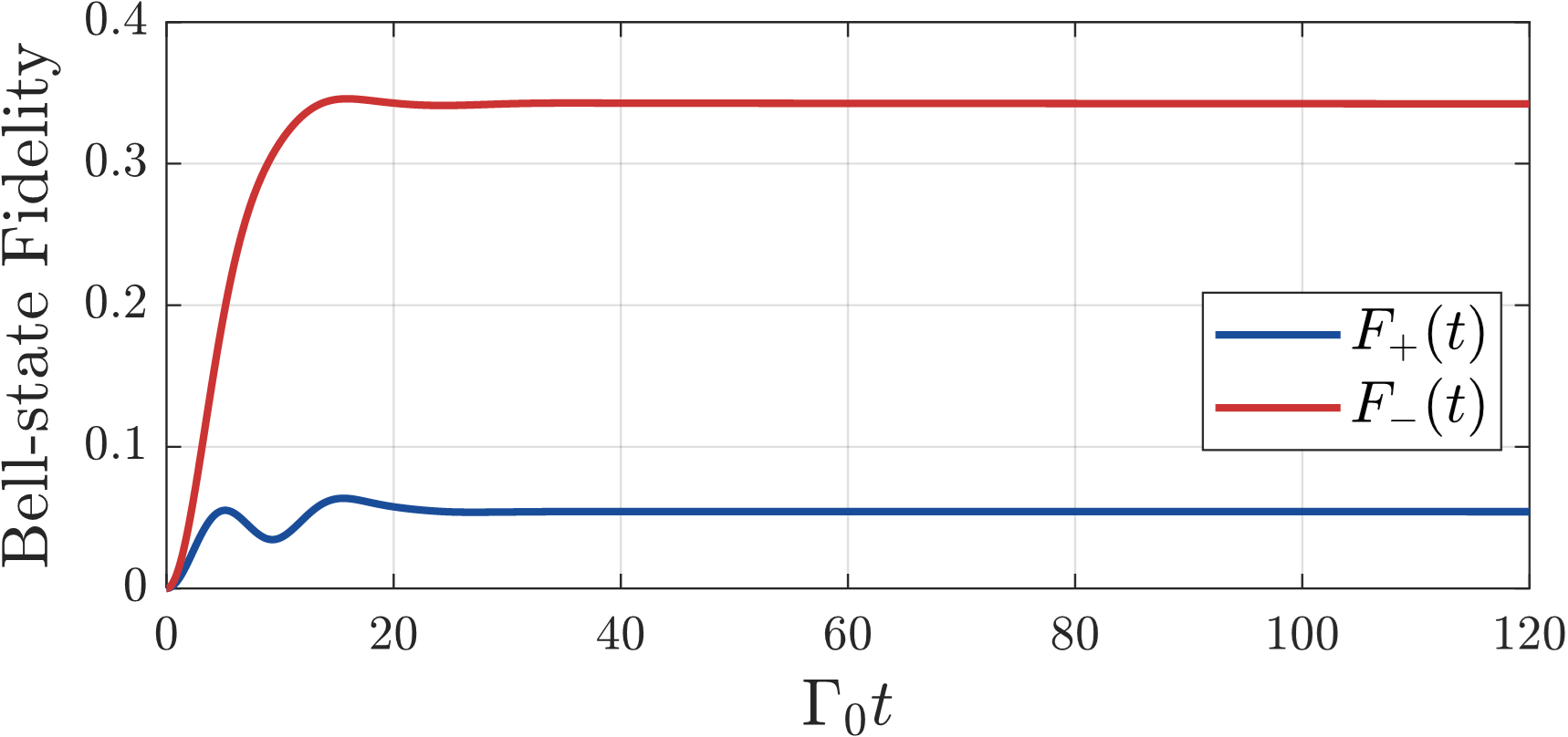
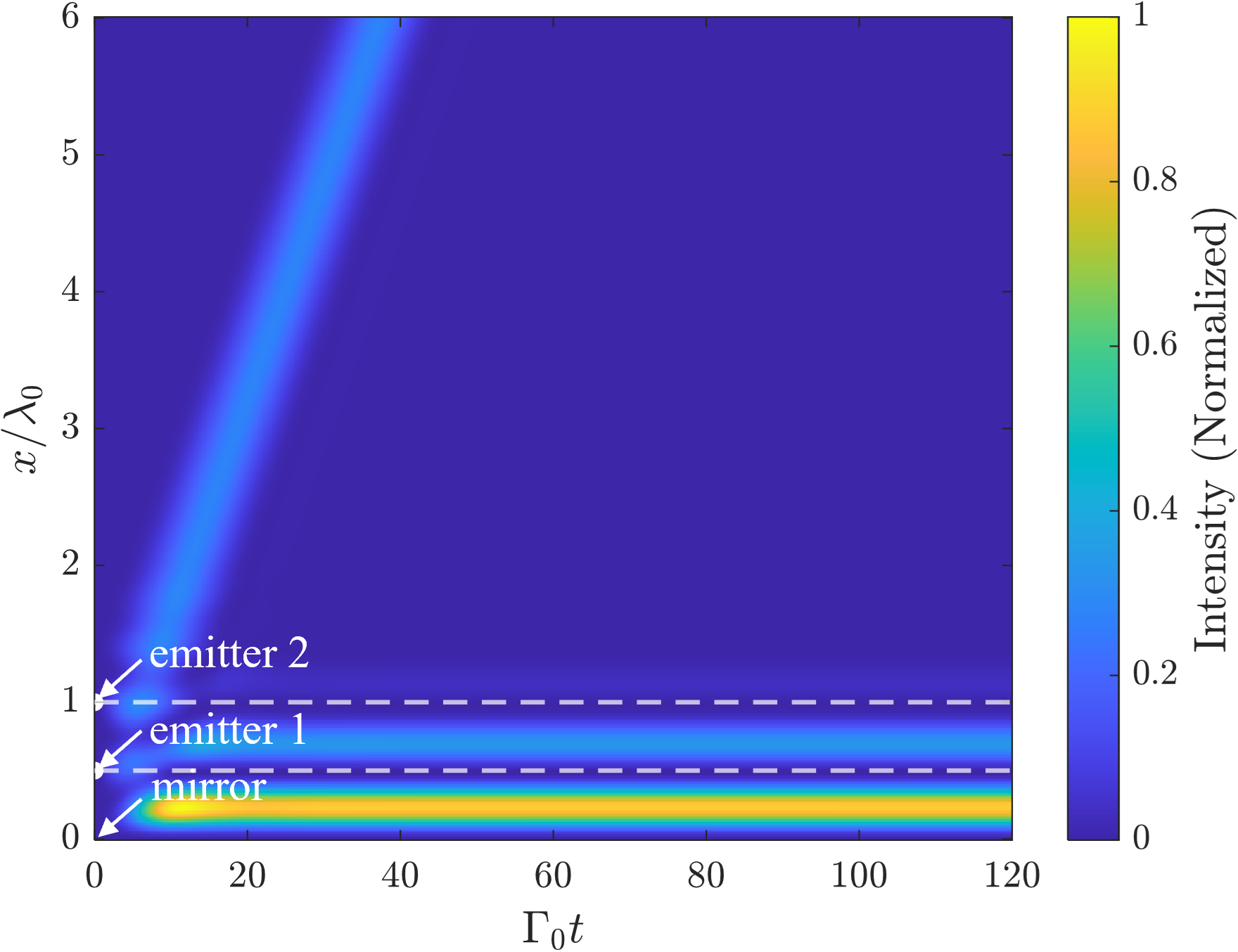
Figure 2: Population sector probabilities in a representative semi-infinite waveguide configuration, showing long-lived excitation and contribution from bound states.
When a lossy dielectric slab is embedded in the waveguide, strong non-Markovian effects emerge: the slab introduces delayed feedback, asymmetric decay, and temporally separated quantum jumps. These features are prominent in the sector population trajectories and in the spatiotemporal field intensity, underscoring the breakdown of simple exponential (Markovian) relaxation.
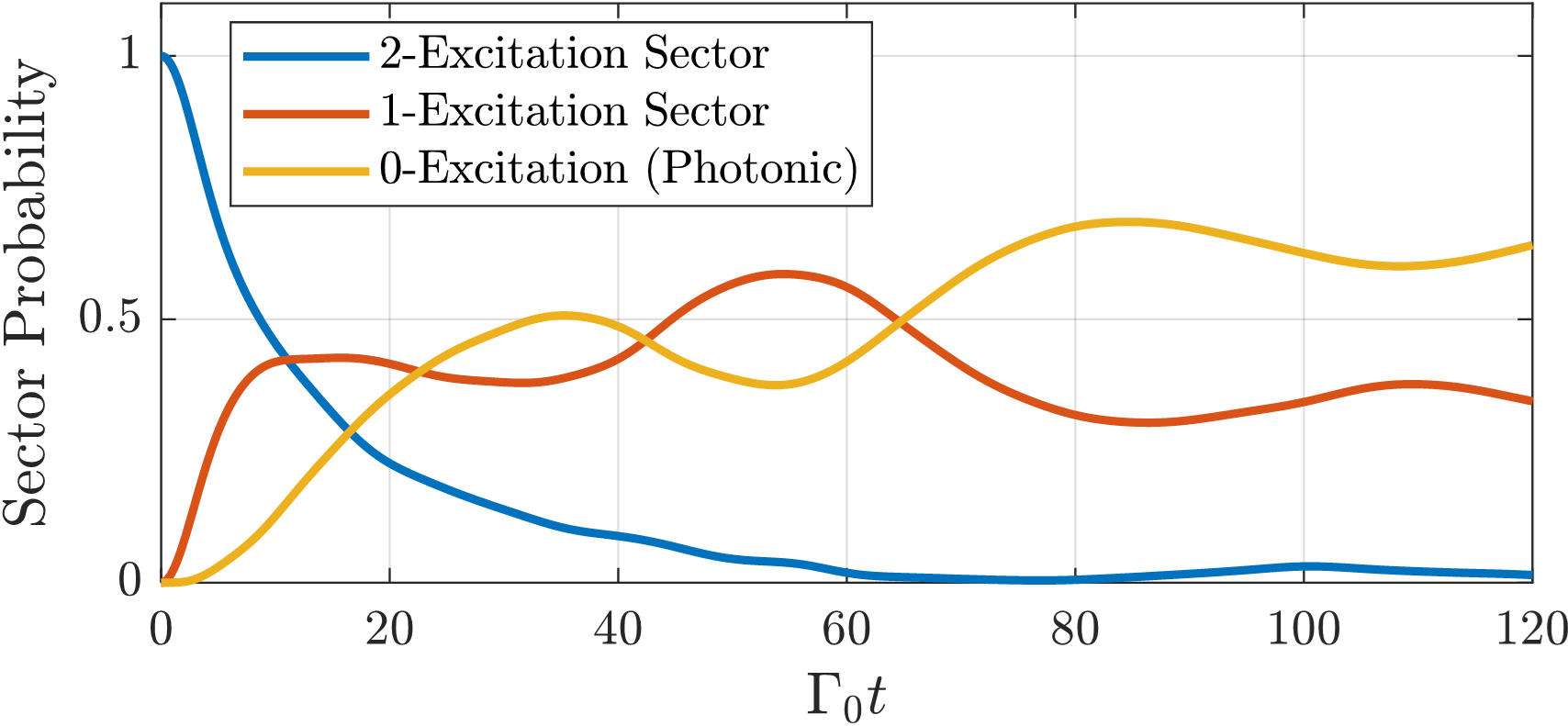
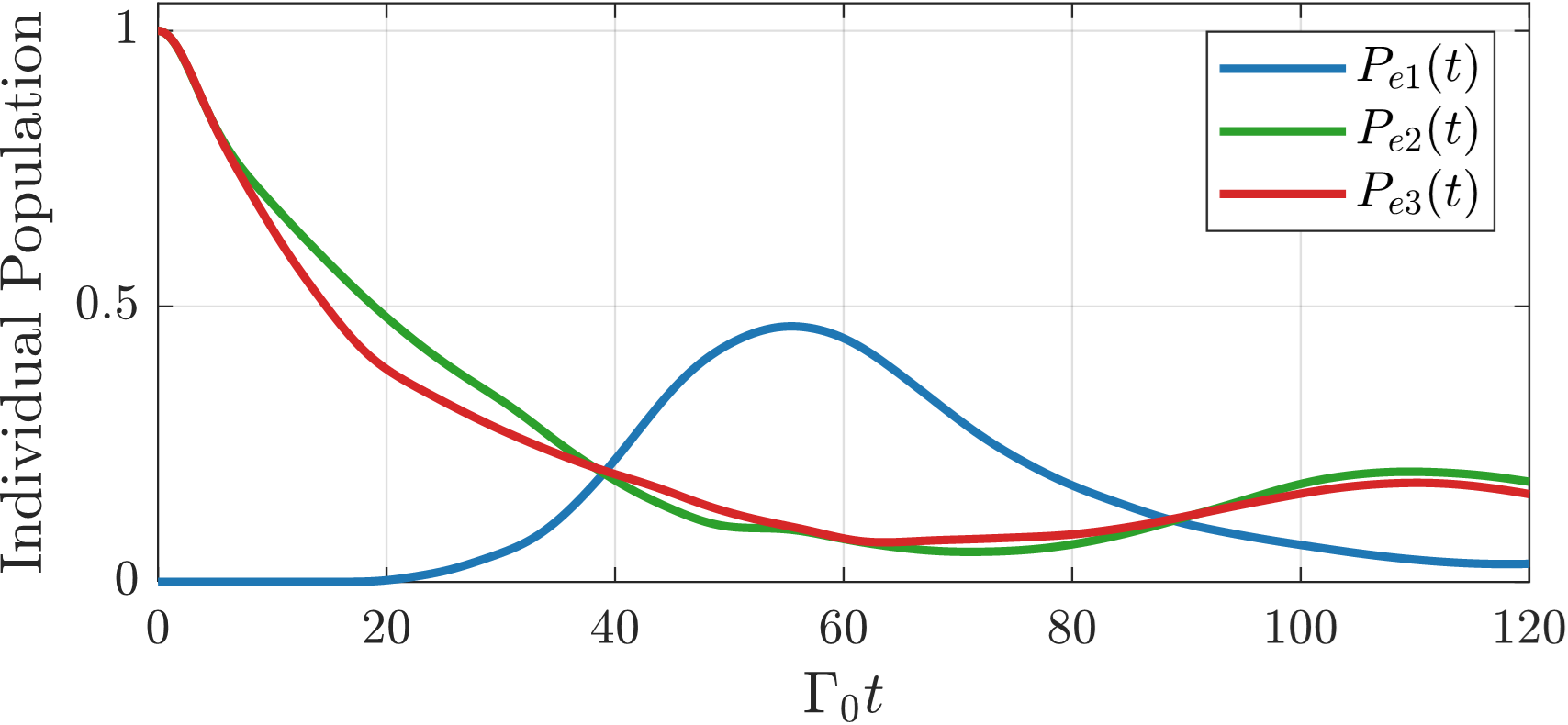
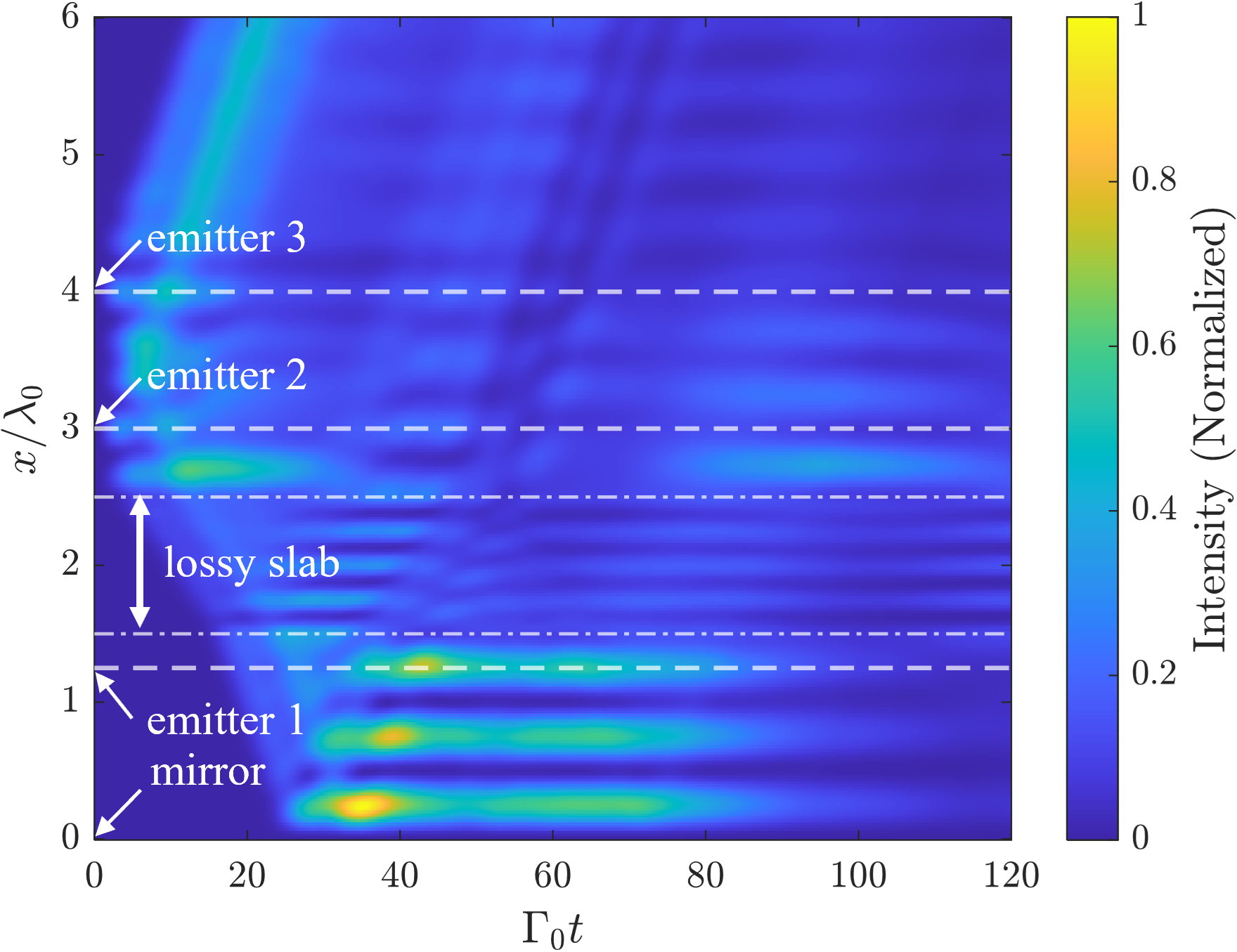
Figure 3: Sector probability evolution for emitters in a structured environment showing pronounced non-Markovian transfer among excitation sectors.
Collective Emission from Symmetric Dicke States
The method captures the decay cascade from collectively excited (symmetric Dicke) states, including the dynamical redistribution among bright and dark collective sectors. In free-space-like or symmetric configurations, ideal Dicke superradiance is observed—with population flowing exclusively into symmetric single-excitation channels and then the ground state.
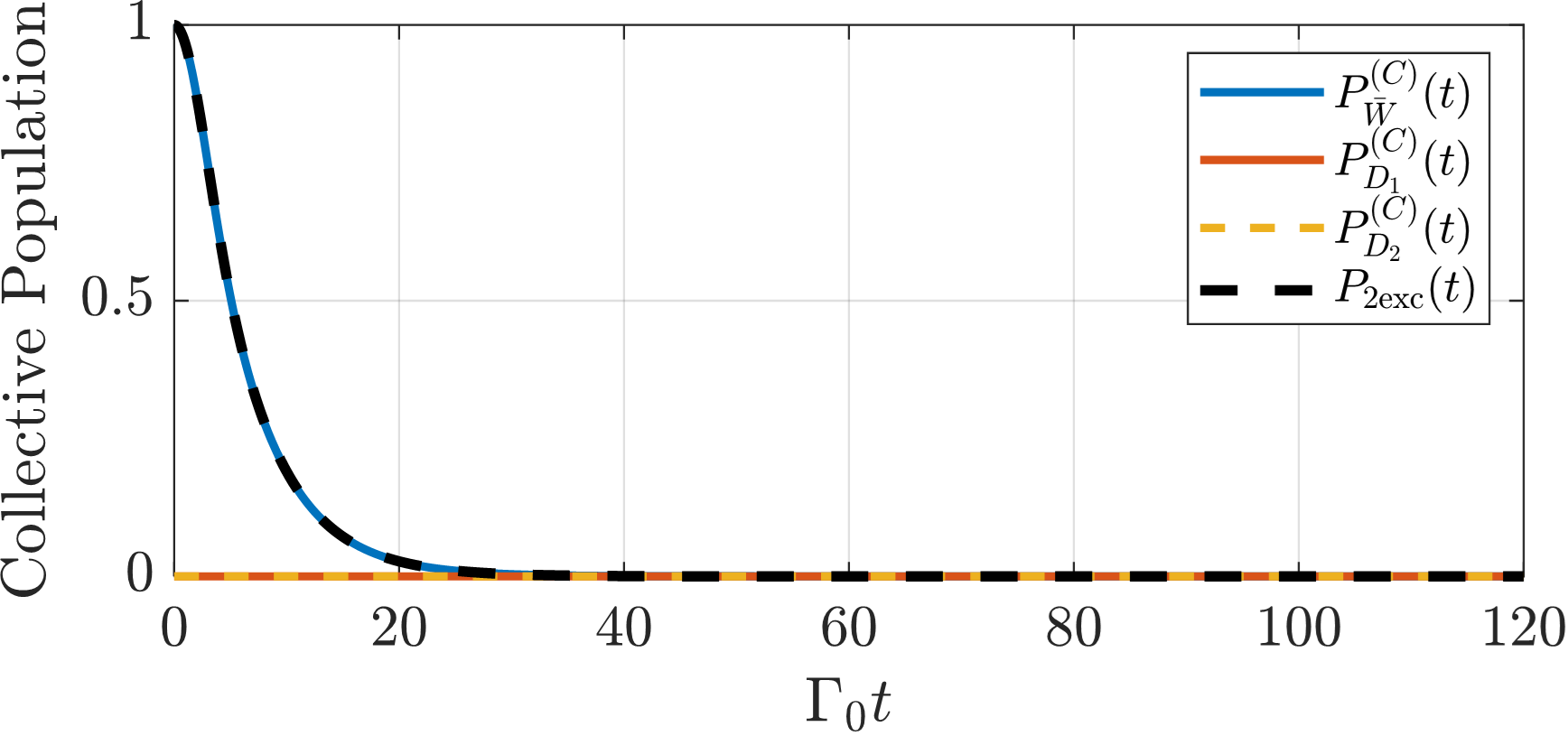
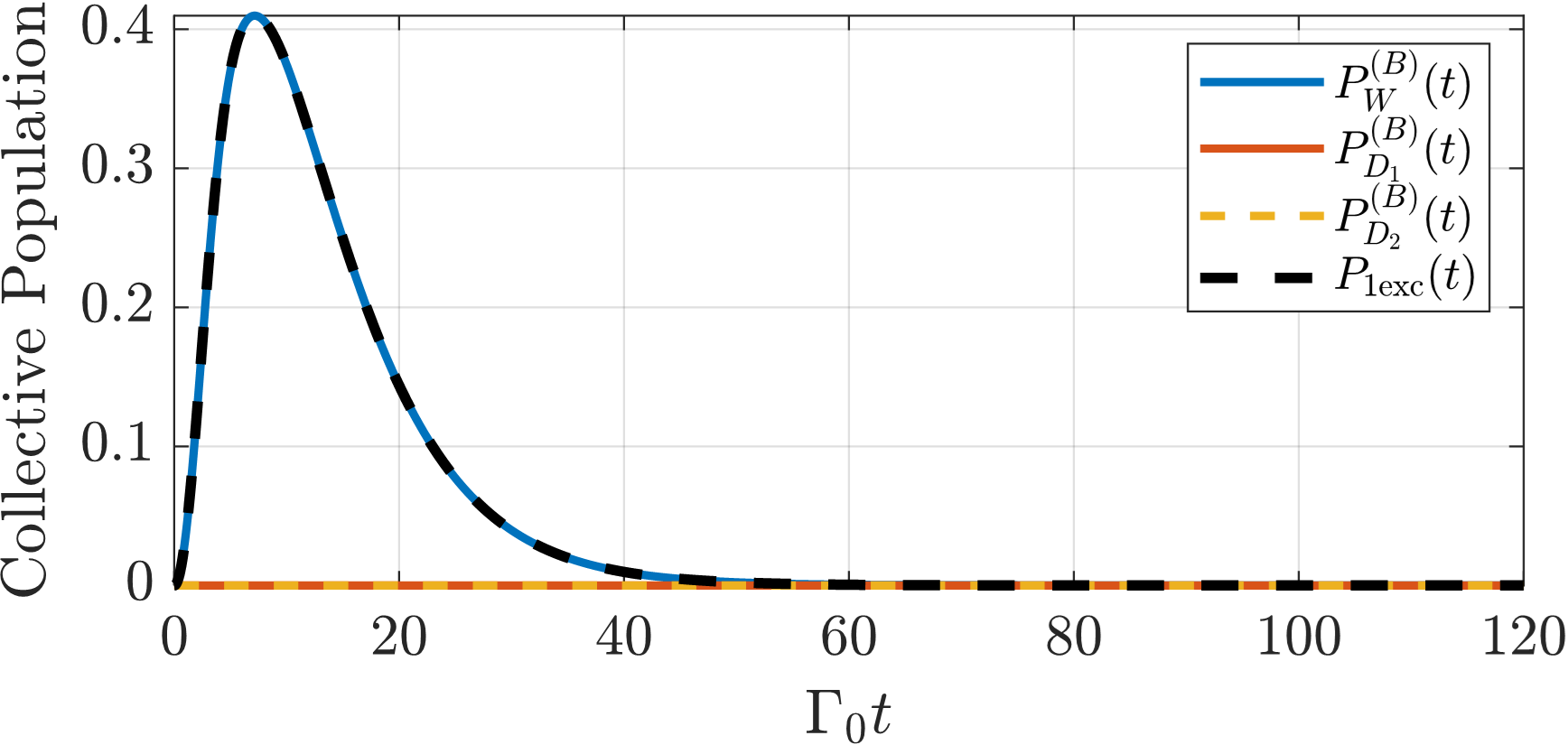
Figure 4: Collective decay dynamics of the symmetric Dicke state in free space, confirming ideal Dicke superradiance.
When symmetry is broken by environmental structuring (dielectric slabs, geometric asymmetry), population is redistributed toward orthogonal dark states and persistent oscillations appear, indicating strong feedback and subradiant trapping. A two-dimensional parameter scan over emitter placements and slab thicknesses reveals phase-sensitive regimes of anomalously high dark-state occupation, reflecting environment-induced control of collective quantum interference.

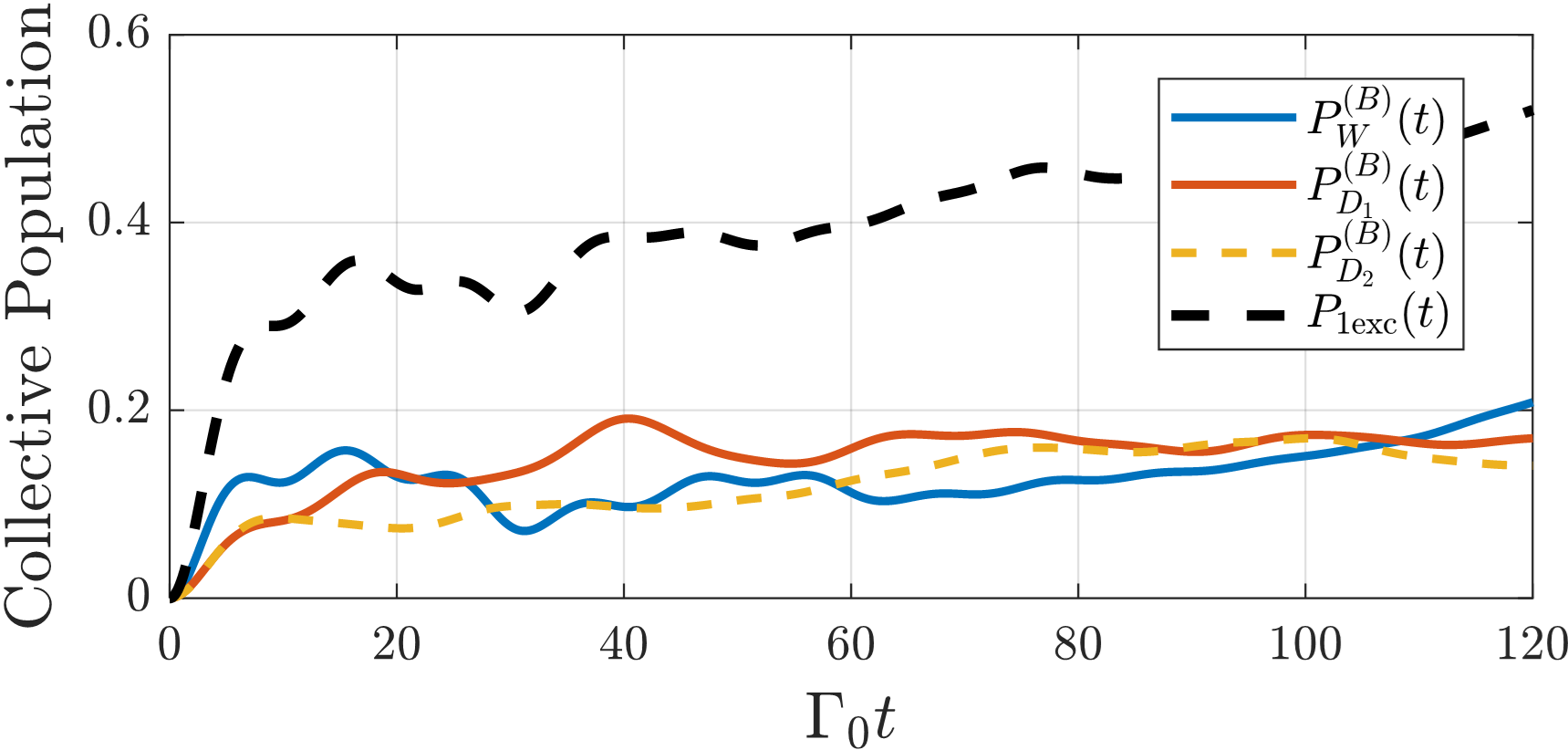
Figure 5: Dynamics in structured environments with pronounced transfer into subradiant dark states and non-Markovian oscillatory behavior.
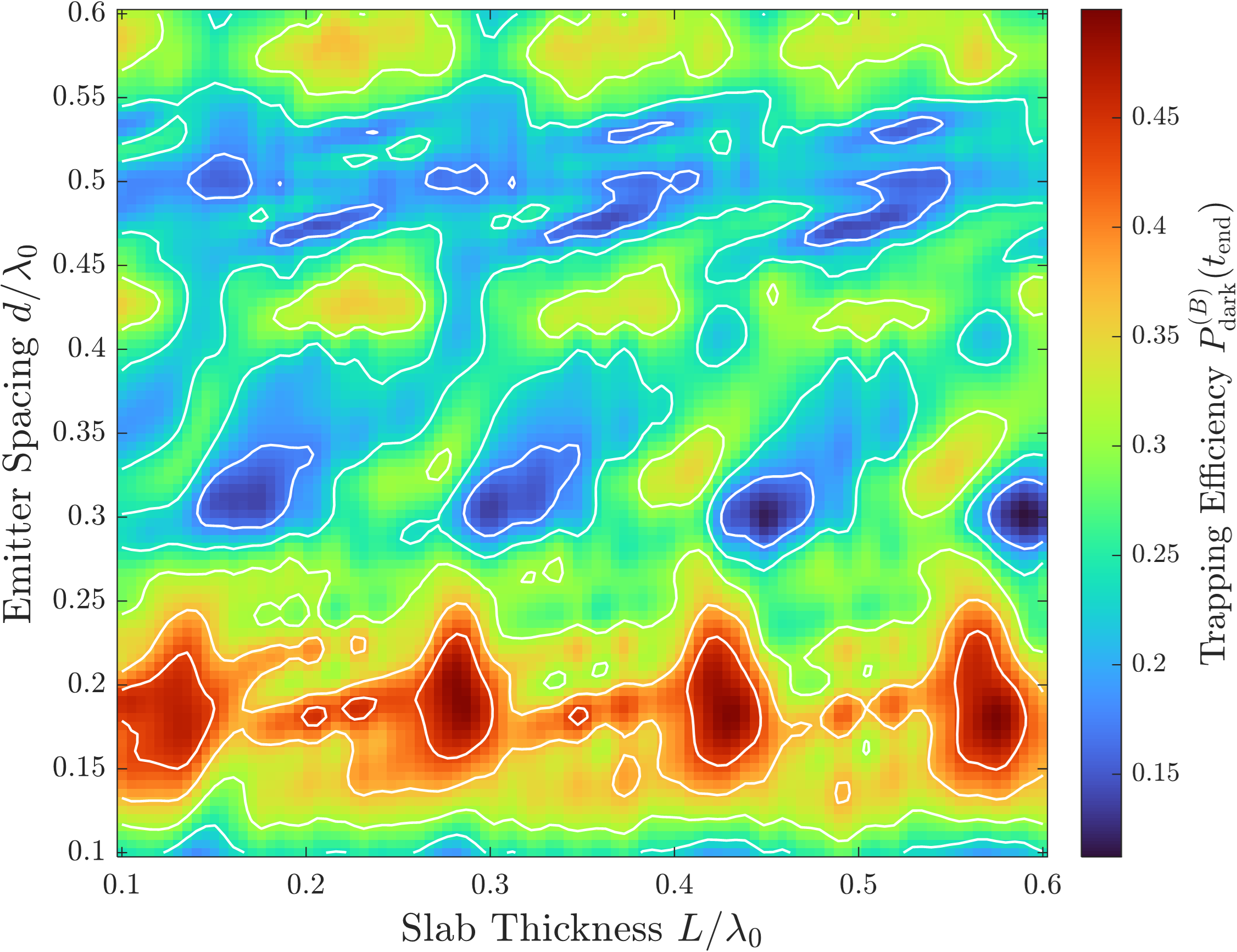
Figure 6: Two-dimensional map of the asymptotic trapping efficiency Pdark as a function of geometric parameters.
Entanglement Dynamics and Sudden Birth
The explicit two-quanta approach exposes the full entanglement dynamics for initially separable (e.g., ∣e,e⟩) and entangled initial states. Consistent with theoretical predictions, concurrence remains zero for a finite retardation time—exhibiting "entanglement sudden birth"—then develops oscillatory revivals linked to field-mediated reinteraction. This behavior is inaccessible to Markovian or single-photon models, affirming the necessity of the present hierarchy in capturing non-Markovian, non-perturbative quantum memory effects in open, structured systems.
Theoretical and Practical Implications
The present framework delivers a modular, computationally tractable, first-principles tool for multi-excitation, multi-emitter non-Markovian QED. The combination of Green's function embedding, ECM reduction, and explicit amplitude tracking distinguishes this from stochastic or master-equation techniques and connects rigorously to advanced computational EM methods (FEM/FDTD/CQEM).
Practically, this enables the design and analysis of photonic structures (cavities, photonic crystal environments, plasmonic interfaces) supporting engineered multi-photon interactions, entanglement generation, and waveguide QED protocols, in direct contact with realistic loss, dispersion, and nonlocality. The explicit treatment of field modes and photon-photon correlations is critical to the interpretation of experiments targeting few-photon quantum technologies, structured light-matter interfaces, and quantum information tasks.
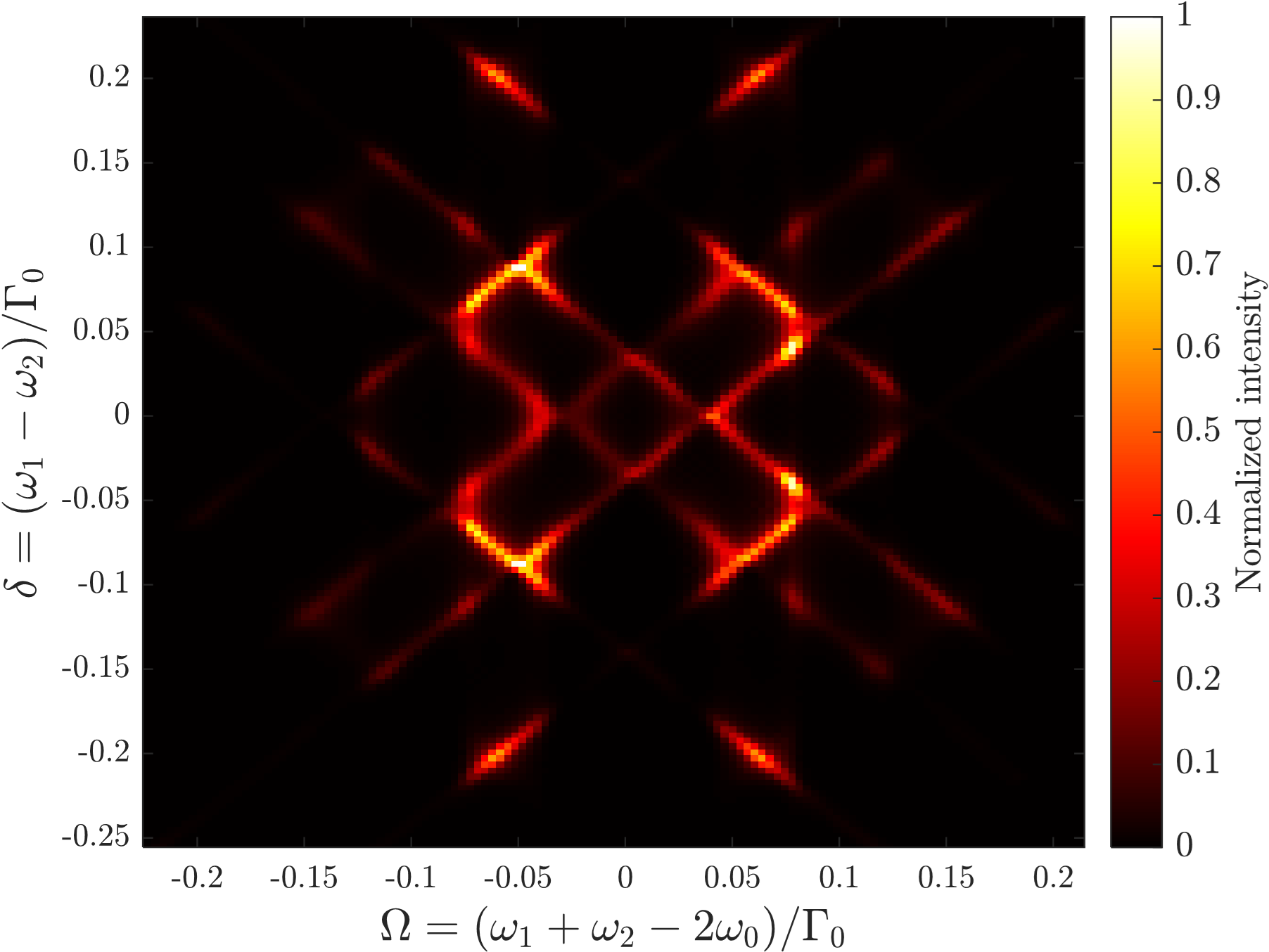
Figure 7: Joint spectral density illustrating high-visibility spectral correlations in the two-photon emission, indicative of multimode entanglement controlled by environment structuring.
Outlook and Future Directions
The Green's function + ECM + M-LN architecture is inherently extensible—higher excitation manifolds, inclusion of nonlinearities, multimode coupling, or direct connection to time-domain EM solvers are all possible. The modular dependence on the local Green's function allows coupling with ab-initio or numerical EM solvers for arbitrary geometries, offering a practical path to device modeling at the quantum level in nanophotonics, integrated quantum optics, and cavity/circuit QED.
Theoretical questions remain on accurately parametrizing extremely complex or disordered reservoirs and on further reducing computational scaling. However, for its targeted regime (few excitations, few emitters, arbitrary environments), this framework is state-of-the-art.
Conclusion
The developed computational approach systematically bridges the gap between quantum optical theory and realistic electromagnetic structure modeling for non-Markovian, multi-photon, and multi-emitter regimes. By retaining full phase, amplitude, and multi-sector dynamics, it provides an actionable tool for both the exploration of fundamental quantum phenomena—such as entanglement birth and subradiant population trapping—and the practical engineering of photonic quantum devices. The formalism’s dependence on the Green’s function makes it a unifying platform for future advances in computational quantum electrodynamics and quantum photonic technology.
Key Figures Referenced:
- Figure 1: Schematic illustration of single-end photonic waveguide configurations
- Figure 2: Population
- Figure 3: Sector probability
- Figure 4: Collective decay dynamics of the symmetric Dicke state in free space
- Figure 5: Collective decay dynamics in structured environments
- Figure 6: Two-dimensional trapping efficiency map
- Figure 7: Post-selected conditional joint spectral density J(ω1,ω2)