- The paper demonstrates that anharmonic phonon-phonon interactions in insulating WS₂ induce a magnetic-field-driven transverse thermal resistivity, drawing an analogy to the Senftleben-Beenakker effect.
- It employs combined experimental measurements and ab-initio modeling to reveal a robust scaling law (κxy ∝ κxx²) and shows that both thermal conductivities peak near similar temperatures.
- The study introduces a Lorentz-like Berry force mechanism that quantifies momentum exchange in phonon gases, providing insights for engineering transverse thermal transport in diverse insulators.
Interaction-Driven Transverse Thermal Resistivity in a Phonon Gas
Introduction and Motivation
The study titled "Interaction driven transverse thermal resistivity in a phonon gas" (2604.03644) interrogates the microscopic mechanisms underlying the phonon thermal Hall effect (THE) in crystalline insulators, with an emphasis on the role of phonon-phonon interactions. Traditionally, most theoretical accounts of THE have either posited intrinsic origins (Berry curvature effects, topological phonon bands) or extrinsic ones (defect-assisted skew scattering), notably neglecting anharmonicity as an essential ingredient for transverse responses. In contrast, the present work draws an explicit analogy with the Senftleben-Beenakker (SB) effect in molecular gases, where collisional angular momentum modifications by applied fields yield an off-diagonal thermal conductivity tensor. The central claim is that a generic phonon gas exhibits a magnetic-field-driven transverse thermal resistivity, the magnitude of which is constrained by a Berry force acting on drifting nuclei, and that this scenario gives a quantitative account for transverse thermal transport in a wide range of insulators.
Experimental Approach and Transport Characterization
The focal material is layered WS2, a transition metal dichalcogenide (TMD) with a large band gap, studied for its purely phononic heat transport. The experimental protocol involved simultaneous measurement of longitudinal (κxx) and transverse (κxy) thermal conductivities as functions of temperature and magnetic field.
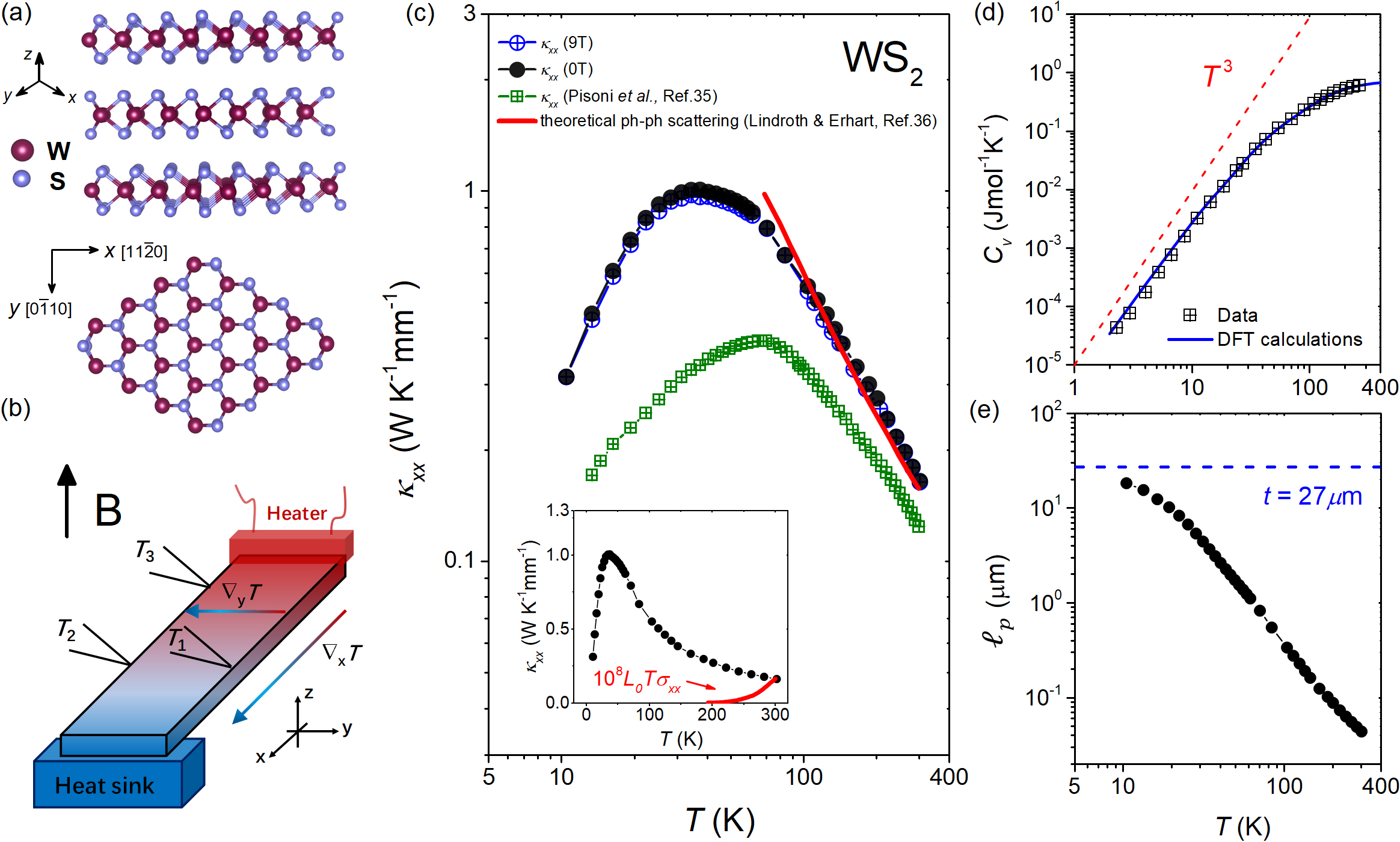
Figure 1: Crystal structure and measurement setup of WS2; temperature dependence of κxx clearly showing phonon-dominated transport and mean-free-path evolution.
The κxx peaks sharply around 34 K, with a value near 1000 W·K−1·m−1, exceeding previous reports and closely aligning with ab-initio theoretical predictions. The electronic contribution is orders of magnitude lower than the phononic one, validating the insulating regime. Above the peak, a power-law decay κxx∝T−λ (with λ≳1) is observed, consistent with anharmonic phonon dynamics limited by Planckian dissipation, but without an evident Ziman regime. The phonon mean-free-path nearly saturates at the sample thickness at 10 K, indicating proximity to the ballistic regime. The heat capacity measurements agree quantitatively with calculations from the ab-initio phonon dispersions.
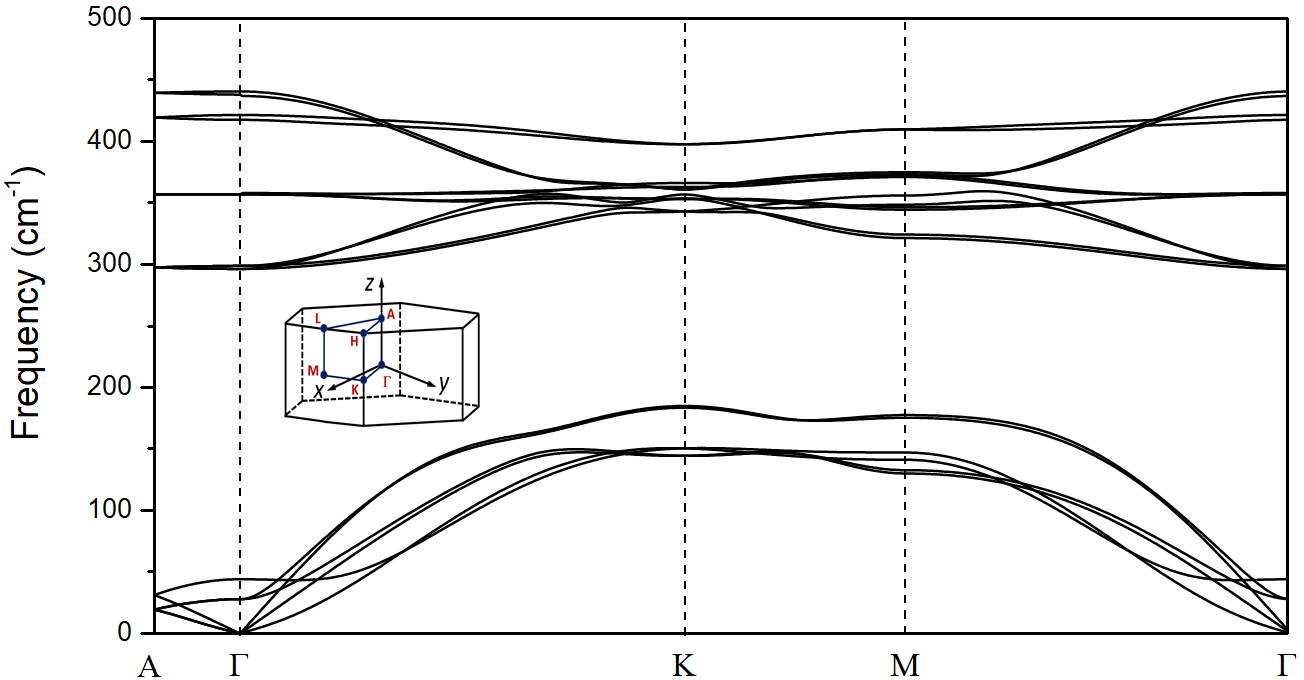
Figure 2: Calculated phonon dispersions for WSκxx0 reveal large gaps arising from mass disparity, consistent with high measured thermal conductivity.
Observations of the Phonon Thermal Hall Effect
The transverse thermal response is accessed via measurement of the thermal Hall angle κxx1 under applied magnetic fields. The results indicate a linear field dependence near the peak temperatures and demonstrate that κxx2 and κxx3 both peak at similar, but not identical, temperatures.
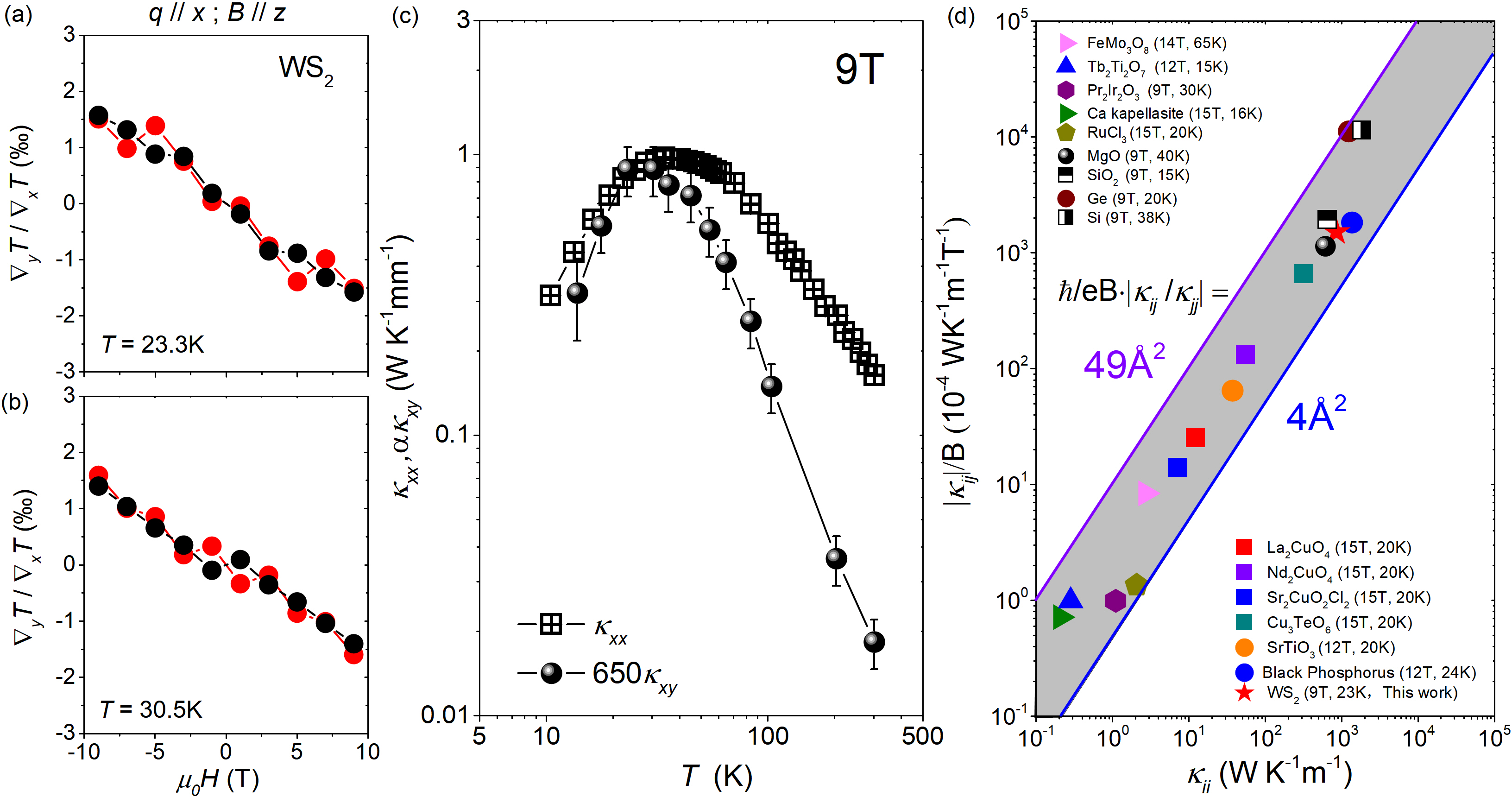
Figure 3: Field dependence and temperature evolution of the thermal Hall angle and κxx4 for WSκxx5, establishing the linear behavior and proximity of peaks in κxx6 and κxx7.
The maximum thermal Hall angle respects the upper bound anticipated in other insulators, with numerical values on the order of κxx8 Tκxx9. The scaling law κxy0 holds robustly across the studied temperature window, implying a nearly temperature-independent transverse thermal resistivity.
Theoretical Framework and Senftleben-Beenakker Analogy
The manuscript develops a kinetic theory analogy between real molecular gases and phonon gases, invoking the SB effect, where field-induced collisional anisotropy generates transverse heat transport without the requirement for chirality. In a molecular gas, the magnetic field modifies the angular momentum distribution, skewing collision cross-sections and yielding a transverse thermal conductivity maximized when κxy1.
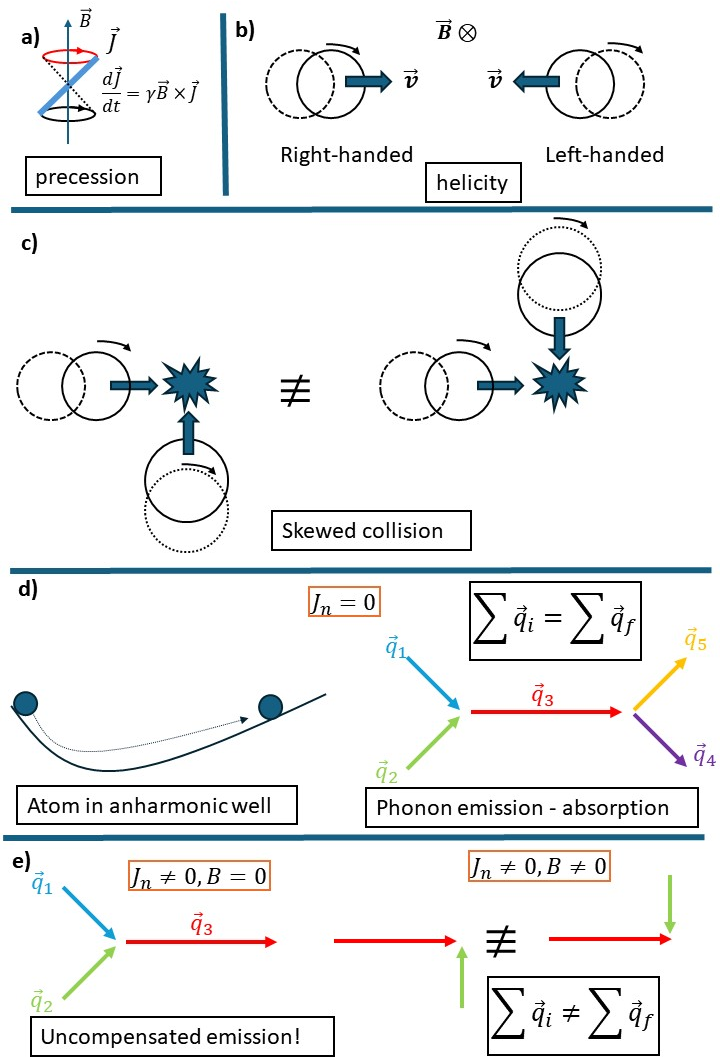
Figure 4: Schematic depiction of SB effect in molecular gases and analogous processes in phonon gases; highlights field-driven angular momentum modification and non-equivalent collision events.
The phonon gas differs by non-conservation of particle number; however, in the presence of a temperature gradient and magnetic field, a rigid rotation of phonon flux density and thus a transverse temperature gradient develops. Key is the anharmonicity enabling three-phonon processes and the symmetry breaking by the field.
Quantification of Transverse Thermal Resistivity
Transverse thermal resistivity is defined as κxy2. The experimentally determined κxy3, normalized to field, is nearly flat over multiple orders of temperature and lies in the range κxy4–κxy5 m·K·Wκxy6·Tκxy7 across diverse insulators (WSκxy8, Si, Ge, black P, SrTiOκxy9, Nd20CuO21, quartz).
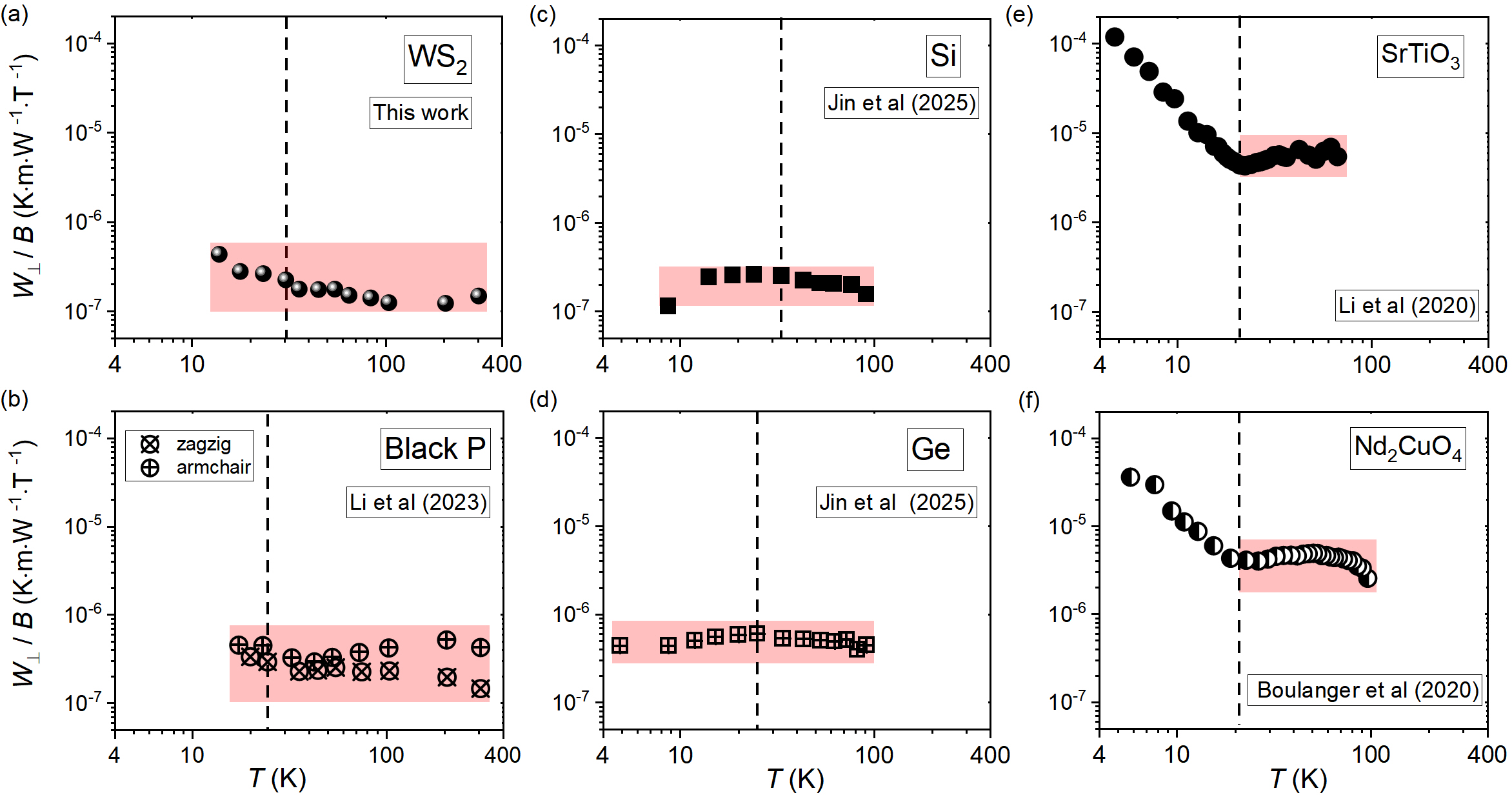
Figure 5: 22 as a function of 23 for several insulators, showing universality and flatness across wide 24 ranges.
This scaling behavior elucidates the 25 relationship, as 26 is effectively constant near the peak. For SrTiO27 and Nd28CuO29, κxx0 exceeds unity in normalized units outside the minimum dissipation regime, consistent with enhanced anharmonicity and extrinsic skew scattering.
Berry Force and Momentum Conversion
The theory advances a Lorentz-like Berry force acting on nuclei moving in a magnetic field, whose magnitude is set by screening parameters and the thermodynamic drift velocity induced by longitudinal heat flow. The equality of Berry and thermal forces yields:
κxx1
where κxx2 encode screening, momentum transfer, and entropy contributions, κxx3 is the interatomic distance, and κxx4 the sound velocity. For typical parameters, this formula quantitatively accounts for measured κxx5.
Universality of the Thermal Hall Angle
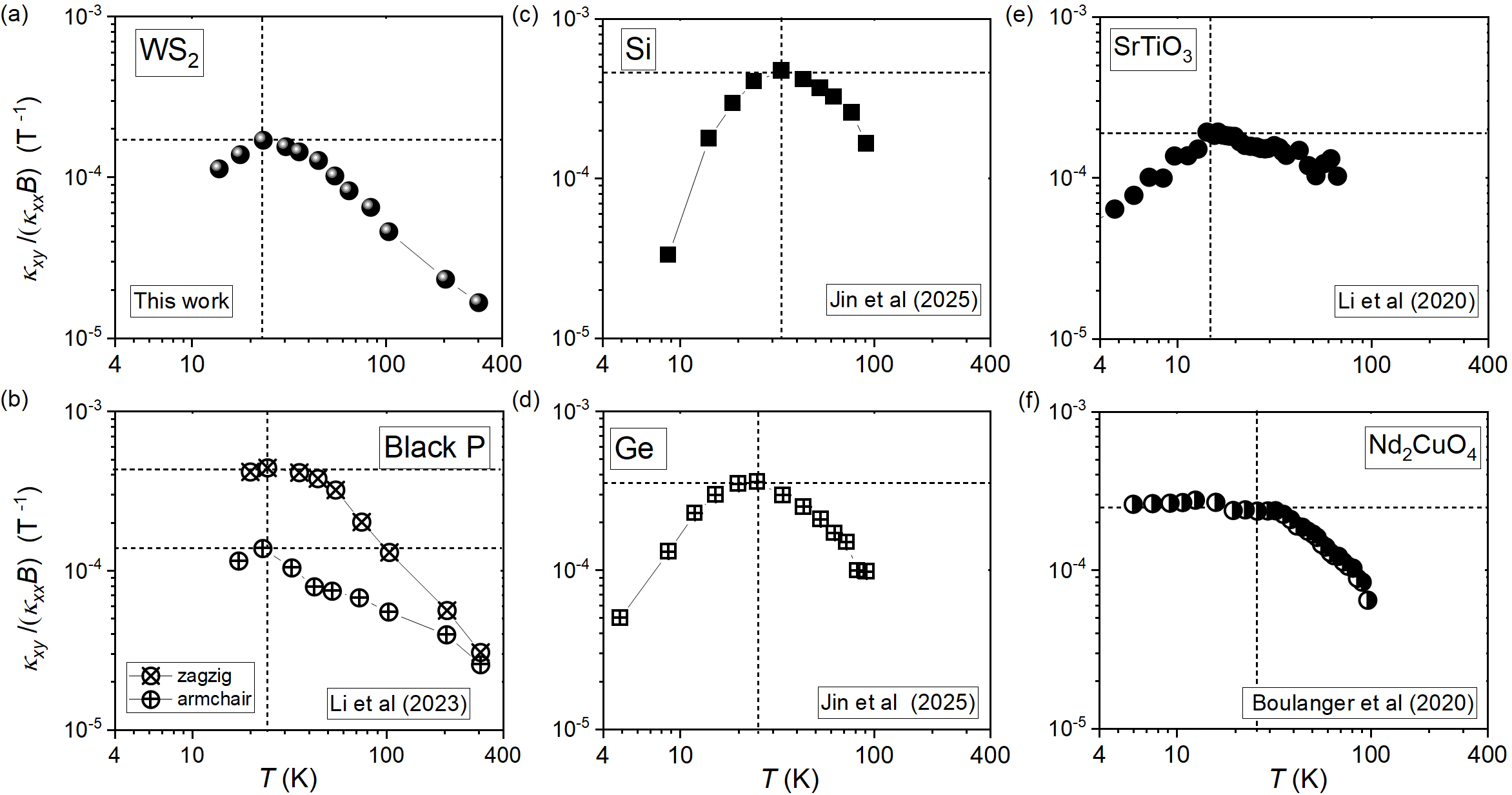
Figure 6: Temperature dependence of κxx6 for multiple insulators, illustrating peak alignment and universal upper bound.
The field-normalized thermal Hall angle peaks at values of several κxx7 Tκxx8 across disparate materials, unaffected by dissipation mechanisms, mean-free-paths, or atomic masses, consistent with the theoretical upper bound established from geometric interference principles and Aharonov-Bohm phase consideration.
Supplementary Experimental Details
The supplemental material demonstrates data-processing protocols for even and odd magnetic-field components of temperature gradients and reinforces the negligible electronic thermal conductivity in WSκxx9.
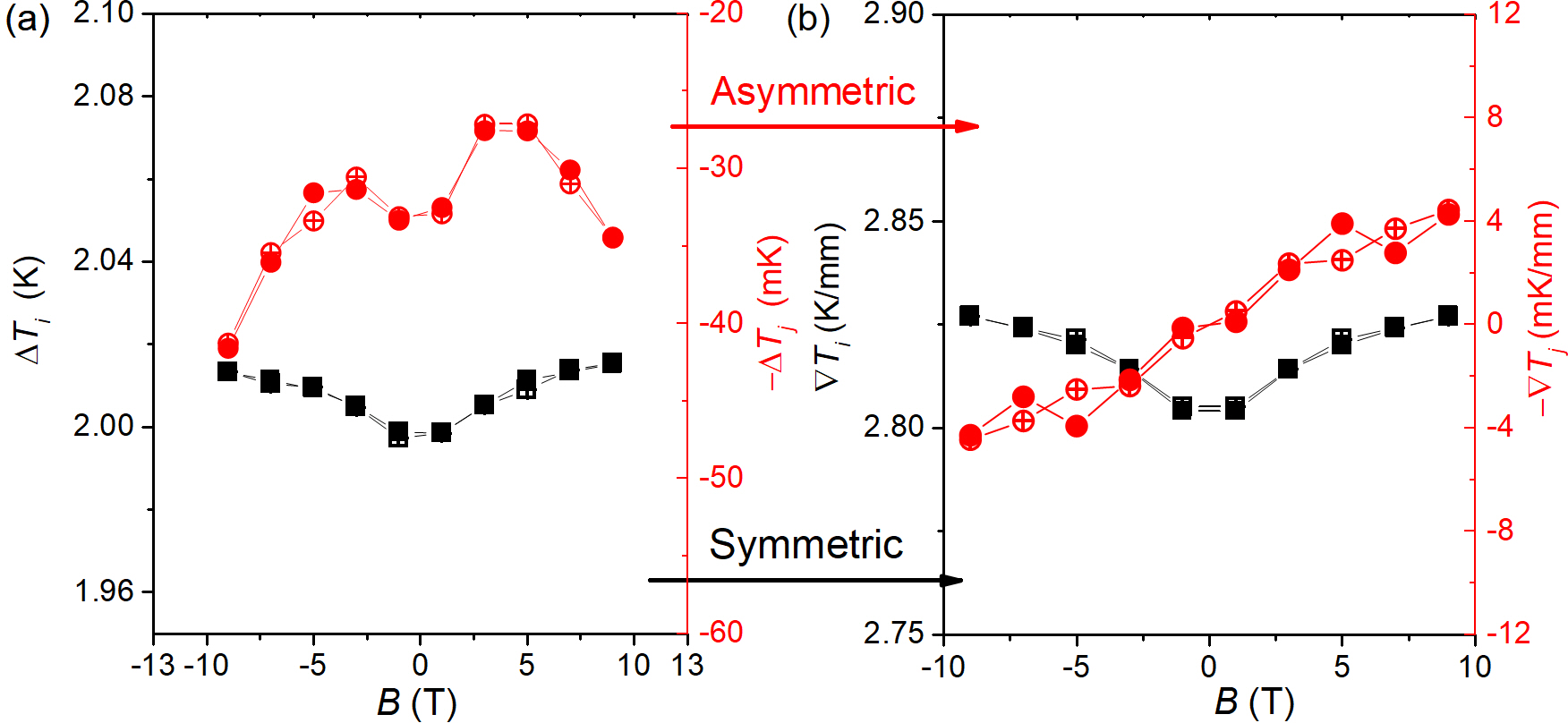
Figure 7: Symmetric and asymmetric processing of longitudinal/transverse raw data at 23.3 K ensures rigorous extraction of THE signal.
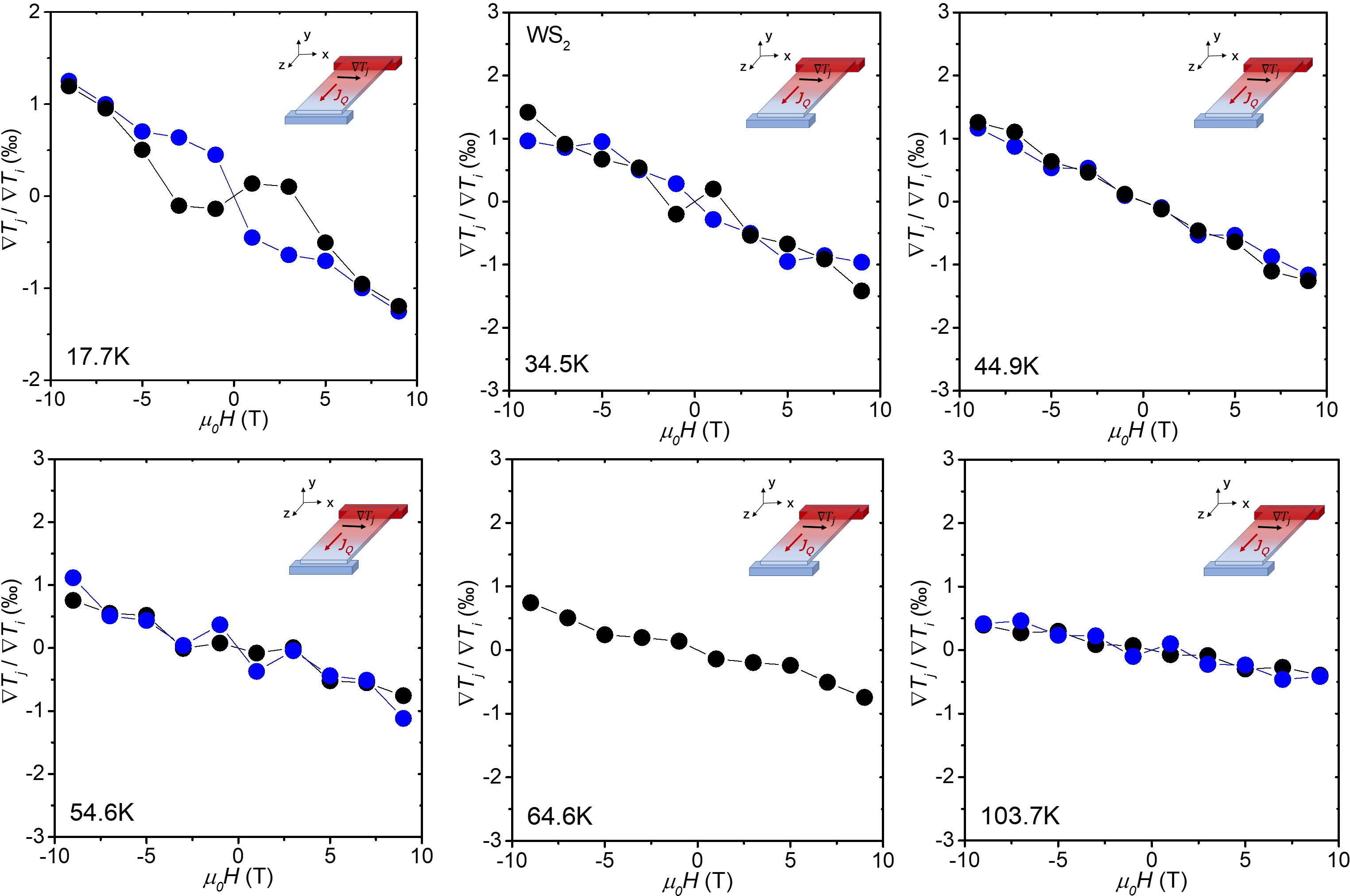
Figure 8: Reproducibility of symmetric/asymmetric processing across temperatures establishes robustness in thermal Hall measurements.
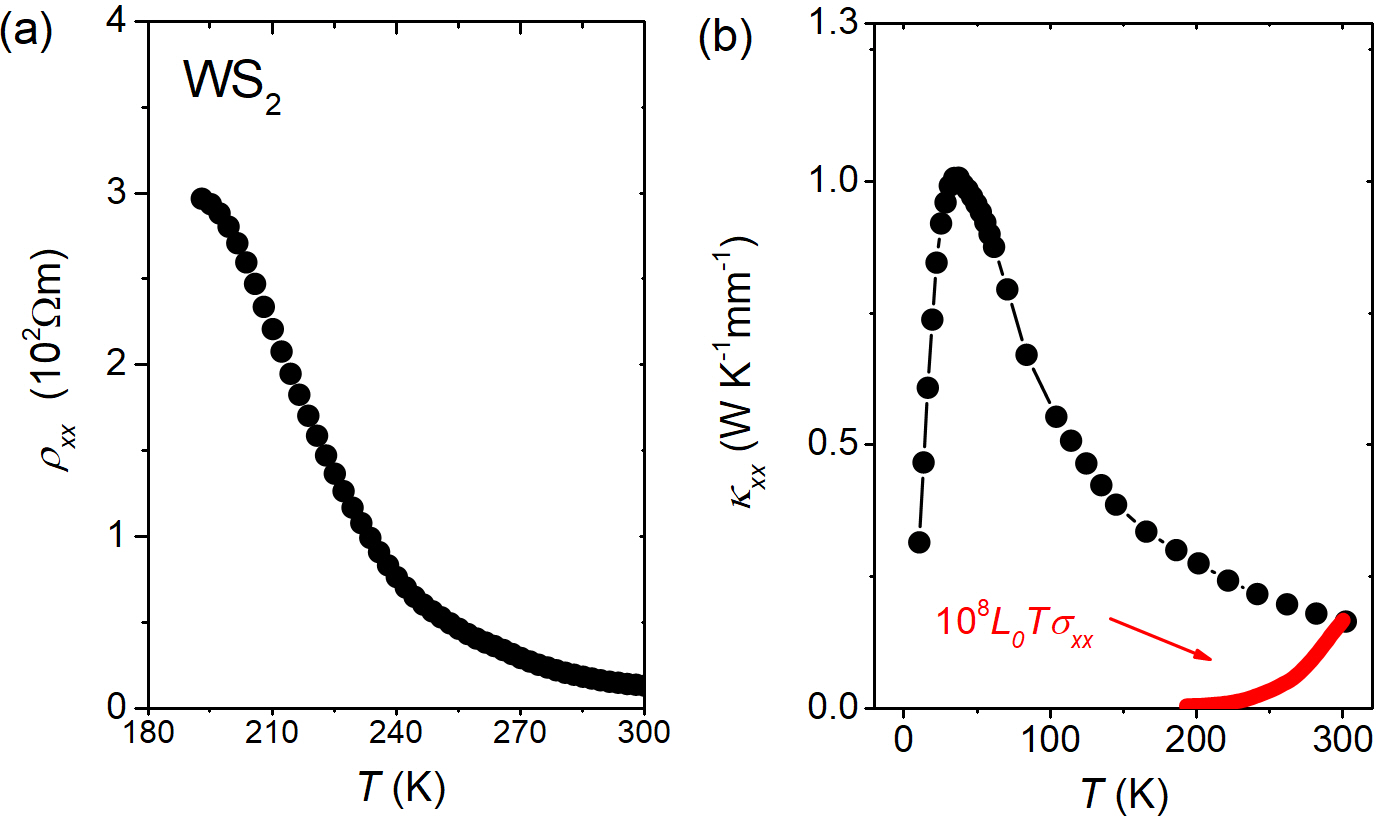
Figure 9: Longitudinal resistivity and electron thermal conductivity; phonon-dominated conduction in WSκxx0 is explicit from comparison.
Implications, Contradictory Claims, and Outlook
The paper asserts that interaction-driven transverse thermal resistivity emerges generically in phonon gases, without the need for chiral phonons or topological band structure, contradicting prior claims in the literature that posited chirality or defect scattering as necessary conditions. The identification of a clear kinetic mechanism based on Berry force and anharmonic momentum exchange is a strong claim, supported by both scaling laws and quantitative agreement with multi-material datasets.
Practical implications include a roadmap for engineering transverse thermal transport in insulators via modulation of anharmonicity, lattice mass contrast, and symmetry, independent of electronic properties. The theoretical underpinning suggests new directions for ab initio modeling of phonon interactions under magnetic fields, Berry curvature mapping for nuclei, and systematic study of entropy-driven phonon drift across complex crystals. Future AI-driven materials modeling could leverage these principles to optimize thermal management in semiconductors, quantum devices, and TMD-based platforms.
Conclusion
This work provides a comprehensive experimental and kinetic-theoretical account for the phonon thermal Hall effect in WSκxx1 and related insulators, attributing the transverse resistivity to phonon-phonon interactions affected by the magnetic field. The universal scaling behavior, robust quantitative formula, and analogy to SB effects in molecular gases illuminate a hitherto overlooked mechanism for off-diagonal thermal transport. Further research on Berry force quantification, anharmonicity control, and extension to non-crystalline media promises expanded understanding and novel applications in thermal manipulation at the mesoscale and quantum regime.