- The paper presents a dual-track challenge for bicubic (×4) image super-resolution, balancing high-fidelity restoration and perceptual realism.
- Key methodologies include transformer-based backbones, cascaded pipelines, and inference-time optimizations, with top performances reaching over 33 dB PSNR and perceptual scores above 4.0.
- These results underscore emerging trends in model adaptation and generative prior integration to effectively navigate the perception–distortion tradeoff.
Overview of the NTIRE 2026 Image Super-Resolution Challenge: Technical Insights and Benchmark Analysis
This essay provides an authoritative technical summary of "The Fourth Challenge on Image Super-Resolution (×4) at NTIRE 2026: Benchmark Results and Method Overview" (2604.14558), focusing on the benchmark structure, new methodological trends, evaluation outcomes, and implications for the research community. The NTIRE 2026 Image SR (×4) Challenge remains a central fixture for evaluating state-of-the-art solutions to high-quality image reconstruction from bicubicly downsampled observations, with a dual-track setting (restoration and perceptual) reflecting both fidelity- and realism-driven SR objectives.
Challenge Structure and Evaluation Protocol
The challenge adopts the bicubic ×4 SR setting using the well-curated DIV2K [timofte2017ntire] and LSDIR [li2023lsdir] datasets. Two distinct tracks are established:
- Restoration Track: Prioritizes high PSNR and SSIM for pixel-wise fidelity, ranking submissions primarily on PSNR.
- Perceptual Track: Focuses on perceptual quality using a weighted combination of seven IQA metrics (LPIPS, DISTS, CLIP-IQA, MANIQA, MUSIQ, NIQE, and SSIM), facilitating a broader evaluation of generated detail and visual realism.
Submissions are assessed on the DIV2K test split, with code submission and reproducibility checks to ensure competitive integrity. A total of 194 participants registered, yielding 31 valid entries—a demonstration of sustained research interest.
The restoration track saw highly competitive results, with SamsungAICamera achieving 33.73 dB PSNR—the leading score for this iteration—while two additional teams exceeded the 33 dB threshold. In the perceptual track, seven teams surpassed a perceptual score of 4.0, emphasizing the increasing strength of methods balancing fidelity and realism.

Figure 1: SamsungAICamera’s hybrid transformer-CNN cascade achieves state-of-the-art performance in both restoration and perceptual tracks.
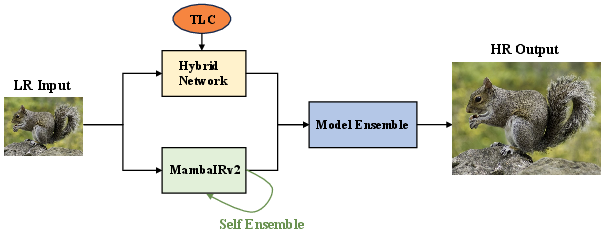
Figure 2: I2WM{content}JNU leverages inference-time enhancement and model ensembling without additional training.

Figure 3: VEPG’s one-step diffusion-based solution emphasizes perceptual realism with explicit IQA integration.

Figure 4: SR-Strugglers’ fusion of diverse pretrained transformer architectures with geometric TTA maximizes restoration gains.

Figure 5: HONORAICamera’s method, built on Z-Image-Turbo, demonstrates adaptation of latent diffusion backbones for SR.
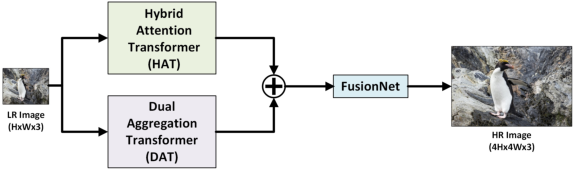
Figure 6: IK-LAB deploys multimodal fusion of HAT-IQCMix and DAT using a lightweight residual refinement branch.
The methods exhibit strong architectural diversity—summarized as follows:
- Transformer-based Backbones Dominate: Most competitive solutions (e.g., HAT, SwinIR, HMANet) build on large, pre-trained transformer architectures, often adapted with lightweight fine-tuning.
- Inference-Time Optimizations: Extensive self-ensemble strategies, tiling, dynamic reflection padding, and checkpoint interpolation meaningfully boost performance in test scenarios.
- Two-Stage Cascaded Pipelines: A significant increase in frameworks decoupling restoration (deterministic) and perceptual detail generation (generative), allowing explicit mitigation of the perception–distortion tradeoff.
- Generative Priors Adoption: Diffusion and rectified flow models are deployed for their strong texture hallucination, with targeted adaptations such as LoRA tuning, structural guidance, and customized loss functions to enhance consistency and subjective quality.
- Explicit Conditioning and Detail-Aware Objectives: Techniques such as structure, degradation, and semantic conditioning via cross-attention, and the use of high-frequency or local-detail weighted loss terms, are observed in high-ranking submissions.
- Efficient Adaptation Strategies: A paradigm shift towards staged training, partial fine-tuning, and large-scale model reuse minimizes retraining cost and enhances transferability.
Team Methodologies: Notable Strategies
SamsungAICamera
The top-performing method implements a cascaded network. The initial stage employs a HAT-based Transformer (GOM) for global structure restoration. The subsequent CNN-based Detail Enhancement Module (DEM), leveraging NAFNet, refines local details. A dynamic fusion branch integrates both outputs with spatially adaptive weighting, yielding superior PSNR and competitive perceptual scores.
Training is multi-phased: first, extensive pre-training on a 2M-image custom collection, then fine-tuning on DIV2K with progressive patch size enlargement and advanced loss design (e.g., SWT loss, multiple perceptual/IQA losses), managed through empirical weight balancing and grid search.
I2WM{content}JNU
This submission takes an inference-only approach, deploying two robust pre-trained architectures—Hybrid Network (SRC-B) and MambaIRv2—complemented by inference-time enhancements (Test-time Local Converter, self-ensemble). Their outputs are ensembled, resulting in efficient, competitive performance without additional training or large-scale optimization.
VEPG
A diffusion-centric framework based on OMGSR and FLUX.2-klein-base, VEPG extends standard optimization objectives with both full-reference and differentiable no-reference IQA losses (MUSIQ, CLIP-IQA, MANIQA), explicitly targeting perceptual gains. The loss terms are meticulously normalized and weighted, producing strong performance in the perceptual track.
SR-Strugglers
This inference-only approach fuses outputs from two transformer-based backbones (HAT-style and MSHAT) using a validation-optimized global pixel-wise mixing weight, enhanced by geometric test-time augmentation on one branch. The main challenge addressed is maximally leveraging strong fixed priors without changing model internals.
HONORAICamera
Adapting Z-Image-Turbo for SR, their pipeline is trained in two stages: latent space alignment and perceptual IQA-oriented fine-tuning, including CLIP-supervised consistency loss. Custom degradations via Real-ESRGAN synthesis and selective loss configuration balance artifact suppression and metric maximization.
IK-LAB
A multimodal ensemble where pretrained HAT-IQMIX and DAT outputs are adaptively combined through a lightweight residual refinement network. Loss design emphasizes frequency and gradient domain consistency (Charbonnier, FFT, Sobel), and test-time ensemble is heavily exploited for improved restoration.
Theoretical and Practical Implications
The NTIRE 2026 results highlight several clear implications:
- Pretrained Transformer Dominance: Transformer architectures, when efficiently adapted with inference-time and loss-based augmentation, set the bar for restoration-oriented SR. Community adoption is likely to trend toward larger, more generalizable backbones, interpreted as domain-specific "foundation models" for image restoration.
- Generative Model Integration: The movement toward cascaded or hybrid pipelines, uniting deterministic backbone restoration and generative priors (notably diffusion and rectified flow), will define future state-of-the-art in perception-centric SR settings.
- Loss Engineering and Metric-Driven Optimization: Strong evidence for the necessity of multi-objective, IQA-aware supervision, especially with differentiable no-reference metrics, to raise performance in subjective realism.
- Explicit Conditioning and Adaptive Inference: The integration of semantic, degradative, and local context features enables SR solutions to address real-world diversity; future systems will further expand conditional generation and dynamic model adaptation.
Future Directions
Subsequent progress in super-resolution will likely focus on:
- Resource-efficient adaptation of large foundation models for diverse domains.
- Refinement of cascaded and generative pipelines for robust fidelity-perception balance.
- Automated blending of explicit conditionings (e.g., scene semantics, degradations) using cross-modal attention or prompt-based methods.
- Tighter integration of differentiable, task-relevant metrics for direct optimization.
- Enhanced framework for benchmarking, where multi-track and multi-domain adaptability is paramount.
Conclusion
The NTIRE 2026 Image Super-Resolution (×4) Challenge demonstrates a mature, rapidly evolving field. The dominance of transformer-based, highly modular, and generative-augmented pipelines yields both exceptional restoration and perceptual realism, with community innovation shifting toward efficient adaptation, multi-prior fusion, and contextual conditioning. These insights will inform both theoretical advances and the development of next-generation, deployable image SR systems across varied application domains.