- The paper introduces the TAS-AI framework, which splits the experimental process into signal discovery, model discrimination, and parameter refinement for enhanced efficiency.
- It employs a hybrid approach that transitions from agnostic Log-GP based exploration to physics-informed inference, significantly reducing experimental time.
- Benchmark results highlight improvements in global reconstruction accuracy, rapid parameter convergence, and optimized motion-aware sequencing.
Hybrid Active Learning for Autonomous Spin Wave Spectroscopy: Summary and Analysis
Introduction and Motivation
The paper “Accelerating Quantum Materials Characterization: Hybrid Active Learning for Autonomous Spin Wave Spectroscopy” (2604.23821) presents the TAS-AI framework for autonomous neutron triple-axis spectroscopy (TAS). The central thesis is that automated experimental control in this domain must explicitly separate the tasks of (1) signal detection, (2) model discrimination, and (3) parameter refinement. The work asserts that attempting to solve all tasks with a single acquisition policy is suboptimal, and instead introduces a hybrid architecture with explicit regime transitions: a model-agnostic phase for exploration, followed by a physics-informed phase for targeted inference and refinement, augmented by a constrained falsification/audit layer to resolve failures arising from posterior-weighted exploitation.
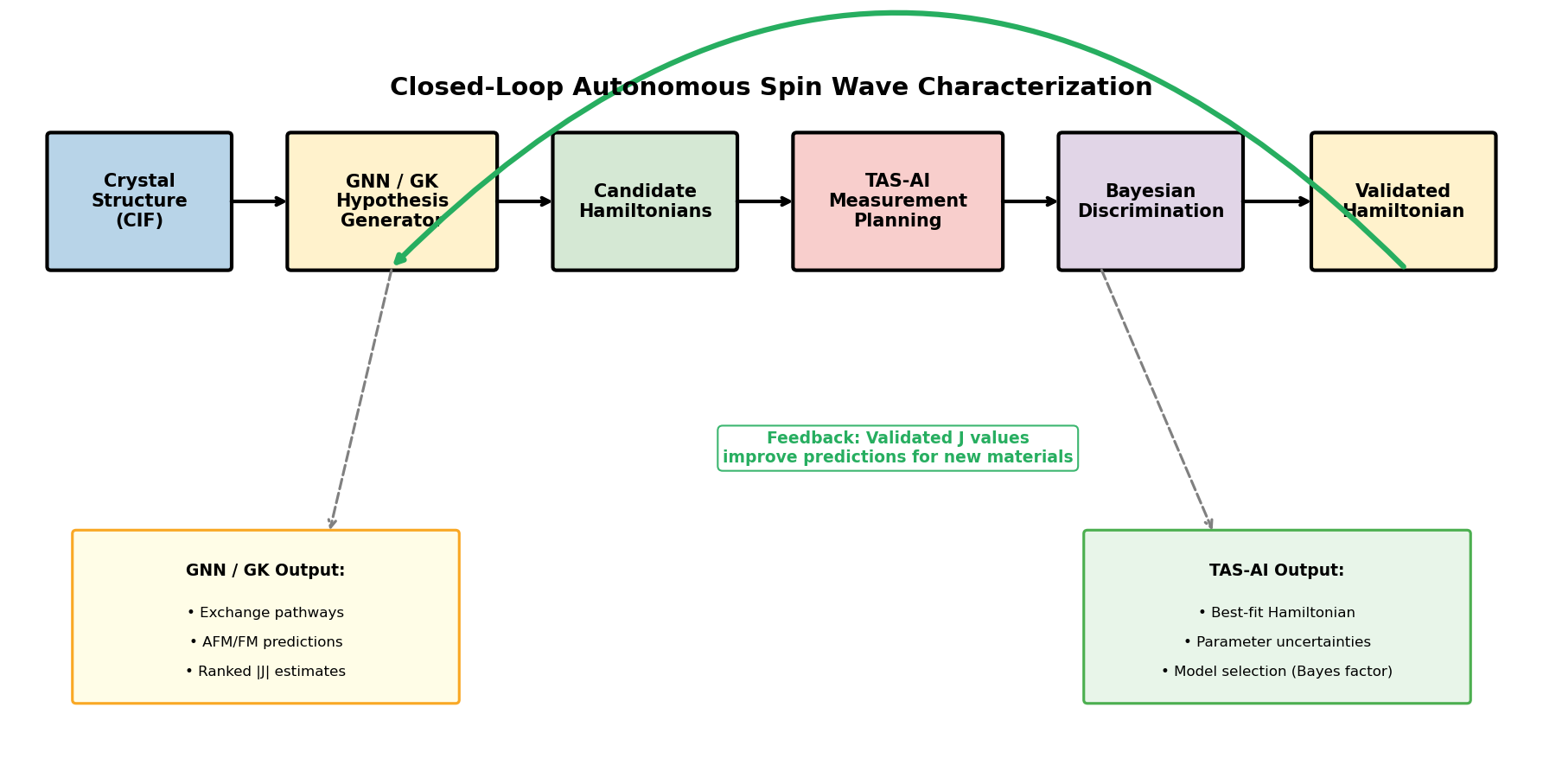
Figure 1: Hybrid TAS-AI workflow. The controller begins with agnostic Log-GP mapping to localize signal, hands off to physics-informed discrimination/refinement once structure is detected, and uses motion-aware sequencing to optimize wall-clock time. An optional constrained audit layer can request targeted falsification probes under the same kinematic and safety constraints enforced by the numerical planners.
The proposed system is developed and validated in silico using a digital twin that incorporates realistic instrument constraints, kinematics, and counting noise. The approach is motivated by both fundamental and practical considerations: TAS beam time is precious and high-dimensional parameter spaces can render manual or monolithic approaches inefficient and error-prone, especially in the presence of unknown or ambiguous spectral features.
Hybrid Workflow Architecture
TAS-AI operates by decomposing the control loop into modular, task-specific layers:
- Agnostic discovery: Employs Log-Gaussian-Process (Log-GP) active learning to efficiently survey the (Q,E) response landscape without relying on any assumed model structure. Enhancements include linear-intensity variance weighting, exclusion of already sampled regions, and energy tapering to avoid boundary failures.
- Physics-informed inference and refinement: Upon detection of structured signal regions, the controller hands off to a Hamiltonian-aware planner. Acquisition is driven by expected information gain per wall-clock time, explicitly integrating both measurement and instrument motion costs.
- Motion-aware sequencing: Introduces path optimization, leveraging greedy or MCTS-based batch planning to maximize information rate while minimizing repositioning penalties.
- Strategic audit/falsification layer (optional): A constrained high-level controller, which may be implemented as a deterministic top-two max-disagreement rule or as an LLM-based committee, injects targeted probes to break model-selection impasses and mitigate algorithmic myopia.
This separation allows each phase to utilize inductive biases best suited to the current experimental regime, ensuring both broad discovery and efficient inference.
Benchmarking and Numerical Results
Global Reconstruction (Discovery)
Systematic benchmarks demonstrate that during blind mapping tasks (unknown response surfaces), agnostic methods (random, grid, enhanced Log-GP) reach global error thresholds more reliably and efficiently compared to physics-only planners. This result persists even in high-fidelity simulations with realistic energy broadening and instrument constraints.
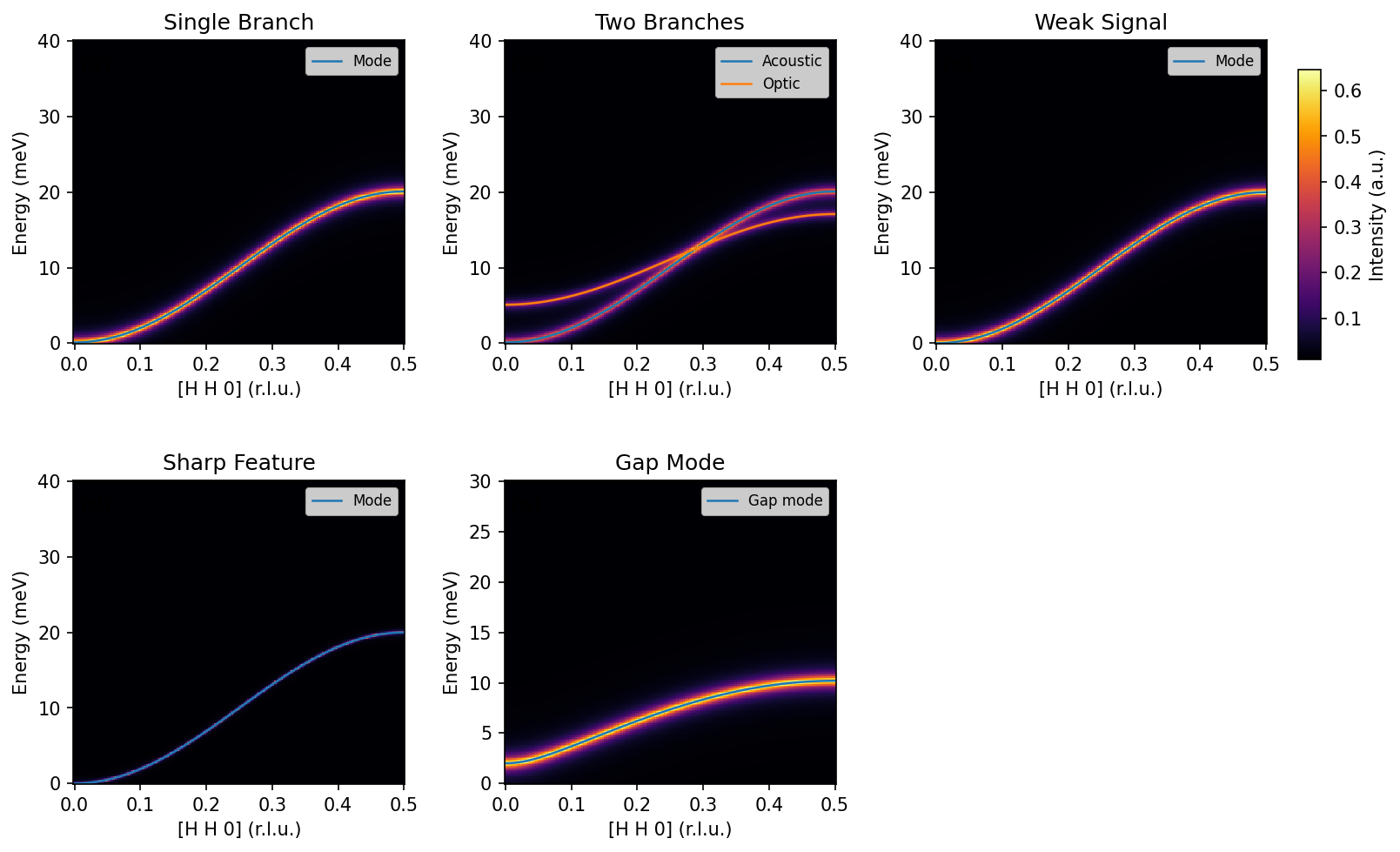
Figure 2: Synthetic benchmark scenarios used to test discovery-oriented behavior: single branch, two branches, weak signal, sharp feature, and gap mode.
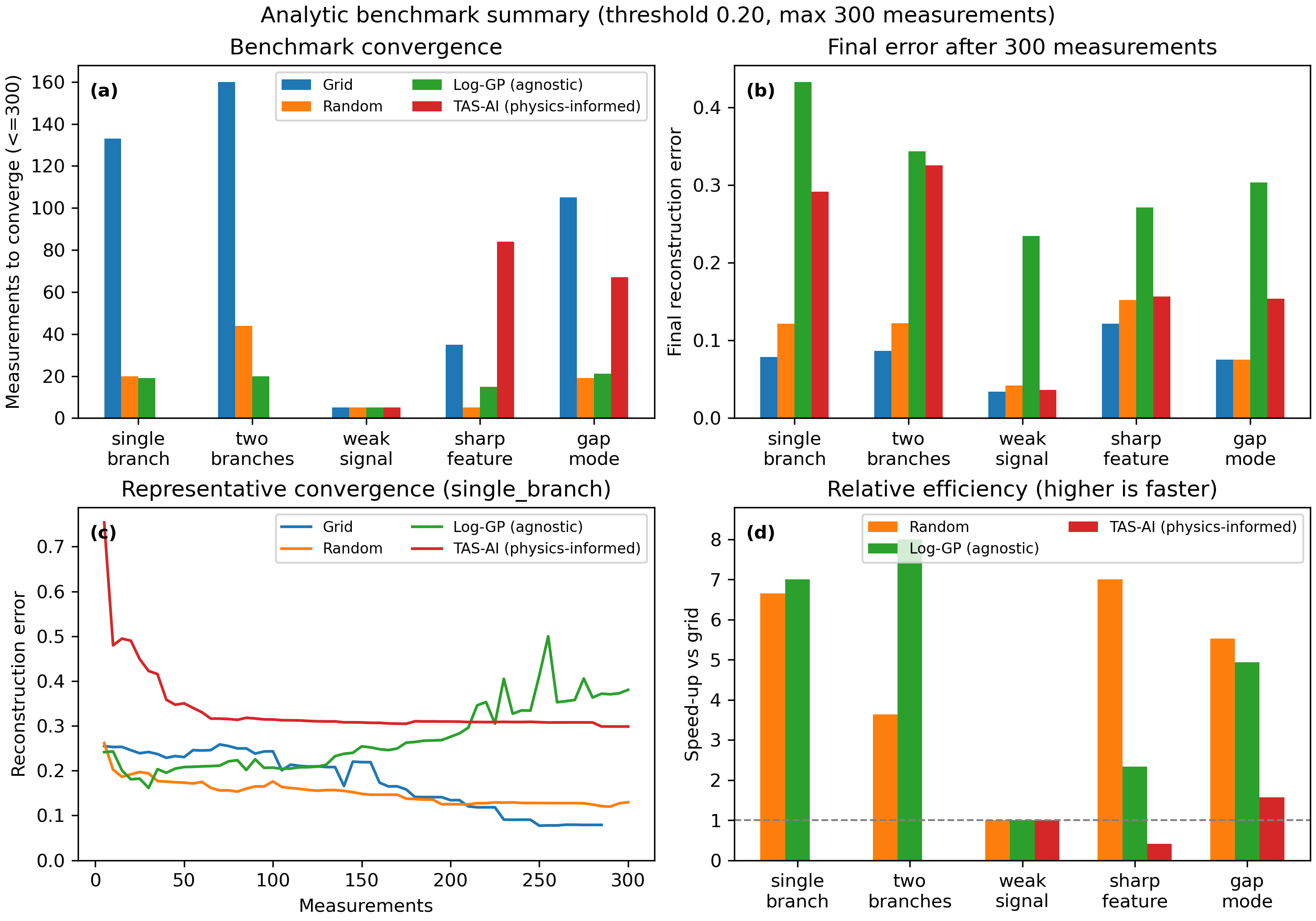
Figure 3: Analytic blind-reconstruction benchmarks. Agnostic methods are favored by the global reconstruction metric because they are optimized for discovery rather than for parameter inference.
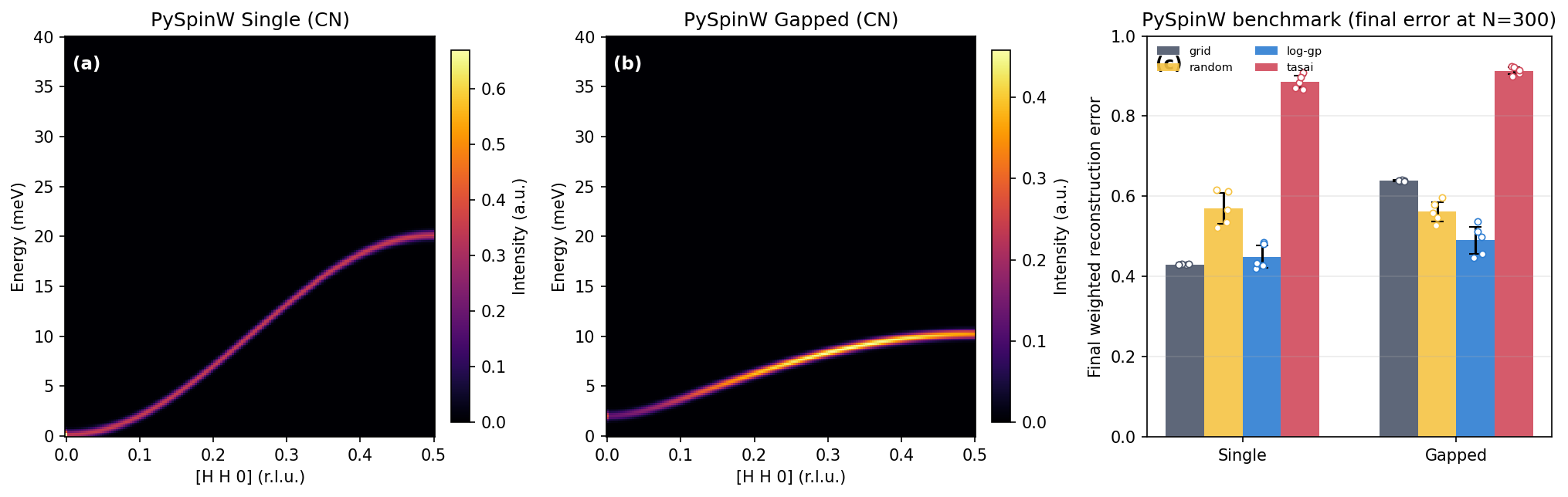
Figure 4: PySpinW ground-truth benchmarks with Cooper–Nathans-derived energy broadening. Enhanced Log-GP matches or outperforms other agnostic methods on discovery; physics-only TAS-AI underperforms in purely exploratory scenarios.
These findings reinforce the explicit claim that discovery and inference are distinct problems with orthogonal requirements.
Once plausible physics models are available and signal support is identified, the transition to physics-based planning yields substantial gains in both inference speed and efficiency. In parameter refinement tasks with a known model, the information-per-time-driven acquisition rapidly contracts the posterior uncertainty and reaches RMS error thresholds with dramatically lower total experiment time compared to agnostic or random baselines.
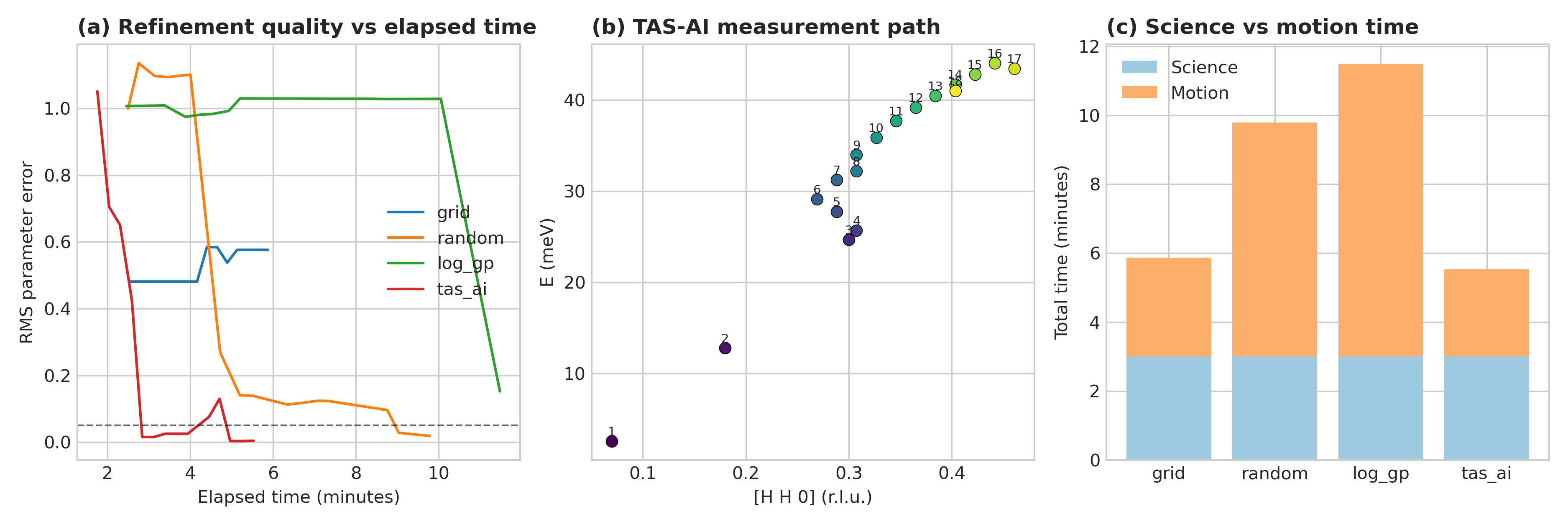
Figure 5: TAS-AI reaches RMS error threshold in parameter refinement quickest by prioritizing high-information-rate measurements. Representative run shows TAS-AI achieving the goal in 170 s versus 542 s for the random baseline.
In-Loop Model Discrimination
The controller maintains a posterior over discrete Hamiltonian candidates and employs AIC proxy weights for real-time model comparison. In closed-loop discrimination tasks, TAS-AI achieves decisive evidence ratios (>100) with fewer than 10 measurements, enabled by targeting regions where competing models most strongly diverge.
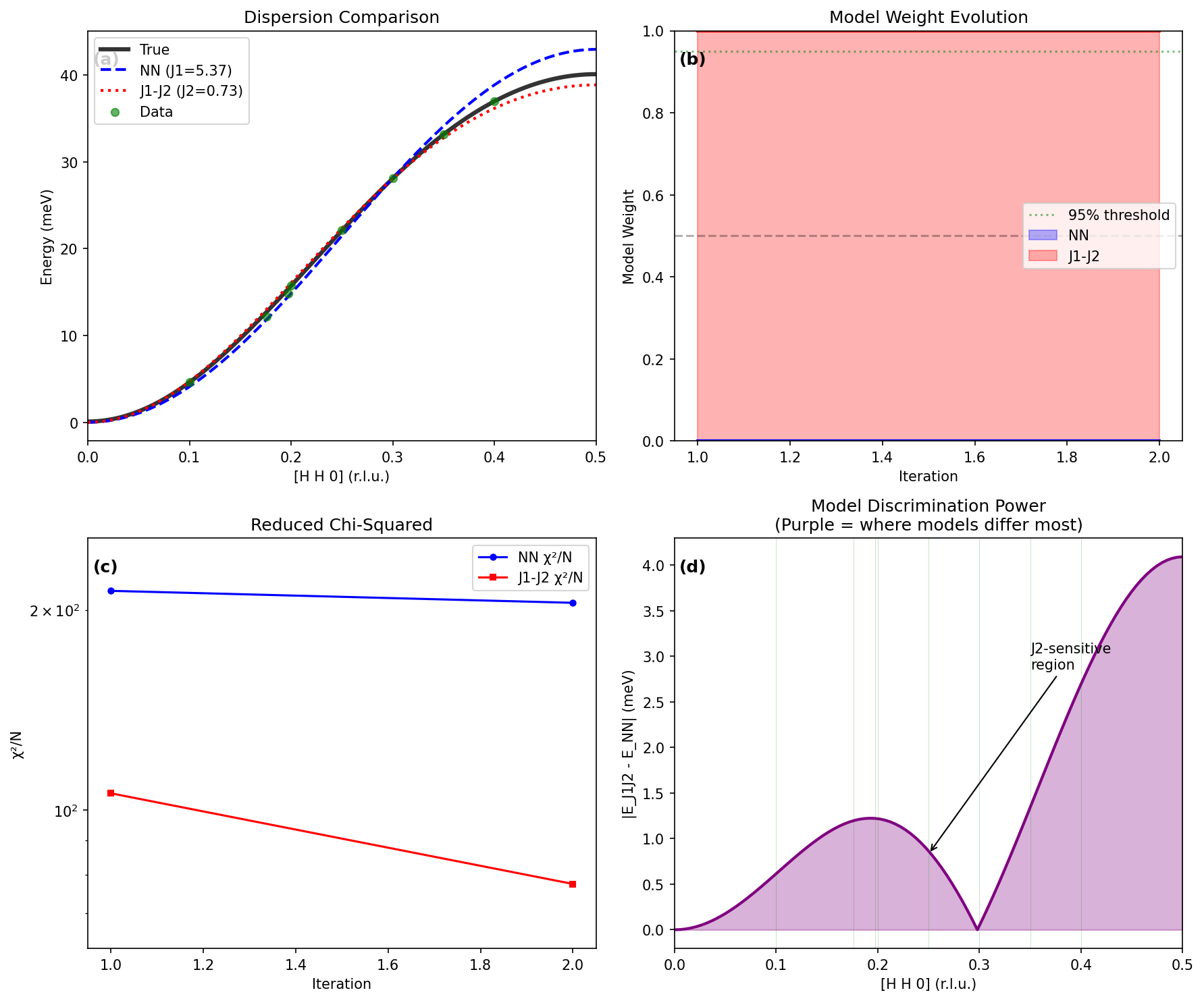
Figure 6: In-loop Hamiltonian discrimination performance: decisive selection via targeted, contrast-maximizing measurements.
Motion-Aware Sequencing
Experimental throughput is enhanced by incorporating explicit motion-time costs. Motion-aware scheduling reduces wall-clock overhead for a fixed set of candidate measurements, with the optimized sequence yielding an 83% efficiency (versus 57% for random ordering).
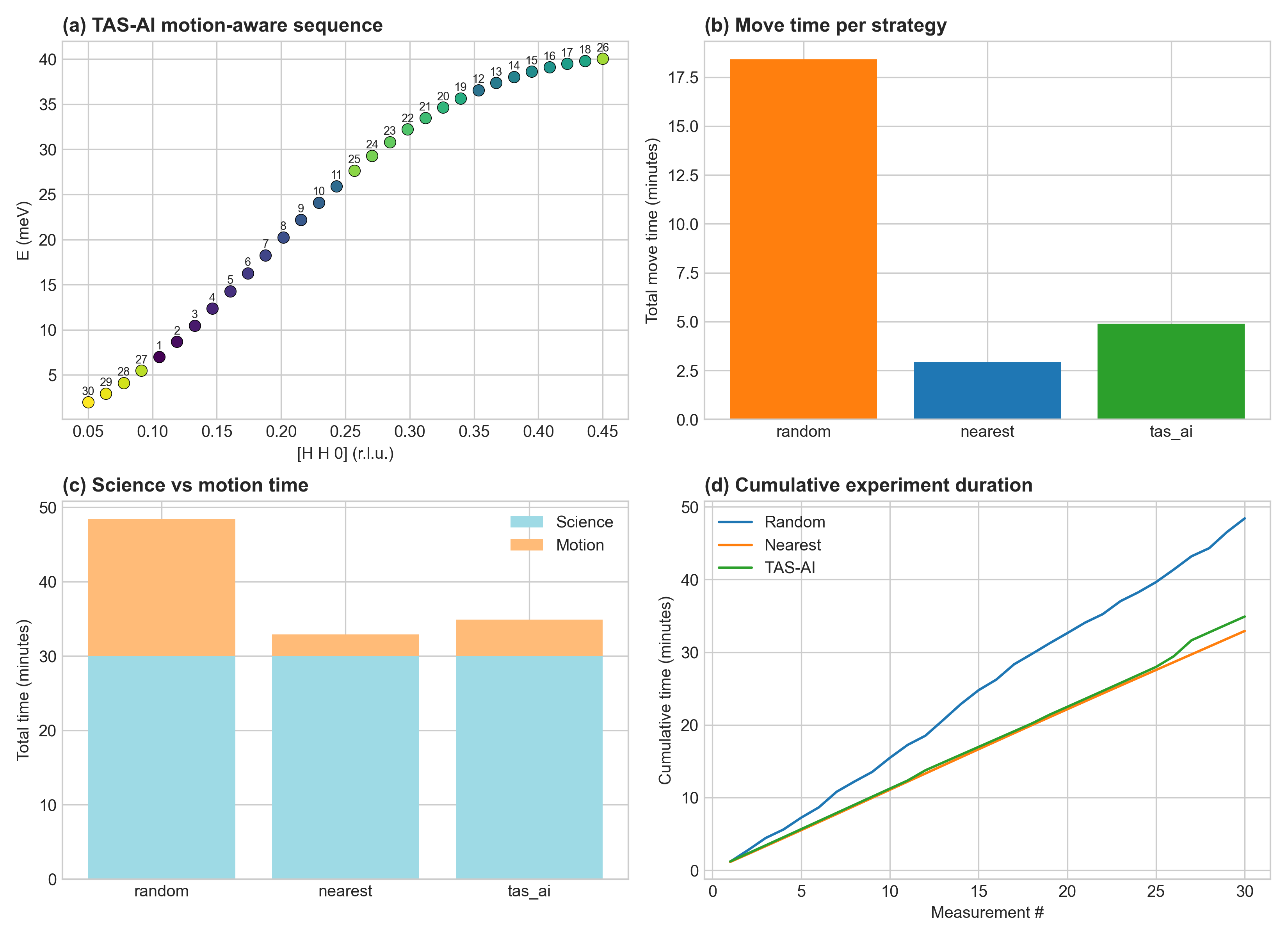
Figure 7: Motion-aware scheduling diagnostics: optimization of path order reduces total movement time and increases experiment efficiency.
For batch execution, MCTS-based planning further reduces path inefficiency when motion costs are dominant.
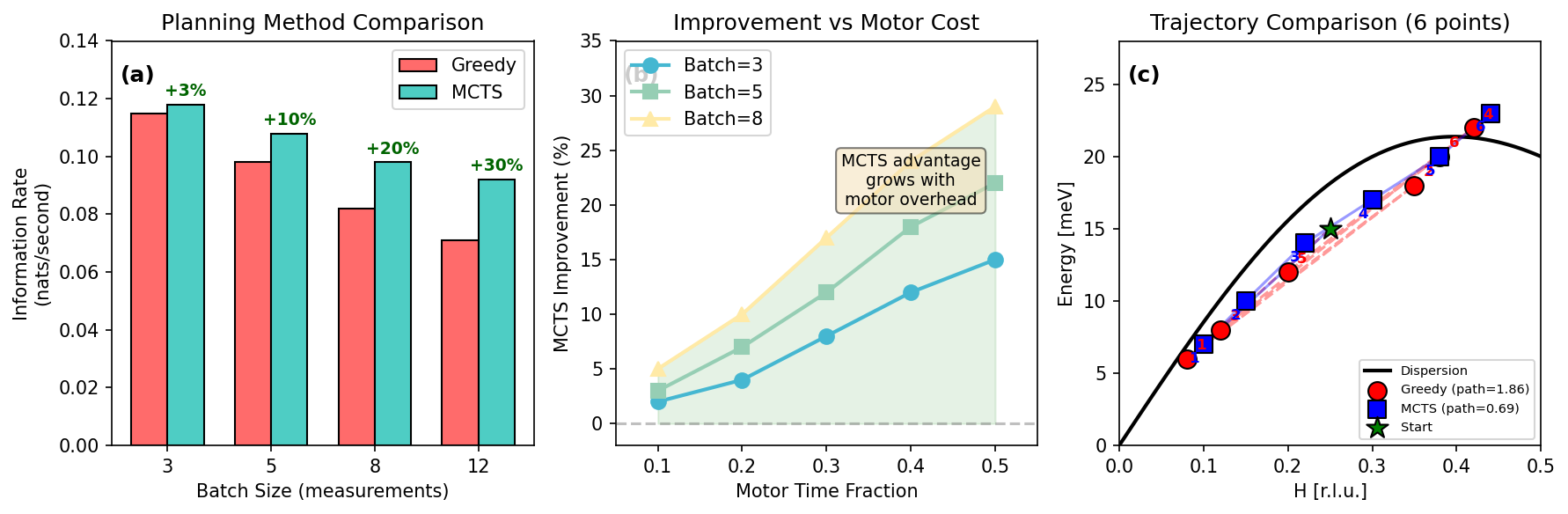
Figure 8: MCTS batch planning reduces path inefficiency relative to one-step greedy ordering in motion-dominated regimes.
Integrated Hybrid Handoff
The ensemble effect is best illustrated by a run with clear phase transitions: agnostic coverage, activation-map-based refinement, then physics-driven exploitation. The control phase boundaries and corresponding posterior evolution validate the benefit of task-aware switching.
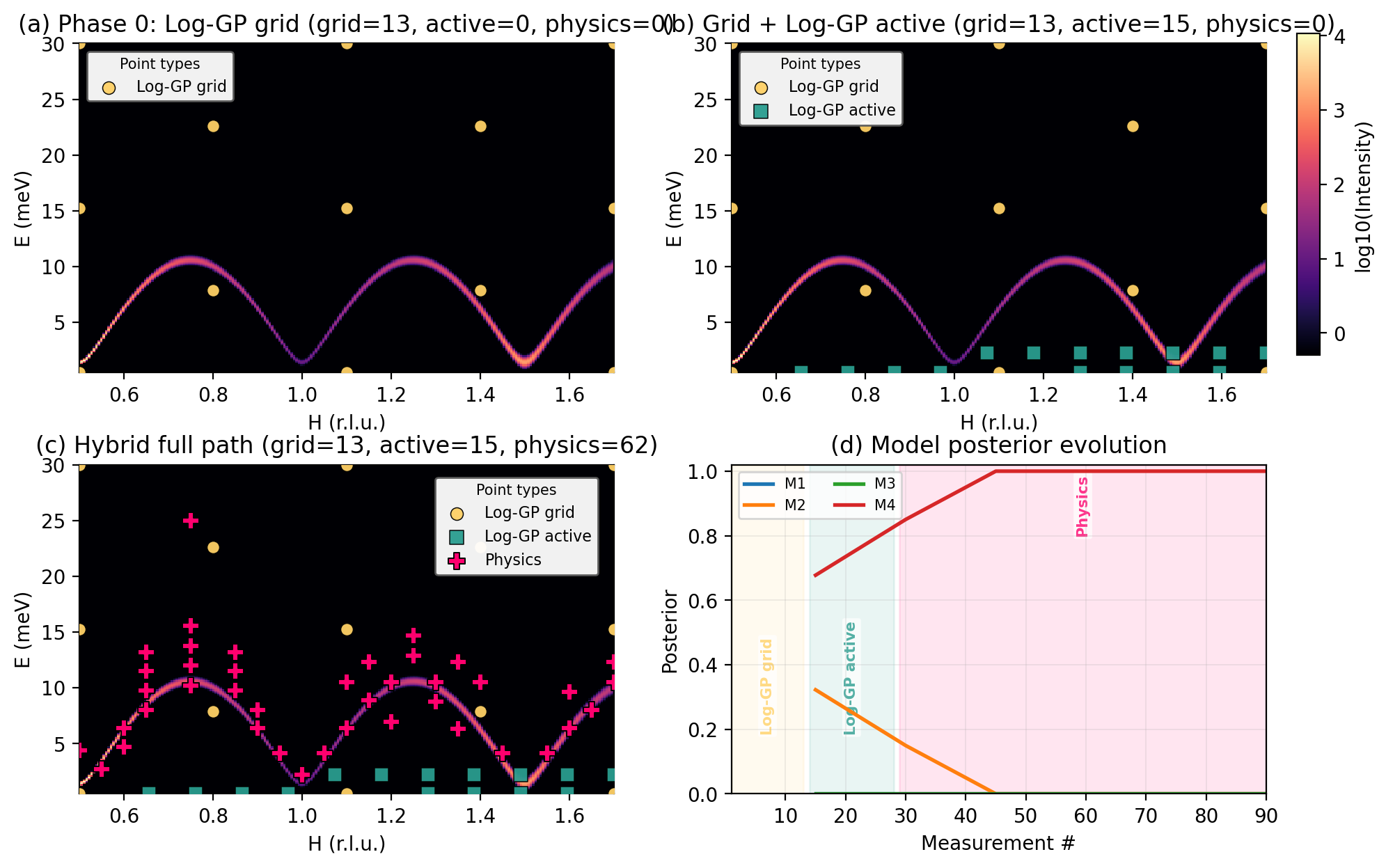
Figure 9: Explicit handoff from agnostic to physics-informed control. Posteriors sharpen and decisive model selection occurs only upon transition to informed inference.
Algorithmic Myopia and Strategic Falsification
A posterior-weighted acquisition policy is susceptible to algorithmic myopia: early dominance of an incorrect hypothesis leads to “wrong-leader dwell,” with the system over-concentrating on regions that refine rather than falsify the current top model. Silent-data posterior lock-in arises especially when discriminative signal is in weak or low-intensity regions.
To address this, a constrained falsification/audit layer is introduced. This component—either as a deterministic max-disagreement rule or as an LLM-based committee—has limited authority but can force batches specifically targeting regions most diagnostic of falsity for the current leader, mitigating posterior traps.
Pilot demonstrations confirm that such an audit layer resolves lock-in dramatically faster without degrading final parameter recovery.
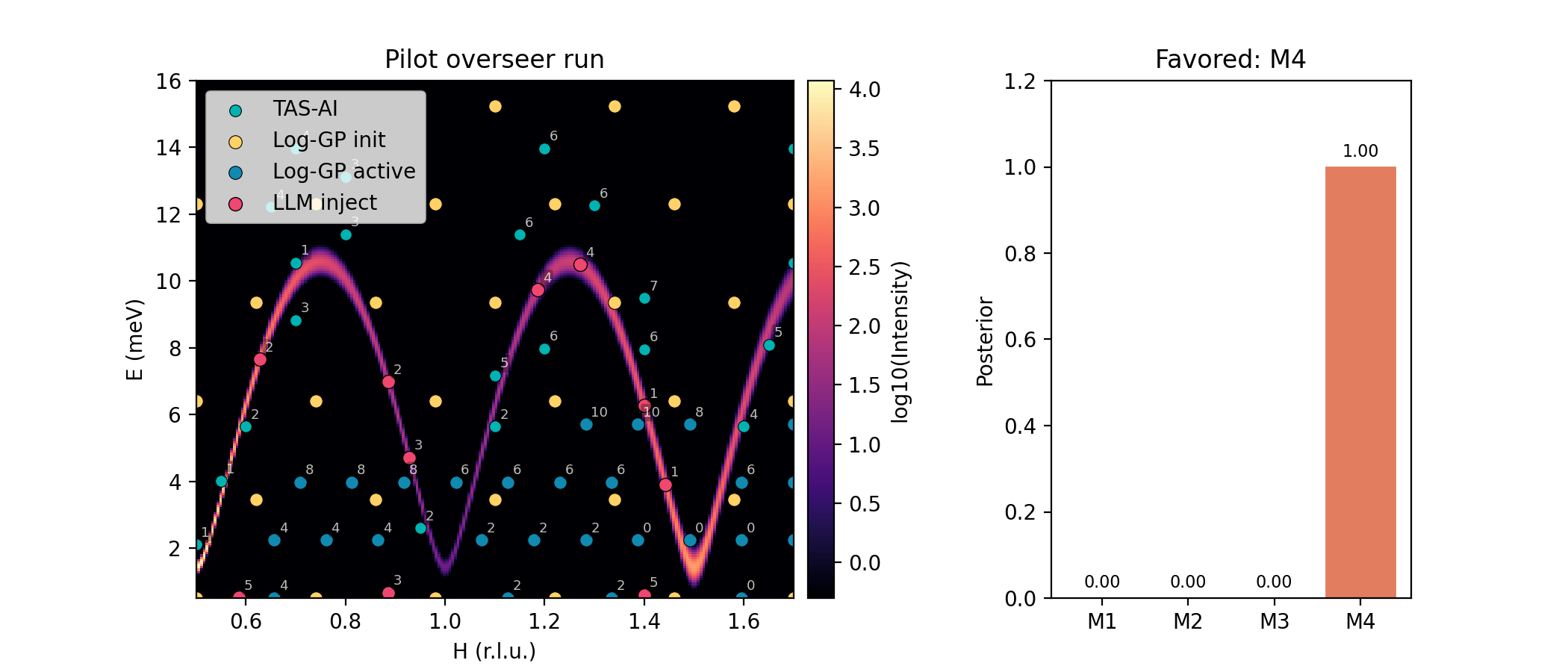
Figure 10: Pilot LLM-audited closed-loop run. The audit layer injects falsification probes, maintaining numerical integrity and instrument constraints.
In controlled ablation benchmarks (“ghost-optic” and “bilayer ferromagnet” scenarios), falsification-enabled controllers eliminate wrong-leader dwell versus refinement-only policies. Top-two max-disagreement suffices for two-model benchmarks, but broader policies or LLM arbitration are required in multi-model traps where the decisive falsifier differentiates the leader from lower-ranked (not runner-up) models.
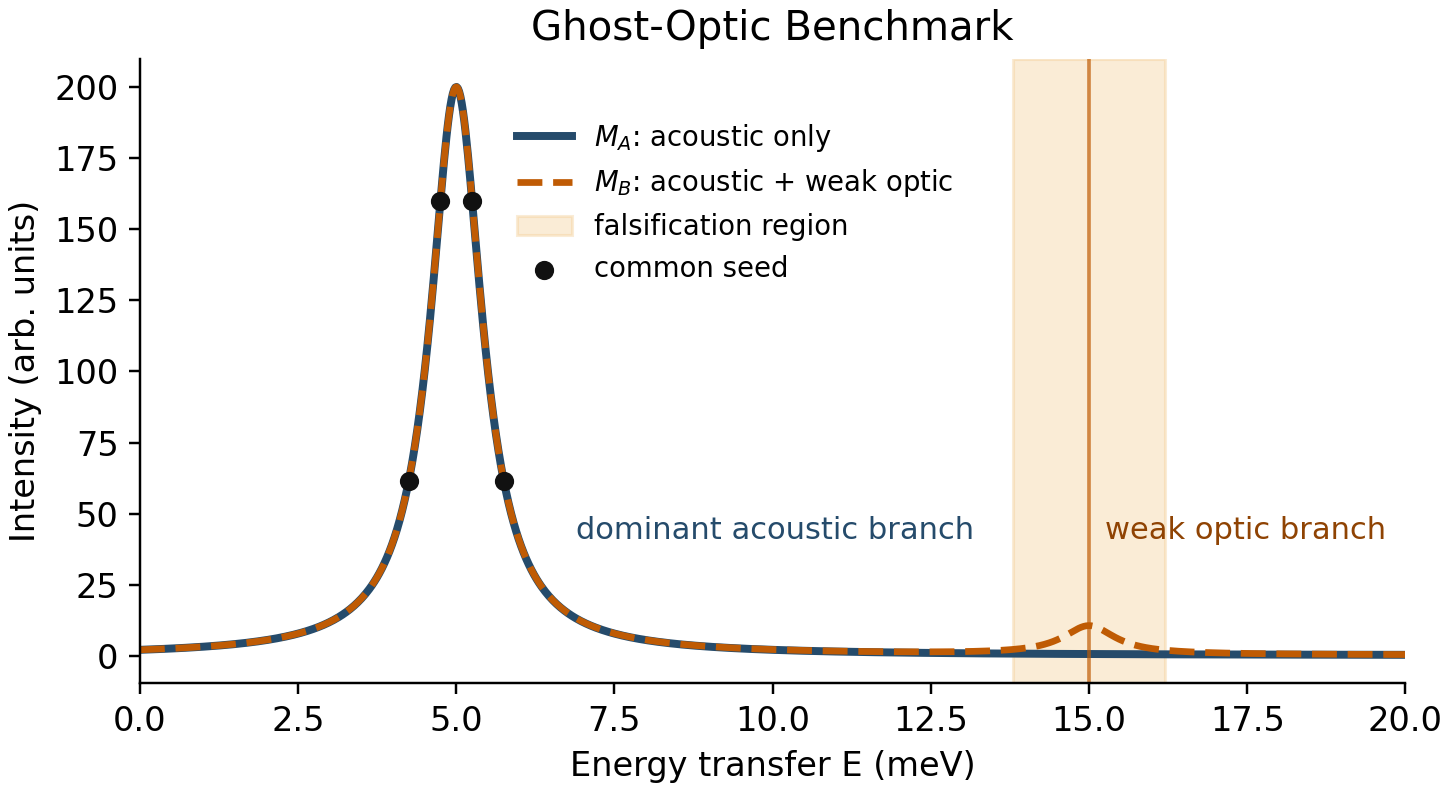
Figure 11: Ghost-optic benchmark: regions where lower-rank falsification is needed for disambiguation.
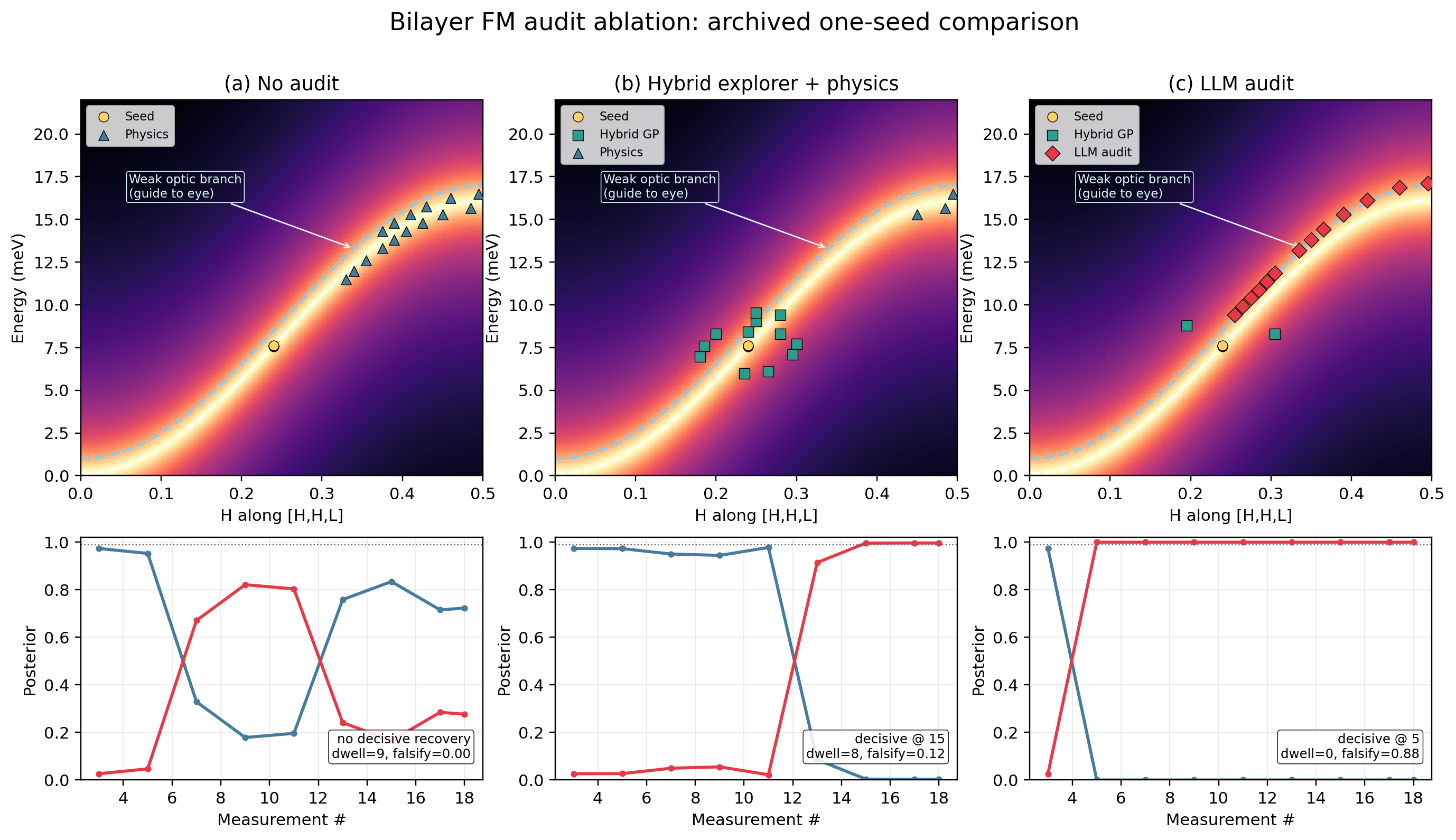
Figure 12: Bilayer audit ablation: policies deploying falsification rapidly achieve decisive selection while refinement-only dwell on the incorrect leader.
The LLM-based audit layer exhibits robustness and flexibility: it achieves competitive performance without any scenario-specific engineering and is able to handle natural-language ambiguity descriptions, a clear pragmatic advantage as the hypothesis/model space scales.
Implications and Outlook
The findings have both immediate and long-term implications for experimental automation and Bayesian design.
Practically, the results establish that hybrid autonomy—beginning with agnostic, model-free exploration and escalating to physics-aware targeted inference—is superior to monolithic schemes for rapid, reliable quantum materials characterization using TAS. The modularity of the architecture reduces beamtime waste and increases model discrimination power while maintaining interpretability and safety via strict constraint management.
Theoretically, the demonstration that falsification-oriented acquisition must be architecturally separated and strategically injected—particularly in multi-hypothesis regimes—has general relevance for closed-loop experiment design and suggests that audit layers, potentially using LLMs, provide both robustness and scalability in the context of high-dimensional and uncertain scientific inference.
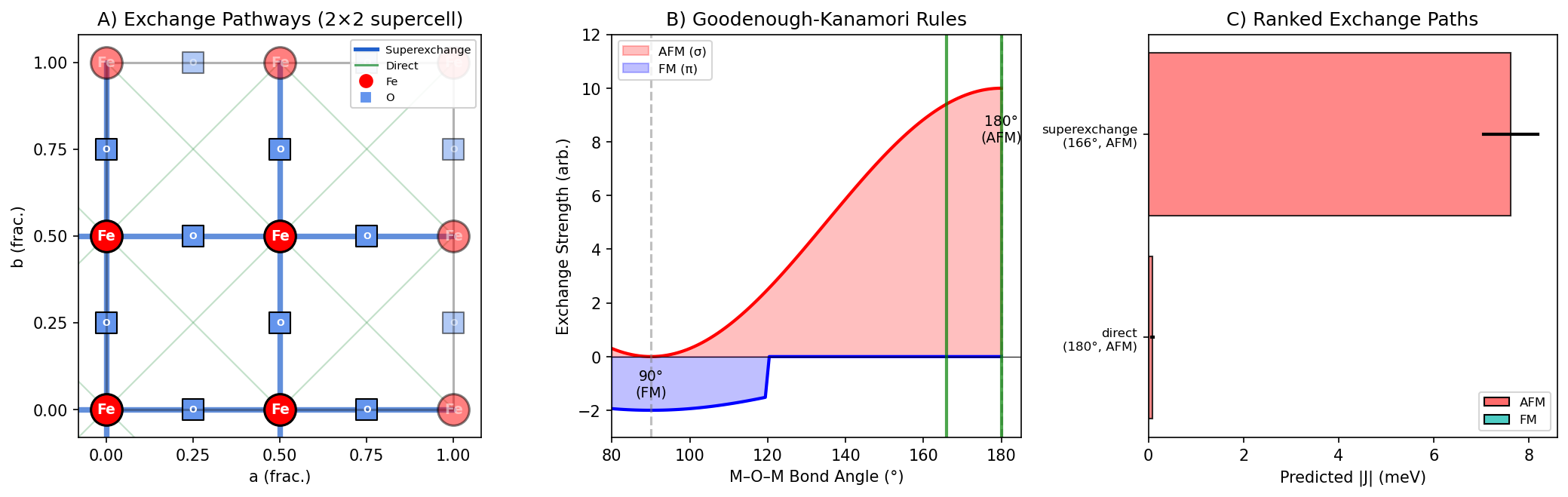
Figure 13: Structure-based hypothesis generation: automating the prior model library via analysis of exchange paths and orbital heuristics.
While current results focus on square-lattice models with limited parameterization for tractability and clarity, the architecture is applicable to broader Hamiltonian families and more complex experimental regimes. Further integration with automated hypothesis generation (e.g., using GNN surrogates for model proposal) and deployment on live instrument hardware are logical next steps.
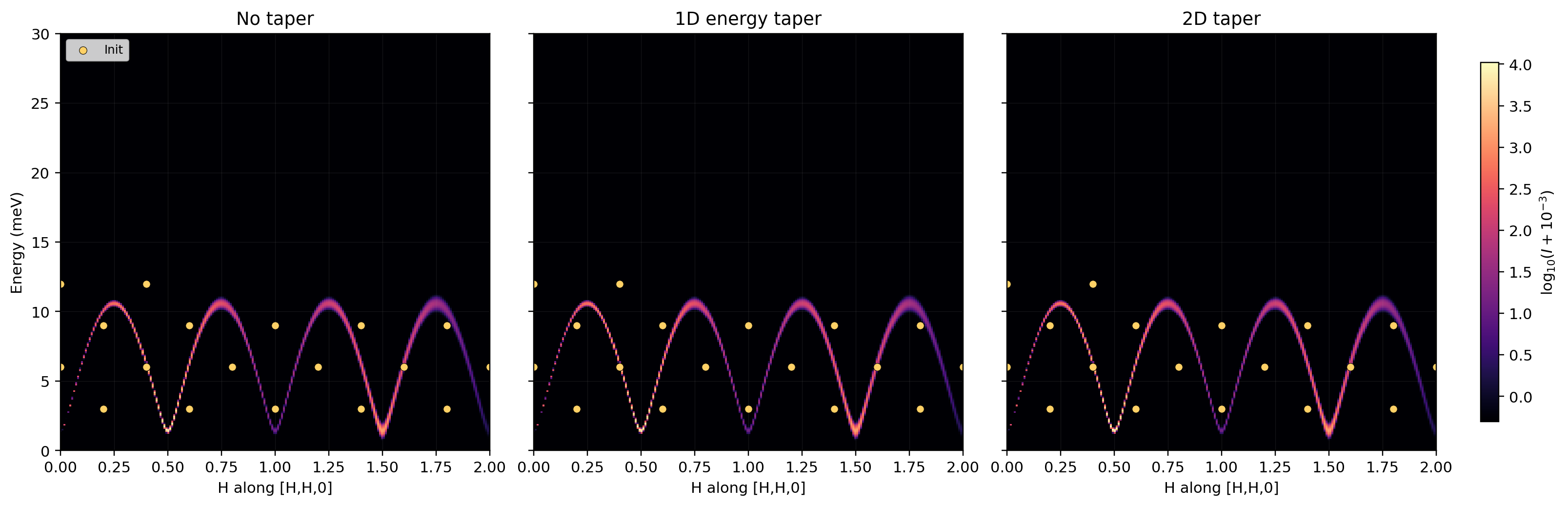
Figure 14: Performance of Log-GP enhancements for active selection, highlighting the benefit of variance weighting and tapering.
Conclusion
TAS-AI substantiates several key principles for autonomous spectroscopy:
- Discovery and inference are best addressed by distinct acquisition strategies, deployed as hybrid sequential controllers.
- Physics-informed planning is optimal for parameter refinement and model discrimination, conditional on successful region discovery.
- Motion-aware scheduling and batch planning contribute significantly to wall-clock efficiency.
- Constrained falsification channels—implemented by deterministic or LLM-based audit layers—are essential for overcoming algorithmic myopia inherent in posterior-weighted experimental design.
The open-source TAS-AI platform provides a robust foundation for further advances in closed-loop quantum materials experimentation, with the architectural lessons herein being widely transferrable to other autonomous scientific domains.
Reference:
"Accelerating Quantum Materials Characterization: Hybrid Active Learning for Autonomous Spin Wave Spectroscopy" (2604.23821)

