- The paper introduces a novel pipeline that accurately reconstructs explicit strand-level facial hair using depth-gated Gaussian optimization and crossing-aware tracing.
- It integrates tailored grounding and photometric refinement to ensure physical plausibility, superior directional fidelity, and improved editability.
- Experimental results demonstrate higher F1 scores and robust simulation readiness across diverse facial hair types compared to state-of-the-art methods.
Prior-free Multi-view Strand-level Facial Hair Reconstruction
Introduction and Context
Facial hair, encompassing beards, mustaches, eyebrows, and eyelashes, is a defining component of human facial identity and expression. Despite advances in high-fidelity digital avatar technology, the reconstruction of strand-level facial hair remains a major technical bottleneck, as prior approaches either neglect the complex, sparse structure of facial hair or encode it in volumetric forms that preclude efficient editing and downstream simulation. The paper "Wispy to Voluminous: Prior-free Multi-view Capture of Strand-level Facial Hair" (2606.08041) introduces a comprehensive, automatic pipeline that reconstructs high-quality, explicit strand-level geometry of facial hair from multi-view images, bridging the gap between realistic capture and practical, editable assets in digital content creation.
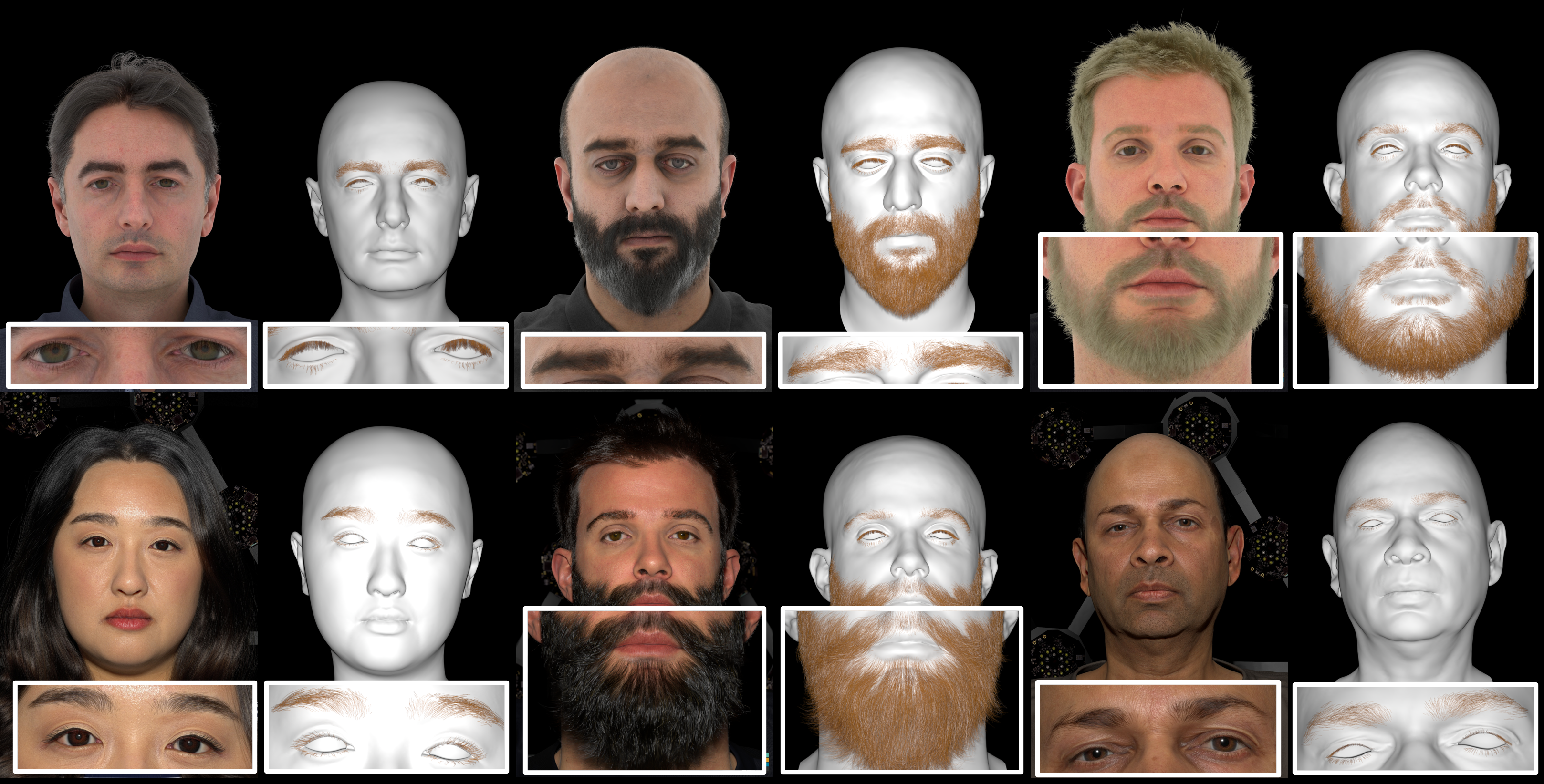
Figure 1: The pipeline can reconstruct detailed, strand-resolved geometry for diverse facial hair types, including eyelashes, eyebrows, and beards.
Methodology
The proposed approach comprises four stages, designed to transform multi-view image data into a physically grounded, strand-based facial hair asset:
- Depth-Gated 3D Gaussian Optimization:
The pipeline begins by lifting 2D orientation cues, extracted via Gabor filters from synchronized multi-view images, into a 3D field of anisotropic Gaussian primitives. A core innovation is the "depth-gated" rasterizer that leverages a reconstructed facial mesh to enforce early ray termination, preventing Gaussians from being optimized behind the skin surface. This resolves ambiguity at the hair-skin interface and suppresses sub-surface noise, resulting in a clean, hair-specific orientation field.
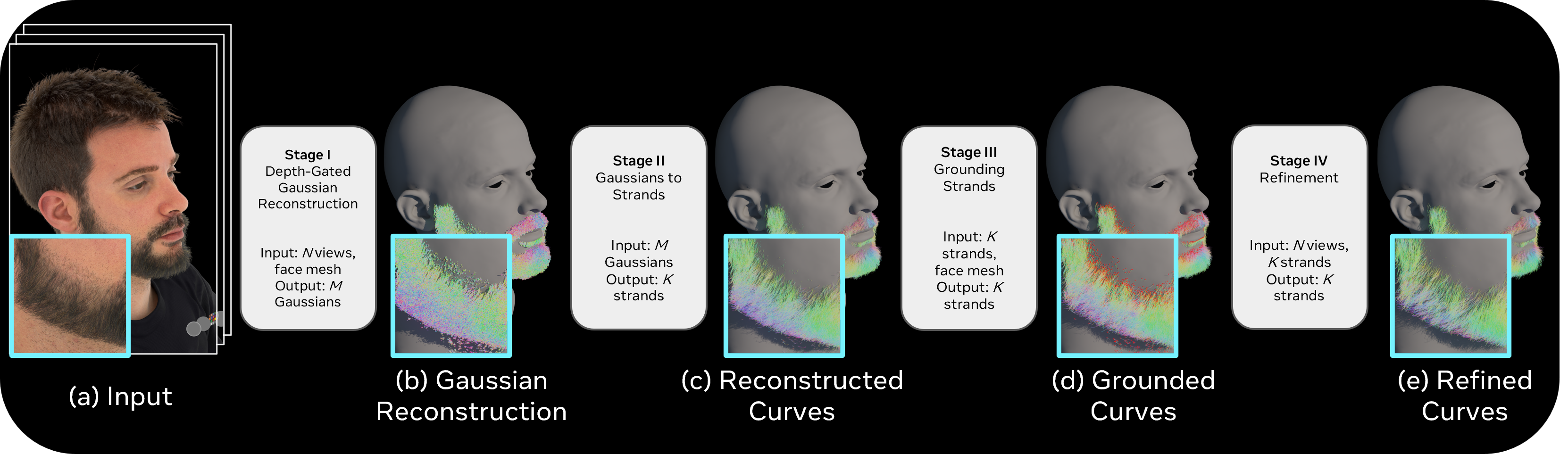
Figure 2: Pipeline overview showing four stages: (a) input images, (b) depth-gated Gaussian reconstruction, (c) strand extraction, (d) mesh grounding, and (e) final photometric refinement.
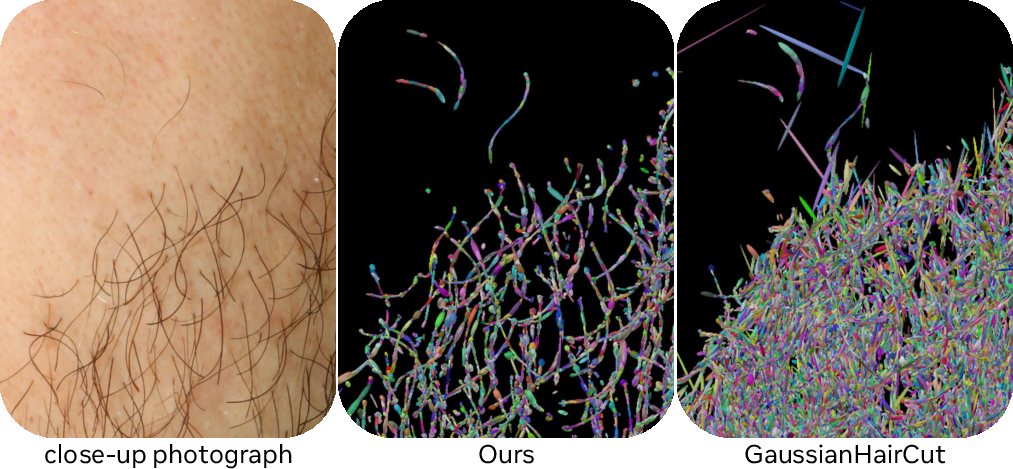
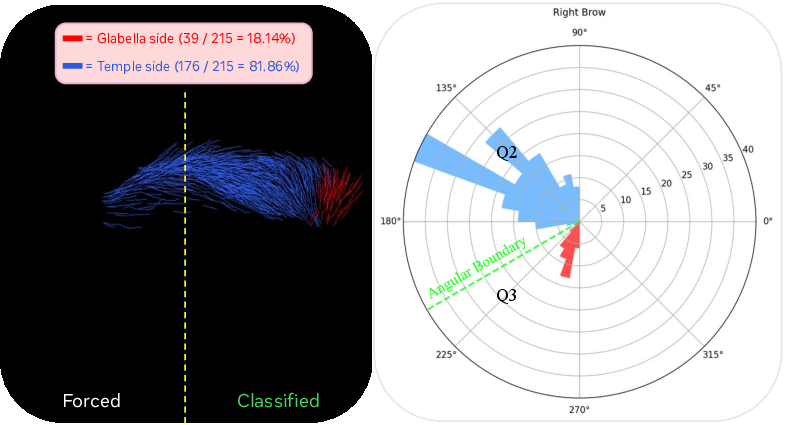
Figure 3: Depth gating in Stage I confines Gaussians to true hair regions, suppressing artifacts common in prior work.
- Crossing-aware Strand Tracing: Filtered Gaussians are traced into continuous strands using confidence-weighted Euler integration. The algorithm ensures robustness to frequent crossings and extreme curvature characteristic of facial hair by prioritizing high-opacity (high-confidence) primitives and employing crossing-aware suppression to avoid misconnections and redundant strand reconstructions.
- Physically Plausible Grounding:
Strands are anchored to the facial mesh, resolving the root-tip ambiguity with region-specific strategies: gravity-blended reference directions for beards, projection-based methods for eyebrows, and proximity rules for eyelashes. This physical grounding is essential for editability, animation, and simulation.
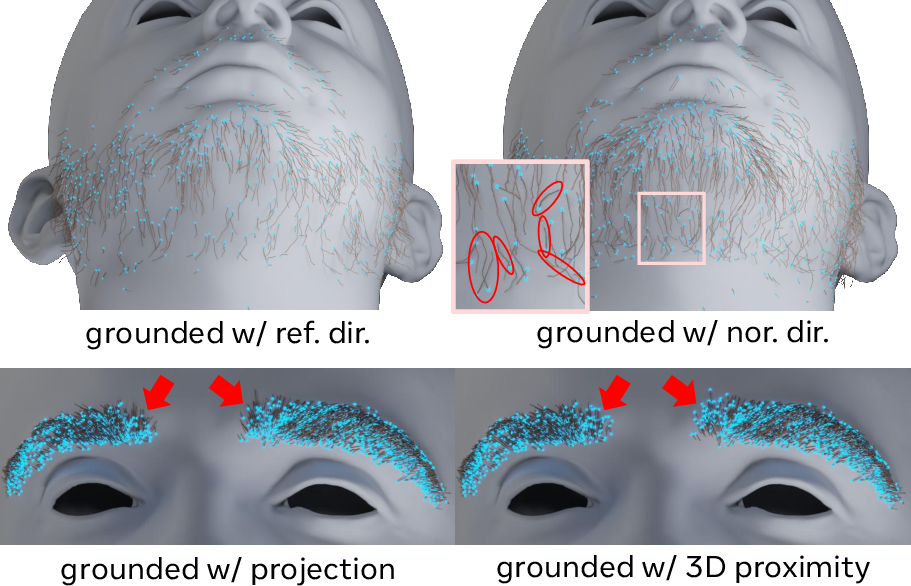
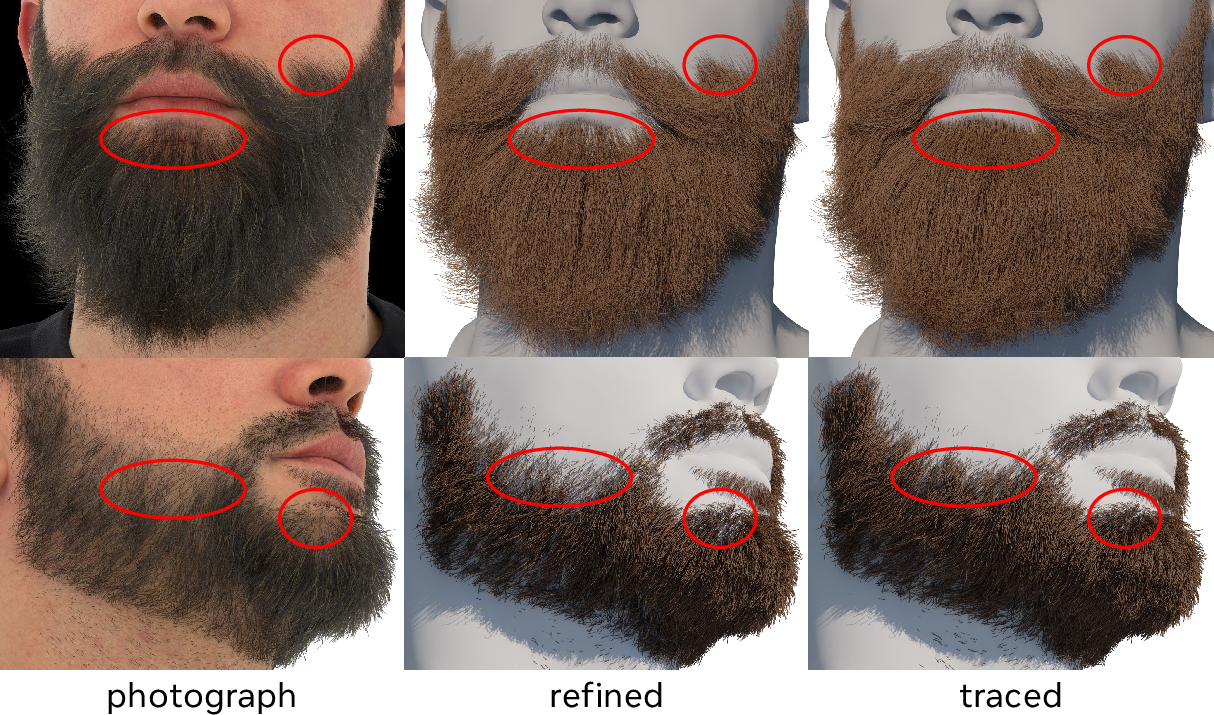
Figure 4: Example of the grounding stage, aligning strands to the underlying mesh and resolving ambiguity in facial hair orientation.
- Photometric Refinement and Strand Surgery: The final stage applies a sparsity-aware, photometrically driven refinement. Strands are locally pruned and reparameterized via subject-specific variational autoencoders, aligning density with image evidence and ensuring compatibility for downstream production use. Segment-wise opacity control enables fine-grained culling of redundant or spurious geometry, especially important in sparse regions.
Experimental Validation
Qualitative and Quantitative Results
The method is thoroughly evaluated on both synthetic and real multi-view datasets, covering a wide spectrum of facial hair types and densities. Visual assessments demonstrate that the approach accurately recovers not only global shape and orientation but also critical local features such as sparsity, clustering, and strand-level variation.
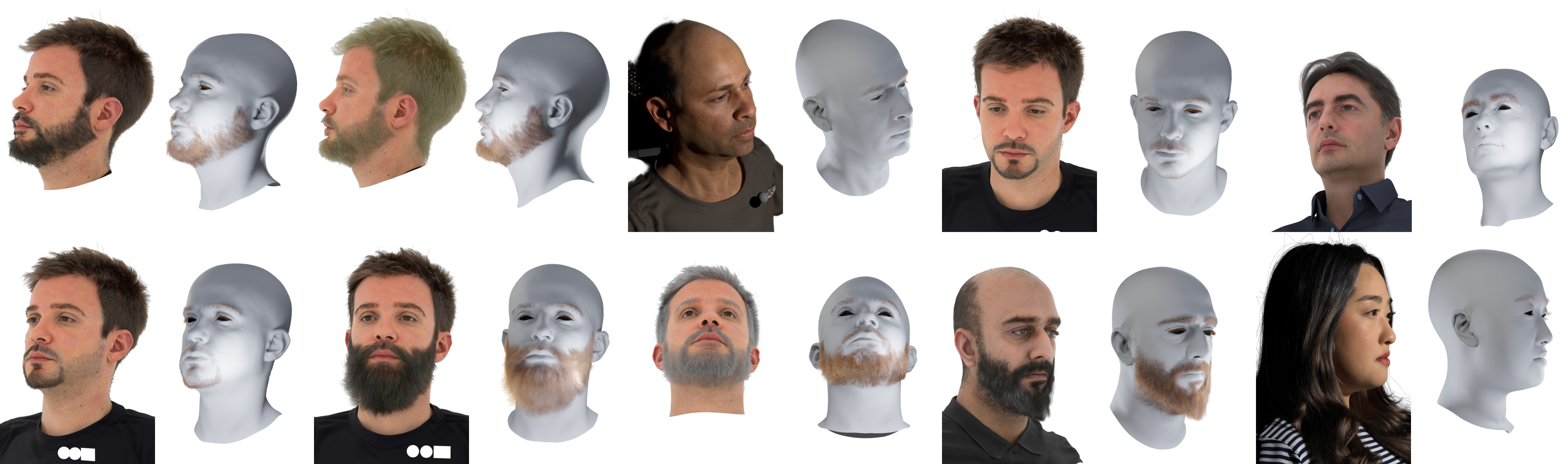
Figure 5: Reconstruction results across eyelashes, brows, stubble, and voluminous beards, capturing subtle subject-specific details.
Comparisons with state-of-the-art methods (including LPMVS, HairGS, and Beeler et al.) show that the proposed pipeline produces coherent strand geometry with superior coverage in both dense and sparse regions, maintains directional fidelity, and reconstructs fine structures such as eyelashes more robustly.
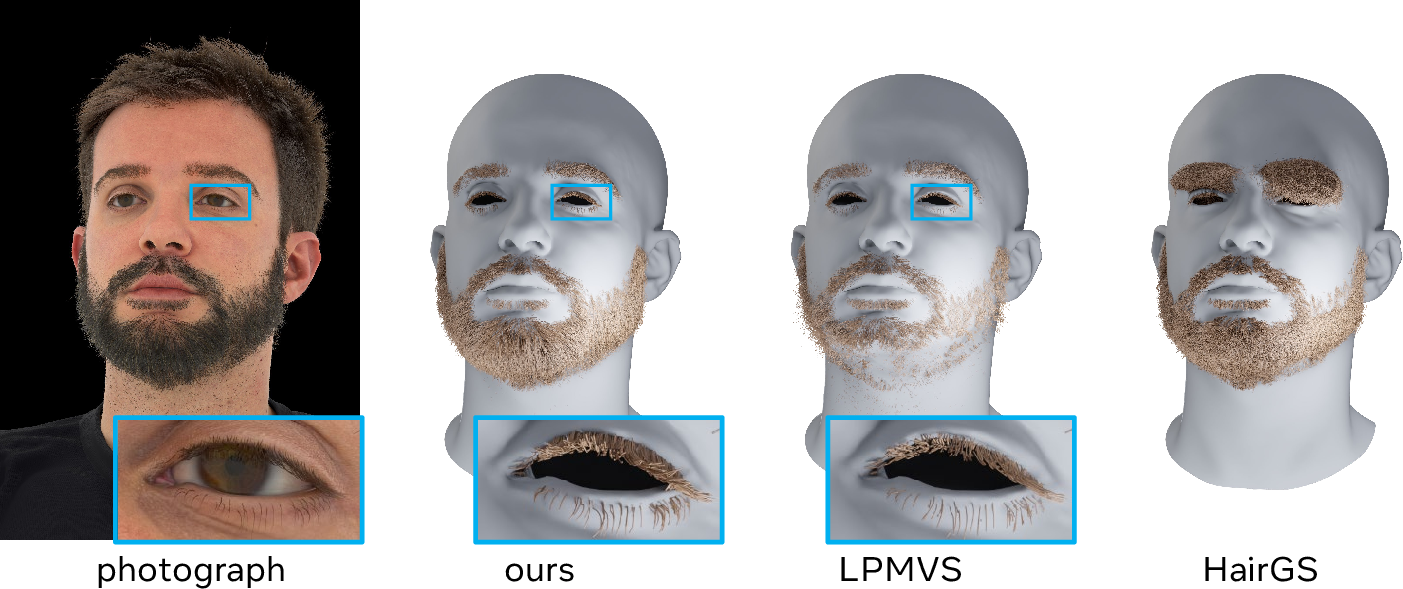
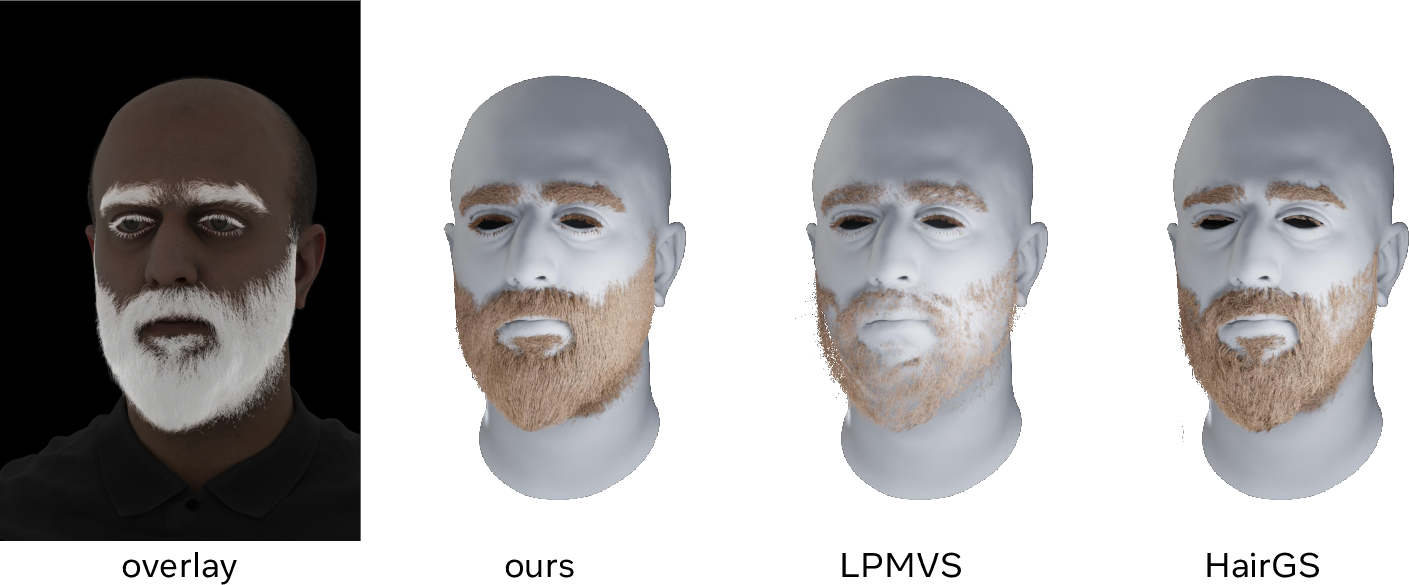
Figure 6: On bearded subjects, the method yields significantly more coherent and complete strand geometry than LPMVS and HairGS, particularly for spatially varying and sparse regions.
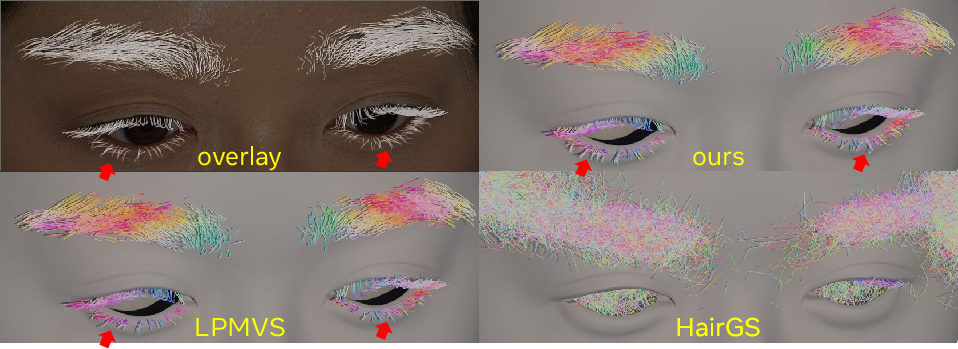
Figure 7: The method also outperforms competitors on eyebrows and eyelashes, preserving fine-level anatomical structures that are typically lost by dense volumetric approaches.
Quantitative analysis confirms that, compared to existing methods, this approach achieves the highest F1 and strand-consistency scores, particularly for beards and eyebrows, even at strict evaluation thresholds.
Ablation Studies
Detailed ablations demonstrate the necessity of each pipeline component. Notably, without depth-gated rasterization, Gaussian noise infiltrates the sub-surface, undermining strand tracing (Figure 8). Removing crossing-aware tracing or grounding steps leads to increased misconnections and physically implausible orientations, underlining the importance of the integrated design.
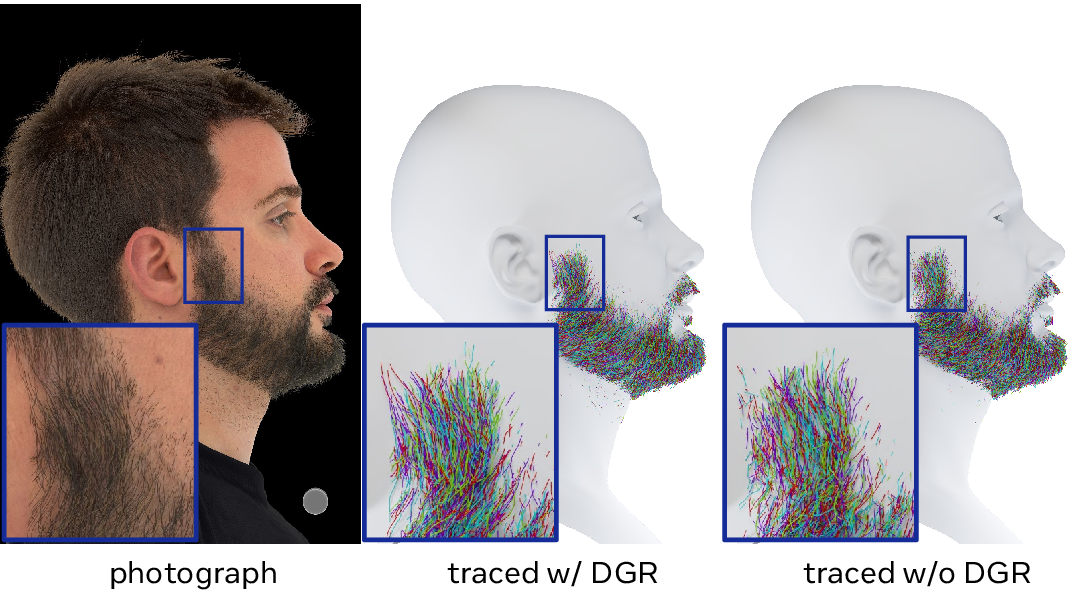
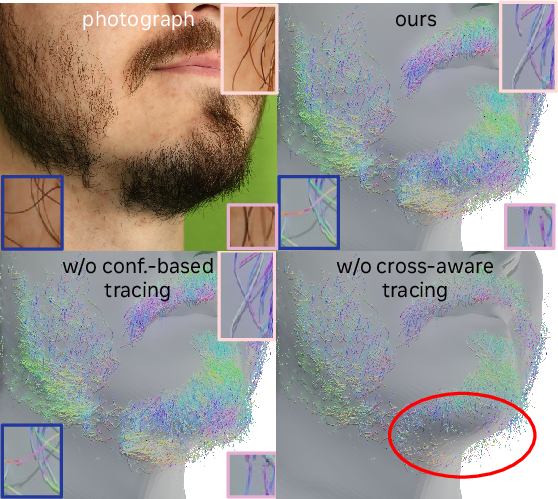
Figure 8: Depth-gated rasterization eliminates spurious artifacts near the skin, resulting in better-organized primitives for subsequent tracing.
Limitations
Despite its robustness, the method has certain limitations, primarily due to photometric optimization biases inherent to volumetric rendering: Gaussian density tends to concentrate on the outer visible shell, yielding undersupported interior structures in occluded beard regions (Figure 9). Further, density control via photometric loss alone is ill-posed, limiting precise recovery of true hair sparsity.
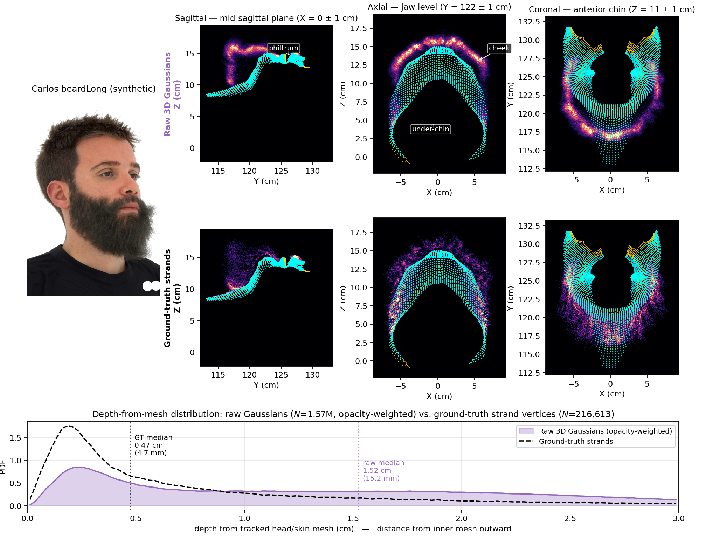
Figure 9: Tomographic analysis reveals that Gaussians concentrate in the outer visible shell, leaving beard interiors insufficiently supported.
Applications and Practical Implications
The explicit, mesh-grounded strand representation supports a wide range of practical applications in digital content creation and human avatar synthesis:
- Editing and Grooming: UV terrain-based trimming (Figure 10), style transfers, and length-based cutting (Figure 11) are all naturally supported.
- Asset Transfer: Strand geometry can be implanted onto other subjects' face meshes via shared UV topology, enabling rapid reuse and editing (Figure 12).
- Animation and Simulation: The assets are compatible with physics-based simulation and rendering pipelines (Figures 15), including physically plausible relighting and material editing.
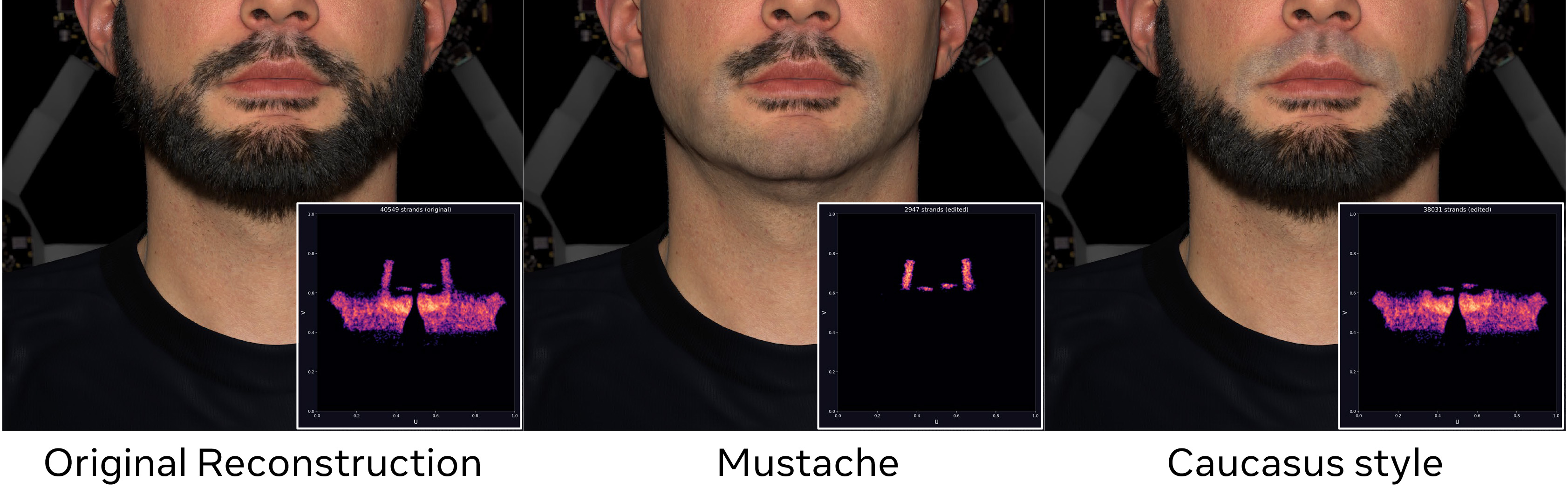
Figure 10: UV terrain-based trimming enables intuitive facial hair style edits with root selection in UV space.
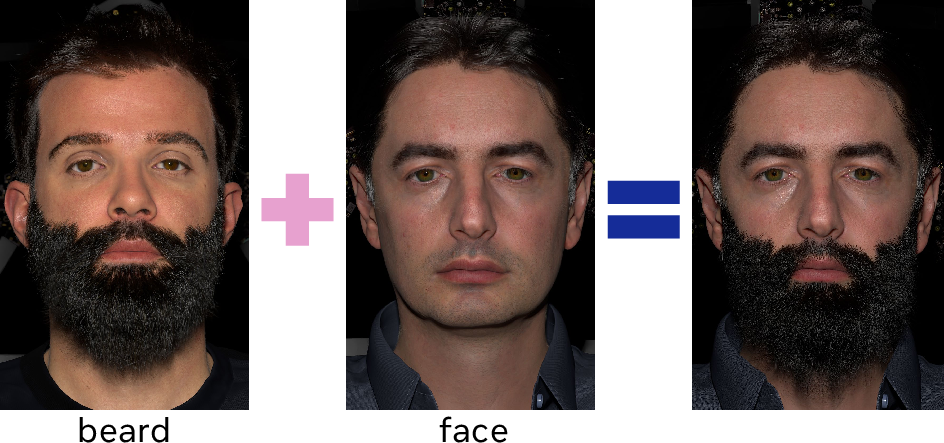
Figure 12: Beard implantation across subjects via UV-space root mapping, retaining both source density and adapting to new facial geometry.
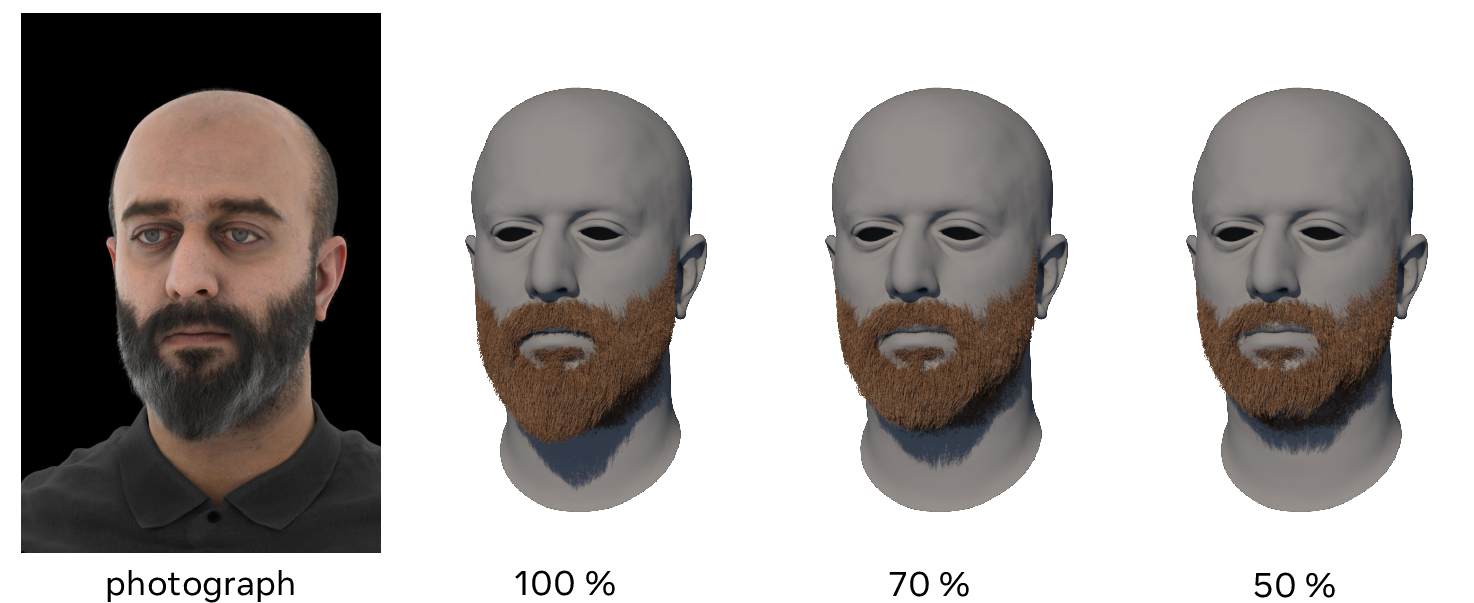
Figure 11: Automatic, continuous beard cutting is enabled via straightforward arc-length-based trimming of mesh-grounded strands.
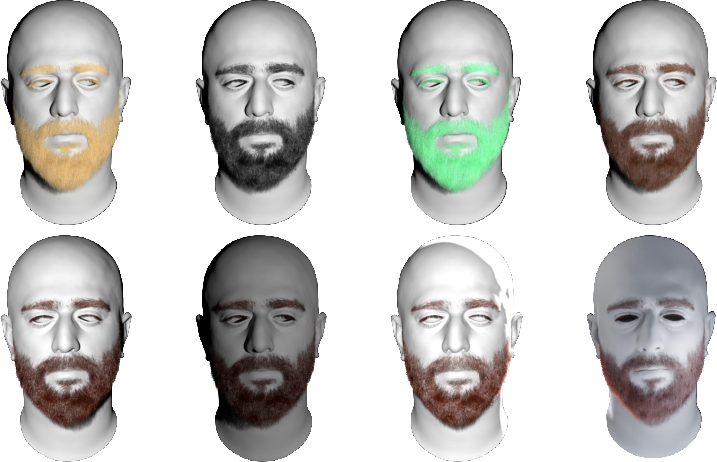
Figure 13: Physically-based relighting and material editing of the recovered strands using standard production BSDFs.
Theoretical and Future Directions
This work emphasizes the value of a prior-free, data-driven approach in handling the highly variable, low-redundancy structures of facial hair. It introduces a paradigm where implicit volumetric representations serve as intermediate fields for explicit, editable asset extraction, rather than end goals in themselves.
Potential future enhancements include:
- Volumetric Ambiguity Resolution: Addressing the "shell bias" via neural field propagation or inside-out growing mechanisms tailored to spatially heterogeneous facial regions.
- Photometric Loss Improvements: Integrating physically-based differentiable rendering under controlled lighting to better align density and geometric fidelity, and recover appearance directly.
- Specialized Matting Models: Developing facial-hair-specific matting models to enhance input segmentation, shown to be a key determinant of fine detail in reconstructions (Figure 14).
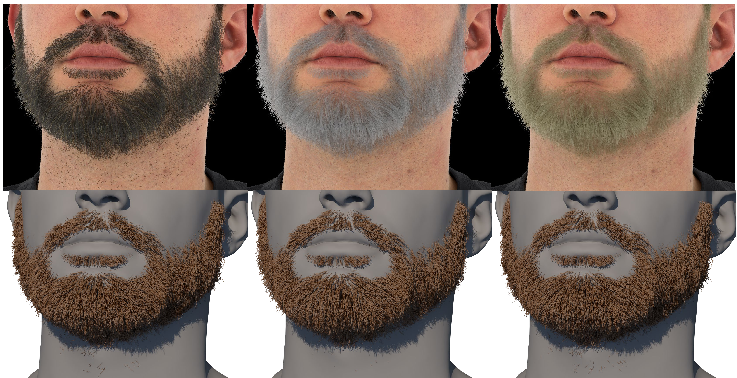
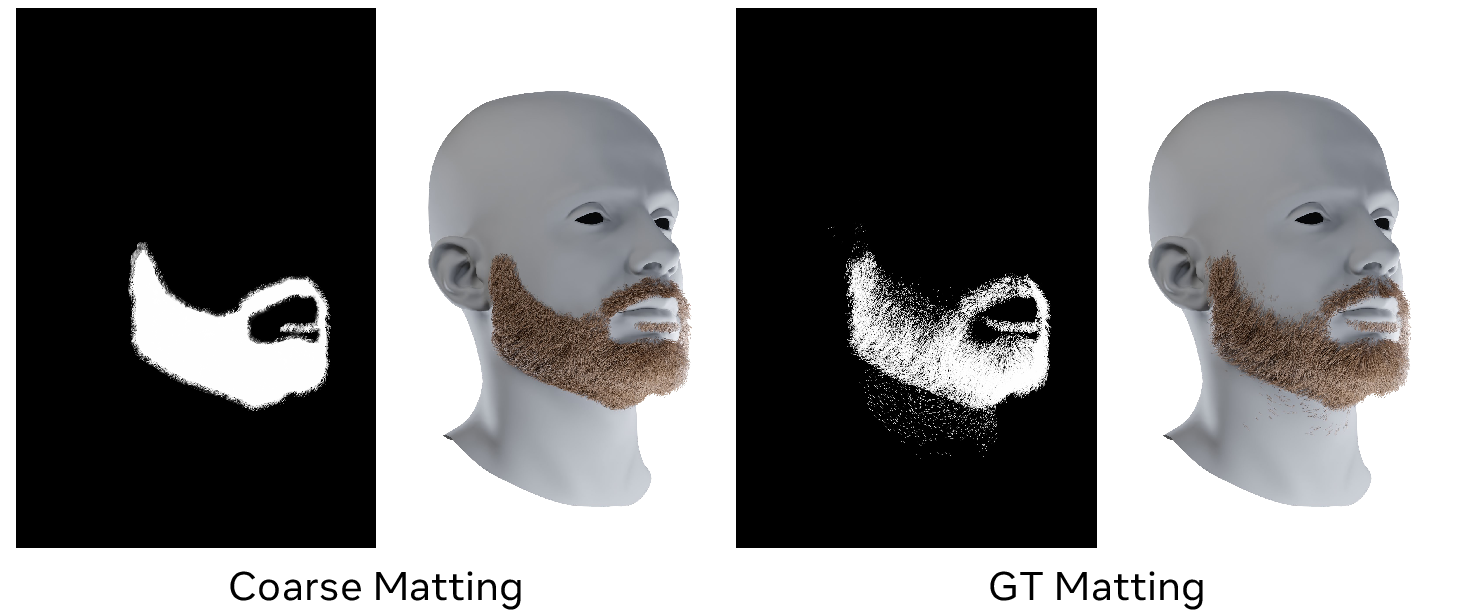
Figure 14: Robustness demonstrated across varying hair albedos; low-contrast or dyed regions yield consistent geometry.
Conclusion
The presented pipeline constitutes a significant advancement in facial hair reconstruction for digital humans. By jointly leveraging depth-gated 3D Gaussian optimization, robust tracing, physically motivated grounding, and photometric, sparsity-aware refinement, the method establishes a new standard for the automatic extraction of strand-level facial hair assets from multi-view imagery. This facilitates reliable, editable, and animatable digital facial assets for applications in avatars, VFX, and digital doubles, and suggests promising avenues for further research at the intersection of geometric computer vision and computer graphics (2606.08041).