- The paper demonstrates that dynamic few-shot adaptation via frequency-sensitive, mutually-exclusive subspace routing significantly boosts detection accuracy for evolving AI-generated images.
- Fleet’s dual-branch design combines frozen semantic feature extraction with FFT-based high-frequency analysis to efficiently adapt to new generator distributions using minimal labeled examples.
- The Treasure benchmark, featuring 360K images from 64 generator categories, rigorously validates the approach, showing marked improvements over static model baselines.
Fleet: Dynamic Few-Shot Adaptation for AI-Generated Image Detection
Introduction and Motivation
The detection of AI-generated images (AIGI) is increasingly challenged by the rapid evolution of generative models, which often invalidate detectors founded on static artifact and invariance assumptions. "Fleet: Few Shots Lead Effective AI-generated Image Detection" (2606.31082) scrutinizes this vulnerability, experimentally demonstrating that current state-of-the-art (SOTA) AIGI detectors, which generalize well on closed, static benchmarks, catastrophically underperform on contemporary, sophisticated generators. As seen in traditional benchmarks, SOTA detectors' performance can plummet to near-random when faced with cutting-edge, previously unseen generator distributions, making static generalization frameworks untenable in open-world adversarial settings.
To address this, the paper proposes a paradigm shift from "static generalization" to "dynamic adaptation" via few-shot learning. Fleet introduces a mutual-exclusion, high-frequency-guided subspace routing architecture with avoidance routing and replay-based anti-forgetting, enabling robust, rapid adaptation to novel generations with only a few labeled examples. Additionally, the work presents Treasure, a benchmark of unprecedented diversity and scale specifically engineered to rigorously stress AIGI detectors under realistic distribution shifts.
Treasure Benchmark: Comprehensive Open-World Evaluation
A critical contribution is the construction of the Treasure benchmark, which remedies several limitations in previous datasets by explicitly targeting architectural, stylistic, and semantic diversity across both AI- and Non-AI-generated classes. Treasure encompasses 360,000 images from 64 generator categories, including 20 closed-source commercial models and finely annotated artistic styles (e.g., photorealism, illustrations, 3D renderings, traditional art).
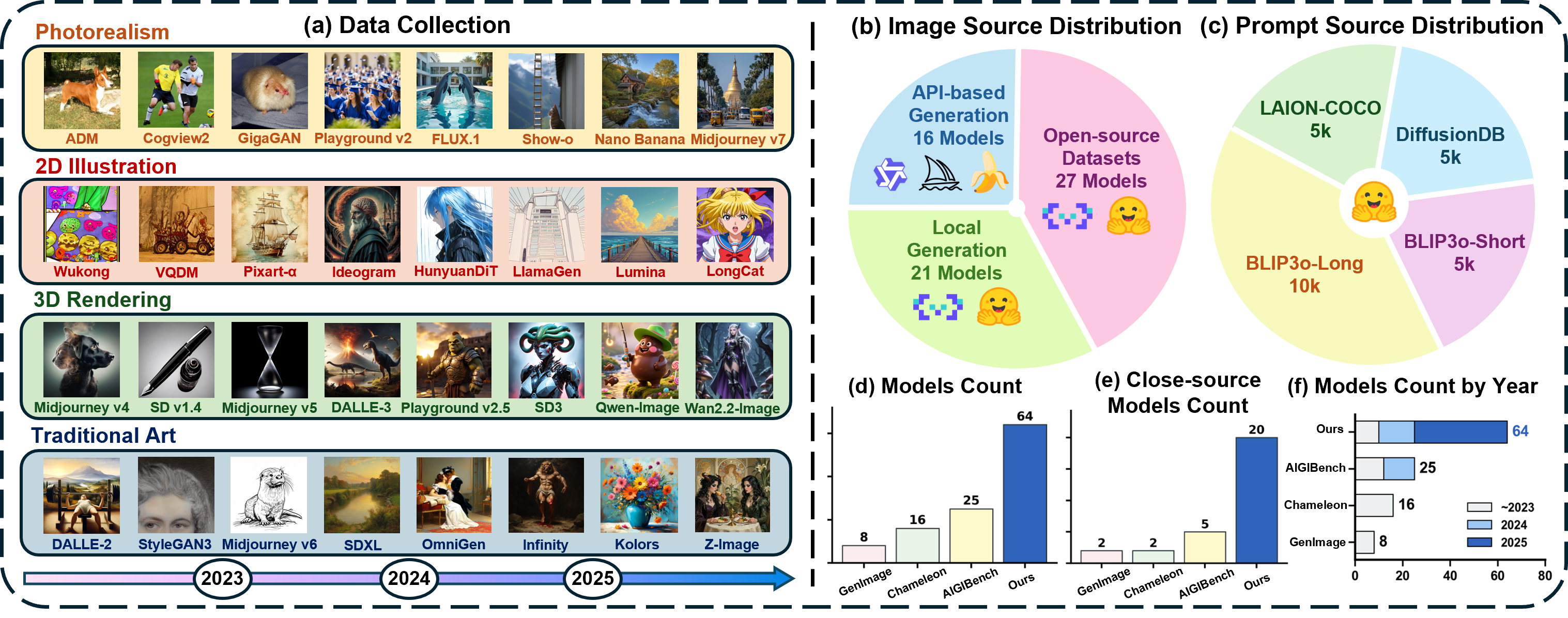
Figure 1: Overview of the Treasure dataset: diverse image sources, prompt coverage, and scale compared to prior benchmarks.
The dataset simulates real-world deployment scenarios and exposes detector brittleness hidden by dataset saturation effects seen in prior AIGI benchmarks. Comprehensive deduplication and prompt-source balancing ensure that evaluation authenticity aligns with practical forensic conditions. The scale and diversity position Treasure as a new standard for open-set AIGI detection research.
Fleet Architecture: Frequency-Guided Mutually-Exclusive Subspace Routing
At the core of Fleet is a dual-branch architecture. The primary branch leverages a frozen DINOv3 backbone with LoRA adapters to extract semantically-rich features, while the secondary branch encodes high-frequency traces via an FFT-based high-pass and feedforward convolutional encoder. These signals parameterize subspace routing logits, used to gate feature aggregation across multiple, learnable, mutually-orthogonal subspaces.
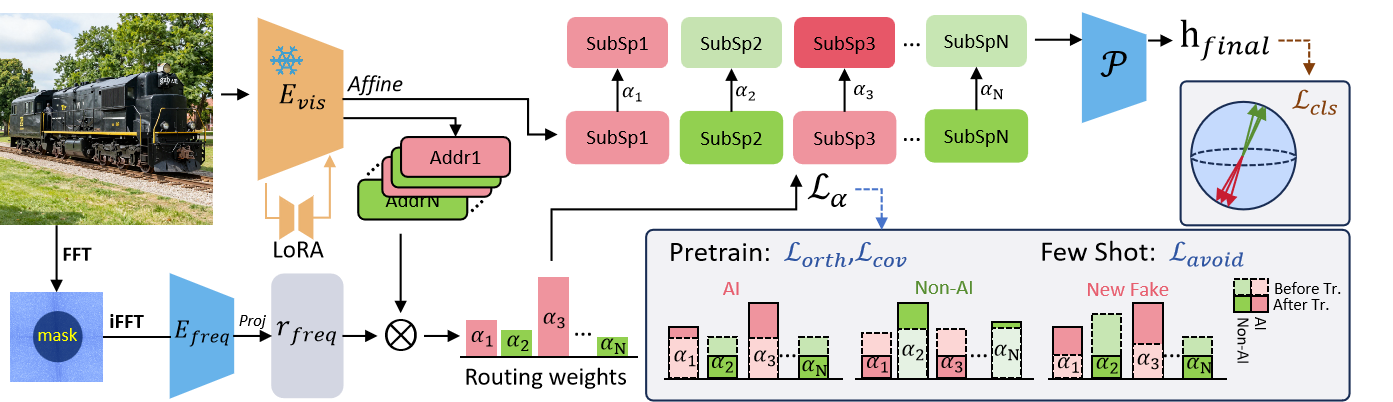
Figure 2: Schematic of the Fleet architecture: dual-branch processing, frequency-guided routing, orthogonality and coverage loss, and avoidance routing for few-shot adaptation.
Routing weights are dynamically generated for each input via a softmax over subspace addressing projections, regulated by orthogonality (enforcing mutual exclusivity for AI/Non-AI activation), and a coverage loss (preventing collapse or underutilization of subspaces). During adaptation, avoidance routing explicitly penalizes the activation of Non-AI subspaces by new AI-generated samples—effectively "shunting" transfer learning updates into forgery-specific regions of the feature space.
Dynamic Few-Shot Adaptation and Anti-Forgetting
Fleet's adaptation proceeds by sampling a modest support set (e.g., 10 labeled images) from a new generator and updating only LoRA parameters and routing projections. Crucially, adaptation is performed with a fixed-size replay buffer comprising periodic AI/Non-AI exemplars from earlier training to stabilize historical knowledge via a distillation loss, preventing catastrophic forgetting and prototype drift.
Ablations show that avoidance loss and coverage loss are essential for optimal adaptation, while LoRA rank is relatively insensitive within reasonable settings—all subspace-related objectives are critical for stable and high-accuracy transfer.

Figure 3: Sensitivity to replay buffer size and number of subspaces, confirming Fleet's stability and adaptability.
Comparative Evaluation
On Treasure and AIGIBench-13, Fleet achieves substantial improvements over both zero-shot and previous few-shot baselines. For challenging closed-source generators (e.g., Doubao Seedream 4.0), Fleet attains a jump from 20.4% to 73.1% accuracy after only 10-shot adaptation—compared to ongoing failure of SOTA methods. Notably, Fleet's 1-shot accuracy on Treasure rivals or exceeds 10-shot baselines, and the 10-shot regime yields mean accuracies surpassing 92% across all generator classes. Anti-forgetting is effectively eliminated: after sequential adaptation across multiple novel generators, Fleet's validation accuracy on the original distribution consistently remains above 99.9%.

Figure 4: Long-horizon continual few-shot adaptation demonstrates Fleet's ability to retain accuracy across both new and previously learned generator classes even with a fixed replay buffer.
Robustness analysis further highlights that Fleet's performance degrades less under strong, unseen image perturbations (e.g., compression, blurring) than comparable approaches, attesting to architectural invariance and distributional flexibility.
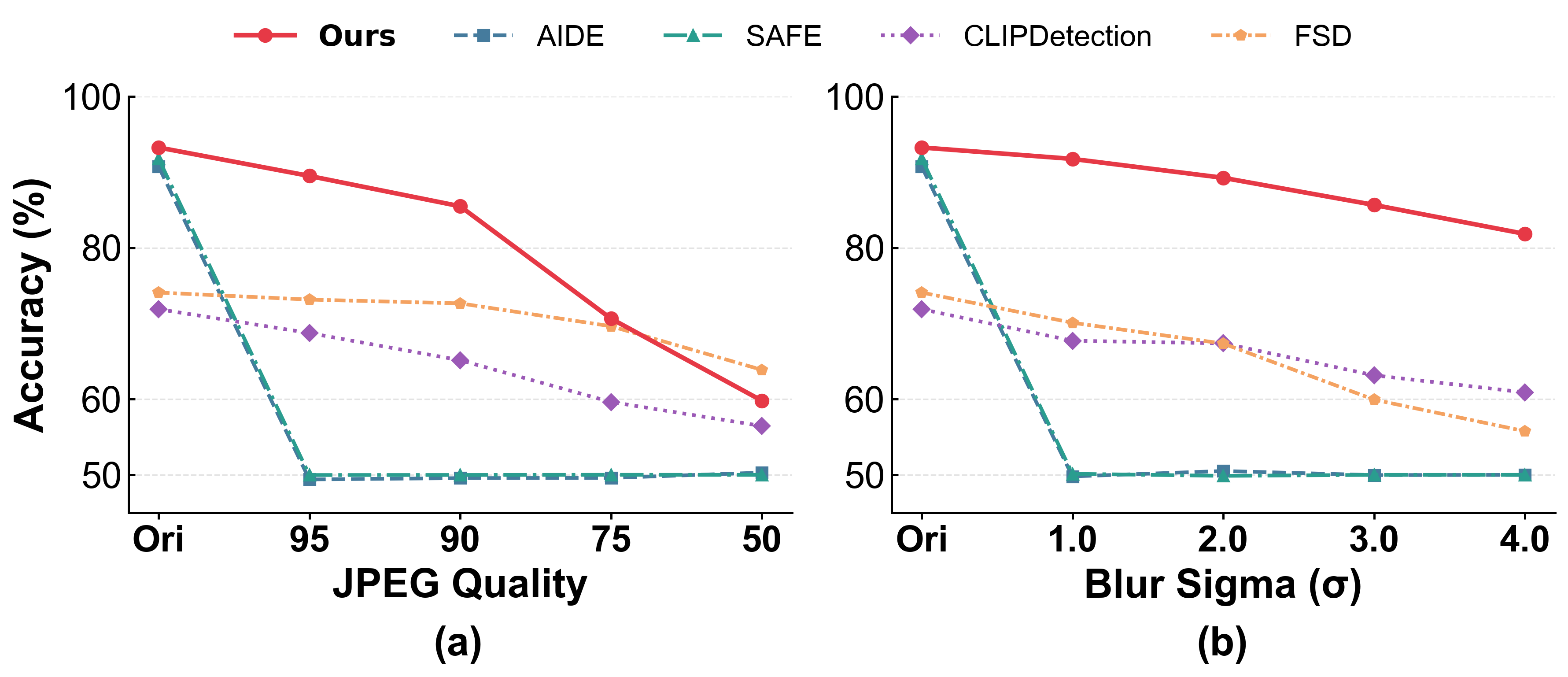
Figure 5: Fleet exhibits strong detection robustness to varying intensity of post-processing perturbations.
Subspace Routing Dynamics
Visualization of subspace routing pre- and post-adaptation reveals functional specialization: certain subspaces activate exclusively for authentic or forged images, and adaptation rapidly corrects aberrant routing induced by new generator distributions. Empirically, dynamic subspace addressing proves superior to static prototypes, emphasizing the necessity of data-dependent routing for open-world detection.
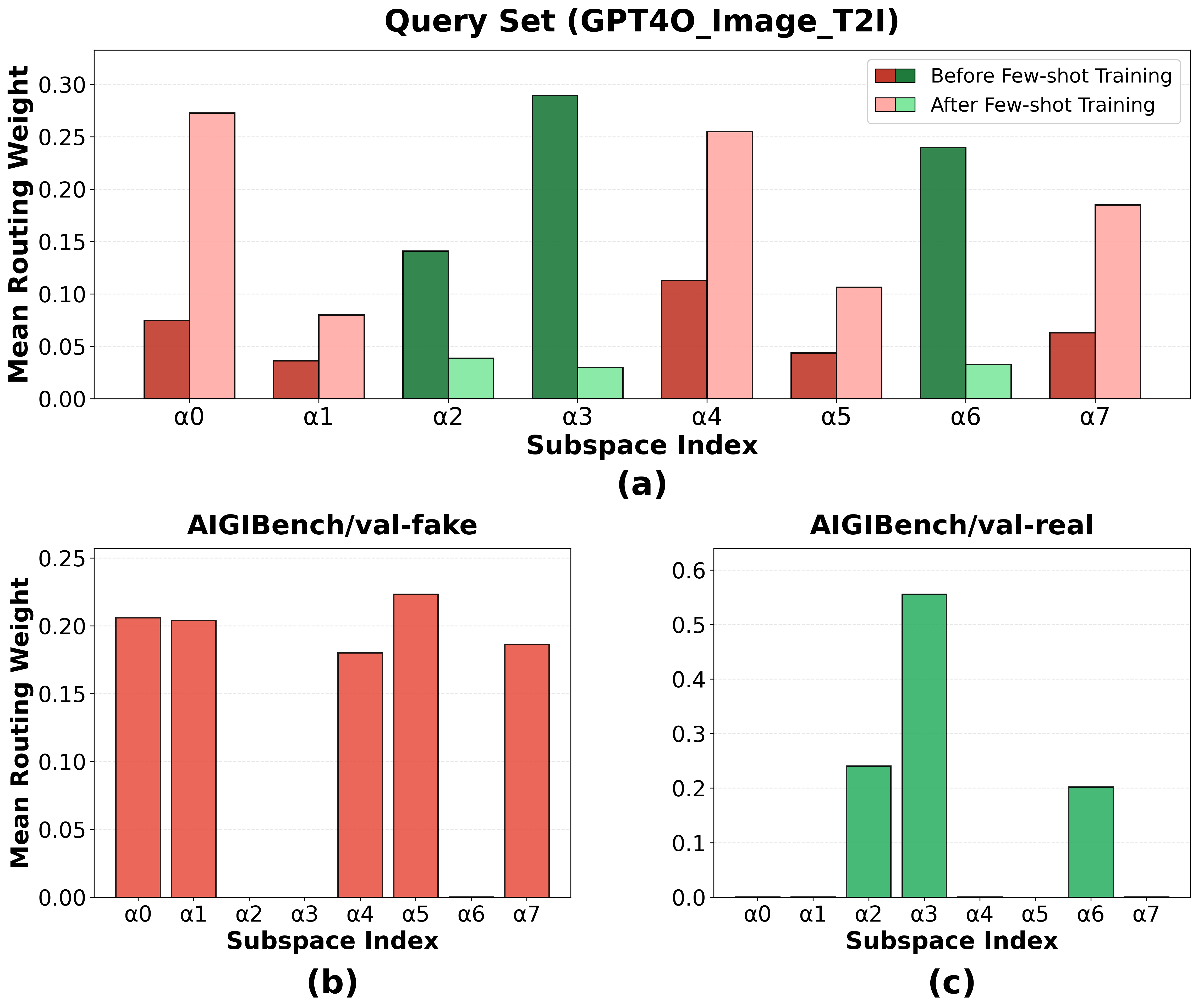
Figure 6: Visualization of routing weight shifts for AI and Non-AI classes before and after few-shot adaptation.
Theoretical and Practical Implications
Fleet substantiates that the "static artifact" hypothesis is unsustainable under the current pace of generative model evolution. The results indicate that high-frequency signal routing and explicit subspace mutual-exclusion, augmented by replay-based anti-forgetting, enable efficient and reliable adaptation without large-scale fine-tuning or catastrophic knowledge loss. The modular separation between feature extraction, gating, and adaptation losses provides a template for rapid deployment pipelines responding to emergent generative threats.
Practically, Fleet's paradigm enables forensic tools capable of real-time updating against "zero-day" generator attacks—critically necessary as generative content becomes pervasive and model release cycles accelerate. Theoretically, the success of subspace mutual-exclusion and selective routing may motivate further study on modular gating architectures for other open-category or non-stationary learning tasks.
Limitations and Future Directions
Despite its strengths, Fleet is currently specialized for full-image synthesis detection; generalizing to more localized manipulations (e.g., splicing, inpainting) remains open. The approach relies on a replay buffer for anti-forgetting, incurring some storage overhead that future streaming or replay-free adaptation algorithms could address. Sequential few-shot adaptation is supported empirically, but formal convergence results and memory-efficiency investigations warrant further work. Expansion to multi-modal or continual lifelong adaptation—possibly via hierarchical or compositional routing—could broaden Fleet's impact in adversarial digital media forensics.
Conclusion
Fleet and Treasure establish a new baseline in dynamic AIGI detection—the former through a frequency-sensitive, mutually-exclusive subspace architecture allowing efficient and robust few-shot adaptation, and the latter through a comprehensive, high-diversity benchmark suited for realistic adversarial evaluation. This work demonstrates that SOTA generalization is attainable only through explicit design for distributional shift and memory retention, providing a path forward for forensic AI system deployment in adversarial, rapidly evolving environments.