- The paper presents a full-stack experimental validation of AI-enabled xApps in the O-RAN Near-RT RIC, achieving deterministic, ultra-low latency (1–25µs inference, <4ms end-to-end) for network state classification.
- It details a complete offline-to-online pipeline with model training, C array export, and inlined inference logic using compiled C, ensuring minimal external dependencies.
- Results indicate that lightweight models like logistic regression yield near-optimal performance, with system bottlenecks stemming from transport and scheduling overhead rather than inference computation.
Enabling Real-Time AI Inference in O-RAN Near-RT RIC: Architecture, Feasibility, and Measurement
Introduction
The integration of AI/ML capabilities into open, disaggregated RANs is a principal enabler for the self-optimization of emerging 5G/6G cellular architectures. The O-RAN Alliance defines the Near-Real-Time RAN Intelligent Controller (Near-RT RIC) as the locus for closed-loop control on 10 ms–1 s timescales, but deterministic, low-latency AI deployment within such control loops remains underexplored. This paper ("Enabling Real-Time AI in O-RAN: Deploying and Measuring AI Inside a Near-RT RIC xApp" (2607.01583)) presents the design and full-stack experimental validation of AI-enabled xApps for network state classification, embedded as deterministic, compiled C modules within the Near-RT RIC, and characterizes their latency and performance on a reproducible OAI/FlexRIC testbed.
System Design and AI Embedding Pipeline
The proposed system encompasses a complete offline-to-online pipeline: offline model training on a structured, balanced synthetic dataset, export of model parameters as C arrays, and inlining of the inference logic within the xApp executable. The xApp operates in the FlexRIC Near-RT RIC and processes cross-layer E2 service model indications in real time. The embedded classifiers—logistic regression (LR) and a shallow multilayer perceptron (MLP)—rely solely on libc and are devoid of external ML runtime dependencies, ensuring minimal and auditable latency at inference time.
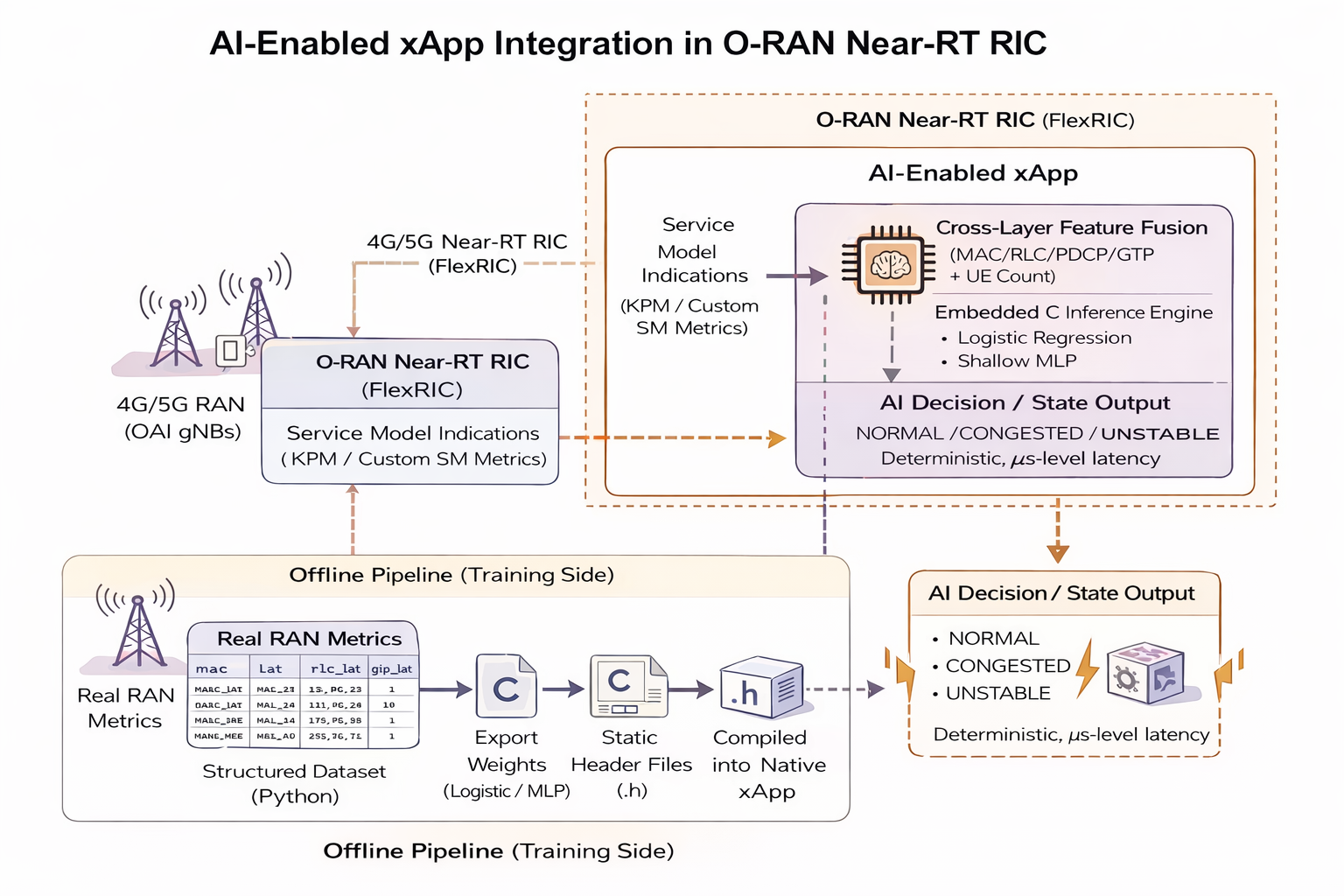
Figure 1: End-to-end architecture of the AI-enabled network state classification xApp, integrating cross-layer service model indications and deterministic, compiled C inference within the O-RAN Near-RT RIC.
The system is orchestrated and reproduced using RIC Workbench, a lightweight dashboard facilitating complete control over CN5G, gNBs, FlexRIC, and custom xApp builds on commodity hardware.
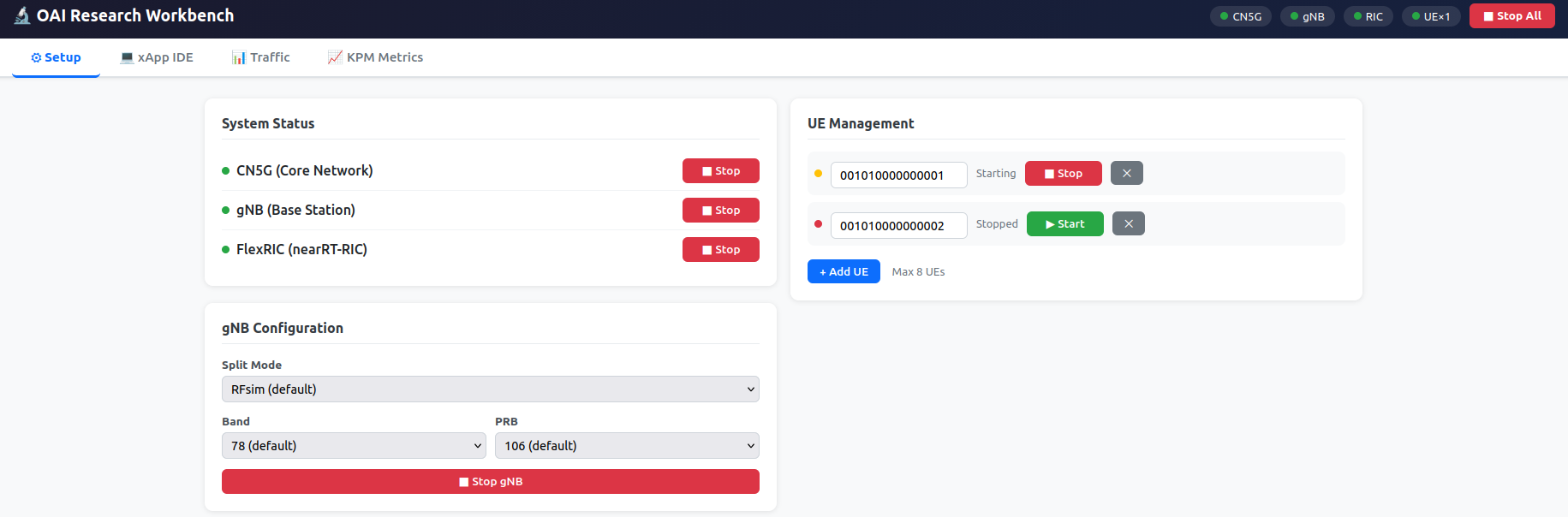
Figure 2: RIC Workbench enables full-stack O-RAN experimentation from a single workstation, streamlining testbed setup.
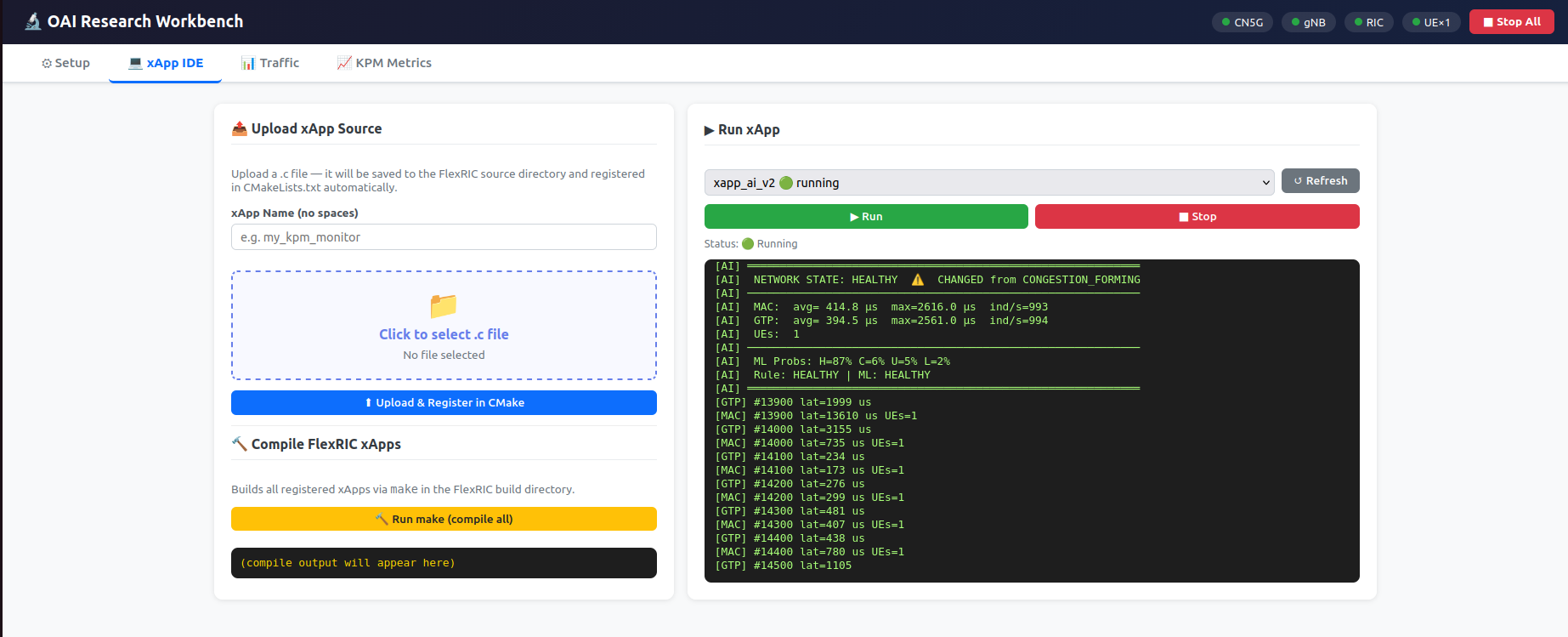
Figure 3: Live xApp execution and real-time AI-based network state classification as observed in the RIC Workbench IDE.
Dataset Construction and Classification Task
The authors define a structured synthetic dataset to serve as a proxy for operational RAN conditions. Each instance is a five-dimensional vector comprising MAC, RLC, PDCP, and GTP latencies, and UE count. Labels correspond to four canonical network states: Healthy, Congestion Forming, User-Plane Stress, and Control-Plane Stress. Gaussian noise and class-overlapping phenomena ensure a nontrivial classification regime, providing a rigorous but reproducible setup for embedded AI validation.
Feature analysis demonstrates statistically differentiable structure across classes (Figure 4), supporting the viability of supervised learning even under noise injection.
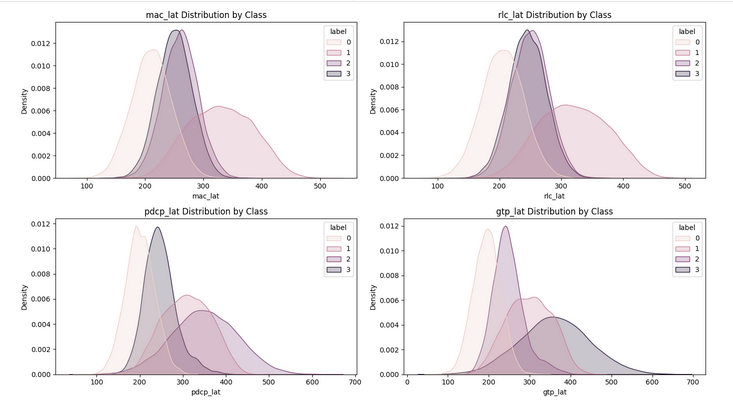
Figure 4: Feature distributions confirm per-class structure and explain why model accuracy is limited by feature overlap rather than model expressiveness.
Offline Model Evaluation
A comprehensive benchmark sweep covers rule-based, logistic regression, random forest, gradient boosting, SVM-RBF, and MLP models on a 32,000-sample dataset. All supervised classifiers cluster in a narrow accuracy and macro F1 band ($0.88$–$0.90$), indicating that augmenting model complexity beyond LR yields diminishing returns for this task (Figure 5).
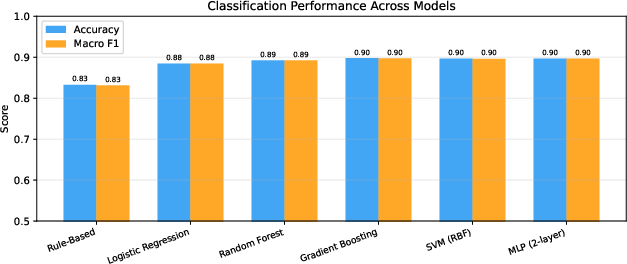
Figure 5: Classification performance for all model families shows negligible separation among ML models, with an absolute improvement over rule-based baselines.
Confusion matrices confirm substantial error overlap between "Congestion Forming" and the stress classes, further substantiating the limit imposed by feature geometry rather than capacity (Figure 6).
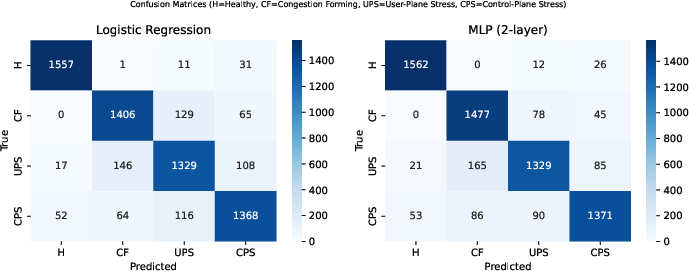
Figure 6: Error structure for LR and MLP is nearly identical, underlining the structural, not algorithmic, origins of hard-to-classify regions.
Ablation with respect to Gaussian noise level (Figure 7) demonstrates robust parity among LR, MLP, and RF across a broad range of σ, while the rule-based baseline deteriorates at higher noise.
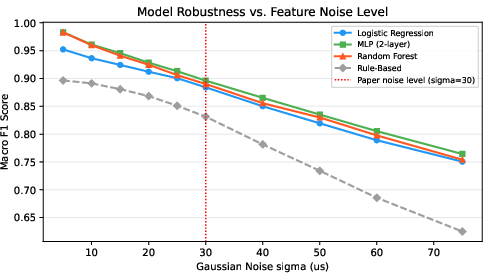
Figure 7: Robustness ablation shows all ML models degrade similarly under increasing noise, emphasizing parity is due to feature overlap, not underfitting.
Runtime Deployment: Latency Characterization
Empirical measurement on a live OAI/FlexRIC testbed reveals that model inference latency is negligible relative to the Near-RT RIC control budget. Specifically, logistic regression executes in 1–5 μs, while the MLP incurs only 10–25 μs—both several orders of magnitude below the typical 10 ms control period. End-to-end latency, measured from E2 message arrival, through inference, to action dispatch, remains <4 ms for >95% of events, and is overwhelmingly dominated by transport/scheduling overhead rather than inference computation (Figure 8).
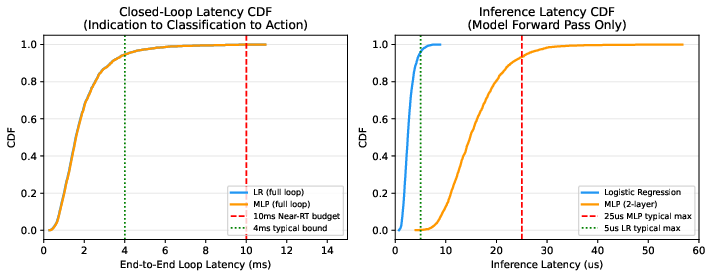
Figure 8: Both inference-only and closed-loop latencies confirm sub-4\,ms end-to-end operation, with AI computation accounting for a negligible fraction of total delay.
Rare latency spikes (>100 ms) are attributed to non-model factors (e.g., host OS scheduling), emphasizing the conservative, real-world test environment used.
Implications and Theoretical/Practical Impact
Determinism, Simplicity, and Auditability
The results demonstrate that lightweight, simple AI models (e.g., LR) deliver near-optimal classification performance while providing deterministic, auditable, and ultra-fast inference compatible with Near-RT RIC constraints. Marginal accuracy gains from more complex models are not practically redeemable in this context given their elevated implementation and run-time costs.
System Bottlenecks and Design Focus
The system-level analysis dictates that optimizations should target E2 transport and callback overheads, rather than AI inference acceleration or additional model compression, as these will not impact end-to-end performance at the measured scale.
Reproducibility as Research Enabler
The open-sourced RIC Workbench and fixed pipeline enable direct reproducibility of results, lowering the barrier of entry for experimental AI-in-RAN work previously attainable only on large testbeds.
Future Directions
- Live data generalization: The current dependence on synthetic data constrains external validity; production-grade training and evaluation must integrate real RAN traffic and diverse environmental conditions.
- Scalability and Multi-xApp Coordination: Practical O-RAN deployments involve dense, heterogeneous nodes and multiple co-resident xApps, potentially with competing policies—requiring new scheduling, coordination, and safety mechanisms.
- Rich Temporal and Closed-Loop Control: Future work should address temporal modeling (e.g., recurrent nets, attention mechanisms) and fully-implemented closed-loop control actions.
- Production-grade Real-Time OS Support: Substantial reduction in rare latency outliers is possible via PREEMPT_RT kernels and CPU isolation, further strengthening timing determinism.
Conclusion
This work establishes a reference methodology for embedding deterministic, low-latency AI inference within O-RAN Near-RT RIC xApps using only compiled C, validated on a reproducible commodity testbed. The insights provided—most notably, that AI computation is not the bottleneck within the RIC loop for such tasks, and that increased model complexity yields negligible gain on structurally-constrained problems—offer guidance for future system and algorithm design in practical, deployable AI-driven RAN control. Extensions to real-world datasets, advanced temporal models, fully automated closed-loop policies, and scaled multi-agent deployments are compelling next steps.