- The paper introduces an exact k-cell decomposition method that precisely identifies combinatorial k-visibility transitions, reducing redundant partition lines.
- It classifies critical events (appear, disappear, merge, split) using analytic criteria based on vertex configurations and local edge orientations.
- The approach achieves an O(n^4) cell structure, improving computational efficiency for applications in pursuit-evasion and robotic sensor planning.
An Exact Generalized k-Cell Decomposition: A Technical Analysis
Introduction and Problem Context
This work addresses k-visibility planning in polygonal environments by introducing an exact k-cell decomposition method. In this context, a k-modem is a device enabling an agent to "see" through up to k walls, thus generalizing classical visibility problems to the k-visibility regime. Prior decompositions for such environments have included superfluous partition lines, resulting in inefficiencies both in theory and in practice. The presented approach precisely identifies the loci of combinatorial visibility events—appear, disappear, split, and merge—so that each partition line in the decomposition corresponds exactly to a critical transition in the shadow structure (the regions invisible to the agent). This yields a combinatorial cell structure of the space with O(n4) complexity, in contrast to the previous best O(k2n4) result.
Preliminaries: k-Visibility and Shadow Events
The agent is modeled as a point robot within a simple polygon (possibly with holes), equipped with a k-modem. k-visibility implies that every visible point can be connected to the agent via a segment crossing at most k0 polygon edges. The core computational difficulty is that as the agent moves, the k1-visibility region changes combinatorially only at specific critical locations. The four fundamental types of shadow events are:
- Appear: a new shadow component emerges.
- Disappear: an existing component vanishes.
- Merge: two components unite.
- Split: one component divides into two.
The decomposition must guarantee invariance of the shadow’s combinatorial structure within each cell and guarantee that every event occurs precisely on decomposition lines.
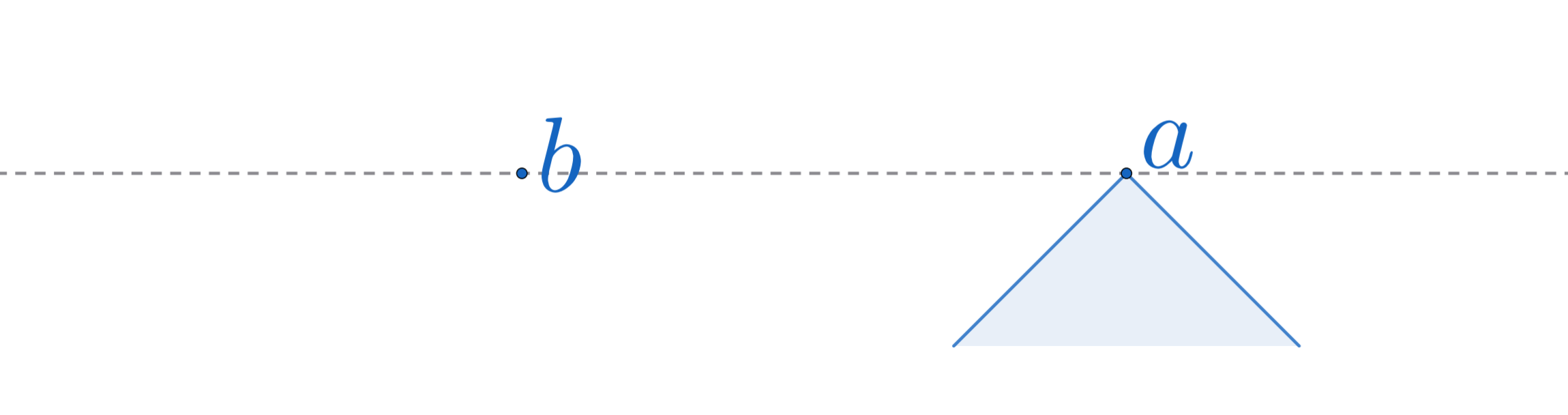
Figure 2: A vertex k2 critical to a point k3, illustrating the notion of criticality that underpins event detection.


Figure 3: Three vertices that are mutually critical on the same line—such configurations are disallowed in the decomposition.
Core Decomposition Principle
A combinatorial change in the shadow structure can only occur when an agent crosses a line defined by two vertices that are mutually critical. This mutual criticality means—for the line k4 through k5 and k6—each vertex has both incident edges on the same side of k7. The method classifies all possible mutually critical pairs according to the convexity (convex or reflex type) and spatial arrangement (same or opposite side) of the defining vertices. This leads to eight principal configurations, further supplemented by four special cases (adjacent vertex pairs).
No event occurs unless this mutual criticality is satisfied. This criterion prunes the decomposition substantially, guaranteeing that extraneous lines are omitted.
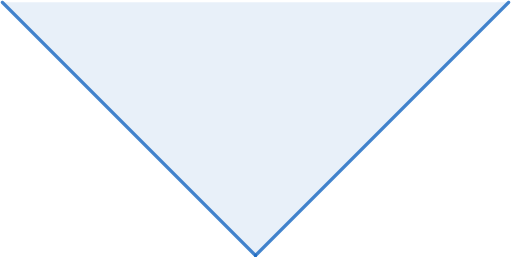
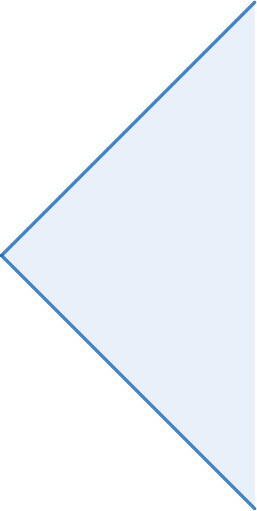
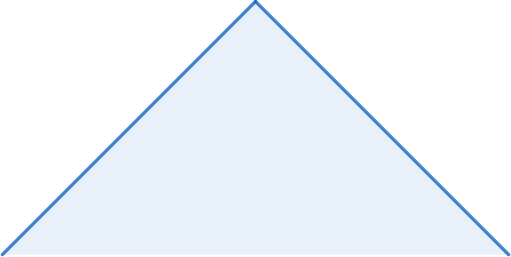
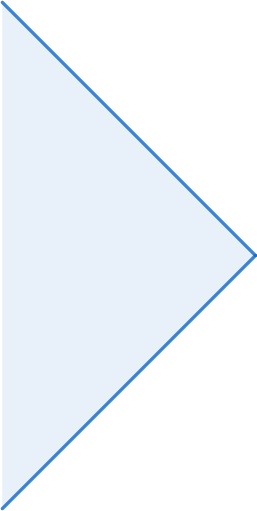
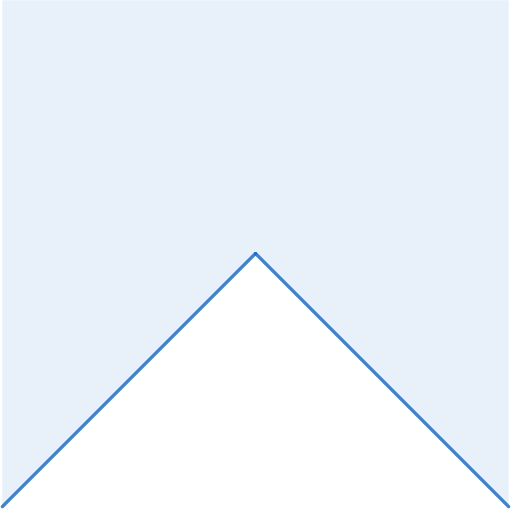



Figure 1: The four local orientations for a convex and a reflex vertex, highlighting combinatorial differences key to event classification.
Event Classification and Examples
By tracking local edge orientation and the number of walls intersected (counters k8 and k9), the decomposition distinguishes when and what type of event occurs upon crossing a partition line. For each configuration type (e.g., Convex-Convex-Opposite, CCO), analytic formulas determine event conditions:
- In the CCO case, an appear/disappear event at k0 occurs if k1, a merge/split event at the adjacent segment occurs if k2, etc.
Each event is illustrated schematically by agent positions above/below partition lines and associated combinatorial changes in the shadow. Only for narrow values of k3 or k4 do these events occur; in extreme cases (very low or very high wall counts), no event is triggered since regions are trivially visible or permanently occluded.
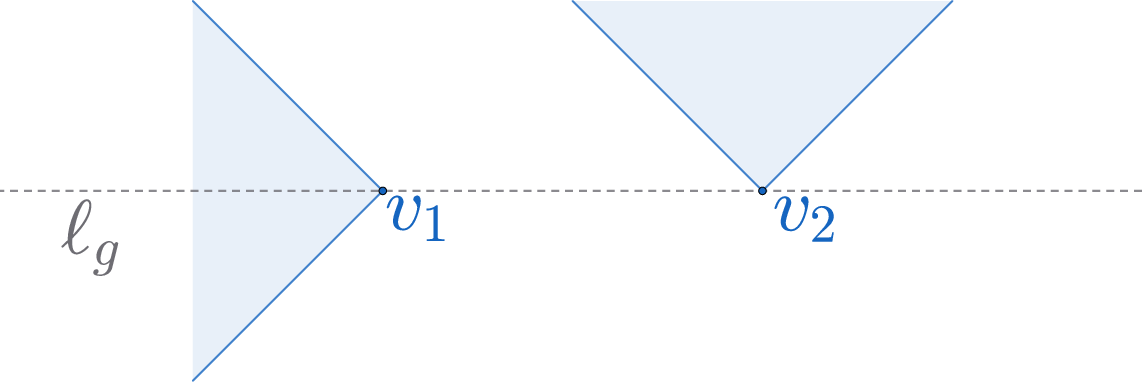
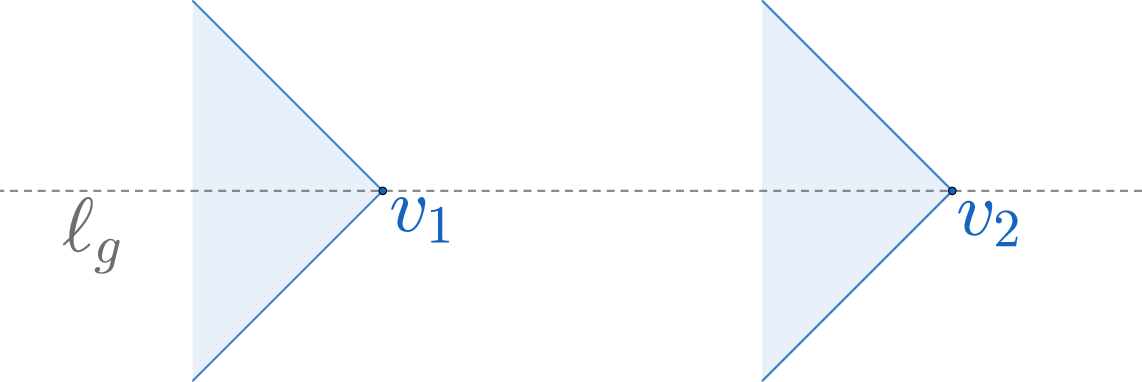
Figure 4: The absence of events in certain vertex orientations, demonstrated by agent locations straddling the critical line.
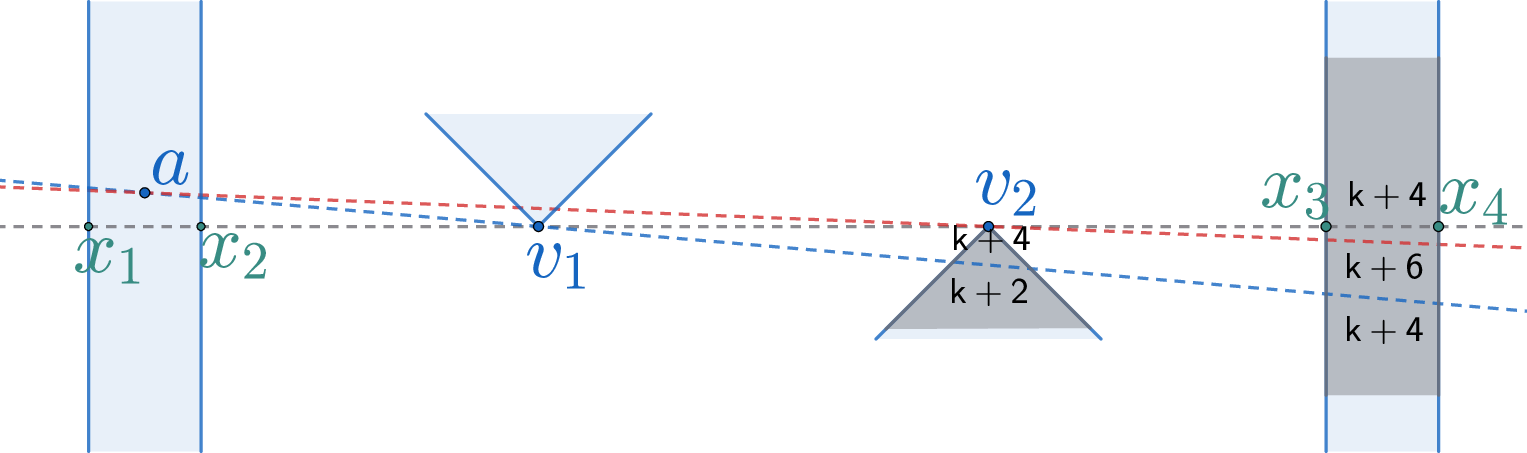
Figure 5: CCO case; above k5: agent position, event parameters k6, k7.
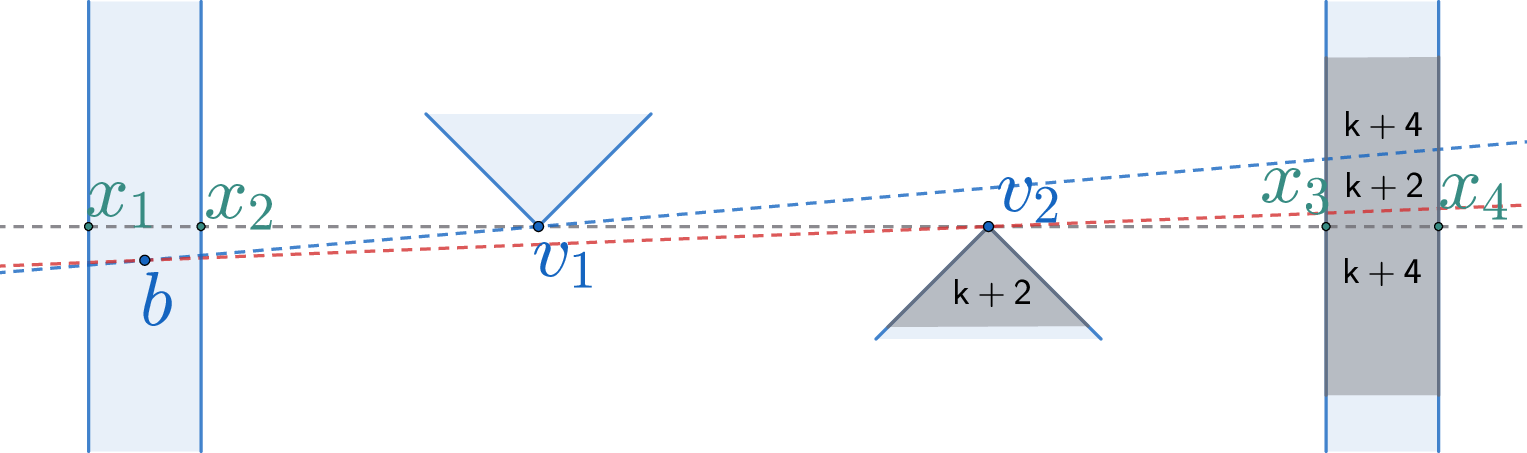
Figure 6: CCO case; below k8: agent position with the same event parameters.
Complexity Analysis and Comparison
The line arrangement generated by all mutually critical vertex pairs yields k9 lines; their arrangement in the plane induces k0 cells, each corresponding to a unique combinatorial structure of the shadow. In contrast, the previous best decomposition (Bahoo et al., 5 Nov 2025) included k1 cells due to consideration of lines corresponding to all k2-transitions, many of which were redundant for actual visibility changes.
A direct implication is a worst-case k3 reduction in cell count when k4 approaches k5. The cells are not necessarily convex but strictly respect the invariant combinatorial constraints required for exact k6-visibility event tracking.
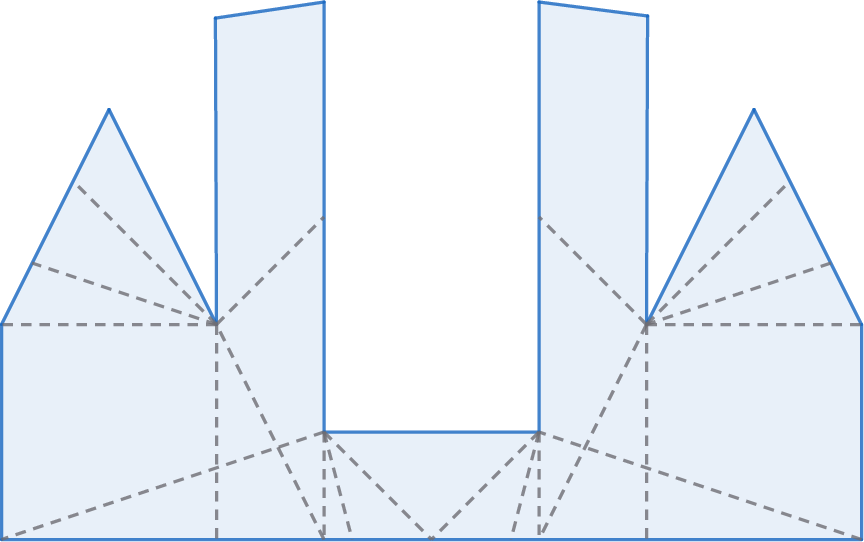
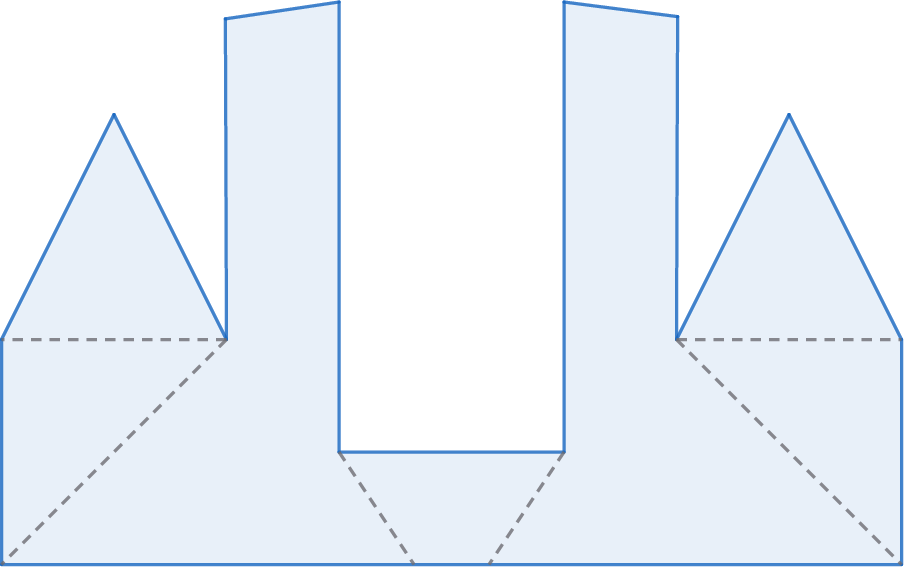
Figure 7: Left—previous method’s decomposition with many surplus partition lines; right—proposed method with only essential lines, greatly reducing structural complexity.
Extension to Polygons with Holes
In environments with holes, nontrivial shadow “wraparound” phenomena arise. A split event on a single partition line may fail to truly divide a component if the shadow remains connected around a hole. The decomposition algorithm, therefore, tracks (and prunes) segments nullified by duplicate connectivity. Only on the relevant intersection of two such partition lines does an actual combinatorial split occur.
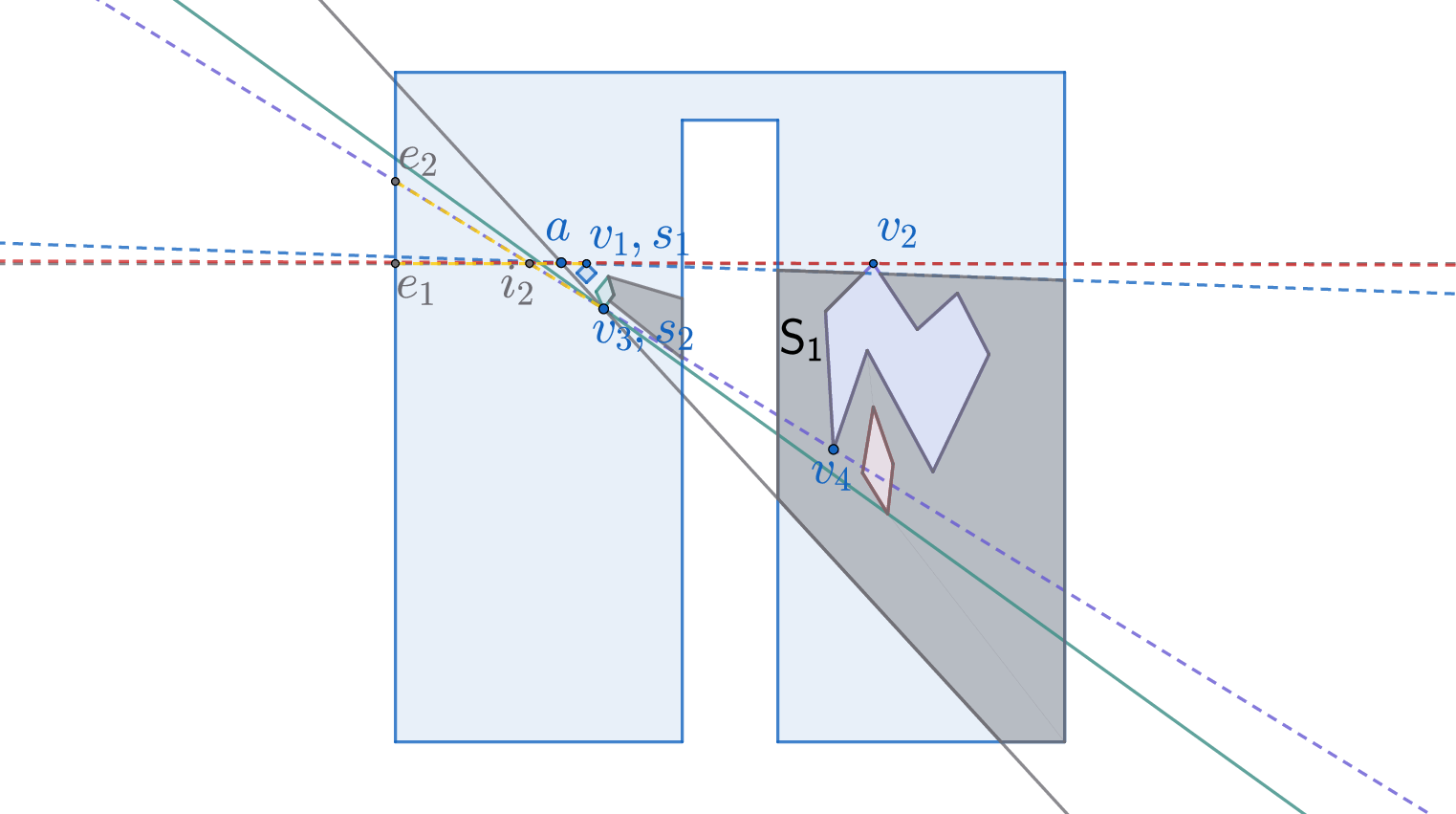
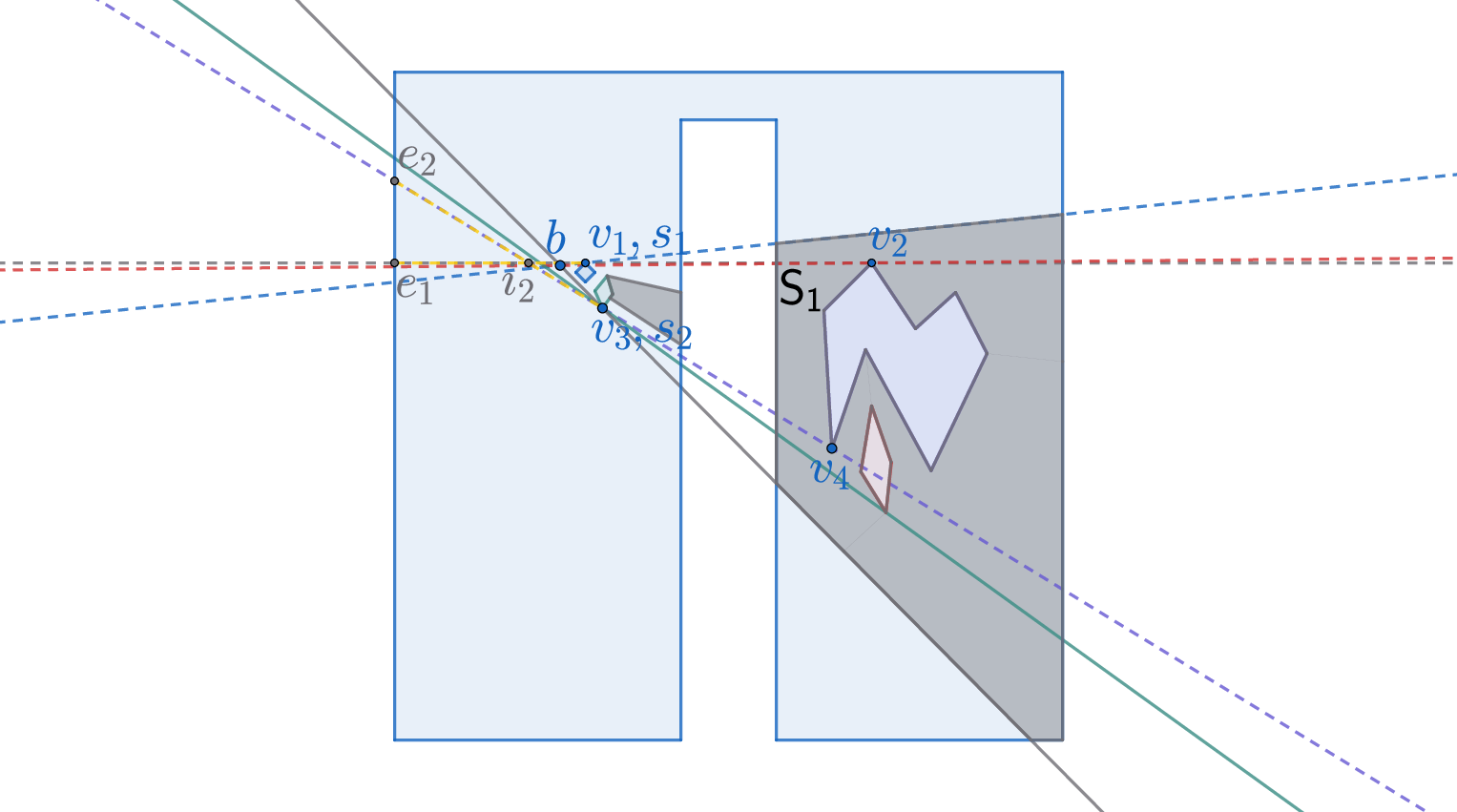
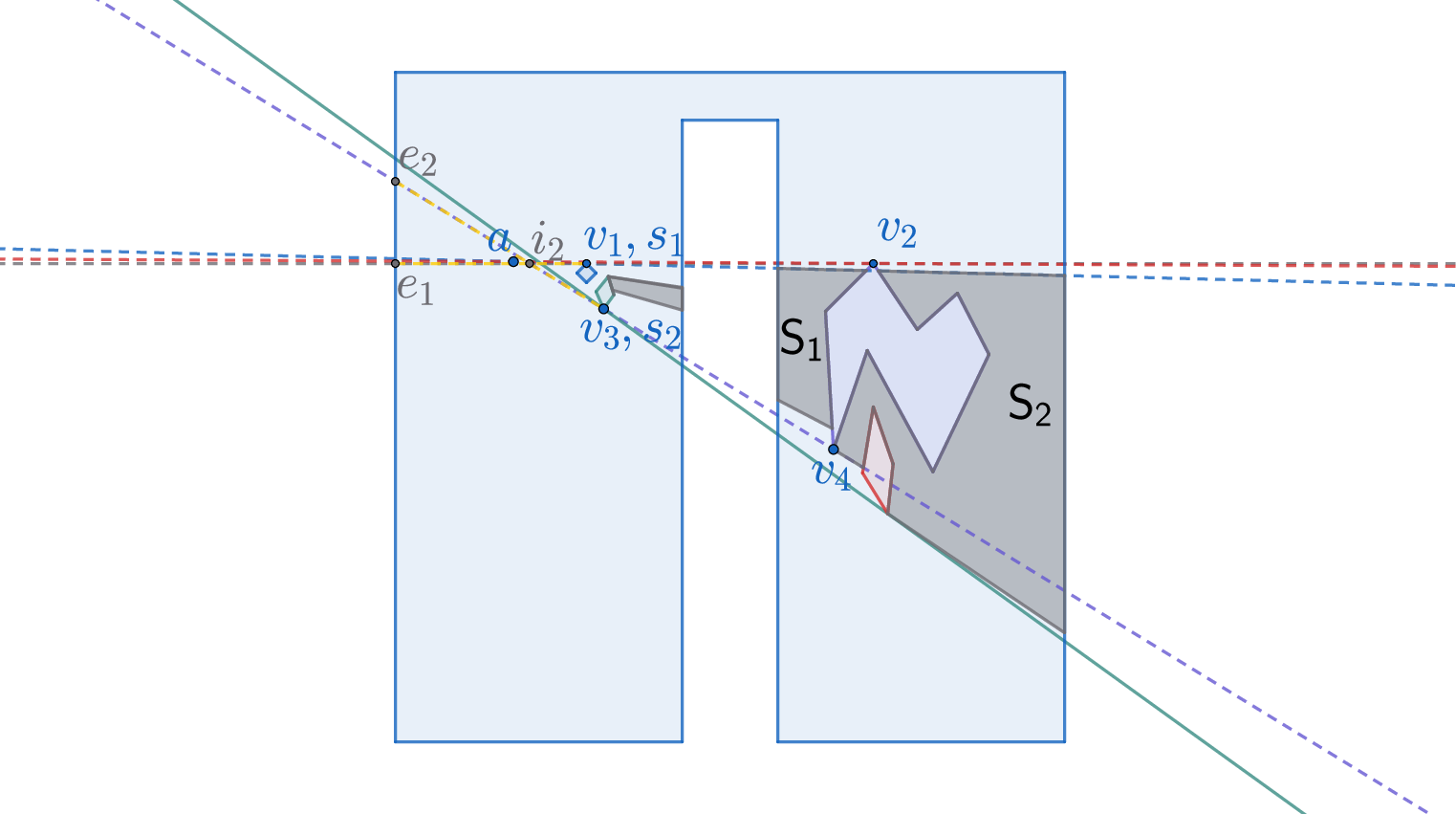
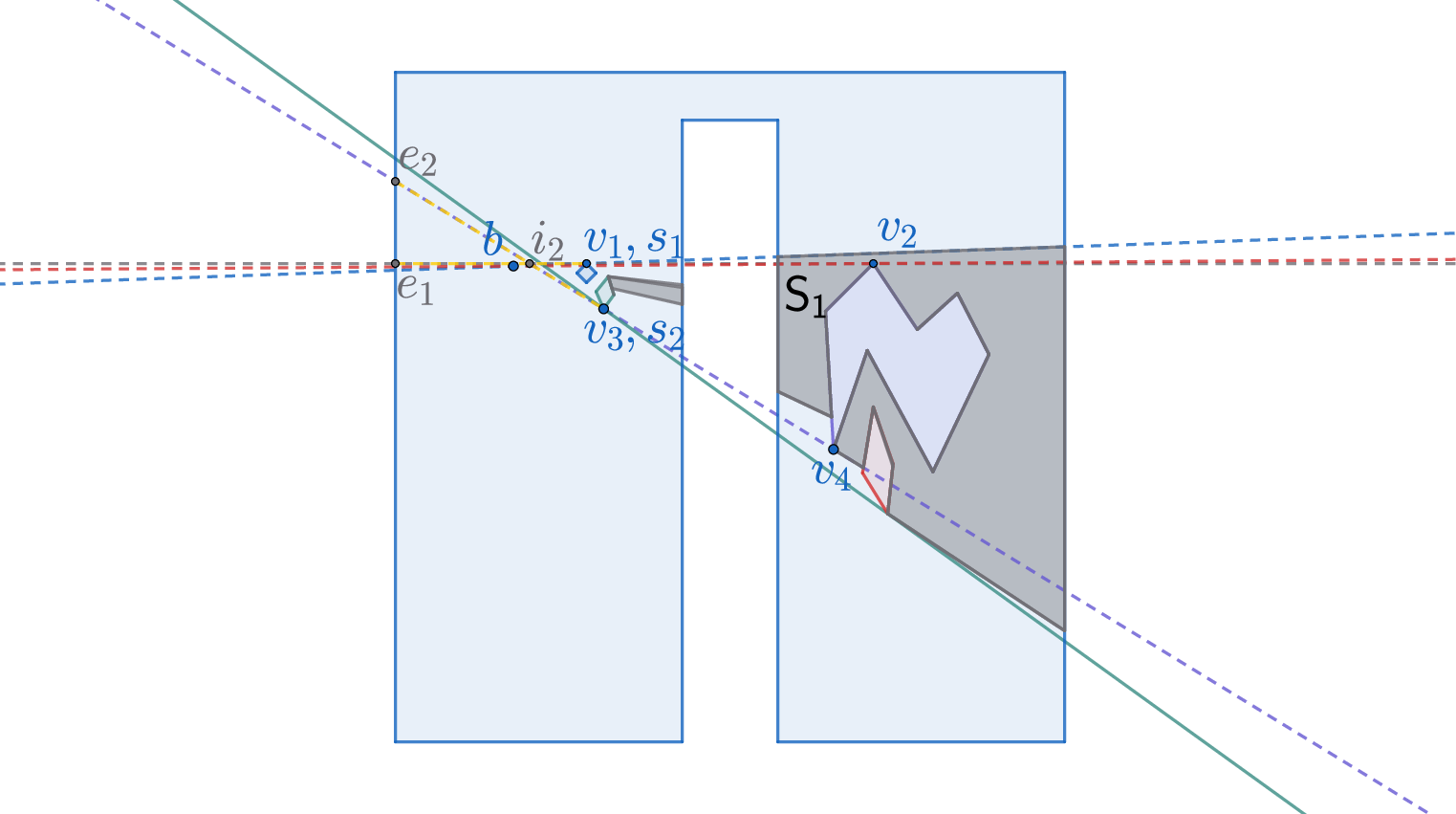
Figure 10: Shadow structure in a polygon with holes—agent above both splitting lines; shadow remains connected.
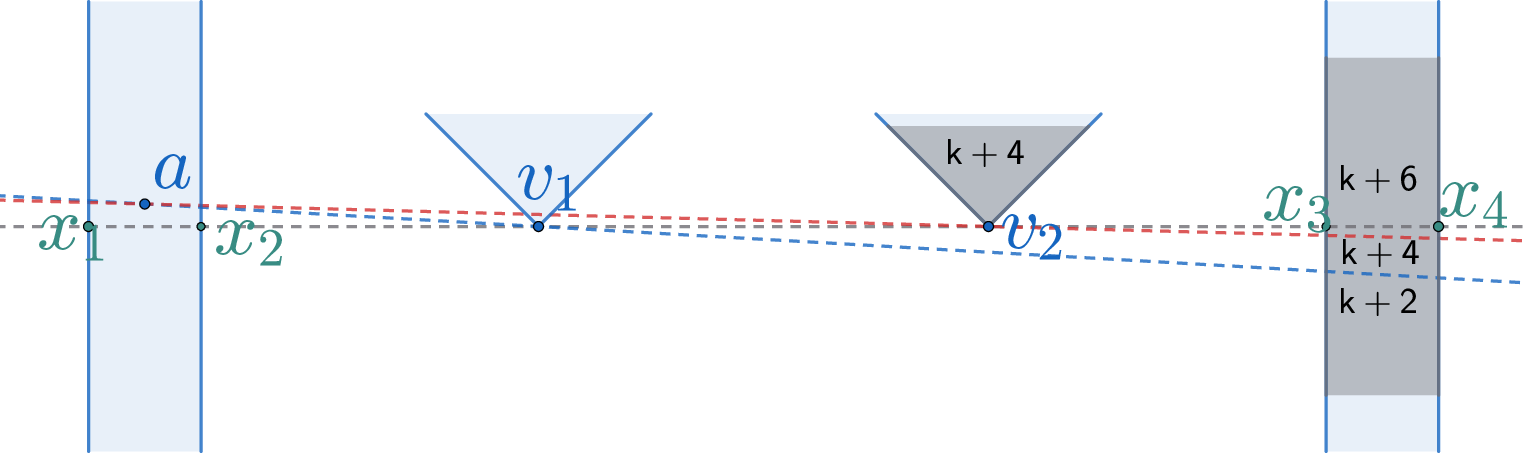
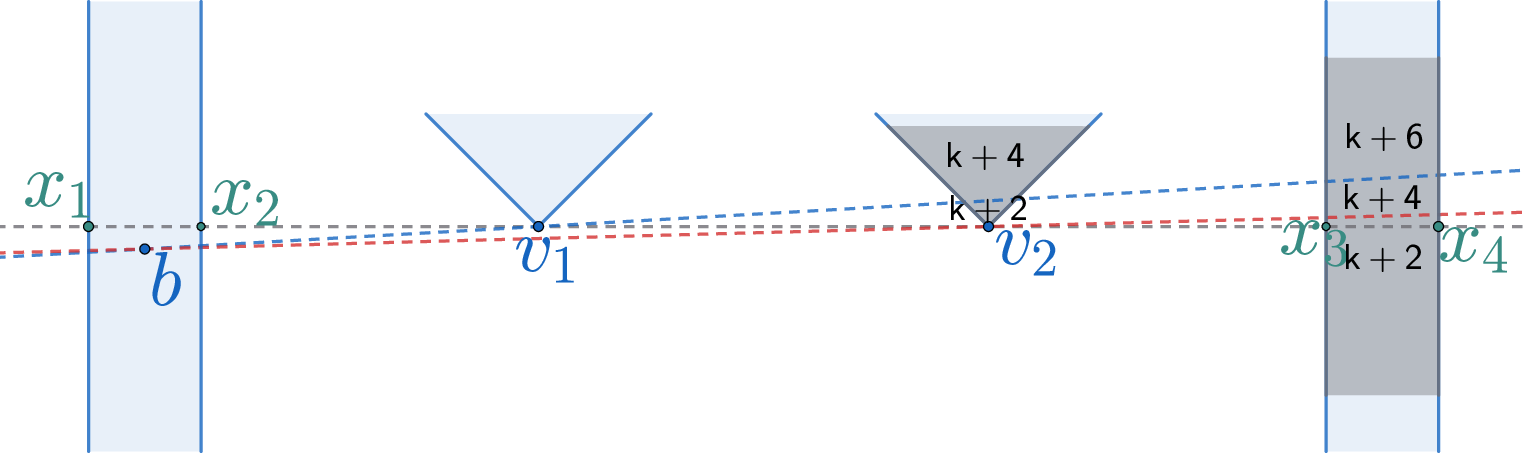
Figure 12: Agent crosses below the first partition line; shadow still connects around the hole.
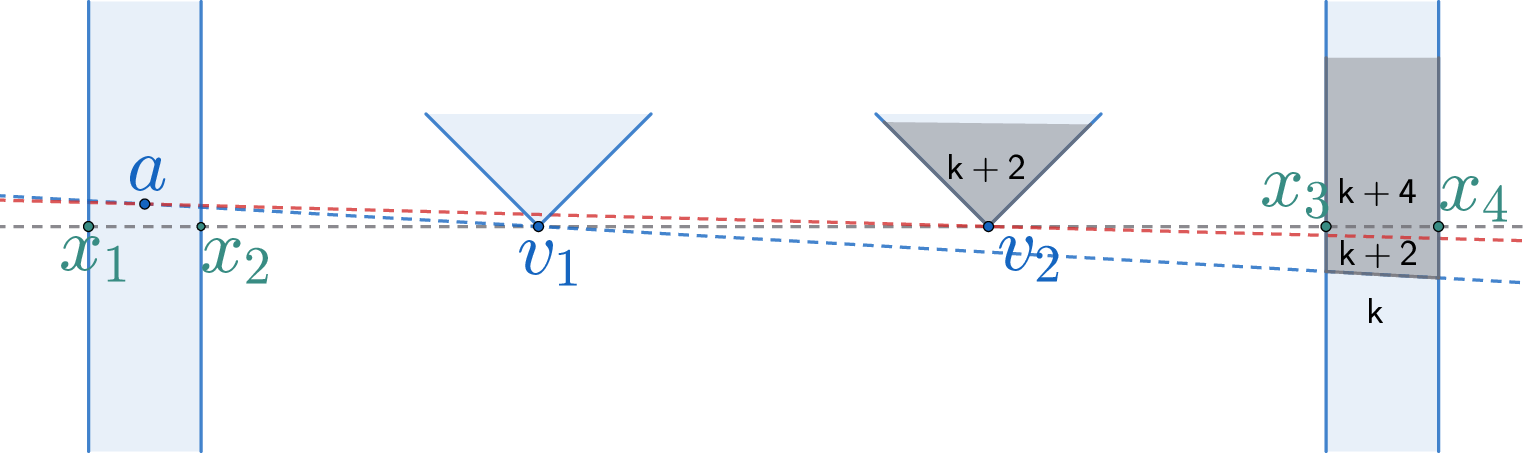
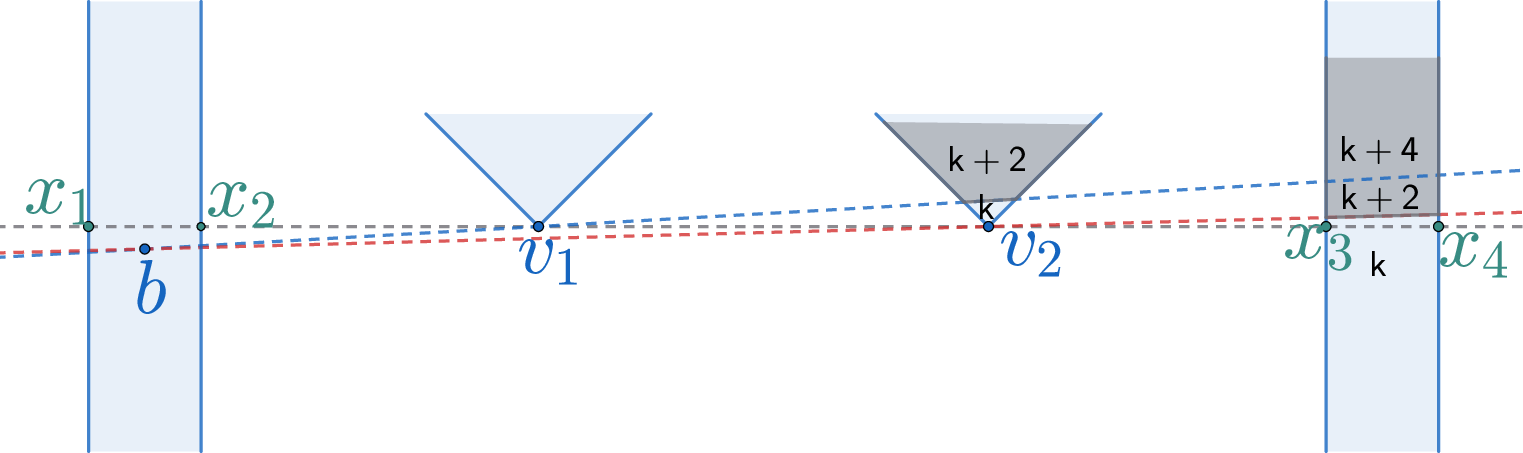
Figure 14: Agent above the first and below the second partition line; initiation of actual split event.
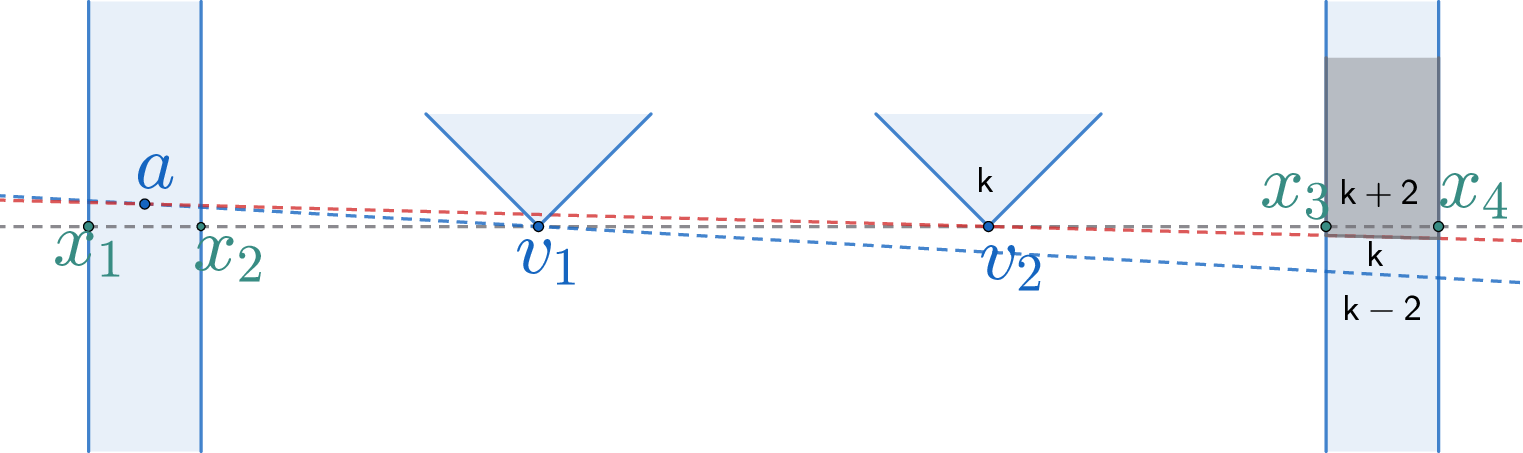
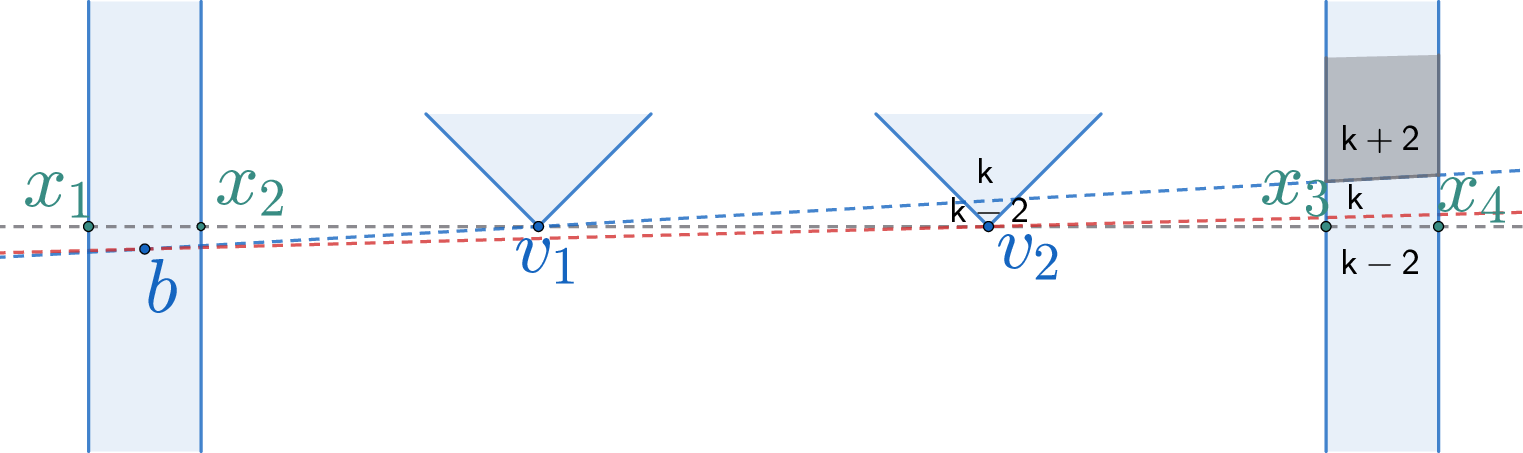
Figure 16: Agent beyond both splitting lines; actual combinatorial change to disconnected shadow components around the hole.
Theoretical and Practical Implications
The theoretical improvement in decomposition complexity, from k7 to k8, reduces computational overhead—significantly impacting applications such as optimal pursuit-evasion, agent-counting in invisible regions [yu2011shadow], and k-visibility guided route or sensor planning. By enumerating visibility events exactly, the approach also enables direct application of prior shadow-based motion planning algorithms without modification.
The decomposition is robust under varying k9 (including degenerate settings with k0 near k1) and is generalizable to polygons with holes. Moreover, since the decomposition encodes all critical transitions, it is suitable as a substrate for efficient k2-visibility polygon queries, sensor placement, and future extensions to more complex cell structures.
Future Directions
Promising avenues include:
- Algorithmic optimization for efficient computation and storage of the k3 decomposition, possibly via output-sensitive techniques or implicit representations.
- Extension to higher dimensions or richer sensor models (e.g., angularly constrained k4-visibility).
- Integration with hybrid pursuit-evasion strategies and uncertainty modeling.
- Empirical evaluation in deployment scenarios for surveillance, search-and-rescue, or wireless network planning.
Conclusion
This paper presents a precise k5-cell decomposition method for polygonal environments that captures only those partition lines where genuine combinatorial visibility events occur. The resulting k6 cell structure (provably minimal under the stated constraints) allows for exact tracking of shadow transitions with immediate application to k7-visibility pursuit-evasion and related algorithmic tasks. The methodology eliminates decompositional redundancies and demonstrates further extensibility to environments with holes. These theoretical constructs provide a principled framework for advancing visibility-based algorithms in practical multi-agent robotic and surveillance scenarios.
References:
- "Generalized k-Cell Decomposition for Visibility Planning in Polygons" (Bahoo et al., 5 Nov 2025)
- "Shadow information spaces: Combinatorial filters for tracking targets" [yu2011shadow]
- "Computing the k-Visibility Region of a Point in a Polygon" [Bahoo2020]