- The paper introduces magic Rényi entropy to unify quantification of quantum magic across spins, bosons, and fermions.
- It employs a convolution protocol with replica path integrals and boundary CFT to derive universal scaling laws and critical behaviors.
- Numerical validation via exact diagonalization confirms analytical predictions, revealing boundary RG flows and magic phase transitions.
Introduction and Motivation
The quantification of quantum computational resources such as entanglement and magic has proven pivotal for both quantum many-body theory and the resource theory underpinning quantum computation. While entanglement is universally recognized as a fundamental resource across spins, bosons, and fermions, the "magic" resource—quantifying the state's deviation from efficiently simulable classes (stabilizer, Gaussian)—has, until now, lacked an encompassing, field-theoretical framework valid across all physical settings.
This paper presents a comprehensive theoretical construction that unifies the quantification of nonstabilizerness (spins/qudits) and non-Gaussianity (bosons/fermions) via a universal measure—magic Rényi entropy (MRE)—and describes its field-theoretical underpinning through conformal field theory (CFT). The authors introduce this measure, analytically derive several universal scaling results via boundary CFT, and corroborate these results through numerically exact diagonalization.
The Magic Rényi Entropy: Unified Construction and Properties
The central conceptual advance is the introduction of the magic Rényi entropy (MRE), Mn, constructed through a quantum convolution protocol: for a pure state ρ, Mn is defined as the Rényi entropy of order n of the reduced state resulting from an n-replica unitary convolution followed by tracing out n−1 replicas.
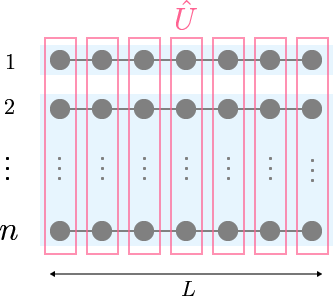
Figure 1: Schematic of quantum convolution—after the replica-mixing unitary, only resourceful (nonfree) quantum states generate inter-replica correlations detectable via the MRE.
For spins with local Hilbert-space dimension d, Mn recovers the stabilizer Rényi entropy (SRE)—a well-studied measure of magic. In the continuous-variable case (bosons, fermions), Mn is defined such that it precisely quantifies non-Gaussianity. This construction satisfies faithfulness, invariance under free unitaries (Clifford or Gaussian), and additivity for pure states. Under certain conditions, monotonicity under free operations is also established.
The convolution's defining unitary can be made explicit in all settings, with the Helmert (or beam-splitter for n=2) transformation for bosons/fermions, ensuring the measure is both computationally tractable and physically meaningful across platforms.
A central technical achievement is the path-integral representation of ρ0 for many-body thermal or ground states, recasting the convolution operation within replicated Liouville-space path integrals. The key observation is that the convolution and purity calculation map to a path-integral with a defect line (the convolution unitary) and a nontrivial boundary condition determined by partial traces and replica mixing.
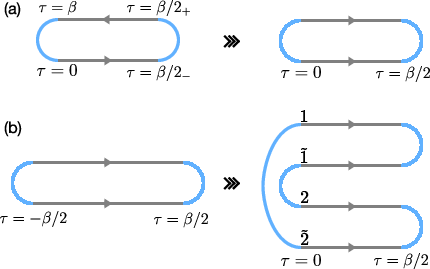
Figure 2: Folded Liouville path-integral representations of the partition function and state purity, emphasizing the boundary sewing structure induced by the MES.
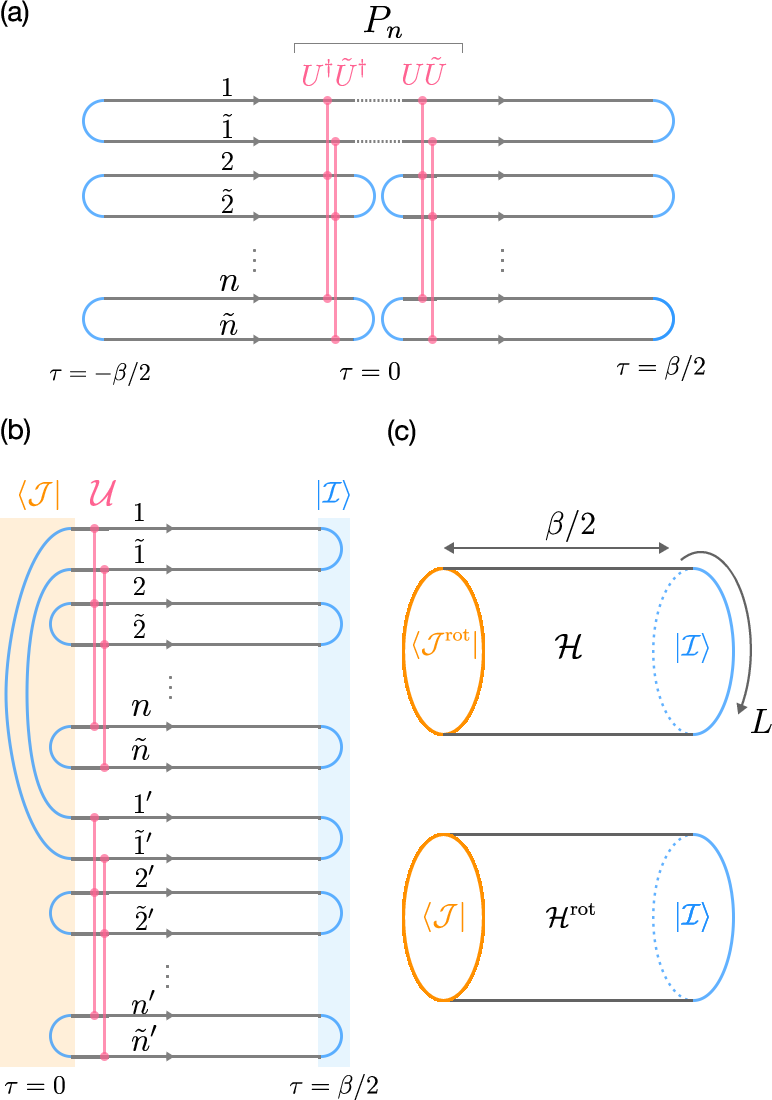
Figure 3: Schematic for the MRE path-integral, showing equivalence of the rotated boundary (upper, convolution as a boundary operation) and rotated bulk (lower, convolution as bulk deformation with unrotated boundary) perspectives.
Boundary CFT techniques reveal that the universal, size-independent contribution to MRE in critical one-dimensional systems is determined by the Affleck-Ludwig ρ1 factor—a measure of boundary entropy reflecting universal data of the infrared fixed-point boundary condition induced by the convolution. Two equivalent perspectives are analyzed:
- Rotated-boundary picture: The convolution unitary acts as a defect at the edge, changing the boundary state's symmetry and thus altering ρ2.
- Rotated-bulk picture: The bulk Hamiltonian is conjugated by the convolution, generating inter-replica couplings while preserving a simple boundary sewing structure.
Both approaches yield identical universal results, though their applicability and computational convenience differ depending on the context.
Analytical Results: Tomonaga-Luttinger Liquid and Universal Scaling
A concrete demonstration of the field-theoretical formalism is provided for the spinless fermion chain at half-filling, whose low-energy description is given by a Tomonaga-Luttinger liquid (TLL). The key parameter is the Luttinger ρ3, with ρ4 corresponding to the free-fermion, Gaussian fixed point.
The universal constant ρ5 (size-independent contribution to ρ6) is analytically obtained:
- In the vicinity of ρ7, ρ8 with ρ9. This result encapsulates the continuous renormalization of non-Gaussianity, with even dependence on Mn0 reflecting the Mn1 duality symmetry.
- Beyond a critical interaction (Mn2, i.e., Mn3 or Mn4), a boundary RG flow is induced, triggering a boundary phase transition. The boundary CFT analysis shows that in this case, Mn5 decreases for increasing system size, in accordance with the Mn6 theorem for boundary entropy monotonicity.
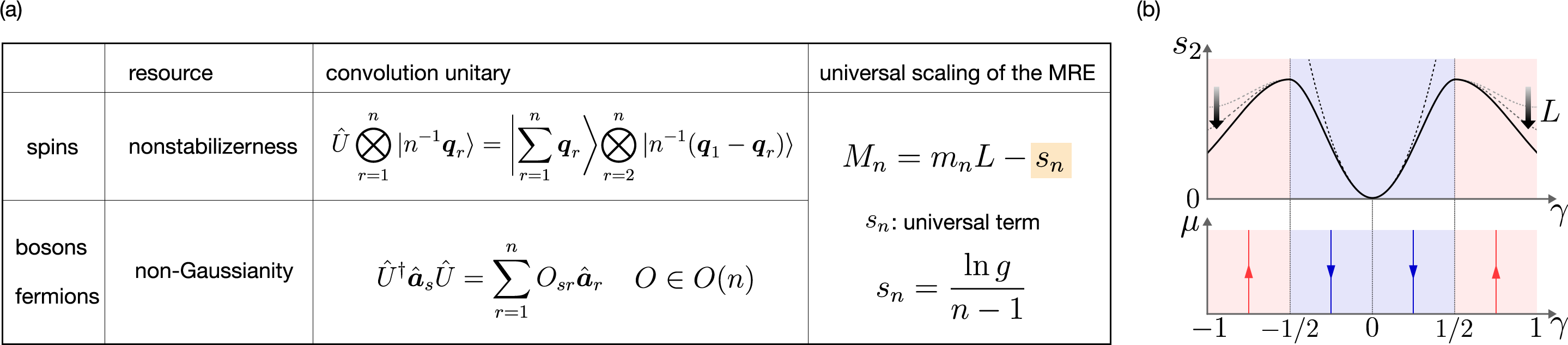
Figure 4: (a) Unified structure of magic across spins, bosons, and fermions. (b) Top: Universal Mn7 scaling for the TLL as a function of Mn8. Dashed curve: analytical result. Bottom: Boundary RG flow in Mn9-space, indicating critical points at n0.
Numerical Validation and Finite-Size Scaling
Extensive exact diagonalization confirms these field-theoretical results:
- Numerical fits of n1 to scaling forms robustly extract n2 for various system sizes and interaction strengths.
- Data plotted as a function of n3 exhibit collapse under the n4 duality, confirming analytical predictions.
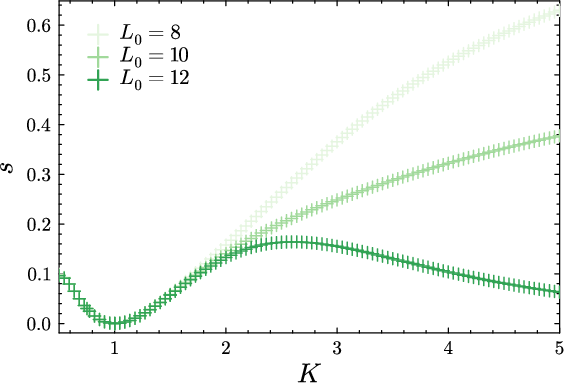
Figure 5: Universal constant n5 extracted for the TLL as a function of n6, showing nonmonotonicity and agreement with field-theoretical predictions.
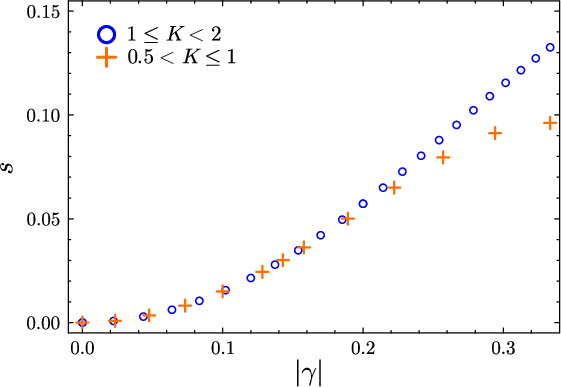
Figure 6: Collapse of n7 data for n8 vs. n9, illustrating the duality n0.
A finite-size scaling analysis based on RG considerations yields the precise boundary phase transition point (numerically located at n1), in excellent agreement with the theoretical value n2.
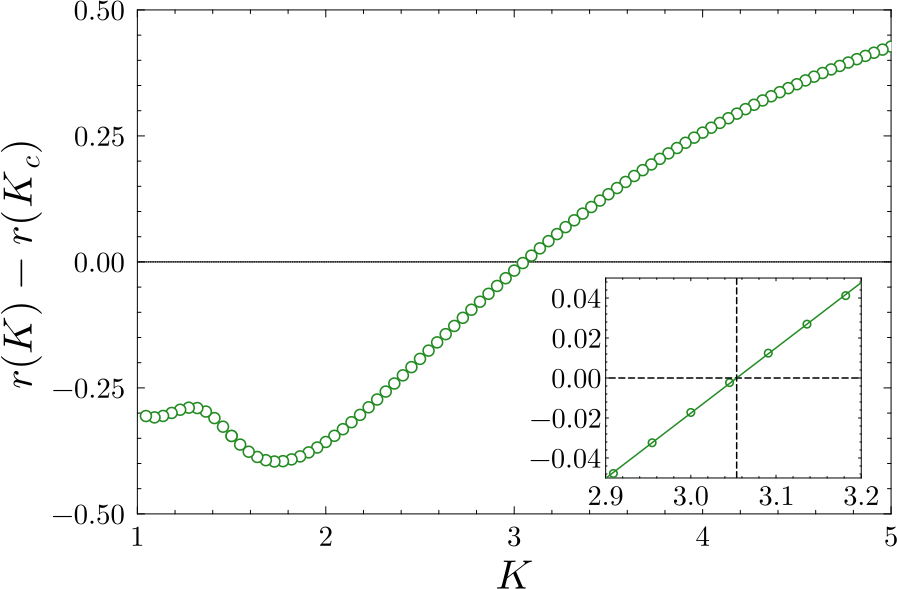
Figure 7: Finite-size scaling crossing analysis used to locate the boundary phase transition at n3. Inset: zoom near the transition point.
Broader Implications, Open Questions, and Theoretical Outlook
This unified approach provides a rigorous, universal framework for many-body quantum computational resources. Notably:
- The MRE, as constructed, is proven faithful and additive, and satisfies monotonicity under key classes of free operations (including adaptive Gaussian/Stabilizer protocols for certain constructions).
- The field-theoretical framework, especially the connection to n4-factors and boundary RG flows, enables analytic computation of magic across diverse microscopic models, including systems with complex interactions, disorder, or topological features.
- The formalism subsumes earlier results for the SRE and advances understanding of non-Gaussianity’s universal structure in interacting bosonic and fermionic systems, including phenomena such as magic phase transitions and chaos indicators.
- The framework is readily extendable to the analysis of critical dynamics, measurement-induced transitions, hybrid systems, and potentially quantum gravity contexts (SYK models, holography).
Several open questions and challenges remain:
- Full operational meaning of the MRE for bosons and fermions at general n5; extension of monotonicity and robustness results to more general adaptive protocols.
- Development of efficient computational algorithms (e.g., tensor network or Monte Carlo methods) for MRE in large-scale systems—this is critical for numerically probing magic phase diagrams in higher dimensions or in the presence of disorder.
- Exploration of the interplay between magic and other complexity measures, and further elucidation of universal relationships between magic, entanglement, and chaos.
Conclusion
This work establishes a rigorous, unifying framework for quantum computational resources in many-body systems, bridging spin, boson, and fermion settings using the magic Rényi entropy and boundary conformal field theory. The field-theoretical insights allow for the analytical and numerical study of universal properties of "magic," including how many-body interactions can drive boundary RG flows and phase transitions. These results strengthen the connection between quantum information theory and low-energy field theories, positioning the MRE as a fundamental tool for the analysis and classification of quantum resources in condensed matter, quantum computation, and beyond.