Reinforcement Learning: From Algorithms To Foundation Models
Abstract: Reinforcement learning (RL) provides a framework for sequential decision making under explicit objectives. In its classical form, RL studies how an agent should act to maximise long-term reward in a dynamic environment. In richer settings, the problem extends beyond a single agent and fixed environment: intelligent behavior may require strategic interaction, adaptation to uncertainty, and reasoning over high-dimensional worlds. This thesis studies RL from two perspectives: algorithms in games and RL in the era of foundation models. The first part focuses on multi-agent RL in games. It examines how incentives, policies, and equilibrium concepts interact in competitive and general-sum environments, spanning two-player zero-sum games, large-scale video games, and multi-player settings with general structure. These works investigate learning in multi-agent systems and the behavior of RL methods in interactive environments. The second part studies RL with generative and foundation models, motivated by the idea that prior knowledge can enrich sequential decision making. Pretrained generative models and learned world models serve as representation tools and structured priors for planning, control, and policy optimization. The thesis develops diffusion-based world models, investigates RL for efficient video generation, explores generative models as policy classes, and studies interactive video world models in which actions shape future observations. It also addresses long-horizon modeling through architectures with memory. Together, these contributions present a unified view of RL as objective-driven adaptation in complex sequential domains. From strategic games to generative world models, the thesis highlights how RL connects decision making, environment modeling, and emerging foundation-model capabilities, offering a broader perspective on the principles underlying intelligent behavior.

Paper Prompts
Sign up for free to create and run prompts on this paper using GPT-5.
Top Community Prompts
Explain it Like I'm 14
What is this paper about?
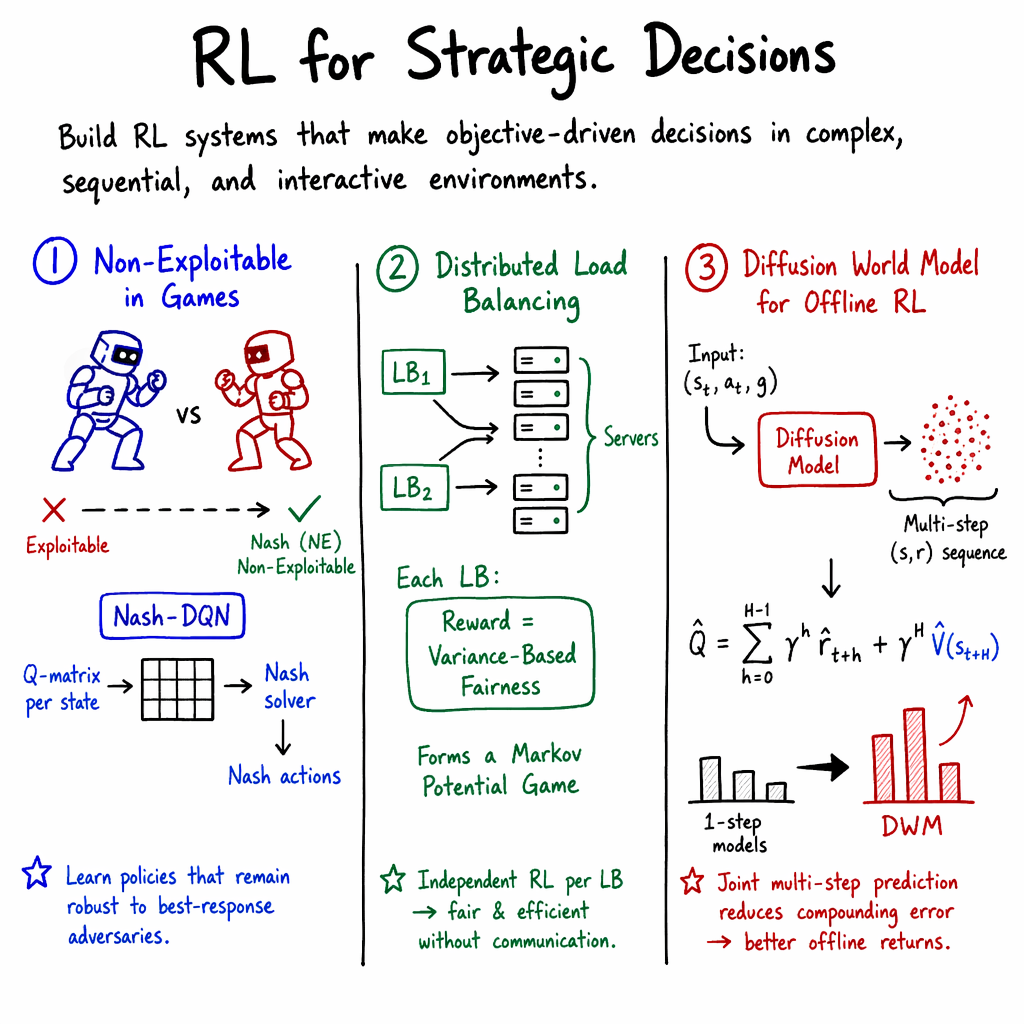
This paper is about teaching computers how to make good decisions over time, a field called reinforcement learning (RL). In RL, a computer program (an “agent”) tries actions, sees what happens, and gets “rewards” for good outcomes. Over time, it learns a strategy (called a policy) that earns more rewards.
The paper looks at RL in two big settings:
- How RL works when there are multiple agents who may compete or cooperate (like players in a game).
- How RL can benefit from powerful pre-trained AI models (called foundation models) to better understand and plan in complex worlds—especially using “world models” that predict what might happen next, even for things like video.
What questions does the paper try to answer?
The paper asks, in simple terms:
- How do learning agents find smart, stable strategies when other agents are also learning and reacting? (Think: how to play fairly and cleverly against an opponent who is also improving.)
- How do ideas from game theory (like “Nash equilibrium,” where no player wants to change their plan alone) connect to RL algorithms?
- How can big pre-trained models (like those used for images or video) help an RL agent plan ahead, explore better, and learn faster?
- Can we build “world models” that act like a mental movie—predicting future states and visuals—so the agent can practice in its head?
- How do we handle very long tasks where memory and long-term planning really matter?
How did the researchers approach the problem?
The paper blends theory with practical methods:
- Single-agent RL basics:
- Markov Decision Process (MDP): a formal way to describe a situation with states (what’s happening now), actions (what the agent can do), and rewards (how good the outcome is).
- Value iteration: if you know how the world works, you can compute the “value” of each state by looking one step ahead, again and again, until the values settle.
- Q-learning: if you don’t know the world’s rules, you can learn by trying actions and adjusting your estimates of how good actions are in each state (your “Q-values”).
- Policy gradient and actor–critic: instead of learning “how good is this action,” directly tune the policy (the agent’s decision rule) to get more reward. The “actor” proposes actions; the “critic” judges them.
- Multi-agent RL (games):
- Replace a fixed environment with other agents who also make choices. Your success depends on their strategies too.
- Minimax and Nash equilibrium: mathematical tools from game theory to find stable strategies in competitive settings (like two-player zero-sum games, where one player’s gain is the other’s loss).
- Markov games: game versions of MDPs where multiple players act at each step and the world changes accordingly.
- RL with foundation models and world models:
- Use pre-trained generative models (like diffusion models for images/video) as “structured priors,” giving the agent a head start about how the world tends to look and behave.
- Diffusion-based world models: models that can predict future frames or states, letting the agent “imagine” different futures before acting.
- Generative models as policies: instead of simple decision rules, use expressive models that can generate rich, diverse actions.
- Interactive video world models: connect actions to visual outcomes (e.g., “if I press left, what will I see next?”).
- Memory for long horizons: architectures that keep track of important past information so the agent can plan over many steps.
Technical terms in everyday language:
- Policy: the agent’s recipe for choosing actions.
- World model: the agent’s “mental simulator” of how the world will change after each action.
- Diffusion model: a type of generative model that builds images or videos by gradually “denoising” random noise into a realistic picture.
What are the main findings and why are they important?
- In multi-agent settings:
- The paper connects RL algorithms with game-theory ideas (like minimax and equilibria) to understand when learning leads to stable, smart strategies.
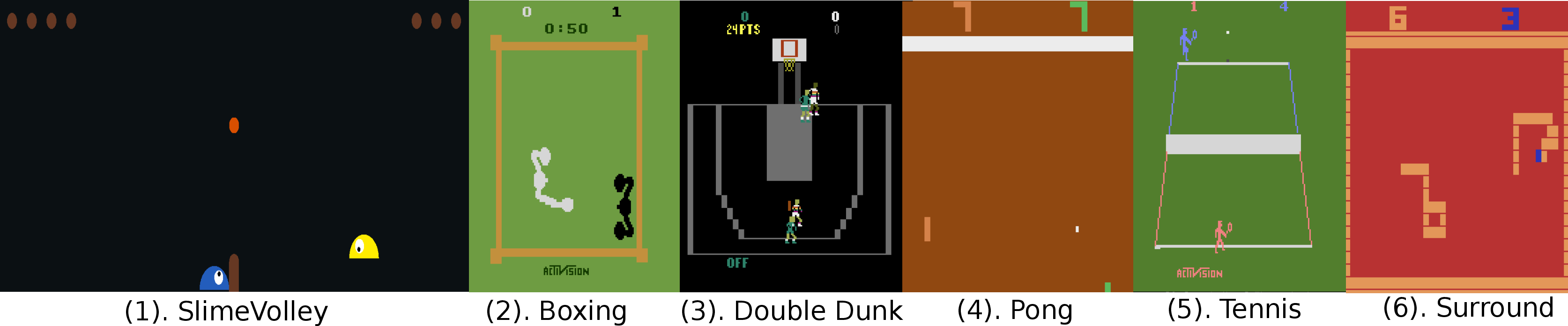
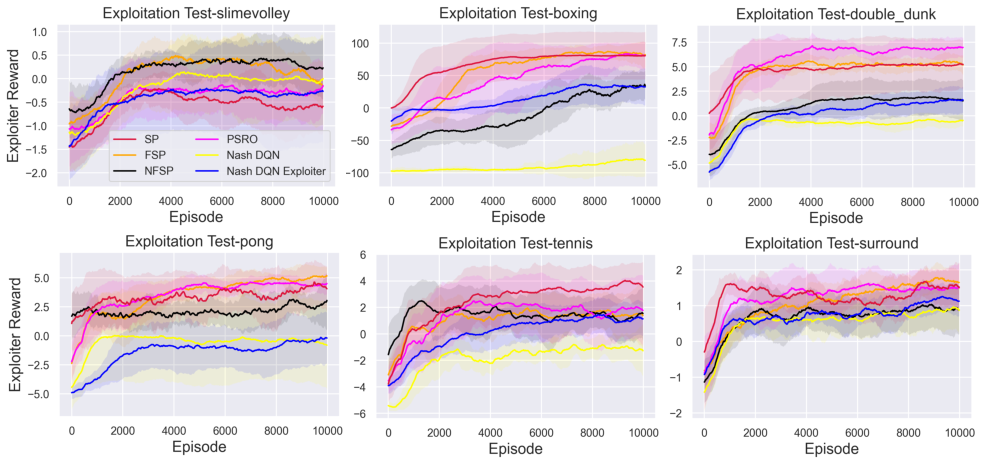
- It studies both theory and practice: from classic two-player zero-sum games to complex, large-scale environments (like video-game domains).
- This matters because many real problems—trading, security, sports simulations, negotiations—are interactive and strategic, not just “single-player.”
- With foundation models and world models:
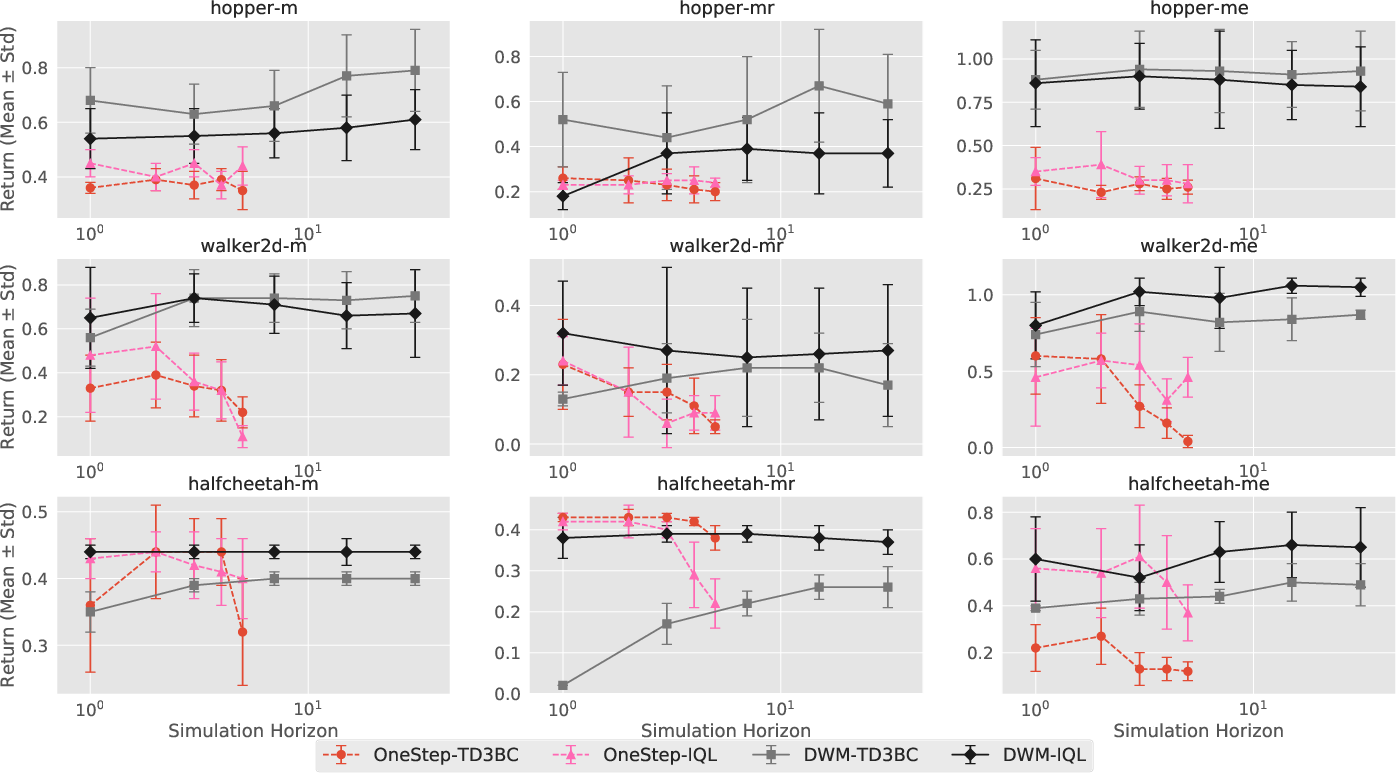
- Diffusion-based world models can help an agent plan by imagining futures more accurately, improving sample efficiency (learn more from less experience).
- RL can guide video generation to be more efficient and controllable, which can help agents learn from or produce realistic visual experiences.
- Using expressive generative models as the policy class can make agents more flexible and robust.
- Interactive video world models link actions to future visuals, teaching agents how their moves change what they will see next.
- Adding memory to world models helps with long tasks, so agents don’t forget important information and can plan far ahead.
These findings matter because they make learning faster, strategies more stable, and planning more realistic—key steps toward more capable, reliable AI.
What is the potential impact?
- Smarter, more reliable decision-makers: Combining RL with foundation models can create agents that explore safely, generalize better to new situations, and plan further ahead.
- Better multi-agent behavior: Understanding equilibria and incentives helps build systems that can compete or cooperate effectively—useful in robotics teams, autonomous driving among many cars, online markets, and complex games.
- Stronger planning with “mental simulation”: World models reduce the need for risky trial-and-error in the real world by letting agents practice in their heads.
- Long-horizon capability: Memory-enhanced models allow agents to tackle extended tasks, from long missions in robotics to multi-step interactions in digital environments.
- A step toward broader intelligence: By unifying decision making (RL), environment modeling (world models), and powerful pre-trained knowledge (foundation models), this work pushes AI toward more general, human-like problem solving—while also highlighting the need for accurate, efficient models and careful evaluation to ensure safety and reliability.
Knowledge Gaps
Knowledge gaps, limitations, and open questions
Below is a concise list of concrete gaps and unresolved questions that emerge from the paper’s current scope and exposition, framed to guide future research:
- Algorithmic specifics for foundation-model-based RL: The manuscript outlines directions (diffusion-based world models, expressive generative policies, interactive video world models) but does not specify training objectives, architecture choices, planning/control interfaces, or optimization procedures needed to reproduce or extend these methods.
- Quantitative guarantees from priors: No formal conditions or sample-complexity/performance guarantees are provided showing when and how pretrained foundation models (as priors or world models) provably improve exploration, data efficiency, or generalization over model-free baselines.
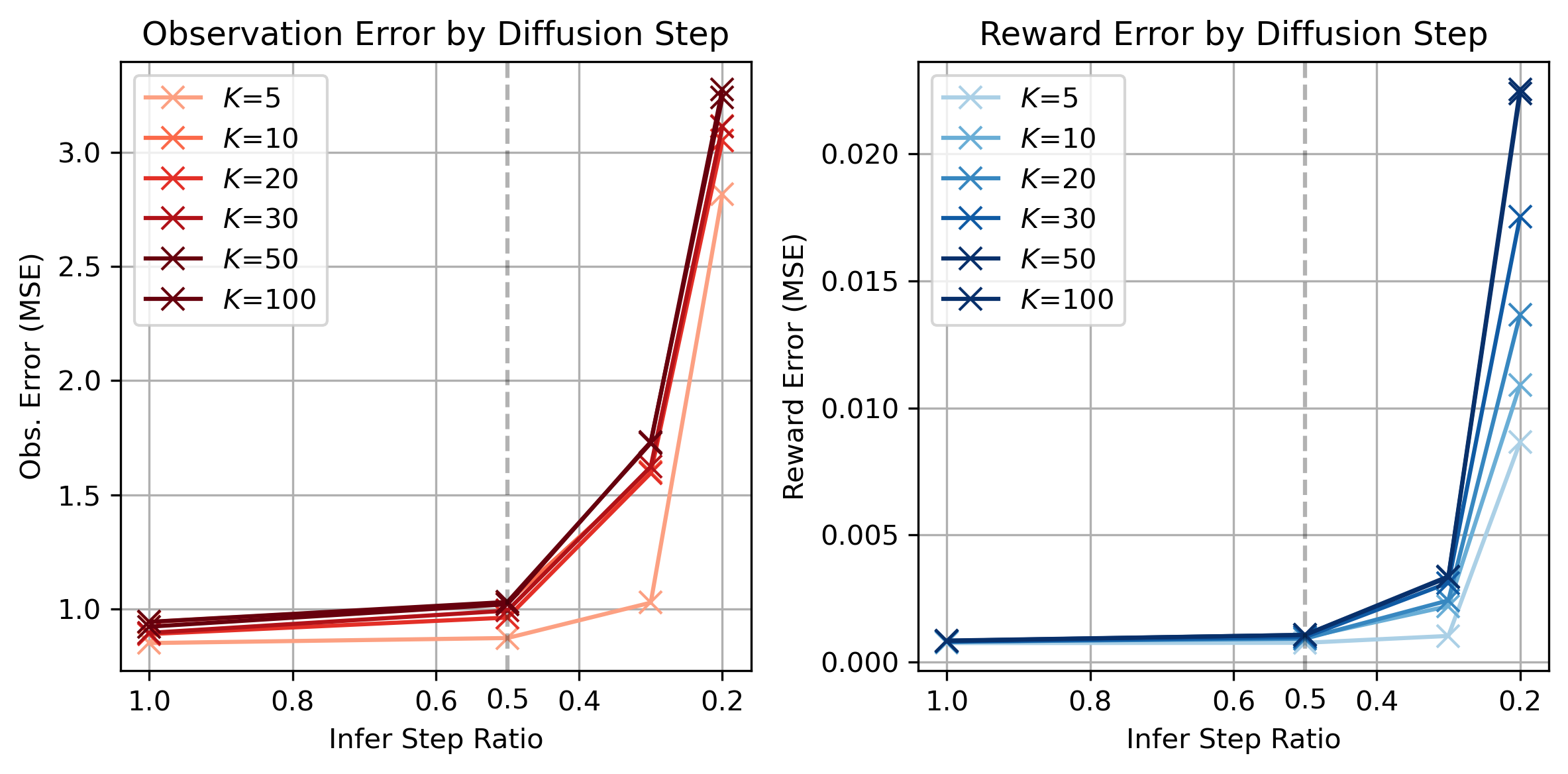
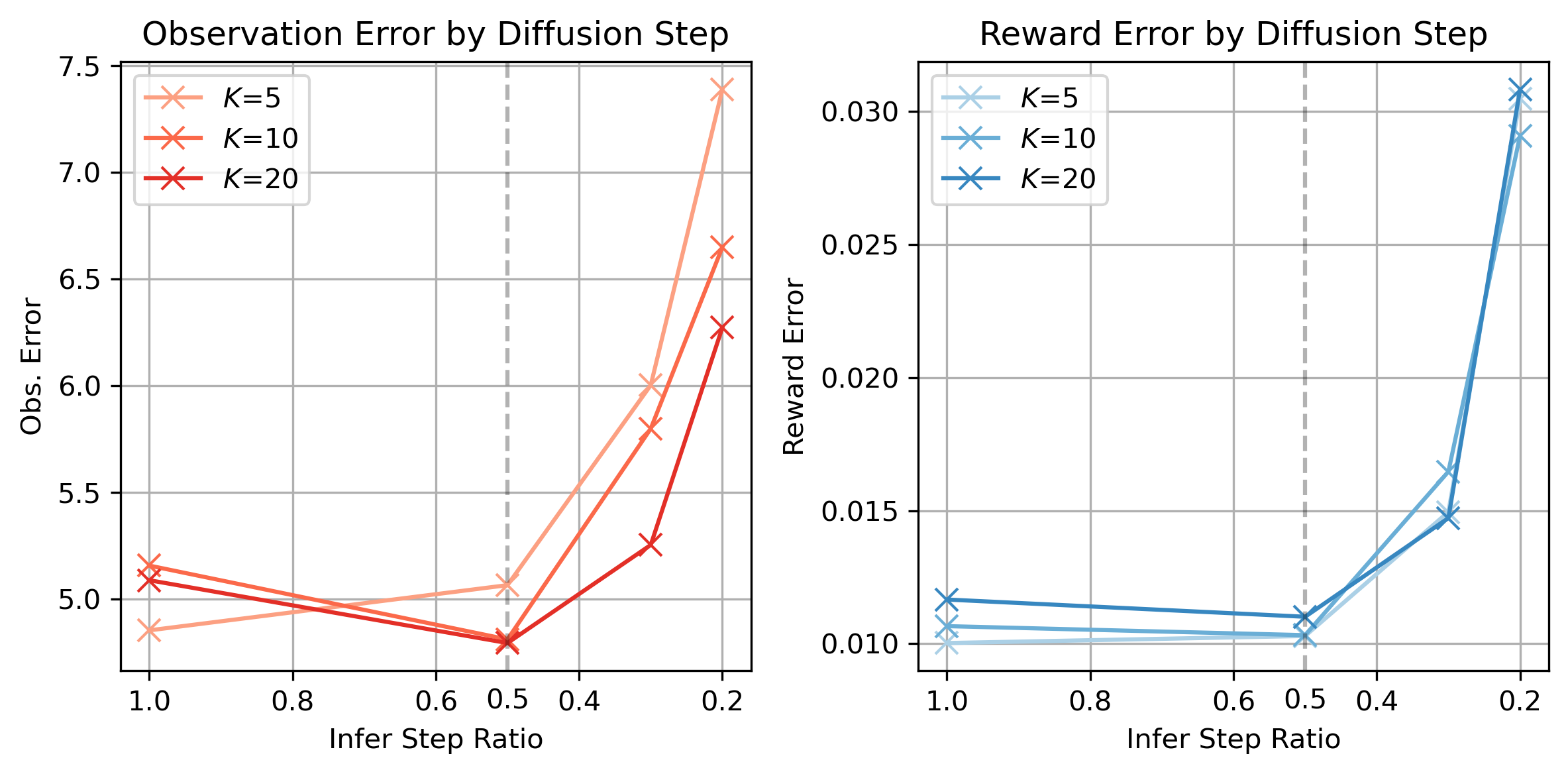
- Model-bias and error compounding: There is no analysis of how errors from diffusion/world models accumulate over long horizons, nor methodologies (e.g., uncertainty-aware planning, pessimism, ensembles, risk bounds) to mitigate compounding error during planning and control.
- Uncertainty calibration in generative world models: The paper does not address how to estimate and calibrate epistemic vs. aleatoric uncertainty in high-capacity generative models, or how such uncertainty should influence action selection under risk.
- Computational tractability and latency: Online planning/control with large diffusion or video models is computationally heavy; strategies for real-time control (e.g., model compression, distillation to smaller planners, caching, MPC with limited lookahead) and their trade-offs are not specified.
- Safety, alignment, and objective misspecification: The integration of foundation models with RL raises risks of reward hacking and misgeneralization; no safety constraints, risk-sensitive objectives, or monitoring mechanisms are proposed for deployment in complex environments.
- Benchmarks and metrics: The thesis references “large-scale video-game domains” and “efficient video generation” but does not define concrete benchmarks, evaluation protocols, or task-appropriate metrics (e.g., controllability, fidelity, sample efficiency, robustness, latency) to assess proposed methods.
- Comparative baselines and ablations: There is no clear plan for systematic comparisons between model-based vs. model-free RL, or ablations that isolate the contributions of priors, world-model accuracy, policy class expressivity, and memory mechanisms.
- Long-horizon memory architectures: While memory-augmented world modeling is highlighted, there is no analysis of credit assignment, gradient stability, memory length vs. performance trade-offs, or principled mechanisms for handling long-term dependencies without catastrophic forgetting.
- Optimization of expressive generative policies: Using high-capacity generative models as policy classes can induce unstable optimization and poor trust-region properties; there is no guidance on regularization, constraint handling, or optimization algorithms that ensure stable policy improvement.
- Exploration leveraging priors: The paper does not specify exploration strategies that exploit foundation-model priors (e.g., novelty in latent spaces, information gain with learned dynamics, goal-conditioned exploration) in sparse or deceptive reward settings.
- General-sum and equilibrium selection: Beyond zero-sum definitions, there is no treatment of learning dynamics, equilibrium selection, or convergence in general-sum Markov games, nor criteria for when stable equilibria are learnable under function approximation.
- Partial observability and beliefs in multi-agent settings: The introduction mentions POMDPs but does not address belief-state estimation, opponent belief modeling, or memory-based policies required for realistic partially observed multi-agent interactions.
- Nonstationarity and opponent adaptation: Methods for dealing with changing opponent policies (e.g., opponent modeling, meta-learning, no-regret guarantees, exploitability vs. robustness trade-offs) are not specified.
- Function approximation and stability (“deadly triad”): Contraction and convergence results are presented for tabular settings, but the thesis does not analyze divergence risks when combining off-policy learning, bootstrapping, and deep function approximation (e.g., DQN/DDPG stability guarantees or failure modes).
- Distribution shift and transfer: The amount and type of pretraining data required, robustness to domain shift when deploying foundation models in novel RL tasks, and adaptation mechanisms (e.g., online fine-tuning, domain randomization) are not characterized.
- Causal world modeling and counterfactuals: World models trained on correlations may fail under interventions; the manuscript does not address causal structure learning, counterfactual reasoning, or how causal knowledge could improve planning and generalization.
- Constrained and risk-sensitive RL: Realistic tasks impose constraints (safety, energy, fairness) and risk requirements; constrained formulations, Lagrangian methods, CVaR objectives, or robust RL extensions are not discussed.
- Formalization and reproducibility: Several definitions and equations are incomplete or inconsistent (e.g., broken notation and LaTeX in Bellman equations, PG theorems), which impedes reproducibility; a clarified, consistent formalism and release of code/data are needed to enable verification and extension.
Practical Applications
Immediate Applications
Below is a concise set of deployable use cases that leverage the paper’s findings on multi-agent reinforcement learning (RL), minimax game optimization, and RL with foundation/generative models (e.g., diffusion-based world models, interactive video world models, and memory-augmented long-horizon modeling).
- Robust game AI and automated QA through adversarial self-play
- Sector: Software/gaming
- What: Use zero-sum/minimax training to build adversarial “boss” agents and self-play bots that stress-test levels, mechanics, and balance; deploy automated QA agents that discover exploits and regressions without scripted test cases.
- Tools/workflows: Multi-agent training pipelines; Nash/minimax policy evaluation; CI integrations that run adversarial test suites.
- Assumptions/dependencies: Access to game environment APIs; sufficient compute for self-play; carefully shaped rewards to reflect defects/coverage; monitoring for non-stationarity in training.
- Model-based planning with diffusion world models in robotics simulators
- Sector: Robotics/industrial automation
- What: Insert diffusion-based world models as learned dynamics modules to accelerate planning and reduce simulator calls for robotic arms, mobile robots, and pick-and-place tasks.
- Tools/workflows: ROS-compatible world-model module; MPC/planner using learned dynamics; offline dataset curation to train models.
- Assumptions/dependencies: High-fidelity offline logs; sim-to-real gap mitigation (domain randomization/calibration); latency constraints for real-time control.
- Efficient video generation via RL-tuned generative pipelines
- Sector: Media/marketing/creative tooling
- What: Apply RL objectives to guide diffusion/video generators (e.g., optimize for brand compliance, scene duration, transitions, or compression cost) to reduce iteration cycles and compute cost.
- Tools/workflows: Reward definitions for style/consistency/latency; policy-gradient fine-tuning of generation parameters; A/B testing dashboards.
- Assumptions/dependencies: Stable pretrained video models; content and IP compliance; human-in-the-loop guardrails for safety and quality.
- Adversarial red-teaming for AI systems using zero-sum RL
- Sector: Security/AI safety
- What: Train adversarial agents to probe model-based systems (e.g., LLM agents, tool-using assistants) for failure modes; defender agents co-trained to harden policies.
- Tools/workflows: Minimax training loop; attack/defense policy libraries; evaluation metrics tied to policy violations and recovery.
- Assumptions/dependencies: Safe sandboxes; robust logging; clear red-team reward shaping; governance for handling discovered vulnerabilities.
- Interactive simulation for operations training and education
- Sector: Education/enterprise training
- What: Use world models to create low-cost, responsive environments for teaching control, decision-making, and game-theoretic reasoning (e.g., supply-chain decisions, networked systems).
- Tools/workflows: Classroom labs/Jupyter notebooks with RL exercises; parameterized Markov games for case studies; automated assessment based on value functions.
- Assumptions/dependencies: Adequate compute on student devices or cloud; curated scenarios with interpretable outcomes.
- Market and policy stress testing with multi-agent simulators
- Sector: Finance/public policy (sandboxed)
- What: Use Markov games to simulate strategic interactions (market making, auction bidding, congestion pricing) and test strategies under adversarial or counterfactual conditions.
- Tools/workflows: Scenario libraries; best-response analyzers; equilibrium diagnostics and sensitivity analysis.
- Assumptions/dependencies: Synthetic or sanitized datasets; strong compliance constraints; careful interpretation of equilibrium results vs real markets.
- Scenario generation for autonomous systems
- Sector: Autonomous driving/robotics simulation
- What: Generate rare or safety-critical visual scenarios using interactive video world models to enrich training and validation sets.
- Tools/workflows: Generative scenario builder with action-conditioned rollouts; coverage metrics aligned to ODD (operational design domain).
- Assumptions/dependencies: Real-world data for grounding; scenario realism validation; IP/privacy constraints.
- AutoML and control tuning with policy-gradient and reparameterization tricks
- Sector: Software/ML platforms
- What: Apply continuous-control policy gradients to tune hyperparameters or control knobs (e.g., latency/throughput, resource allocation) with lower-variance gradients.
- Tools/workflows: Reparameterized PG components in AutoML; actor-critic controllers for service SLOs.
- Assumptions/dependencies: Stable reward signals (SLO proxy); safety constraints for production; rollback mechanisms.
Long-Term Applications
These applications require further research, scaling, safety validation, or infrastructure development before broad deployment.
- Generalist embodied agents using memory-augmented world models
- Sector: Robotics/assistive technology
- What: Household/warehouse robots that plan over long horizons by integrating memory into world models; robustly handle partial observability and extended tasks.
- Tools/workflows: Long-horizon planners, memory-augmented diffusion models, hierarchical RL; continual learning loops.
- Assumptions/dependencies: Reliable long-horizon credit assignment; safe exploration; low-latency inference on-device; rigorous evaluation/standards.
- Personalized treatment planning via learned patient “digital twins”
- Sector: Healthcare
- What: Use interactive world models to simulate patient-specific trajectories and optimize long-horizon interventions (e.g., chronic disease management).
- Tools/workflows: Causal validation pipelines; clinician-in-the-loop policy evaluation; uncertainty and fairness auditing.
- Assumptions/dependencies: High-quality longitudinal EHRs; regulatory approval; bias and safety guarantees; interpretability for clinical adoption.
- Autonomous grid and energy-market control with multi-agent RL
- Sector: Energy
- What: Coordinate distributed assets (storage, DERs, demand response) under strategic and uncertain conditions; robust to adversarial actors.
- Tools/workflows: Markov games for dispatch and pricing; robust control with adversarial training; simulator-to-operations bridging.
- Assumptions/dependencies: Safety-critical certification; cyber-physical security; transparent governance; abundant high-fidelity operational data.
- Mechanism design and automated negotiation
- Sector: Finance/marketplaces/legal-tech
- What: Use game-theoretic RL to design auction formats, dynamic pricing, and automated contract negotiation between agents with strategic incentives.
- Tools/workflows: Equilibrium solvers; counterfactual evaluation; contract-generation tooling with reward alignment.
- Assumptions/dependencies: Legal/regulatory frameworks; guardrails against collusion/manipulation; interpretability of learned mechanisms.
- AI governance and alignment via multi-agent debate and cooperative/competitive training
- Sector: AI safety/policy
- What: Train ensembles of foundation-model agents in zero-sum and cooperative games (debate, critique, verification) to improve robustness, calibration, and truthfulness.
- Tools/workflows: Debate protocols; adjudication rewards; red-team/blue-team continuous training; oversight dashboards.
- Assumptions/dependencies: Reliable alignment metrics; prevention of sycophancy and collusion; scalable oversight; societal consensus on objectives.
- City-scale policy simulators with strategic agents
- Sector: Public policy/urban planning
- What: Evaluate congestion pricing, zoning, or subsidy policies by modeling citizens/firms as strategic agents in Markov games; explore equilibrium and distributional impacts.
- Tools/workflows: Data-integrated agent-based RL; scenario explorer; sensitivity and fairness analyses.
- Assumptions/dependencies: Rich, representative data; transparent assumptions; explainability; privacy safeguards.
- Multi-robot swarms for environmental monitoring and disaster response
- Sector: Robotics/environment
- What: Use memory-enabled world models for coordination over extended missions (search-and-rescue, precision agriculture).
- Tools/workflows: Decentralized policies; communication-efficient coordination; sim-to-field transfer pipelines.
- Assumptions/dependencies: Robust comms; hardware reliability; safety certification; resilience to non-stationary conditions.
- Controllable narrative and interactive media generation
- Sector: Entertainment/creative industries
- What: Use RL-guided, action-conditioned video world models to maintain plot consistency, pacing, and user choices in interactive films/games.
- Tools/workflows: Reward design for narrative coherence; director-in-the-loop editing; compliance and safety filters.
- Assumptions/dependencies: Scalable, high-quality video models; rights management; user safety and content standards.
- Strategic cyber defense and cyber-physical resilience
- Sector: Security/critical infrastructure
- What: Train defender/attacker agents in realistic Markov games to devise robust defense-in-depth strategies and incident response policies.
- Tools/workflows: Cyber range integrated with learned world models; evaluation of Nash/minimax policies under evolving threats.
- Assumptions/dependencies: Realistic attack models; safe containment; collaboration with standards bodies; explainable strategies for operators.
- Long-horizon, cross-tool workflow automation by foundation-model agents
- Sector: Enterprise software
- What: Agents that plan across many steps and tools (RPA + LLMs + planners) with memory-enhanced world models to reduce handoffs and failure cascades.
- Tools/workflows: Orchestration frameworks; task-decomposition and verification layers; recovery policies learned via RL.
- Assumptions/dependencies: API stability; strong observability; rollback and human oversight; reliability targets and SLAs.
Glossary
- Actor-critic methods: A class of RL algorithms that combine a policy (actor) with a value function estimator (critic) to improve learning efficiency. "actor-critic methods"
- Advantage function: The difference between the action-value and value function, indicating how much better an action is than average at a state. "where $A^{\pi_{\theta}(s,a)=Q^{\pi_{\theta}(s,a)-V^{\pi_{\theta}(s)$ is the advantage function."
- Banach Fixed Point Theorem: A result guaranteeing a unique fixed point for a contraction mapping in a complete metric space, ensuring convergence of iterative procedures. "Banach Fixed Point Theorem"
- Baseline subtraction: A variance-reduction technique in policy gradients that subtracts a baseline (often the value function) from returns without introducing bias. "Baseline Subtraction Stochastic Policy Gradient"
- Bellman expectation operator: The operator mapping a value function to its expected one-step return under a fixed policy. "the Bellman expectation operator is defined by"
- Bellman fixed-point equation: The equation stating that the value function under a policy equals its Bellman update, characterizing consistency of values. "the Bellman fixed-point equation"
- Bellman optimality operator: The operator that maps a value function to its optimal one-step look-ahead value over actions, central to optimal control. "the Bellman optimality operator"
- Cauchy sequence: A sequence whose elements become arbitrarily close to each other, used to define completeness in metric spaces. "then the sequence is a Cauchy sequence."
- Complete metric space: A metric space in which every Cauchy sequence converges to a point within the space. "Complete Metric Space"
- Contraction mapping: A function on a metric space that brings points closer by a constant factor less than one, ensuring convergence to a fixed point. "the the function (operator) is contraction mapping or contractor."
- Deep Deterministic Policy Gradient (DDPG) methods: Actor-critic algorithms for continuous control using deterministic policies and target networks. "deep deterministic policy gradient (DDPG) methods"
- Deep Q-Network (DQN): A deep RL algorithm that approximates the Q-function with a neural network and a target network for stability. "DQN optimises the following equation:"
- Deterministic Policy Gradient (DPG) theorem: A result giving the gradient of the objective for deterministic policies using the action-value gradient. "deterministic policy gradient (DPG) theorem"
- Differential entropy: The continuous analog of Shannon entropy for probability densities, measuring uncertainty. "is the differential entropy for probability density function "
- Diffusion-based world models: World models built using diffusion generative processes to model dynamics for planning and control. "diffusion-based world models"
- Dynamic programming: A method for solving MDPs with known dynamics by recursively breaking problems into subproblems. "this becomes a dynamic programming problem."
- Entropy regularization: Adding an entropy bonus to the objective to encourage exploration and stochasticity in policies. "entropy-regularized values"
- Foundation models: Large pretrained models with broad capabilities used as priors or representations to enhance RL. "Recent progress in foundation models has opened a new direction for RL"
- General-sum environments: Multi-agent settings where payoffs do not sum to a constant, encompassing both cooperative and competitive interactions. "general-sum environments"
- Markov Decision Process (MDP): A formal model of sequential decision making with states, actions, transitions, rewards, and discounting. "Markov Decision Process"
- Markov game: A multi-agent extension of MDPs where multiple players act and receive rewards over a horizon with Markovian transitions. "Markov Game"
- Markov policy: A policy depending only on the current state, not the full history. "a Markov policy depends only on the current state"
- Martingale-difference noise: The zero-mean noise sequence arising in stochastic approximation, controlled by diminishing step sizes. "the martingale-difference noise induced by sampling transitions is controlled by the diminishing step sizes."
- Minimax optimization: An optimization framework for adversarial settings that seeks to minimize the maximum loss (or maximize the minimum gain). "minimax optimization"
- Minimax theorem: A result asserting equality of max-min and min-max values in zero-sum games under appropriate conditions. "the minimax theorem"
- Nash equilibrium: A strategy profile where no player can benefit by unilaterally deviating, given others’ strategies. "Nash Equilibrium"
- Policy gradient theorem: A result expressing the gradient of expected return with respect to policy parameters without differentiating through state distributions. "policy gradient (PG) theorem"
- Q-learning: A model-free RL algorithm that learns the optimal action-value function via temporal-difference updates. "Q-learning"
- Replay buffer: A dataset of past transitions used for off-policy learning to break correlations in updates. "replay buffer "
- Reparameterization Policy Gradient Theorem: A policy gradient formulation using a differentiable transformation of noise to enable low-variance gradients. "Reparameterization Policy Gradient Theorem"
- Robbins-Monro conditions: Step-size conditions ensuring convergence in stochastic approximation (divergent sum of steps, convergent sum of squares). "the learning rates satisfy the Robbins-Monro conditions"
- Soft actor-critic methods: Entropy-regularized actor-critic algorithms optimizing a stochastic policy with a temperature-controlled entropy term. "soft actor-critic methods"
- State occupancy measure: The discounted distribution over states visited by a policy. "state occupancy measure"
- Stochastic approximation: A methodology for solving fixed-point or root-finding problems using noisy observations and diminishing step sizes. "is a stochastic approximation procedure"
- Sup-norm: The maximum absolute difference over all components, used to measure convergence of value/Q functions. "in the sup-norm"
- Temporal-difference learning: A bootstrapping method updating value estimates using other learned estimates to reduce variance. "temporal-difference learning"
- Transition kernels: Probability mappings that define the distribution over next states given current state and actions in Markov processes. "transition kernels"
- Trust-region methods: Policy optimization techniques that constrain update steps to remain within a region where approximations are reliable. "trust-region methods"
- Two-Player Zero-Sum Markov Game: A Markov game with two players whose rewards sum to zero at each step. "Two-Player Zero-Sum Markov Game"
- Value Iteration: A dynamic programming algorithm applying the Bellman optimality operator repeatedly to compute optimal values. "Value Iteration"
- World model: A learned model of environment dynamics and rewards used for planning and policy optimization. "a learned world model"
- Zero-sum games: Competitive games where one player’s gain is the other’s loss, and total payoff sums to zero. "Zero-sum games provide the canonical game-theoretic setting"
Collections
Sign up for free to add this paper to one or more collections.