Published 5 Apr 2016 in astro-ph.EP, astro-ph.IM, and physics.pop-ph | (1604.01356v8)
Abstract: In the nearly 60 years of spaceflight we have accomplished wonderful feats of exploration that have shown the incredible spirit of the human drive to explore and understand our universe. Yet in those 60 years we have barely left our solar system with the Voyager 1 spacecraft launched in 1977 finally leaving the solar system after 37 years of flight at a speed of 17 km/s or less than 0.006% the speed of light. As remarkable as this is we will never reach even the nearest stars with our current propulsion technology in even 10 millennium. We have to radically rethink our strategy or give up our dreams of reaching the stars, or wait for technology that does not currently exist. While we all dream of human spaceflight to the stars in a way romanticized in books and movies, it is not within our power to do so, nor it is clear that this is the path we should choose. We posit a technological path forward, that while not simple, it is within our technological reach. We propose a roadmap to a program that will lead to sending relativistic probes to the nearest stars and will open up a vast array of possibilities of flight both within our solar system and far beyond. Spacecraft from gram level complete spacecraft on a wafer ("wafersats") that reach more than $1/4c$ and reach the nearest star in 20 years to spacecraft with masses more than $105$ kg (100 tons) that can reach speeds of greater than 1000 km/s. These systems can be propelled to speeds currently unimaginable with existing propulsion technologies. To do so requires a fundamental change in our thinking of both propulsion and in many cases what a spacecraft is. In addition to larger spacecraft, some capable of transporting humans, we consider functional spacecraft on a wafer, including integrated optical communications, imaging systems, photon thrusters, power and sensors combined with directed energy propulsion.
The paper presents a roadmap to interstellar flight leveraging directed energy propulsion through phased development of high-power laser arrays and ultralight spacecraft.
It details the underlying physics and precise phase control methodologies necessary for achieving relativistic speeds via electromagnetic acceleration.
It examines challenges such as interstellar dust impacts and proposes mitigation strategies alongside scalable, modular designs for communication systems.
A Roadmap to Interstellar Flight: Directed Energy Propulsion
The paper "A Roadmap to Interstellar Flight" (1604.01356) presents a compelling vision for achieving interstellar travel using directed energy propulsion. It addresses the limitations of conventional propulsion systems and proposes a phased approach to developing the necessary technologies for sending relativistic probes to nearby stars. This roadmap encompasses both the development of high-power laser arrays and the creation of ultra-lightweight spacecraft, leveraging recent advancements in photonics and materials science.
Directed Energy Propulsion Physics
The paper explores the physics of directed energy propulsion, contrasting it with chemical propulsion and emphasizing the potential for electromagnetic acceleration to achieve relativistic speeds. The force exerted by a laser on a reflective sail is given by:
F=cP0(1+ϵr)
where P0 is the laser power, ϵr is the reflectivity of the sail, and c is the speed of light. The paper presents equations for calculating the acceleration, velocity, and distance traveled by the spacecraft, considering both non-relativistic and relativistic scenarios. It is shown that the maximum speed is achieved when the sail mass equals the payload mass. The paper also discusses the effects of beam efficiency, photon recycling, and relativistic phenomena on the overall system performance.
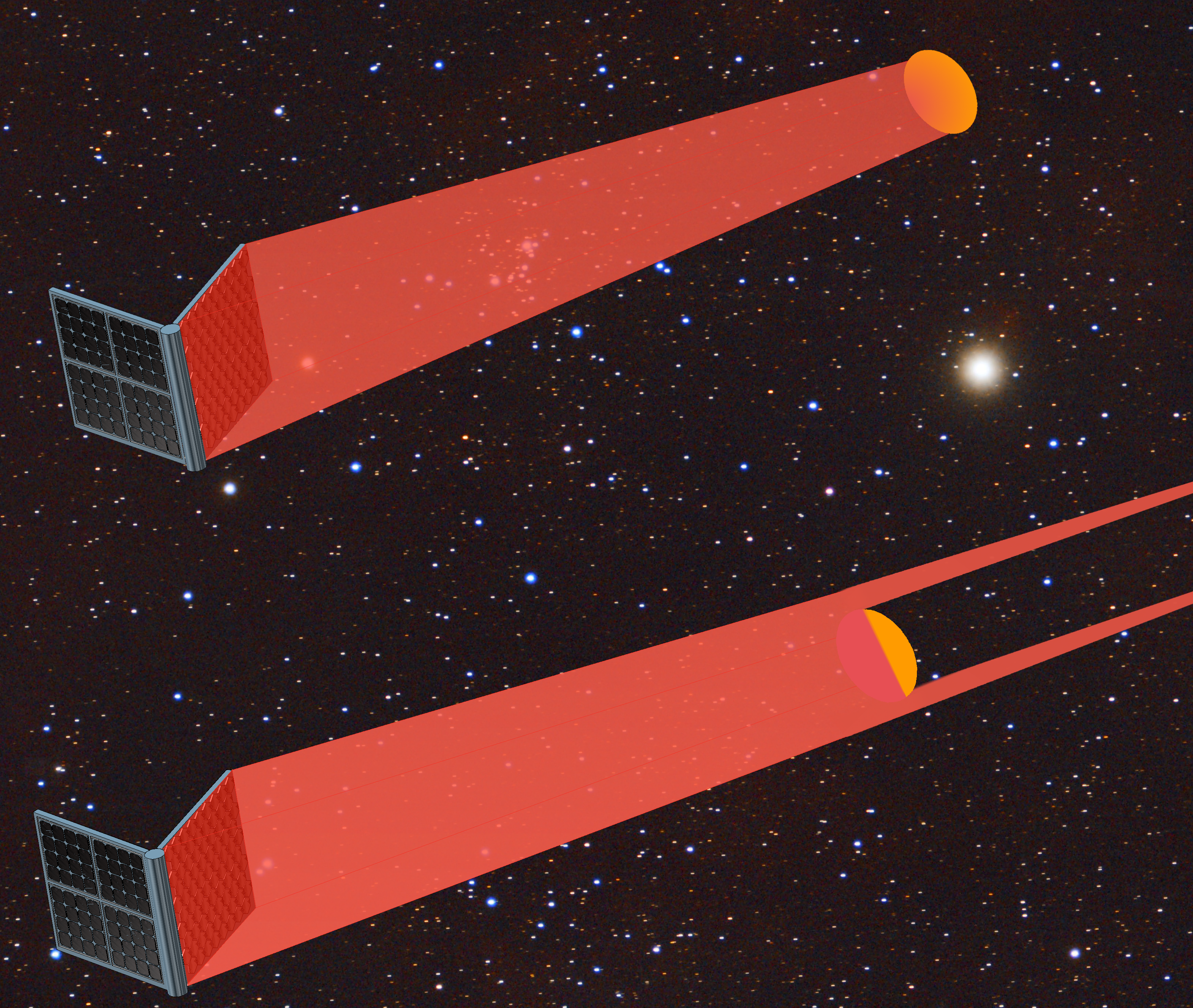
Figure 1: Conceptual drawing illustrating how the laser beam fills the sail initially and eventually overflows as distance increases, leading to a speed increase by 2.
The paper addresses the efficiency of energy transfer, noting that the instantaneous energy efficiency is proportional to the speed of the spacecraft. It also explores the potential for photon recycling to enhance thrust and efficiency, particularly at lower speeds and shorter ranges. Additionally, the possibility of photon-assisted launch is discussed, where a ground-based laser system could be used to assist in launching spacecraft into LEO.
System Design and Components
The paper describes the key components of the proposed interstellar flight system, including the photon driver, laser sail, and wafer-scale spacecraft. The photon driver is envisioned as a modular laser phased array, which eliminates the need for a single, massive laser and allows for scalable power output. The laser sail, made from ultra-lightweight materials with high reflectivity, serves as the interface between the laser beam and the spacecraft. Wafer-scale spacecraft, integrating cameras, communications, power, and sensors onto a single chip, represent a radical departure from traditional spacecraft design.
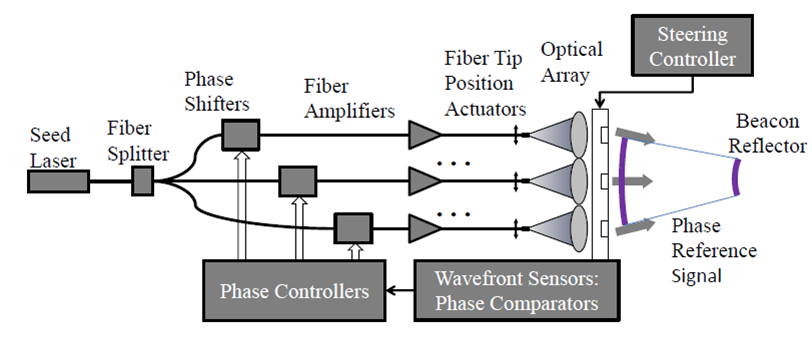
Figure 2: Schematic design of a phased array laser driver, highlighting the critical role of wavefront (phase) sensing and system metrology in forming the final beam.
The paper highlights the importance of precise phase control in the laser array, enabled by wavefront sensing and advanced metrology. It also discusses the design considerations for the laser sail, including material selection, thermal management, and stability. The concept of a "spacecraft on a wafer" is presented, emphasizing the potential for mass production and low-cost exploration of interstellar space.
Interstellar Medium and Dust Impact
The paper acknowledges the challenges posed by the interstellar medium, including gas and dust impacts on the spacecraft. It estimates the density and size distribution of interstellar dust grains and analyzes the potential for erosion and damage to the sail and spacecraft. Mitigation strategies, such as minimizing spacecraft cross-section, shielding, and fault-tolerant designs, are discussed.
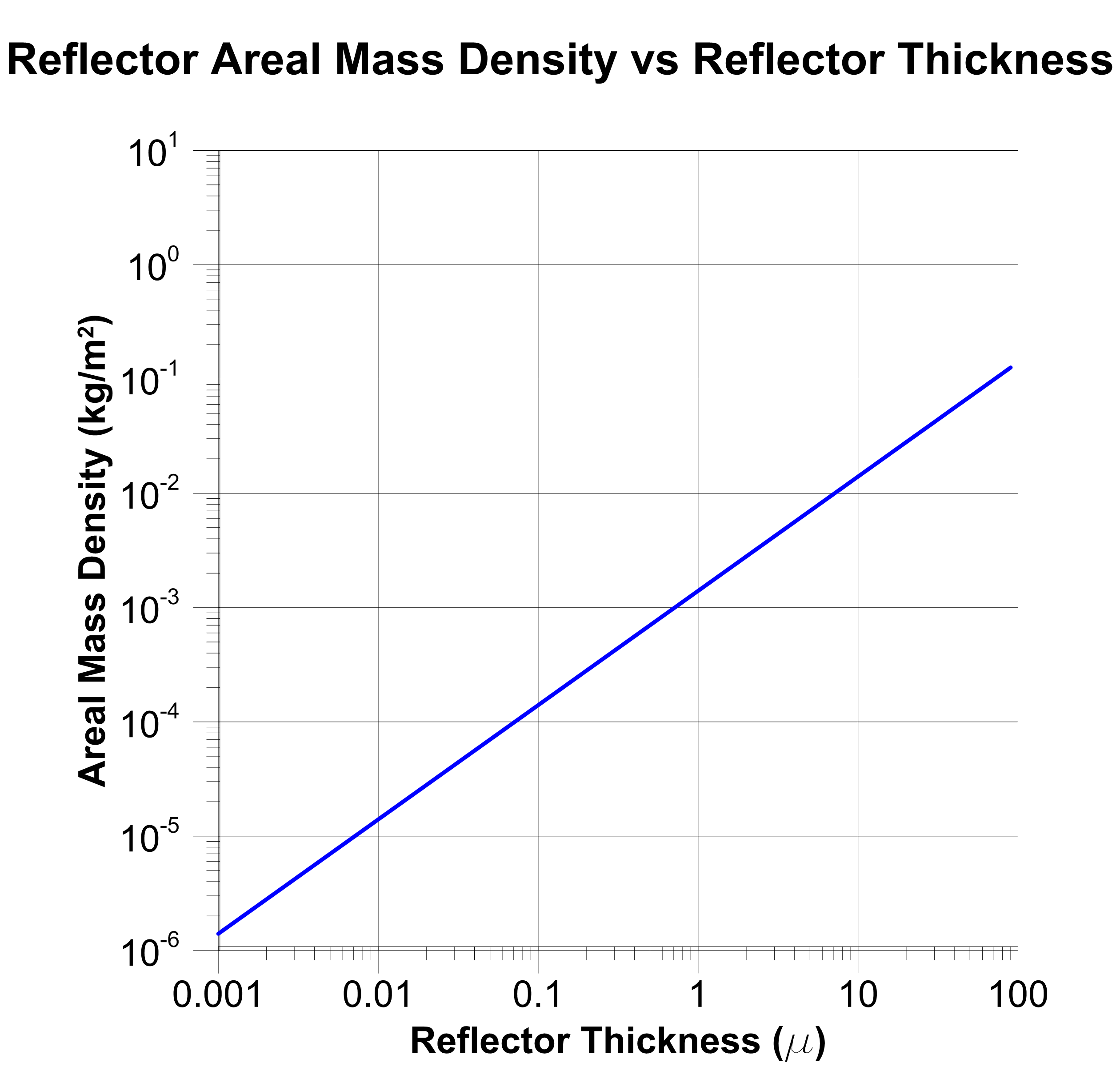
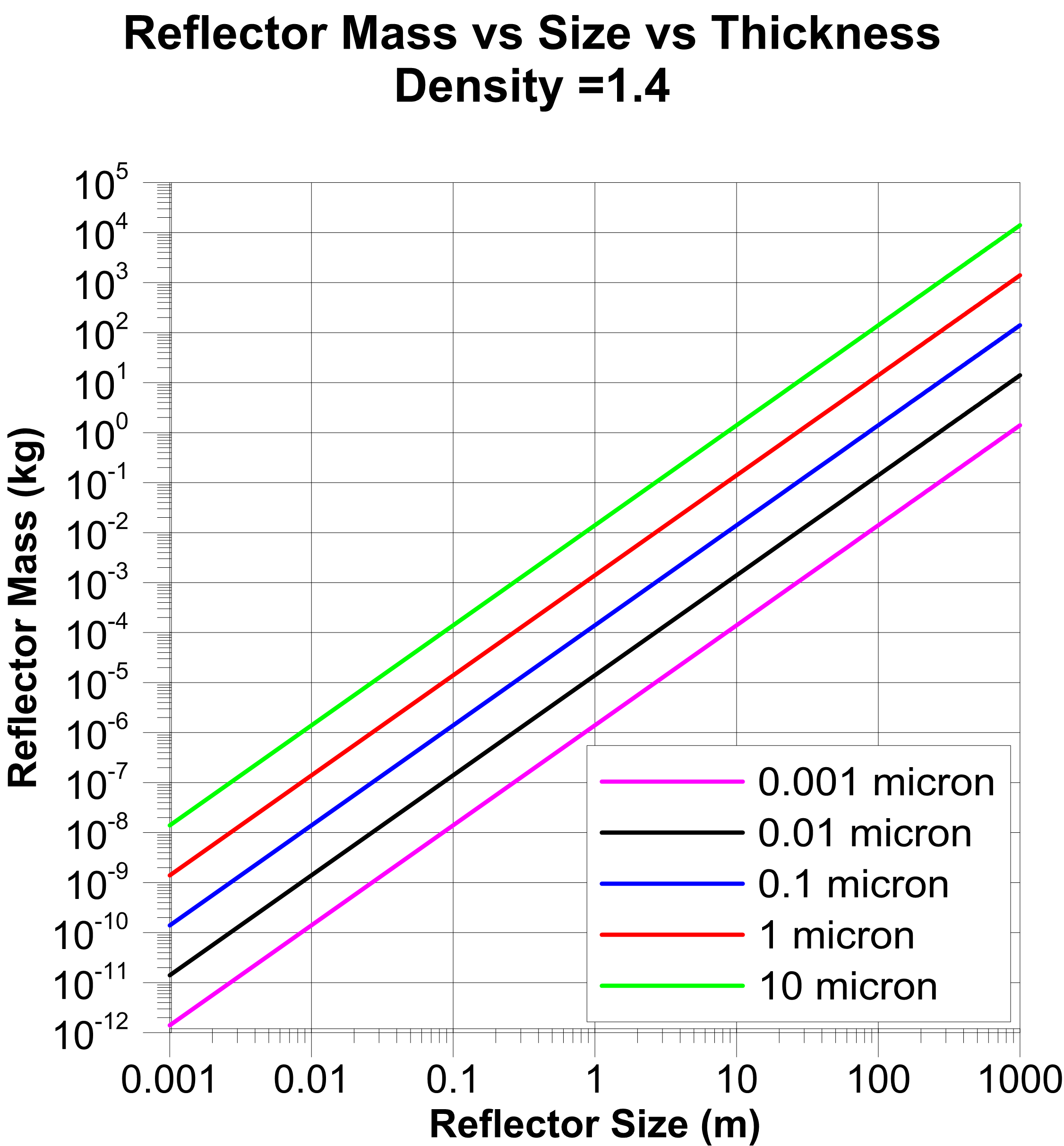
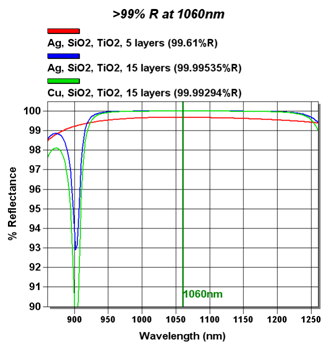
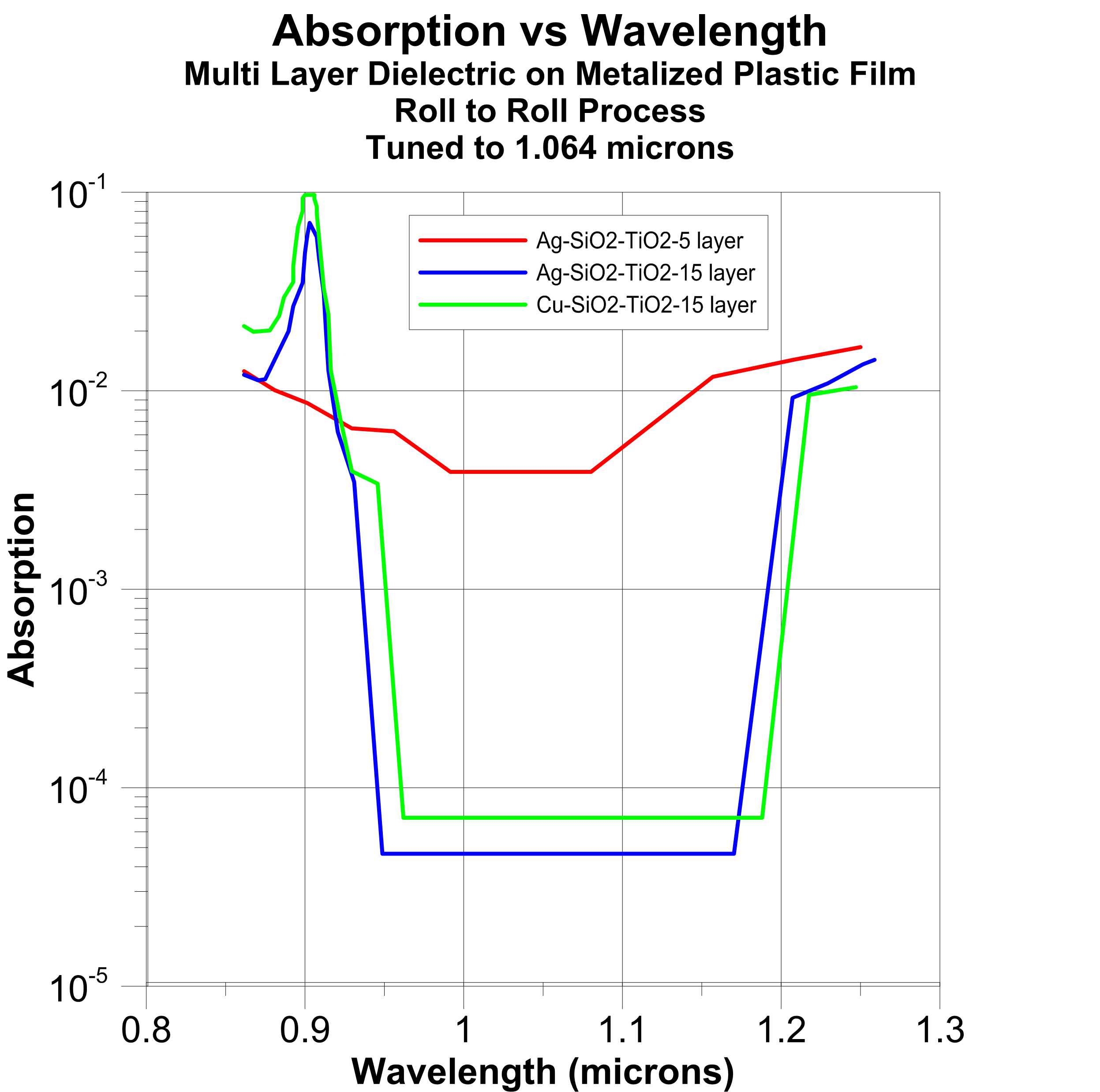
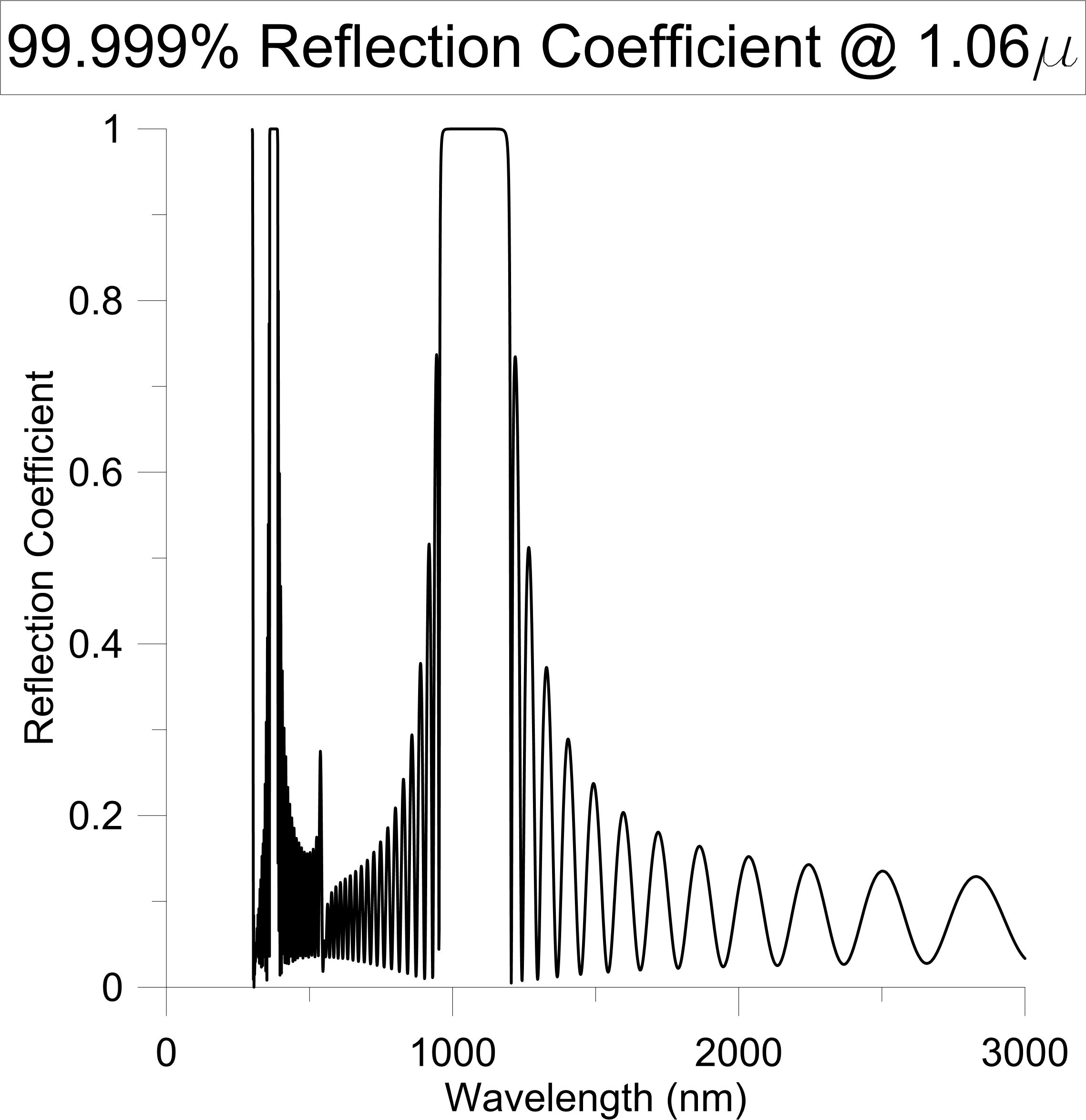
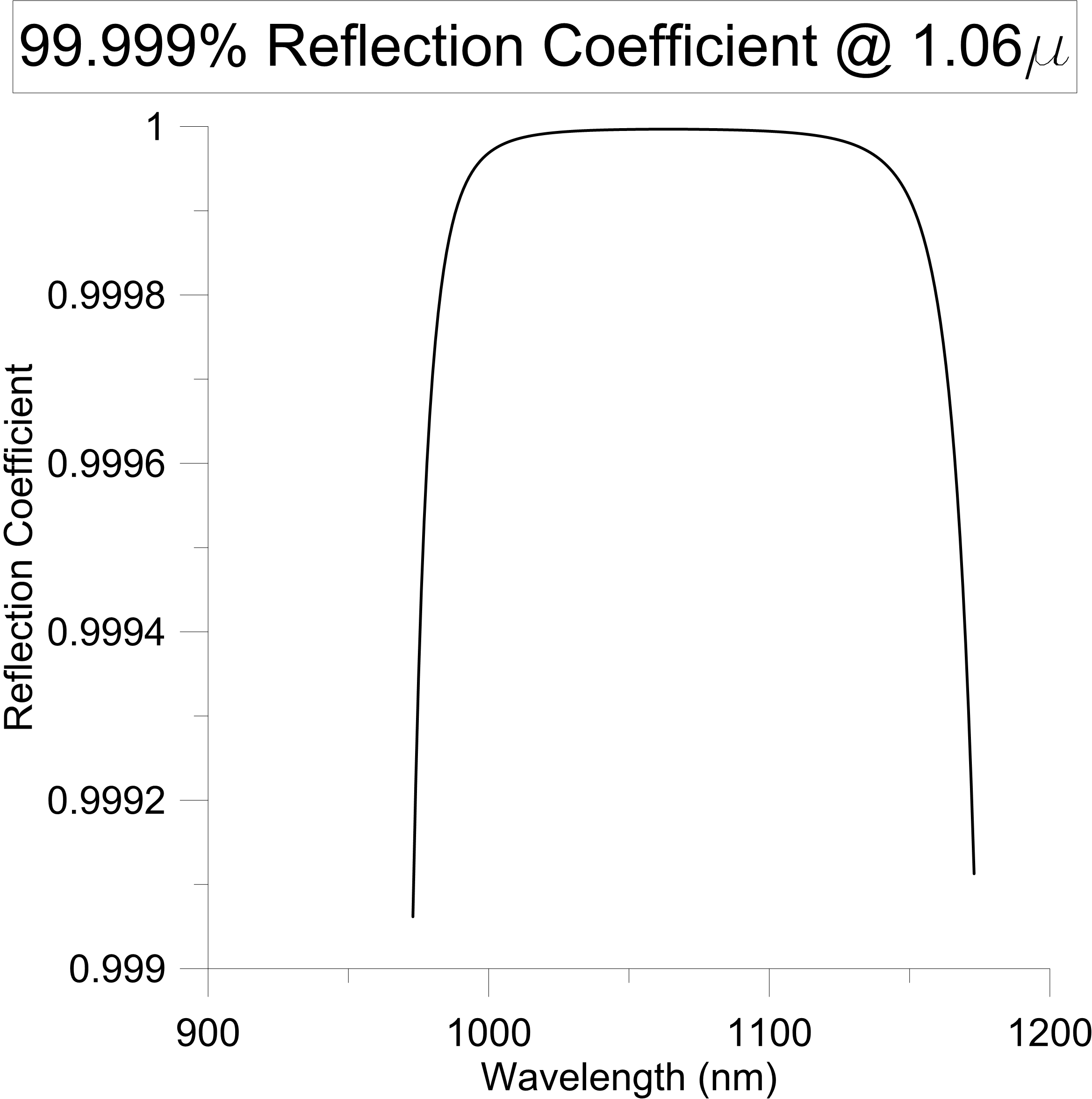
Figure 3: Graphs showing reflector areal mass vs reflector thickness and mass of the reflector vs size, illustrating the importance of minimizing reflector mass for achieving high speeds.
Communications and SETI Implications
The paper explores the use of the DE-STAR system for long-range interstellar communications, both to and from the spacecraft. It analyzes the data rates achievable with different system configurations, considering factors such as laser power, aperture size, and background noise. The implications of this technology for SETI are also discussed, suggesting that a similarly advanced civilization could be detectable across vast distances using directed energy beacons.
Roadmap to Interstellar Flight
The paper proposes a detailed roadmap for developing the technologies needed for interstellar flight, starting with small-scale ground-based tests and gradually scaling up to larger, space-based systems. The roadmap includes specific milestones for technology maturation, operational capabilities, and system integration. It emphasizes the modularity and scalability of the proposed system, allowing for incremental progress and risk mitigation.
Conclusion
The paper "A Roadmap to Interstellar Flight" (1604.01356) offers a comprehensive and technically grounded vision for achieving interstellar travel using directed energy propulsion. While acknowledging the significant challenges involved, the paper presents a plausible path forward, leveraging recent advancements in photonics, materials science, and space systems engineering. The proposed roadmap provides a framework for staged development, enabling incremental progress towards the long-term goal of exploring the nearest stars.