- The paper’s main contribution is a decentralized cloudlet architecture using single-board computers to build robust, low-cost micro-data centers for remote regions.
- It employs a modular design with stackable boxes, dual subclusters, and tailored power solutions to address intermittent connectivity and energy challenges.
- Empirical tests indicate the system sustains 12 hours of operation at 48W consumption, showcasing its resource efficiency and suitability for harsh environments.
Cloudlet Micro-Data Centers for Rural and Remote Areas: Architecture, Implementation, and Implications
Introduction
"Bringing the Cloud to Rural and Remote Areas -- Cloudlet by Cloudlet" (1605.03622) delineates a pragmatic approach to mitigate the digital divide by proposing a decentralized, community-centric cloudlet architecture. The central thesis posits that the deployment of small-scale, low-cost micro-data centers—composed of single-board computers such as Raspberry Pi—offers a feasible, robust alternative to conventional hyperscale data center models, particularly in infrastructure-constrained environments. The motivation is rooted in the limitations of emulating Western data center architectures in the Global South: cost, unreliable connectivity, sporadic electricity, and sovereignty concerns regarding data locality and privacy.
Cloudlet Architecture and Network Topology
The architecture is predicated on modularity and fault-tolerance, leveraging stackable wooden boxes as casings. Each node consists of subclusters housing multiple single-board computers (predominantly Raspberry Pi 2, model B), switches supporting PoE, SSDs, and management/control interfaces. The default network topology avoids single points of failure by coupling two independent subclusters per micro-data center, each fully operational yet collaboratively forming a resilient system.
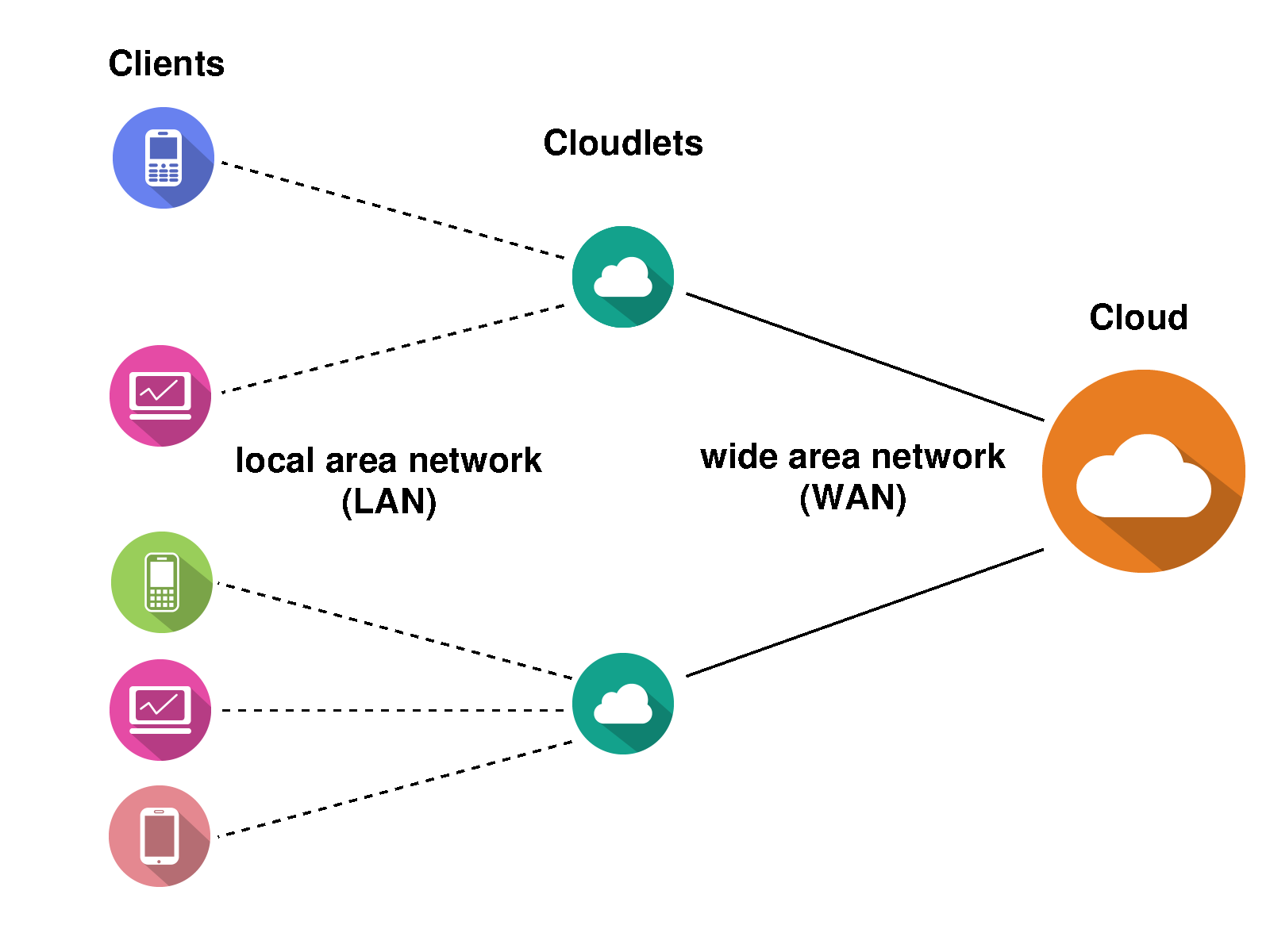
Figure 1: High-level schematic of the cloudlet architecture, emphasizing client-to-cloud communication relayed through micro-data center intermediary nodes.
The power subsystem is bespoke-designed to accommodate energy uncertainty, utilizing either lead-acid or lithium batteries charged by diverse sources (e.g., solar panels) and sized for multi-hour autonomy. The absence of active cooling, replaced by engineered passive airflow and thermal dissipation mechanisms, underscores the design's robustness in harsh, resource-limited settings.
Physical modularity is afforded by the box construction method, supporting ease of transport, local manufacturability, and rapid hardware replacement or repair—a pronounced advantage over monolithic rack system deployments.
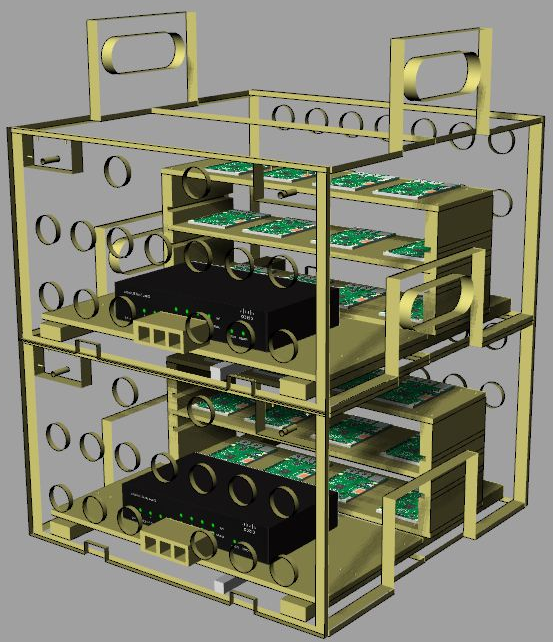
Figure 2: The stackable box design facilitates scalable deployments, straightforward maintenance, and field-adapted expansion for evolving community requirements.
Networking Stack and System Software
The network backbone comprises commodity switches (preferably supporting PoE for simplified power distribution), with each subcluster forming a local domain of redundancy. The deployment supports dynamic linkage of additional boxes for horizontal scaling or expanded geographic coverage.
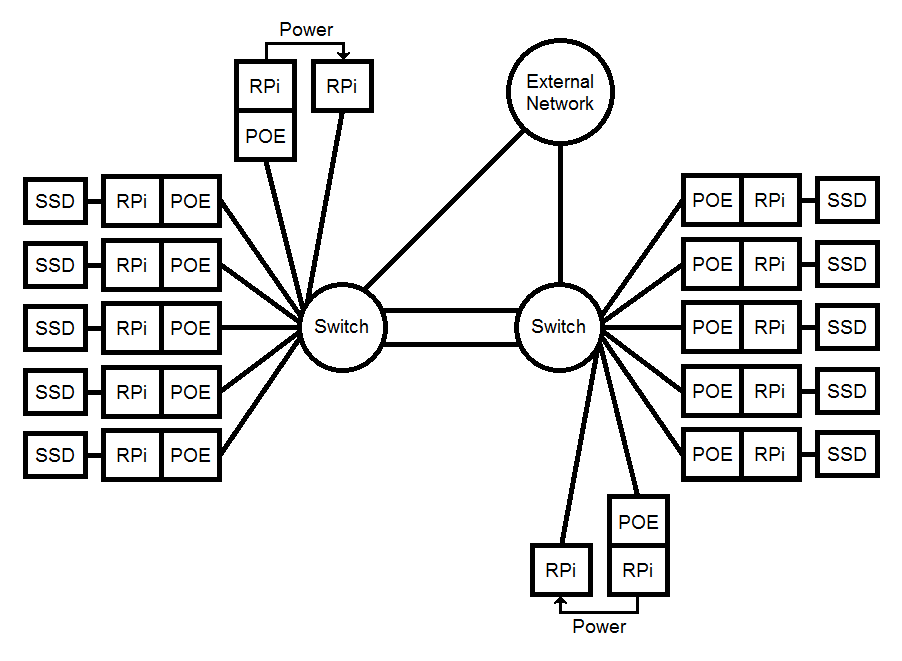
Figure 3: Schematic of the network architecture, visualizing two interconnected subclusters and their linkage to external networks with clear isolation and fault domains.
On the software layer, minimal Debian or ArchLinuxARM installations are automated via custom scripts, with node registration, health monitoring, and cluster integration performed systematically. The authors critically assess middleware adoption, concluding that heavyweight frameworks like OpenStack are impractical on low-resource platforms. Instead, they achieve a functional distributed storage service by deploying only OpenStack Swift (object store), successfully operating data replication and redundancy protocols without resource exhaustion.
Engineering Trade-offs and Empirical Observations
Empirical power consumption testing under stress loads demonstrates a draw of 48W per subcluster (seven RPis, a switch, and five SSDs), with a two-subcluster system dimensioned for 12 hours of autonomous operation at a capped 50% battery discharge—essential for battery longevity. The design flexibly accommodates scaling the battery bank or node count to match local energy availability and demand profiles.
The system's open hardware and software orientation, along with locally sourceable box materials and easily swapped SBC models, directly addresses sustainability and future adaptability challenges often encountered in donor-driven infrastructure projects.
Practical and Theoretical Implications
Deploying such cloudlet-based micro-data centers reconfigures the adoption landscape for cloud computing in rural and remote regions. Practically, it lowers capital and operational costs, enhances autonomy, and localizes governance and maintenance. Such platforms are amenable to a wide range of use cases: sensitive workloads (health/government), educational deployments for distributed systems curricula, and as experimental platforms for edge computing and IoT aggregation.
From a theoretical perspective, this architecture reinforces the need for distributed, federated models in future cloud and AI deployments, evidencing that non-hyperscale, hybrid approaches provide meaningful utility where centralized infrastructure is infeasible. This foregrounds new research directions in distributed systems, reliable protocols over intermittent networks, and resource-optimized middleware for constrained hardware.
One strong claim—even if not numerically benchmarked—is the assertion that open platform-based, bottom-up infrastructure engineering is the only sustainable approach for bridging the cloud accessibility gap in the Global South, rather than importing "bigger is better" models from Western contexts.
Prospects for Future Development
Anticipated developments will involve optimizing cluster orchestration for unreliable networks (probabilistic consensus, gossip protocols), lightweight virtualization layers, and tailorable multi-tenant security. The project also serves as an enabler for locally developed solutions, catalyzing further research and entrepreneurial activity anchored in open hardware ecosystems. Broader AI applications can potentially be staged at the edge, utilizing micro-data centers as relay hubs or preprocessing nodes for federated learning architectures.
Conclusion
The "cloudlet by cloudlet" paradigm establishes a technically rigorous, context-aware template for community-driven micro-data center deployment. The work's implications extend beyond technical configuration, engaging with the socio-technical realities of information sovereignty, adaptability, and capacity-building. The approach is well positioned to inform future research trajectories at the intersection of sustainable infrastructure, edge computing, and decentralized AI systems.