- The paper demonstrates that retinal neural codes form noise-robust ridge structures rather than traditional local maxima.
- It employs K-Pairwise Maximum Entropy and Tree Hidden Markov models on data from 150 retinal ganglion cells to map soft local maxima across spike counts.
- The identified ridge patterns correlate with neuronal communities, suggesting inherent error correction capabilities in natural neural processing.
Noise-Robust Modes of the Retinal Population Code as Ridges and Neuronal Communities
Introduction
The paper "Noise-Robust Modes of the Retinal Population Code have the Geometry of 'Ridges' and Correspond with Neuronal Communities" (1610.06886) investigates the structure of neural population codes and introduces the notion that neural activity patterns can be organized into discrete clusters or codewords, each acting as a noise-robust population codeword. This work diverges from the traditionally assumed local peaks in the probability landscape, suggesting instead a ridge-based structure correlated with network theory concepts like neuronal communities.
Methods and Models
Experimental Data: The study analyzed datasets from approximately 150 retinal ganglion cells responding to both repeated and non-repeated stimuli, provided by natural movies and white noise checkerboard ensembles. Neural responses were recorded and analyzed to map probability landscapes.
Modeling Approach: The authors employed two principal models to explore neural activity structures: the K-Pairwise Maximum Entropy (MaxEnt) model and the Tree Hidden Markov Model (HMM). These models were chosen to capture the stochastic nature of neural population activity, independent of direct stimulus coding, allowing a focus on intrinsic activity organization.
Key Analytical Techniques:
- Local Maxima and Ridges: Rather than relying solely on the commonly used concept of local maxima, the paper defines "soft local maxima," which are local probability maxima constrained to fixed spike counts. This concept is extended to discover ridges across spike count levels using a novel algorithm linking these maxima.
- Ridge Search Algorithm: A graph-theoretic approach visualizes the connection between soft local maxima across spike levels, presenting them as "ridges" in the neural response landscape.
Results and Findings
Contradictory Findings on Local Maxima: The study finds an absence of local maxima under non-repeated stimuli conditions, refuting earlier hypotheses that had considered them potential candidates for codewords.
Ridge Formation: Using soft local maxima, researchers demonstrate that ridges are prevalent structures in the probability landscape, representing a linked series of high-probability states across spike counts. The ridges derived from the Tree HMM exhibited a close correspondence to statistically derived collective modes.
Neuron Community Dynamics: The ridge structures align closely with the concept of neuronal communities, revealing a non-trivial overlap with Donald Hebb's cell assembly theory, suggesting error correction capabilities intrinsic to these communities.
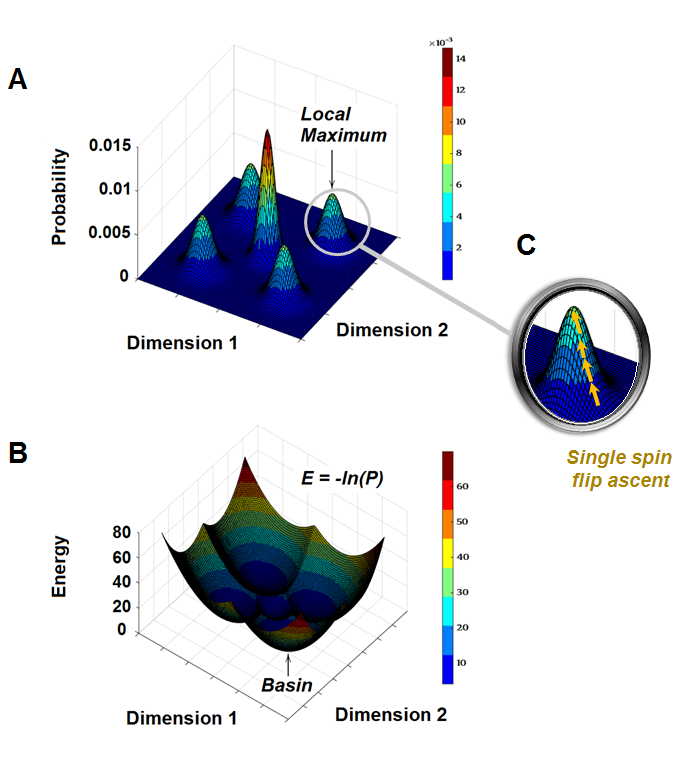
Figure 1: Schematic illustrating the concept of local maxima and basins.
Discussion
Error Correction and Clustering: The work positions these ridges and the associated neuronal communities as intrinsic codes for handling neural response variability, facilitating error correction via natural clustering.
Stimulus Dependence: The research emphasizes the role of stimulus ensemble properties on the probability landscape and, consequently, the neural coding body's architecture. Specifically, while local maximum structures might manifest with repeated stimuli, ridges accurately depict naturalistic, non-repeated stimulation environments more accurately.
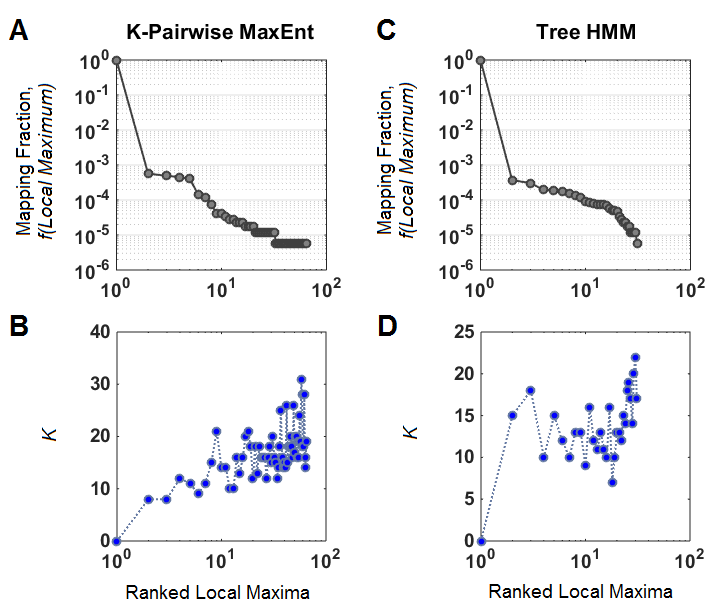
Figure 2: Local maxima results obtained for the dataset using either the K-Pairwise Maximum Entropy model or Tree hidden Markov model as the underlying probability model.
Implications and Future Directions
This paper extends our understanding of neural coding by moving beyond simplistic peak models toward a more inclusive framework accounting for ridge geometries. Practically, these findings suggest that downstream neural decoding algorithms can leverage the robustness of ridge structures. Further exploration into biological plausibility of decoding these structures using simple neuron sets offers a pathway towards developing better artificial neural models that mimic these natural processes.
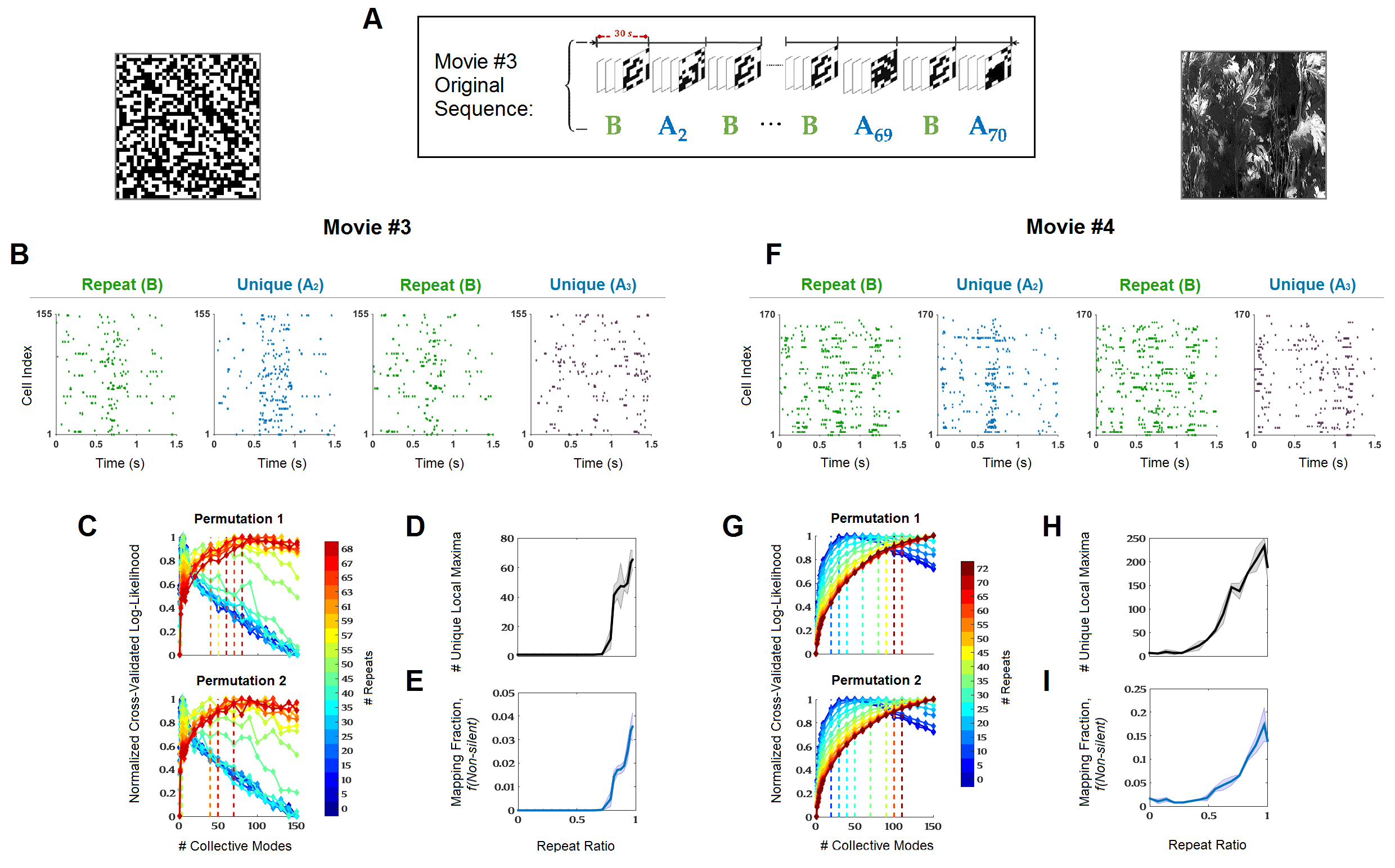
Figure 3: Experimental design showcasing results for the parametric repeat analysis.
Conclusion
The findings of this study challenge the dominant coding paradigms by promoting ridge structures over local peaks as core components of neural population codes. The connection to neuron community frameworks provides a sophisticated approach to understanding neural information processing, especially in the face of varying natural stimuli. Future work might explore these concepts within other sensory systems, potentially offering broader insights into neural representation across different neural architectures and species.