- The paper introduces a novel approach by transforming seismic signals into audio and applying CNN and LSTM models, achieving accuracies up to 93.99%.
- It utilizes MFCC feature extraction on audio-transformed seismic data at different sampling rates, demonstrating improved temporal resolution in detection.
- The study validates model performance with metrics like Cohen's Kappa Score, showing enhanced reliability over traditional STA/LTA methods.
A Novel Approach for Earthquake Early Warning System Design using Deep Learning Techniques
The paper presents a methodology that leverages deep learning techniques to enhance the efficacy of earthquake early warning systems (EEWS). By converting seismic data into audio signals and applying speech recognition methods, the research demonstrates the potential for reliable earthquake detection.
Introduction to Earthquake Detection Techniques
Traditional earthquake detection mechanisms rely on seismic data analysis using algorithms like the Short-Term Average / Long-Term Average (STA/LTA). However, these methods struggle with parameter tuning and may produce false alarms due to non-seismic activities such as landslides or thunderstorms. The authors propose a novel approach by transforming seismic signals into audio data, which are analyzed using deep learning models such as Convolutional Neural Networks (CNN) and Long Short-Term Memory networks (LSTM).
The authors highlight that earthquake magnitudes follow an exponential scale, making early detection crucial for mitigating damage. The historical success of predictions, like the Haicheng earthquake, indicates the potential for significant advancements using automated data-driven technologies.
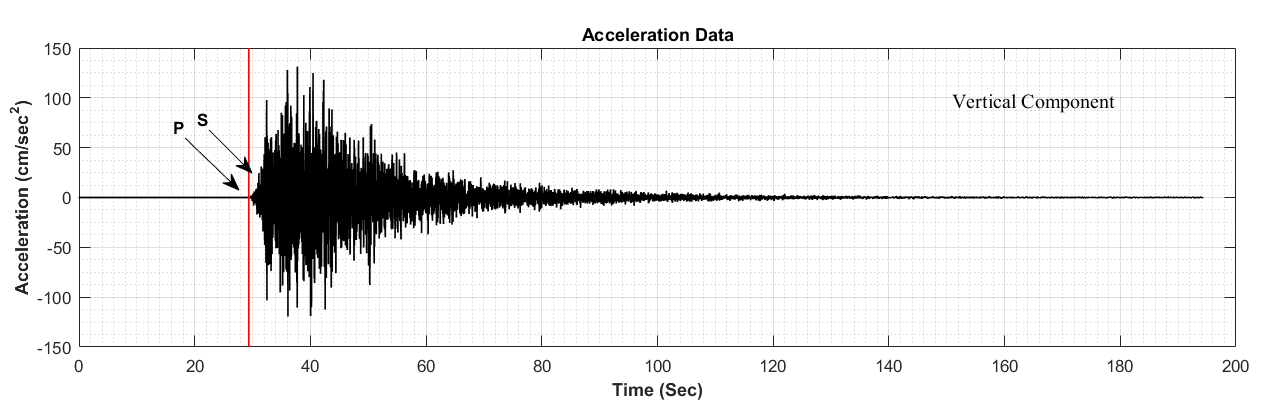
Figure 1: A 6.8 magnitude earthquake acceleration signal with P-wave and S-wave arrivals detected by STA/LTA algorithm.
Deep Learning Models for Seismology
The paper leverages CNNs and LSTMs to analyze the audio-transformed seismic data.
Convolutional Neural Network (CNN) Architecture
The proposed CNN architecture involves multiple convolutional layers followed by pooling and dense layers. The increment in filter size across layers aims at capturing more abstract features of the data.
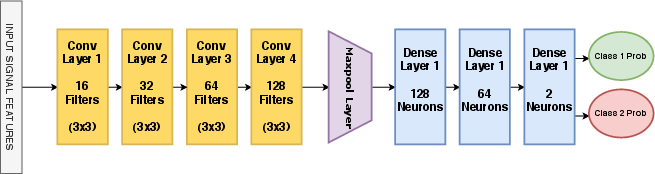
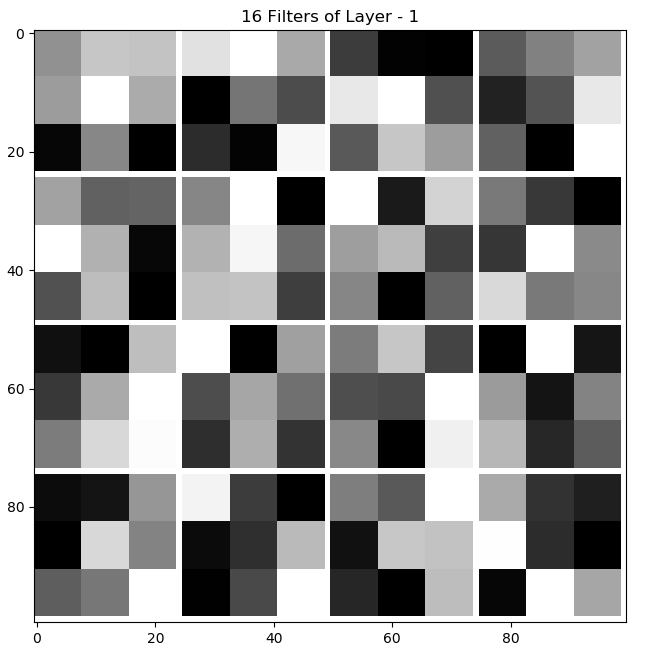
Figure 2: Block Diagram of the CNN Model used.
Long Short Term Memory (LSTM) Architecture
Contrarily, the LSTM architecture is designed to handle sequential data processing better, which is particularly effective in temporal data like seismic waves.
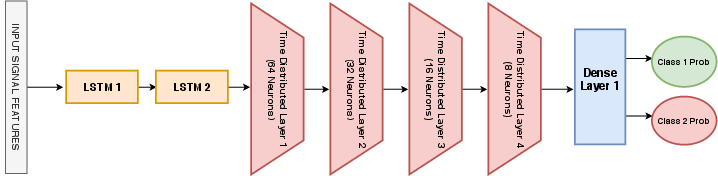
Figure 3: Block Diagram of the LSTM Model used.
Data and Methodology
The study utilizes seismic data transformed into audio format at different sampling rates (200Hz and 1000Hz). Pre-processing includes pre-emphasis filtering, framing, and Fourier transformation, followed by feature extraction using Mel-Frequency Cepstral Coefficients (MFCC).
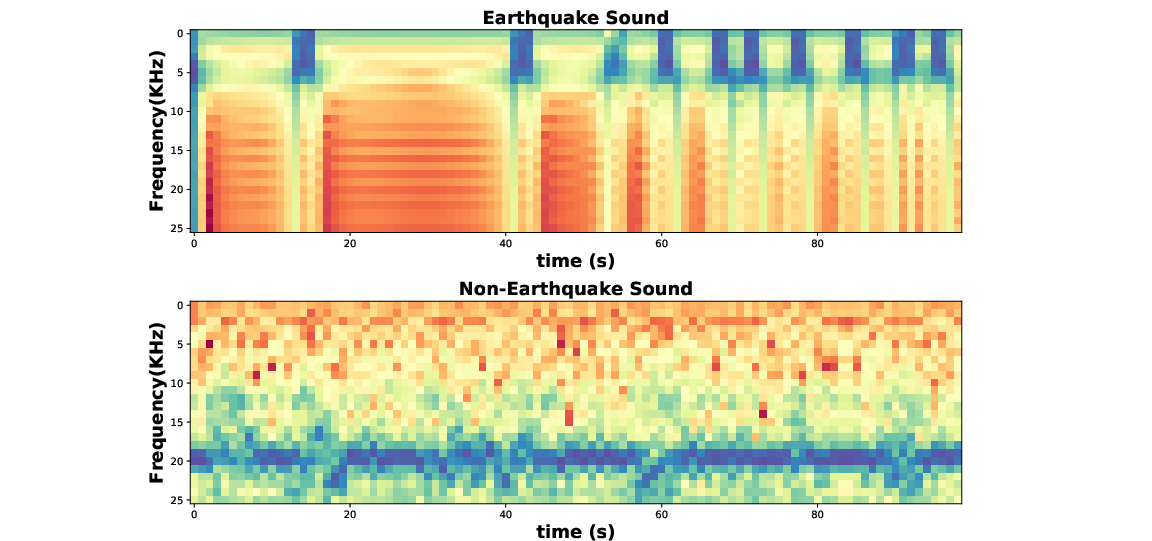
Figure 4: Features extracted from the signal for training the models after applying the filter bank.
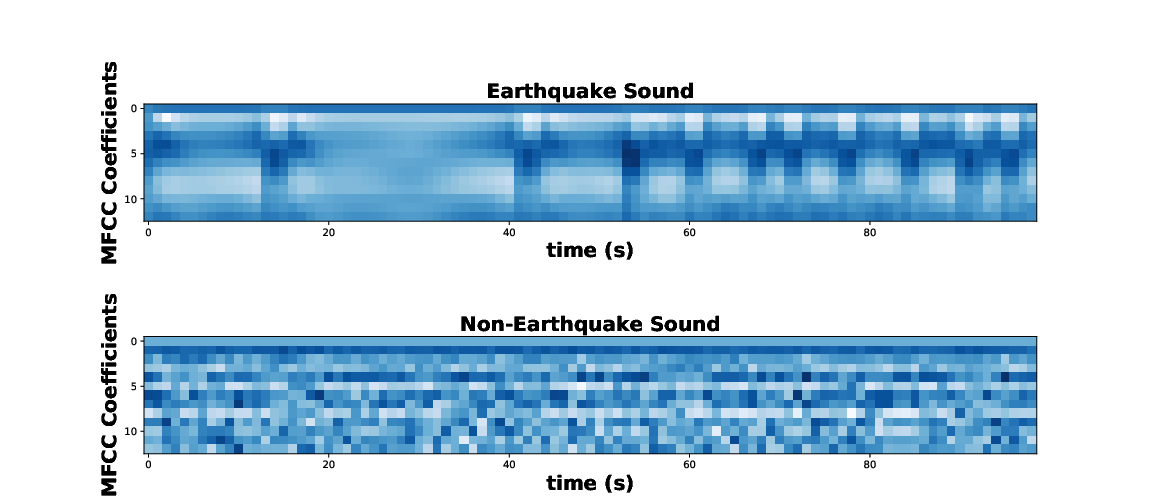
Figure 5: Mel-Frequency Cepstral Coefficients (MFCCs) as extracted from the short frames.
Both CNN and LSTM models trained on 1000Hz audio data exhibited high accuracy, with the CNN achieving 91.1% and the LSTM achieving 93.99% accuracy for a 0.2-second sample window. The LSTM outperforms the CNN due to its proficiency with time-series data.
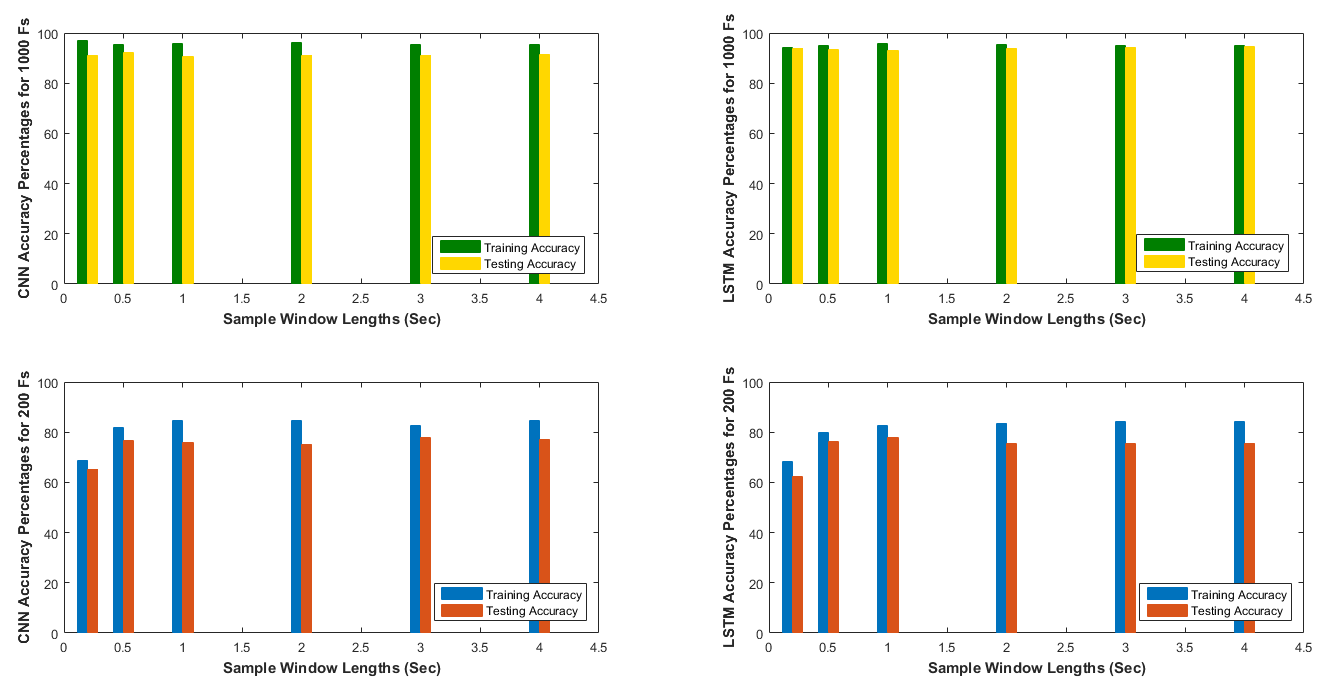
Figure 6: Testing and Training Accuracy comparisons of CNN and LSTM Models across sampling frequencies.
The models are validated using Cohen's Kappa Score, ensuring robustness in classification.
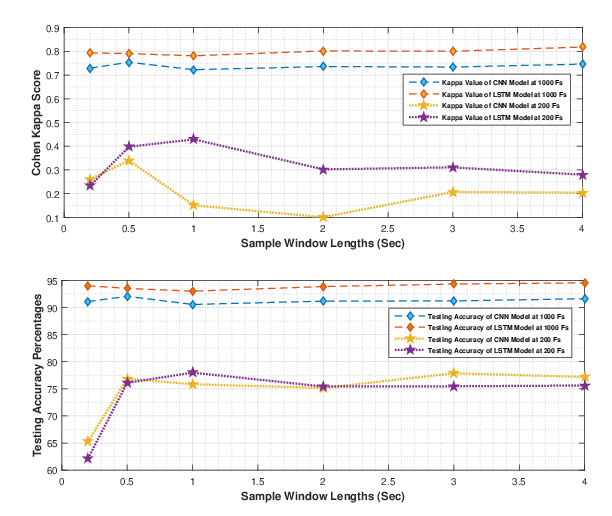
Figure 7: Testing Accuracy and Cohen Kappa Score comparisons.
The incremental accuracy achieved with increased sampling rates suggests that temporal resolutions significantly affect model performance.
Implications and Future Applications
Beyond immediate earthquake detection, these models have the potential to forecast earthquake parameters—such as magnitude and velocity—earlier in the seismic wave propagation, which is crucial for EEWS. The research opens new possibilities for applying real-time deep learning analysis in seismology without the constraints of pre-determined thresholds.
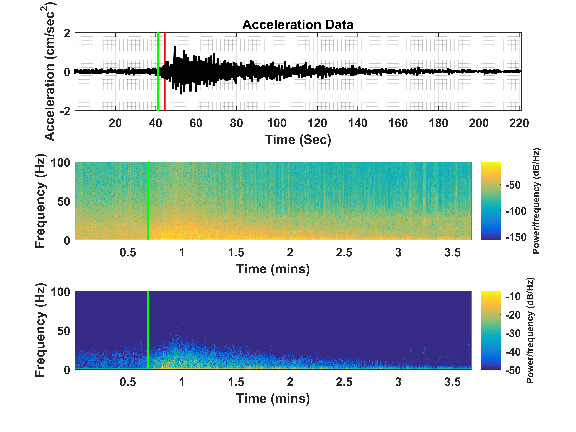
Figure 8: A comparison of STA/LTA and proposed methods with challenges associated with threshold-based approaches.
Additionally, the prototype hardware for seismic data acquisition supports this approach by simulating real-time earthquake conditions, with promising results validating the system's applicability in real scenarios.
Conclusion
The study successfully presents a deep learning-based earthquake detection system that significantly improves upon traditional methods in accuracy and speed. Its real-time processing capabilities, combined with minimal prerequisite configurations, pave the way for wider adoption in seismic monitoring and other related applications, potentially extending to military and security fields for movement detection.
The authors posit that the combination of MFCC and deep learning models brings us a step closer to implementing robust and scalable EEWS to preemptively mitigate the impact of seismic activities.