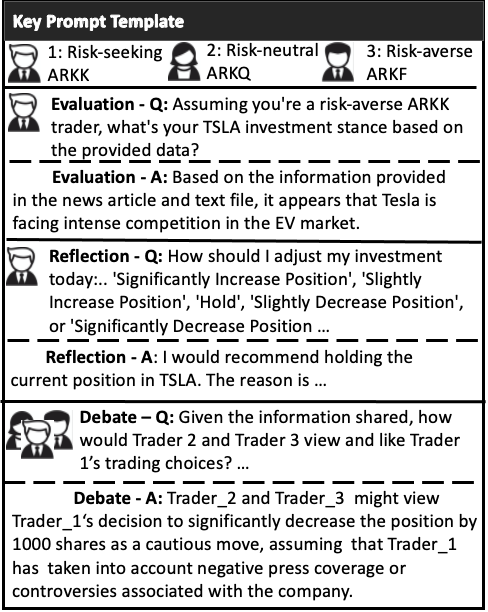
- The paper introduces a multi-agent system that incorporates layered memory and distinct trading personas for improved decision-making.
- It outlines a structured methodology where memory events are dynamically prioritized through decay functions, simulating human cognitive processes.
- The system's collaborative agents debate trading strategies, ultimately achieving enhanced predictive accuracy and robust market performance.
TradingGPT: Multi-Agent System with Layered Memory
The paper "TradingGPT: Multi-Agent System with Layered Memory and Distinct Characters for Enhanced Financial Trading Performance" introduces a novel approach that leverages multi-agent systems and layered memory structures to enhance financial trading performance through sophisticated decision-making inspired by human cognitive processes.
LLMs in Financial Trading
The proposed framework, TradingGPT, builds upon the capabilities of LLMs, particularly GPT, to power multi-agent systems for automated financial trading. Traditional LLM applications in trading often overlook the nuanced memory organization and character-driven decision-making that humans naturally employ. The novel system differentiates itself by introducing layered memories, aligned with human short-term, medium-term, and long-term memory categorizations, and individualized trading characters which enrich decision-making.
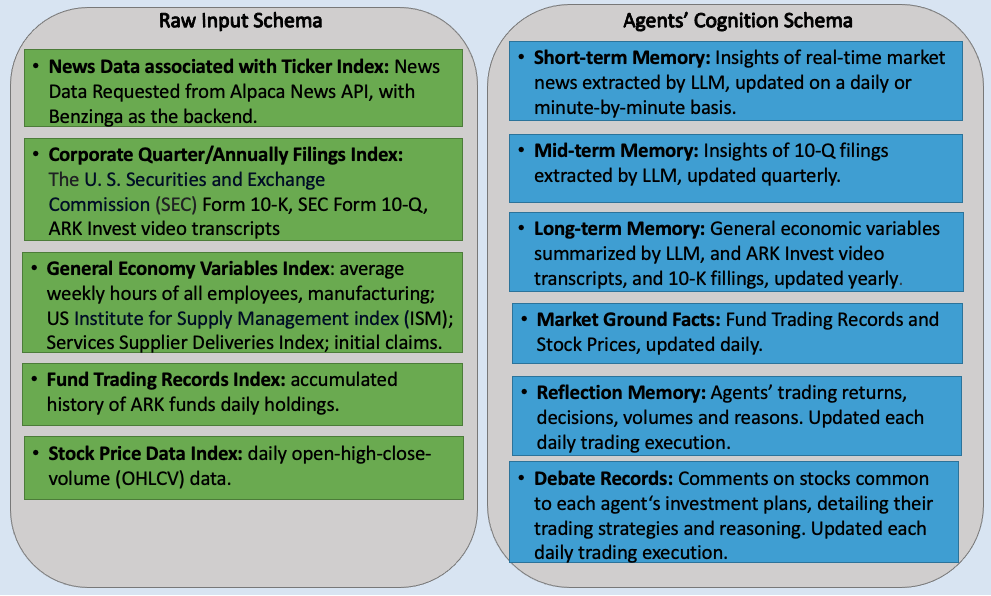
Figure 1: TradingGPT Data Warehouse.
The architecture introduces layered memory processing, enabling an agent to navigate and prioritize complex financial information efficiently. The memory structure allows agents to organize information hierarchically, preserving essential past events while focusing on immediate market changes.
Methodology and Implementation
TradingGPT's design integrates a system where agents employ an innovative memory formulation. Memory events are categorized into three layers, and each is retrieved based on recency, relevancy, and importance. These events are mathematically processed to replicate human cognitive categorization, aligning more closely with memory decay models from psychology.
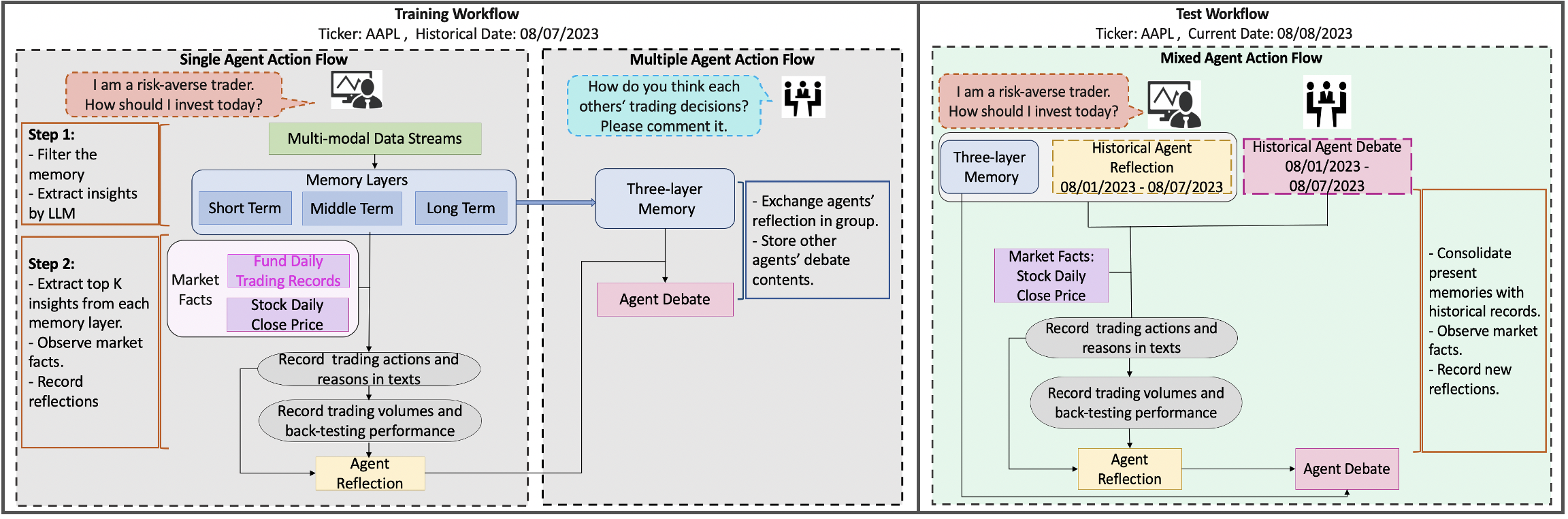
Figure 2: TradingGPT training and test workflow.
- Layered Memory: Agents manage actions and memories across these cognitive layers using customized decay functions to prioritize information relevant to current trading objectives.
- Character Design: Agents exhibit distinct characters with predefined trading preferences (risk-averse, neutral, or seeking), facilitating diversified approaches to market speculation, akin to various human trader personas.
- Multi-Agent Interaction: Debate mechanisms allow agents to interact, sharing insights and optimizing collective decision-making across different data feeds. This interaction is crucial for reflecting the multi-modal nature of financial data and encourages robust trading strategies.
Training and Testing
The implemented system undergoes a rigorous training and testing workflow, wherein agents assimilate individual and collective historical trading data, refining strategies and execution.
The integration of memory reflections and debate feedback into the agent's decision-making highlights an alignment with human-like strategic behavior.
Implications and Future Work
This research sets the stage for a dynamic trading paradigm that offers superior performance compared to unary agent systems. The multi-layered memory coupled with character-based trading models not only enhances the system's adaptability but also promises improved predictive accuracy in financial markets.
The paper suggests extending its application beyond finance into various AI-driven sectors, potentially impacting areas like game design and consultative AI in healthcare and technology fields. Future work will focus on comparing model effectiveness using advanced LLMs and expanding the framework's versatility across different market environments.
Conclusion
TradingGPT presents a compelling advancement in leveraging LLM capabilities within multi-agent frameworks for financial trading. Its layered memory and character-driven methodologies provide a robust platform for simulating human cognitive functions and decision-making, promising significant strides in automated trading technologies. The integration of nuanced multi-agent interactions and debate mechanisms further anchors its utility in real-world financial applications, paving the way for a new generation of intelligent, adaptive trading systems.