Papers
Topics
Authors
Recent
Search
2000 character limit reached

Thermodynamic Computing System for AI Applications

Published 8 Dec 2023 in cs.ET, cond-mat.stat-mech, and cs.AI | (2312.04836v1)

Abstract: Recent breakthroughs in AI algorithms have highlighted the need for novel computing hardware in order to truly unlock the potential for AI. Physics-based hardware, such as thermodynamic computing, has the potential to provide a fast, low-power means to accelerate AI primitives, especially generative AI and probabilistic AI. In this work, we present the first continuous-variable thermodynamic computer, which we call the stochastic processing unit (SPU). Our SPU is composed of RLC circuits, as unit cells, on a printed circuit board, with 8 unit cells that are all-to-all coupled via switched capacitances. It can be used for either sampling or linear algebra primitives, and we demonstrate Gaussian sampling and matrix inversion on our hardware. The latter represents the first thermodynamic linear algebra experiment. We also illustrate the applicability of the SPU to uncertainty quantification for neural network classification. We envision that this hardware, when scaled up in size, will have significant impact on accelerating various probabilistic AI applications.

Definition Search Book Streamline Icon: https://streamlinehq.com
References (31)
  1. Sara Hooker, “The hardware lottery,” Communications of the ACM 64, 58–65 (2021).
  2. Pavel Izmailov, Sharad Vikram, Matthew D Hoffman,  and Andrew Gordon Gordon Wilson, “What are bayesian neural network posteriors really like?” in International conference on machine learning (PMLR, 2021) pp. 4629–4640.
  3. Yann LeCun, “Objective-driven AI,” https://www.youtube.com/watch?v=vyqXLJsmsrk (2023).
  4. Geoffrey Hinton, “Neurips 2022,” https://neurips.cc/Conferences/2022/ScheduleMultitrack?event=55869 (2022).
  5. Naeimeh Mohseni, Peter L. McMahon,  and Tim Byrnes, “Ising machines as hardware solvers of combinatorial optimization problems,” Nat. Rev. Phys. 4, 363–379 (2022).
  6. Navid Anjum Aadit, Andrea Grimaldi, Mario Carpentieri, Luke Theogarajan, John M. Martinis, Giovanni Finocchio,  and Kerem Y. Camsari, “Massively parallel probabilistic computing with sparse Ising machines,” Nat. Electron. 5, 460–468 (2022).
  7. George Mourgias-Alexandris, Hitesh Ballani, Natalia G Berloff, James H Clegg, Daniel Cletheroe, Christos Gkantsidis, Istvan Haller, Vassily Lyutsarev, Francesca Parmigiani, Lucinda Pickup, et al., “Analog iterative machine (aim): using light to solve quadratic optimization problems with mixed variables,” arXiv preprint arXiv:2304.12594  (2023).
  8. Takahiro Inagaki, Yoshitaka Haribara, Koji Igarashi, Tomohiro Sonobe, Shuhei Tamate, Toshimori Honjo, Alireza Marandi, Peter L. McMahon, Takeshi Umeki, Koji Enbutsu, Osamu Tadanaga, Hirokazu Takenouchi, Kazuyuki Aihara, Ken-ichi Kawarabayashi, Kyo Inoue, Shoko Utsunomiya,  and Hiroki Takesue, “A coherent ising machine for 2000-node optimization problems,” Science 354, 603–606 (2016).
  9. William Moy, Ibrahim Ahmed, Po-wei Chiu, John Moy, Sachin S Sapatnekar,  and Chris H Kim, “A 1,968-node coupled ring oscillator circuit for combinatorial optimization problem solving,” Nature Electronics 5, 310–317 (2022).
  10. Jeffrey Chou, Suraj Bramhavar, Siddhartha Ghosh,  and William Herzog, “Analog coupled oscillator based weighted ising machine,” Scientific reports 9, 14786 (2019).
  11. Tianshi Wang and Jaijeet Roychowdhury, “Oim: Oscillator-based ising machines for solving combinatorial optimisation problems,” in Unconventional Computation and Natural Computation: 18th International Conference, UCNC 2019, Tokyo, Japan, June 3–7, 2019, Proceedings 18 (Springer, 2019) pp. 232–256.
  12. Bradley H Theilman, Yipu Wang, Ojas Parekh, William Severa, J Darby Smith,  and James B Aimone, “Stochastic neuromorphic circuits for solving maxcut,” in 2023 IEEE International Parallel and Distributed Processing Symposium (IPDPS) (IEEE, 2023) pp. 779–787.
  13. Patrick J. Coles, Collin Szczepanski, Denis Melanson, Kaelan Donatella, Antonio J. Martinez,  and Faris Sbahi, “Thermodynamic AI and the fluctuation frontier,”  (2023), arXiv:2302.06584 [cs.ET] .
  14. Tom Conte, Erik DeBenedictis, Natesh Ganesh, Todd Hylton, John Paul Strachan, R Stanley Williams, Alexander Alemi, Lee Altenberg, Gavin E. Crooks, James Crutchfield, et al., “Thermodynamic computing,” arXiv preprint arXiv:1911.01968  (2019).
  15. Maxwell Aifer, Kaelan Donatella, Max Hunter Gordon, Thomas Ahle, Daniel Simpson, Gavin E Crooks,  and Patrick J Coles, “Thermodynamic linear algebra,” arXiv preprint arXiv:2308.05660  (2023).
  16. Samuel Duffield, Maxwell Aifer, Gavin Crooks, Thomas Ahle,  and Patrick J Coles, “Thermodynamic matrix exponentials and thermodynamic parallelism,” arXiv preprint arXiv:2311.12759  (2023).
  17. Todd Hylton, “Thermodynamic neural network,” Entropy 22, 256 (2020).
  18. Natesh Ganesh, “A thermodynamic treatment of intelligent systems,” in 2017 IEEE International Conference on Rebooting Computing (ICRC) (2017) pp. 1–4.
  19. Patryk Lipka-Bartosik, Martí Perarnau-Llobet,  and Nicolas Brunner, “Thermodynamic computing via autonomous quantum thermal machines,” arXiv preprint arXiv:2308.15905  (2023).
  20. Kerem Y. Camsari, Brian M. Sutton,  and Supriyo Datta, “p-bits for probabilistic spin logic,” Appl. Phys. Rev. 6, 011305 (2019).
  21. Shuvro Chowdhury, Andrea Grimaldi, Navid Anjum Aadit, Shaila Niazi, Masoud Mohseni, Shun Kanai, Hideo Ohno, Shunsuke Fukami, Luke Theogarajan, Giovanni Finocchio, et al., “A full-stack view of probabilistic computing with p-bits: devices, architectures and algorithms,” IEEE Journal on Exploratory Solid-State Computational Devices and Circuits  (2023).
  22. Shashank Misra, Leslie C Bland, Suma G Cardwell, Jean Anne C Incorvia, Conrad D James, Andrew D Kent, Catherine D Schuman, J Darby Smith,  and James B Aimone, “Probabilistic neural computing with stochastic devices,” Advanced Materials 35, 2204569 (2023).
  23. Samuel Liu, T Patrick Xiao, Jaesuk Kwon, Bert J Debusschere, Sapan Agarwal, Jean Anne C Incorvia,  and Christopher H Bennett, “Bayesian neural networks using magnetic tunnel junction-based probabilistic in-memory computing,” Frontiers in Nanotechnology 4, 1021943 (2022).
  24. Vikash Kumar Mansinghka et al., Natively probabilistic computation, Ph.D. thesis, Citeseer (2009).
  25. Kevin P Murphy, Probabilistic machine learning: an introduction (MIT press, 2022).
  26. Christopher Williams and Carl Rasmussen, “Gaussian processes for regression,” Advances in neural information processing systems 8 (1995).
  27. Jeremiah Liu, Zi Lin, Shreyas Padhy, Dustin Tran, Tania Bedrax Weiss,  and Balaji Lakshminarayanan, “Simple and principled uncertainty estimation with deterministic deep learning via distance awareness,” Advances in Neural Information Processing Systems 33, 7498–7512 (2020).
  28. Tianqi Chen, Emily Fox,  and Carlos Guestrin, “Stochastic gradient hamiltonian monte carlo,” in International conference on machine learning (PMLR, 2014) pp. 1683–1691.
  29. Peter W Shor, “Scheme for reducing decoherence in quantum computer memory,” Physical review A 52, R2493 (1995).
  30. Peter W Shor, “Polynomial-time algorithms for prime factorization and discrete logarithms on a quantum computer,” SIAM review 41, 303–332 (1999).
  31. Isaac L Chuang, Neil Gershenfeld,  and Mark Kubinec, “Experimental implementation of fast quantum searching,” Physical review letters 80, 3408 (1998).
Citations (5)

Summary

  • The paper demonstrates the design and experimental realization of a continuous-variable thermodynamic computer (SPU) enabling hardware-based Gaussian sampling and matrix inversion.
  • It details the SPU’s architecture using LC circuits and FPGA control, showing comparable accuracy to digital methods in probabilistic AI tasks.
  • The analysis reveals a potential scaling advantage with O(d^2) runtime and energy efficiency over digital sampling, promising for high-dimensional AI problems.

Thermodynamic Computing System for AI Applications: An Expert Analysis

Introduction and Motivation

The paper "Thermodynamic Computing System for AI Applications" (2312.04836) presents the first experimental realization of a continuous-variable (CV) thermodynamic computer, termed the Stochastic Processing Unit (SPU). The work is motivated by the computational bottlenecks in probabilistic AI, particularly in generative models and Bayesian inference, where sampling and linear algebra primitives are central yet resource-intensive on conventional digital hardware. The authors argue that analog, physics-based hardware—specifically thermodynamic computing—can offer significant speed and energy advantages by directly mapping the mathematics of probabilistic AI to the underlying physical dynamics.

Theoretical Foundations of Thermodynamic Computing

Thermodynamic computing leverages the stochastic dynamics of physical systems, modeled by underdamped Langevin SDEs, to realize equilibrium distributions corresponding to Gibbs measures. In the context of the SPU, the system's state variables (currents and voltages in LC circuits) evolve under these dynamics, with noise sources providing effective temperature control. The stationary distribution of the system is Gaussian when the potential energy is quadratic, enabling direct sampling and matrix inversion via physical processes.

SPU Architecture and Physical Implementation

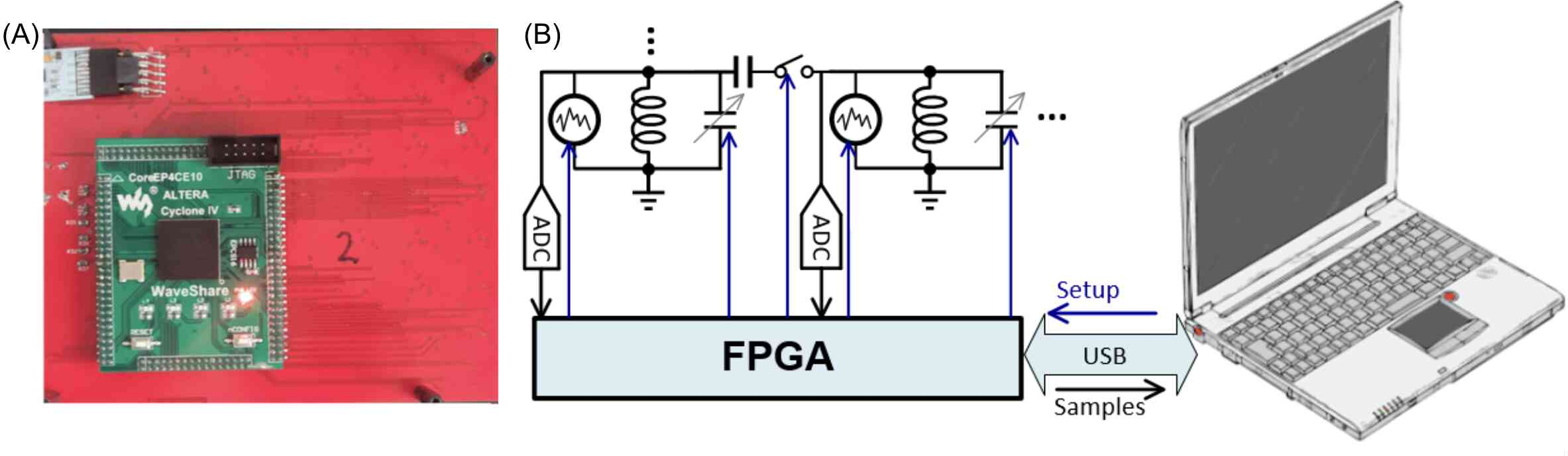
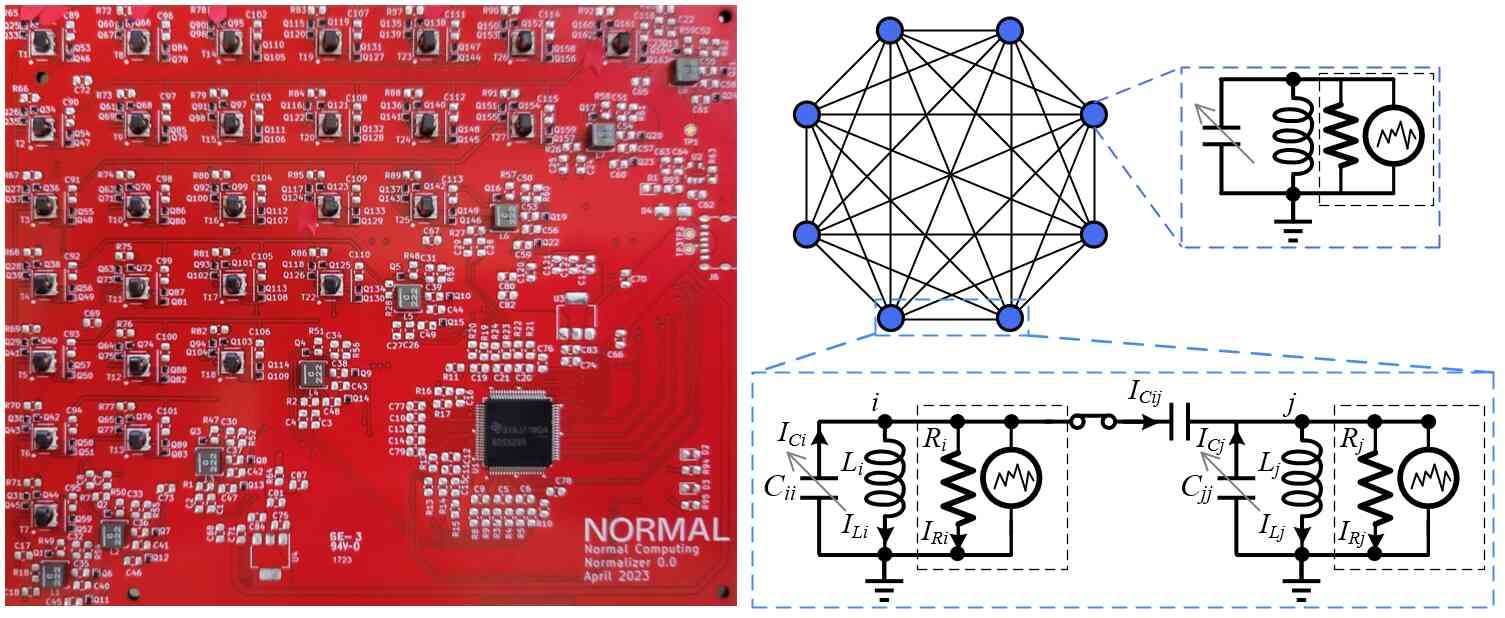
The SPU is constructed as a PCB with eight fully-connected LC unit cells, each equipped with switchable capacitor banks and bipolar coupling elements. The hardware is controlled via an FPGA, which manages the configuration of capacitances and couplings, as well as the injection of pseudo-Gaussian noise. The analog subsystem is interfaced with digital hardware for parameter compilation and sample readout. Figure 1

Figure 1: The SPU PCB and schematic, showing eight all-to-all coupled LC cells with noise sources and switchable couplings.

The design allows for flexible configuration of the covariance structure of the sampled Gaussian, with four distinct capacitance values per cell and three coupling states per connection. The noise source is implemented using LFSR-based pseudo-random bit sequences, filtered and modulated to approximate Gaussian statistics.

Gaussian Sampling and Sample Quality

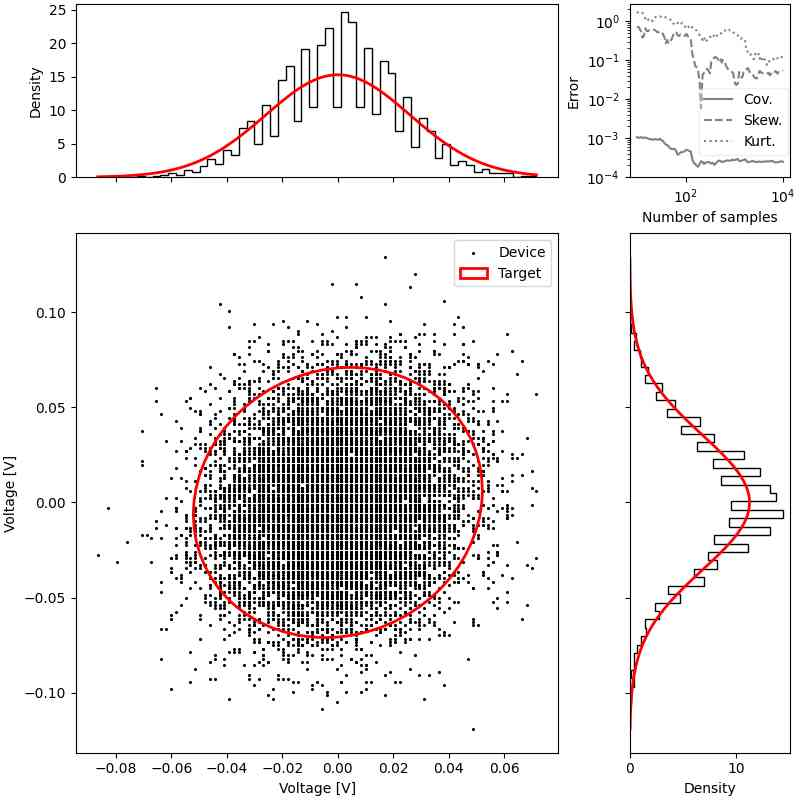
The SPU is capable of sampling from user-specified multivariate Gaussian distributions by mapping the desired precision matrix to the Maxwell capacitance matrix of the hardware. The equilibrium voltage distribution across the capacitors realizes the target Gaussian, with sample quality dependent on noise amplitude, sampling rate, and hardware calibration. Figure 2

Figure 2: Empirical voltage samples from two coupled SPU cells, showing agreement with theoretical marginals and covariance structure.

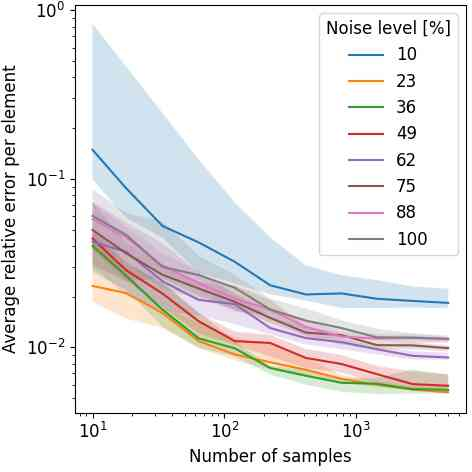
The authors demonstrate that intermediate noise levels yield optimal sample fidelity, and that sample decorrelation is governed by the system's correlation time, which is a function of the largest eigenvalue of the capacitance matrix and the resistance. Figure 3

Figure 3: Effect of noise level and sample count on covariance error, indicating optimal operating regimes for the SPU.

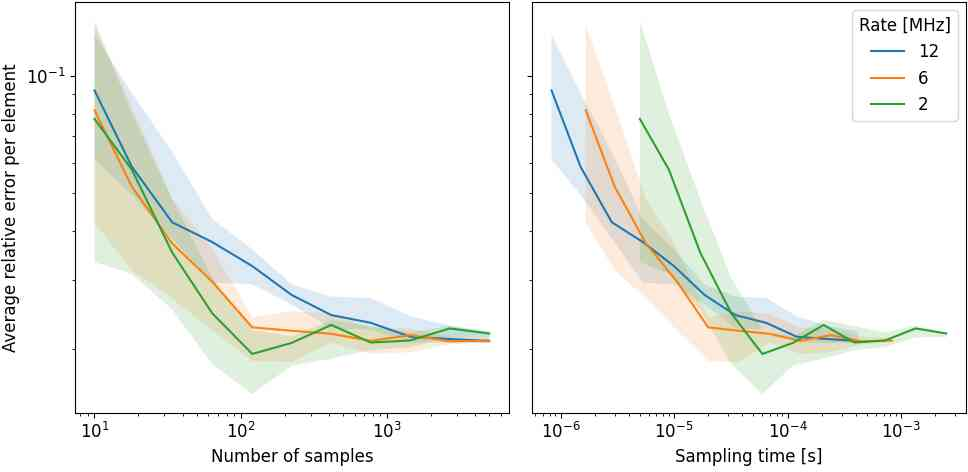
Figure 4

Figure 4: Sampling rate and sample count trade-offs, with higher rates favoring reduced total sampling time but lower rates improving per-sample accuracy.

Matrix Inversion via Thermodynamic Equilibrium

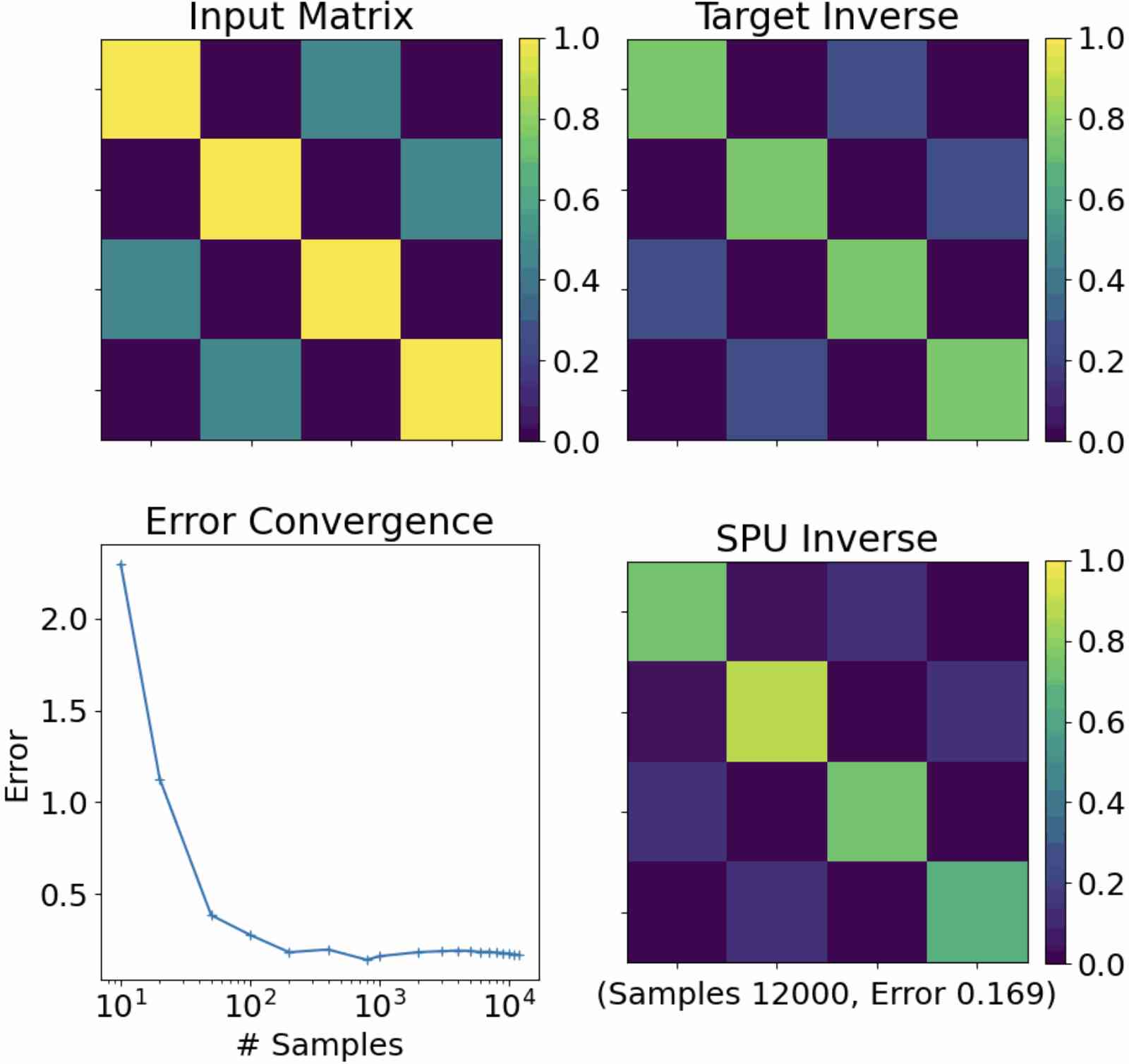
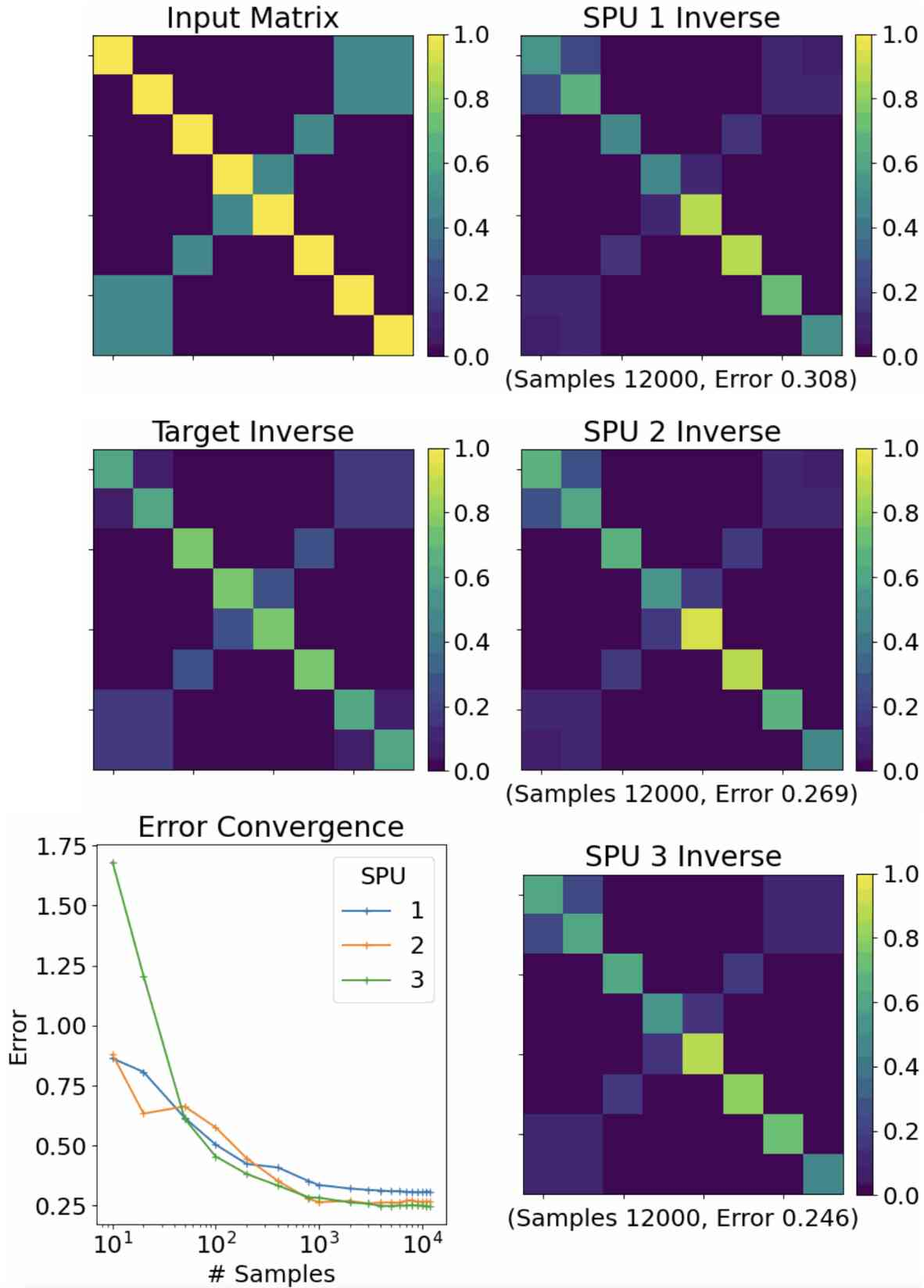
Matrix inversion is achieved by configuring the SPU to sample from a Gaussian with a precision matrix equal to the matrix to be inverted. The sample covariance of the equilibrium voltages yields the inverse. The authors report successful inversion of 4x4 and 8x8 matrices, with error decreasing monotonically with sample count, and reproducibility demonstrated across three independent SPU devices. Figure 5

Figure 5: Experimental inversion of a 4x4 matrix, showing convergence of the SPU-derived inverse to the true inverse.

Figure 6

Figure 6: 8x8 matrix inversion results across three SPUs, confirming device reproducibility and error scaling.

Figure 7

Figure 7: Time progression of matrix inversion, illustrating error reduction and visual convergence of the SPU inverse.

Applications in Probabilistic AI

Gaussian Process Regression (GPR)

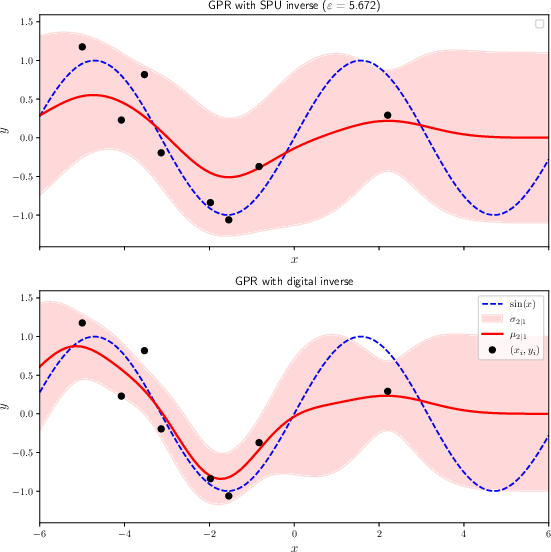
The SPU is used to accelerate GPR by performing the matrix inversion subroutine in hardware. For synthetic noisy sine data, the SPU-derived posterior mean and variance closely match digital results, with the true function lying within the predicted uncertainty bounds. Figure 8

Figure 8: GPR results using the SPU, with posterior mean and variance matching digital benchmarks.

Uncertainty Quantification in Neural Networks

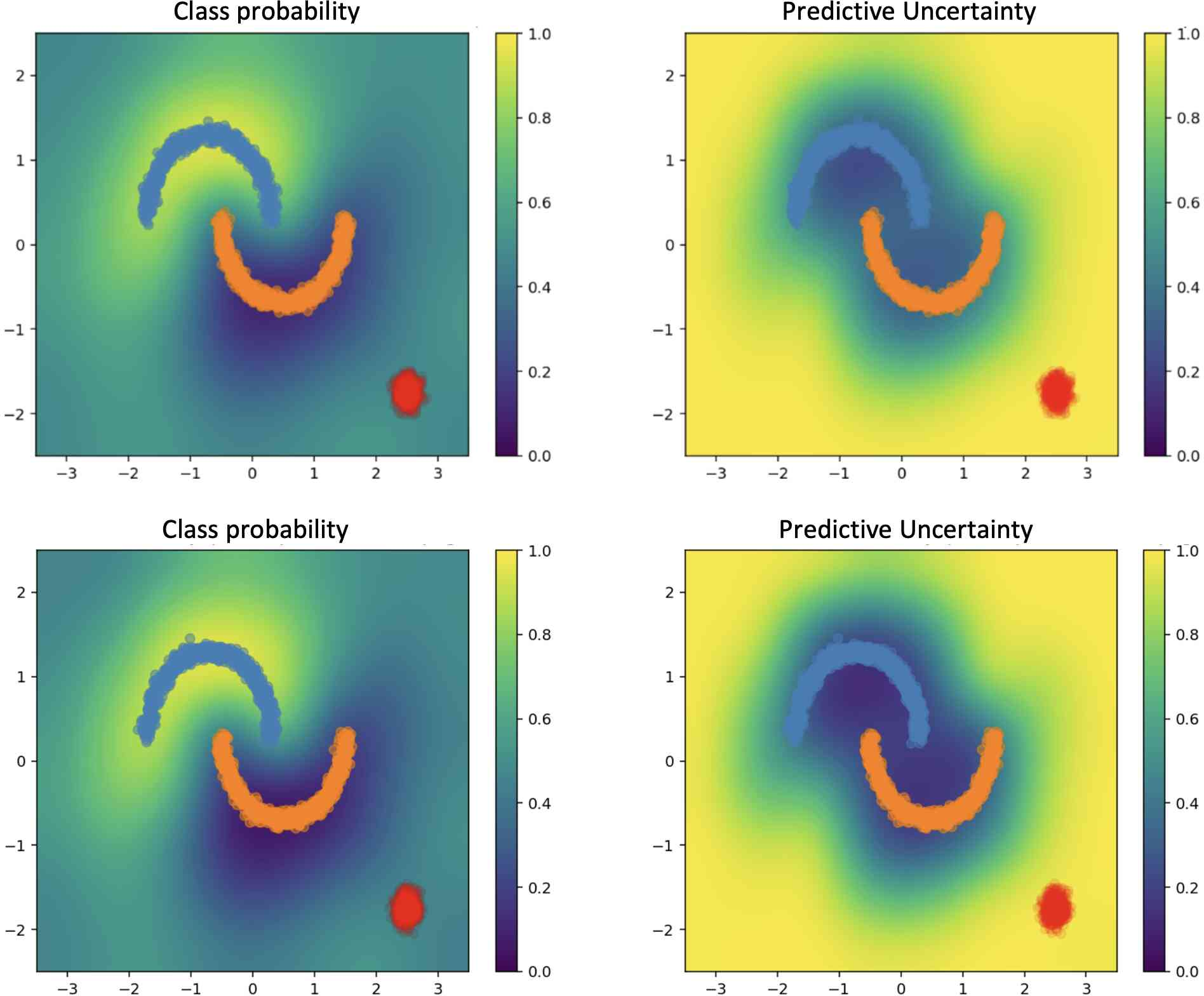
The SPU is integrated into the SNGP algorithm for uncertainty quantification in neural network classification. On the two-moons dataset, SPU-based sampling yields uncertainty estimates comparable to digital Cholesky sampling, with high uncertainty for out-of-distribution points and low uncertainty near training data. Figure 9

Figure 9: SNGP uncertainty quantification using SPU sampling, demonstrating reliable predictive uncertainty on neural network outputs.

Performance Scaling and Thermodynamic Advantage

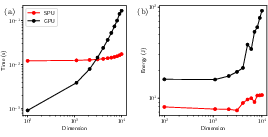
The authors present a scaling analysis comparing the SPU to an NVIDIA RTX A6000 GPU for Gaussian sampling. The SPU exhibits O(d2)O(d^2) scaling in runtime and energy, compared to O(d3)O(d^3) for digital Cholesky sampling. The crossover point for speed advantage is predicted at d3000d \approx 3000, with energy savings present at all tested dimensions. Figure 10

Figure 10: Time and energy scaling for SPU vs. GPU, showing projected thermodynamic advantage at high dimensions.

Hardware-Digital Interface and Calibration

The SPU operates as a co-processor, with the FPGA managing configuration and sample acquisition. Calibration procedures are detailed to correct for non-uniformities arising from PCB layout and component tolerances, including post-processing normalization and parallel loading models. Figure 11

Figure 11: SPU-digital interface, illustrating data flow and control between CPU, FPGA, and analog hardware.

Figure 12

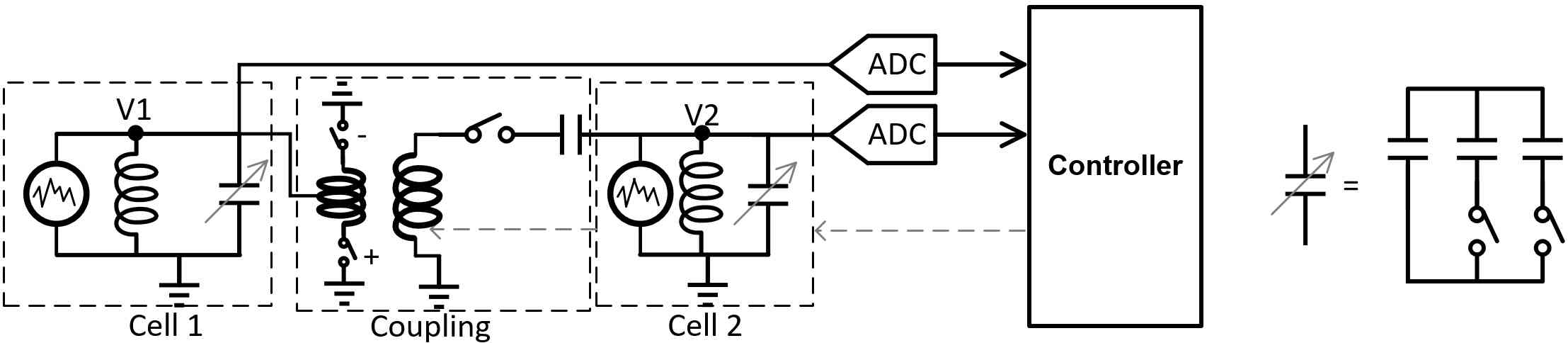
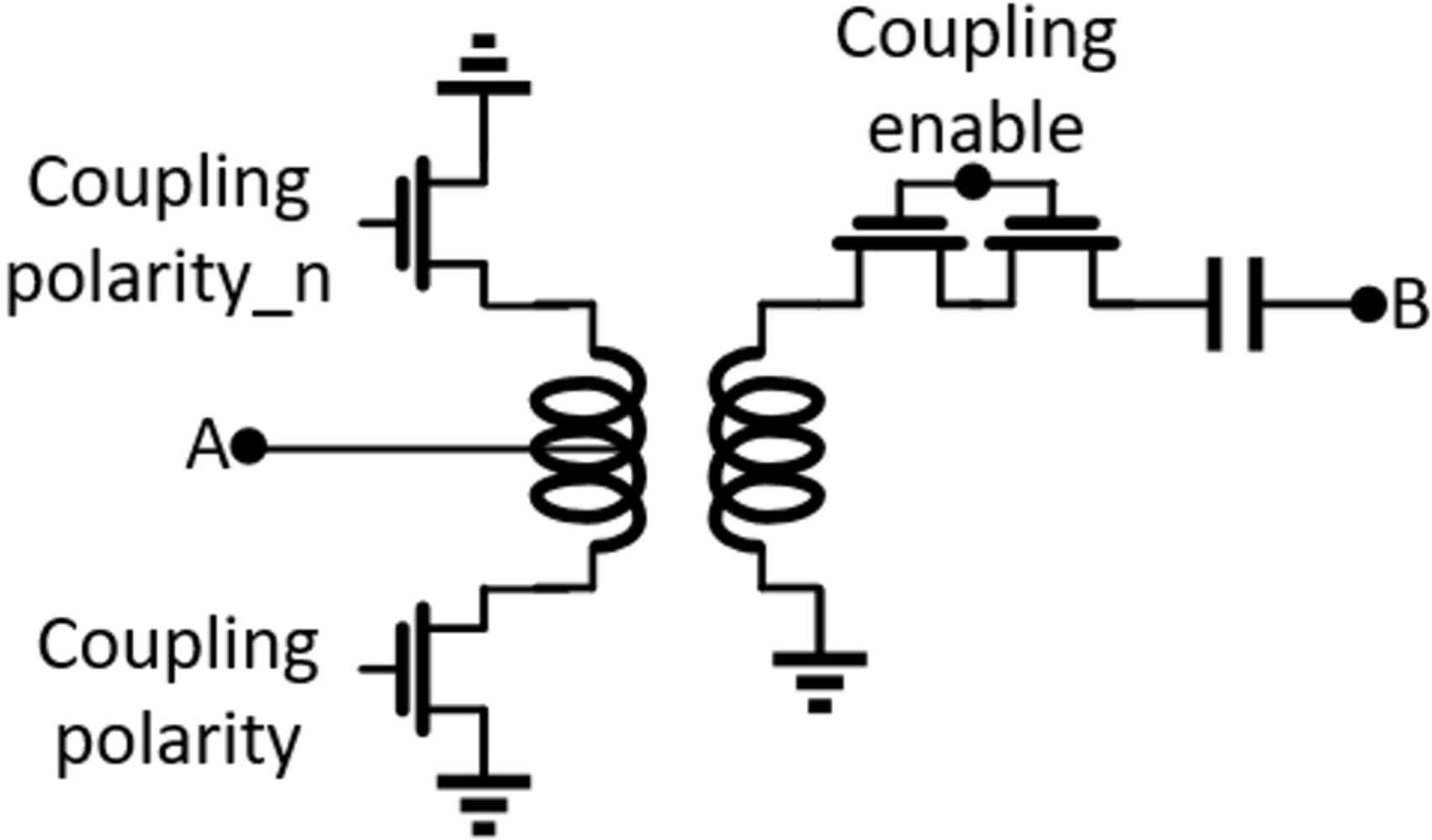
Figure 12: Simplified SPU schematic, highlighting capacitor bank and bipolar coupling implementation.

Figure 13

Figure 13: LFSR-based noise source and bit sequence generator for stochastic driving.

Device Characterization and Calibration

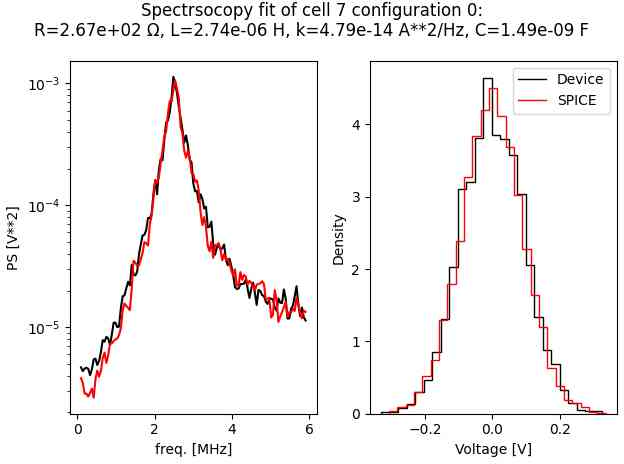
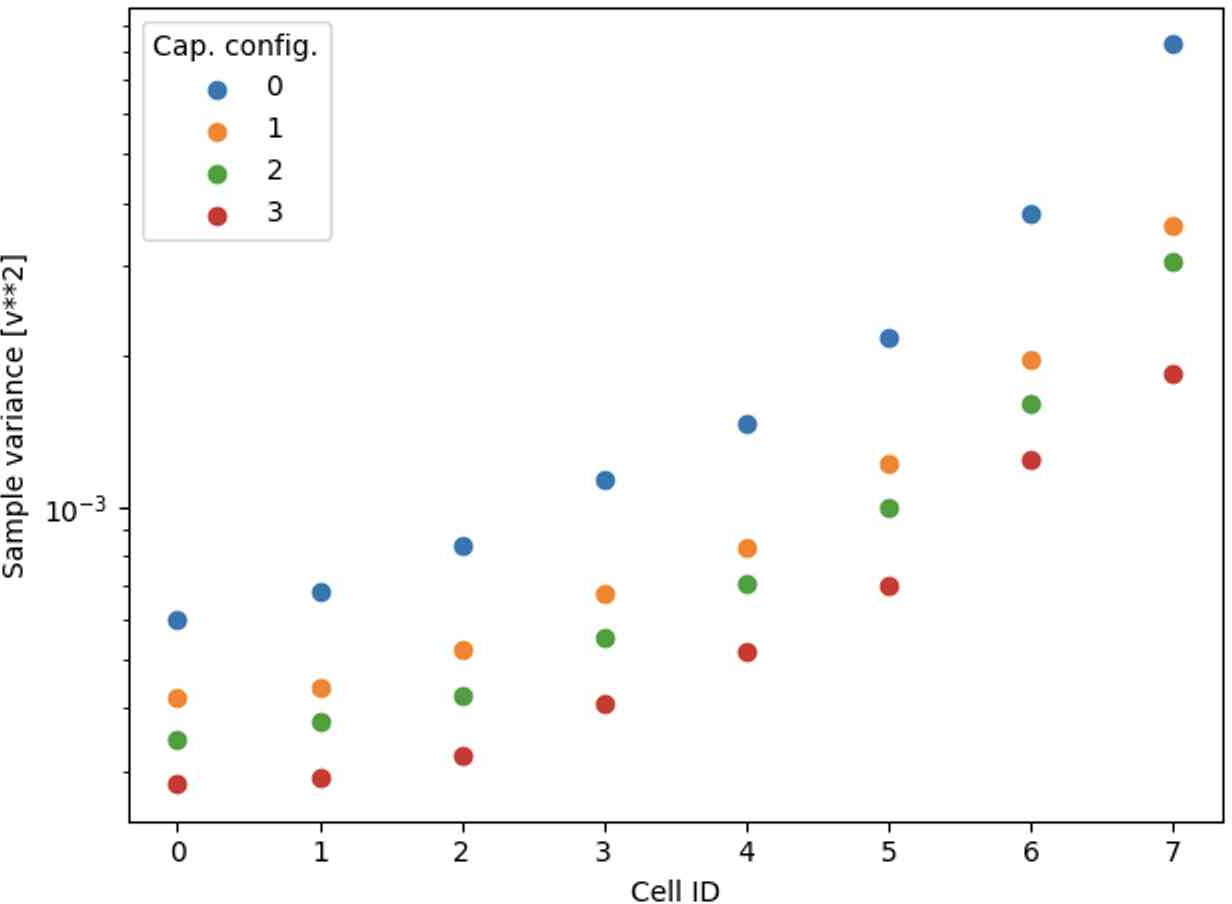
Spectroscopy with noise driving is used to empirically determine component values and coupling strengths, enabling accurate mapping from mathematical specifications to hardware configurations. Calibration methods are employed to correct for systematic non-uniformities in sample variance across cells. Figure 14

Figure 14: Power spectrum and histogram fit for device characterization, confirming agreement with SPICE simulations.

Figure 15

Figure 15: Sample variance across cells and configurations, informing calibration strategies.

Figure 16

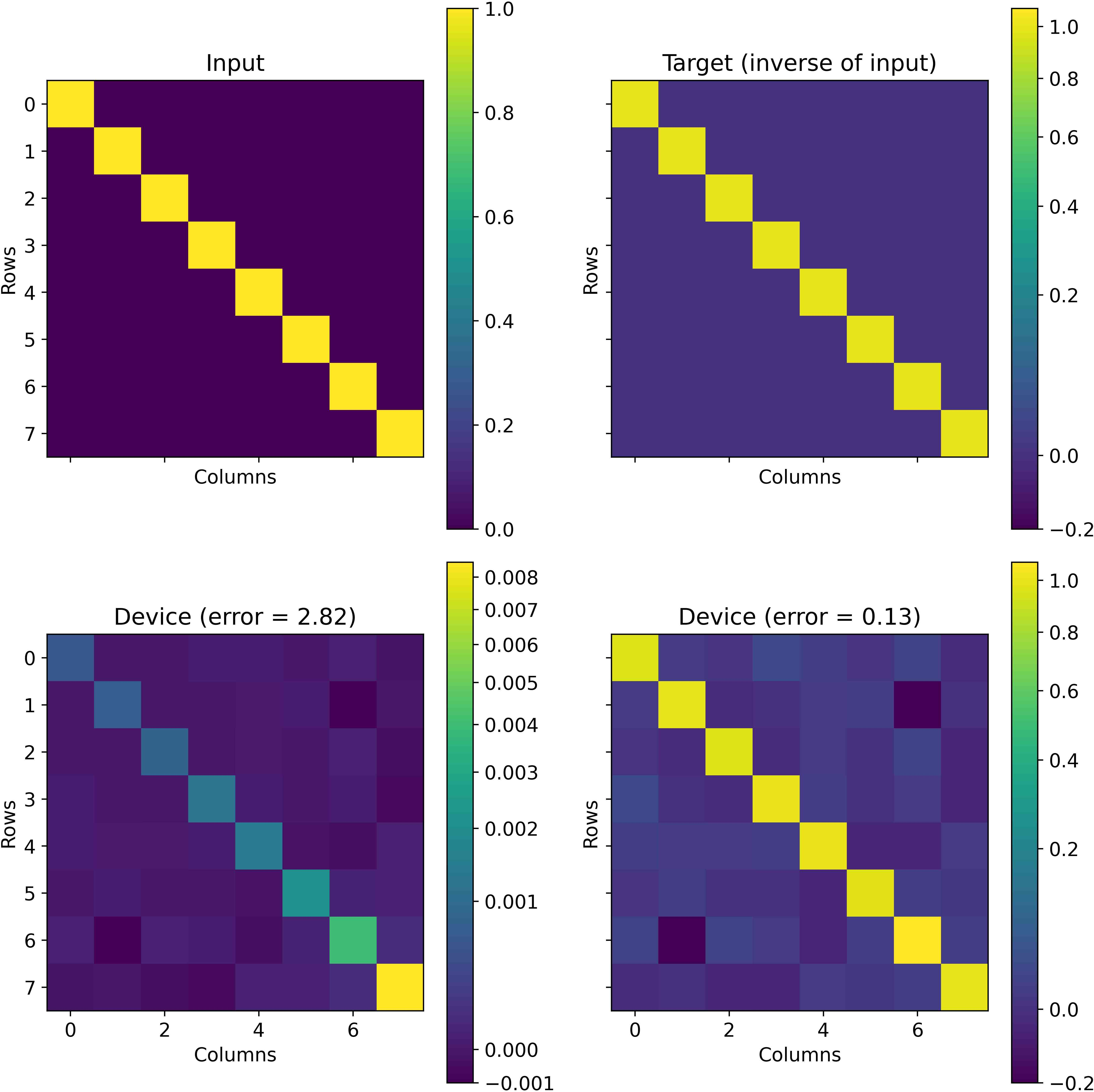
Figure 16: Heat maps of input, target, and sample covariance matrices, before and after calibration.

Figure 17

Figure 17: Circuit diagram of the coupling network, elucidating sources of asymmetry and loading effects.

Implications and Future Directions

The SPU represents a concrete step toward hardware acceleration of probabilistic AI primitives, with demonstrated capabilities in Gaussian sampling, matrix inversion, regression, and uncertainty quantification. The projected scaling advantages in speed and energy consumption suggest that thermodynamic computing could become competitive with, or superior to, digital hardware for high-dimensional problems. The approach is inherently robust to noise, as stochasticity is a feature rather than a bug.

Theoretically, the work establishes a direct mapping between physical thermodynamic dynamics and mathematical operations central to AI, opening avenues for further exploration of non-Gaussian sampling, generative diffusion models, and other probabilistic algorithms. Practically, scaling the SPU to higher dimensions and integrating it into hybrid analog-digital systems could enable new classes of AI applications with improved efficiency and reliability.

Conclusion

This paper provides a comprehensive blueprint for the implementation and application of CV thermodynamic computing in AI, with experimental validation of key primitives and a clear path toward thermodynamic advantage. The SPU's architecture, calibration, and integration strategies are well-detailed, and the performance analysis substantiates the potential for significant speed and energy improvements. Future work should focus on scaling, integration with digital systems, and extension to broader classes of probabilistic models, with the ultimate goal of enabling reliable, efficient, and scalable AI hardware.

Paper to Video (Beta)

Whiteboard

No one has generated a whiteboard explanation for this paper yet.

Open Problems

We haven't generated a list of open problems mentioned in this paper yet.

Collections

Sign up for free to add this paper to one or more collections.

Tweets

Sign up for free to view the 8 tweets with 75 likes about this paper.