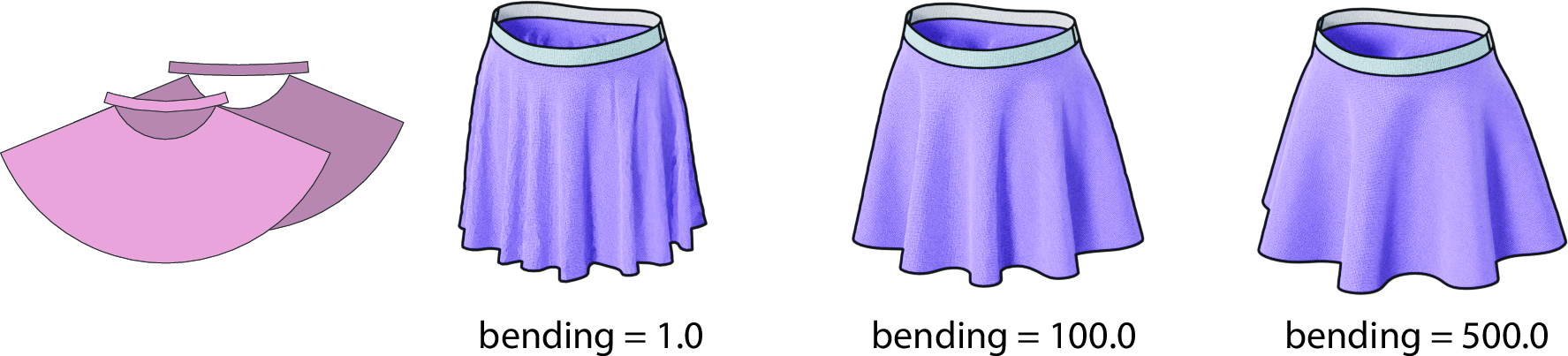
- The paper introduces a dataset of 115,000 synthetic 3D garments with detailed sewing patterns, offering unprecedented scale and control for garment simulation research.
- It leverages a novel pipeline that combines PCA-based body sampling, parametric design, and GPU-accelerated draping simulation to ensure realistic garment fitting.
- The work sets a benchmark for digital fashion research by enabling advanced cloth simulation, virtual try-on, and personalized garment retargeting.
GarmentCodeData: Advancing Dataset Scale and Procedural Control for 3D Garment Modeling
Motivation and Contributions
The generation and reconstruction of 3D garments—particularly with corresponding sewing patterns—underpins advances in fields such as virtual try-on, CAD-to-production, avatar creation, and data-driven garment simulation. However, scalable, open, and domain-diverse datasets that contain detailed structural representations of garments (notably sewing patterns) are scarce. "GarmentCodeData: A Dataset of 3D Made-to-Measure Garments With Sewing Patterns" addresses these limitations by introducing a synthetic dataset comprising 115,000 high-quality, made-to-measure 3D garment samples, spanning diverse garment types, realistic statistical body shape variations, and material settings. The release is coupled with a robust, open-source, highly scalable pipeline for parametric garment and body sampling, pattern generation, and draping simulation, as well as several algorithmic contributions crucial for reliability and coverage.
Data Generation Pipeline
1. Statistical Body Model Sampling and Measurements
A critical foundation is the creation of a comprehensive shape space from template registration to CAESAR scans, with PCA-based sampling producing 5,000 statistically plausible, gender-neutral body meshes covering anthropometric variation. Automated measurement extraction is performed by landmarking and plane intersection algorithms (Figure 1), with a strong emphasis on garment-relevant measurements such as circumferences and lengths “along balance lines”—i.e., parallel or orthogonal to gravity—which aligns with pattern drafting conventions and ensures reliable fit relative to posture.
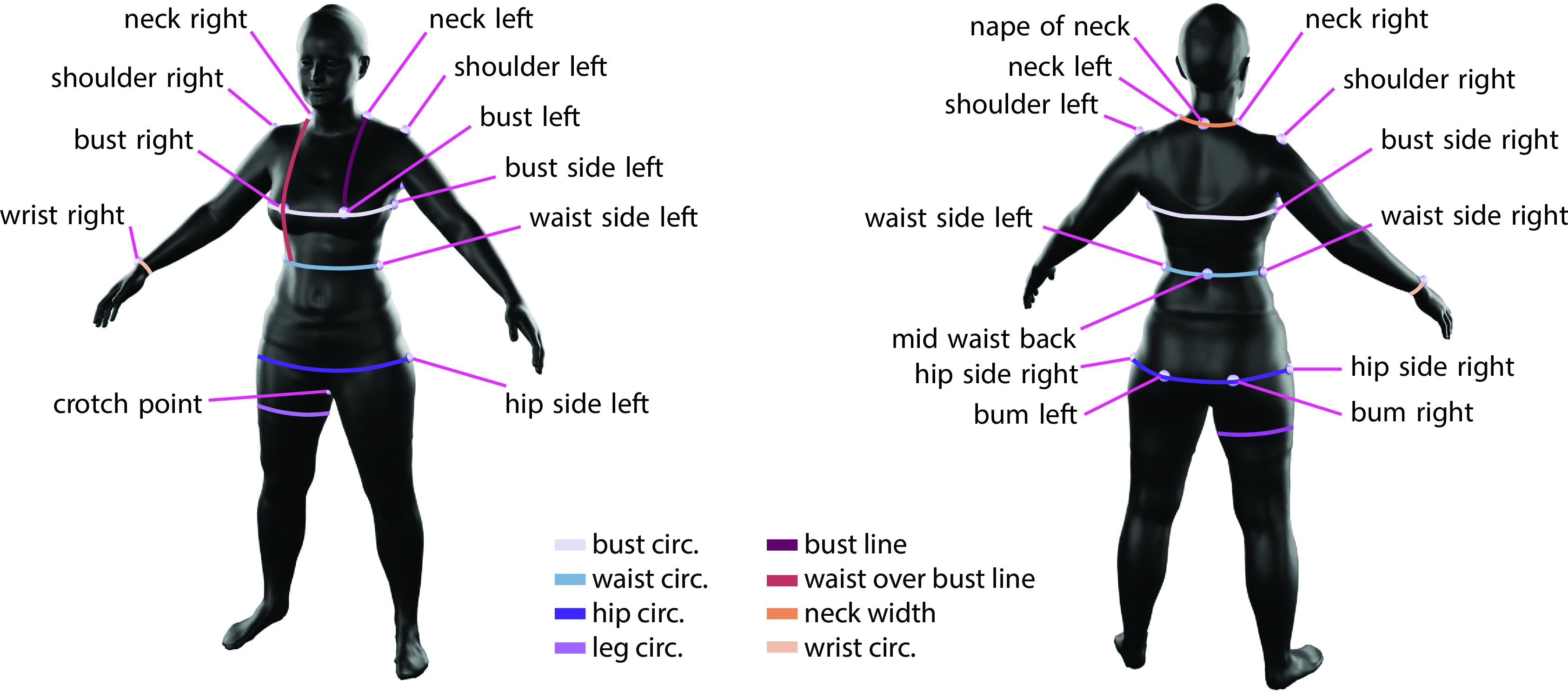
Figure 1: Overview of the body landmarks and measurements, supporting robust anthropometric measurement extraction across the statistical body model.
These procedures resolve the historical challenge of high-throughput, measurement-consistent retargeting, and pattern scaling to arbitrary body shapes without reliance on 3D scanning or costly labor.
2. Procedural Garment and Pattern Design Sampling
Design sampling is built atop the GarmentCode parametric framework, now extended with edited design spaces (by fashion expert input), non-uniform parameter distributions capturing real-world style popularity, and sampling constraints to enforce physically realistic, plausible garment instances. For further control and diversity, default probability thresholds bias design elements towards realism, with explicit guarantees (e.g., skirt length not exceeding leg length, symmetrical features privileged unless otherwise sampled). Panel labeling and improved edge-case pruning (empty patterns, nonphysical overlaps, sliding risk) are included.
3. Mesh Generation and Simulation
Generated sewing patterns are converted to physically simulation-ready meshes using a ‘box mesh’ paradigm, with edge merging to enforce seams and Delaunay triangulation of panel interiors (Figure 2). This automatically supports arbitrary topologies and merge complexities found in real-world garment construction.
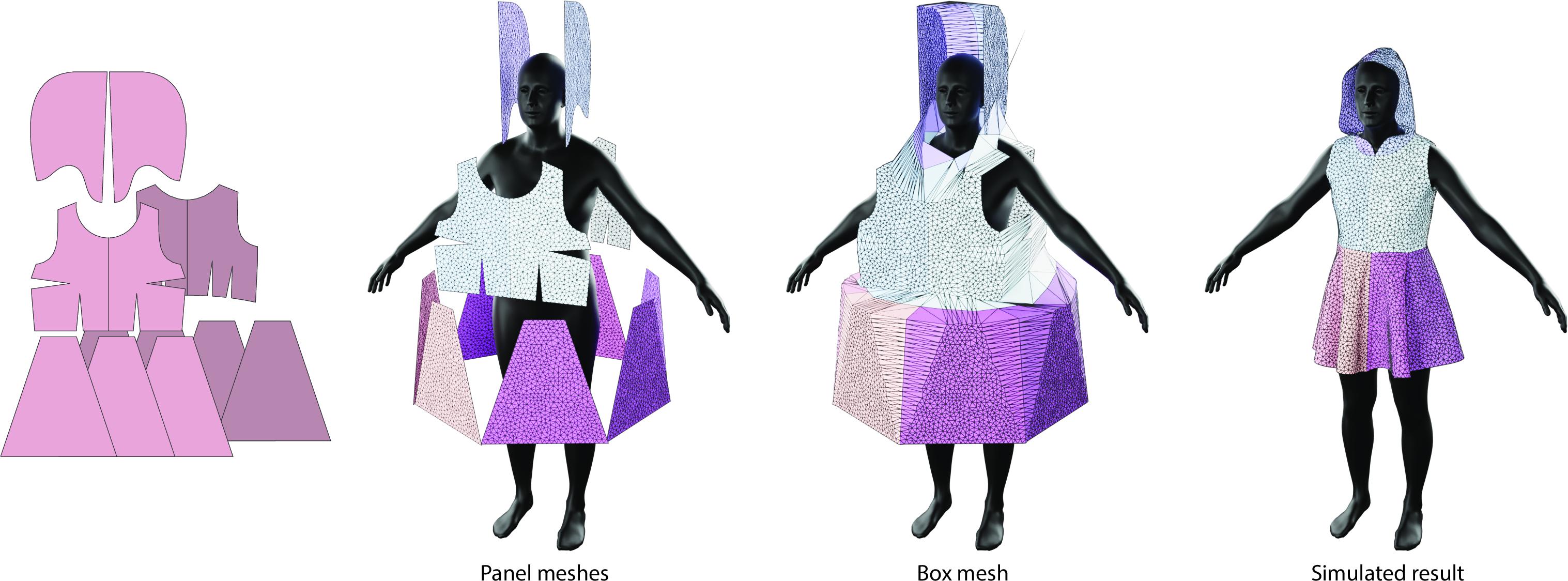
Figure 2: Mesh generation process converting panel-based sewing definitions into simulation-ready triangle meshes.
4. Scalable XPBD-Based Draping and Collision Handling
The pipeline leverages Warp—a performant, open-source, GPU-accelerated XPBD engine—for cloth simulation, extended with domain-targeted treatments including:
- Initial collision resolution: Excluding intersecting edges from the initial collision-prevention phase, with semantic panel-to-body-part associations to direct mesh separation per body segment, and selective panel-body collision filtering that prevents, e.g., lower garments being caught on arms.
- Attachment constraints: Parametrized as half-space constraints using precomputed measurements (e.g., all lower-body garment waist vertices must remain above measured waist level) for robust initial placement. These are dynamically released to permit garment relaxation into physically accurate equilibrium (Figure 3).
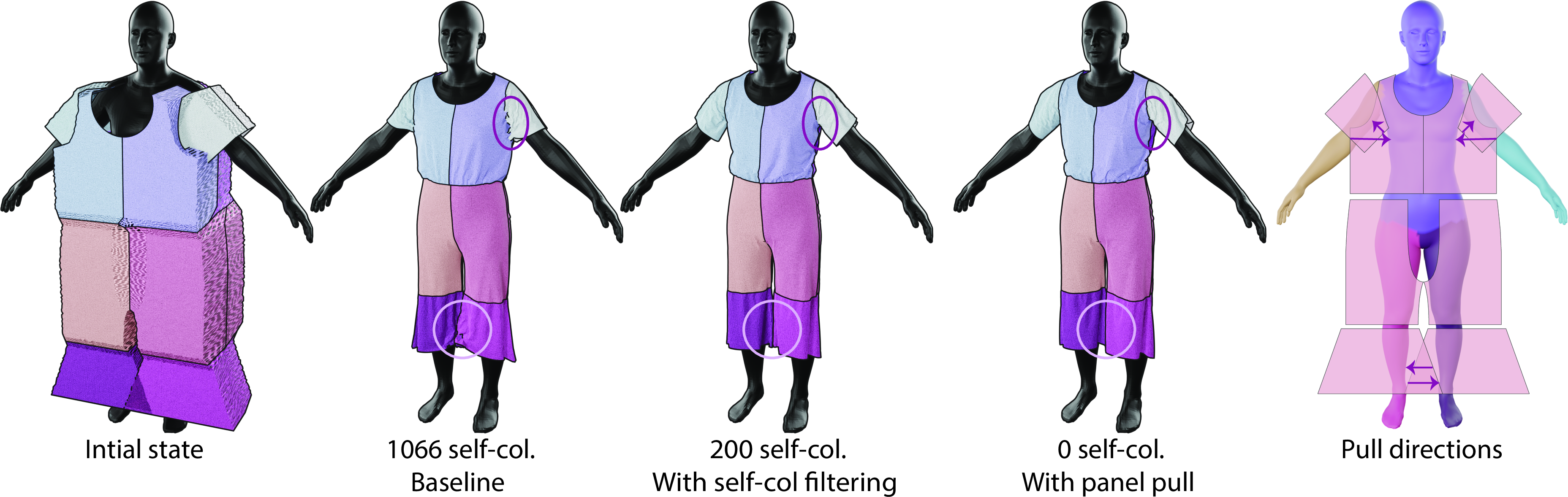
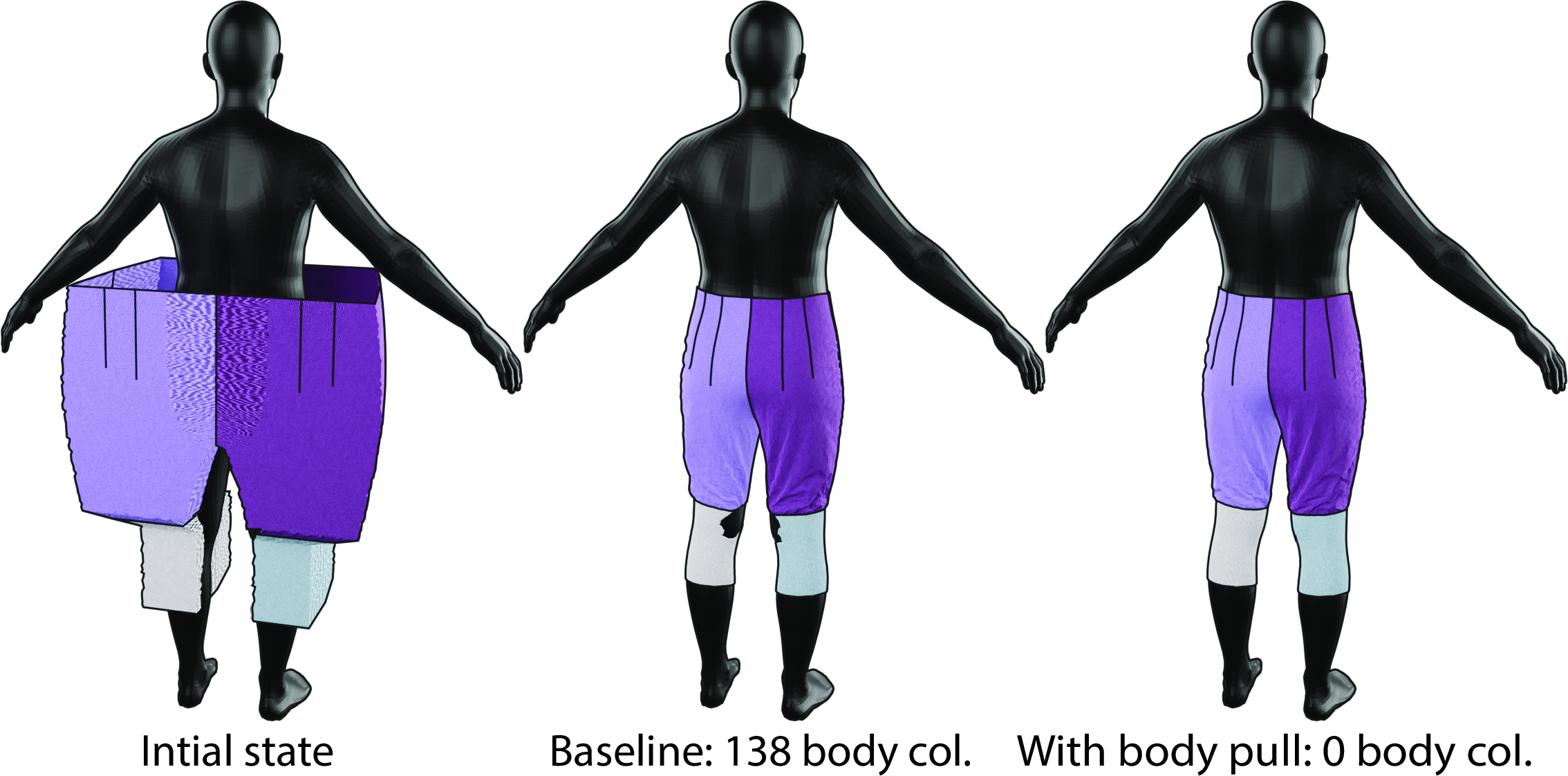
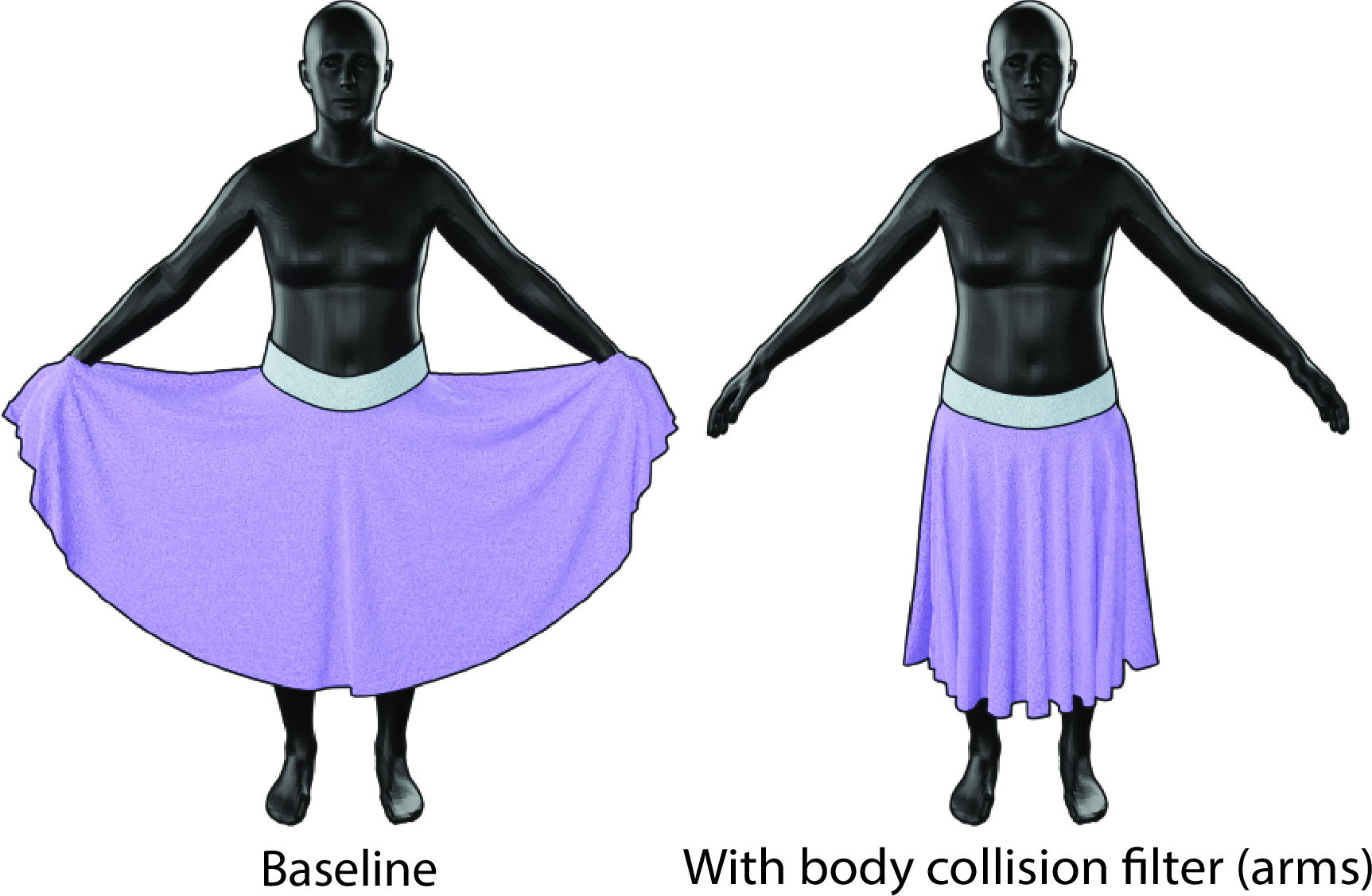
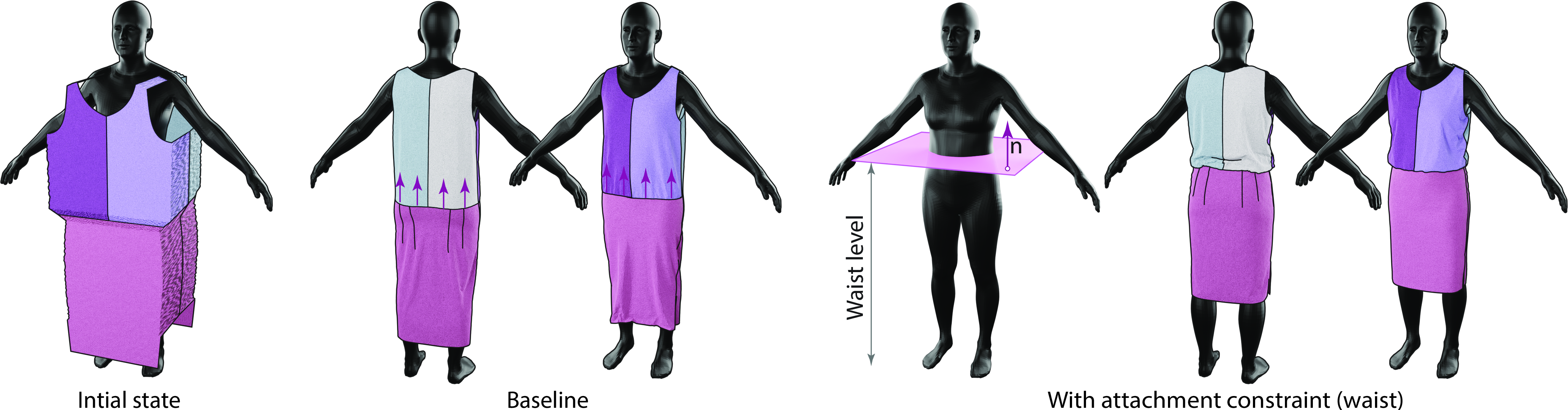
Figure 3: Resolving simulation issues such as collision and misplacement using semantic collision filters and attachment constraints.
5. Batch Parallelization and Quality Filtering
Draping simulation is batched and parallelized, with strict time and equilibrium convergence criteria. Quality control rejects outliers with high cloth-body or self-intersections, unstable configurations, and unphysical garment states, maintaining high label reliability (about 72% simulation success rate across the dataset).
Empirical Assessment
Anthropometric Accuracy and Design Retargeting
Automated measurements are evaluated against manual CAESAR ground truth, showing overestimations within a few centimeters for most circumferences (attributed to differences in landmark/tissue compression definitions). Nevertheless, the resultant fit for made-to-measure designs remains robust, as confirmed by retargeting fitted patterns to PCA extremes—garments consistently exhibit visually correct fit and balance on extreme bodies (Figure 5).
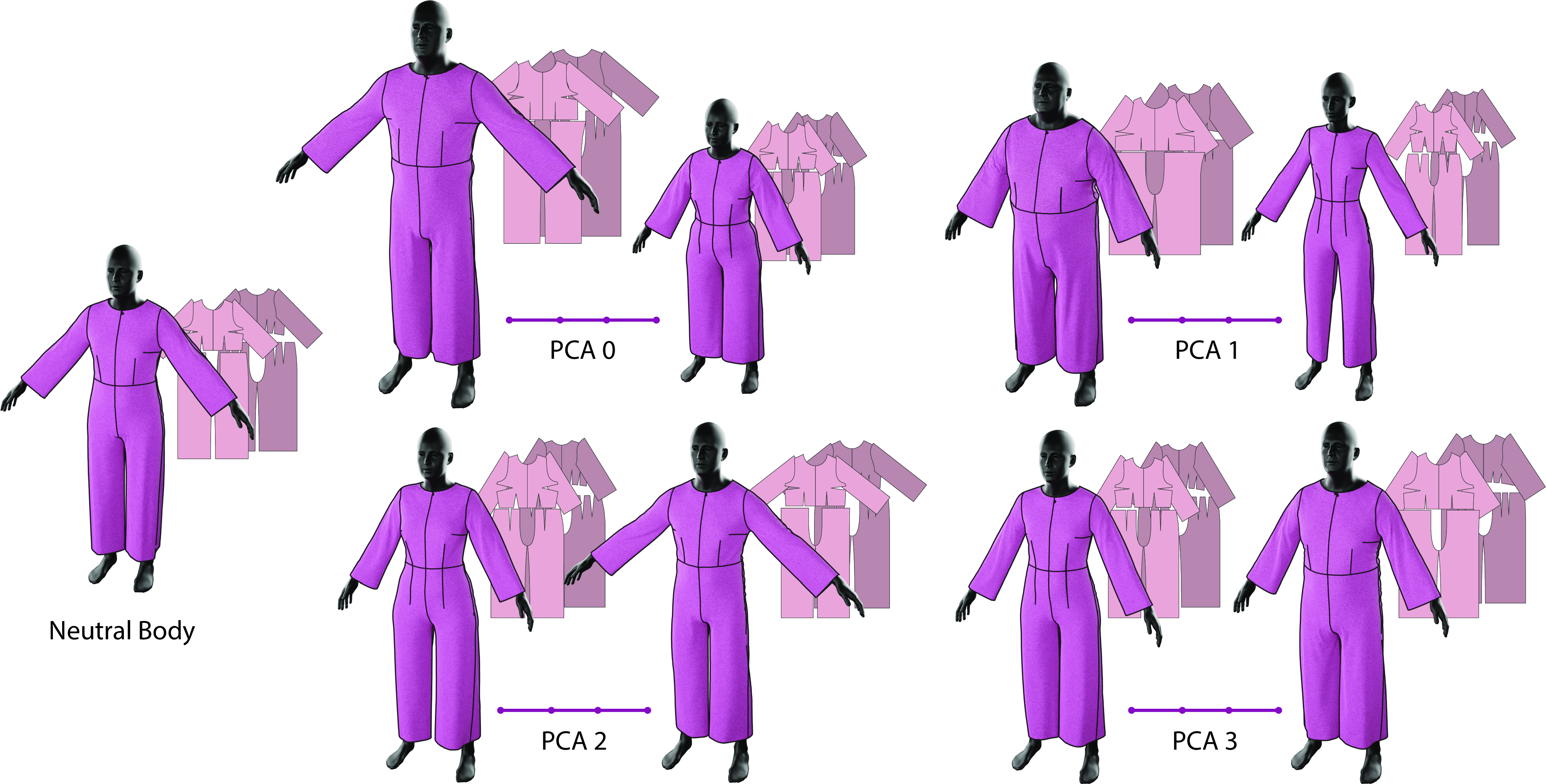
Figure 5: Systematic retargeting of fitted garment designs across body shape extremes based on algorithmic measurement extraction.
Simulation Failure Modes and Pipeline Robustness
Failure case analysis (Figure 6) reveals identifiable causes: sliding (due to nonphysical design), self-intersections (especially in complex layer/top pairings), and residual dressing misalignments. These are primarily due to intrinsic parametric space limitations and the remaining difficulty of fully automatic, semantic body-garment alignment.
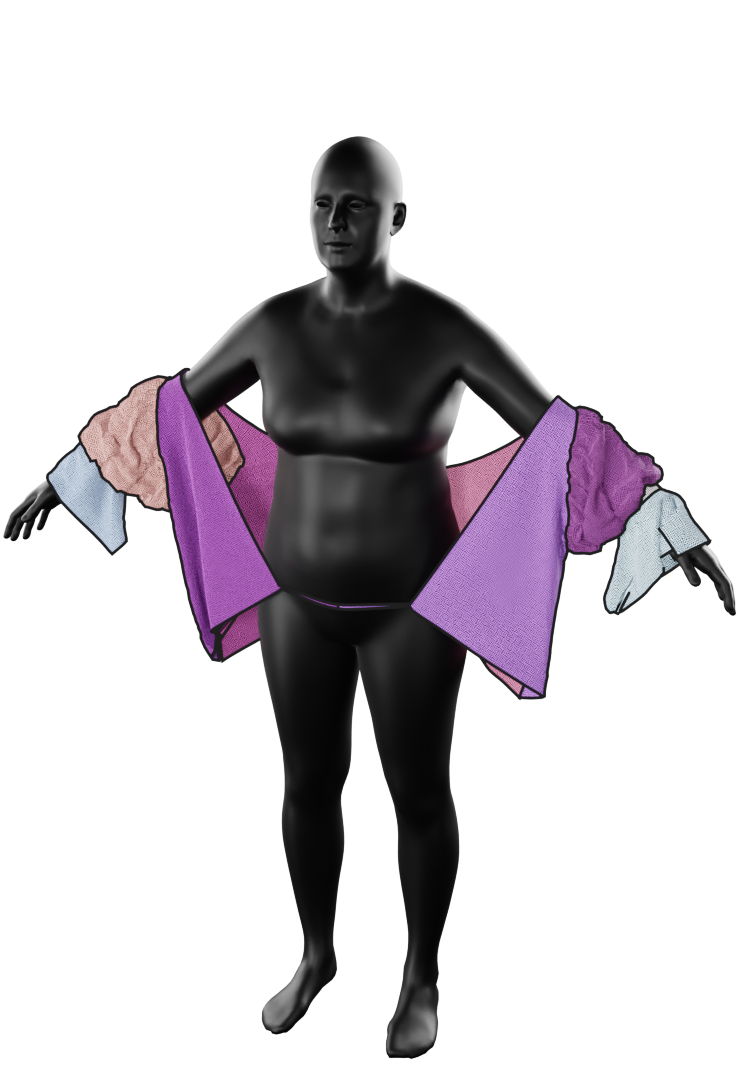

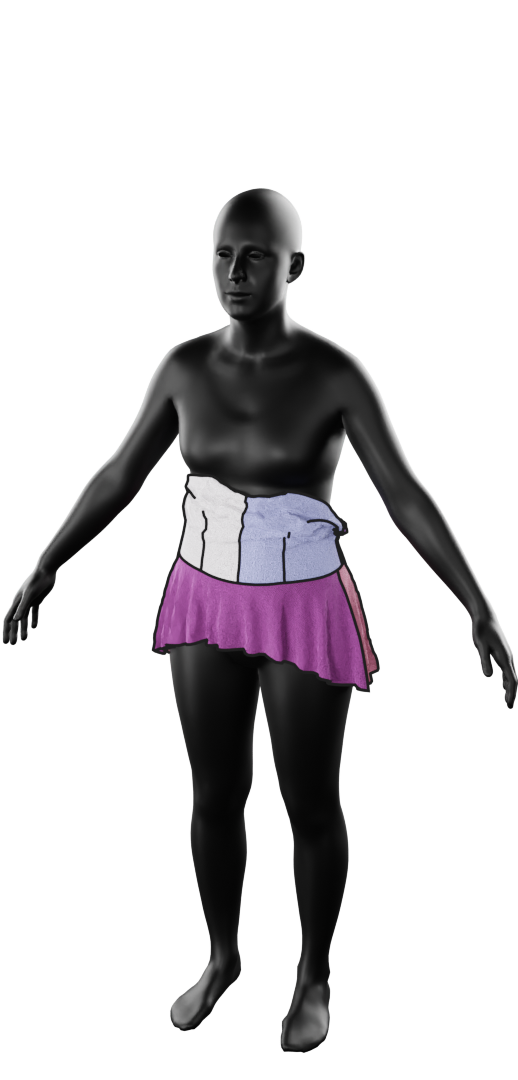
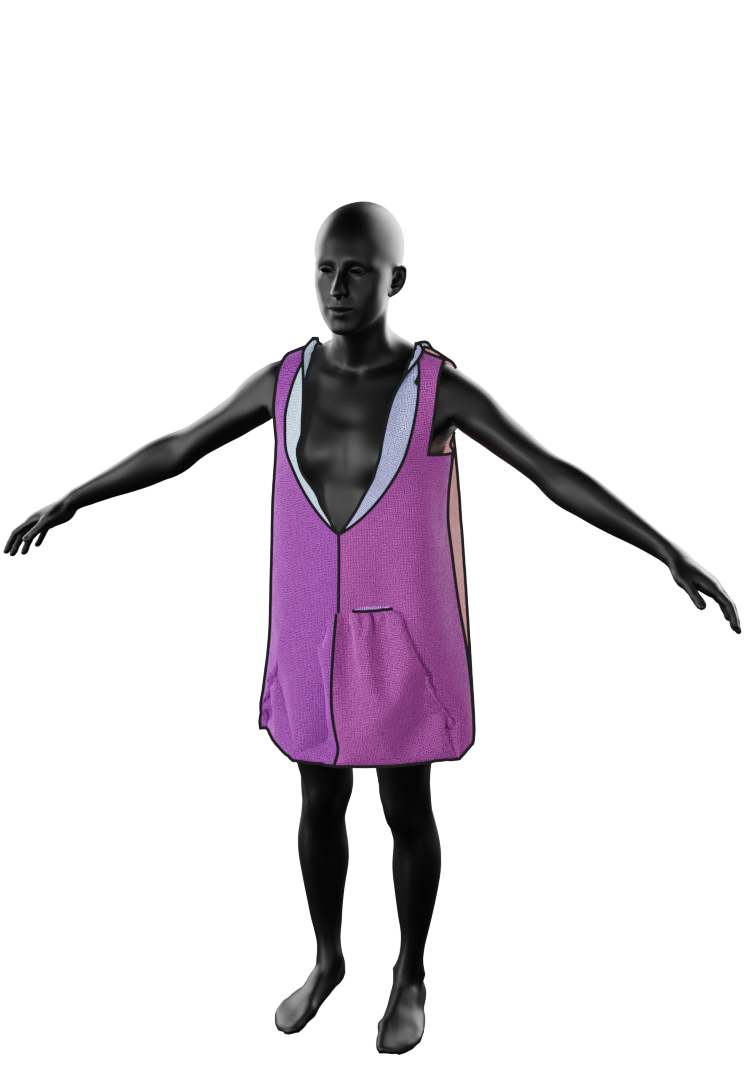
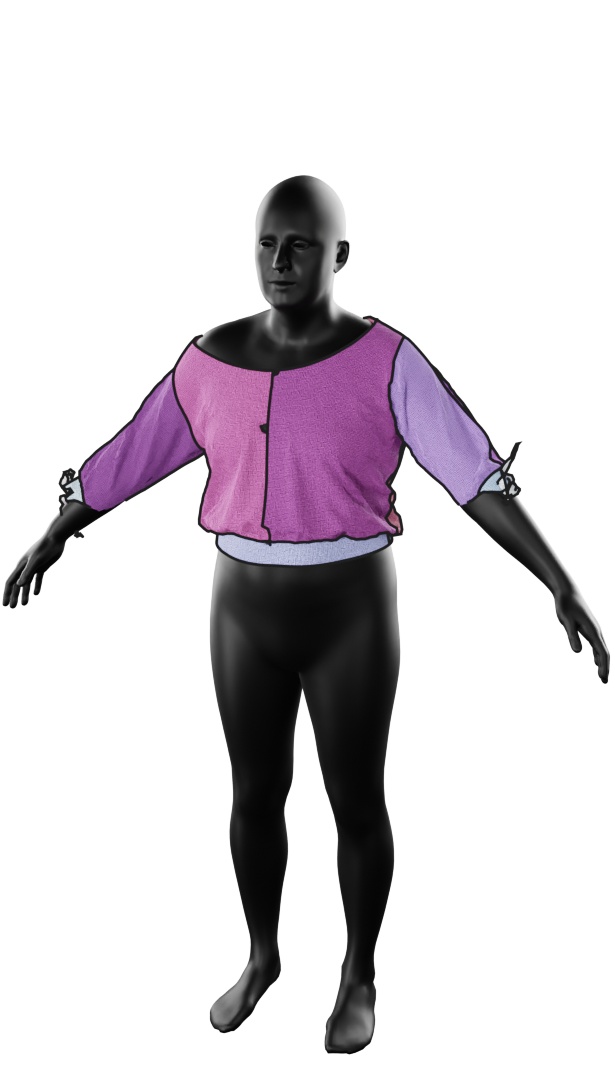
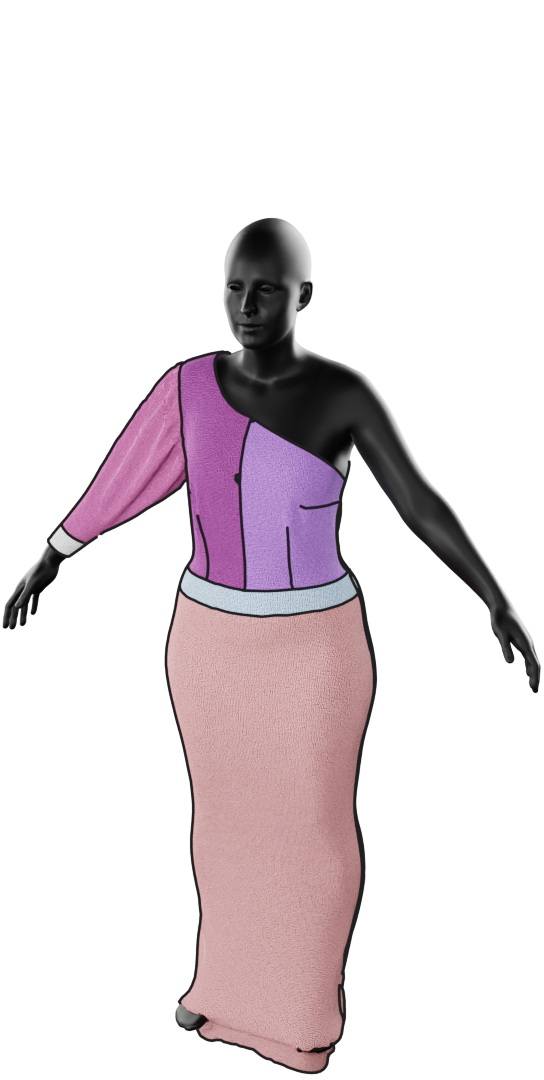
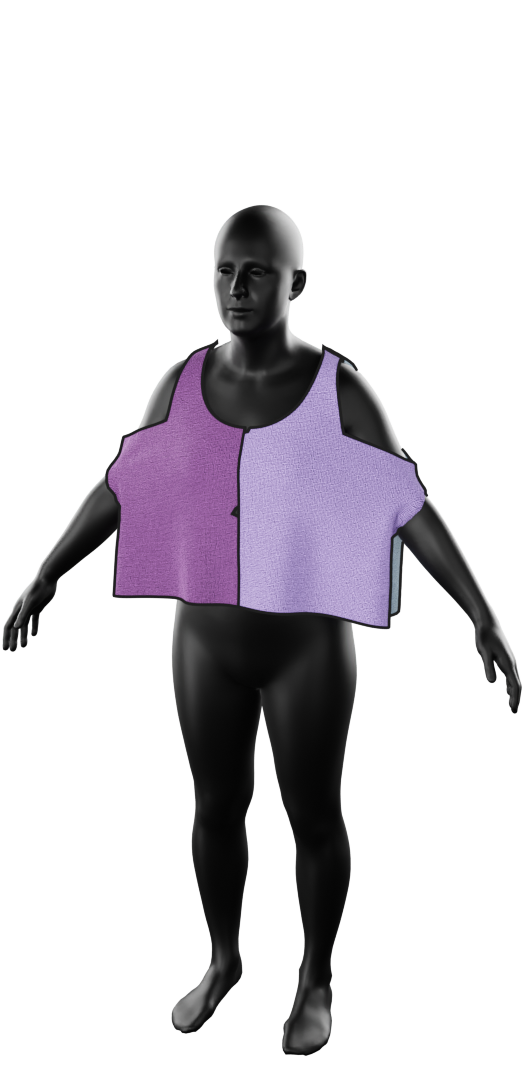
Figure 6: Characteristic simulation failure cases such as sliding, self-collision, and dressing misalignment, highlighting open challenges for robust data generation.
Implications and Future Directions
Impact for Machine Learning, Simulation, and Digital Fashion
GarmentCodeData sets a new standard for scale and coverage in sewing pattern-labeled garment datasets, opening research frontiers in:
- End-to-end learning for garment reconstruction and pattern estimation from images or point clouds, now feasible for modern neural architectures due to synthetic scale and perfect ground truth.
- Physically based neural cloth simulation, where precise pattern geometry and measured fit ground the simulation state space.
- Transfer and fit prediction studies, facilitating robust garment retargeting, virtual try-on, and anthropometric personalization pipelines.
Limitations and Open Challenges
The dataset inherits limitations from both the underlying GarmentCode model (e.g., exclusion of hardware, layered garments, or intricate pleats) and the body shape model (restricted to the European CAESAR subset, thus not global, not inclusive of children or disabled bodies). The material modeling, while diverse at a canonical level, does not account for fully data-driven, real-world–measured fabric models. Body-garment alignment and malevolent collision states remain open for further automation, where advances in neural collision detection or optimization-based untangling could provide improvements.
Ethical and Sustainability Considerations
The work calls out inherent demographic and coverage biases in open anthropometric datasets. With server infrastructure using renewable energy, there is an aim to mitigate computational carbon impact, but broader progress towards representative, low-impact 3D human data for global populations is needed.
Conclusion
GarmentCodeData delivers a highly scalable, controllable, and well-aligned garment/body dataset with explicit sewing pattern annotation, addressing a major impediment in research for neural garment reconstruction, cloth simulation, and personalized avatar technologies. With its open-source pipeline and rigorous simulation infrastructure, it serves as both a benchmark and a toolkit for the next generation of AI and graphics research in digital fashion and anthropometric modeling. Future work may address extension to more fabric/material types, improved semantic initial alignment, and expansion towards more inclusive human shape statistics.