- The paper introduces MLAS, which integrates LLMs across multi-agent systems to enhance operational flexibility, data protection, and monetization opportunities.
- It details architectural comparisons between centralized and decentralized designs and evaluates both tuning-free and parameter-tuning training methods.
- The study presents robust interaction protocols and security measures while exploring innovative business models like Agent-as-a-Service.
LLM-based Multi-Agent Systems: Techniques and Business Perspectives
The paper "LLM-based Multi-Agent Systems: Techniques and Business Perspectives" (2411.14033) examines the progression and integration of multi-agent systems composed of LLMs. This framework, termed Multi-LLM-Agent Systems (MLAS), proposes a paradigm shift in AI deployment across both technical and business aspects. Herein, the paper discusses how the capabilities of LLMs are leveraged to create systems exceeding the functionality of singular AI models, outlining the price-performance equation, flexibility in operation, proprietary data safeguarding, and monetization potentials.
Architectural and Protocol Design
Architectures of MLAS
The MLAS framework is structurally diverse, incorporating centralized and decentralized designs to enhance task-solving capabilities, operational flexibility, and data preservation strategies. Centralized architectures grant comprehensive control and coordination over all agents within a system, ideal when full operational oversight and data access are available. In contrast, decentralized architectures propose a modular approach where agents operate autonomously yet collaboratively, crucial for systems prioritizing privacy and independent agency.
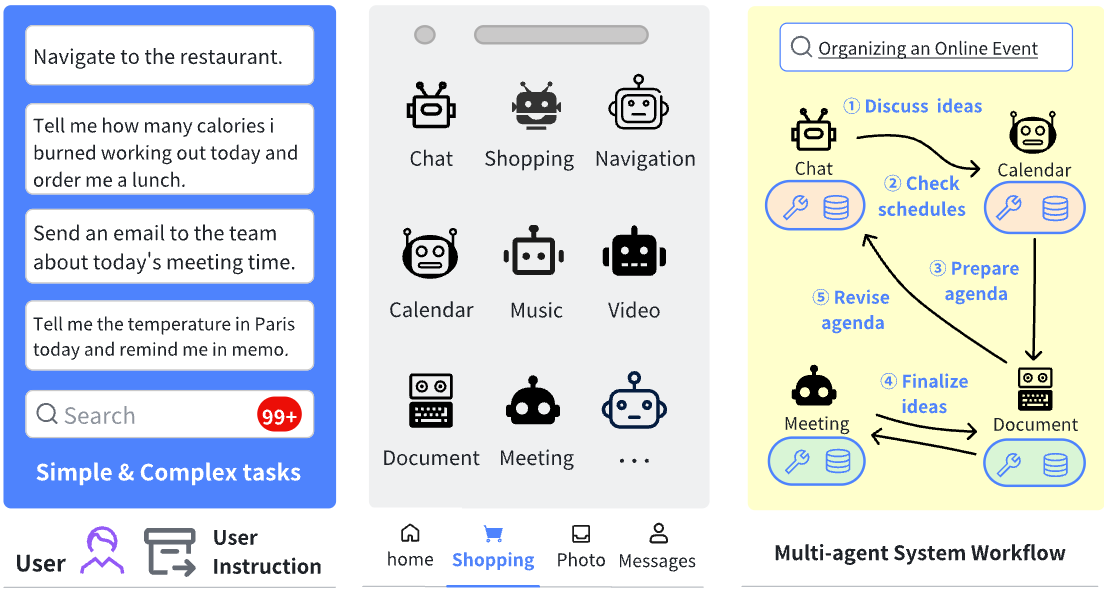
Figure 1: Illustration of MLAS.
The paper delineates the architectural intricacies of MLAS, most notably distinguishing between centralized methodologies where control is ubiquitous, to decentralized strategies embracing limited oversight yet full privacy and individual agency intelligence.
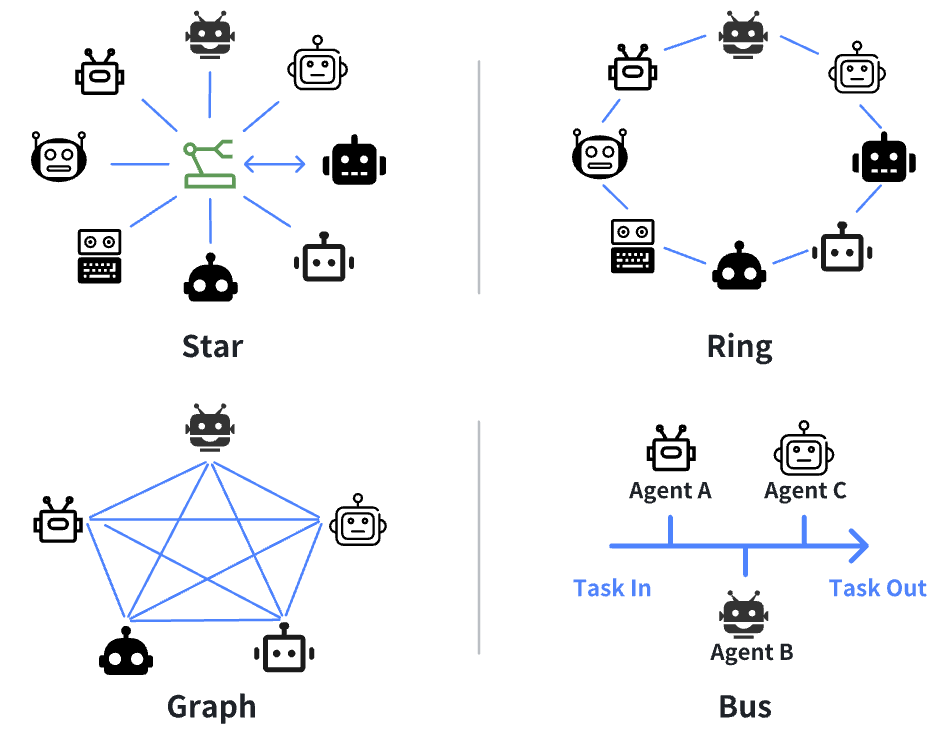
Figure 2: Architectures of MLAS.
Interaction Protocols
Interaction within MLAS requires robust protocol frameworks to facilitate seamless communication across agents. These protocols must bridge the challenges inherent to probabilistic decision-making and dynamic agent collaboration, using structured yet flexible systems.
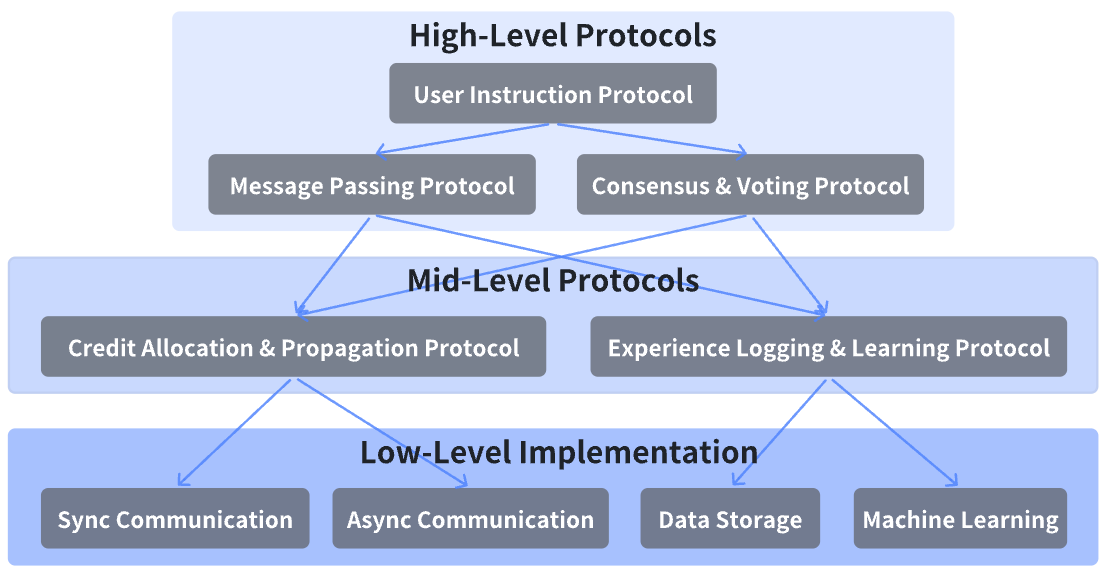
Figure 3: Protocol Hierarchy.
The protocol layer herein comprises instruction processing, message exchanges, consensus formation, credit allocation, and experience management, ensuring harmonized inter-agent activities while preserving autonomy and enhancing decision-making accuracy. This constructs a hierarchical framework enabling adaptive protocol selection conducive to scalable operations.
Technical Approaches for Agent Improvement
Agent Training Methods
MLAS agents undergo improvement via diverse training strategies, delineated as tuning-free and parameter-tuning methodologies.
Tuning-free Methods
Tuning-free methodologies, such as prompt engineering, few-shot learning, and external tool utilization, allow agents to refine their operational efficacy without altering model parameters, promoting flexibility and adaptability within multi-agent environments.
Parameter-tuning Methods
Parameter-tuning methods encompass alignment methods and multi-agent reinforcement learning (MARL), focusing on adjusting LLM weights to optimize agent intelligence collaboratively. Cooperative MARL approaches explore centralized and decentralized training protocols reflecting the multi-agent goal of task accomplishment.
Security Perspectives
Attacks and Defense Mechanisms
MLAS security perspectives address potential vulnerabilities arising from its distributed nature, including prompt injection, memory/data poisoning attacks, and model inversion threats.
Defense strategies propose input sanitization, perplexity filtering, adversarial fine-tuning, and multi-party computation models aimed at preserving system integrity and mitigating risks while maintaining efficiency.
Business Implications
Traffic and Intelligence Monetization
Traffic monetization in MLAS involves strategic optimization of user engagement and ad targeting, leveraging agent interaction to increase CTR/CVR. Intelligence monetization explores data-driven service sales by transforming agents' intelligence into marketable insights and services, aligning agents with commercial value generation models.
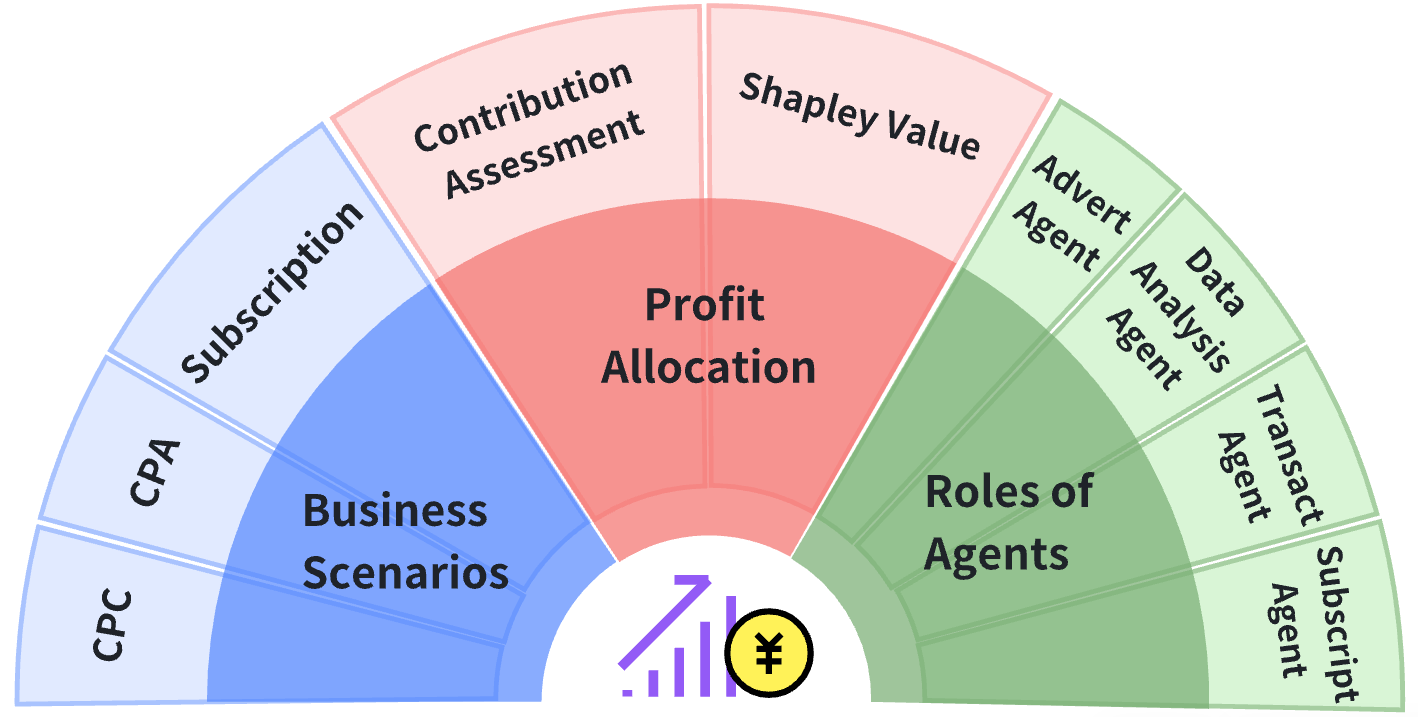
Figure 4: Traffic Monetization.
Additionally, the licensing and marketplace models such as Agent-as-a-Service (AaaS) propose dynamic deployment frameworks that facilitate scalable interactions and tailored service offerings.
Conclusion
The paper postulates that MLAS represents a transformative leap in AI integration, offering multifaceted benefits across technical efficiency, business innovation, and privacy adherence. As the ecosystem evolves, the synergy between technological advancement and strategic monetization—bolstered by robust privacy frameworks—will catalyze the widespread adoption and implementation of MLAS, heralding a new era of artificial collective intelligence.