Agentic Systems: A Guide to Transforming Industries with Vertical AI Agents
Abstract: The evolution of agentic systems represents a significant milestone in artificial intelligence and modern software systems, driven by the demand for vertical intelligence tailored to diverse industries. These systems enhance business outcomes through adaptability, learning, and interaction with dynamic environments. At the forefront of this revolution are LLM agents, which serve as the cognitive backbone of these intelligent systems. In response to the need for consistency and scalability, this work attempts to define a level of standardization for Vertical AI agent design patterns by identifying core building blocks and proposing a \textbf{Cognitive Skills } Module, which incorporates domain-specific, purpose-built inference capabilities. Building on these foundational concepts, this paper offers a comprehensive introduction to agentic systems, detailing their core components, operational patterns, and implementation strategies. It further explores practical use cases and examples across various industries, highlighting the transformative potential of LLM agents in driving industry-specific applications.
Paper Prompts
Sign up for free to create and run prompts on this paper using GPT-5.
Top Community Prompts
Glossary
- Agentic systems: AI-based frameworks composed of one or more collaborating agents that autonomously execute complex tasks across domains. "Agentic systems are advanced frameworks that integrate one or more LLM agents to automate complex tasks and streamline processes across various domains."
- Assistants API: OpenAI’s API for building agents with tools, memory, and retrieval for complex, dynamic tasks. "OpenAI: Introduced the Assistants API, enabling the development of AI agents with advanced capabilities such as tool utilization, memory-based persistent conversations, and knowledge retrieval for handling complex tasks and dynamic interactions"
- AutoGen: A Microsoft framework for building multi-agent systems that collaborate to automate tasks. "Microsoft: Introduced frameworks like AutoGen, which supports multi-agent systems for task automation and collaboration"
- Bias Mitigation: Techniques to detect and reduce unfair bias in AI outputs. "Bias Mitigation: Identifying and reducing biases in generated responses."
- Chain of Thought Reasoning: A reasoning approach where the agent decomposes complex problems into sequential steps. "Task Sequencing, Goal-Oriented Planning, and Chain of Thought Reasoning:"
- Chain Prompting: A workflow technique chaining multiple prompts/LLMs to accomplish a task. "Example of LLM Workflow: Chain Prompting with RAG for Knowledge Retrieval"
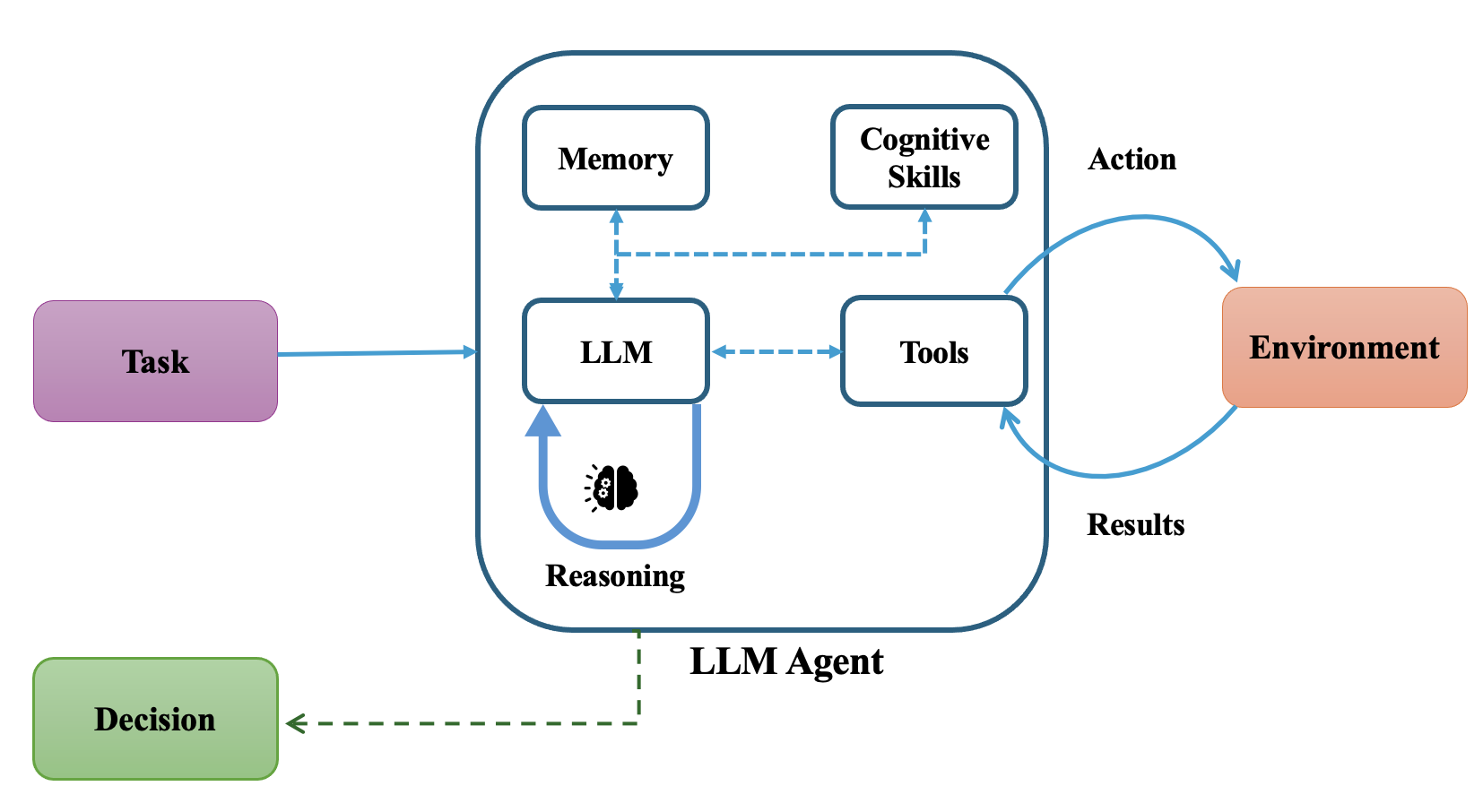
- Cognitive Skills module: A module that hosts purpose-built inference models for specialized, domain-specific tasks beyond general LLM capabilities. "The Cognitive Skills module acts as a model hub, equipping the agent with purpose-built models specifically designed to accomplish tasks that general-purpose LLMs, even when fine-tuned LLMs, struggle to perform effectively."
- Compliance Monitoring Models: Specialized models that check outputs for adherence to policies, laws, and regulations. "Compliance Monitoring Models:"
- Context-aware systems: Systems that incorporate real-time situational data to adapt their behavior and outputs. "The limitations of traditional SaaS platforms have driven the adoption of context-aware systems, which aim to address these gaps by integrating real-time data and adaptability into workflows."
- Contextual Awareness Tools: Tools that provide situational or environmental context to tailor agent actions. "Contextual Awareness Tools: Systems that provide the agent with situational and environmental context, enabling it to tailor its actions and outputs based on specific operational scenarios."
- Data poisoning attacks: Adversarial attempts to corrupt training or retrieval data to mislead models. "Identifying and mitigating risks like jailbreaking attempts, toxic content generation, or data poisoning attacks."
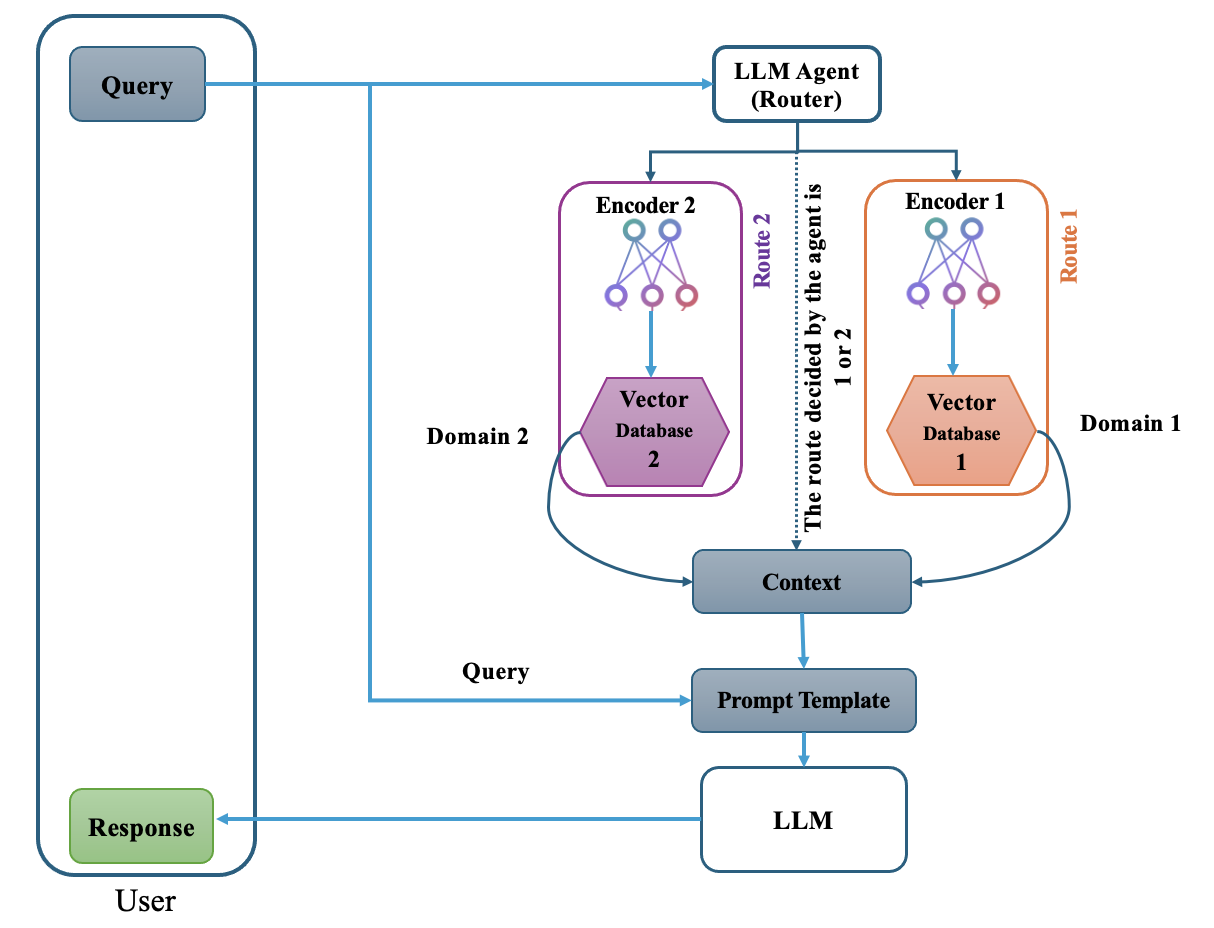
- Domain-specific encoders: Embedding models fine-tuned for a particular knowledge domain to improve retrieval and understanding. "These vector databases are powered by domain-specific encoders, fine-tuned to understand the semantics and key aspects of their respective domains."
- Dynamic API Integration: Real-time connections to external systems and data streams enabling adaptive decisions. "Dynamic API Integration: Tools that allow the agent to interact with live data streams, proprietary platforms, and external systems, facilitating real-time decision-making and adaptive responses."
- EHRs (Electronic Health Records): Digitized patient medical histories used in clinical workflows. "Specialized agents access diagnostic databases, EHRs, and clinical guidelines."
- ERP systems: Enterprise software platforms for managing core business processes (e.g., finance, supply chain). "Interoperability Across Systems: Seamlessly integrating with enterprise tools and bridging gaps between structured (e.g., ERP systems) and unstructured (e.g., emails, documents) data environments."
- Guardrail Classifiers: Safety and risk models that assess outputs for vulnerabilities, ethics, and policy adherence. "LLM Agent 4: Utilizes Guardrail Classifiers to assess the risk levels of decisions made by the Orchestrator and other agents."
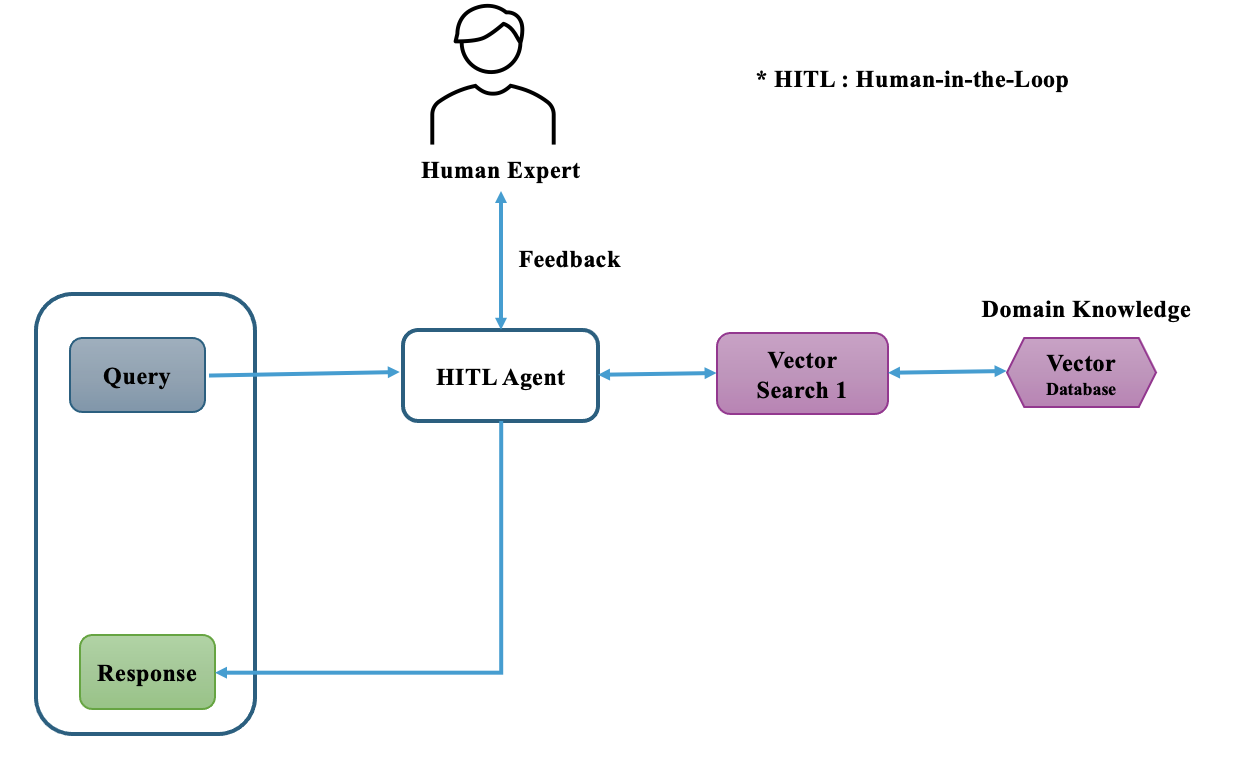
- Human-Augmented Agent: An AI agent that collaborates with humans, incorporating oversight and feedback in its workflow. "A Human-Augmented Agent is an intelligent system designed to collaborate with humans by automating complex tasks while incorporating human oversight, feedback, or decision-making."
- Human-in-the-Loop (HITL) Agent: An agent pattern where humans validate, refine, or override AI decisions. "Human-in-the-Loop (HITL) Agent: Integrates human feedback on decision status and environmental context to validate, refine, or override outputs generated by the agent."
- Image Classification and Object Detection: Computer vision tasks to categorize images and localize/identify objects. "Image Classification and Object Detection:"
- Jailbreaking attempts: Efforts to bypass an AI model’s safety controls to induce harmful or restricted behavior. "Identifying and mitigating risks like jailbreaking attempts, toxic content generation, or data poisoning attacks."
- Knowledge Graphs: Structured graph-based representations of entities and relationships for complex, interlinked queries. "Connected to Knowledge Graphs, which provide structured and interconnected data for handling complex, interlinked queries."
- Knowledge Retrieval Systems: Systems that fetch relevant information (structured or unstructured) to ground agent responses. "Knowledge Retrieval Systems: Retrieval-Augmented Generation (RAG) systems to access structured (e.g., databases) and unstructured (e.g., document repositories) knowledge, enabling the agent to incorporate relevant domain-specific information into its operations."
- LangChain: A framework that supports building agents and tool-using LLM applications. "LangChain: Supports implementing agents for dynamic, multi-step tasks but faces challenges with speed limitations when managing complex interactions between multiple agents and tools"
- LLM agents: Autonomous agents powered by LLMs that combine reasoning, memory, skills, and tools. "At the forefront of this revolution are LLM agents, which serve as the cognitive backbone of these intelligent systems."
- Legacy System Interfaces: Connectors that integrate traditional databases and systems into modern agent workflows. "Legacy System Interfaces: Tools for bridging traditional structured data systems, such as relational databases, to incorporate historical data and insights into the agent's current tasks."
- LLM workflows: Predefined, static pipelines of LLM steps with limited adaptability. "LLM workflows are predefined, static processes designed to perform specific, linear tasks."
- Magentic-One: A generalist multi-agent architecture proposed for domain-agnostic complex problem solving. "Magentic-One: Proposes a generalist multi-agent system architecture for solving complex problems, aiming for adaptability across domains"
- Misinformation Detection: Methods to identify and flag potentially false or misleading content. "Misinformation Detection: Flagging and correcting potentially false or misleading information."
- Multi-Agent System: A coordinated collection of autonomous agents collaborating to solve interconnected tasks. "A Multi-Agent System is a collection of autonomous agents designed to collaborate and solve interconnected problems or achieve shared goals."
- Optical Character Recognition (OCR): Technology to extract text from images or scanned documents. "Optical Character Recognition (OCR): Enables the agent to process and extract information from:"
- Orchestration module: A coordinating component that manages communication and task flow among agents. "These systems are designed to function autonomously, enabling agents to collaborate through direct communication or an orchestration module that coordinates their interactions."
- Orchestrated Multi-Agent System: A multi-agent pattern with a lead agent delegating subtasks and integrating outputs. "Orchestrated Multi-Agent System: Involves a lead agent that delegates subtasks to specialized agents and integrates their outputs, commonly used in dynamic, multi-step workflows."
- Reasoning Engine (LLM): The core decision-making component that plans, infers, and synthesizes information. "Reasoning Engine (LLM): The Brain of the Agent"
- ReAct Agent: An agent pattern that interleaves reasoning and acting to handle interactive tasks. "ReAct Agent: Combines reasoning and action to handle interactive workflows and decision-making tasks"
- Retrieval-Augmented Generation (RAG): A pattern that grounds LLM outputs with retrieved domain knowledge. "a typical workflow involves a chain of prompts using multiple LLMs, combined with a Retrieval-Augmented Generation (RAG) pattern for accessing domain-specific knowledge."
- Risk Assessment Models: Models that evaluate potential risks (e.g., IP conflicts, privacy, underwriting) in decisions or content. "Risk Assessment Models:"
- Router Agent: An agent that routes queries to appropriate sub-agents, tools, or knowledge sources. "Router Agent: Maps queries or tasks to the appropriate sub-agents or data sources, often used in multi-domain retrieval systems like Retrieval-Augmented Generation (RAG)"
- RAG Agent Router: A task-specific agent that directs queries to the right domain sources in RAG systems. "RAG Agent Router :"
- RAG Orchestrated Multi-Agent System: An orchestrated multi-agent pattern where specialized retrieval agents handle distinct domains/tools. "RAG Orchestrated Multi-Agent System:"
- SaaS platforms: Cloud-hosted software services offering scalable, standardized functionality across organizations. "with SaaS platforms becoming essential for scalability and efficiency across industries."
- Search APIs: External search interfaces used by agents to retrieve supplementary or broad-context information. "Connected to Search APIs, leveraging external search engines or APIs to retrieve supplementary information and broader contextual data."
- Semantic Kernel: A Microsoft framework integrating AI into enterprise workflows with security and scalability. "Semantic Kernel, which integrates AI into enterprise workflows with a focus on security and scalability"
- Toxicity Detection: Methods to identify offensive or harmful language in generated outputs. "Toxicity Detection: Screening outputs for offensive or harmful language."
- Vector databases: Datastores that index embedding vectors for semantic search and retrieval. "two distinct vector databases, each representing a specific knowledge domain"
- Vector Search Engines: Retrieval systems that query vector databases using embeddings for semantic similarity. "LLM Agent 1: Connected to Vector Search Engines, which access specific vector databases (e.g., DB1, DB2, DB3)."
- Vector Search mechanism: A retrieval method that uses vector similarity over embedded data. "The HITL Agent uses a Vector Search mechanism to retrieve relevant information from a Vector Database,"
- Vertex AI Agent Builder: Google’s platform for building agents that combine grounded search and conversational capabilities. "Vertex AI Agent Builder, which integrates Vertex AI Search for grounded responses and Vertex AI Conversation for natural dialogue"
- Vulnerability Detection Models: Models that detect adversarial risks and security issues (e.g., jailbreaks, toxic outputs). "Vulnerability Detection Models:"
Collections
Sign up for free to add this paper to one or more collections.