- The paper introduces an AMS model that augments classical mass-spring approaches with weakly coupled ghost rest-shape interactions to preserve global hair structure.
- It employs biphasic integrity and angular springs along with a heptadiagonal integration scheme to achieve real-time performance with up to 15,000 strands.
- Empirical evaluations show that AMS outperforms traditional methods in stability and fidelity, even under high-contact and dynamically complex scenarios.
Augmented Mass-Spring Model for Real-Time Dense Hair Simulation
Introduction and Motivation
Simulation of realistic hair dynamics remains a computationally demanding problem at scale due to the complexity of fine-grained, collision-rich scenarios and the sheer number of strands required for visually convincing results. Traditional physics-based methods, such as Discrete Elastic Rods (DER), offer accuracy at the cost of significant computational expense, typically restricting interactive simulations to a limited number of strands. Mass-spring (MS) models, while more efficient, have historically struggled to maintain global strand features and suffer from instabilities and unrealistic sagging, particularly in dense hair simulations.
The paper “Augmented Mass-Spring Model for Real-Time Dense Hair Simulation” (2412.17144) introduces a novel augmentation of the classic MS framework. By adding weakly coupled biphasic interactions through a “ghost” rest-shape configuration, the proposed Augmented Mass-Spring (AMS) model enhances the fidelity, stability, and global structure preservation of dense hair simulation—enabling real-time simulation of tens of thousands of strands, including nonstandard styles and high-contact scenarios.
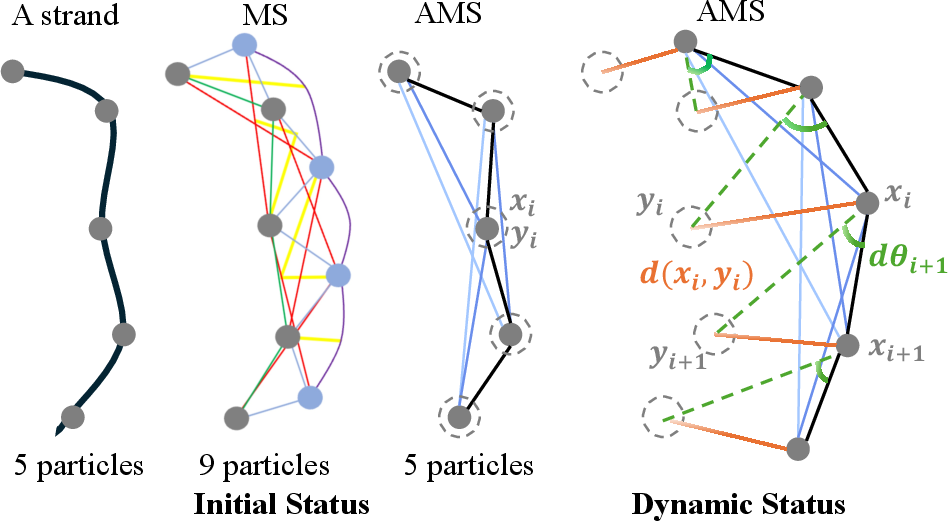
Figure 1: Schematic of a hair strand in classical MS and AMS formulations. AMS leverages a ghost rest-shape and biphasic (integrity and angular) springs for global stability and shape preservation.
Methodology
AMS preserves the efficiency of MS mechanics, wherein each strand is discretized into particles connected by local edge, bending, and torsion springs. The key augmentation involves:
- One-way biphasic coupling with a ghost rest-shape: Each particle connects to its initial (rest) configuration via integrity springs (distance-based) and angular springs (angle-based). These additional couplings operate with constants several orders of magnitude smaller than those of core MS springs, ensuring minimal distortion of local dynamics.
- Reduced system size: Unlike classic stabilized MS models (which double the number of system degrees of freedom through ghost particles and altitude springs), AMS maintains only the real particles, leading to lower memory overhead and simplified linear system structure.
- Heptadiagonal integration: The system matrices arising from the AMS formulation are strictly heptadiagonal, enabling highly efficient exact LU decomposition per time step.
Hair-Hair and Hair-Object Interactions
Hair-hair interactions utilize a two-stage hybrid Eulerian/Lagrangian approach. Strands are rasterized into a background Eulerian volume, allowing FLIP/PIC computations of global interactions before detailed per-particle collision resolution. Hair-solid collisions are handled via SDF-based constraint projections and tangential/normal velocity modification for stability and contact fidelity.
Empirical Evaluation
AMS is evaluated on a consumer-grade GPU (NVIDIA RTX 3080 Ti), achieving real-time performance (<16ms per frame) with up to ~15,000 strands and hundreds of thousands of particles, while maintaining high fidelity under a diverse set of conditions.
Ablation Studies and Comparative Analysis
Global Feature Preservation: AMS, even with modest biphasic coupling, retains initial strand shapes where MS suffers instability or immediate sagging even at prohibitively high stiffness.
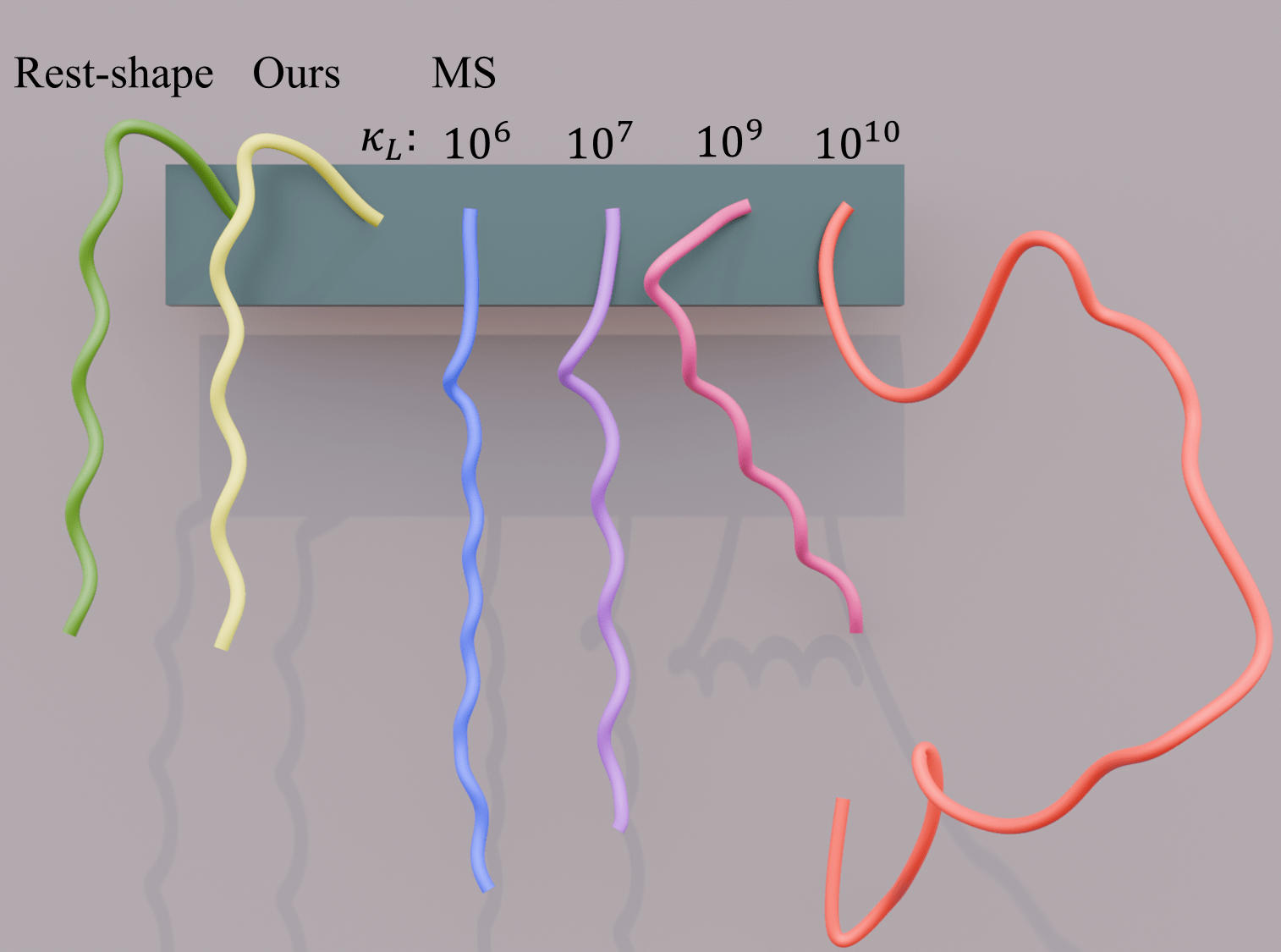
Figure 2: Single-strand simulation demonstrates that AMS (bottom row) preserves global shape, whereas increasing standard MS spring constants leads to early collapse or instability (top row).
Stability Under Complex Dynamics: The angular spring in AMS critically enhances simulation stability. As its coupling constant κα decreases, instabilities and collapse characteristic of MS re-emerge. AMS thus enables larger time steps at lower edge/bending stiffness.
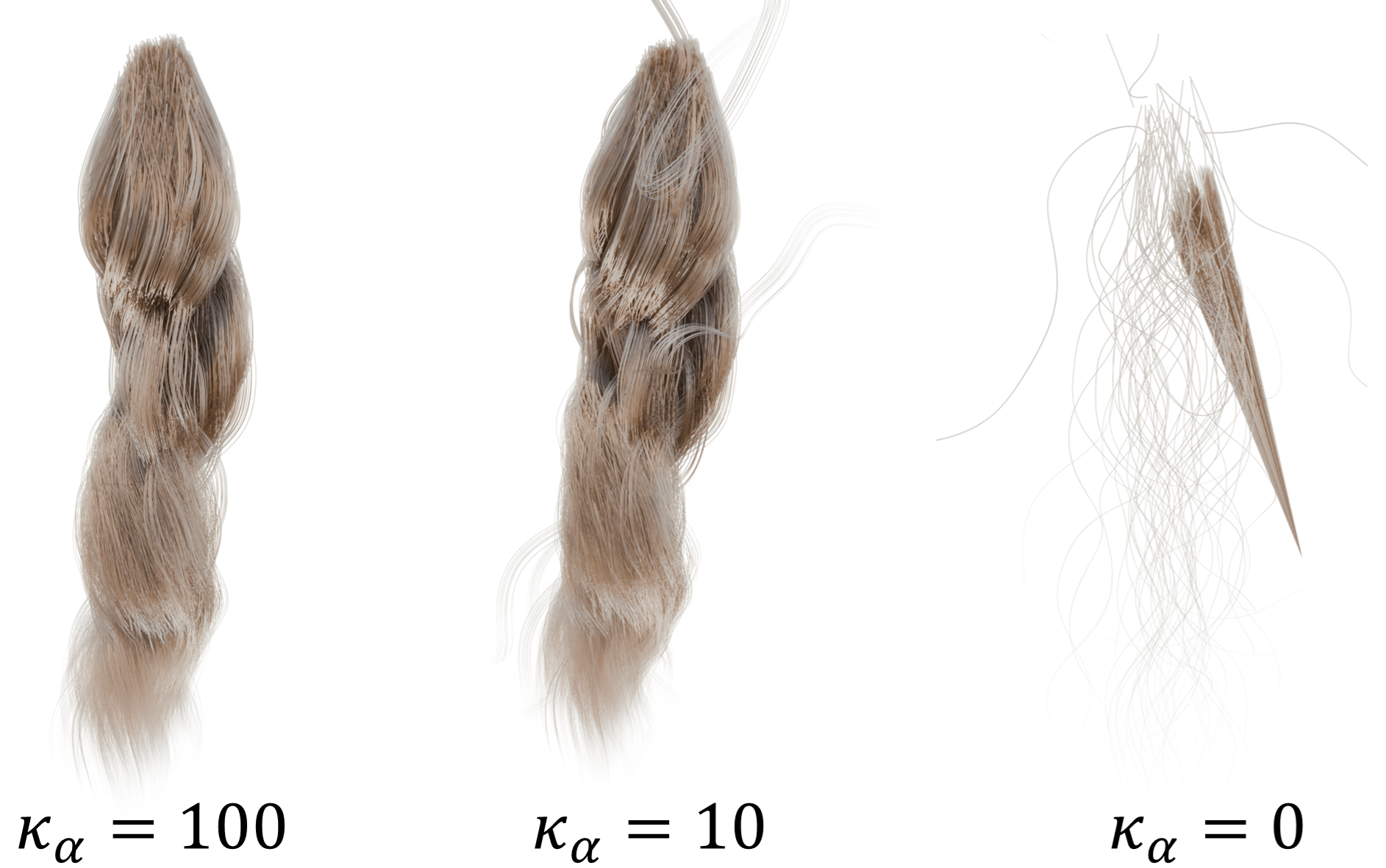
Figure 3: Wisp simulation illustrating increased instability in the absence of angular coupling (κα→0).
Performance and Fidelity Comparison: In a wind-driven curly wig scenario, AMS simulates 10,422 strands at ~2ms/frame—substantially outperforming a state-of-the-art Cosserat-MPM model (“Sag-free initialization for strand-based hybrid hair simulation” [hsu2023sag]), which simulates only 1024 strands at ~1.2ms/frame, while also eliminating the need for ad-hoc initialization against sagging.
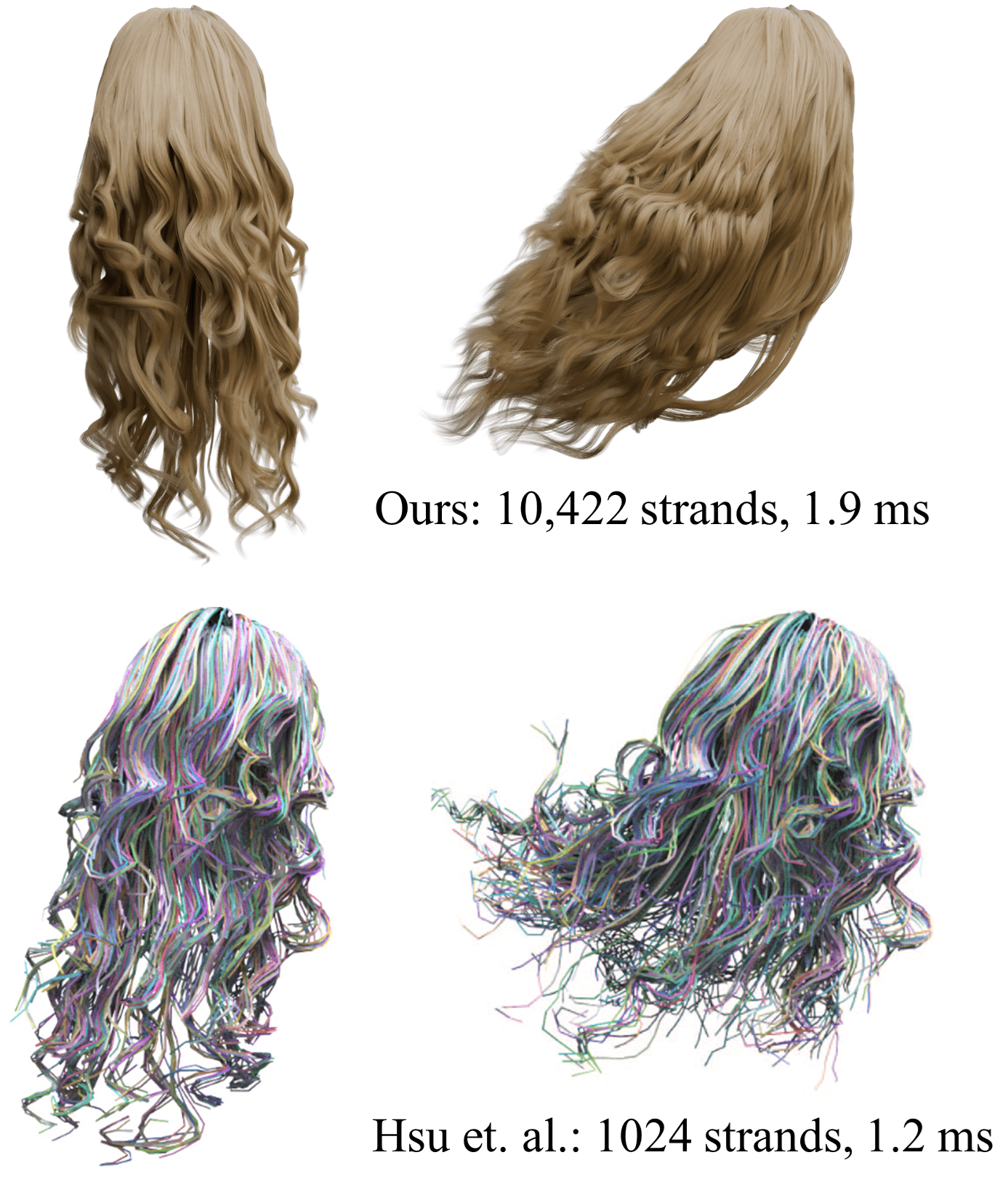
Figure 4: Qualitative comparison of AMS simulation (top) against Cosserat-MPM hybrid (bottom), demonstrating similar or greater fidelity without specialized initialization.
AMS excels in high-contact, real-time scenarios, accurately modeling interactions between dense hair and external objects (e.g., hands, spheres), with no artifacts such as guide-strand interpolation or neural upsampling approaches (e.g., CT2Hair [shen2023ct2hair]) that fail to adapt to novel contact geometry.
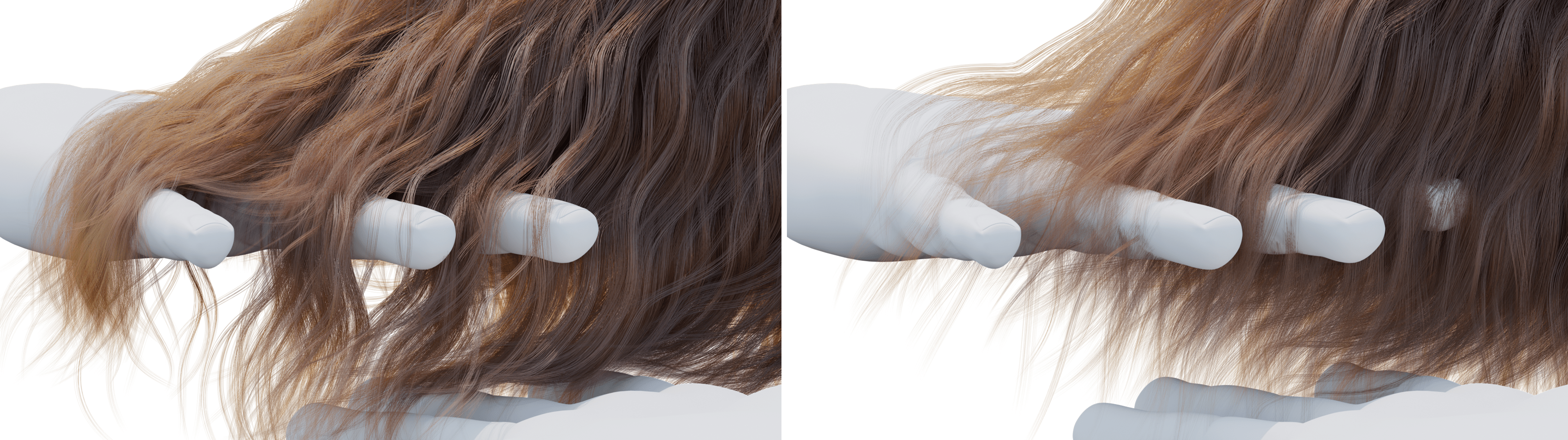
Figure 5: AMS simulates 15k strands in hair-hand contact (left). Guide-strand interpolation (right) produces artifacts under similar conditions.

Figure 6: AMS (right) vs. neural interpolation (middle) in complex hair-solid interactions. Only AMS adapts to new geometry and prevents object penetration.
AMS further demonstrates robustness in nonstandard and nonuniform settings, such as asymmetric styles or facial hair, preserving intended groom structures and individual strand characters where MS loses global shape immediately.
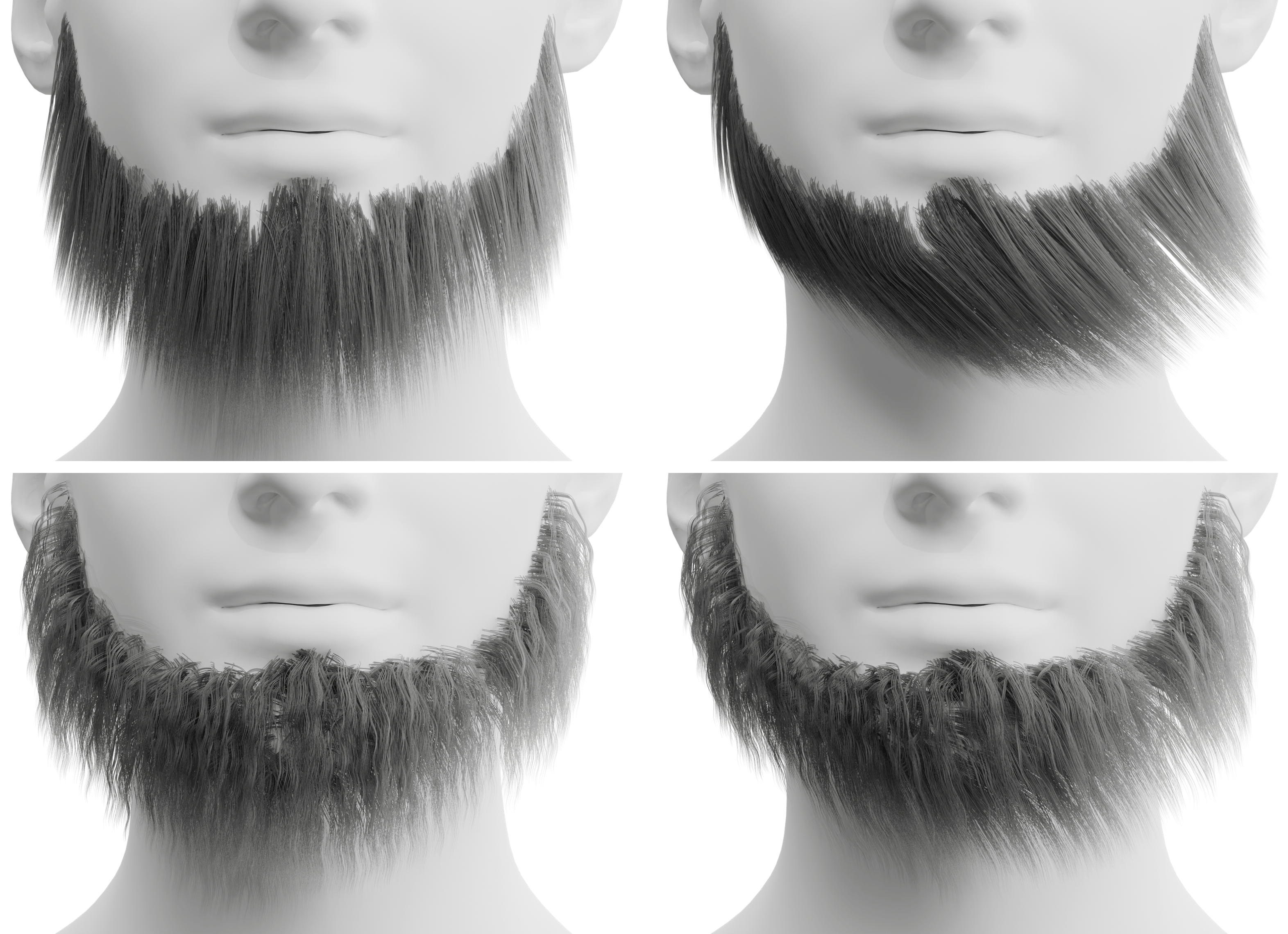
Figure 7: Time-lapse of facial hair simulation. AMS (bottom) preserves intended beard structure; MS (top) rapidly degrades.
Extreme force scenarios, such as roller-coaster-type accelerations, are also well-handled via explicit modeling of non-Hookean, nonlinear tension in the integrity springs of the biphasic coupling, supporting progressive shape degradation/loss as observed in real-world dynamics.
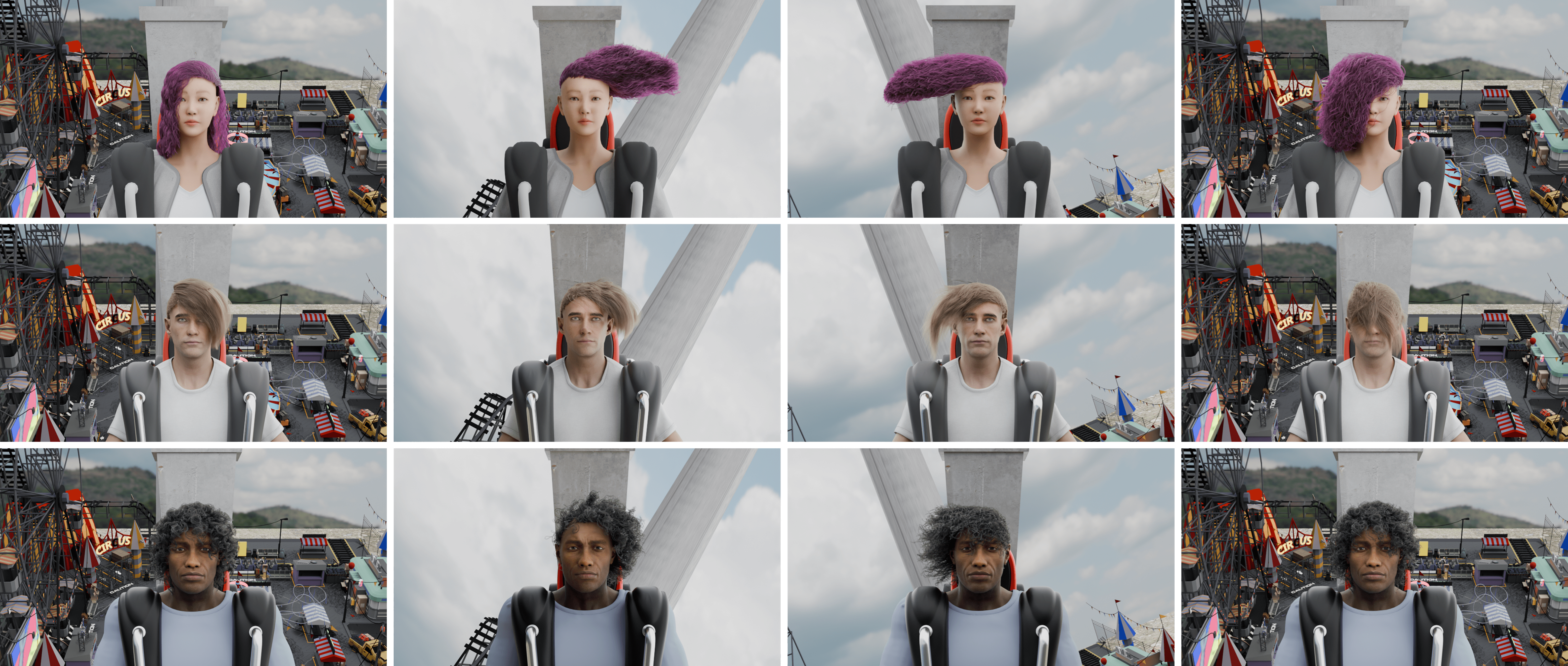
Figure 8: Hair under “roller-coaster” dynamics for long, short, and curly styles, capturing style-dependent non-linear loss of global features.
Applications
Hair Grooming and Editing
AMS supports dynamic, physical trimming/editing that mirrors real-world mass/volume redistribution, as opposed to purely geometric trimming common in standard digital tools.
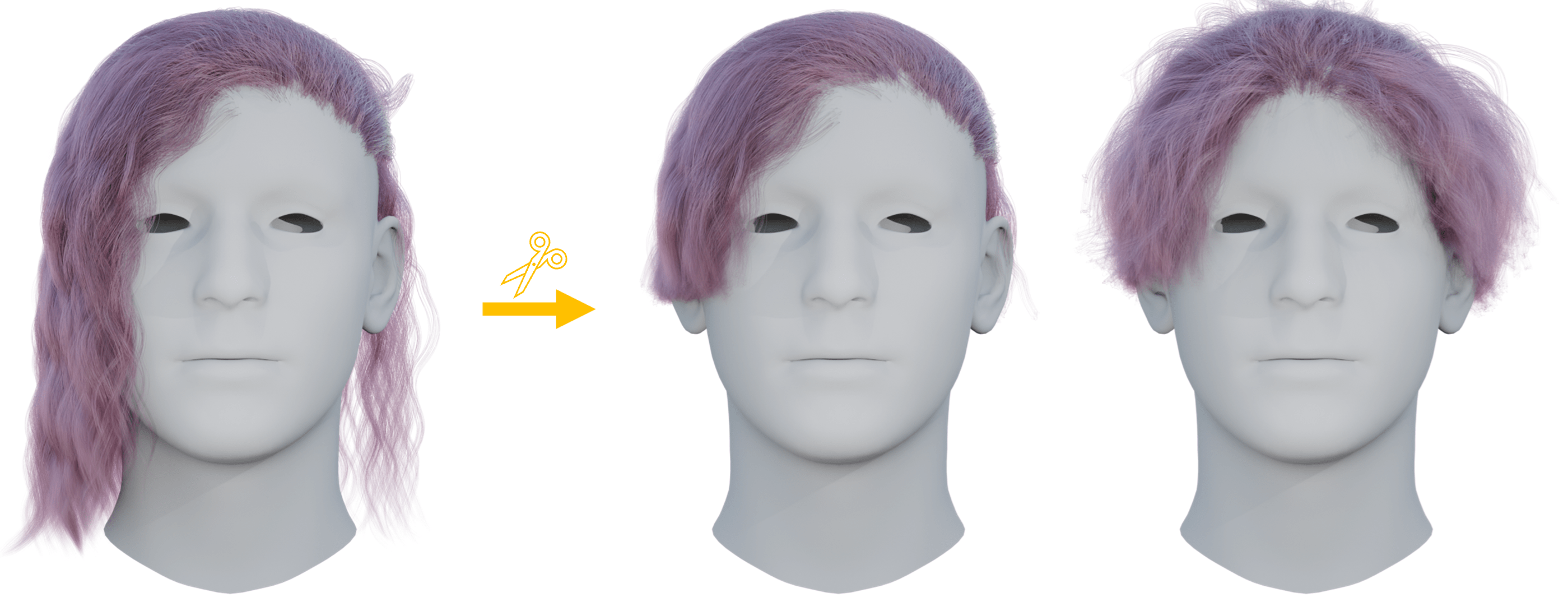
Figure 9: Geometric (center) vs. simulation-based (right) hair trimming demonstrates shape adaptation and dynamic realism unique to AMS.
Real-Time Avatar Driving
By integrating video-based facial tracking, AMS enables temporally coherent, physically plausible hair motion in virtual avatars, coupling hair dynamics to tracked user expression and pose in real time.
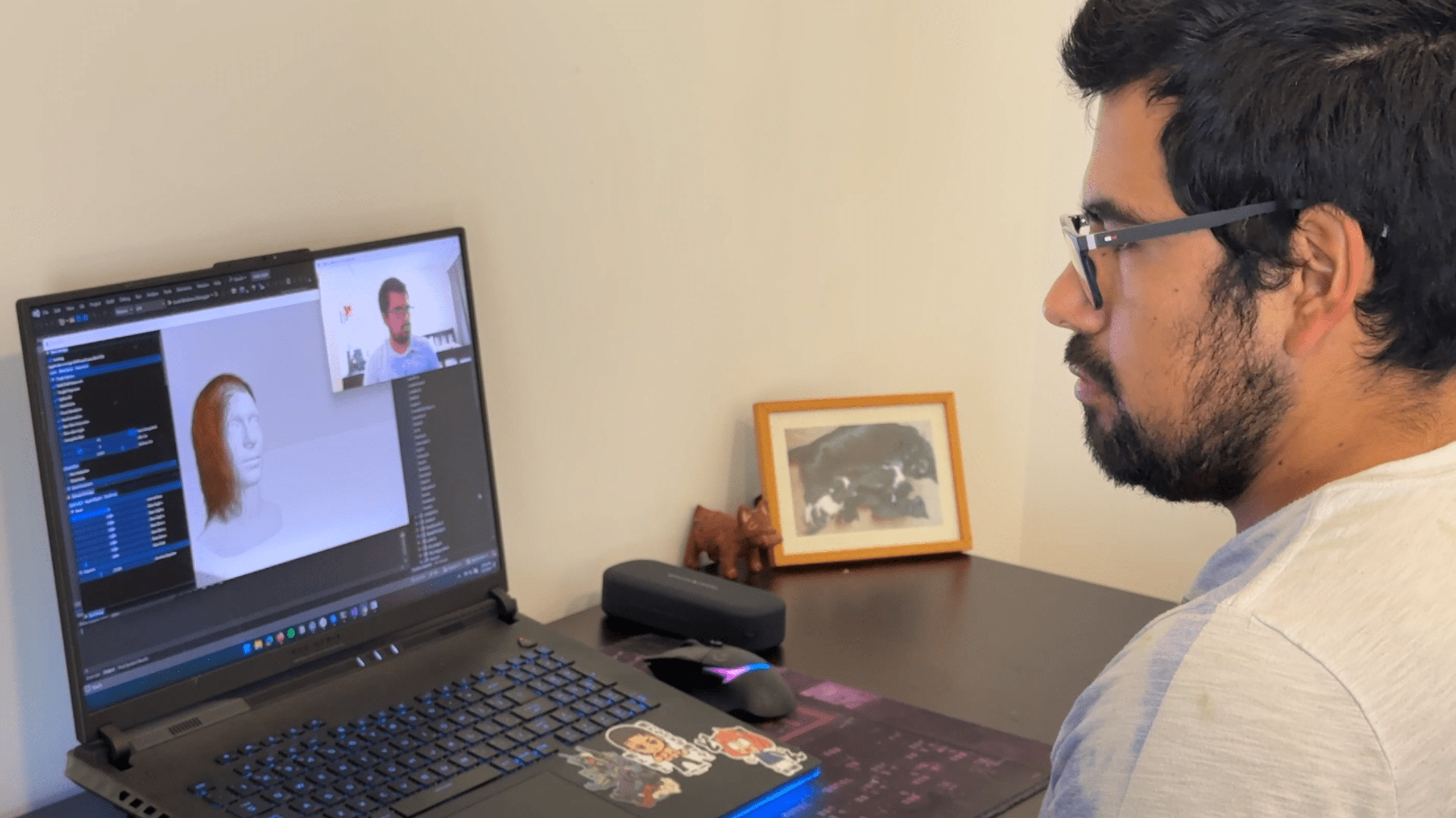
Figure 10: Integration of video-based facial tracking with live AMS simulation for avatar control and hair motion.
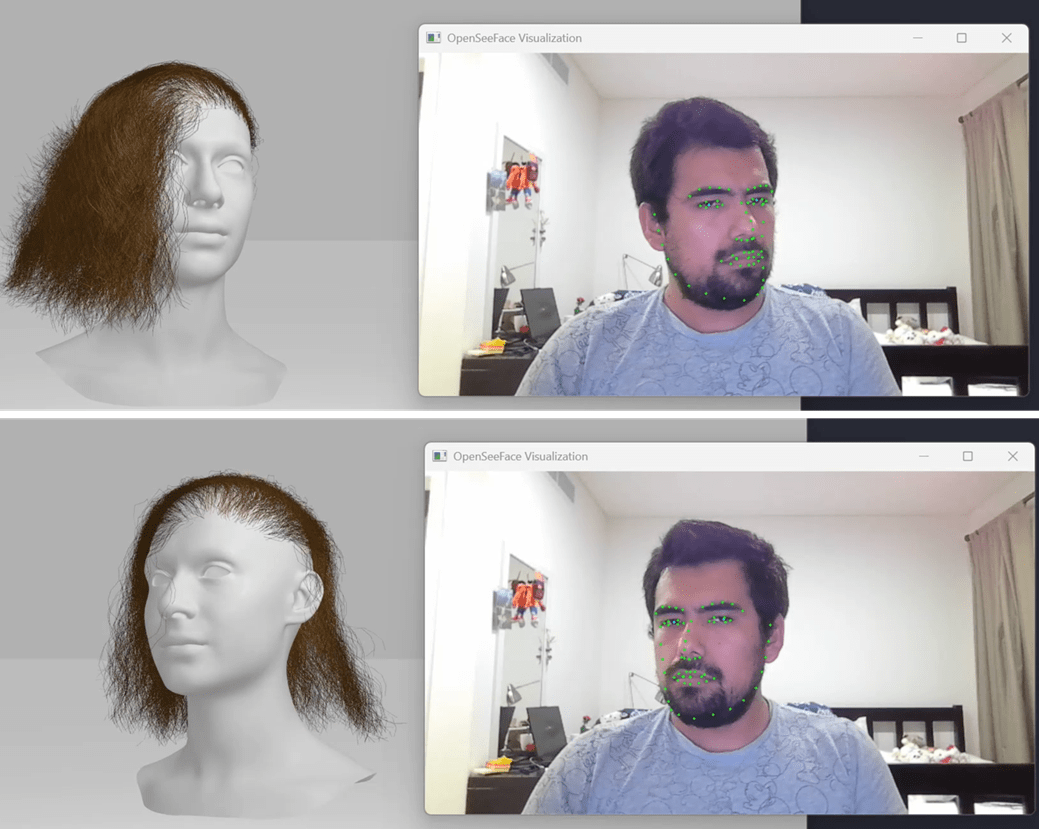
Figure 11: Coherent hair motion across a video time sequence driven by facial tracking.
Discussion and Implications
The results demonstrate that augmenting the MS model with weakly coupled, one-way biphasic (ghost-based) interactions is sufficient to recover global structural stability, prevent sagging, and support real-time dense simulation. AMS narrows the gap between MS and more complex, computationally intensive rod/MPM-based models in terms of simulation fidelity, while retaining the computational and memory advantages of banded-matrix MS approaches. This represents a meaningful step towards integrating physically plausible, high-fidelity hair simulation into real-time applications such as interactive character rendering, game engines, and digital content creation suites.
AMS also establishes a strong case that physics-driven modeling, when carefully augmented, can compete with (or outperform) contemporary neural/data-driven approaches—especially as the latter remain hampered by out-of-distribution generalization and high data/compute requirements in diverse, unstructured settings.
Potential future research directions include the extension of AMS to dynamic cloth simulation, improved handling of extremely high-frequency strand interactions, and further unification with generative modeling approaches for automatic asset creation.
Conclusion
The Augmented Mass-Spring (AMS) model introduces critical advances in real-time, dense hair simulation by embedding global structure awareness, improved stability, and non-linear dynamic responses directly into a computationally efficient mass-spring framework. AMS supports real-time, strand-level simulation for a wide range of grooms and interaction scenarios, significantly raising the fidelity ceiling for interactive hair simulation systems. The introduced methodologies provide a practical foundation for scalable, high-quality hair animation in both real-time and offline pipelines.