- The paper introduces an innovative experimental method combining cold supersonic helium beams, interferometric laser alignment, and SI-traceable calibration to achieve unprecedented precision in measuring ionization energy.
- It finds that the measured ionization energy of metastable helium deviates by 9σ from theoretical predictions, highlighting crucial discrepancies in QED calculations.
- The study's methods mitigate Doppler shifts using a retroreflection setup and imaging-assisted spectroscopy, setting new benchmarks for precision metrology in atomic physics.
Introduction
Helium (4He), particularly in its metastable $(1s)(2s)\;^3S_1$ state, offers an ideal platform for precision tests of quantum electrodynamics (QED) and nuclear effects in few-electron systems. The paper "Metrology in a two-electron atom: The ionization energy of metastable triplet helium ($2\,^3S_1$)" (2501.02983) introduces an innovative approach to determine the ionization energy of 4He with unprecedented accuracy, addressing discrepancies between experimental measurements and theoretical predictions, which previously stood at 7σ and now extend to 9σ.
Experimental Approach
The authors developed a new experimental setup that improves the precision of helium spectroscopy. This setup utilizes a cold, supersonic beam of metastable helium, produced by a cryogenic valve and electric discharge. Key to the setup is an interferometric laser-alignment control combined with SI-traceable frequency calibration and imaging-assisted Doppler-free spectroscopy. This allows for the recording of spectra of the np Rydberg series in 4He and the extrapolation of these series to determine the ionization energy.
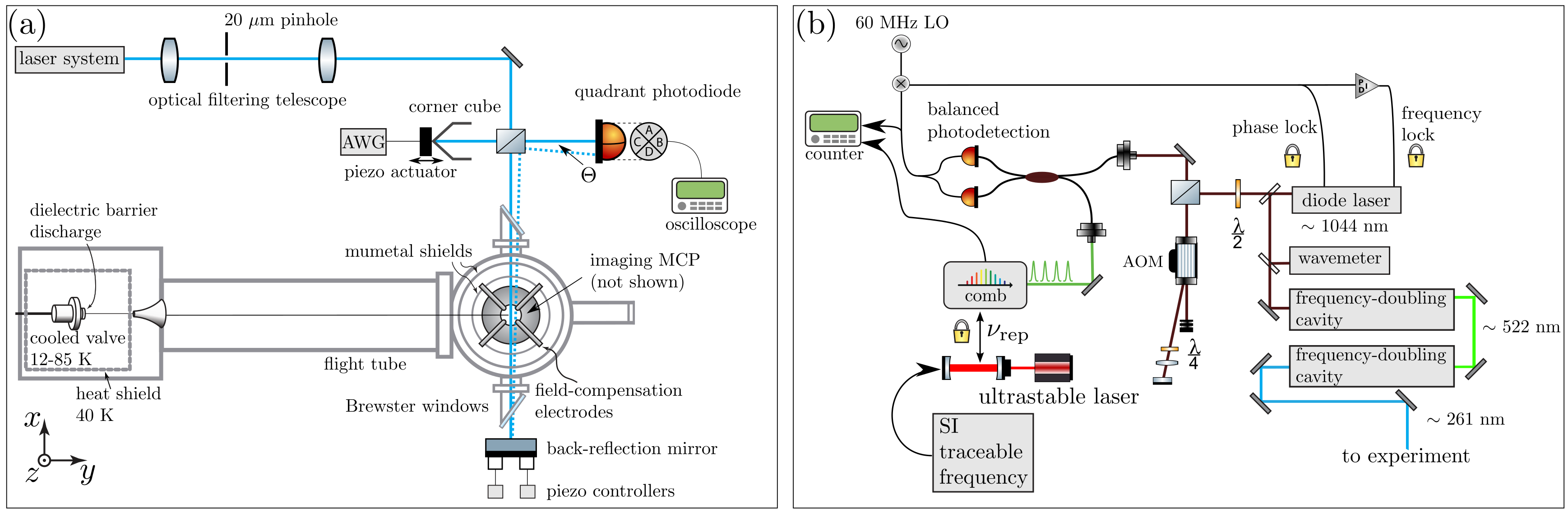
Figure 1: The experimental setup for measuring ionization energy, featuring high-vacuum conditions, a cryogenically cooled pulsed valve, and interferometric alignment.
By employing this approach, the ionization energy $E_\mathrm{I}\,(2\;^3S_1)$ was determined to be 1152842742.7082(55)stat(25)sysMHz, deviating significantly from the theoretical value of 1152842742.231(52)MHz and thus confirming the aforementioned 9σ discrepancy.
Laser System and Calibration
The UV laser system, integral to the precision achieved, was finely tuned to the transitions under observation. The paper details the laser's frequency stabilization and calibration, involving a frequency-doubled optical frequency comb with a stabilized reference laser. This establishment of SI-traceable measurements ensures accuracy in frequency determination, critical for high-resolution spectroscopy.
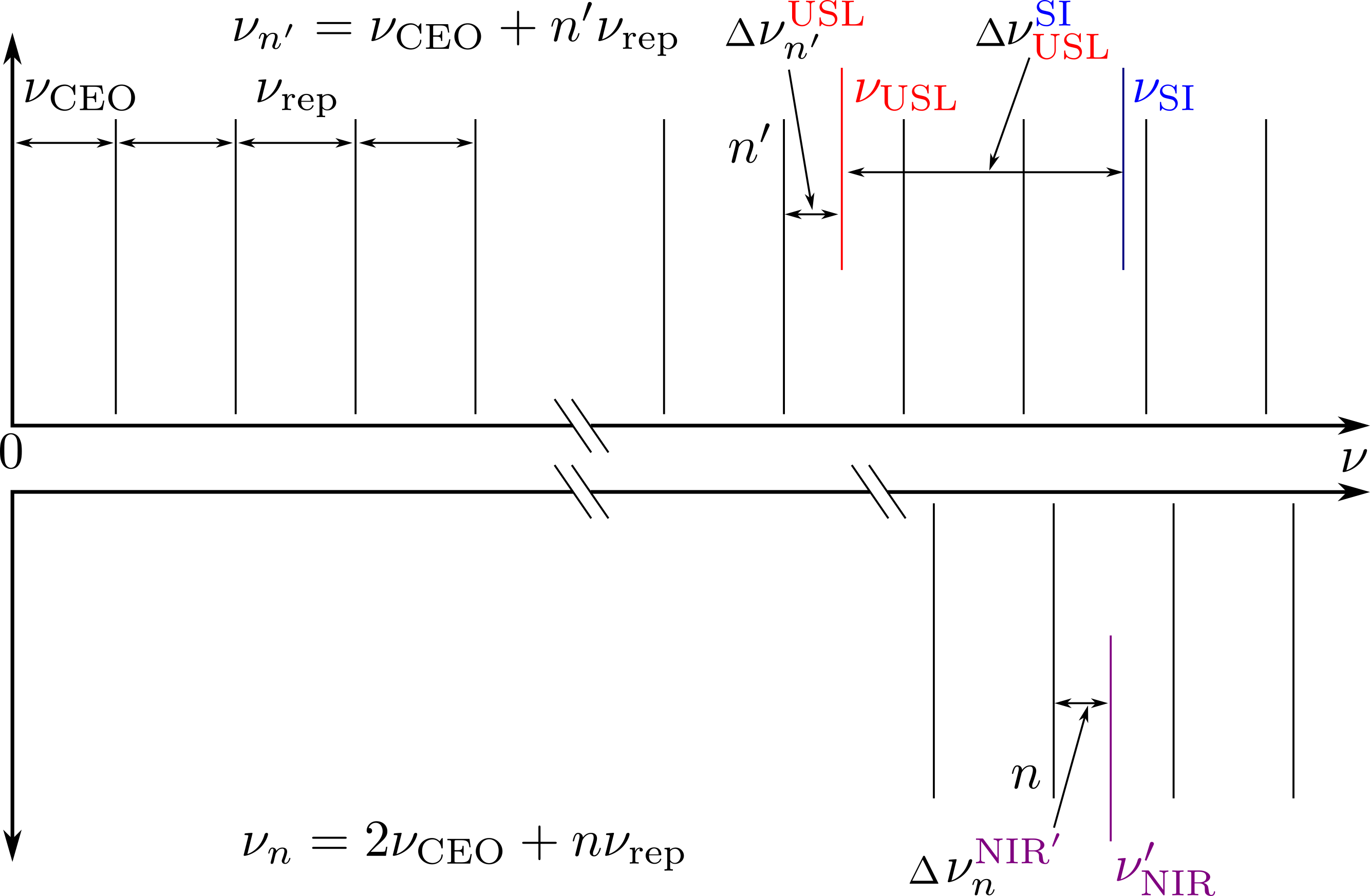
Figure 2: Schematic of the frequency-calibration procedure for the UV laser system using frequency combs.
Suppression of Doppler Shifts
To mitigate Doppler shifts, a retroreflection setup was utilized. The laser beam was intersected at near-perfect orthogonal angles to the atomic beam, allowing for correction of first-order Doppler shifts via geometric alignment, improving spectral readings' precision. Further, Imaging-Assisted Single-photon Spectroscopy (IASS) permitted the collection of reduced Doppler-width spectra, enhancing the clarity and accuracy of the readings.
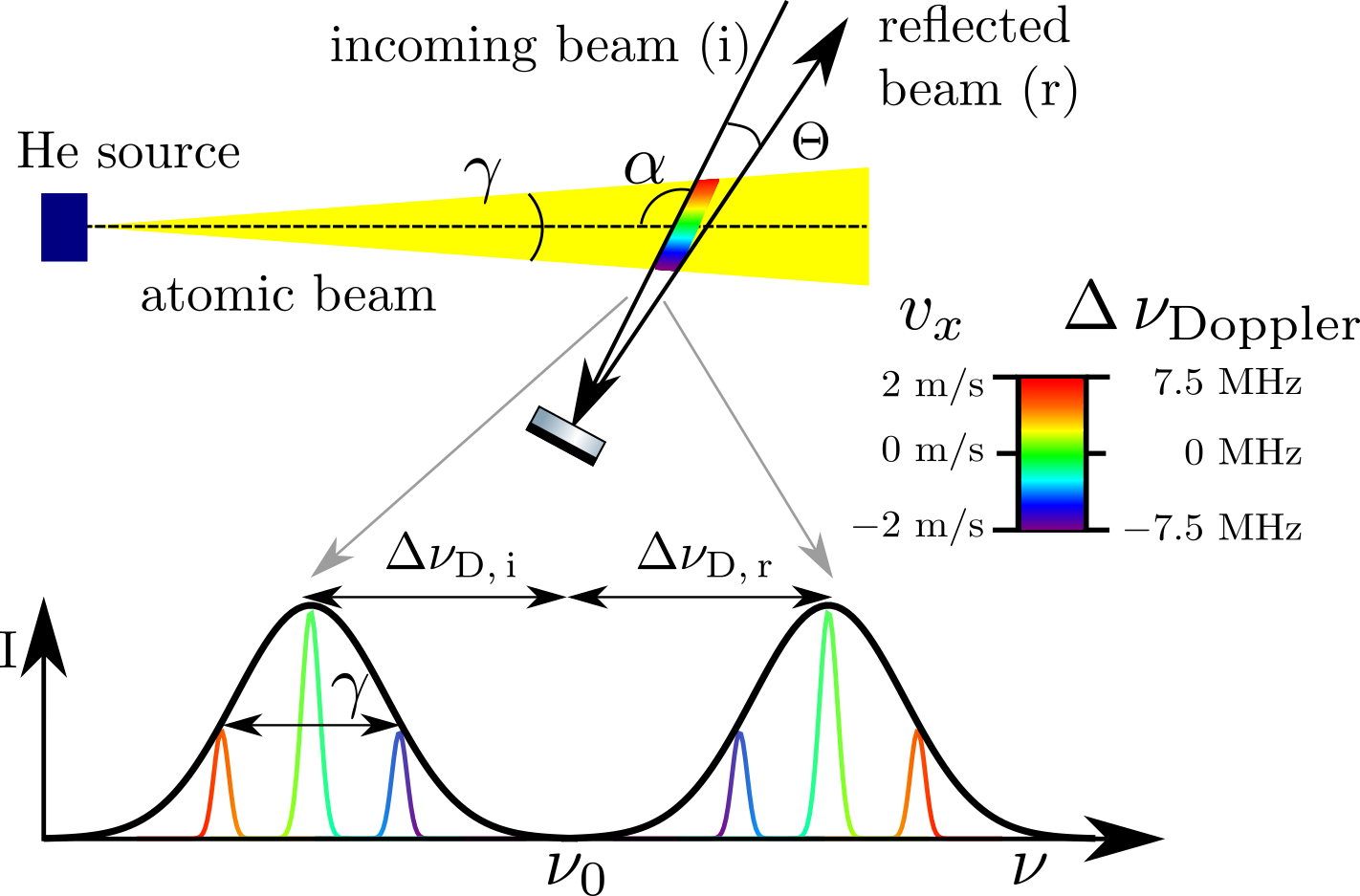
Figure 3: Geometry of the IASS setup minimizing Doppler shifts through careful beam alignment.
Results and Implications
The refined measurement of the ionization energy resulted in a robust confirmation of a significant deviation from theoretical predictions. This has profound implications for QED calculations in light atomic systems, suggesting limitations or necessary revisions in current theoretical frameworks. The advancements in precision metrology proposed in this study set new benchmarks in atomic physics, offering potential for improved isotopic shift measurements. Such measurements could facilitate determining 3He and 4He nuclear charge radii differences, addressing long-standing discrepancies in muonic helium ions' spectroscopic measurements.
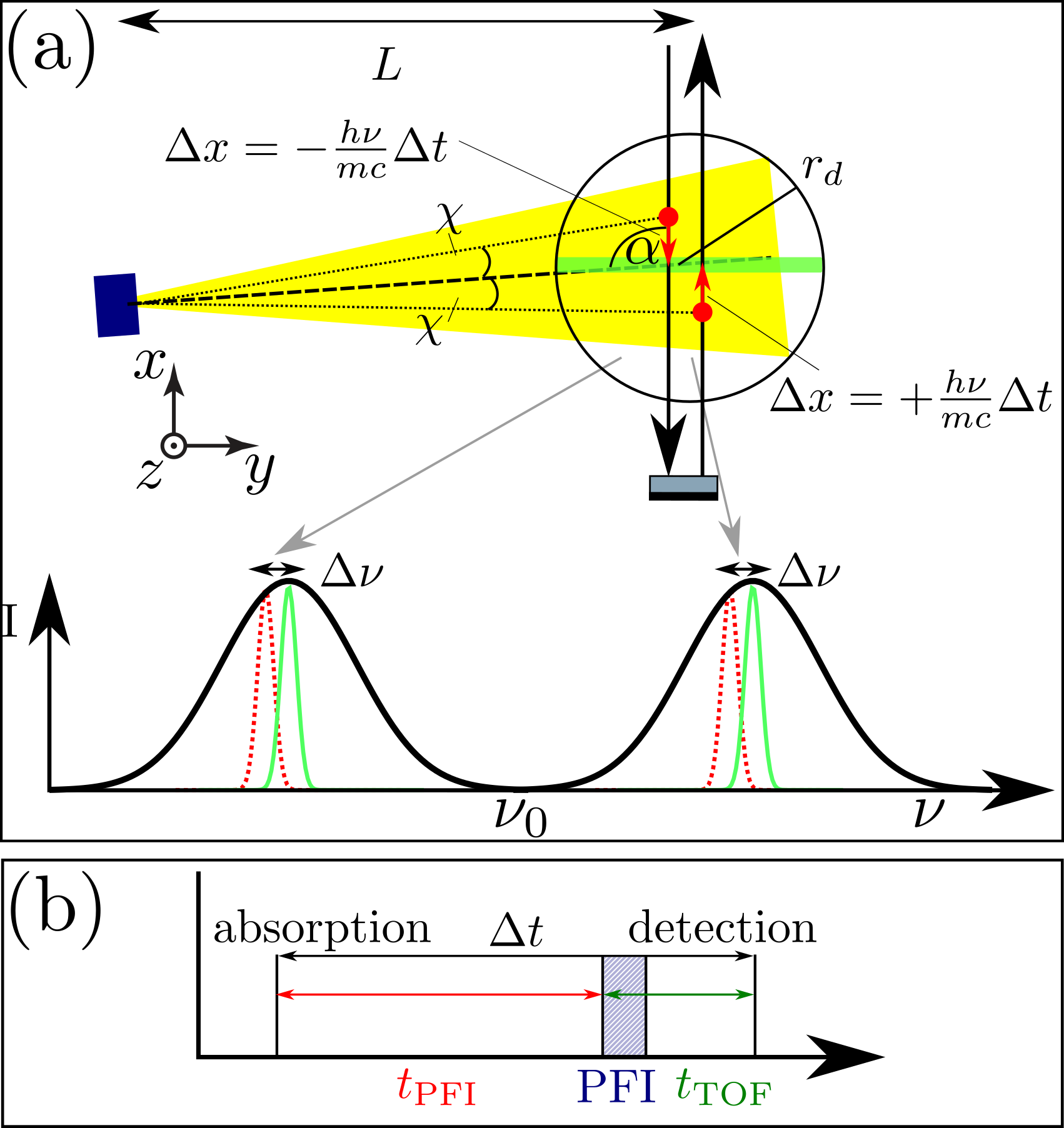
Figure 4: The post-selection Doppler shift arrangement and its mitigation in the experimental sequence.
Conclusion
The innovative methodology and its application to determine 4He ionization energy with enhanced precision represent a significant step in quantum metrology. The persisting 9σ discrepancy between precise experimental data and theoretical values emphasizes the need for continued theoretical verification and potentially new physics insights in atomic interactions. Future work aims to extend these precision measurements to 3He, which may resolve inconsistencies in nuclear charge radius determinations and further test the prevailing quantum mechanical models.