- The paper introduces a layered, spatial interface paradigm that decouples content creation from rhetorical structuring, reducing cognitive friction in writing.
- The study employs mixed-method evaluations, including NASA-TLX and PSSUQ, to demonstrate improved user agency and more effective integration of LLM feedback compared to traditional tools.
- The approach leverages modular LLM personas and spatial manipulation strategies to facilitate non-linear, iterative workflows that enhance creativity and content organization.
Script&Shift: A Layered Interface Paradigm for LLM-Augmented Writing
Introduction and Motivation
Script&Shift proposes a flexible, layered interface paradigm for LLM-assisted writing, addressing deficiencies present in mainstream writing tools and interfaces. The system acknowledges that writing is an inherently recursive process, involving multiple abstraction levels ranging from micro-level content development to macro-level rhetorical organization. Current LLM-based writing aids, such as chatbots and conventional word processors, introduce cognitive and operational friction, failing to support seamless transitions between content manipulation, idea development, and structural experimentation. Script leverages a zoomable, spatially organized workspace that empowers writers to orchestrate content and rhetorical strategies across layers, aiming to reduce the "gulf of envisioning" and improve authorial agency with LLMs. The design is grounded in process models of writing, prior empirical work on LLM writing assistance, and interface research in collage and spatial writing environments.
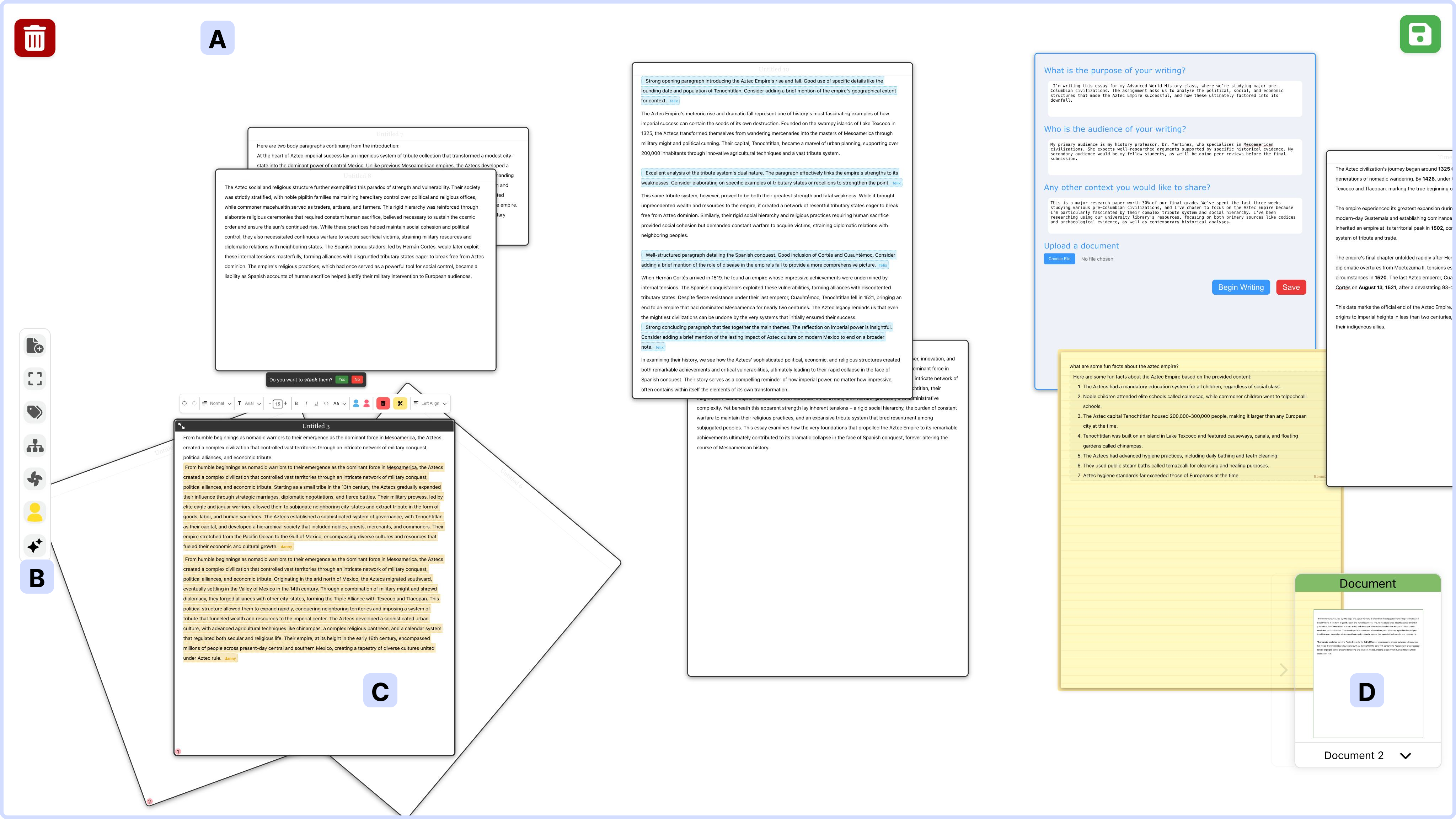
Figure 1: Multi-granular view of Script’s writing workspace, layer toolbars, and compiled document visualization.
Layered Interface Paradigm
Script reifies the concept of a "layer" as the central primitive in the writing workflow. Layers encapsulate discrete writing or organizational units, such as sections, rhetorical moves, or scratchpads for auxiliary research. The system supports three main layer types: (1) a metadata layer encoding project goals, audience, and context; (2) content layers for primary writing and inline LLM interaction; and (3) scratchpads for background information and supporting documentation. The infinite, zoomable canvas allows flexible stacking, fanning, folding, and combining of layers, enabling non-linear exploration, variation, and composition of ideas.
Script’s interface is augmented with contextually aware toolbars, tagging primitives, and "Writer's Friends," which are specialized LLM personas for ideation, elaboration, structuring, tonality, feedback, and audience customization. The user can perform granular operations such as tunneling content between layers, peeking at LLM continuations, or invoking feedback agents, all without breaking compositional flow.
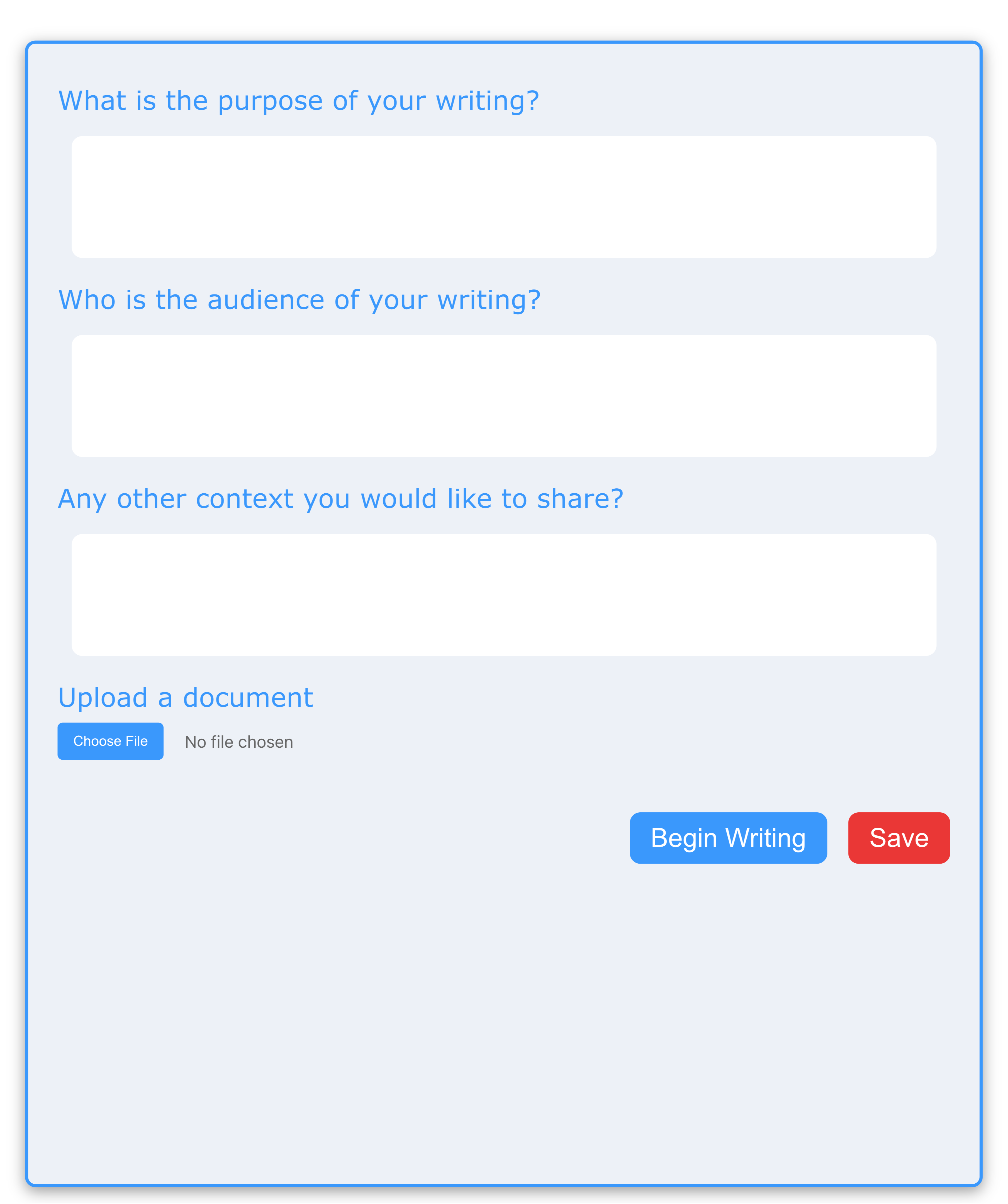
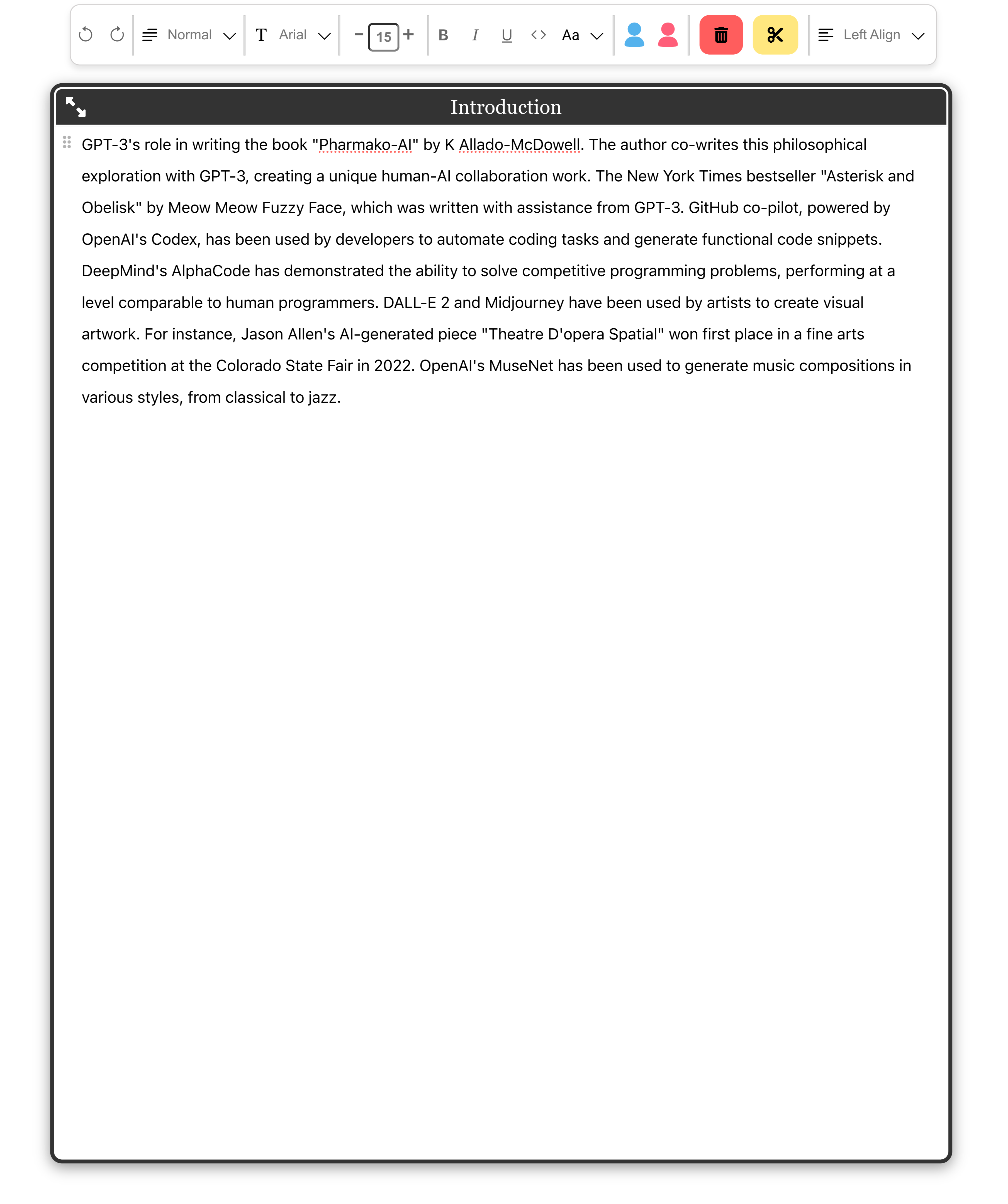
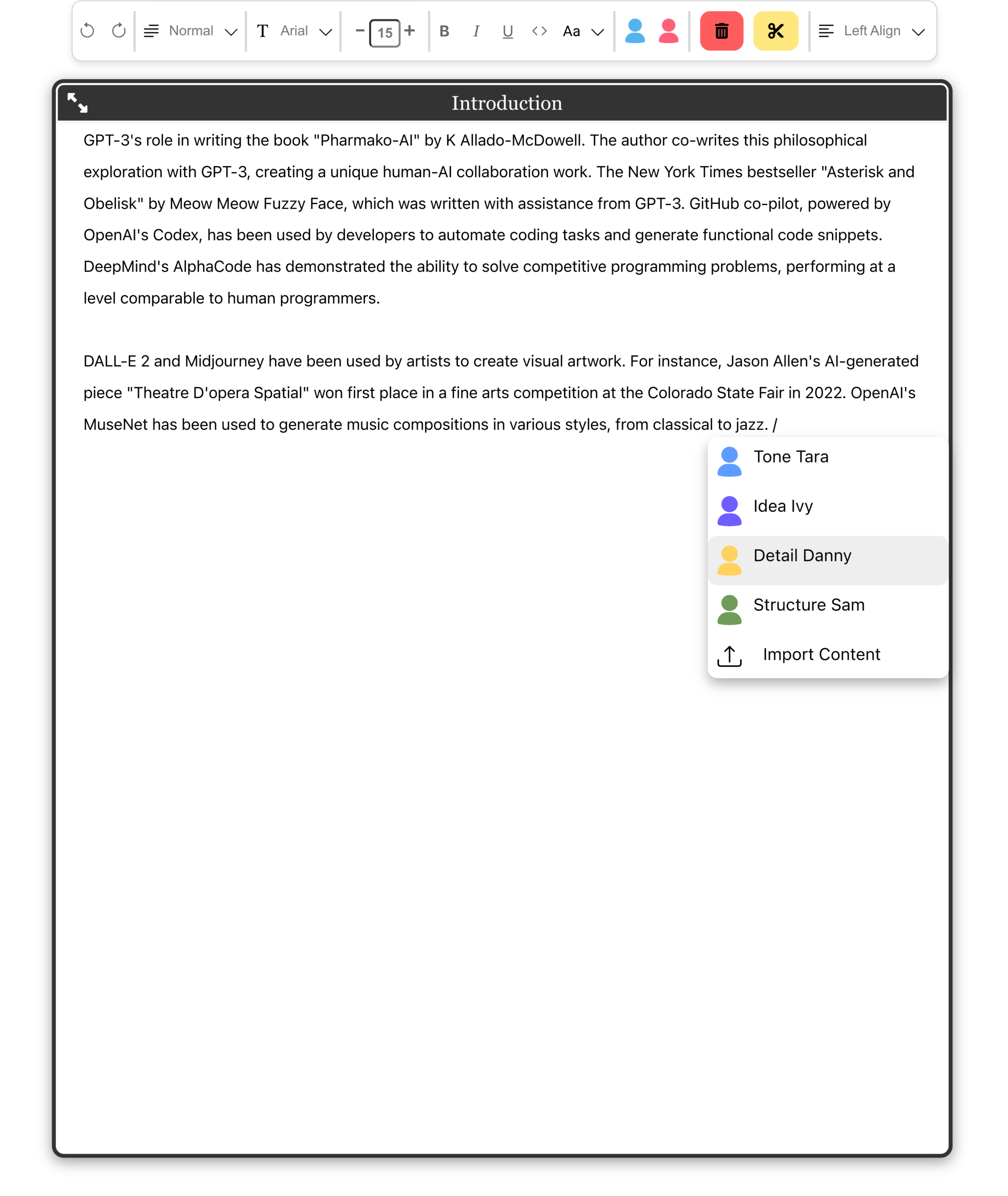
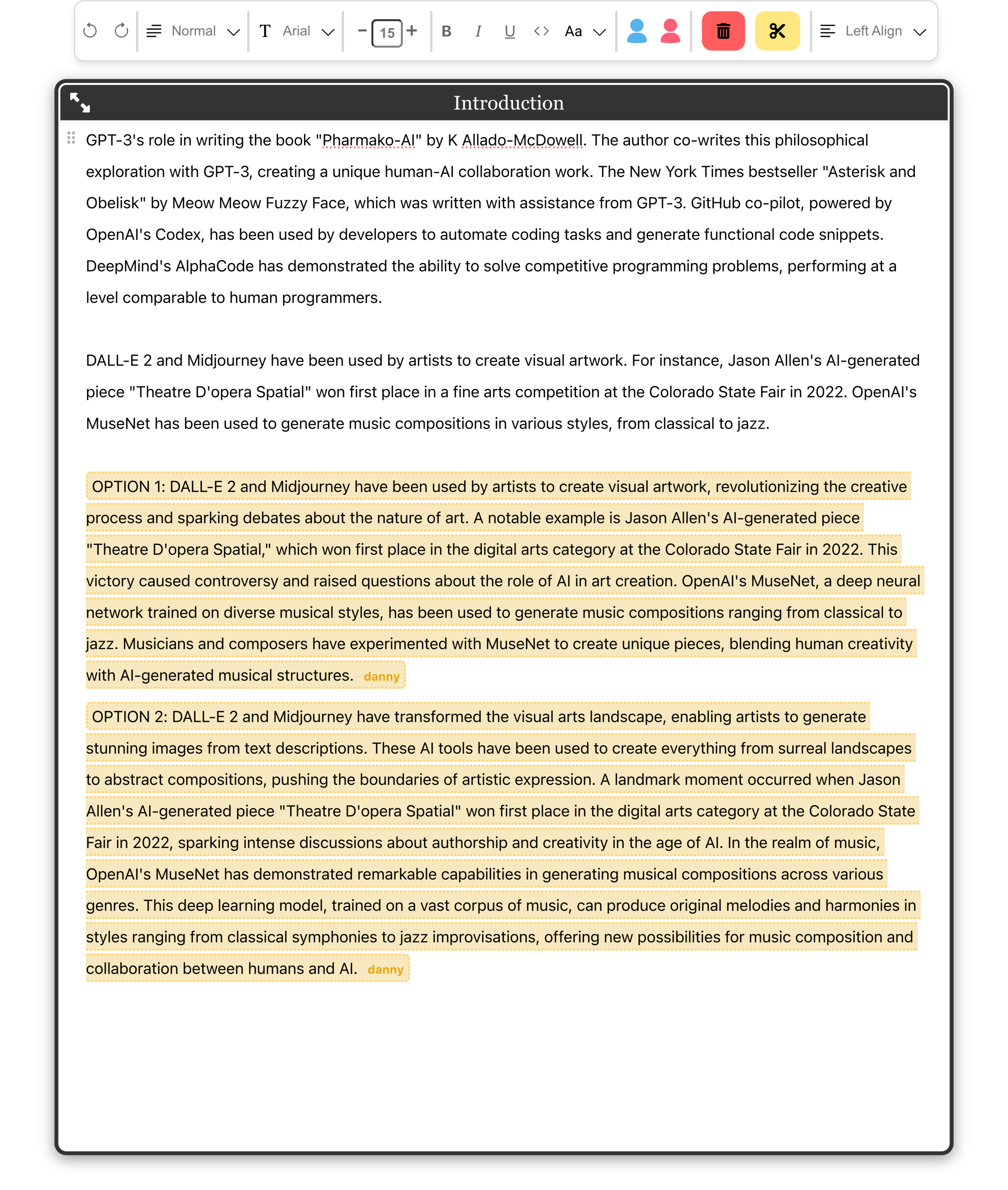
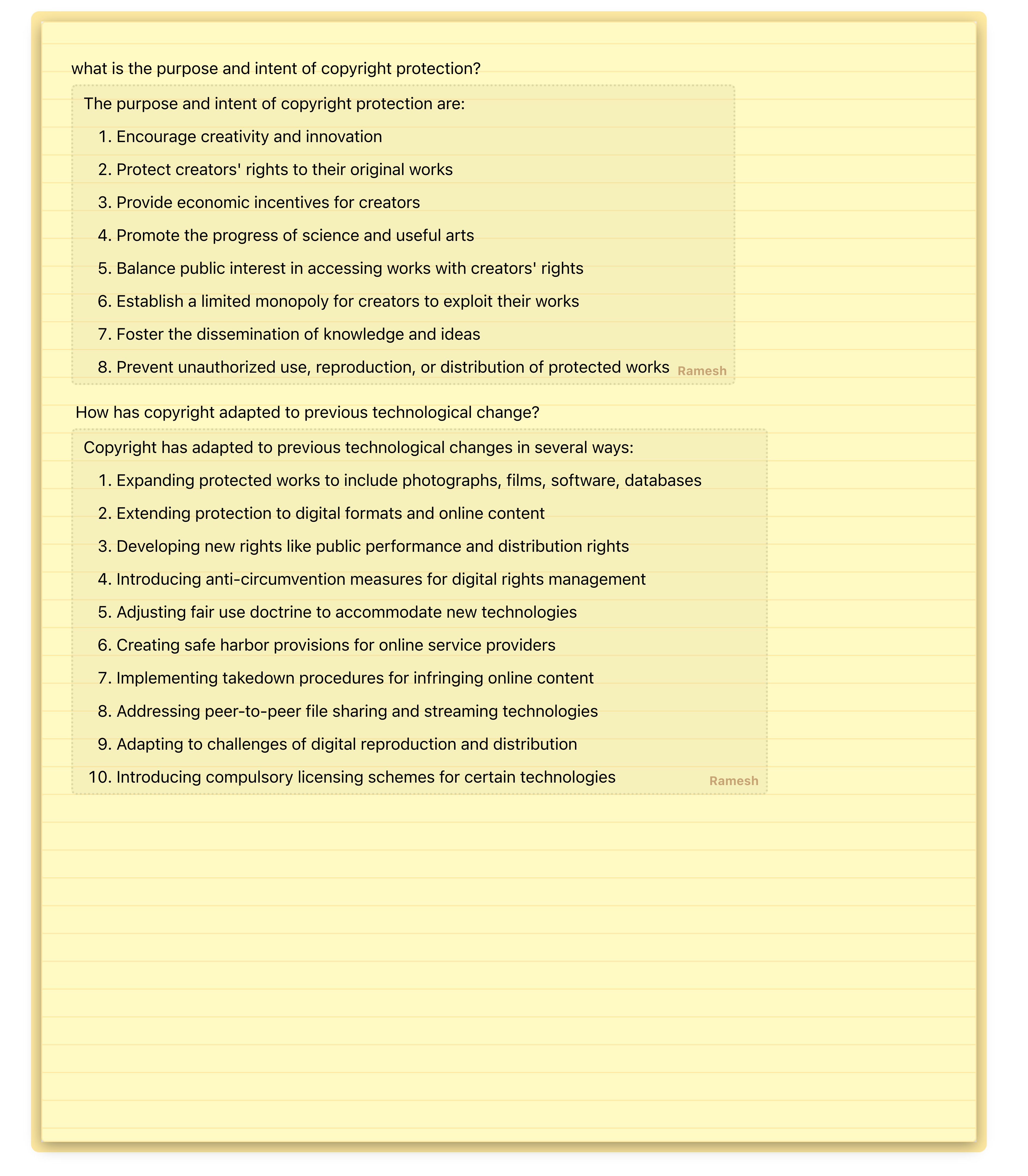
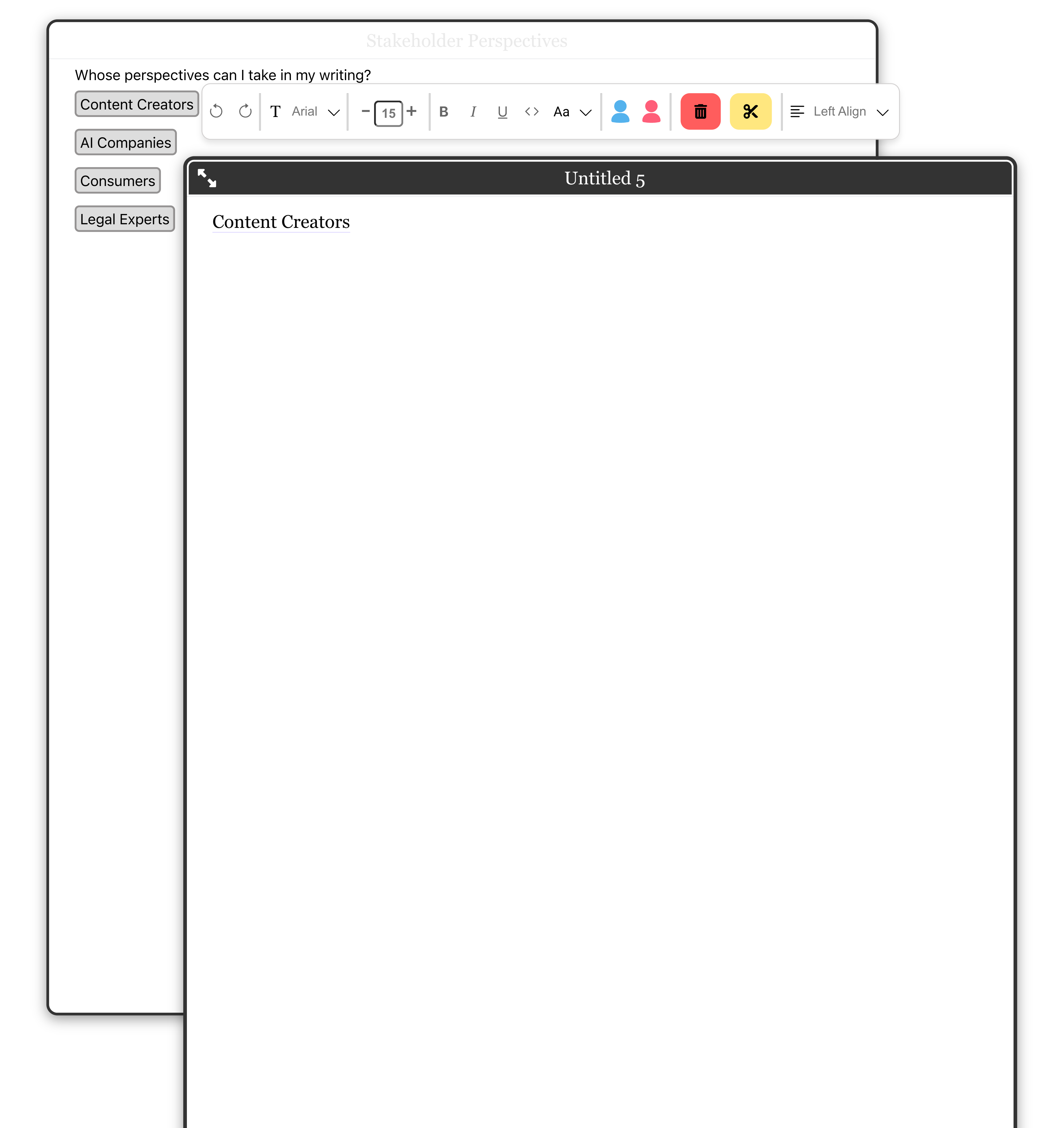
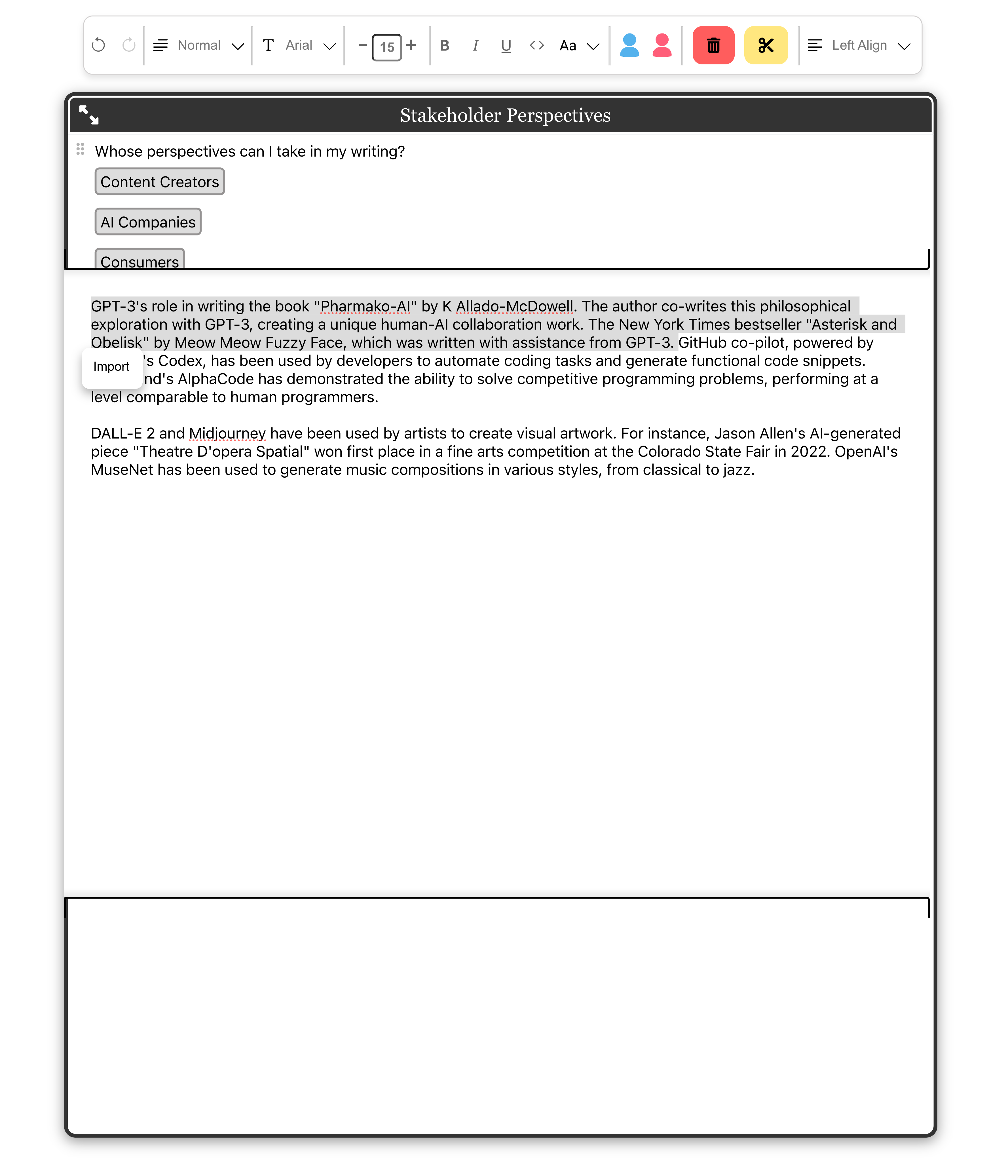
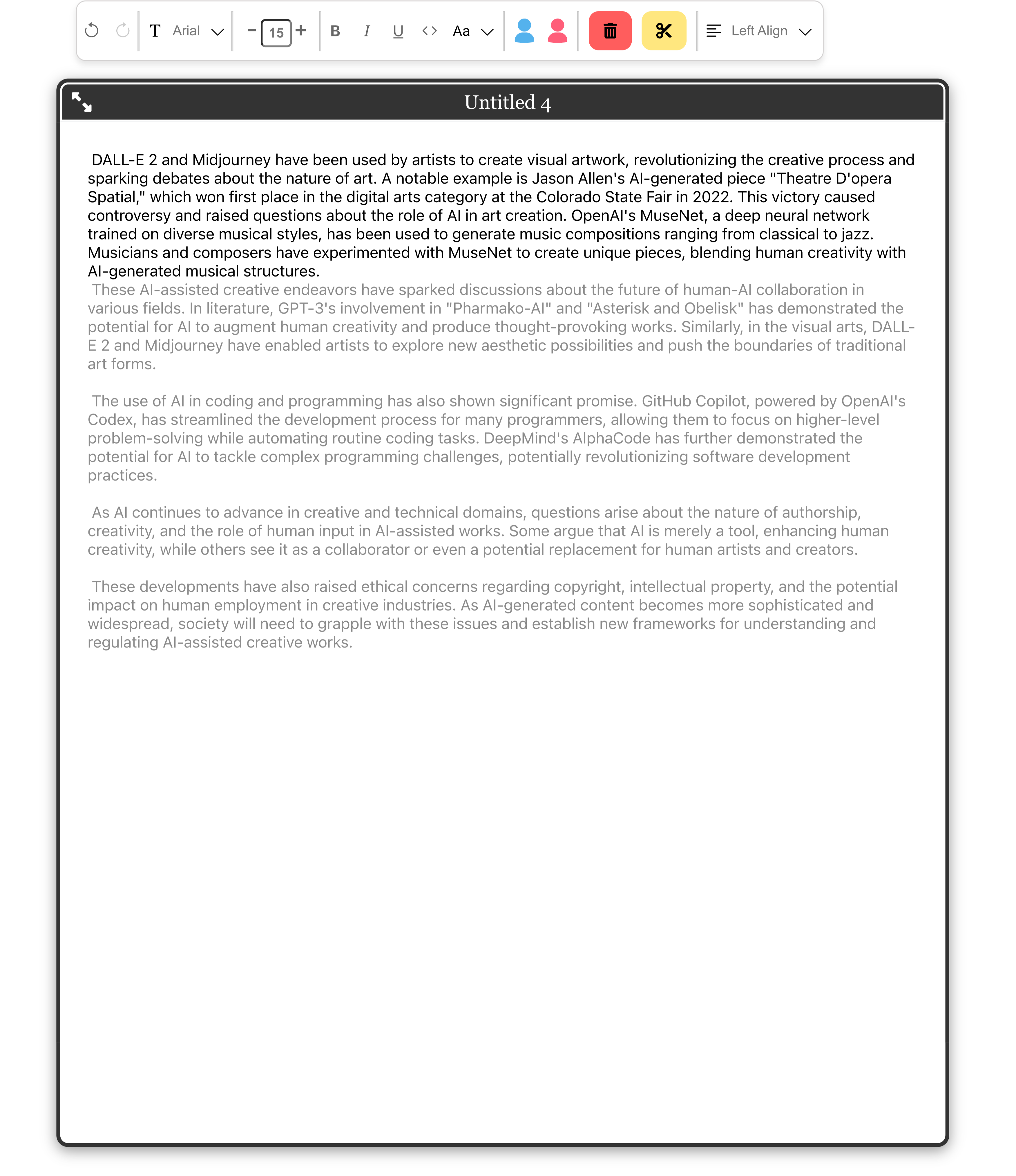
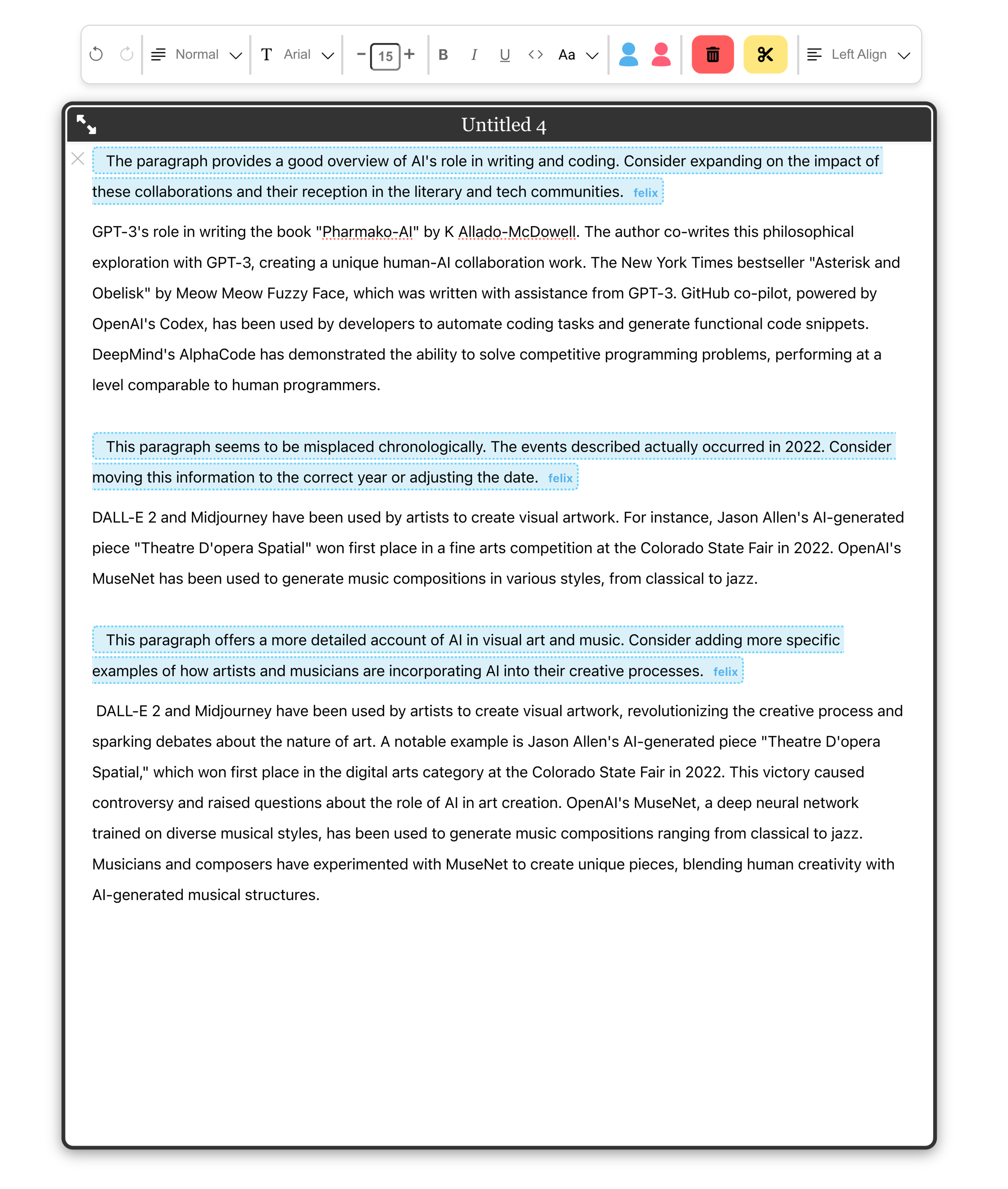
Figure 2: Meta layer interface for specifying high-level writing context and goals.
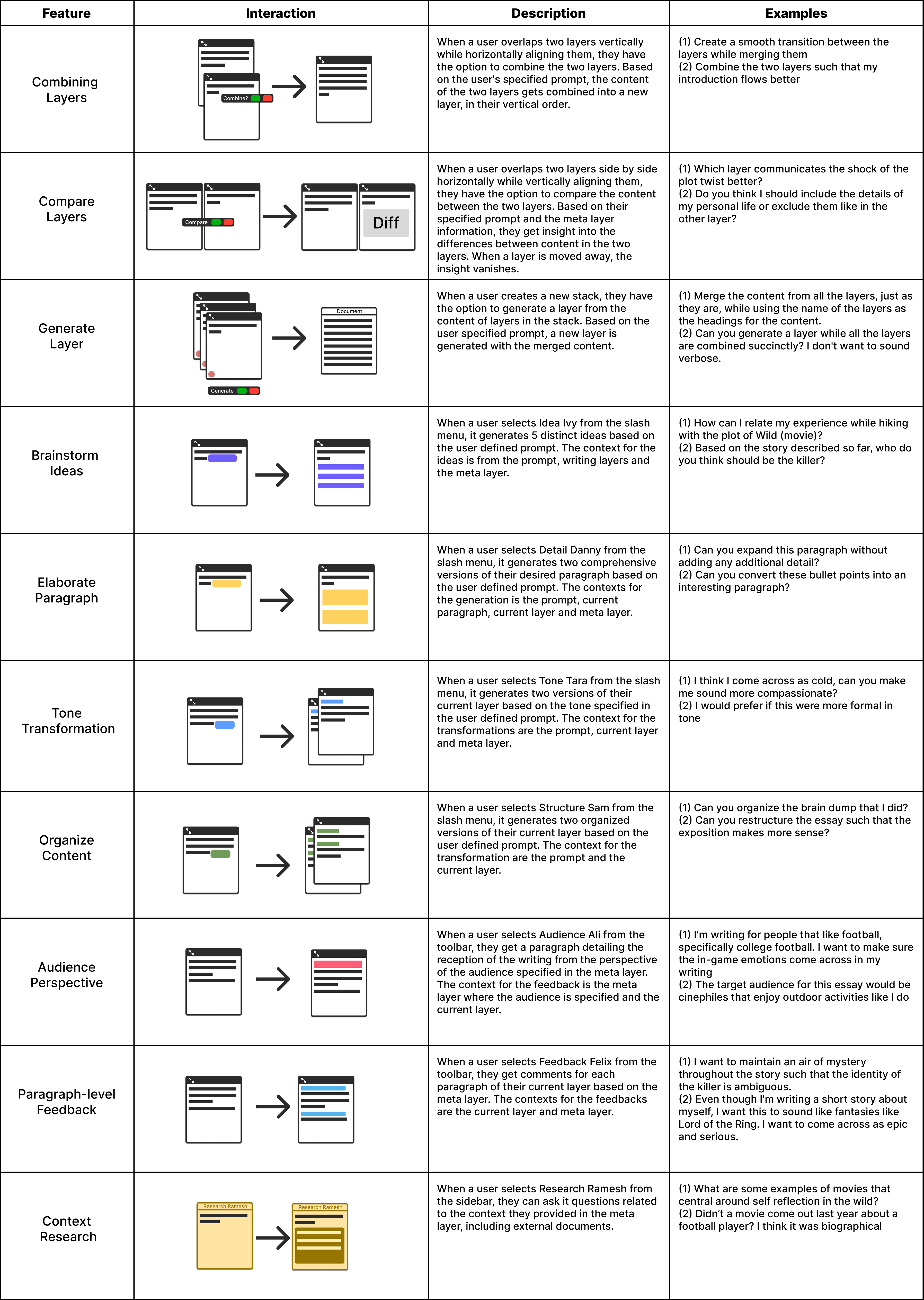
Figure 3: Task-specific content transformation features invoked through user prompts and persona selection.

Figure 4: High-level system architecture and prompt orchestration flow for LLM calls, including meta and writing layers.
Exemplary Workflows
The system supports varied workflows including freewriting with subsequent rhetorical structuring, document-based question (DBQ) composition, and parallel topic development for research papers. For instance, in argumentative writing, users can convert unstructured text into argumentative templates, instantiate milestone components (e.g., Claim, Ground, Warrant), and flesh out each section via targeted LLM suggestions and layer manipulation.

Figure 5: Freewriting workflow with template-driven argument structuring and persona-invoked content expansion.
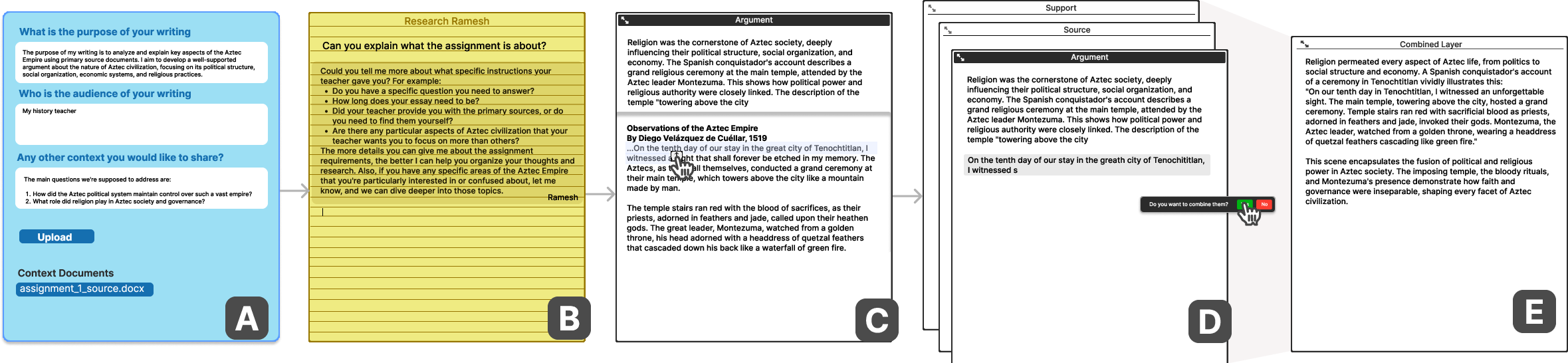
Figure 6: DBQ workflow with metadata specification, document upload, research agent, and cross-layer extraction.
This paradigm generalizes to cases where writers must simultaneously manage multiple document sections, maintain alignment between evidence and claims, or experimentalize with alternative organizational logics. Spatial manipulation (tearing/apart, combining, folding, stacking) is natively supported, as is the generation of audience-specific or tone-modified variants.
System Architecture
The Script system decomposes into modular front- and backend components tailored for high-interactivity LLM integration. Layer primitives encapsulate text editors and context management. The prompt composer, consisting of a knowledge repository, task-specific prompt logic, and an orchestrator, synthesizes user instructions, context, and meta information into structured LLM calls. The workspace manager coordinates structural operations and the rendering of AI-generated content, ensuring seamless projection of LLM outputs onto specific content locations or newly-initialized layers. Claude 3.5 Sonnet is leveraged as the LLM backend for its compositional capacity and text coherence. The UI employs React and Lexical; spatial mechanics are handled via React Flow.
Evaluation Results
Mixed-Methods User Study
A comprehensive user study utilizing NASA-TLX, PSSUQ, and the Creative Support Index (CSI) demonstrates Script’s operational effectiveness. Subjective workload analysis reveals effort and mental demand commensurate with the complex task, but frustration scores remain minimal, indicating interface transparency.
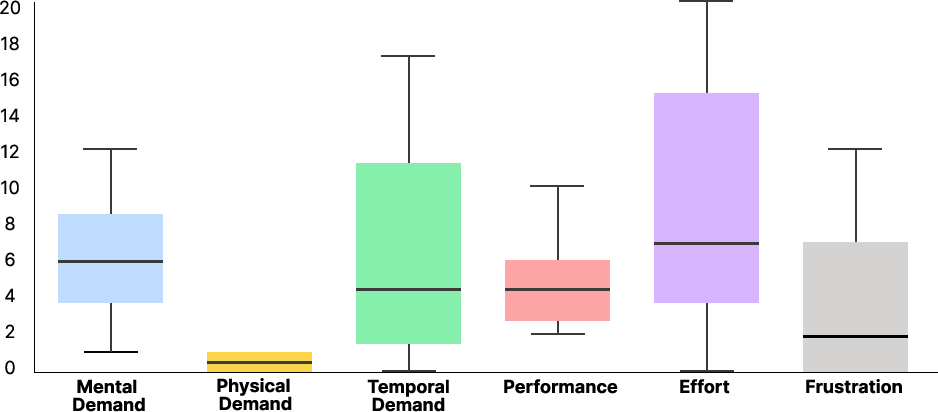
Figure 7: Distribution of NASA-TLX workload responses across major subscales.
PSSUQ results indicate robust usability, with system usefulness and interface quality outperforming conventional document-centric tools. Error messaging is an identified area for refinement. CSI scores, especially in enjoyment and results-vs-effort, further confirm strong creative support, although immersive potential remains somewhat underexplored.
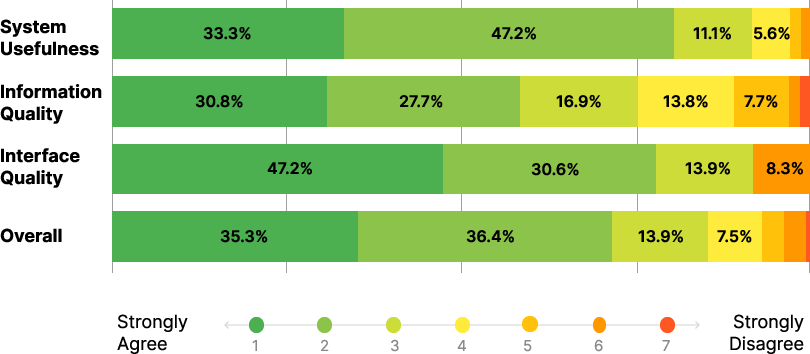
Figure 8: Usability evaluation (PSSUQ) of Script across major system dimensions.
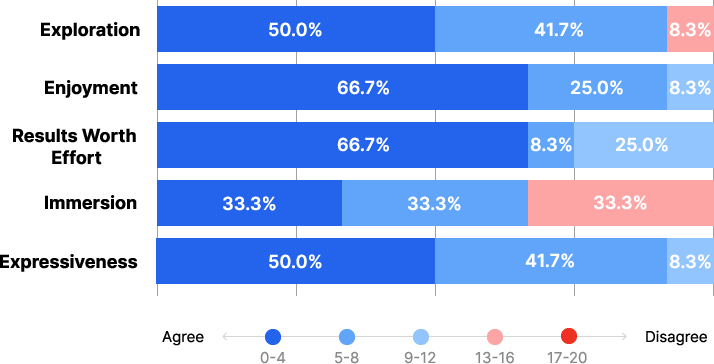
Figure 9: Creative Support Index sub-dimension distribution illustrating perceived support for exploration and expressiveness.
Layer Manipulation Patterns
Qualitative inspection reveals three dominant manipulation strategies: (1) spatial clustering for conceptual organization, (2) iterative tearing/re-combination to test rhetorical variants, and (3) leveraging persona affordances for divergent thinking while retaining traceability to source layers.

Figure 10: Visualization of distinct strategies for layer creation, tearing, and recombination in user workflows.
Between-Subjects Comparative Analysis
A controlled comparison with two baseline conditions (Chat-LLM and In-Line-LLM) affirms that Script users exhibit greater diversity in writing strategies, earlier and more effective integration of LLM feedback, and more nuanced prompt articulation. The chat-based condition leads to higher prompt reissuance and visible confusion in instructing the LLM, highlighting the advantages of Script’s explicit, structured prompt orchestration and spatial organization affordances.
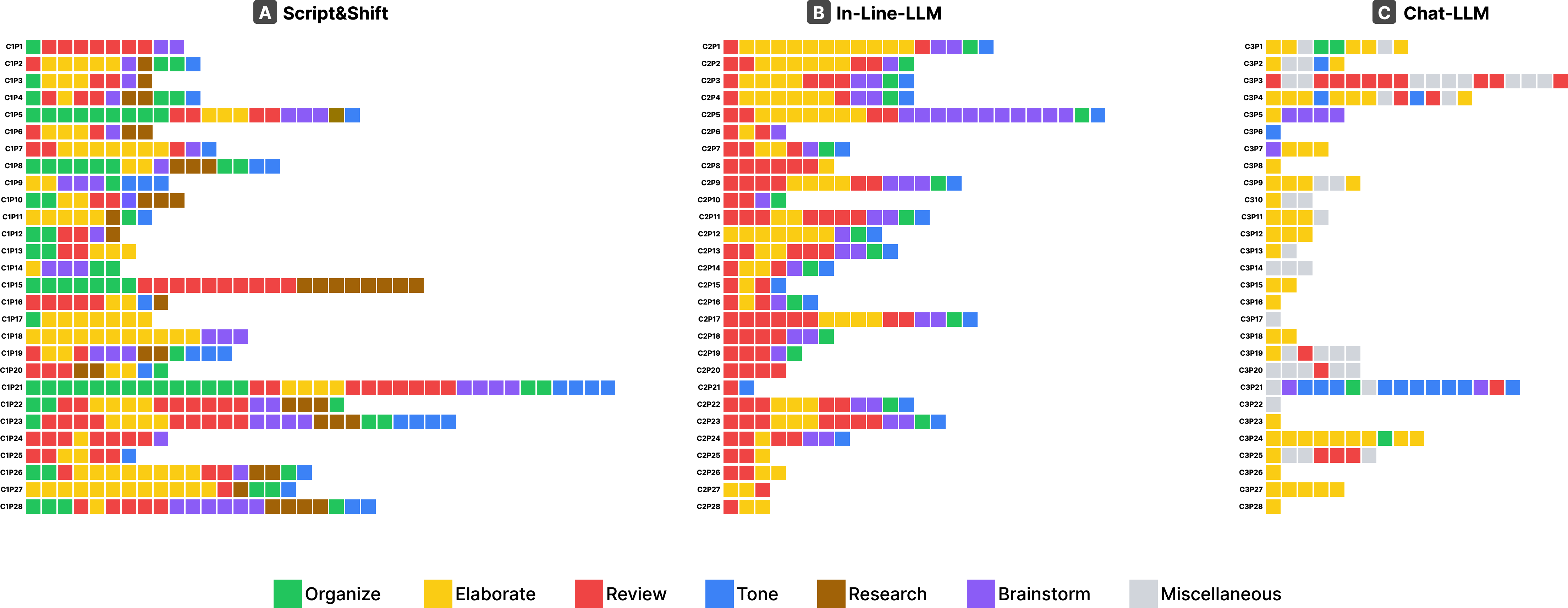
Figure 11: LLM interaction sequence and subprocess diversity across Chat-LLM, In-Line-LLM, and Script conditions.
Theoretical and Practical Implications
Script operationalizes a paradigm shift from linear, document-centric authoring to spatial, layer-based composition, directly supporting knowledge transformation models rather than mere knowledge telling. The spatial metaphor and manipulation affordances align with robust findings in process-writing and creativity research, better mapping to the cognitive practices of skilled writers. The explicit decoupling of content development and rhetorical structuring allows for high-dimensional iterative writing and reduces friction for tasks such as feedback integration, audience adaptation, or style shifting.
The integration of task-specific LLM personas substantially reduces the envisioning and articulatory gaps characteristic of direct LLM prompting, as observed by prompt specificity and reduced user frustration. Users demonstrate higher agency, more non-destructive editing, and willingness to experiment, enabled by Script's sandboxed layers and meta-level manipulation.
Generalization to educational settings, policy writing, creative media, and collaborative authoring is plausible due to the underlying architectural modularity and extensibility of assistant personas. The framework can be fruitfully extended to support collaborative writing, multimodal authoring, gesture-based input, and advanced provenance tracking to address provenance and LLM hallucination concerns.
Limitations and Future Directions
Initial onboarding entails a cognitive cost owing to the novel spatial and layered paradigm, indicating a need for progressive disclosure and adaptive help systems. Some users encountered a mismatch between persona affordances and desired stylistic outcomes, spotlighting the future importance of dynamic persona adaptation and enhanced LLM grounding with explicit user-provided context. Hallucination risk in research-focused operations remains, pointing to further design for grounded, chain-of-thought reasoning and robust citation support. User control and transparency of LLM outputs require ongoing attention.
Conclusion
Script demonstrates that a layered, spatial interface paradigm, tightly integrated with LLM personas and prompt scaffolding, robustly enables non-linear, exploratory, and rhetorically diverse writing workflows. It provides strong evidence for the superiority of such paradigms over document- or chat-centric models with respect to user agency, creativity, and operational efficiency. Script offers a generalizable foundation for future AI-augmented writing environments and prompts several promising research directions for interface design, process support, and cognitive alignment in human-AI writing collaboration.