- The paper introduces Autono, a robust ReAct-based framework that dynamically generates actions to improve decision-making in complex environments.
- It employs a timely abandonment strategy and probabilistic penalties to balance exploration and efficiency during task execution.
- The framework enhances multi-agent collaboration through memory sharing and modular design, outperforming existing frameworks in experimental evaluations.
Autono: A ReAct-Based Highly Robust Autonomous Agent Framework
Introduction
The paper presents a highly robust autonomous agent framework, Autono, grounded in the ReAct paradigm to address challenges in solving complex tasks through adaptive decision-making and multi-agent collaboration. Autono improves upon traditional frameworks by dynamically generating subsequent actions during agent execution based on prior trajectories, thereby enhancing robustness in complex environments.
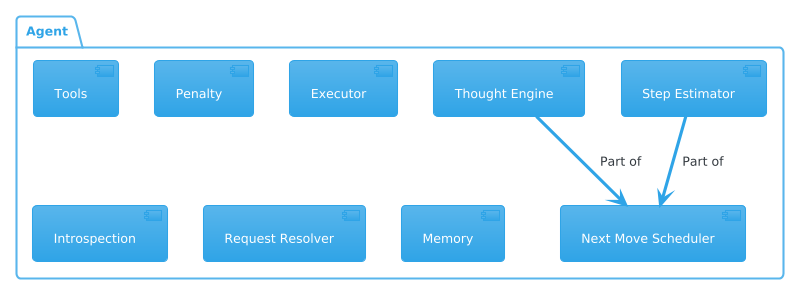
Figure 1: Components of an Agent.
Unlike existing frameworks that rely on predefined workflows generated by LLM-based planners, Autono introduces a timely abandonment strategy and a probabilistic penalty system to manage potential termination issues, enhancing efficiency and adaptability. The framework also integrates a memory transfer mechanism to facilitate effective collaboration among multiple agents.
Framework Design and Execution
Autono leverages key capabilities such as reasoning and action integration, memory sharing, and tool extensibility to enhance the flexibility and adaptability of autonomous agents. The ReAct paradigm forms the foundation of the framework, allowing agents to iteratively refine reasoning and action processes in response to dynamic task requirements.
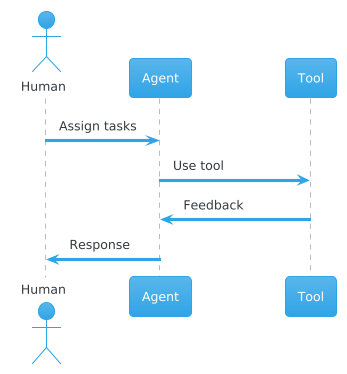
Figure 2: Task Execution Workflow of an Agent.
The timely abandonment strategy dynamically adjusts task abandonment probabilities based on task progress and resource consumption. Through hyperparameter tuning like abandonment probability and penalty coefficients, developers can optimize agent execution strategies for both conservative and exploratory approaches.
Multi-Agent Collaboration
The framework's architecture supports multi-agent collaboration by enabling memory sharing and dynamic task delegation among agents. The memory transfer mechanism allows agents to access shared dynamic memory, ensuring a unified understanding of task context and enhancing execution efficiency.
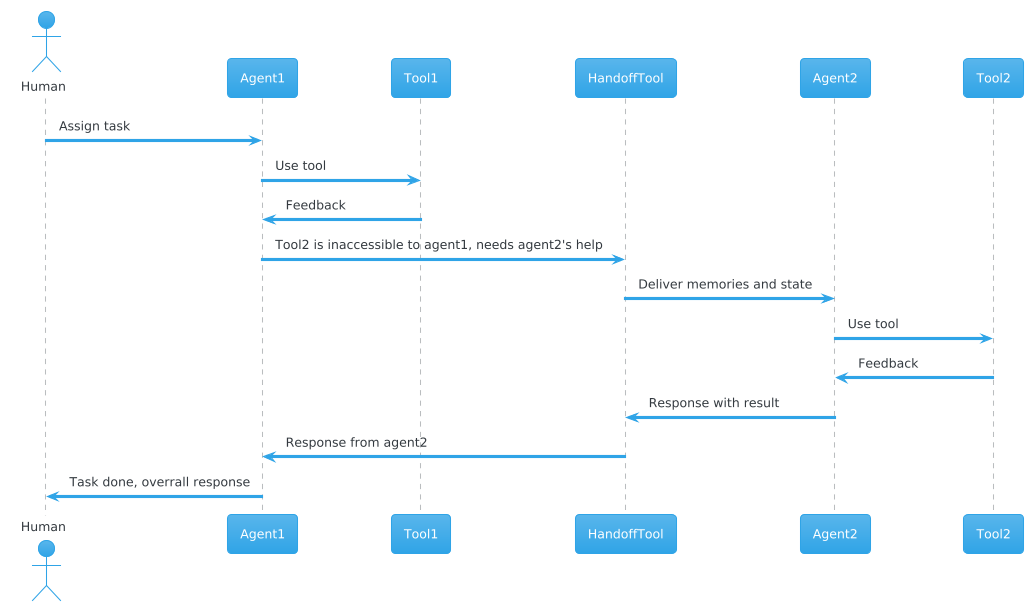
Figure 3: Task Execution Workflow Involving Multiple Agents.
Modular design and MCP protocol compatibility further amplify agent extensibility, facilitating seamless integration with external tools and expanding the action space. This modular approach allows for effective division of labor and specialization among agents, improving task quality and efficiency.
MCP Protocol Compatibility
Autono stands out by supporting the Model Context Protocol (MCP), enabling standardized communication between LLMs and applications. The MCP tool adapter encapsulates MCP-defined tool interfaces for direct invocation by agents, enhancing interoperability and reducing development overhead.
The session management mechanism ensures persistent, efficient communication between agents and MCP servers, allowing seamless use of tools across task executions without redundant connection setups.
Algorithms
ReAct Based Action Strategy
The ReAct-based action strategy dynamically determines agent actions based on prior trajectories and available tools. This iterative approach harnesses chain-of-thought reasoning and tool matching analysis to optimize decision-making in complex environments.
Timely Abandonment Strategy
The timely abandonment strategy employs probabilistic decision-making to abandon tasks when they exceed resource limits or cost-effectiveness. By manipulating abandonment probability p and penalty coefficient β, agents balance exploration and caution in task execution.
Memory Storage and Sharing
Effective memory storage and sharing are pivotal for multi-agent collaboration. Agents utilize ordered dictionary structures to store and update memories, facilitating synchronization and rapid information sharing among agents, thereby enhancing operational efficiency and avoiding redundant explorations.
Experimental Evaluation
The experimental setup assesses Autono's performance relative to Autogen and Langchain frameworks across varied tasks. Autono consistently achieves higher success rates, particularly in multi-step tasks with possible failures, demonstrating its robust adaptability and effectiveness.
Success rate analysis highlights Autono's superior performance:
- Single-Step Tasks: Achieves near-perfect success rates across multiple models, underscoring stability.
- Multi-Step Tasks: Exhibits outstanding robustness with high success rates, even in complex scenarios.
- Failures: Demonstrates adept error correction, underscoring processing advantages in uncertain environments.
Conclusion and Future Work
Autono signifies advancements in autonomous agent frameworks by integrating adaptive decision-making and multi-agent collaboration into a highly robust system. Its compatibility with MCP and modular design broaden its applicability across various domains.
Yet, challenges persist such as optimizing task execution and resource consumption efficiency. Future research directions could explore large-scale agent coordination strategies, reinforcement learning integration, and real-time adaptability enhancements to further refine the framework.
Despite its limitations, Autono provides a foundation for further exploration in intelligent agents, contributing significantly to handling complex tasks with efficiency and reliability.