- The paper introduces Swin-VIB, a novel framework leveraging a Variational Information Bottleneck to resolve knowledge conflicts in LLMs.
- It employs conditional entropy and sliding context analysis to selectively prioritize supplementary information, reducing response uncertainty.
- Experiments show up to 6.24% improvement over baselines in both multiple-choice and open-ended tasks, underscoring its practical efficacy.
Accommodating Knowledge Conflicts in LLMs
The paper "Accommodate Knowledge Conflicts in Retrieval-augmented LLMs: Towards Robust Response Generation in the Wild" (2504.12982) addresses the challenge of handling knowledge conflicts in Retrieval-Augmented LLMs. This topic is critical as it impacts the reliability of responses generated by LLMs when they encounter conflicting internal and external information sources. The paper introduces Swin-VIB, an innovative framework to accommodate these conflicts, using insights from information theory to guide LLMs towards more robust response generation in varied contexts.
Introduction to Knowledge Conflicts in LLMs
LLMs often integrate external information to improve their response accuracy. Retrieval-Augmented Generation (RAG) techniques are utilized to augment the response generation process with relevant external context. However, this approach introduces a risk of knowledge conflicts, as discrepancies between the LLM's internal memory and external retrieval can lead to unreliable and biased responses.
Knowledge conflicts arise from various sources, including misinformation, outdated data, and biases inherent in the external content. The paper argues that existing methods do not effectively address these conflicts because they either over-rely on external contexts or rigidly adhere to the internal memory without accommodating new information dynamics.
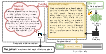
Figure 1: Illustration of knowledge conflict in RAG.
Theoretical Framework and Analysis
The paper employs information theory principles to dissect how LLMs handle conflicting information. It reveals that when the difference between conflicting and supplementary information is substantial, LLMs exhibit more confidence in their preference, thereby reducing uncertainty in generated responses. Conversely, when this disparity is ambiguous, LLMs face significant uncertainty.
To quantify this effect, the authors introduce the concept of conditional entropy, formalized to represent the uncertainty of LLM outputs given specific queries and contexts. This theoretical foundation offers a novel perspective for understanding and predicting LLM behaviors when subjected to conflicting contexts.
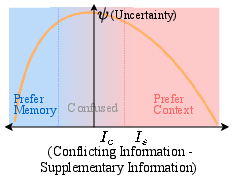
Figure 2: Relationship between uncertainty and the information difference.
The Swin-VIB Framework
Swin-VIB stands as a core contribution of the paper, leveraging a Variational Information Bottleneck (VIB) approach. By sliding across context windows and assessing the information difference, Swin-VIB selectively adapts the retrieved information. This process ensures that contexts with greater information disparity are preferred, effectively guiding LLMs in resolving conflicts and generating reliable responses.
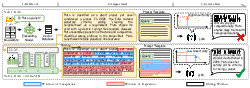
Figure 3: An overview of response generation with Swin-VIB.
This method provides a plug-and-play solution for RAG systems without requiring significant alterations to existing infrastructure. Experiments demonstrate its efficacy in consistently outperforming baseline methods across multiple tasks, notably enhancing accuracy in multiple-choice and open-ended question answering.
Experimental Results
The paper thoroughly evaluates Swin-VIB's performance using datasets like ConflictQA, DRUID, and TruthfulQA. Across various tests, Swin-VIB significantly improves accuracy, reduces response uncertainty, and enhances decision-making reliability.
In multiple-choice tasks, Swin-VIB shows up to 6.24% improvement over current state-of-the-art baselines, reflecting its robust capability to adaptively handle knowledge conflicts. The model maintains low instance-level uncertainty and achieves excellent trade-offs between correction and resistance rates in the presence of conflicting contexts.
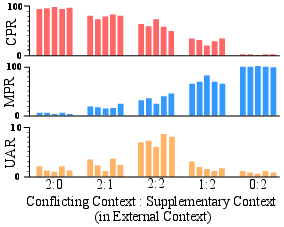
Figure 4: The uncertainty answer ratio of LLMs under varying proportions of external conflicting information from ConflictQA, e.g., 1:2, means that the external context includes one conflicting context and two supplementary contexts.
In open-ended Q&A, Swin-VIB proves instrumental in enhancing retrieval-augmented systems. It improves response generation quality and consistency, highlighted by significant improvements in metrics like EM and METEOR scores.
Conclusion
The paper introduces a novel framework, Swin-VIB, to manage knowledge conflicts effectively in LLMs. By applying information-theoretic insights, it offers a comprehensive solution to improve the reliability and accuracy of responses in complex, real-world scenarios. This work paves the way for more resilient RAG systems capable of navigating the nuanced challenges of conflicting information and adapting dynamically to varying content conditions.
Future work will focus on extending these strategies to diverse response generation tasks, further validating and refining the theoretical underpinnings and practical implementations of conflict resolution in LLMs.