- The paper presents four protocols (MCP, ACP, A2A, ANP) to standardize agent communication in LLM-powered systems.
- It examines technical frameworks like JSON-RPC, REST-native messaging, and decentralized identifiers to address integration challenges.
- Results highlight phased adoption strategies that improve scalability, security, and interoperability across diverse platforms.
Survey of Agent Interoperability Protocols
The paper "A Survey of Agent Interoperability Protocols: Model Context Protocol (MCP), Agent Communication Protocol (ACP), Agent-to-Agent Protocol (A2A), and Agent Network Protocol (ANP)" provides an in-depth examination of four emerging communication protocols for agent interoperability within systems powered by LLMs. Each protocol addresses different facets of interoperability, enabling LLM-driven autonomous agents to operate efficiently and securely across heterogeneous environments.
Introduction
In the context of LLM-driven autonomous agents, interoperability plays a critical role. These agents require robust communication protocols for effective integration, context exchange, and task coordination across diverse platforms. Fragmented implementations lead to challenges in scalability and security. Therefore, standardized protocols such as MCP, A2A, ACP, and ANP are proposed.
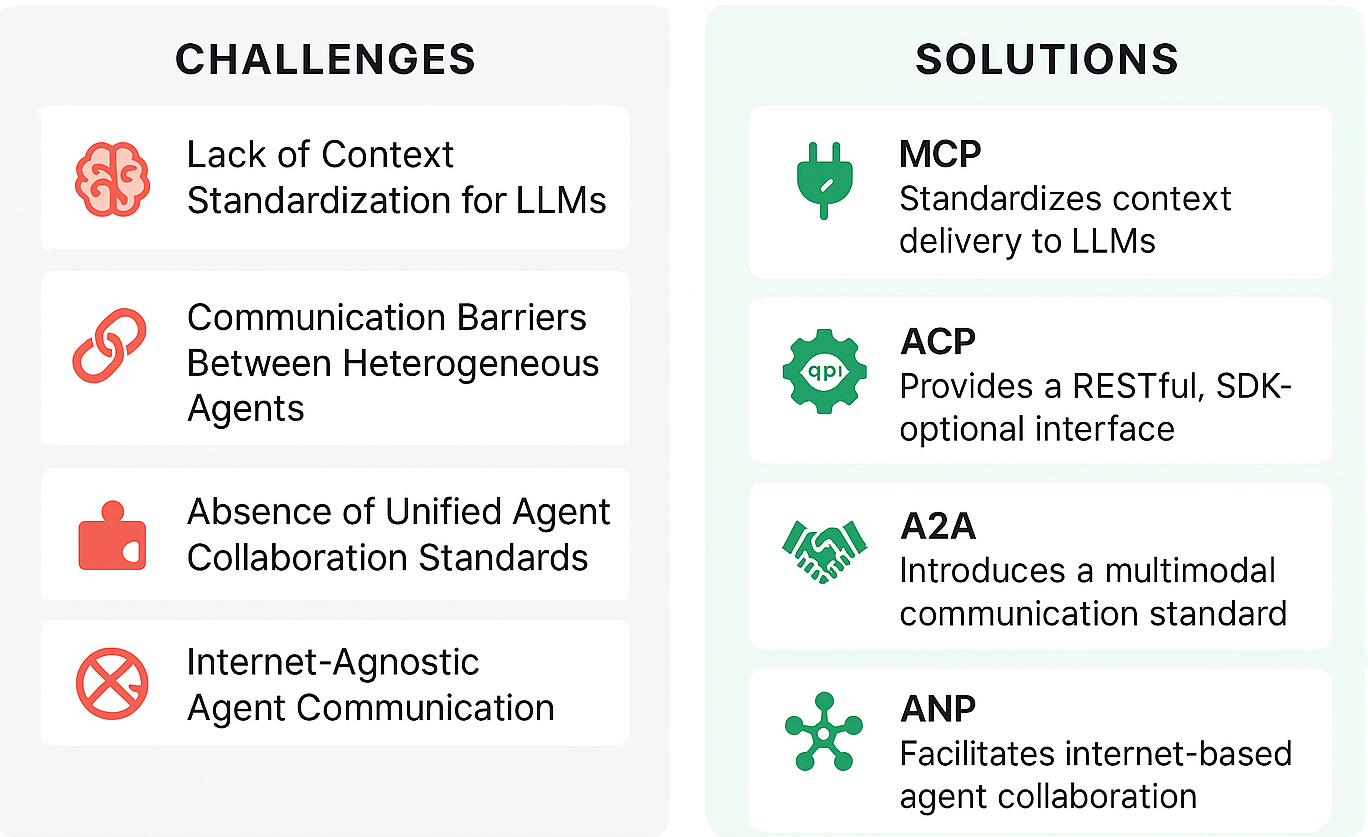
Figure 1: Protocol-aligned solution to challenges in agent communication.
Protocols Overview
Model Context Protocol (MCP)
MCP provides a client-server interface for secure ingestion of context and structured tool invocation using JSON-RPC. This protocol is essential for environments where LLMs interact with tools and services in a deterministic and structured manner.
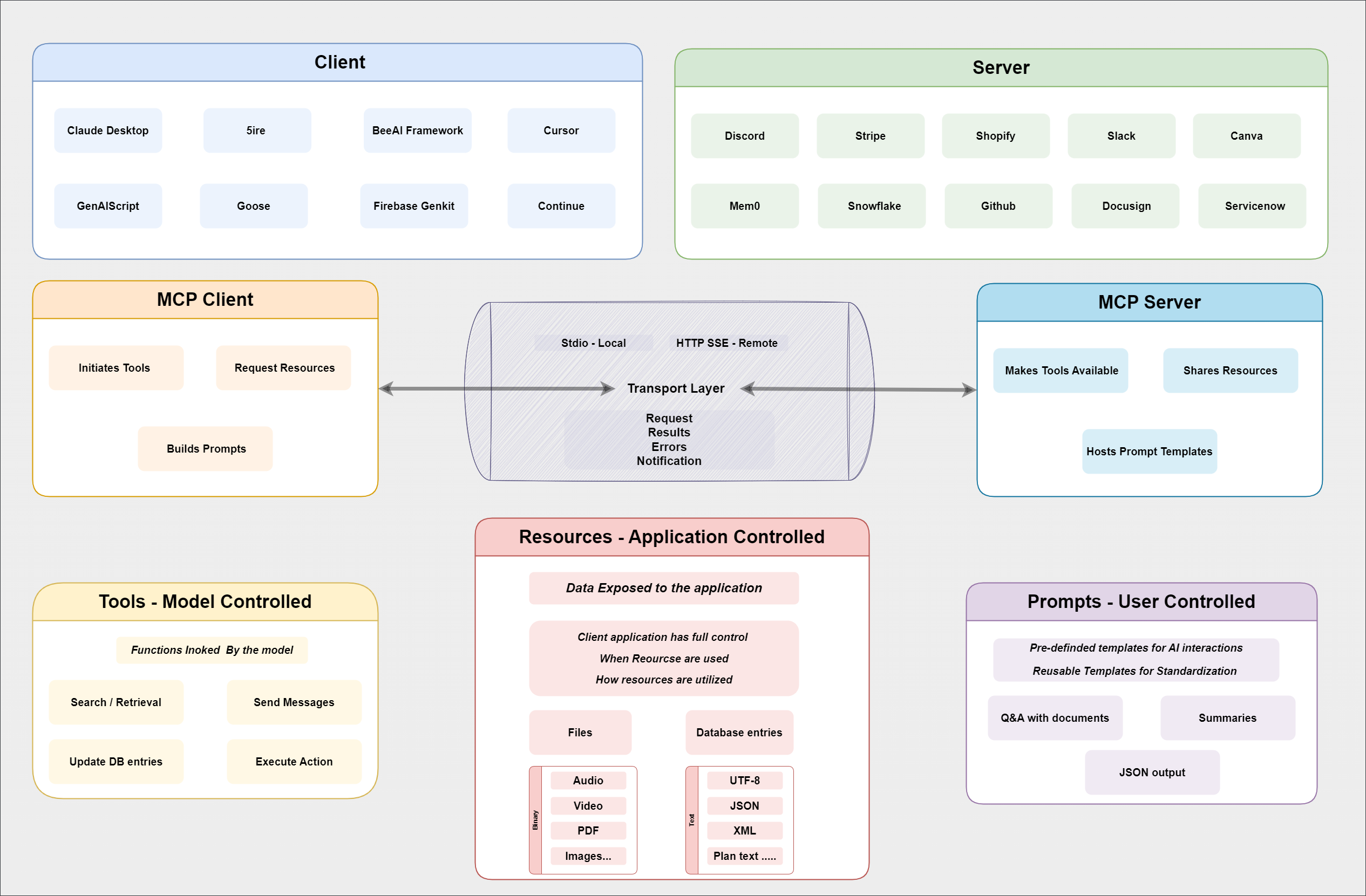
Figure 2: An overview of MCP.
Key components include:
- Tools and Resources: MCP allows LLMs to invoke external APIs, integrating real-world operations seamlessly.
- Prompts: Standardized prompts ensure repeatability and predictability in interactions.
Agent Communication Protocol (ACP)
The ACP framework facilitates asynchronous, REST-native messaging between agents. It introduces structured multi-part messaging and streaming, allowing agents to communicate effectively in multimodal scenarios.
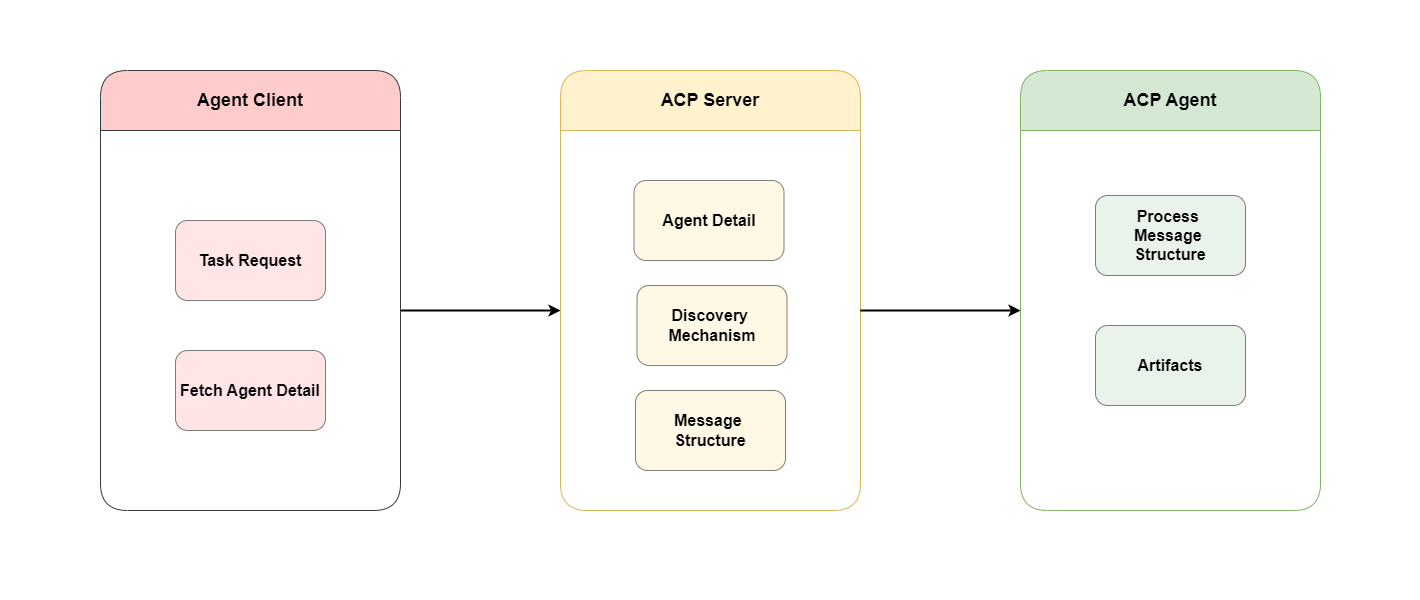
Figure 3: An overview of ACP.
Core architectural elements:
- Agent Registry: Maintains agent metadata, controlling authentication and authorization.
- Task Requests: Structured JSON messages that define operations and expected outputs.
Agent-to-Agent Protocol (A2A)
A2A supports peer-to-peer interactions through capability-based agent cards over HTTP. This protocol is tailored for enterprise-scale workflows requiring dynamic capability discovery and task orchestration.
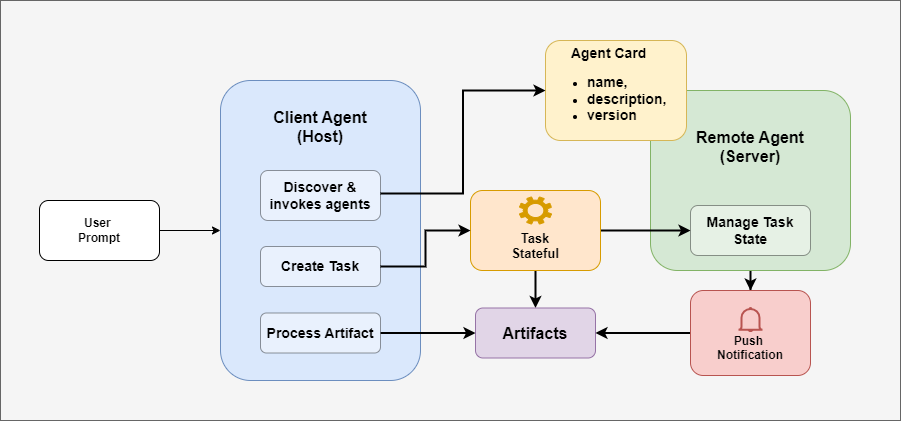
Figure 4: An overview of A2A.
A2A highlights include:
- Agent Cards: Metadata documents detailing agent capabilities, fostering dynamic discovery.
- Artifact Exchange: Enables efficient sharing of task outputs among agents.
Agent Network Protocol (ANP)
ANP is designed for open-network environments, emphasizing decentralized agent discovery and collaboration using DIDs and JSON-LD. It supports peer-to-peer communication tailored for public internet use.
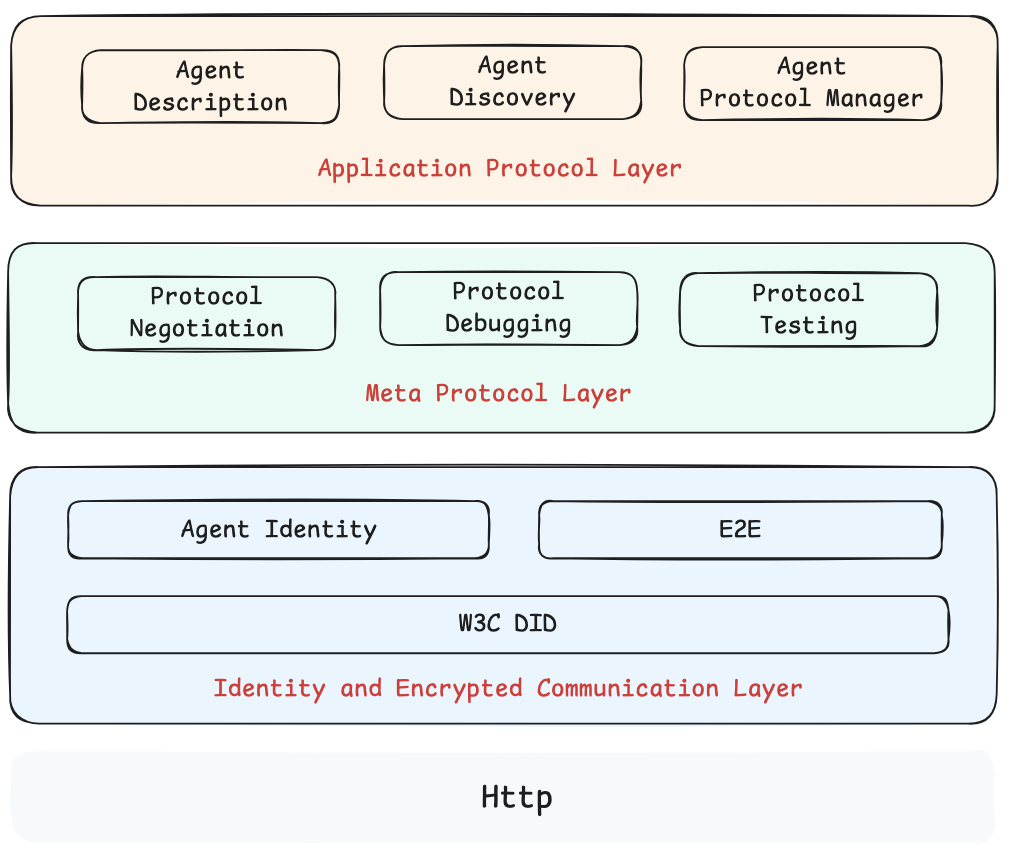
Figure 5: An overview of ANP.
Key features:
- Decentralized Identifiers (DIDs): Ensure secure and verifiable agent identities.
- JSON-LD Graphs: Facilitate semantic understanding and interoperability across platforms.
Comparative Analysis
The protocols differ in architecture, discovery mechanisms, authentication methods, and target use cases. Table 1 outlines a comparative view of these aspects across MCP, ACP, A2A, and ANP.
Strengths and Limitations
- MCP: Strongly integrates LLMs with external tools but assumes centralized setups.
- ACP: Enables rich interactions but requires registry-based configuration.
- A2A: Excels in enterprise contexts but limited to trusted environments.
- ANP: Supports decentralized systems but involves negotiation complexities.
Phased Adoption Roadmap
The adoption roadmap suggests deploying MCP first for structured tool interaction, followed by ACP for rich messaging. A2A supports enterprise collaboration, while ANP is ideal for open agent networks, promoting a sequential integration approach tailored to specific organizational needs.
Conclusion
The survey establishes a foundational framework for designing interoperable and secure agent ecosystems. The combination of these protocols supports scalable deployment across various application domains and levels of interaction complexity. Future directions involve developing bridges and evaluation metrics to enhance cross-protocol interoperability and trust frameworks, essential for advancing AI-driven automated systems on a global scale.