- The paper evaluates five registry solutions by comparing security, authentication, scalability, and maintainability across centralized, enterprise, and distributed models.
- The methodology uses benchmark dimensions and cryptographic measures to reveal trade-offs between trust models and performance in dynamic agent environments.
- Findings suggest that federated and decentralized registry models improve scalability and resilience, ensuring sustainable infrastructures for autonomous AI agents.
Evolution of AI Agent Registry Solutions: Centralized, Enterprise, and Distributed Approaches
Introduction
The evolution of autonomous AI agents across different domains such as cloud computing, enterprise systems, and decentralized environments has necessitated the development of robust registry infrastructures. These infrastructures are essential for ensuring trustworthy discovery, capability negotiation, and identity assurance of AI agents. The paper "Evolution of AI Agent Registry Solutions: Centralized, Enterprise, and Distributed Approaches" investigates five prominent registry approaches: MCP Registry, A2A Agent Cards, AGNTCY Agent Directory Service, Microsoft Entra Agent ID, and NANDA Index AgentFacts. By evaluating these approaches on four dimensions—security, authentication, scalability, and maintainability—the paper provides insights into the architectural trade-offs between centralized control, enterprise governance, and distributed resilience.
Background
Autonomous agents, unlike traditional web resources, are persistent entities that can initiate control flow, retain memory, adapt to context, and spawn subordinate agents. As their presence grows, the challenge is to provide infrastructure capable of real-time identity resolution, trustable metadata exchange, and dynamic discovery. Current internet protocols like DNS and static service catalogs prove insufficient for the dynamic, privacy-preserving needs of these agents. This has led to the creation of several agent frameworks with discovery metadata models designed to address these limitations.
Comparative Analysis of Registry Architectures
The paper evaluates five registry architectures using dimensions such as security, authentication, scalability, and maintenance.
MCP Registry
MCP Registry is centralized, using a GitHub OAuth mechanism for metadata publication. It ensures security by accepting metadata only from authenticated identities, minimizing the attack surface. It is optimized for scalability by caching data locally, which is then served to end-users. As a schema-driven service without package hosting, maintenance is simplified through automated publication flows.
A2A Protocol
A2A Protocol offers a decentralized JSON-RPC interface, enabling agents to discover, negotiate, and collaborate using shared standards. It employs transport-layer security and OAuth2 for authentication, supporting asynchronous interactions and flexible task management.
AGNTCY Agent Directory Service
AGNTCY ADS is a layered architecture promoting agent metadata modeling, immutable object storage, content distribution, and DHT-based registry selection. It excels in security through cryptographic guarantees and decentralized naming, while offering scalable and maintainable solutions through content-addressed records and adaptive replication strategies. The architecture's modular layers facilitate independent scaling and evolution.
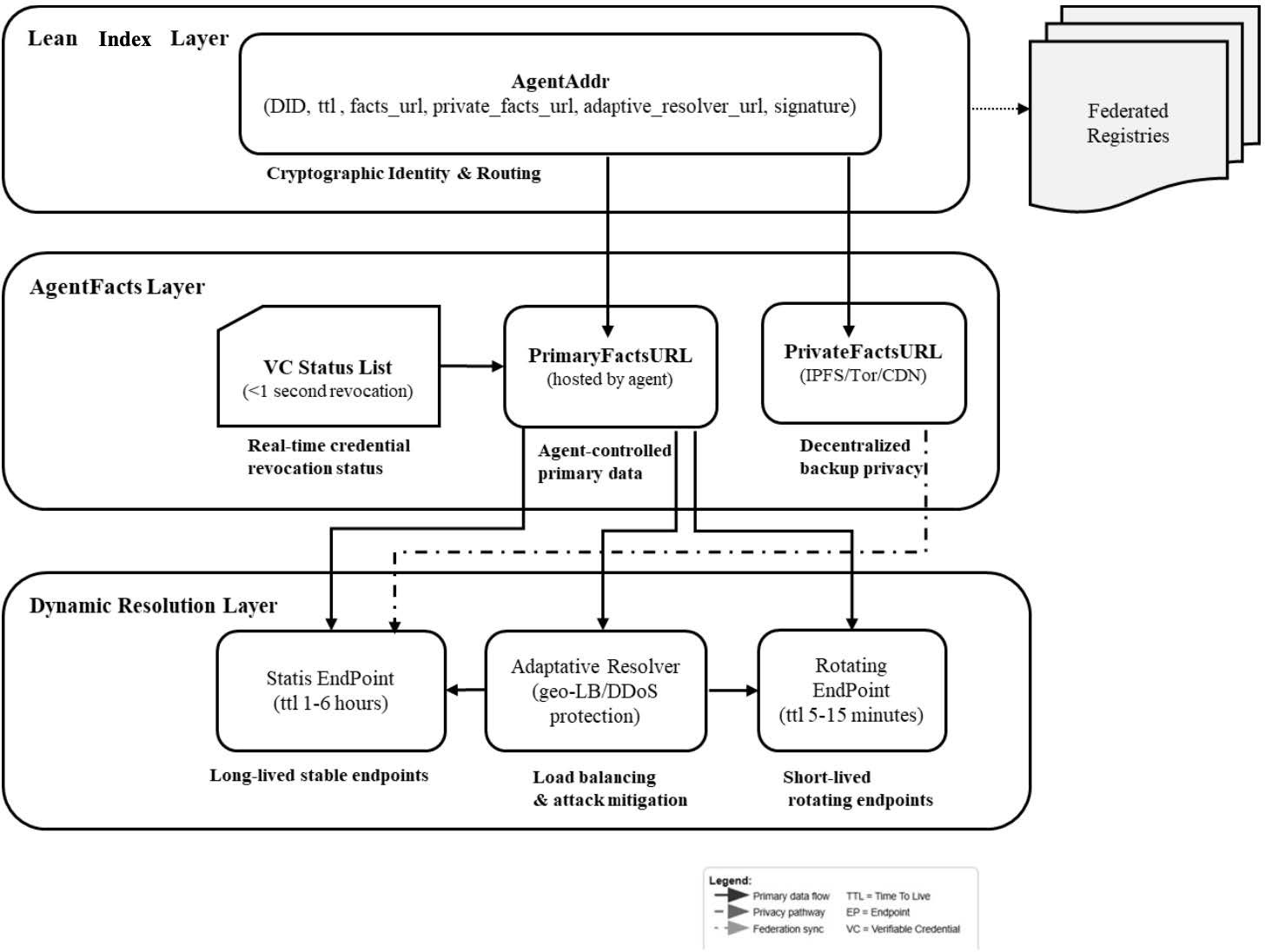
Figure 1: NANDA Index and AgentFacts Architecture: A modular three-layer system for decentralized AI agent discovery and routing.
Microsoft Entra Agent ID
Microsoft Entra Agent ID is a managed directory service suited for enterprise systems, providing visibility, lifecycle management, and access governance for AI agents. It integrates zero-trust principles via tools similar to those for human user identities, emphasizing security and scalable governance.
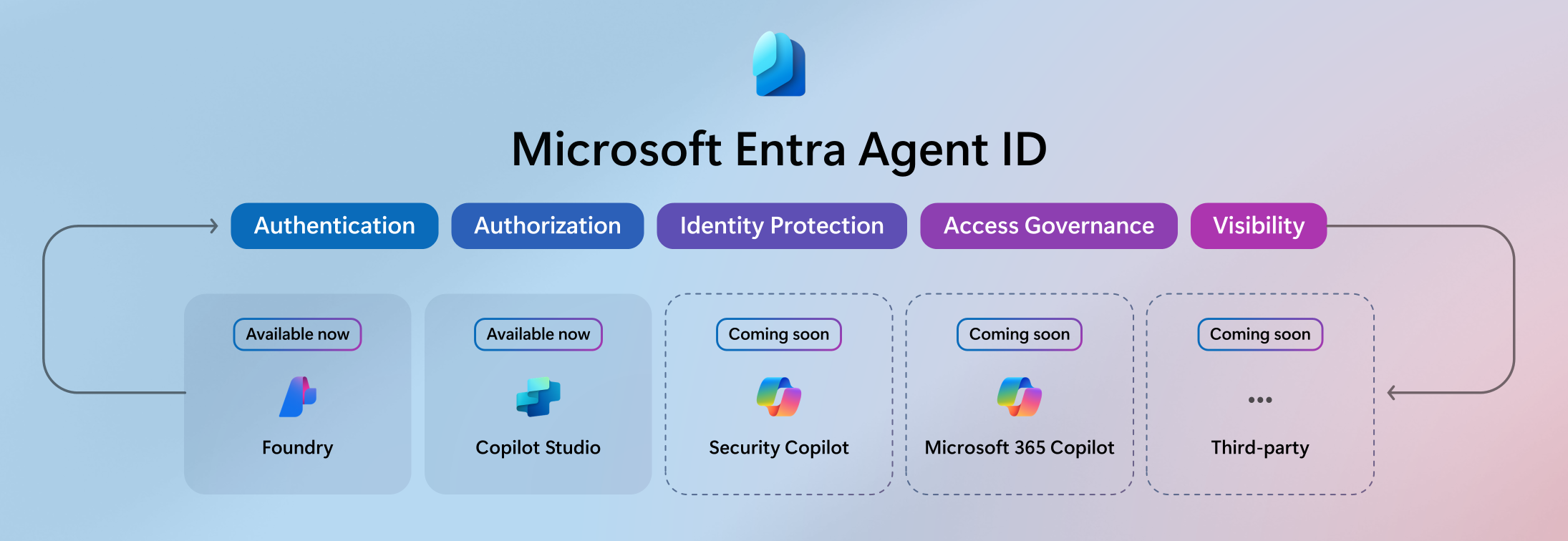
Figure 2: Microsoft Entra Agent ID Overview.
NANDA Index
NANDA Index presents a minimally invasive architecture characterized by lean, modular layers to support agent discovery within decentralized systems. This solution emphasizes cryptographic guarantees and verifiable trust models, allowing federated environments to maintain privacy and scalability.
Implications and Recommendations
The paper emphasizes the importance of evolving registry architectures towards federated models that clearly separate identity resolution from capability metadata, enabling cryptographic trust without compromising privacy or autonomy. Decentralized models like AGNTCY ADS and NANDA Index demonstrate scalability and community governance benefits, addressing critical gaps in interoperability and long-term sustainability—features crucial for regulated sectors like healthcare and finance.
Conclusion
The paper elucidates the significant infrastructure challenges posed by the proliferation of autonomous AI agents and advocates for open, federated registry models as fundamental components of the Internet of AI Agents. Whether through centralized, enterprise, or decentralized approaches, the future demands scalable, secure, and interoperable registry solutions to accommodate the dynamic needs of AI agents across varied deployment contexts.
The paper concludes by inviting collaboration across industry, academia, and civil society to participate in the collective development of these infrastructures, ensuring resilient frameworks that serve the diverse needs of autonomous agent ecosystems without relying on single-vendor control.