- The paper introduces a semantic naming system that addresses service discovery, interoperability, and unified billing challenges in LLM agent ecosystems.
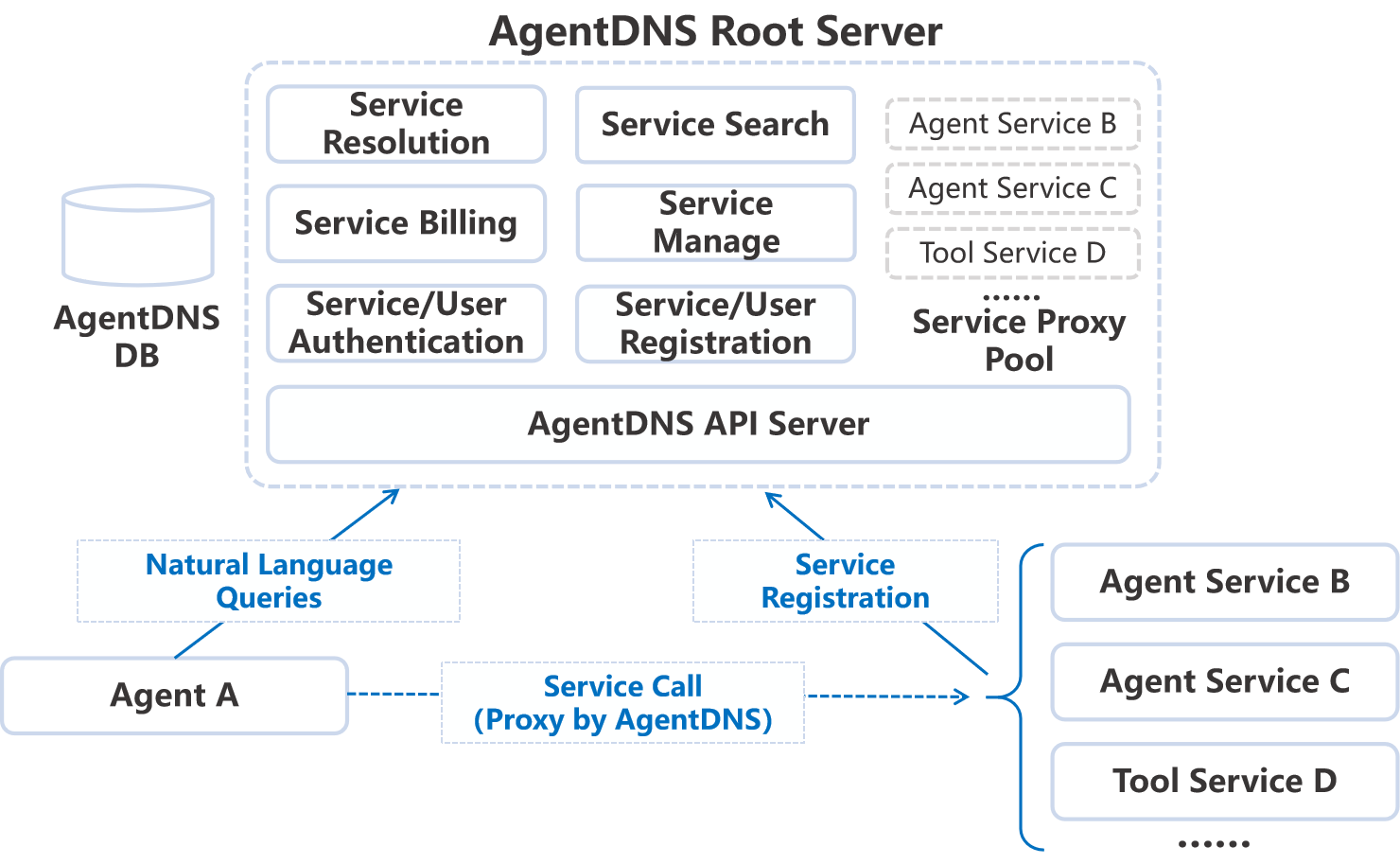
- It employs a DNS-inspired framework with structured service registration, a proxy pool, and hybrid retrieval methods to enhance efficiency.
- The system simplifies cross-vendor collaboration and lays the groundwork for future research in decentralized architectures and privacy-preserving mechanisms.
AgentDNS: A Root Domain Naming System for LLM Agents
The paper introduces AgentDNS, a semantic root domain naming system specifically designed to enable seamless multi-agent interactions. By addressing significant challenges such as service discovery, interoperability, and unified billing for LLM-based agents, AgentDNS seeks to streamline cross-vendor collaboration in diverse sectors.
Core Challenges and Proposed Solutions
AgentDNS aims to tackle three main issues within the LLM agent ecosystem: service discovery, interoperability, and authentication & billing challenges. Each issue arises from the lack of integration capabilities across vendors, forcing manual configuration that limits agent collaboration.
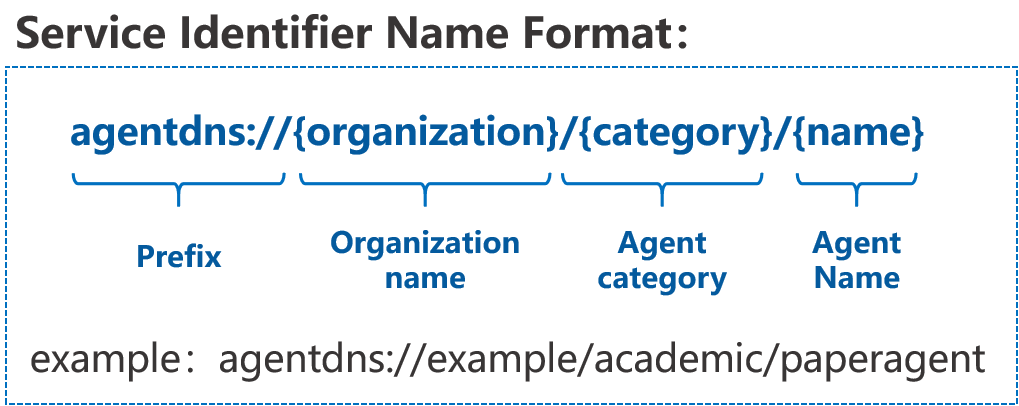
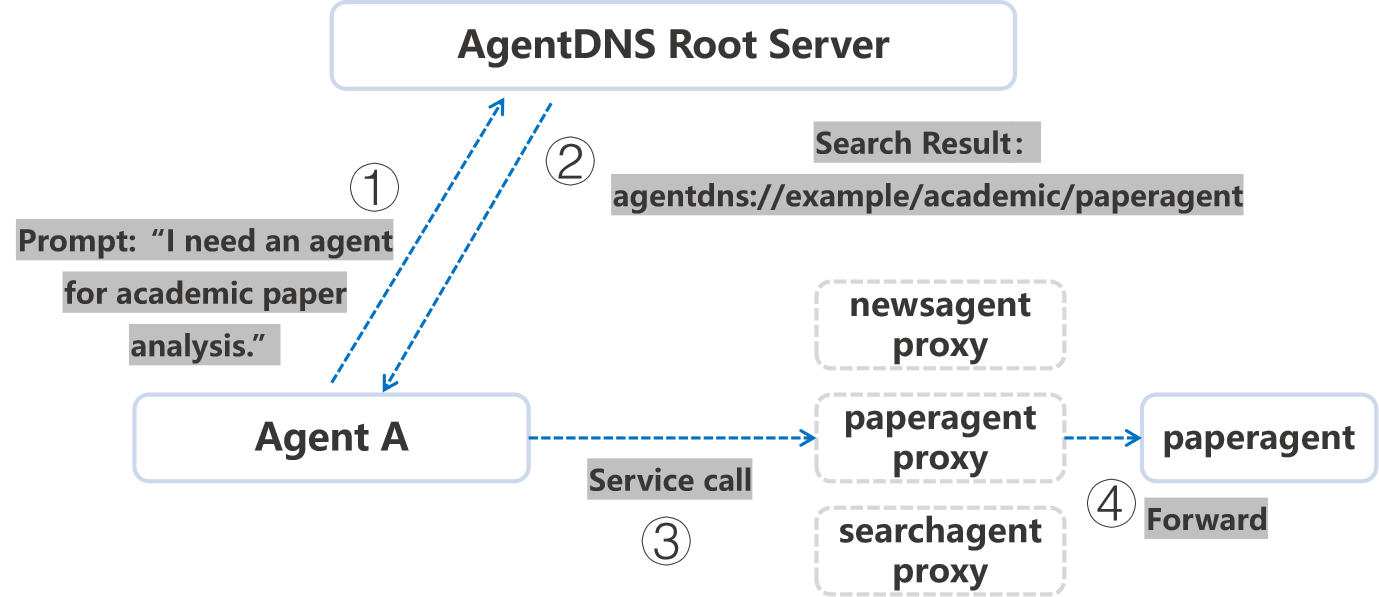
- Service Discovery: Service registration and naming lack standardization, inhibiting LLM agents from autonomously finding services. AgentDNS proposes a semantic naming system that leverages a unified namespace to simplify service identification and retrieval.
- Interoperability: Varied communication protocols hinder seamless interactions between agents from different vendors. AgentDNS facilitates protocol-aware interoperability, allowing agents to dynamically adapt to supported protocols through agent identifier metadata.
- Authentication and Billing: Complex authentication and fragmented billing systems challenge cross-vendor transactions. AgentDNS introduces a unified authentication system via single sign-on and centralized billing mechanism, reducing complexity and enhancing user experience.
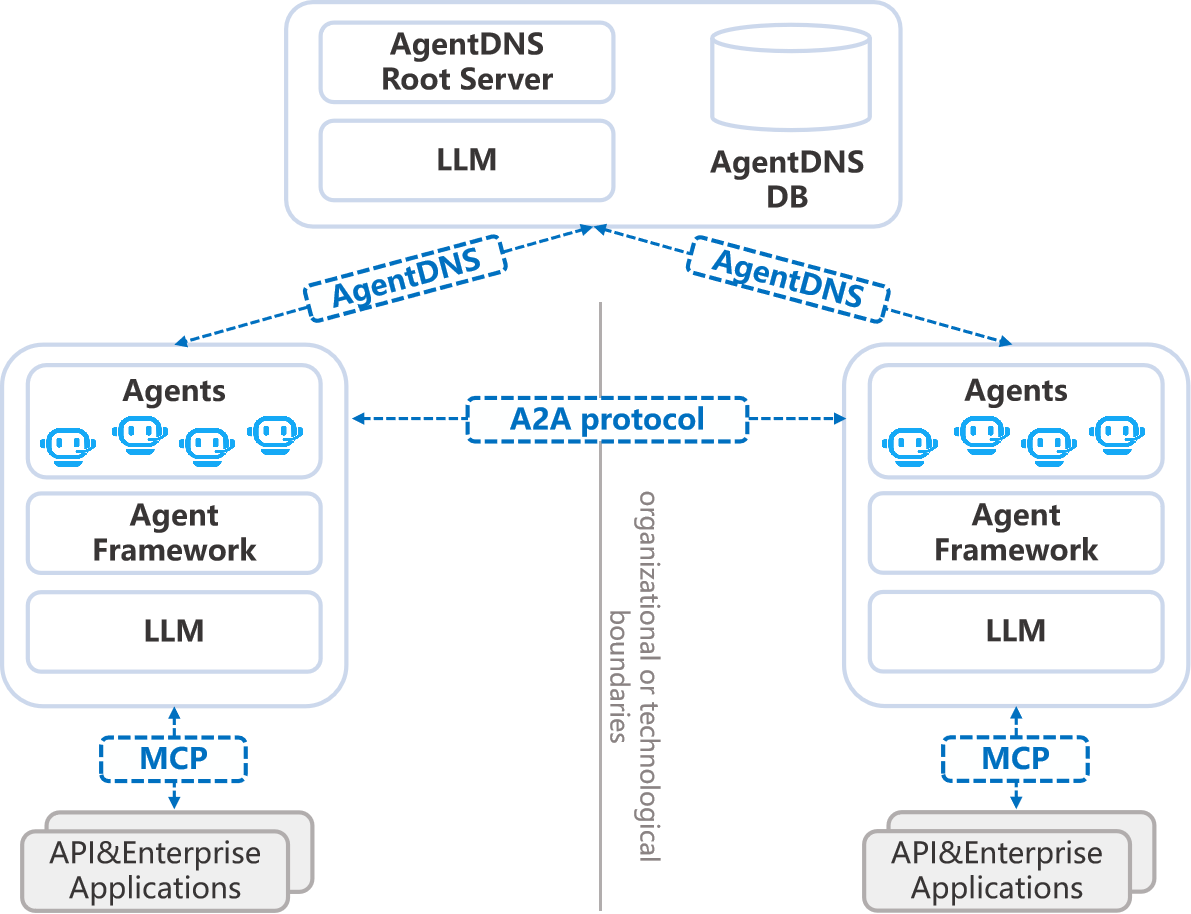
Figure 1: AgentDNS system and its relationship with A2A and MCP Protocols.
AgentDNS System Architecture
AgentDNS centralizes its functions through a root server that encompasses multiple components. Key components include service registration, a proxy pool, service search, and resolution processes—all aimed at providing a comprehensive solution for agent collaboration.
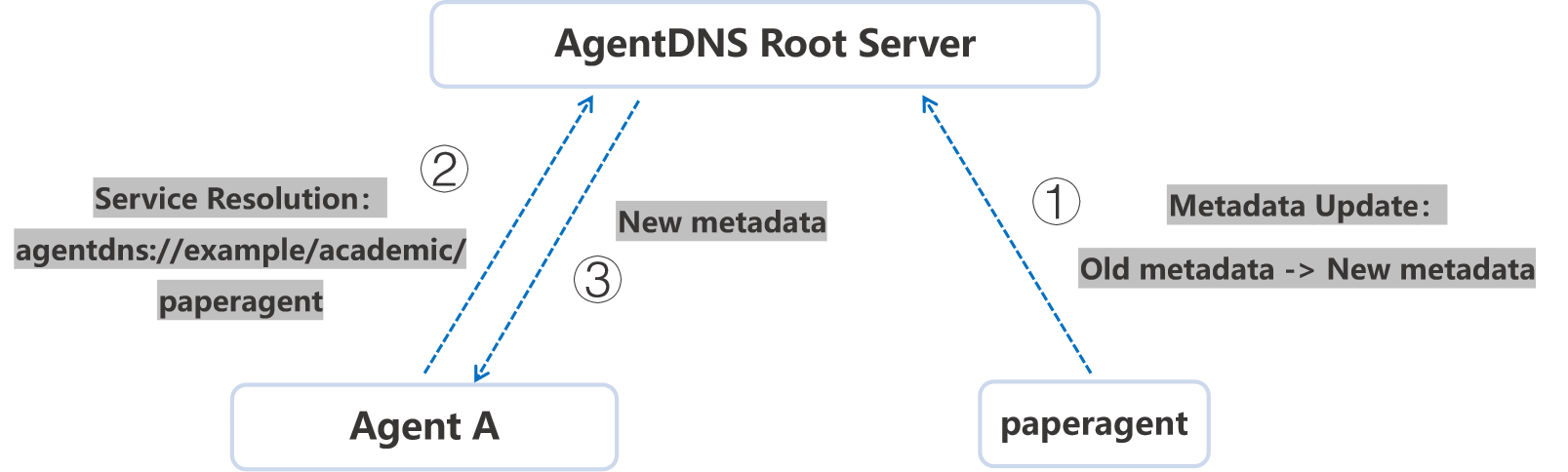
Figure 4: AgentDNS service discovery.
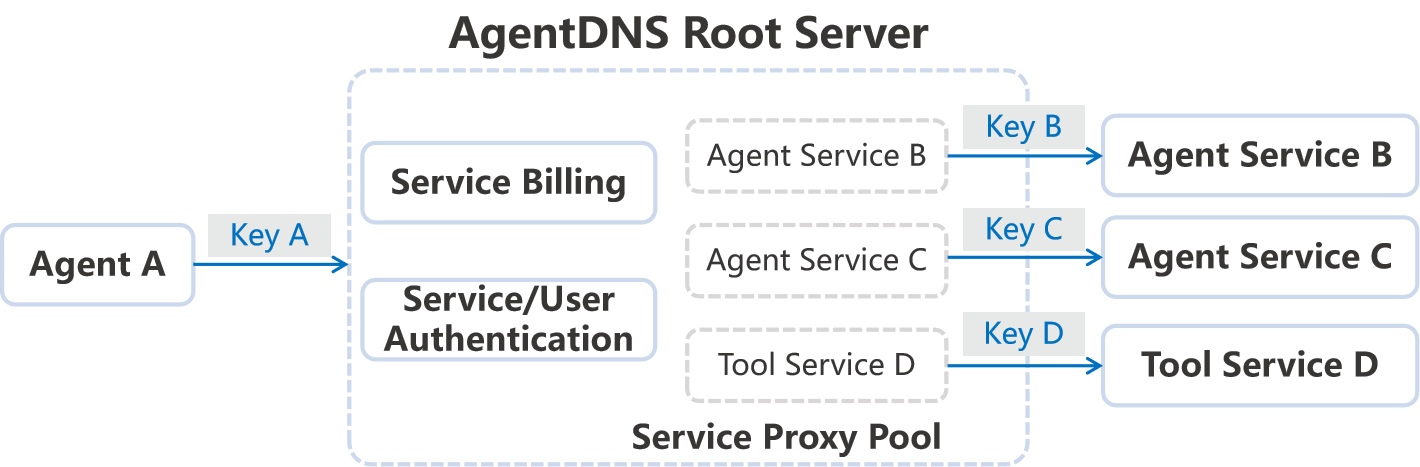
Figure 5: AgentDNS unified authentication and billing.
Theoretical Implications and Practical Applications
AgentDNS employs a DNS-inspired system that decouples service identifiers from physical addresses. The use of semantic names and metadata-driven protocols align with LLM agent needs, signaling a crucial evolution in agent system design and deployment.
Practically, AgentDNS could optimize workflows in domains such as academic research and corporate environments, where multi-agent tasks are prevalent. The case study illustrates a comprehensive agent workflow that could be implemented in real-world scenarios to handle complex tasks like research surveys effectively (Figure 6).
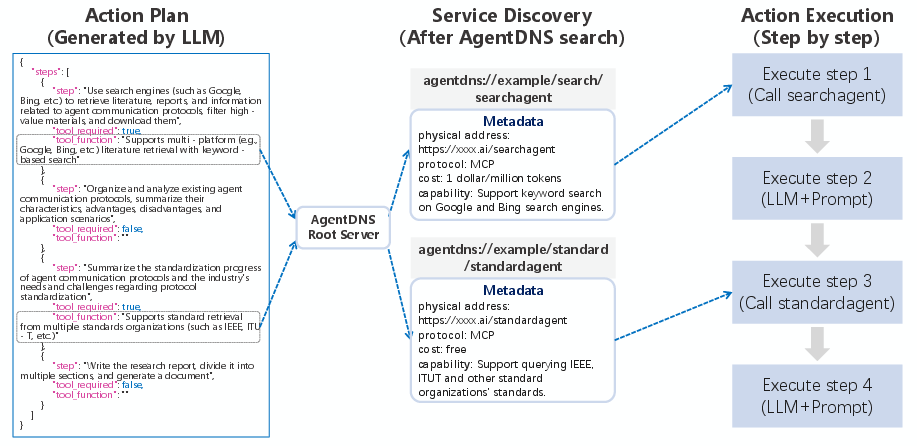
Figure 6: AgentDNS case study.
Future Research Directions
The paper identifies future avenues to enhance AgentDNS's capabilities, such as embracing decentralized and federated architectures to bolster robustness, and developing AgentDNS-compatible agent planning LLMs for fine-tuned model alignment. Privacy-preserving discovery mechanisms, leveraging cryptographic techniques, remain a crucial area for development to secure agent interactions.
Conclusion
AgentDNS presents a vital contribution to the field of LLM agents by providing a centralized yet flexible system that dissolves existing boundaries in multi-agent service interactions. It sets the stage for improved automation, reduced manual interventions, and possibly sits at the core of future agent ecosystems, requiring further innovation in decentralized architectures and security protocols.